Passive Fire Protection Market Snapshot

Key Players

  • Promat International NV (Belgium)
  • 3M Company (USA)
  • Saint-Gobain SA (France)
  • Isolatek International (USA)
  • Tremco Illbruck Group GmbH (Germany)
  • Hilti Corporation (Liechtenstein)
  • Morgan Advanced Materials (UK)
  • Sherwin-Williams Company (USA)
  • Hempel A/S (Denmark)
  • Knauf Gips KG (Germany)

Market Size

Base Year 2024
$5.18 Bn
CAGR
7.63%
Forecast 2034
$10.81 Bn

Market Segments

By Material
Mineral Wool, Glass Wool, Cementitious Materials, Intumescent Coatings, Fire-Resistant Boards
By Construction Type
Residential Buildings, Commercial Buildings, Industrial Buildings, Infrastructure
By Application
Compartmentalization, Firestopping, Fire Protection Coatings, Smoke Extraction, Others
By End User Industry
Building & Construction, Oil & Gas, Power Generation, Transportation, Others

Market Dynamics

Drivers
  • Increasing safety regulations
  • Growth in construction industry
Restraints
  • High installation cost
  • Strict regulatory norms
Opportunities
  • Increased safety regulations
  • Demand for fire-resistant materials

Market Size

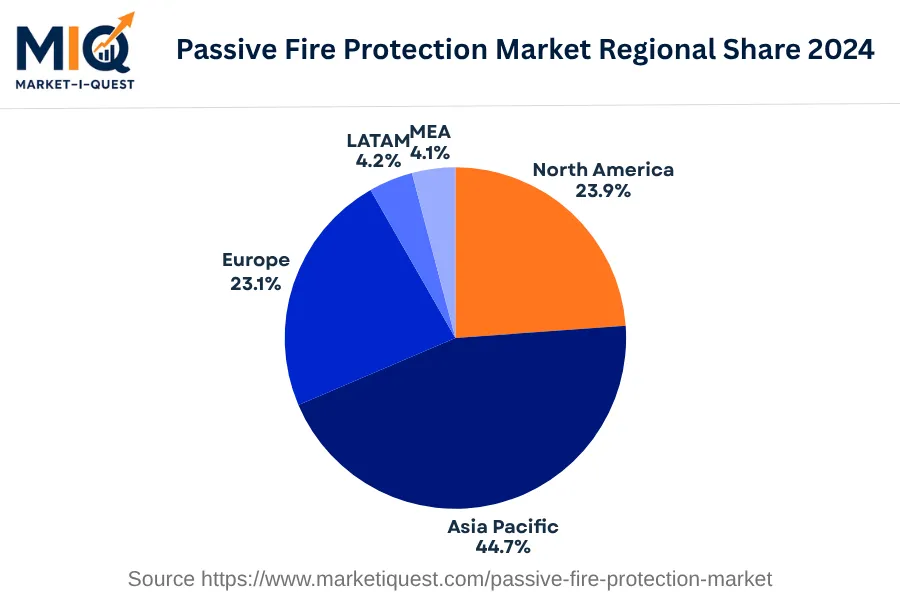
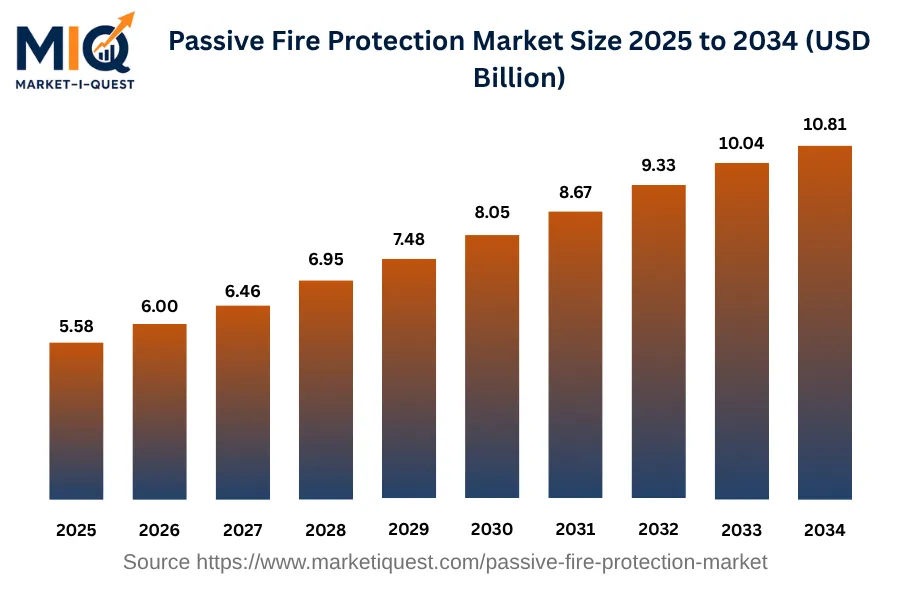
The Passive Fire Protection market size is expected to increase from 5.58 billion in 2025 to 10.81 billion by 2034, at a CAGR of 7.63%. This doubling of market size over a nine-year period aligns with a steady upward trend. The primary causes of this growth in the Passive Fire Protection market are an increase in the demand for fire protection systems and a rise in concerns regarding the safety and security of buildings and structures. As of 2024, the market shares by region were as follows: North America held 23.9% of market share, Asia Pacific dominated the field with 44.7%, Europe had 23.1% share, and the remaining 8.2% was divided evenly between Latin America and the Middle East and Africa.

Key Takeaways

  • By Material -Glass Wool displayed supremacy accounting for the highest share in the base year.
  • By Construction - Residential Buildings led the segment earning a notable position in the recent year.
  • By Application - Smoke Extraction rose to the top showcasing the most significant growth.
  • By End User -Oil & Gas held the largest share of the segment in the most recent year.
passive-fire-protection-market market size

Key Driving Factors

Enforcement of Stringent Building Construction Regulations

Municipal and national governments worldwide are pushing to enforce more stringent fire safety regulations for building designs. In specific, the International Building Code (IBC) and National Fire Protection Association (NFPA) standards mandate the inclusion of passive fire protection systems in various building categories. These standards specify the use of fire-resistant materials and designs that prevent or slow the spread of fire and smoke. As a result, architects, construction companies, and building owners are increasingly adopting passive fire protection solutions, such as fire doors, fire-resistant glass, and other containment systems, to comply with these regulations. This regulatory push is driving growth in the passive fire protection market.

Increasing Focus on Safety in the Oil & Gas Industry

The oil and gas industry is witnessing a significant shift towards prioritizing safety, largely due to past incidents of catastrophic fires and explosions in oil rigs and refineries. This shift is increasing the demand for passive fire protection solutions specifically designed for this high-risk environment. Systems such as fireproofing materials and enclosures that protect critical control systems in these facilities have become essential. International safety guidelines, including those from the American Petroleum Institute and other industry-specific bodies, underline the critical need for these solutions. This steady focus on improving safety parameters within the oil and gas industry has emerged as a major driver in the passive fire protection market.

Market Evolution by Timeline

2019-2023
In this time frame, key buyers mainly included construction and manufacturing firms across North America and Europe seeking to comply with stringent building codes. Suppliers shipped products predominantly based on cementitious materials and intumescent coatings. The integration of PFP systems in commercial buildings, industrial sectors and construction projects achieved moderate maturity. Industry standards moved towards sustainability, with the LEED certification becoming crucial. Fluctuation in raw material prices influenced overall costs, with a shift towards fixed-price contracts being common. Delays due to supply chain constraints marked significant risks, inflict by bad weather.
2024
The demand for PFP systems saw expansion as buyers from emerging markets, particularly from Asia-Pacific, invested in infrastructure development. PFP providers noted a move towards the novel technology of thin film intumescent coatings, with preliminary pilots indicating potential efficacy. Building standards, including the Building Research Establishment Environmental Assessment Method (BREEAM), influenced regional adoption, pushing eco-friendly alternatives. Market models started favoring partnerships between PFP manufacturers and construction companies. Procurement trends leaned towards shared risk contracts due to potential raw material shortages.
2025-2029
The persistent concern for building safety continued to drive PFP demand across all regions. There was a typical increase in the market of flexible fire barriers. The integration of PFP systems into projects approached high maturity. The shift to sustainable means of protection was solidified with the widespread enforcement of environmental guidelines like ISO 14001. Pricing pressures led to exploration of performance-based contracts. Hurdles to lookout for include inconsistent quality and limitations of traditional supply chains. Likely response included increased investment in quality control systems and the rise of e-commerce-based procurement methods.
2030-2034
Construction and renovation projects across both developed and emerging economies typically consistently demand PFP systems. The supply landscape broadened further with the advent of smart, IoT-based fire protection systems, promising precise detection and response. With the resilience demonstrated by PFP systems, fire safety standards like EN 1366-4 saw universal adoption. The commercial model that got traction is choosing strategic regional partnerships and long-term contracts, with a focus on service provisions. The potential risk of trade restrictions might pose difficulties. A suitable mitigation strategy would be to strengthen local manufacturing capabilities.

Future Market Outlook

Future Opportunities

As regulations tighten and awareness of fire safety increases, opportunities in the passive fire protection market are expanding. The International Building Code is set to undergo revisions in 2024, which will likely require enhanced fire safety measures in residential and commercial buildings in the United States, potentially stimulating demand for compliant fire protection solutions. Companies like Hilti are actively developing firestop systems that meet these evolving codes, presenting a pathway for increased market penetration. Additionally, the 2023 EU Fire Safety Directive aims to integrate fire safety more comprehensively into building designs and renovations, creating a heightened emphasis on passive fire protection materials among developers and architects. In emerging markets like Asia-Pacific, the growing construction sector is anticipated to embrace regulatory frameworks similar to those in Europe and North America, further boosting demand for passive fire protection solutions. Moreover, the rise of retrofitting older buildings to meet modern safety standards is presenting additional opportunities, as noted in a 2023 report by the Fire Safety Engineering research group at the University of Queensland, Australia. Companies positioned strategically to adapt their offerings to these regulatory changes and market demands may find significant growth and partnership prospects as industries across various regions prioritizes safety and compliance.

Segmentation Analysis

By Material

The market is divided into subsegments including Mineral Wool, Glass Wool, Cementitious Materials, Intumescent Coatings, and Fire-Resistant Boards. Glass Wool accounted for the largest revenue share while Intumescent Coatings are expected to grow at the fastest CAGR during the forecast period.

Largest Revenue Share

Glass Wool

Market Share Leader

Glass Wool has emerged as the leading subsegment in terms of revenue generation in the material market. A combination of factors contributes to this position, the primary one being its widespread application owing to superior attributes such as high thermal efficiency, sound insulation, and excellent fire resistance properties. In terms of geography, Europe and North America have a significant demand for Glass Wool due to stringent safety regulations and a robust construction sector, that predominantly uses fire-resistant materials. Additionally, emerging markets such as the Asia-Pacific region are a massive contributor to the demand for glass wool, driven by the expansion of the real estate sector. The purchasing criteria for glass wool hinge on its thermal performance, lifespan, and the level of fire resistance provided. Furthermore, the low switching costs from alternative materials and the easy availability of Glass Wool through multiple distribution channels, including online, have fortified its position as the subsegment generating the largest revenue.

Fastest CAGR

Intumescent Coatings

Forecast Period Growth Leader

On the other hand, the Intumescent Coatings subsegment is expected to demonstrate the fastest growth. Intumescent Coatings are gaining traction due to their expanding application in various industries such as construction, oil & gas, and transportation, where fire-resistant materials are crucial. Their growth is driven by one fundamental attribute - the ability to expand when exposed to high temperatures, forming an insulating layer that protects the underlying material. Regulatory dynamics also serve as a catalyst pushing up the use of intumescent coatings as stringent safety standards demand fireproofing of infrastructures. However, their high initial cost could be a potential barrier to adoption. To overcome this hurdle, makers are forming strategic partnerships to finance and streamline production. In terms of risk, high dependence on the performance of end-user industries makes the demand rather susceptible to market volatility. However, developments in technology and a global tendency towards disaster-resilient infrastructure construction is expected to drive the subsegment's growth.

By Construction Type

The market is divided into subsegments including Residential Buildings, Commercial Buildings, Industrial Buildings, and Infrastructure, with Residential Buildings accounting for the largest revenue share while Industrial Buildings are expected to grow at the fastest CAGR during the forecast period.

Largest Revenue Share

Residential Buildings

Market Share Leader

Of all the subsegments in construction, residential buildings tend to generate the most revenue due to a consistently high demand for housing. With increasing urbanization and population growth, more people are needed to accommodate in cities thus driving up the demand for residential buildings. Another contributing factor is the rise in disposable income and the pursuit of improved quality of life, which encourages investment in housing from individuals. Besides, the expansion of the real estate sector in several emerging economies has fueled up the revenue for this subsegment. Furthermore, the industry is aided by supportive government initiatives and policies promoting home ownership and affordable housing. This includes subsidies, grants, and tax rebates. Moreover, residential constructions are often easier to fund and realize quicker returns than other construction types, underpinning its status as the highest revenue-generating subsegment.

Fastest CAGR

Industrial Buildings

Forecast Period Growth Leader

While the demand for residential buildings is stable, the surge in the industrial sector offers a unique growth opportunity for the Industrial Buildings subsegment. Key factors driving growth in this subsegment are rapid industrialization and technological advancements. As industries like manufacturing, logistics, and technology expand, they need more space for operations. Such expansions often demand heavy-duty structures and facilities which fall into the category of industrial buildings. Furthermore, governments worldwide are pushing for industrial growth to boost their economies, thereby encouraging investments in industrial infrastructure. However, construction of industrial buildings often requires navigating more complex permitting and zoning regulations, but the demand is still poised to rise. Technological advancements are also playing a key role in the growth of this segment. The use of automation, AI, and digital planning tools are streamlining the construction process, making it quicker and more efficient. This reduction in construction time can also potentially attract more projects, thereby promising highest growth rate.

By Application

The market in this segment is divided into subsegments including Compartmentalization, Firestopping, Fire Protection Coatings, Smoke Extraction, and Others. Fire Protection Coatings accounted for the largest revenue share, while Smoke Extraction is expected to grow at the fastest CAGR during the forecast period.

Largest Revenue Share

Fire Protection Coatings

Market Share Leader

Fire Protection Coatings lead in terms of revenue mainly due to their widespread application across various industries, including construction, automotive, and electronics, primarily because of their effectiveness in preventing or slowing down the spread of fire. This is usually achieved by creating a barrier, thus significantly reducing potential damage and allowing more time for evacuation and emergency response. Technological advancements and the surge in building and industrial safety measures are further driving the demand for these coatings. Diverse regulatory bodies worldwide mandate the use of fire protection coatings, which subsequently reinforces steady demand. Customers consider factors such as effectiveness, durability, ease of application, and compliance with regulations when purchasing these coatings. Switching costs are usually high as changes might necessitate new product testing or approval, making consumers less likely to switch frequently. Such factors combined substantiate the dominant revenue stance of Fire Protection Coatings in the base year 2024.

Fastest CAGR

Smoke Extraction

Forecast Period Growth Leader

Smoke Extraction is poised to achieve the fastest growth rate within these segments. Rapid urbanization, alongside stringent building safety regulations, necessitates advanced smoke extraction systems in commercial and residential structures. Technology plays a significant role in driving adoption with improvements in system efficiency and smart integration capabilities. For instance, smoke extraction systems are increasingly integrated with fire alarm systems for immediate activation during emergencies. In terms of catalysts, partnerships between manufacturers and construction companies are facilitating wider spread and adoption. However, high initial capital expenditure poses a barrier but is mitigated to some extent by the grave implications of non-compliance to safety norms. While near-term risks include economic slowdown affecting construction activities, extensiveness of safety regulations mitigates this risk over the long term. Thus, Smoke Extraction projects a promising growth trajectory.

By End User Industry

The market is divided into subsegments including building & construction, oil & gas, power generation, transportation, and others. The oil & gas subsegment accounted for the largest revenue share while the power generation subsegment is expected to grow at the fastest CAGR during the forecast period.

Largest Revenue Share

Oil & Gas

Market Share Leader

In the base year 2024, oil & gas held the largest market share due to several factors. Firstly, oil and gas are key resources in the global energy market and hence, there is an enormous demand for them. This industry intersects with nearly every other sector in some way, creating a broad customer base. Geographically, regions like Middle East, North America, and parts of Asia which are rich in oil reservoirs contribute significantly to the revenue. The oil & gas market is highly regulated, with many governments controlling resources and prices. The purchasing criteria involved can be complex, reflecting global standards and numerous local requirements. Switching costs from oil to other sources can be high, firstly due to the immense infrastructural developments and secondly, the abundance and easy availability of oil. Most sales involve direct channels due to the high-stakes nature of transactions and the intricate delivery logistics.

Fastest CAGR

Power Generation

Forecast Period Growth Leader

The power generation segment is showing promising growth trends and is expected to expand at the fastest CAGR in upcoming years. The growth drivers for this segment are multiple and diverse. Rapid industrialization and urban development are seeing a surge in the demand for power in all sectors, from residential to commercial. Technological advancements in power generation, such as the advent of renewable energy sources like solar and wind energy, are likely to stimulate market growth in this segment. Governments worldwide are adopting policies that favor renewable energy generation, further propelling growth. However, high capital expenditure and regulatory hurdles pose significant adoption barriers. There is a risk associated with the uncertainty of government policies across different regions in the near term, making it important for market players to stay abreast of the political climate. These conditions combined make the power generation the fastest-growing subsegment.

Competitive Analysis

Key Market Players

Manufacturers / OEMs

Promat International Nv
Belgium
3M
US
Advanced Insulation Limited
UK

Key Suppliers & Raw Materials

Huntsman Corporation
US
BASF SE
Germany
PPG Industries
US

Distributors, Integrators & Channel Partners

Knauf Insulation
Germany
Global Fire Systems Group
UK
Specified Technologies Inc.
US

Porter’s Five Forces Analysis

The analysis provides a structural view of the Passive Fire Protection Market dynamics.

Supplier Bargaining Power

Low

Abundant suppliers with standardized products decrease bargaining power.

Buyer Bargaining Power

High

Numerous choices and low switching costs empower buyers.

Threat of Substitutes

Low

Lack of feasible alternatives due to stringent safety regulations reduces threat of substitutes.

Threat of New Entrants

Medium

Initial capital investment and regulatory hurdles manage the entry rate.

Competitive Rivalry

High

Numerous competitors with comparable product offerings heighten competitive tension.

Regional Analysis

Geographic market dynamics and growth opportunities across key regions

Global Market Outlook

passive-fire-protection-market market regional share

North America

In 2024, North America's Passive Fire Protection market showed substantial growth off the back of heightened regulatory demands and increased public safety concerns. With stricter construction regulations being implemented in the United States, Canada, and Mexico, developers and constructors faced increasingly stringent compliance requirements, driving investments in passive fire protection solutions. Technological advancements in fire-resistant materials and systems boosted adoption rates across sectors including healthcare and manufacturing, with significant demand for high-end safety features to safeguard assets and premises.

The year saw customers prioritizing vendors who offered comprehensive, tailored solutions over generic offerings. In addition, there was a strong move towards digitalization and smart technologies for improved fire safety management in complex structures like multi-story hospitals and plants. A trend towards mergers and acquisitions was apparent among key players in the market, aiming to expand product portfolios and regional presence, especially in fast-growing sectors such as utilities and retail. Enforcement of standards like NFPA 101 in the USA and the National Fire Code in Canada also shaped the market landscape, driving adherence among all stakeholders. Consequently, there was increased emphasis on proactive fire protection across the board, from planning and product development to installation and inspection processes.

Asia Pacific

In 2024, the Passive Fire Protection market in the Asia Pacific witnessed significant growth, driven by a combination of factors. Increasing demand for fire safety in high occupancy premises, such as commercial and residential buildings, emerged as a primary driving force, particularly in densely populated countries such as India and China. Regulatory bodies, including China's Ministry of Emergency Management and India's National Disaster Management Authority, enacted more stringent fire safety standards, thereby stimulating the market. Investments in infrastructure development in countries such as Japan, South Korea, and key ASEAN markets also contributed to the market expansion.

In terms of trends, the adoption of advanced technologies, such as intumescent coatings and fire-resistant sealants, became pervasive across the region. Notably, the demand for eco-friendly fire protection materials witnessed a surge among enterprise and government buyers. Partnerships and M&A activities characterized the market, with an example being Nippon Paint's collaboration with ICA Group for fire retardant paint production. Moreover, there was an upswing in robust policy enforcement, particularly in Australia, which enhanced adherence to fire safety standards in sectors such as utilities, manufacturing, and retail. The growing implementation of passive fire protection in healthcare infrastructure emphasized the market's trend towards an increased focus on safety in critical sectors.

Europe

In 2024, the Passive Fire Protection (PFP) Market in Europe exhibited a significant growth due to a combination of demand factors, regulatory changes, and technological adoption. Stricter safety standards in countries like Germany, the UK, and France mandated the increased use of PFP materials in both private and public buildings, propelling market demand. The noteworthy investment in modern and efficient technologies by EU manufacturers enhanced production capabilities, meeting this raised demand.

Market trends clearly demonstrated an untouched niche for green and sustainable PFP solutions. Governments and large enterprises further influenced buying behaviours through stringent enforcement of construction codes and safety regulations across verticals including healthcare, utilities, and manufacturing. The expansion of e-commerce channels in Spain, Italy, Nordics, Benelux, and Central & Eastern Europe signified a substantial shift in sales dynamics. Moreover, various collaborations and M&A took place, notable among which was Saint Gobain's acquisition of Knauf Insulation, fostering market consolidation and leading to optimised supply chains.

Lastly, governments across Europe unified under EU's Construction Products Regulation (CPR), setting higher standards for PFP solutions and bringing about policy enforcement which significantly impacted the market. A marked response in the sectors of government, healthcare, and utilities showed adherence to these policies, thereby further invigorating the PFP market in 2024.

Latin America

The Passive Fire Protection (PFP) market in Latin America during the base year of 2024 evidenced robust demand, particularly in Brazil, Mexico, Argentina, Colombia, Chile, and Peru. Regulatory pressure towards enhanced building safety norms acted as a key driver, with governments implementing stringent PFP requirements. Infrastructural investment also influenced market growth, with a rise in new construction projects across both residential and commercial sectors demanding advanced PFP solutions. Further, technological adoption took a rise, with initiatives towards digitalization seeing an increase in the use of smart PFP systems, especially in the enterprise sector.

Shifting buyer behavior demonstrated preference for advanced, tech-oriented PFP which improved protection against fire hazards. Products utilizing nanotechnology and smart components witnessed an upswing, as customers sought more efficient solutions. Meanwhile, channel dynamics reflected a rise in online procurement, despite traditional direct sales still dominating. Consolidation became a notable trend in the market with a visible rise in partnerships and M&A activity between local and international players, catering to increased demand. Lastly, a marked improvement in the enforcement of fire safety standards accentuated the importance of PFP systems, particularly across healthcare, utilities, manufacturing, and retail sectors. The LATAM market in 2024 showed a clear gravitation towards PFP adoption, underpinned by a blend of regulatory, technological and infrastructural factors.

Middle East & Africa

In 2024, the Passive Fire Protection Market in the Middle East and Africa encountered a dynamic operational shift. Tightening regulations, such as Saudi Arabia's National Fire Protection Association standards, galvanized demand for heightened fire safety in multiple sectors, including oil and gas and healthcare. Investments from UAE and Qatar in their burgeoning construction and utilities sectors boosted the adoption of technologically advanced protective materials. Volatility in crude oil prices rippled supply dynamics, triggering fluctuations in product pricing across the board.

In alignment with international safety standards, buyer behavior leaned towards fire-resistant materials for building construction and retrofitting, thereby setting a new trend. Israel and Egypt witnessed a rise in partnerships and M&A deals, melding domestic firms with international players to strengthen their market foothold. The enforcement of rigorous fire safety policies by South Africa's Department of Labour redirected product development towards ethically sourced and environmentally-friendly solutions. In Nigeria and Kenya, telecom operators and financial services providers led the demand for passive fire protection systems to safeguard their essential installations. Together, these drivers and trends shaped the Passive Fire Protection Market in the Middle East and Africa during 2024.

Recent Industry Developments

Latest market innovations, product launches, and strategic initiatives

April 2026

Urban fire authorities in North America and Europe enforced stricter building codes (EN 13501 and NFPA 5000 compliance), requiring mandatory continuous compartmentation and certified firestopping sealants around pipe and cable penetrations in all new multi-family and commercial developments.

March 2026

3M Company expanded its industrial automotive fire-protection portfolio, deploying specialized protective coatings (including Sikagard collaborations) engineered to shield EV battery packs and high-voltage compartments from extreme temperatures.

Frequently Asked Questions