Parking Sensors Market Snapshot

Key Players

  • Bosch (Germany)
  • Denso Corporation (Japan)
  • Valeo (France)
  • Continental AG (Germany)
  • Autoliv Inc. (Sweden)
  • Honda Motor Co. Ltd. (Japan)
  • Hyundai Mobis (South Korea)
  • Texas Instruments (US)

Market Size

Base Year 2024
$10.84 Bn
CAGR
8.74%
Forecast 2034
$25.06 Bn

Market Segments

By Technology
  • Ultrasonic
  • Electromagnetic
By Installation
  • OEM
  • Aftermarket

Market Dynamics

Drivers
  • Increased urbanization
  • Advancement in parking guidance technology
Restraints
  • High installation cost
  • Technological complexities
Opportunities
  • Increased urbanization
  • Technological advancements in sensor technology

Market Size

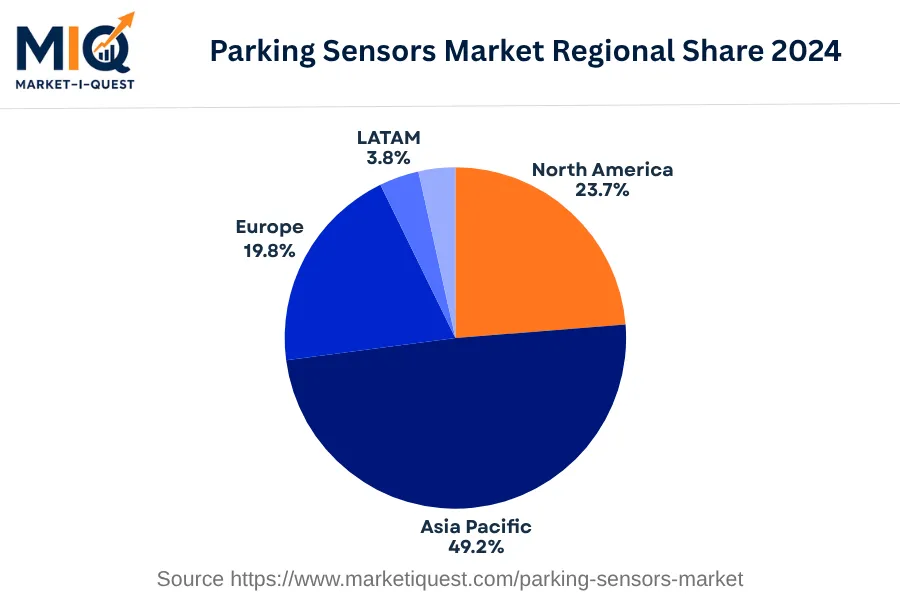
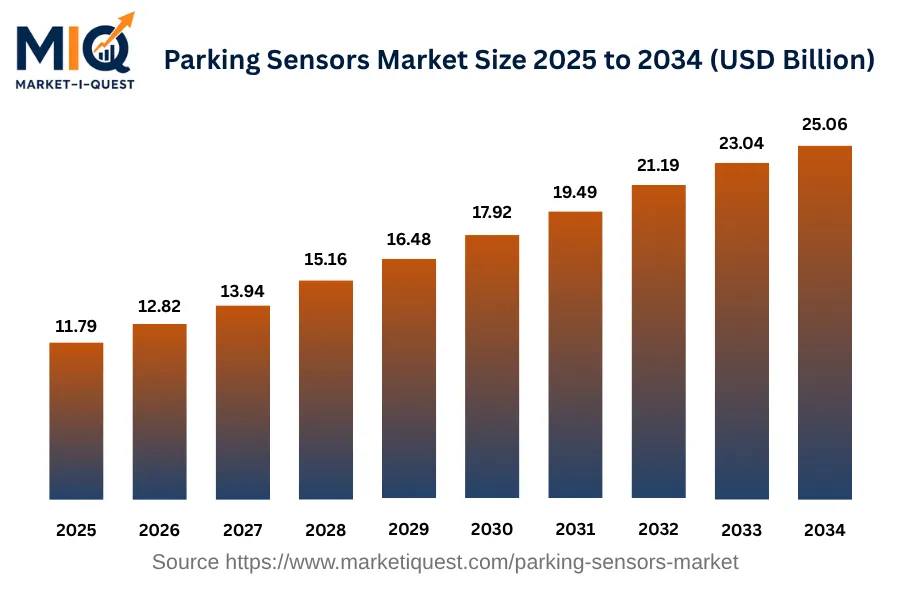
The Parking Sensors Market size was $10.84 billion in 2024 and rose to $11.79 billion in 2025. By 2034, the market size is projected to grow to $25.06 billion, implying a CAGR of 8.74%. This decade-long growth can be attributed to factors inherent in the data, such as the yearly increase in the market size. The market registered steady growth annually from 2025 to 2034, highlighting its stable expansion over these years. The regional share distribution in 2024 shows 23.7% of the market for North America, followed by Asia Pacific maintaining the dominant share at 49.2%. Europe held 19.8% of the market, while smaller shares were found in Latin America at 3.76% and the Middle East and Africa region at 3.48%.

Key Takeaways

  • By Technology - Ultrasonic sensors led the market with a significant share in the base year.
  • By Installation - OEMs held a predominant position in the last recorded year.
parking-sensors-market market size

Key Driving Factors

Escalation of Parking Spaces in Urban Settings

As urbanization continues its upward trend globally, the volume of vehicles also increases exponentially. Such a surge has heightened the pressure on parking spaces, particularly in bustling city centers. This pressure has led to a notable increase in multi-story and underground car parks where parking can be challenging for many drivers, leading to increased demand for parking sensors to help navigate these tight spaces. Property developers and architects, cognizant of this demand, now make allowances for parking sensors in modern parking facilities, which has become a substantial driving factor for the market.

Integration with Advanced Driver-Assistance Systems (ADAS)

The inclusion of parking sensors in advanced driver-assistance systems (ADAS) is significantly driving the market. Automotive manufacturers are increasingly incorporating ADAS in new vehicle models as these systems offer various features to help drivers, including lane sensing, automatic braking, and proximity alerts. As part of ADAS, parking sensors provide critical data about the car's immediate environment, helping prevent accidents during the parking process. This safety feature has become a significant selling point, especially in high-end vehicle models. As a result, the intensifying trend of ADAS incorporation in new vehicles has been an influential factor in the promotion and expansion of the parking sensors market.

Market Evolution by Timeline

2019-2023
During this period, most buyers of parking sensors were car manufacturers like BMW, Toyota, and Ford. The US and Europe were the leading demand regions due to high rates of car purchases. Ultrasonic sensors were popular. Yet, image parking sensor technology (for rearview cameras) was emerging as well. Regulations like the US NHTSA mandate for rear visibility systems in all new vehicles fueled the demand. Typical pricing models were supply contracts whereby manufacturers locked in long-term, volume-based deals. Manufacturers struggled with integrating sensors smoothly into vehicles, hence aesthetic issues. There were no uniform standards in sensor technology.
2024
In 2024, the demand for parking sensors grew in emerging markets like India, China, and Brazil as car ownership increased. Adoption of the Internet of Things (IoT) began to be seen in parking sensors for remote access. However, this raised concerns about cybersecurity, hindering widespread adoption. The market saw the introduction of MEMS-based sensors, offering precise detection and reduced size compared to ultrasonic sensors. The price competition was fierce, and strategic tie-ups between sensor and vehicle manufacturers became common to share costs and risks.
2025-2029
Advanced parking guidance systems were the norm in this timeframe. The use cases expanded from personal cars to commercial vehicles and public transport systems. Technological integration between sensors and cars improved significantly, reducing design constraints. Governments globally started enacting regulatory norms to ensure parking safety -- a key driver of sensor adoption. Strategic partnerships between sensor manufacturers and automotive firms persisted as a common commercial model. Cybersecurity remained a concern, though manufacturers made strides toward improving device and data security.
2030-2034
Autonomous vehicles began driving the parking sensors market during these years. Most buyers of sensors were manufacturers of smart and self-parking systems. Demand was driven by urban drivers who valued utility and convenience in parking functions, particularly in densely populated regions. The market expanded further as applications diffused into traffic management and smart cities initiatives. Sensor technology evolved to integrate AI for learning parking patterns, enhancing system efficiency. Standards for sensor technology were widely accepted and adopted, providing a level playing field. Cybersecurity concerns were addressed more systematically, though some risk remained.

Future Market Outlook

Future Opportunities

The current emphasis on smart city initiatives worldwide is paving the way for significant opportunities in the parking sensors market. Cities such as Singapore and Barcelona have implemented smart parking solutions that utilize sensor technology to guide drivers to available spaces efficiently. This deployment not only reduces congestion but also improves urban air quality by minimizing vehicle idling. The European Commission's Urban Mobility Initiative encourages cities to pilot smart parking solutions as part of broader sustainable urban mobility plans, offering a platform for sensor technology expansion. Companies like ParkMobile and INRIX are positioning themselves to exploit these opportunities by developing applications that leverage real-time sensor data for enhanced user experience. In North America, the adoption of electric vehicles is driving demand for dedicated parking solutions that accommodate EV charging stations integrated with parking sensors. These innovations are critical as legislative measures in California and New York aim to expand EV infrastructure by 2025. Additionally, partnerships between tech firms and automotive manufacturers are fostering the development of sensor systems that integrate seamlessly with navigation software, enhancing user convenience while optimizing parking resource allocation. As sustainability becomes a central theme in urban development, parking sensors that offer multifunctionality and connect with broader smart city frameworks will become essential tools for urban planners.

Segmentation Analysis

By Technology

The market is divided into subsegments including Ultrasonic and Electromagnetic technologies. Ultrasonic technology accounted for the largest revenue share, while Electromagnetic technology is projected to grow at the fastest CAGR during the forecast period.

Largest Revenue Share

Ultrasonic

Market Share Leader

Ultrasonic technology has dominated the technology sector in terms of revenue generation. This supremacy can be attributed to its widespread acceptance across various industries. It offers benefits such as high accuracy, efficiency, and repeatability, making it a preferred choice among various end users. It's popular in sectors such as healthcare, automotive, and industrial processes due to its ability to provide precise and reliable results leading to improved productivity. Geography-wise, it's acceptance is widespread, with strong presence in developed markets such as North America and Europe due to their advanced industrial setup. Developing regions such as Asia-Pacific also show significant adoption of ultrasonic, with growing industrialization and technological advancements. Regulations also favour the use of ultrasonic technology due to its non-invasive nature and low health risks. High switching costs also ensures that customers who have made the initial investment in ultrasonic technology stay committed to it. This, combined with reliable and efficient distribution channels, ensures a continuous demand for ultrasonic technology in the market.

Fastest CAGR

Electromagnetic

Forecast Period Growth Leader

The fast-growing CAGR of the Electromagnetic subsegment is an evidence of its gaining popularity. There are plenty of reasons why this subsegment is expected to see an impressive growth. Firstly, the rapid advancements in technology have paved the way for the development of advanced electromagnetic tools that have proven highly efficient. In addition, an increase in adoption of electromagnetic technology is seen in fields that are looking for non-invasive methods of inspection and measurement. Moreover, the capital expenditure involved in upgrading to electromagnetic technologies is justifiable due to increased efficiency and accuracy they offer. Regulatory support encouraging non-invasive methods also serve as a catalyst for its growth. That said, large-scale implementation of electromagnetic technology still faces barriers such as lack of skilled professionals and high upfront costs. It would be essential for manufacturers to address these issues to ensure sustained industry growth. However, the trends indicate a promising future for the electromagnetic subsegment.

By Installation

The market is segregated into OEM and Aftermarket subsegments. The OEM subsegment registered the highest revenue in 2024, whereas, the Aftermarket subsegment is poised for the quickliest growth in the future.

Largest Revenue Share

OEM

Market Share Leader

The original equipment manufacturer (OEM) subsegment emerged as a prominent revenue generator in 2024. This can be attributed to the vertical integration strategies often employed by OEMs. These strategies typically involve controlling each stage of the production and distribution process, thereby improving efficiency and reducing costs. Moreover, OEMs generally have large-scale operations, which allow for the cost-effective procurement of raw materials, thereby further enhancing profitability. Geographically, growing demand in developing economies has been a significant driving factor behind the robust revenues of OEMs. This demand is fueled by rapidly expanding industrial sectors and infrastructural developments. Furthermore, from a regulatory perspective, governments worldwide have enforced stringent, industry-specific regulations, which OEM manufacturers are better equipped to adhere to due to their robust, in-house technical capabilities. Additionally, customers tend to favor OEM products because they provide quality assurance. The comparatively high switching costs for end-users and the widespread reach of OEM distribution channels have also contributed to this subsegment's substantial revenue generation.

Fastest CAGR

Aftermarket

Forecast Period Growth Leader

The Aftermarket subsegment stands as the fastest-growing sector within the market. Several driving factors contribute to this growth. Technological advancements and the integration of digital platforms and e-commerce into the aftermarket subsegment are leading to a transformation of traditional business models and supply chains, thereby facilitating growth. Furthermore, policy changes, such as the push for promoting sustainable practices, encourages the refurbishment and repair of existing products, which substantially favors the aftermarket subsegment. Despite these advantages, there exist certain adoption barriers such as the preference for original products and potential compatibility issues which aftermarket companies need to be aware of. However, capital investments into R&D and strategic partnerships with digital technology providers could potentially mitigate these barriers and accelerate the growth of the aftermarket subsegment. Buyers should be cognizant of the volatility of the market and the potential risks that abrupt technological changes or policy oscillations can pose to the sector.

Competitive Analysis

Key Market Players

Manufacturers / OEMs

Valeo
France
Bosch
Germany
DENSO
Japan

Key Suppliers & Raw Materials

Freescale Semiconductor
US
Texas Instruments
US
Tung Thih Electronic
Taiwan

Distributors, Integrators & Channel Partners

ADAS
UK
Parking Dynamics
UK
Garmin Ltd.
Switzerland

Porter’s Five Forces Analysis

The analysis explores competitive dynamics within the Parking Sensors Market.

Supplier Bargaining Power

Medium

Variety of suppliers present but dependability and quality influence choice heavily.

Buyer Bargaining Power

High

Many alternatives and low switching costs give buyers significant power.

Threat of Substitutes

Medium

Potential for alternative technologies and systems, but high installation difficulty limits threat.

Threat of New Entrants

Low

High capital expenditure and technical know-how create barriers to entry.

Competitive Rivalry

High

The market is saturated with significant competition among established firms.

Regional Analysis

Geographic market dynamics and growth opportunities across key regions

Global Market Outlook

parking-sensors-market market regional share

North America

In 2024, the North American market for parking sensors displayed significant dynamism, driven by increasing vehicle safety concerns, technology adoption, and stringent vehicle safety regulations. Rising demand factors included greater consumer awareness about vehicular safety aids like parking sensors and the inculcation of these technologies in mid-range vehicles to premium vehicles. There was significant investment in sensor technology developments, specifically in Canada and the U.S., where major automakers prioritized advanced driver-assistance systems.

Adoption of advanced parking sensor technologies, such as ultrasonic and electromagnetic sensors, experienced a surge, especially in densely populated urban areas. This was further influenced by partnerships between vehicle manufacturers and technology companies and a growing trend in the e-commerce sector where delivery fleets incorporated parking sensors for enhanced safety measures.

The automobile industry was the primary market customer, followed by the government sector adopting these technologies for their vehicle fleets. There was an increasing trend in retail, wherein consumers preferred vehicles equipped with advanced safety features like parking sensors. In terms of policy enforcement, the U.S. National Highway Traffic Safety Administration regulations and Canada Motor Vehicle Safety Standards played a significant role in standardizing the incorporation of parking sensors in new vehicles to minimize parking-related mishaps.

Asia Pacific

In 2024, the Asia Pacific parking sensors market shows a remarkable upturn, primarily driven by expanding vehicle fleets, growing urbanization, and advancements in sensor technology. Increasing congestion in burgeoning cities like Beijing, Delhi, and Jakarta has heightened the demand for compact, technologically enhanced vehicles, where parking sensors play a vital role. Government regulations in countries such as Australia, mandating the use of parking sensors to ensure road safety, has also bolstered the development of the market. Additionally, with cost-efficient production in countries like China and India, supply dynamics are favorably influenced.

As of 2024, robust trends are discernable in the Asia Pacific parking sensors market. A perceivable shift is visible in buyer preference towards ultrasonic sensors due to their proven accuracy and reliability. Notably, there’s been significant growth in the use of these sensors across the utility sector, particularly in automated parking systems. Furthermore, strategic collaborations, as seen between renowned entities like Hyundai and Aptiv, have augmented the market growth, particularly in South Korea and Japan. The enforcement of vehicular safety norms by bodies like China’s MIIT is shaping the standard requirements, directly impacting the adoption of advanced sensor technologies.

Europe

In 2024, the European Parking Sensors Market witnessed significant traction due to various drivers and evolving trends. Several drivers catalyzed market growth, including the surge in automobile production and sales, stringent safety regulations from the European Union, and an increasing investment in parking infrastructure. Furthermore, the growing demand for luxury vehicles equipped with advanced sensors across Germany, the UK, France and Italy fuelled the market growth.

The evolving trend of autonomous vehicles in Europe significantly contributed to the market evolution. Buyer preference for vehicles with integrated advanced sensor technology showed a progressive swing in Spain, the Nordics, Benelux, and Central & Eastern Europe, also driving up the demand for parking sensors. In 2024, the rise in strategic collaborations between sensor manufacturers and automotive OEMs to create cost-effective solutions played an enhancing role in market development.

Sectors that saw substantial demand included enterprise and retail, with both sectors investing heavily in automated parking systems to improve parking efficiency and ensure user safety. These developments reflected a larger trend towards the adoption of smart city infrastructure initiatives within urban areas of Europe, where the application of advanced sensor technologies emerged as an integral component. This increased adoption has positioned the Parking Sensors Market as an essential part within the European automotive sector in 2024.

Latin America

In 2024, the Latin American (LATAM) parking sensors market experienced remarkable growth amid rising demand and technological innovation. With major economies including Brazil, Mexico, Argentina, Colombia, Chile, and Peru increasingly adopting smart city solutions, a heightened need for efficient parking management systems was observed. Government regulations promoting improved road safety standards stimulated the widespread adoption of parking sensor technology. Various investments in infrastructure development and urban planning favorably influenced supply dynamics, while the introduction of advanced parking sensor technology appealed to a price sensitive market.

Shifting consumer behavior trends indicated a growing preference for vehicles equipped with advanced driver-assistance systems (ADAS), including parking sensors, particularly in urban areas. A notable shift in the automotive industry was observed, with the majority of vehicle manufacturers integrating these sensors into their offerings, thereby impacting product dynamics in the LATAM market. Strategic partnerships among automotive and technology firms surged, indicating a growing trend towards collaboration and integration for better products.

Across sectors such as enterprise, government, manufacturing, and retail, the application of parking sensors gained significance given their ability to decrease operational costs and enhance safety. In particular, the retail sector witnessed a surge in deployment of parking sensors for efficient space management in densely built shopping centers. Overall, the LATAM parking sensors market in 2024 reflected an ecosystem adapting to meet technological advancements and ever-increasing urbanization demands.

Middle East & Africa

In 2024, the Parking Sensors Market in the Middle East and Africa signified significant advancements in the automotive sector, primarily fueled by an increasing focus on road safety and streamlined urban mobility. Notably, the sector's growth was driven by technological adoption, with leading markets such as South Africa, UAE, and Saudi Arabia investing heavily in advanced sensor technologies. Demand surged, attributed primarily to the rise in luxury vehicle fleets and traffic congestion in cities like Riyadh and Dubai. Regulatory pressure for safer and efficient parking also informed this growth, with nations like Israel and Egypt enforcing safety standards that necessitated parking sensor utilization. Additionally, competitive pricing dynamics contributed to the expanding market within the budget vehicles segment, particularly in Kenya and Nigeria.

Trends included a shift in buyer behavior, favoring vehicles equipped with advanced sensor systems, denoting an increased consumer awareness regarding vehicle safety. There was also a discernible rise in partnerships among manufacturers, tech firms, and car brands to enhance parking systems. Moreover, channel dynamics revealed a preference for digital interfaces for purchasing sensors. For instance, the online platform Souq in UAE became a major parking sensor distributor. Lastly, policy enforcement across sectors, such as utilities and telecom, led to a broader market penetration. For example, corporate fleets governed by entities like South African Telecom integrated parking sensors to ensure compliance, and to streamline operations.

Recent Industry Developments

Latest market innovations, product launches, and strategic initiatives

June 2026

Robert Bosch GmbH unveiled its next-generation fifth-generation ultrasonic sensor platform. The module fuses ultrasonic wave data with short-range radar input into a single localized Electronic Control Unit (ECU), allowing automatic vehicle parking algorithms to accurately detect low-reflectivity obstacles, high curbs, and pedestrians down to $2\text{ cm}$ proximity.

Frequently Asked Questions