Parenteral Nutrition Market Snapshot

Key Players

  • B. Braun Melsungen AG (Germany)
  • Fresenius Kabi AG (Germany)
  • Baxter International Inc. (USA)
  • Otsuka Pharmaceutical Co. Ltd. (Japan)
  • Grifols
  • S.A. (Spain)
  • Allergan Plc. (Ireland)
  • Actavis Plc. (USA)
  • Vifor Pharma (Switzerland)
  • Pfizer Inc. (USA)
  • Sichuan Kelun Pharmaceutical Co. Ltd. (China)

Market Size

Base Year 2024
$8.62 Bn
CAGR
6.73%
Forecast 2034
$16.53 Bn

Market Segments

By Nutrient Type
Carbohydrates, Parenteral Lipid Emulsion, Single-Dose Amino Acid Solution, Trace Elements, Vitamins & Minerals
By Stage Type
Adult, Pediatrics
By Indication
Pediatrics, Alzheimer's Disease, Nutrition Deficiency, Cancer Care, Diabetes, Chronic Kidney Diseases, Orphan Diseases, Dysphagia, Pain Management, Malabsorption/GI Disorders/Diarrhea, Others
By Sales Channel
Online, Retail, Institutional

Market Dynamics

Drivers
  • Increasing malnutrition cases
  • Advanced healthcare facilities
Restraints
  • High treatment costs
  • Risks of complications
Opportunities
  • Growing healthcare sector
  • Increasing malnutrition cases

Market Size

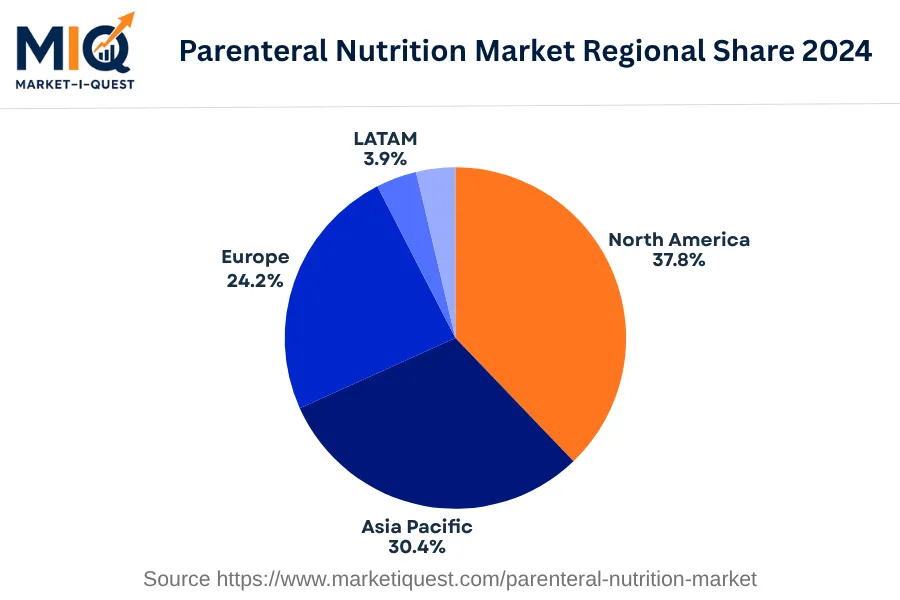
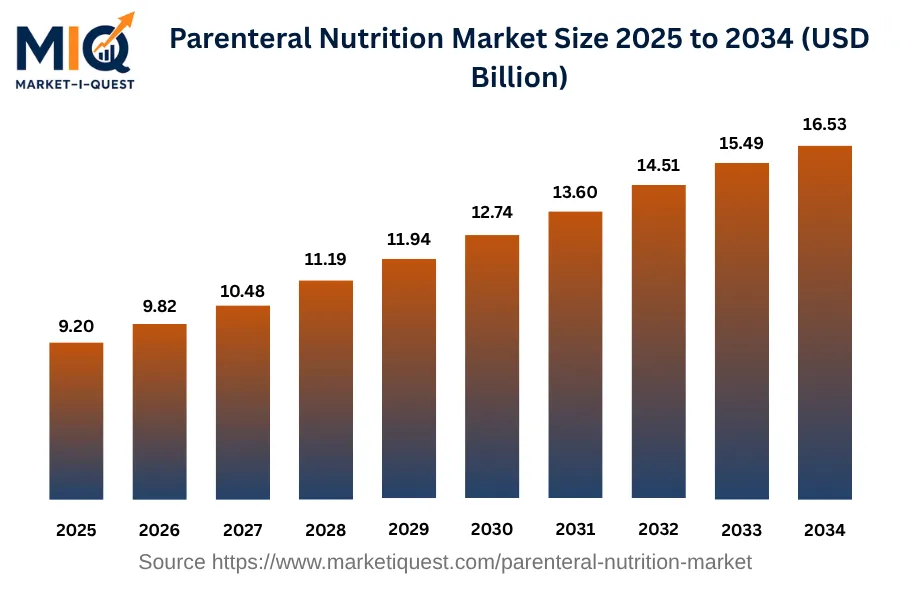
The Parenteral Nutrition Market, at a size of USD 9.20 billion in 2025, will increase to USD 16.53 billion by 2034, growing at a CAGR of 6.73% during this period. The growth path from 2025 to 2034 indicates a constant upsurge with a considerable increase in the market size over the years. This expansion is primarily due to the increasing reliance on parenteral nutrition methods as an alternative means to orally ingesting nutrients. Advancements in parenteral nutrient compound mixtures and delivery systems have made this method more safe, reliable, and efficient, contributing to its increasing adoption in clinical treatments and healthcare facilities. The market share in 2024 was distributed as follows: North America held the largest share with 37.8%, followed by Asia Pacific at 30.4%, Europe at 24.2%, Latin America at 3.9%, and the Middle East and Africa at 3.7%.

Key Takeaways

  • By Nutrient Type - Carbohydrates held a leading position in 2024 accounting for a significant market share.
  • By Stage Type - Adults led the market accounting for a majority share in the same year.
  • By Indication - Diabetes took the lead representing a notable portion of the market in 2024.
  • By Sales Channel - Retail was the dominant sales channel in 2024 accounting for the highest market share.
parenteral-nutrition-market market size

Key Driving Factors

Increase in Malnutrition Cases

One highly specific factor that's driving the parenteral nutrition market is the increase in malnutrition cases especially among critically ill patients. Malnourished persons who cannot intake sufficient nutrition orally or through enteral feeding are often administered parenteral nutrition. This is often seen among critically ill patients in hospitals including those suffering from gastrointestinal diseases, cancer, and other severe illnesses. As the number of these cases rise, owing to factors like rising populations and spread of life-threatening diseases, the demand for parenteral nutrition also increases. This thereby bolsters the market growth and encourages manufacturers to produce more of these nutritional products.

Stricter Regulatory Norms for Food Safety

Another specific driving factor for the parenteral nutrition market is the enactment of stringent food safety regulations. Regulatory bodies like the U.S. Food and Drug Administration, and European Medicines Agency have established strict guidelines on production, handling, and distribution of parenteral nutrition, aiming to ensure safety and efficiency. As a result, healthcare providers are compelled to procure high-quality, regulatory-compliant products for patient safety, which boosts the demand in the market for parenteral nutrition. Companies in this market are thus spurred to adhere to the guidelines and emphasize quality and effectiveness in their offerings, further stimulating market growth.

Market Evolution by Timeline

2019-2023
In these years, hospitals were the dominant buyer segment in North America and Europe, driven by the rise in premature births and the lack of adequate oral nutrition. Major suppliers included Baxter International and Fresenius Kabi AG. The demand for single-dose amino acid solution increased as it minimized the chances of microbial contamination. Despite overall increase in demand, there were potential risks such as over-hydration and electrolyte imbalances. Regulatory norms like Quality Management System (QMS) ISO 13485 for the development and production of medical devices have influenced adoption.
2024
This year marked an increase in the usage of parenteral nutrition amongst patients suffering from chronic conditions such as cancer and diabetics, especially in Asia-Pacific regions due to an increase in malnutrition cases. Companies like B. Braun Melsungen AG experienced higher demand and initiated strategic partnerships with regional suppliers to boost production. However, complexities in clinical nutrition and high costs of treatment were the key concerns. The market saw a rise in annual pricing due to supply-chain disruptions caused by COVID-19.
2025-2029
During this timeline, the Middle East and Africa experienced a surge in demand due to increasing cases of malnutrition. Product innovations like lipid emulsions, which allow for a more balanced energy delivery, dominated the market. The supply was constrained, treating the issue companies like Allergan, Plc adopted partnerships and acquisitions as key strategies. Clinical trials were faced with regulatory hurdles as the US FDA reinforced safety protocols for intravenous nutritional products, impacting the commercial adoption and pricing.
2030-2034
The demand among geriatric population was noted to spike in this period, especially in developed countries as the elderly are frequently prone to eating disorders. Manufacturers such as Nestle Health Science have introduced advanced nutrient solutions involving high protein and low glucose. A shift towards decentralization of supply chain has been observed where local manufacturing units play a crucial role. However, shortage of certified health professionals for administering parenteral nutrition remained a practical blocker.

Future Market Outlook

Future Opportunities

The future of the parenteral nutrition market is expanding due to regulatory advancements and growing awareness of nutritional deficiencies among hospital patients. The 2021 launch of the World Health Organization's Global Nutrition Coalition aimed at addressing malnutrition has prompted healthcare providers to reevaluate dietary interventions for hospitalized patients. This aligns with the recent focus on enteral nutrition, as evidence suggests that a combination of enteral and parenteral methods may yield better outcomes, opening avenues for integrated solutions. Companies like Fresenius Kabi are currently exploring partnerships with healthcare institutions to increase the awareness of individualized nutritional approaches, thereby creating market demand. In 2022, the U.S. Centers for Medicare and Medicaid Services proposed updates to reimbursement policies that could encourage the use of advanced parenteral nutrition therapies in clinical settings. Furthermore, the aging population in regions such as Europe and North America is increasing the prevalence of chronic illnesses, leading to higher demand for tailored nutritional solutions. The ongoing research into novel formulations for specific medical conditions, such as obesity and metabolic syndrome, indicates a shift towards targeted therapies. With health authorities placing an emphasis on the role of nutrition in recovery, industry stakeholders are likely to invest in innovations and operational efficiencies that meet evolving clinical guidelines, thus solidifying the role of parenteral nutrition in modern healthcare management.

Segmentation Analysis

By Nutrient Type

The market is divided into subsegments including Carbohydrates, Parenteral Lipid Emulsion, Single-Dose Amino Acid Solution, Trace Elements, Vitamins & Minerals. Carbohydrates accounted for the largest revenue share while Single-Dose Amino Acid Solution is expected to grow at the fastest CAGR during the forecast period.

Largest Revenue Share

Carbohydrates

Market Share Leader

Carbohydrates, as one of the primary sources of energy, have dominated the nutrient type market. They are an integral part of a balanced diet and are widely used in a host of industries such as food, pharmaceutical, and animal feed, which contributes significantly to their market share. Demand from growing populations, particularly in developing regions, has enhanced revenue generation. Moreover, an expanding interest in sports and fitness has propelled the demand for sports nutrition products where carbohydrates are a key ingredient. Their use in the medical sector for patients needing a direct energy source also adds to this subsegment's market size. Lastly, their prolonged shelf life and stability during storage, alongside a wide range of sourcing options, play pivotal roles in making carbohydrates the subsegment with the highest revenue.

Fastest CAGR

Single-Dose Amino Acid Solution

Forecast Period Growth Leader

Foreseen with the fastest CAGR, the Single-Dose Amino Acid Solution subsegment is projected to thrive in the near future. A key driver behind this growth is the increasing health consciousness amongst consumers and an understanding of the benefits of amino acids in the human body. Widely used within the dietary supplement industry, their role in muscle recovery and growth has made them integral for fitness enthusiasts and athletes. Their ease of use in single-dose solutions elevates their desirable attributes. Furthermore, their application in parenteral nutrition for patients unable to consume nutrients through standard means has seen a significant rise which further boosts their potential. However, potential regulatory scrutiny over their production standards and falsely advertised benefits could temper its expected growth rate.

By Stage Type

The market is divided into subsegments including adult and pediatrics. The adult subsegment accounted for the largest revenue share while the pediatric subsegment is expected to grow at the fastest CAGR during the forecast period.

Largest Revenue Share

Adult

Market Share Leader

The adult subsegment leads in terms of revenue contribution largely due to its relative size and spending power. With changes in lifestyle patterns, increased health awareness, and the vast prevalence of chronic illnesses, this segment represents a major portion of the customer base in most geographical areas. Mature regulatory infrastructure, favorable reimbursement policies, and economies of scale in manufacturing have also added to the profitability and growth of this subsegment. Notably, factors like advanced surveillance and diagnostic systems, a variety of treatment options, and broad insurance coverage have made expenditure for adults more widespread in comparison to other segments. The purchasing patterns within the adult segment are largely driven by efficacy, safety, and cost-effectiveness of treatments or health solutions. Furthermore, the growing accessibility and adoption of digital health channels have boosted purchasing and delivery convenience, adding to the revenue strength of this segment.

Fastest CAGR

Pediatrics

Forecast Period Growth Leader

Despite the adult segment's current leadership in revenue, the pediatric subsegment is projected to witness the fastest CAGR. This growth can be primarily credited to increasing healthcare focus on children's well-being and advancements in pediatric care. Moreover, growing partnerships between healthcare providers and schools or children's organizations are promoting early diagnosis and treatment, leading to increased market share. Investments in pediatric research have resulted in significant improvements in technologies and treatments, lowering primary adoption barriers and fueling growth. That being said, although the pediatrics segment shows tremendous growth potential, near-term risks include the varying regulatory frameworks across regions and the higher costs associated with pediatric health. These might slow down adoption rates, especially in lower to middle-income regions. In conclusion, while this subsegment is faced with certain challenges, the overall growth trajectory looks promising due to the increasing focus on child health.

By Indication

The market is divided into subsegments including Pediatrics, Alzheimer's Disease, Nutrition Deficiency, Cancer Care, Diabetes, Chronic Kidney Diseases, Orphan Diseases, Dysphagia, Pain Management, Malabsorption/GI Disorders/Diarrhea, and others. In 2024, the Diabetes subsegment accounts for the largest revenue, while Orphan Diseases is projected to be the fastest-growing subsegment.

Largest Revenue Share

Diabetes

Market Share Leader

Diabetes, among all other medical conditions in segment_3, has the highest revenue attributed to it in 2024. This is primarily due to the sheer number of individuals affected by diabetes globally. Diabetes is a chronic illness affecting every age group, with an increasing prevalence particularly for type 2 diabetes. The need for daily or regular treatments drives the constant and high demand for diabetes care medications and devices, thereby generating substantial revenue. Furthermore, the global reach of diabetes contributes to its large market size. There is a demand in both developed nations, where the disease's prevalence is increasing due to lifestyle factors, and in developing nations, where awareness and diagnosis are improving. Moreover, technological advancements and innovation in diabetes care devices and the constant need for follow-ups and consultations support its substantial revenue share.

Fastest CAGR

Orphan Diseases

Forecast Period Growth Leader

Contrary to diabetes, orphan diseases constitute a segment that is expected to grow at the fastest pace over the forecast period. Orphan diseases, although individually rare, collectively affect a vast number of people worldwide. The primary growth driver for the market is the unmet medical need for many of these diseases, as several remain without effective treatments. This situation stimulates intensive research, development, and commercialization of new therapies. Moreover, government incentives and policies aimed at promoting orphan drug development, like market exclusivity and tax credits, further expedite the growth. Simultaneously, partnerships between pharmaceutical companies and research institutions propel development efforts. However, high treatment costs and challenges in patient identification and diagnosis pose risks to the growth speed of this subsegment.

By Sales Channel

The market is divided into subsegments including Online, Retail, and Institutional, of which Retail accounted for the largest revenue share while the Online segment is expected to grow at the fastest CAGR during the forecast period.

Largest Revenue Share

Retail

Market Share Leader

The Retail sector is leading the market in terms of revenue, largely driven by its established presence, and customer buying patterns. The tendency of consumers to prefer touching, feeling, and trying products in brick-and-mortar stores before making a purchase decision solidifies Retail's significant market share. Moreover, physical stores in prime locations, coupled with experienced sales advisors, also contribute to their success, as they are able to provide personalized product suggestions based on their interaction with each customer. Retail stores also effectively employ visual merchandising techniques that potentially influence the purchasing decision of a customer. In emerging economies, Retail remains the primary mode of shopping for consumers due to limitations in internet penetration, digital literacy, and online payment infrastructure. Geographical advantages can be leveraged by strategically positioning retail stores throughout bustling cities and towns globally. There are also regular customers who have been patronizing specific retail stores due to trust, loyalty, and the switching cost—from sacrificing familiarity, convenience, and trusted product quality.

Fastest CAGR

Online

Forecast Period Growth Leader

The Online segment, although not currently the revenue leader, has the fastest growth outlook. Digitization, internet penetration, convenience, and changing consumer preferences are the primary drivers for this rapid growth. The comfort of shopping from home, having a variety of choices, and the flexibility of time are significant benefits that make online shopping appealing for the new generation of consumers. Also, technological advancements like Augmented Reality (AR), Virtual Reality (VR), and superior mobile payment security are expected to accelerate this growth rate. However, trust and physical verification of products remain barriers for many consumers, mostly in developing economies. Policies fostering cybersecurity, digital literacy, and stable high-speed internet are needed to expedite the online market adoption, while partnership with local retail outlets can handle logistics and returns seamlessly, mitigating risks related to delayed shipping and order cancellations.

Competitive Analysis - Parenteral Nutrition Market

Key Market Players

Manufacturers / OEMs

Baxter International Inc.
US
Fresenius Kabi AG
Germany
B. Braun Melsungen AG
Germany

Key Suppliers & Raw Materials

KP Pharmaceutical Technology
US
American Regent, Inc.
US
Huangshi Nihong Pharmaceutical Co, Ltd.
China

Distributors, Integrators & Channel Partners

Cardinal Health
US
McKesson Corporation
US
KeySource Medical, Inc.
US

Porter’s Five Forces Analysis

This analysis explores the competitive intensity and attractiveness of the Parenteral Nutrition Market.

Supplier Bargaining Power

High

Few providers of unique, complex parenteral nutrients increase supplier power.

Buyer Bargaining Power

Low

Critical nature of products and lack of alternatives limit buyer bargaining power.

Threat of Substitutes

Low

Few substitute products due to stringent medical and health requirements.

Threat of New Entrants

Medium

High cost and regulatory barriers, offset somewhat by growing market demand.

Competitive Rivalry

High

Fierce competition among leading companies with high stakes for innovation.

Regional Analysis

Geographic market dynamics and growth opportunities across key regions

Global Market Outlook

parenteral-nutrition-market market regional share

North America

In 2024, the North American Parenteral Nutrition market experienced substantial growth primarily in the United States, Canada, and Mexico. Market drivers included increased demand due to the rising prevalence of chronic diseases, such as cancer and diabetes, which necessitated the use of parenteral nutrition methods. Additionally, advancements in infusion technologies reduced complications, promoting wider adoption. There was a rise in the regional healthcare investment for the procurement of sophisticated nutrition support therapies by hospitals and outpatient care centers.

As for trends, consumers exhibited growing preference towards home-based parenteral therapy, demonstrating the shift in patient care management from hospital settings to home care. The market saw new technologies, particularly in customized parenteral nutrition, which mitigated the risks of undernutrition and overfeeding. Furthermore, governmental policy prioritized regulation enforcement with strict monitoring of manufacturing and marketing practices to maintain product safety. There were significant partnership activities and mergers among healthcare providers and manufacturers aiming for expanded customer base and foothold in this market.

The key sectors driving the use of parenteral nutrition products included healthcare, particularly hospitals, outpatient care centers, and clinics, as well as homecare settings, whose needs became more prominent in the base year.

Asia Pacific

In 2024, the Asia Pacific Parenteral Nutrition Market experienced robust growth, largely driven by heightened demand, implementation of health regulations, and technology adoption. Growth drivers included the escalating requirements due to an ageing population and the rising incidence of chronic diseases in areas like China and India. Regulatory frameworks such as India's 'National Health Policy 2017' aided by boosting investments in healthcare infrastructure. Adoption of technologically advanced medical products amplified in markets such as Japan and South Korea due to rise in healthcare spending.

Trends observed comprised shifts in buyer behavior, product technology, and policy enforcement. Increased health consciousness instigated greater acceptance of parenteral nutrition amongst patients, particularly in Australia and ASEAN markets. Technologically advanced solutions took over conventional products, with amino acids and multivitamin infused parenteral nutrition gaining popularity. Strict enforcement of ASEAN's 'Pharmaceutical Harmonization Scheme', introduced standardization across the region, fostering product safety and quality.

Key sectors impacted included healthcare, with hospitals, clinics, and home healthcare providing the majority of the demand. The shift towards home-based treatments influenced the demand for parenteral nutrition solutions. The collaboration between manufacturers, healthcare providers, and policy makers, emerged pivotal in ensuring affordable and high-quality parenteral nutrition for all.

Europe

In 2024, Europe's Parenteral Nutrition Market reflected a mix of maturing sectors and emerging potential. Driving this market were a number of factors, chiefly the growing geriatric population and evolving healthcare dynamics in the region. Countries like Germany, the UK, and France evidenced an increasing need for bespoke healthcare solutions, especially for ageing citizens with particular dietary needs. Additionally, innovations in medical technology were widely adopted in these regions, elevating the ease of administering parenteral nutrition. However, pricing remained a critical aspect, placing pressure on manufacturers to provide quality solutions at affordable rates.

Prevailing trends in 2024 pointed towards an increasing consumer preference for home-based healthcare services, including parenteral nutrition. This, coupled with advances in technologies related to telehealth, transformed the way these services were provided, particularly in Italy, Spain, and the Nordics. Partnerships and M&A activities among Europe's healthcare providers gained traction, especially in the Benelux region and Central & Eastern Europe. Meanwhile, regional policies enforced with an aim to ensure quality standards moulded the market dynamics.

Parenteral nutrition became a crucial arm of the healthcare sector in 2024, catering to a variety of clients such as hospitals, homecare services, and private clinics, indicating a profound transformation in Europe's healthcare dynamics.

Latin America

In 2024, the Parenteral Nutrition Market in Latin America (LATAM), particularly in key economies such as Brazil, Mexico, Argentina, Colombia, Chile, and Peru, grew significantly due to various drivers and prevailing trends.

Drivers contributing to market expansion included increasing healthcare investments, a surge in chronic disease cases, and advancements in parenteral nutrition. Governments across the region allocated more resources towards healthcare to meet increasing demand, specifically in Brazil and Mexico. An upsurge in chronic diseases like cancer and diabetes boosted the consumption of parenteral nutrition in Argentina and Chile, where such conditions are prevalent. Lastly, Colombia saw advancements in parenteral nutrition technology related to customization and administration, enhancing its adoption across the region.

Simultaneously, certain trends shaped this market. The increasing preference for home healthcare over hospitalization, driven by cost-effectiveness, independence, and convenience, steered more patients towards parenteral nutrition systems that can be used at home. Moreover, the rise of e-pharmacies in Peru facilitated the greater accessibility of these products. Lastly, large pharmaceutical firms across LATAM started partnering with local companies to foster growth and meet the regional demand, exemplified by strategic collaborations in Brazil and Argentina.

The primary sectors contributing to this growth were healthcare and retail, including online platforms, with chronic disease patients representing a considerable proportion of end users.
Middle East & Africa

In 2024, the Parenteral Nutrition Market in the Middle East and Africa presented significant growth driven by various factors and trends. Underpinning this expansion was a rising demand due to increasing cases of malnutrition stemming from chronic diseases and escalating surgical procedures particularly in nations like South Africa, Kenya, and Nigeria. Adoption of advanced healthcare technologies, alongside increased funding and investment from regional governments such as Saudi Arabia and United Arab Emirates, further propelled market growth.

Moreover, policies promoting high nutritional standards in healthcare facilities actively influenced the market landscape. A key trend shifting the market dynamics was the predominant preference for amino acid-based parenteral nutrition solutions, largely leveraged by the healthcare sector.

Channel dynamics were marked by partnerships between local hospitals and international parenteral nutrition manufacturers with aim to enhance supply chain efficiency. For instance, Israeli hospitals partnered with leading manufacturers to secure steady supplies. However, stringent regulations and policy enforcement, especially in countries like Egypt and Qatar, have created challenges for international and local suppliers in the market.

Despite these hurdles, the parenteral nutrition market managed a solid footing in the Middle East and Africa in 2024, thanks largely to increased governmental support and advancements in healthcare technology.

Recent Industry Developments

Latest market innovations, product launches, and strategic initiatives

March 2026

Global pharmaceutical manufacturers (including Fresenius Kabi and Baxter International) accelerated the deployment of standardized, ready-to-use multi-chamber bag (MCB) systems. These multi-compartment designs isolate amino acids, dextrose, and lipid emulsions until activation, significantly reducing microbial contamination risk and bedside compounding errors.

Frequently Asked Questions