Palm Vein Biometrics Market Snapshot

Key Players

  • Fujitsu Limited (Japan)
  • M2SYS Technology (United States)
  • PalmSure (United Kingdom)
  • Biyo (United States)
  • PalmSecure (Japan)
  • Mantra Softech (India)
  • Biometría Aplicada (Mexico)
  • Matrix Comsec (India)
  • IdentyTech Solutions (United States)
  • Precision Biometric (India)

Market Size

Base Year 2024
$1.18 Bn
CAGR
21.63%
Forecast 2034
$8.36 Bn

Market Segments

By Technology
Contact-Based, Contactless, Hybrid
By Component
Hardware, Software, Services
By Application
Healthcare, Banking, Security Systems, Automated Attendance
By End Use
Commercial, Government, Residential

Market Dynamics

Drivers
  • Rising concern for security
  • Technological advancements in biometrics
Restraints
  • High Implementation Cost
  • Privacy Concerns
Opportunities
  • Increasing security concerns worldwide
  • Growing demand for contactless biometrics

Market Size

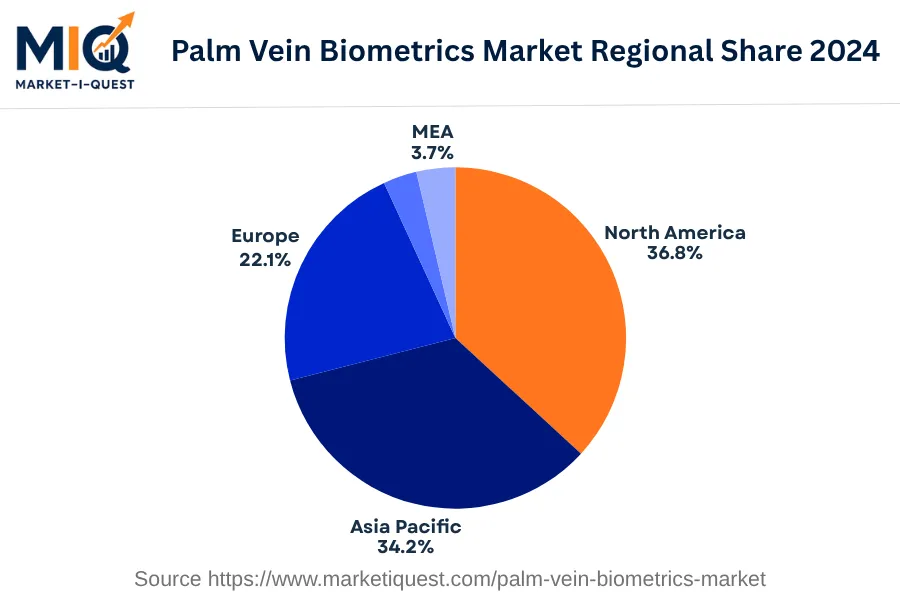
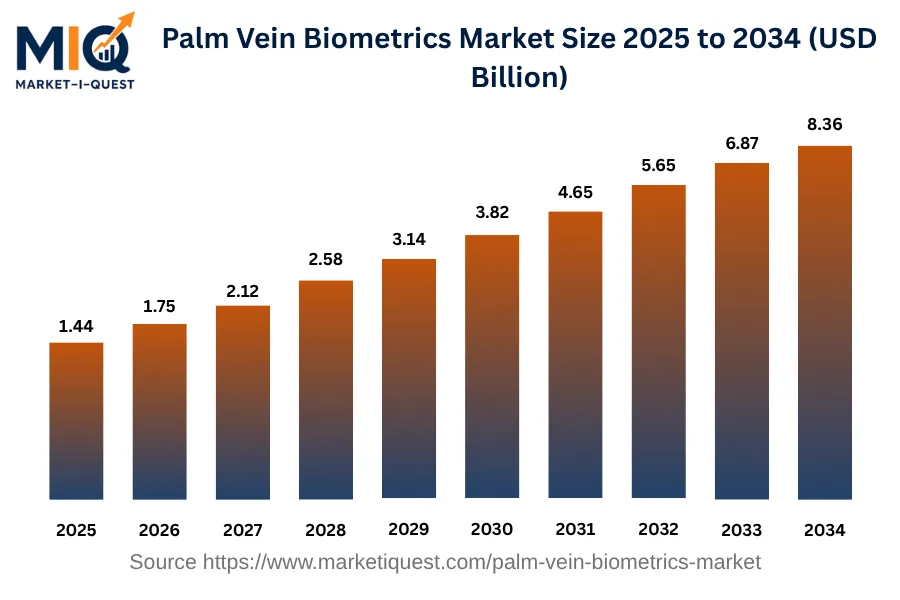
The Palm Vein Biometrics Market size is slated to increase from USD 1.44 billion in 2025 to USD 8.36 billion by 2034, recording a CAGR of 21.6%. This substantial increase over the 9-year period indicates a strong and steady growth in the market size. Factors contributing to this escalation include a rise in adoption of palm vein biometrics technology due to its unique and superior aspects, such as high accuracy rates and its contactless nature, thus enforcing strong penetration rate into the market. Moreover, the demand for advanced security solutions in various industry verticals further propels this market growth. Regional distribution of the market share in 2024 illustrated North America with 36.8%, followed closely by the Asia Pacific region at 34.2%, Europe at 22.1%, LATAM at 3.2%, and MEA at 3.7%. This distribution signifies the areas of major uptake and implementation of the palm vein biometrics technology.

Key Takeaways

  • By Technology - Contact-Based led in the Palm Vein Biometrics Market accounting for a significant share in 2024.
  • By Component - Hardware held a dominant position proving to be the most utilized in 2024.
  • By Application - Healthcare was the top sector leading the utilization of Palm Vein Biometrics in 2024.
  • By End Use - Commercial sector accounted for the highest usage marking a high adoption rate in 2024.
palm-vein-biometrics-market market size

Key Driving Factors

Incorporation in Banking Security Systems

In the banking sector, customer authentication and fraud prevention are critical for daily operations. Palm vein biometrics technology is being incorporated into security systems to provide a higher level of certainty when authenticating users. This is in response to increased incidents of identity theft and fraud in the banking sector, particularly online. Palm vein patterns are unique to each individual and extremely difficult to duplicate, offering a robust form of biometric identification. As financial institutions continue to prioritize secure customer interactions, this unique technology is being adopted with increasing frequency.

Healthcare Data Security Compliance

In the healthcare sector, data security regulations such as the Health Insurance Portability and Accountability Act (HIPAA) in the U.S. mandate strong protection of patient information. Palm vein biometrics offer a solution to this compliance issue. This advanced technology presents a reliable method of patient identification, helping mitigate the risk of identity theft or mistakes. It's also non-contact, which is an added advantage in healthcare settings where hygiene is critical. This requirement for strict data security and identification accuracy in the healthcare industry is a key stimulant for the demand and adoption of palm vein biometrics.

Market Evolution by Timeline

2019-2023
In this period, the Palm Vein Biometrics market witnessed buyers from secure establishments like banks, government offices, commercial buildings mainly in regions like North America, Europe, and parts of Asia-Pacific. Supply came from tech giants, with Fujitsu, Hitachi, and M2SYS shipping variants of Palm Vein Scanners. Integration with existing infrastructure was a significant challenge. Regulatory bodies like the International Biometrics + Identity Association (IBIA) did not issue any specific directives affecting adoption. Price competition was high, with multiple vendors offering similar products, and contracts typically involved yearly maintenance and updates. The biggest risk faced was the reluctance of the public to adopt a relatively invasive technology, countered by vendors with awareness campaigns focusing on the high degree of security provided by the technology.
2024
In 2024, buyers continued to be chiefly from the financial sector, with measures being taken to enhance ATM security including obligatory installation of palm vein scanners. The main constraints related to the accuracy of scanners under different conditions, like poor lighting. No specific regulations influenced the market, but generic data privacy laws did play a part in shaping user acceptance. Vendors started offering services bundled with their hardware, as competition forced them to find new revenue streams. The risk of consumers rejecting the new technology remained, but with increased deployment, there was a decrease in user reluctance.
2025-2029
Buyers of the technology started to involve industries which were more public-facing, like hospitals and universities. Regions from the Middle East also began showing interest. Suppliers included new players, but there were also mergers and acquisitions by technology giants. Procurement was frequently through partnership deals—for example, Fujitsu partnered with BioSec to sell in the Middle East. The EU implemented the General Data Protection Regulation (GDPR), which mandated explicit consent for data collection, presenting an adoption challenge. Vendors attempted to address user privacy concerns through enhanced security protocols, with varying degrees of success.
2030-2034
As palm vein biometrics became more widespread, new buyer segments appeared, such as high-security residential complexes. Different countries from South America and Africa emerged as new markets. Continued improvements in the technology's firmware helped in better accuracy even in tough conditions. Major players started offering specialized biometric solutions for different industrial sectors. In response to the tech development, regulatory bodies enacted more explicit standards for user data collection and protection. Among the risks during this phase were concerns about potential breaches of biometric databases; manufacturers responded by improving encryption and data storage security.

Future Market Outlook

Future Opportunities

The ongoing shift towards contactless solutions and enhanced security measures presents significant opportunities for the palm vein biometrics market. Given the increasing need for secure authentication in the financial sector, banks such as Banco Santander are exploring palm vein technology to reduce fraud and streamline customer service. In 2023, the Transportation Security Administration (TSA) began evaluating palm vein recognition systems for passenger screening at airports, indicating a potential expansion of the technology in critical infrastructure. As e-commerce continues to grow, retailers like Amazon are likely to adopt biometrics for secure transactions, making palm vein technology appealing due to its low false acceptance rates. The rise of digital identity initiatives globally, such as India's Aadhaar system, exemplifies the demand for biometric solutions that ensure the verification of identities without physical contact. Furthermore, strategic partnerships, like that of Daon and the National Health Service in the UK, aim to incorporate biometrics into their operations, thus showcasing the integration potential of palm vein technology. The increasing emphasis on privacy laws worldwide, including the California Consumer Privacy Act, is expected to push firms to align their biometric systems with compliance standards, fostering a more secure environment for user data. Such trends highlight the essential role that palm vein biometrics will likely play in creating secure infrastructures while addressing the demand for privacy-conscious solutions.

Segmentation Analysis

By Technology

The market by technology is divided into subsegments including contact-based, contactless, and hybrid. In 2024, the contact-based subsegment accounted for the largest revenue share while the hybrid is expected to grow at the fastest CAGR during the forecast period.

Largest Revenue Share

Contact-Based

Market Share Leader

Contact-based technologies have accounted for the largest market share primarily due to their widespread adoption across numerous industries. These systems, which require a physical connection for data transfer, are recognized for their reliability and security features. Businesses value contact-based systems for their ability to handle a high volume of transactions efficiently, reduce the risk of data breaches, and provide solid performance under different conditions. Geographically, the adoption of contact-based technologies is higher in regions with strong infrastructure and mature markets like North America and Europe. The procurement for these devices is often handled directly by the customer or through dedicated channel partners, catering to a broad range of customers - from small companies to large corporations. Regulatory frameworks also favor the use of these systems, especially in sectors where transfer of sensitive information is involved. Still, since customers rely on the long-term functionality of these systems, the switching costs associated with this subsegment can be quite high, further cementing its position as the major revenue generator in the technology market.

Fastest CAGR

Hybrid

Forecast Period Growth Leader

The hybrid technology subsegment is expected to expand at the highest CAGR throughout the forecast period. This growth can be attributed to the flexibility and durability that hybrid technologies offer. These systems leverage the advantages of both contact and contactless technologies, providing businesses with robust and adaptable solutions. Businesses seeking to upgrade their systems without a complete overhaul may prefer hybrid technologies due to the associated lower capex. Barriers to adoption, such as high initial setup cost and technical complexity, are being gradually eliminated through policy initiatives promoting digital transformation and strategic partnerships between technology providers and user industries. Potential risks include dependence on evolving technologies and the need to hire or train staff to manage these blended systems. However, these concerns are outweighed by the augmented efficiency and adaptability of hybrid systems that make them a catalyst for growth in the technology market.

By Component

The market is divided into subsegments including Hardware, Software and Services. In 2024, Hardware continues to account for the largest revenue share, while Software is expected to experience the fastest growth in terms of CAGR throughout the forecast period.

Largest Revenue Share

Hardware

Market Share Leader

In the base year 2024, the Hardware subsegment leads the market in terms of revenue. This can be attributed to the continuous demand for physical technology components which are integral in setting up any technological solution. The customer base largely includes companies in various sectors that are strengthening their infrastructures to remain competitive. There is an increased purchasing priority for high functioning technology hardware due to the growing digital transformation trend across different geographies, regardless of the industry or size of the company. Regulatory dynamics also favor the hardware market as they encourage tech-infrastructure growth to accelerate the digital plan. Factors, such as durability, performance efficiency, brand reputation and after-sales service, play significant roles in purchase decisions. Owing to high switching costs and improved durability, there is a lower frequency of replacements.

Fastest CAGR

Software

Forecast Period Growth Leader

Despite Hardware leading in revenue terms, it is the Software subsegment that is expected to exhibit the fastest growth in the market. Rapid technological advancements have stimulated a growing demand for tech solution implementation, necessitating sophisticated software systems. Barriers to adoption include the perceived complexity of software solutions and fears of cybersecurity threats. However, stakeholders are increasingly acknowledging the indispensable utility of software applications in streamlining operations. Developments in technology, such as the advent of AI and machine learning, are powerful catalysts for growth. In the short-term, any proposed changes in data handling regulations or developments in cybersecurity could pose a risk to adoption rates. However, a growing emphasis on strategic partnerships and continual capital investments steadily increases the ease of software application across sectors.

By Application

The market is divided into subsegments including Healthcare, Banking, Security Systems, and Automated Attendance. Among these, Healthcare accounted for the largest revenue share, while Automated Attendance is expected to grow at the fastest CAGR during the forecast period.

Largest Revenue Share

Healthcare

Market Share Leader

The Healthcare segment secured the most significant revenue share in 2024. This outcome can be attributed to various factors. Rapid digital transformation has led to the increased adoption of new technologies in healthcare, necessitating more advanced and secure systems. Further driving healthcare's market lead is the world's growing and ageing population, making the demand for efficient and responsive health services more pressing. Additionally, government initiatives to digitize health records and increase interoperability among healthcare providers have also boosted the market size. The increased purchasing by both public and private healthcare systems, coupled with regulatory compliance requirements, have made it a substantial purchasing segment. Hence, the healthcare segment owes its pole position in terms of revenue to continuous technological advancements, demographic factors, and initiatives at the government level.

Fastest CAGR

Automated Attendance

Forecast Period Growth Leader

Automated Attendance is forecasted to be the fastest-growing subsegment. Ever-evolving technology and the increasing need for efficiency and accuracy in recording attendance across sectors act as significant drivers for this subsegment. The ongoing pandemic has further expedited demand due to a drastic shift towards remote working and learning scenarios. This unexpected change has pushed institutions and corporations to quickly adopt automated attendance systems for smooth and transparent operations. However, it is important to pay heed to the hurdles impending its growth, like the high installation costs and data security issues, particularly given the current remote working modus operandi. Future growth in this subsegment could be boosted by strategic partnerships, burgeoning advancements in AI and Machine Learning, reducing hardware costs, and open-source attendance management solutions.

By End Use

The market is divided into subsegments including Commercial, Government, and Residential. The Commercial subsegment accounted for the largest revenue share while the Residential subsegment is expected to grow at the fastest CAGR during the forecast period.

Largest Revenue Share

Commercial

Market Share Leader

In terms of revenue, the Commercial subsegment leads the market in 2024. This status can be attributed to several factors. Firstly, commercial establishments often require a higher capital investment, leading to larger revenue streams in the present scenario. Secondly, the high-frequency transactions and purchases prevalent in commercial settings contribute significantly to the revenue. These establishments often have larger footprint and operate across different geographies, leading to a broad customer base and significant market demand. Additionally, several commercial organizations have established long-term contracts with suppliers, further ensuring a steady inflow of revenue. Regulations favoring business operations, customer purchasing capabilities, and low operating and switching costs also stand as drivers of the Commercial subsegment's leading position. The predominant distribution channels further facilitate the revenue growth in this subsegment.

Fastest CAGR

Residential

Forecast Period Growth Leader

The Residential subsegment is projected to have the quickest growth rate. The rising trend of home modernization and the increasing inclination towards smart homes are significant catalysts propelling growth in this subsegment. Technological advances such as automation and IoT are becoming increasingly commonplace in residential settings, increasing adoption rates. Governmental policies encouraging energy-efficiency further bolster the adoption of advanced systems in the residential sector. While these are strong growth drivers, potential barriers include high initial capex and resistance to change or adopt new technologies. In the near-term, economic uncertainties and increasing competition provide risks. However, strategic partnerships with technology companies, service providers, and distributors could provide opportunities to overcome these obstacles and accelerate growth. It's worthy to note, though, the nature of residential demand could mean a more episodic revenue pattern, contrasting the steady revenue stream in the commercial segment.

Competitive Analysis

Key Market Players

Manufacturers / OEMs

Fujitsu
Japan
Hitachi
Japan
M2SYS Technology
US

Key Suppliers & Raw Materials

Infineon Technologies
Germany
Sony Corporation
Japan
Broadcom
US

Distributors, Integrators & Channel Partners

BioConnect
Canada
Idemia
France
NEC Corporation
Japan

Porter’s Five Forces Analysis

This analysis evaluates the competitive landscape of the Palm Vein Biometrics Market.

Supplier Bargaining Power

Medium

Market is reliant on a scant number of suppliers with specialized technologies.

Buyer Bargaining Power

Low

High switching costs and technical complexities limit buyer's bargaining power.

Threat of Substitutes

Low

There are limited substitutes given the unique accuracy of palm vein biometrics.

Threat of New Entrants

Medium

Technological and regulatory entry barrier exists but market growth lures new entrants.

Competitive Rivalry

High

Competition is high due to multiple established players and rapid technological advancements.

Regional Analysis

Geographic market dynamics and growth opportunities across key regions

Global Market Outlook

palm-vein-biometrics-market market regional share

North America

In the base year of 2024, the North American market for palm vein biometrics is notably dynamic. Increasing focus on enhanced biometric authentication driven by security concerns in various sectors, such as enterprise, government, and healthcare, significantly contributes to market momentum. Regulatory requirements for stringent authentication procedures further stimulate demand. Moreover, heavy investment in innovative biometric technologies can be observed, fostering both supply-side expansion and technology adoption.

The market showcases several discernible trends. A shift towards cloud-based solutions and mobile applications characterises buyer behaviour, triggered by the demand for greater flexibility and remote access. Notably, there's a growing emphasis on collaboration, seen from the surge in partnerships and M&As among key players aiming for broad-based growth strategies and shared technological capabilities. There is also a decisive push towards standardization within the sector, with policy enforcement mandating interoperable solutions to ensure functionality and integration across various platforms.

Application of palm vein biometrics is pronounced within certain sectors. The healthcare sector, for instance, has leveraged it extensively for patient identification, reducing medical errors. Government use includes border control and national identification. In the enterprise sector, it serves access control, time and attendance management, among other applications. This year, therefore, cruise lines and airlines are also investing in this technology to enable touch-free customer experience in their quest to improve passenger flow and security operations.

Asia Pacific

In 2024, the Palm Vein Biometrics Market in the Asia Pacific showcased dynamic growth centered on fast-growing digital economies. Drivers included India's push to promote its digitization strategy, stimulating demand for biometrics systems across its government departments. Further, China prioritized cybersecurity with vast investments in advanced biometrics, notably palm vein technology. Similarly, Japan's growing adoption of the technology in its high-growth sectors, including healthcare and retail, also contributed to the market surge.

Increasing smartphone penetration, combined with innovative partnerships among tech blue-chips like Samsung and Australian biometrics start-ups, witnessed a shift toward integrating palm vein technology into mobile applications. This tech shift also demonstrated a growing inclination toward handshake partnerships within key ASEAN markets, evidenced by the South Korean-Australian alliance on palm vein biometrics in retail finance.

The companies' growing demand for robust security led enterprise customers in manufacturing and utilities sectors to integrate palm vein biometrics into their infrastructures in Australia. In addition, healthcare institutions in China and Japan increasingly adopted palm vein biometrics fortifying secure access, marking a crucial trend in service-oriented sectors. It was also noteworthy that active policy enforcement for data privacy in key markets like India underlined the escalating importance of secure biometrics, thereby affecting the market dynamics significantly in 2024.

Europe

The Palm Vein Biometrics Market in Europe in 2024 witnessed notable dynamism. Demand was primarily driven by increased adoption in sectors such as healthcare, government, and retail where identity authentication is critical. Notably, stringent privacy laws like GDPR in the EU were instrumental in pushing organizations towards using such non-intrusive, highly secure biometric technologies. Moreover, substantial investment in R&D, particularly in countries like Germany and the UK, also catalyzed market growth.

A significant trend in 2024 was the shift towards seamless identity confirmation products incorporating this technology, a response to rising consumer demand for unintrusive, secure identification. Moreover, sectors such as banking in France, Spain, and Italy showed increased adoption as part of their multi-factor authentication process. There was also a discernible uptrend in partnerships and M&As, as observed in the collaborations between leading biometric tech companies and various enterprises in the Nordics and the Benelux region. An increase in policy enforcement pertaining to data security standards, especially in public sector services across Central & Eastern Europe, underscored this trend.

In the 2024 scenario, sectors such as government and healthcare were notable for their quick adoption of Palm Vein Biometrics, primarily for streamlining access and ensuring data confidentiality — crucial elements in these sectors. Overall, the market drivers and trends highlighted enhanced security needs and data privacy norms stimulating the Palm Vein Biometrics market.

Latin America

In 2024, the Palm Vein Biometrics Market in Latin America exhibited substantial growth in countries like Brazil, Mexico, Argentina, Colombia, Chile, and Peru. Increased demand for advanced security solutions in sectors such as government, healthcare, utilities, manufacturing, and retail drove this market expansion. Governments tightened their ID management regulations which fueled the adoption of this technology. Investments in digitizing services also influenced the market positively as institutions sought secure user verification methods. Technological advancements made palm vein biometrics more affordable which sparked a mass adoption trend.

Consumer preference for biometric applications expanded, changing the buyer behavior in favor of palm vein technology. An evident shift towards digitization, particularly in healthcare and retail sectors, embraced this technology for its accuracy and reliability. Partnerships between biometric solution providers and various sectors blossomed, expanding the market reach. Remarkably, the Mexican government instituted robust policy enforcement, leading to widespread implementation of this technology in public systems.

While larger enterprises were the primary adopters, sizable demand was also observed from small and medium-sized businesses. Healthcare providers, particularly in Brazil and Argentina, increasingly integrated palm vein biometrics for patient identification, contributing to the market growth. Market dynamism was fueled by a strong supply chain, driven by local solution providers and international players keen on exploiting growth opportunities in the region.

Middle East & Africa

The Palm Vein Biometrics Market in Middle East and Africa in 2024 experienced noteworthy developments primarily driven by increased security requirements, technological adoption, and government regulations. High demand for advanced authentication systems from government entities, financial services, healthcare, and oil and gas sectors significantly influenced the market rise. Investments in machine learning and artificial intelligence technology, especially in the United Arab Emirates and Saudi Arabia, further elevated market growth.

Adoption of palm vein biometrics in telecom, utilities, and retail sectors grew, primarily led by Saudi Arabia, UAE, and Qatar, enhancing the technology's commercial viability. In countries like Nigeria, South Africa, and Kenya, government-backed programs fuelled the adoption of this technology in the public sector. Egypt enacted strict data privacy laws, pushing businesses across sectors to use secure biometric systems including palm vein technology.

Trending in the market was the shift towards contact-less biometric solutions, primarily due to the COVID-19 pandemic. Also, partnerships and mergers characterized the market, enhancing technological advancements and broadening application areas. For instance, Israel, known for its cutting-edge technology sector, saw burgeoning partnerships between local tech companies and global biometric enterprises. Meanwhile, regulatory enforcement in data protection stimulated standardization across the market. Notably, the role of palm vein biometrics in customizing user experiences began emerging in the retail sector.

Recent Industry Developments

Latest market innovations, product launches, and strategic initiatives

September 2024

Tencent Cloud expanded commercial deployment of its hybrid palm print and vein recognition technology across transit gates and point-of-sale retail ecosystems in China.

Frequently Asked Questions