Paint Protection Film Market Snapshot

Key Players

  • 3M Company (United States)
  • Eastman Chemical Company (United States)
  • Avery Dennison Corporation (United States)
  • XPEL Inc. (United States)
  • Premiumshield (United Kingdom)
  • Saint-Gobain (France)
  • Hexis S.A. (France)
  • SWM International (United States)
  • Vvivid Vinyl (Canada)
  • Garware Suncontrol (India)

Market Size

Base Year 2024
$0.734 Bn
CAGR
6.82%
Forecast 2034
$1.42 Bn

Market Segments

By Type
  • Thermoplastic Polyurethane (TPU)
  • Polyvinyl Chloride (PVC)
  • Others
By Application
  • Automotive & Transportation
  • Electrical & Electronics
  • Aerospace & Defence
  • Others

Market Dynamics

Drivers
  • Increasing automobile production
  • Rising car aesthetics awareness
Restraints
  • High installation costs
  • Limited consumer awareness
Opportunities
  • Increased demand for luxury cars
  • Rising automotive aftermarket industry

Market Size

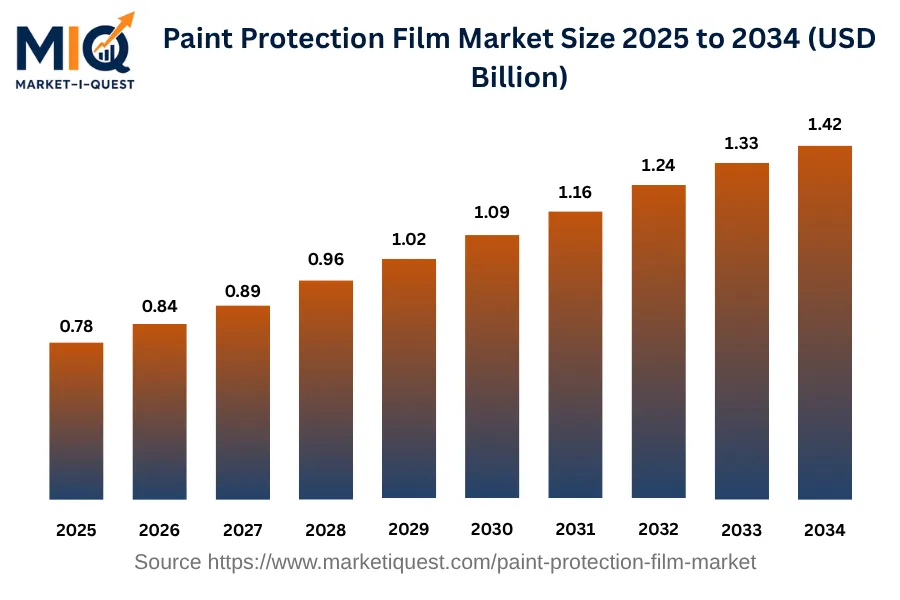
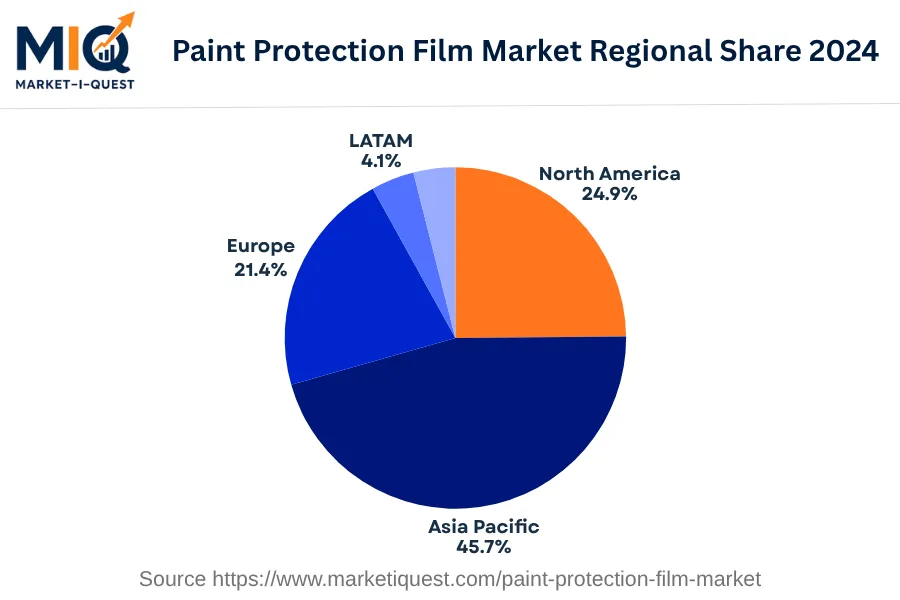
The Paint Protection Film Market was valued at USD 0.78 billion in 2025, and it is estimated to reach a size of USD 1.42 billion by 2034, growing at a CAGR of 6.82%. This market shows a steady growth, with the value increasing from USD 0.73 billion in 2024 to USD 0.78 billion in 2025. The increase in the market value is due to the growing automotive industry, attachment to luxury vehicles and increasing vehicle ownership worldwide. This market has a diverse regional distribution. In 2024, the market shares were as follows: Asia Pacific held the largest share of 45.72%, followed by North America with 24.86%. Europe had a substantial share at 21.38%, while Latin America and Middle East & Africa (MEA) had smaller shares at 4.08% and 3.96% respectively.

Key Takeaways

  • By Type -Polyvinyl Chloride (PVC) led the Paint Protection Film Market with the largest share in base year.
  • By Application - Electrical & Electronics segment held the top position in the Paint Protection Film Market during the base period.
paint-protection-film-market market size

Key Driving Factors

Surge in Automotive Sector's Premium Cars Production

The paint protection film market is notably influenced by an upsurge in the production of premium automobiles around the globe. High-end cars, both on the sports and luxury end, rely heavily on paint protection films. These clear-coat films are added as an aesthetic element to improve the car's look but are also used to prevent damage from stone chips, bug splatters, and minor abrasions – a primary concern for costly vehicle owners. If the exterior damaged, it could lead to high maintenance costs, significantly impacting overall vehicle cost. Consequently, manufacturers of these cars install paint protection films which, therefore, boosts the growth of the paint protection market.

Inclusion of Paint Protection Film in Aftermarket Services

Another significant driver for the paint protection film market is its widespread inclusion in the aftermarket services. Not all vehicles come with a pre-installed paint protection film straight from the manufacturing unit. As a result, car owners often opt to have the film applied post-purchase. Service stations and car wash centers have increasingly started offering application of paint protection films as a part of their services, recognizing the demand from vehicle owners. This demand is mainly due to the awareness among consumers about the long-term benefits, such as maintaining the paint's finish and enhancing the resale value, which furthers the growth of the paint protection film market.

Market Evolution by Timeline

2019-2023
In this period, paint protection films (PPF) saw a demand surge from auto retailers and individual vehicle owners in countries like the United States, China, India, due to the clear benefit of extending the lifespan of vehicle paint. Key manufacturers in these regions responded by shipping more PPF kits, especially the hydrophobic variant. Despite the high integration maturity, there were common concerns about bubble formations during installation, acting as a constraint. Policymakers started emphasising the use of eco-friendly manufacturing processes. Cost-plus pricing model was commonly adopted and agreements were usually done situational or on-demand. The risk lay in the unreliability of installation proficiency which could deter potential users, and manufacturers relied on distribution of self-installation guides to combat this.
2024
2024 witnessed the rising popularity of ceramic-based films which garnered attention in regions like Europe and Japan. The major advantage being better resilience. The technology allowed incorporation of ceramic particles into the film, was still in its pilot phase with a few shipments. Certain regions encouraged nano-ceramic PPF with fewer VOCs. Manufacturers mostly offered these products at premium prices and established partnerships with luxury car dealers. The key risk remained the premium pricing structure that could limit the customer-base and manufacturers reportedly offered flexible payment plans to counteract.
2025-2029
Auto detailing businesses in Middle East and Southeast Asia responded positively to PPF demand. Majority of shipments were self-healing films which regained original form through heat exposure. However, hot-climate regions reported loss of self-healing functionality as a common issue. New industry standards emerged to combat cheap substandard films. Fixed rate contract types dominated the market. Manufacturers and large scale customers often opted for long-term agreements to ensure supply consistency. Main risk was the rise of low-priced, substandard products, and this led to a stricter product certification process.
2030-2034
Vehicle owners in densely populated cities showed a higher demand for PPF due to the prevalence of minor scratches and paint chips. Graphene-based PPF emerged where key manufacturers shipped it in regions like North America and Europe. Despite the technology's high performance promises, overall adoption was slow as graphene films were more expensive. The evolution of regulations pressuring manufacturers to reduce carbon footprints was also a key trend. Performance-based pricing became more common. Manufacturers were concerned about the readiness of the market to accept graphene-based PPF, hence selective pricing strategies were used.

Future Market Outlook

Future Opportunities

The paint protection film market is positioned for significant growth as manufacturers respond to evolving consumer trends and regulatory landscapes. The ongoing shift toward electric vehicles (EVs), accelerated by policies supporting sustainable mobility in countries like Norway, presents a unique opportunity for paint protection film solutions tailored to the needs of EV owners. As of 2023, various automakers, including Tesla and Rivian, are designing vehicles with minimalist exteriors that are prone to damage, driving demand for protective films that maintain aesthetics and functionality. Furthermore, the rise of online retail platforms has facilitated easier access to paint protection film products, allowing consumers to engage with brands like Precut and Install to select films that meet their specific needs. This trend suggests a need for brands to enhance their digital presence and optimize e-commerce strategies. The growing popularity of DIY installation kits also indicates a shift toward consumer empowerment, where individuals seek easy solutions while learning through guided video tutorials. Additionally, collaborations between automotive and film manufacturers could yield tailored solutions for manufacturers offering proprietary film services alongside new vehicle launches. Recent partnerships between film producers and customization shops will likely streamline distribution and enhance product offerings. Altogether, these trends suggest that increasing consumer awareness regarding the protective and aesthetic benefits of paint protection films will nurture the market's expansion through innovative offerings and enhanced consumer interaction strategies.

Segmentation Analysis

By Type

The market is divided into subsegments including Thermoplastic Polyurethane (TPU), Polyvinyl Chloride (PVC), and others. PVC accounted for the largest revenue share while Thermoplastic Polyurethane (TPU) is expected to grow at the fastest CAGR during the forecast period.

Largest Revenue Share

Polyvinyl Chloride (PVC)

Market Share Leader

Polyvinyl Chloride (PVC) is leading the market in revenue generation owing to its wide array of applications across industries such as construction, packaging, and healthcare, among others. Its structural properties including strength, durability, hardness, and resistance to moisture and sunlight make it a preferred choice in the aforementioned industries. Particularly, the demand from the construction industry has significantly increased due to high requirement for windows, doors, water pipelines, and sewage systems, attributed to the enhancement in infrastructure development activities over the years. PVC is also getting recognition in the healthcare sector for manufacturing medical components due to its easy sterilization process, biocompatibility, and mechanical properties. Furthermore, factors such as low switching costs, potential purchasing criteria, specific customer requirements, and strategic geographic locations contribute towards PVC's market dominance. Regulatory support for PVC usage in various industries also facilitates its procurement and consumption, thus adding to its revenue share.

Fastest CAGR

Thermoplastic Polyurethane (TPU)

Forecast Period Growth Leader

Despite Polyvinyl Chloride's sizable revenue dominance, Thermoplastic Polyurethane (TPU) is predicted to proliferate at the highest compound annual growth rate (CAGR) in the forthcoming years. The agility of TPU lies in its unique properties that combine the benefits of rubber and plastic, its high-elasticity, and transparency. It has found extensive utility in industries like automotive, where it is used to manufacture interior components like door panels, seat cushioning etc. Couple this with the accelerating push towards greener automobiles, TPU industry's growth outlook is significantly favourable. TPU's growth is also spurred by partnerships with companies in other, high-growth sectors like footwear, and advancements in technology leading to innovative uses of TPU in these industries. However, adoption barriers such as high prices as compared to other thermoplastic elastomers and the process complexity in manufacturing could slightly impede its growth. Despite these challenges, TPU’s favourable properties and extensive applications are projected to boost its demand, thereby propelling market growth.

By Application

The market is divided into subsegments including Automotive & Transportation, Electrical & Electronics, Aerospace & Defence, and Others. Of these, Electrical & Electronics accounted for the largest revenue, while Aerospace & Defence is expected to grow at the fastest CAGR during the forecast period.

Largest Revenue Share

Electrical & Electronics

Market Share Leader

The Electrical & Electronics subsegment emerged as the most revenue-generating segment in the application market in the base year of 2024. This can be attributed to a surge in the adoption of electric devices and the integration of smart technology in homes and workplaces, driving the consumption of electrical and electronic products. Furthermore, an increase in disposable income among consumers across various regions is contributing to the escalation in purchases of these products. Regulations pertaining to energy-efficient electronic devices are also supporting the growth of the market, pushing manufacturers to invest in producing electronic and electrical devices that consume less power. Technological advancements with an increasing emphasis on Internet of Things (IoT) and Artificial Intelligence (AI) are further catalyzing the market growth. A large chunk of the revenue also comes from the industrial sector where electronic devices and components are extensively used in manufacturing processes.

Fastest CAGR

Aerospace & Defence

Forecast Period Growth Leader

The Aerospace & Defence segment, though not the highest revenue generator, is projected to see the most rapid growth in the coming years. This anticipated growth is driven by several factors including increased spending on defence and space exploration by developed nations, continued advancements in technology and the acceleration of robust space programs. Additionally, the push towards the development of autonomous defence systems and the constant modernization efforts in the military sector are adding to the growth potential of this segment. Potential risks in this sector include policy shifts as it heavily relies on government funding and public sentiment. Stricter regulations and rising geopolitical tensions might present themselves as growth barriers. A change in governmental priorities or a downturn in the economy could significantly affect the rate of growth in the Aerospace & Defence sector.

Competitive Analysis

Key Market Players

Manufacturers / OEMs

3M Company
US
Eastman Chemical Company
US
Avery Dennison Corporation
US

Key Suppliers & Raw Materials

DowDuPont Inc.
US
BASF SE
Germany
ExxonMobil Corporation
US

Distributors, Integrators & Channel Partners

Ziebart
US
XPEL, Inc.
US
Optimum Polymer Technologies, Inc.
US

Porter’s Five Forces Analysis

This analysis provides a comprehensive understanding of the competitive dynamics within the Paint Protection Film Market.

Supplier Bargaining Power

Medium

Limited number of suppliers and dependency on their production capacity affects their bargaining power.

Buyer Bargaining Power

High

Numerous options for paint protection films give buyers greater bargaining power.

Threat of Substitutes

Medium

Availability of substitute products such as ceramic coatings poses a threat.

Threat of New Entrants

Low

High initial investments and technical expertise pose barriers to new entrants.

Competitive Rivalry

High

Intense competition exists among key players with focus on technology and price.

Regional Analysis

Geographic market dynamics and growth opportunities across key regions

Global Market Outlook

paint-protection-film-market market regional share

North America

In 2024, the North American Paint Protection Film (PPF) market served various sectors, including automotive, aerospace, and marine industries. Drivers for the PPF market included heightened consumer awareness about the value and benefits of PPF, which increased demand. Regulatory schemes like the U.S. Automotive Materials Partnership's emphasis on vehicle weight reduction also supported market growth, as lightweight PPF materials offer durability without adding significant heft. Adoption of advanced technologies like self-healing PPF led to increased investment and innovative product options. Additionally, a steady supply chain amidst growing automotive production, especially in Mexico, assured market stability.

Consumer trends indicated a shift towards high-performance, environmentally-friendly PPF options, addressing the growing eco-conscious sentiment among North American customers. Technological advancements also, incidentally, spurred the use of nano-ceramic PPF, a trend favorably viewed by luxury car owners. In terms of distribution, online retail emerged dominant, catering to DIY car owners, while partnerships between main PPF manufacturers and auto-makers streamlined procurement and application processes. To uphold quality, the industry saw stricter policy enforcement, notably via the International Organization for Standardization (ISO), leading to better adherence to quality and safety standards across the U.S., Canada, and Mexico.

Asia Pacific

In 2024, the Asia Pacific paint protection film market experienced significant growth. Drivers of this expansion included increasing consumer demand for vehicle longevity and aesthetic preservation, particularly in high end automobile markets, like China and Japan. Various government regulations concerning vehicle maintenance and safety standards, notably in South Korea and Australia, further stimulated demand. Investments in the manufacturing sector, particularly in India, also bolstered the growth of the market.

Several trends were discernable in 2024. Buyers leaned towards high-quality, durable films, driving manufacturers to fine-tune their processes and invest in advanced technology for better film quality and longer lifespan. Channel dynamics in the region centred on partnerships with automotive companies and authorized dealerships to streamline supply, specifically in key ASEAN markets. Policy enforcement relating to paint integrity conservation in the automotive retail sector also fuelled adoption rates. Standardization of films and increased R&D to improve product quality were also prominent trends.

The key sectors engaging with the paint protection film market were automotive manufacturing and retail, followed by aviation and marine industries. For instance, enterprise buyers in Japan's car manufacturing sector invested heavily in paint protection films, ensuring the longevity and aesthetic appeal of their products. Similarly, the retail sector across major Asian markets also reported an increase in consumer preference for vehicles equipped with quality paint protection films.

Europe

In 2024, the Paint Protection Film (PPF) market in Europe witnessed accelerated growth facilitated by various market drivers and shaped by pertinent trends.

Several factors stimulated demand in the market. Regulatory actions, such as stringent vehicle emissions standards in the UK, propelled investments in vehicle protection to safeguard resale values. In Germany, the remarkable adoption of luxury and electric vehicles with high-end finishes proved instrumental in driving PPF sales. Moreover, the growth in supply dynamics was evident in Italy, where film manufacturing companies ramped up production capacities to meet the escalating demand.

The market trends were characterized by shifting buyer behaviors and technological advancements. Vehicle owners, particularly in France and Spain, increasingly preferred self-healing films that offer superior protection and longevity. Custom-cut PPF technology became widely adopted in the Nordics, resulting in exact-fit installations that improve vehicular aesthetics. In the Central and Eastern European region, several PPF manufacturers initiated partnerships and M&A activities to expand their market presence and fulfil diverse customer needs. Lastly, the standardization of PPF installation procedures in Benelux countries simplified the selection process for vehicle owners and promoted market growth.

These trends and drivers were prevalent across different sectors, impacting varied consumers ranging from private vehicle owners to rental and fleet services, underscored by the emphasis on vehicle longevity and aesthetic maintenance.

Latin America

In 2024, the Paint Protection Film (PPF) Market in Latin America (LATAM) displayed significant growth, bolstered by factors such as increasing automotive production and the rising consciousness about vehicle maintenance. New regulations in countries like Mexico and Brazil, emphasizing regular vehicle inspections, prompted an increased demand for PPF materials among individual car owners for meticulous maintenance. Investment in nanotechnology across the region's manufacturing sector fueled an adoption of superior, resistant film technology leading to better quality PPF products. A notable shift in supply dynamics revealed Chile and Peru venturing into local PPF manufacturing, reducing reliance on imports and impacting market pricing.

Notable market trends included a growing preference for self-healing PPF among customers in Argentina and Brazil, reflecting alterations in buyer behavior. Tech advancements remarkably popularized ceramic-infused PPF, offering extended durability, which pushed retail channels to adapt their product assortments. Collaborative efforts among notable players in the market, like 3M and Xpel, invigorated distribution strategies in Colombia. Regulatory standards were observed to strengthen, particularly in Brazil and Mexico, where policies around material safety became more reinforced. This LATAM PPF market snapshot in 2024 highlights the region's evolving dynamics and industry growth, influenced by a blend of regulatory adjustments, technological innovations, strategic partnerships, and alterations in consumer behavior.

Middle East & Africa

In 2024, the Paint Protection Film (PPF) market in the Middle East and Africa exhibited significant growth. Drivers were increased demand from key sectors including oil and gas, telecom, and automotive. Saudi Arabia, a dominant player, witnessed considerable investment in its automotive sector, boosting the need for PPF. Adoption of superior technology in countries such as UAE and Qatar saw improvements in PPF quality, which drove demand. High pricing of luxury vehicles in these markets further fueled the adoption of PPF to maintain vehicle aesthetics and longevity.

On the trends side, increased buyer sensitivity towards vehicle protection in Egypt and South Africa led to product shifts in PPF application. PPF manufacturers in Israel entered partnerships aimed at product quality enhancements. There was a noticeable policy enforcement in Nigeria for vehicle paint protection, which positively impacted the PPF market. Kenya saw channel dynamics shift with digital platforms becoming a key avenue for PPF sales. In terms of sectors, unexpected demand arose from the government sectors of several countries including Saudi Arabia, which had a substantial influence on market expansion. Operators in the region focused heavily on maintaining a balance between supply dynamics and evolving customer needs.

Recent Industry Developments

Latest market innovations, product launches, and strategic initiatives

February 2026

Premium automotive original equipment manufacturers (OEMs)—including Porsche, BMW, and Tesla—expanded factory-direct and dealership port-of-entry PPF installation options. The pre-delivery option allows buyers to finance factory-warranted pre-cut bumper, hood, and mirror protection directly into vehicle purchases.

September 2025

3M expanded its automotive film portfolio by launching its next-generation Scotchgard Paint Protection Film Pro Series 200. Engineered with improved elastomeric polymers, the film provides superior self-healing recovery, enhanced yellowing resistance, and high optical clarity for luxury automotive finishes.

Frequently Asked Questions