Osteosynthesis Devices Market Snapshot

Key Players

  • Johnson & Johnson (US)
  • Stryker Corporation (US)
  • Zimmer Biomet Holdings (US)
  • Smith & Nephew (US)
  • Medtronic (Ireland)
  • B. Braun Melsungen AG (Germany)
  • Integra LifeSciences Corporation (US)
  • Orthofix Medical Inc. (US)
  • Globus Medical (US)
  • Arthrex Inc. (US)

Market Size

Base Year 2024
$9.61 Bn
CAGR
6.28%
Forecast 2034
$17.67 Bn

Market Segments

By Type
Internal, External
By Material
Degradable, Non-Degradable
By Fracture
Facial Bones, Skull
By End User
Hospitals, Orthopedic Specialty Clinics, Ambulatory Surgical Centers (ASCs), Others

Market Dynamics

Drivers
  • Growing geriatric population
  • Technological advancements in devices
Restraints
  • High product costs
  • Regulatory framework complexities
Opportunities
  • Rising orthopedic disorders incidence
  • Technological advancements in devices

Market Size

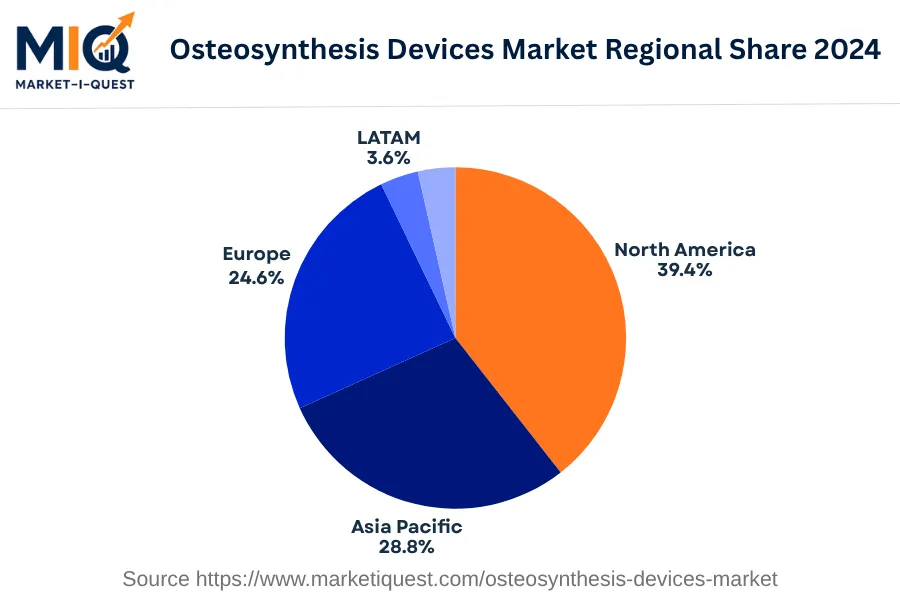
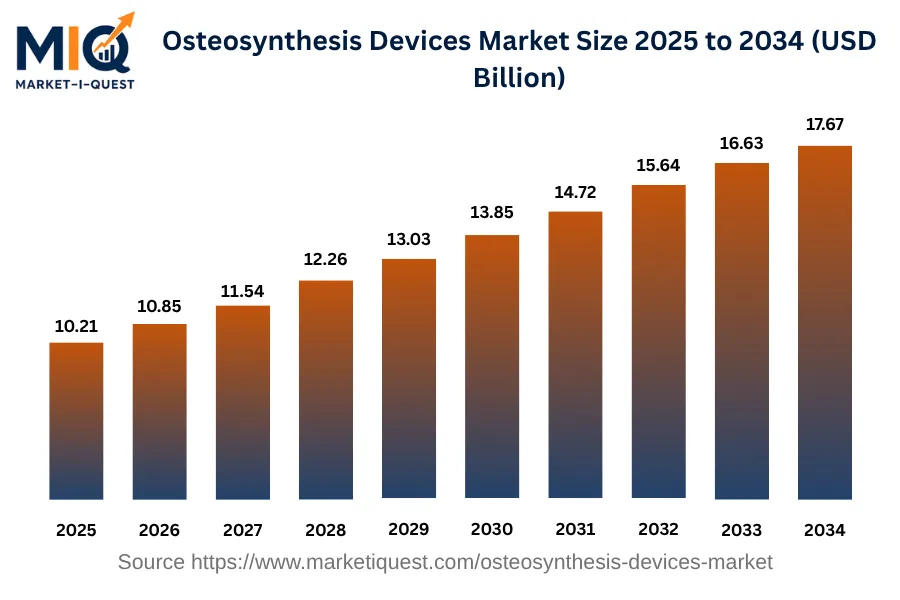
The Osteosynthesis Devices Market was at a value of 10.21 billion USD in 2025, and this is forecasted to grow to a substantial 17.67 billion USD by 2034. This translates to a CAGR of 6.28% during the period from 2025 to 2034. The growth in the Osteosynthesis Devices Market is due to continual advancements in the medical technology field, and the rise of conditions such as osteoporosis and arthritis which lead to a higher demand of these devices. There is also a growing global geriatric population that is contributing to the added demand. The regional share mix in the year 2024 was as follows: North America held 39.42%, Asia Pacific constituted 28.84%, Europe had a 24.58% share, while LATAM and MEA made up 3.62% and 3.54% respectively. The regions' varying market shares are due to differences in healthcare infrastructures, demographics, and the prevalence of relevant medical conditions.

Key Takeaways

  • By Type - Internal devices held a significant lead in the Osteosynthesis Devices Market in 2024.
  • By Material - Non-Degradable devices retained a dominant position in the year 2024.
  • By Fracture - Facial Bones had the principal share in market in 2024.
  • By End User - Hospitals were at the forefront accounting for a major market share in 2024.
osteosynthesis-devices-market market size

Key Driving Factors

Increasing Prevalence of Orthopedic Disorders

Rampant growth in osteosynthesis devices market is being propelled by the increasing prevalence of orthopedic disorders. Conditions like osteoporosis and arthritis are becoming more widespread, with these diseases most frequently affecting the elderly population. As populations across the globe continue to age, this segment of the market is growing, thereby necessitating a greater demand for osteosynthesis devices. These devices are crucial in treating fractures and aiding in bone healing, two key components of managing orthopedic disorders. This heightened need among a flourishing patient demographic is a significant driver pressuring the expansion of the osteosynthesis device market.

Adoption of Minimally Invasive Surgeries

The industry has been witnessing a substantial shift towards minimally invasive surgeries which has become a significant driving factor in the osteosynthesis devices market. Minimally invasive procedures demand smaller incisions compared to traditional surgeries, leading to reduced hospital stays, lesser recovery time, and lower chances of infections. Osteosynthesis devices, particularly internal and external fixators, are often used in these types of procedures to stabilize fractures and enable faster healing. The increased reliance on minimally invasive surgeries by healthcare practitioners around the world, coupled with positive patient experiences, is prompting greater utilization of osteosynthesis devices, thereby propelling the market forward.

Market Evolution by Timeline

2019-2023
During this period, a significant increase in the adoption of osteosynthesis devices was due to rising incidences of osteoporosis and atrophic non-union fractures globally. Predominantly, buyers were orthopedic hospitals, surgical centers, andclinics in the United States, Germany, and Japan. Technological innovation in the segment was marked by the introduction of devices with better design and biocompatible materials such as titanium. This genearted constraints in supply chains due to the increased cost of production and limited availability of these materials. The U.S FDA's 510k program was critical in accelerating the approval of these devices, impacting their adoption significantly. The primary commercial model involved direct purchases through manufacturers. Volatility in raw material prices posed a risk to manufacturers and sometimes led to a price increase. This risk was managed by the use of contractual agreements with suppliers and buyers.
2024
In 2024, increasing demand for personalized implants called for a surge in the use of 3D printing technologies in the osteosynthesis devices market. Most demand for these devices arose from heavily populated regions such as China and India, as there was a rise in the geriatric population with bone-related issues. This year observed the launch of various devices with integrated systems allowing real-time monitoring. Limitations arose due to the high cost of these technologically advanced devices. The International Organization for Standardization (ISO) dictated standards which manufacturers needed to adhere to. Given the novelty of the products, prices remained high and the devices were primarily procured by high-end hospitals directly from manufacturers. The main risk involved was the devices' high costs, managed by some manufacturers offering competitive prices.
2025-2029
The period from 2025 to 2029 saw significant growth in devices catering specifically to pediatric injuries. The primary demand originated from European countries due to the increasing rate of pediatric injuries. Rapidly evolving technologies led to the rise of devices made of bioresorbable materials. Still, their production was hampered by occasional short supply of the materials. Steps toward developing universal standards for these devices was seen by WHO and the International Medical Devices Regulation Forum (IMDRF). The commercial model during this period marked a shift in favor of long-term contracts between manufacturers and hospitals, aided by the growth in demand. Risks due to uncertainty in the supply of bioresorbable materials were typically managed through diversification of the supply chain.
2030-2034
Demand throughout 2030–2034 predominantly originated from developing countries with increased awareness and affordability of osteosynthesis devices. Technological advancements steered the production towards biocompatible and bioresorbable osteosynthesis devices. However, the complexity of manufacturing these devices resulted in supply constraints. The World Health Organization (WHO) outlined guidelines for manufacturers and hospitals to ensure safe and effective use of these devices. Prices saw a decline this period owing to the maturation of technology and increased competition in the market. Contracts were usually multi-year, covering a range of products and included clauses to handle price volatility. Uncertainties regarding raw material supply and production complexities were the significant risks, managed by contingency planning, vertical integration, and closer collaboration with suppliers.

Future Market Outlook

Future Opportunities

The ongoing evolution in osteosynthesis devices presents numerous opportunities for market players seeking to expand their product offerings. In 2023, hospitals worldwide are increasingly prioritizing patient-centered care, offering opportunities for manufacturers to create devices that address specific surgical challenges. The growing trend towards outpatient surgeries opens avenues for developing lightweight and low-profile fixation devices, enhancing mobility post-surgery. Furthermore, advancements in telemedicine and remote monitoring technologies present integration possibilities for osteosynthesis device manufacturers. This convergence enables healthcare providers to track recovery and complications in real-time, altering post-operative care dynamics. Strategic partnerships between established companies and tech startups, as exemplified by Medtronic’s collaboration with a tech firm to enhance surgical visualization, suggest a focus on developing comprehensive solutions beyond device sales. Additionally, the increasing demand for orthopedic surgeries in regions like Asia-Pacific has emerged due to a rise in the aging population, enabling firms to tailor their offerings to local markets. As evidenced by regulatory support from entities such as the European Medicines Agency, which encourages innovation through fast-tracked approvals for new technologies, future legislation is likely to facilitate the introduction of novel devices. Overall, these emerging dynamics shape a landscape rich with potential for innovation and market growth in osteosynthesis devices.

Segmentation Analysis

By Type

The market is divided into two subsegments including internal and external, with the external subsegment accounting for the largest share of revenue and the internal subsegment expected to grow at a faster CAGR.

Largest Revenue Share

External

Market Share Leader

Externally focused services have the largest share in revenue, largely driven by an increase in outsourcing and the global expansion of companies. As businesses expand their footprint in various geographies, they often require significant support which tends to be best dealt with external-focused services given the localized knowledge, regulatory competency, and networks these types of companies have. Another major factor for this dominance is the rise in outsourcing non-core tasks. Cost savings and access to expertise not present in-house are the usual motivators for companies to outsource. Add in the drive towards digitization, and demand for such external services has only increased. Furthermore, the complexities of modern business environments mean increasing regulatory demands. External providers with deep regulatory understanding are therefore in high demand. Thus, these dynamics support the strong position of external services in terms of revenue in our market breakdown.

Fastest CAGR

Internal

Forecast Period Growth Leader

The internal subsegment, although not the leading revenue generator, is projected to grow at the fastest pace in terms of CAGR. This is due to several factors. Firstly, increasing regulatory scrutiny and need for compliance are forcing companies to beef up their internal departments to conform with rapidly changing standards. Secondly, technological advancements are making it easier than before to handle tasks previously outsourced, hence companies are investing heavily in tech-driven in-house capabilities. However, barriers like high cost of maintaining an in-house team and integrating new technology could limit this growth. Politically, recent pushes for data security could act as a catalyst for increased in-house investment, as companies aim for tighter controls. Notwithstanding, current economic conditions and a post-pandemic world still trying to recover present immediate risks to this anticipated growth.

By Material

The market is divided into subsegments including Degradable and Non-Degradable materials. In 2024, Non-Degradable materials accounted for the largest revenue share while Degradable materials are expected to grow at the fastest CAGR during the forecast period.

Largest Revenue Share

Non-Degradable

Market Share Leader

Non-Degradable materials lead in market revenue predominantly due to their ubiquity in various industries, cost-effectiveness, and durability. Non-Degradable materials, including types of plastic and metals, are widely used across industrial, commercial, and residential sectors due to their longevity and resistance to environmental factors. In many markets, these materials are preferred for the cost advantage they offer, especially in high volume markets such as packaging and construction. Regulatory restrictions on the use of these materials are not as stringent as for Degradable materials; hence, the supply chain is generally smooth. Despite environmental concerns and increasing sustainability consciousness, switching costs and the process adaptability required for Degradable materials continue to favor Non-Degradable materials. Furthermore, due to established production methods and distribution channels, Non-Degradable materials have a strong market share.

Fastest CAGR

Degradable

Forecast Period Growth Leader

While Non-Degradable materials dominate current revenue, Degradable materials are expected to outpace them in terms of CAGR. Several factors contribute to this. The foremost is the increasing consumer and regulatory demand for sustainability in response to environmental concerns. Technological advances are also a significant driver, with innovative Degradable materials increasingly matching the performance characteristics of Non-Degradable ones. Capital investment in Degradable materials production is scaling up, fueled to an extent by environmental policy incentives and corporate sustainability commitments, further reducing production costs. While Degradable materials’ adoption still faces some barriers, like the need for informed purchasing decisions and potential short-term supply constraints, these are expected to be mitigated as the market matures. In conclusion, this segment presents high growth potential, albeit with near-term volatility risks due to policy, supply, and demand factors.

By Fracture

The Fracture market is divided into subsegments including Facial Bones and Skull. In 2024, Facial Bones accounted for the largest revenue share, while Skull is expected to grow at the fastest CAGR during the forecast period.

Largest Revenue Share

Facial Bones

Market Share Leader

The revenue generated by the Facial Bones subsegment in the Fracture market has been the highest in 2024 primarily because of the heightened demand for advanced facial bone repair surgeries. This is a result of growing incidences of facial fractures through sports injuries, accidents, and fights. Moreover, owing to the importance of facial appearance in social scenarios, many patients willingly undergo these surgeries, contributing to higher revenues. Additionally, the purchasing decision of customers is often driven by the expertise of surgeons and the quality of post-operative care offered by the hospital. Customers also consider the access to advanced technological procedures and novel modes of treatment before selecting the surgical facility. High switching costs involved in moving from one healthcare provider to another also tends to lock-in customers. The market for Facial Bones is more prevalent in regions with advanced healthcare ecosystems and high-income levels given the costly nature of the procedures involved.

Fastest CAGR

Skull

Forecast Period Growth Leader

The Skull subsegment of the Fracture market is forecasted to grow at the fastest CAGR in the near future. This is driven by the growing incidence of head injuries and consequent skull fractures. The technological advancements in skull fracture repair surgeries, particularly in minimally invasive techniques, could act as catalysts for the growth of this segment. Significant investments are being made in research and product development in this area, which could positively impact the growth. Potential policy regulations encouraging the adoption of new techniques and partnerships between hospitals and technology providers offering advanced treatment options could also fuel growth. However, adoption barriers include the potentially high cost of these treatments and the requisite technical expertise. Also, the market might encounter near-term risks such as stringent regulatory conditions and the disruption caused by the COVID-19 pandemic.

By End User

The market is divided into subsegments including Hospitals, Orthopedic Specialty Clinics, Ambulatory Surgical Centers (ASCs), and Others. Hospitals accounted for the largest revenue share, while Ambulatory Surgical Centers are expected to grow at the fastest CAGR during the forecast period.

Largest Revenue Share

Hospitals

Market Share Leader

Hospitals are known to generate the most revenue as they are the primary care facilities accessed by a broad variety of orthopedic patients. These institutions command higher revenue due to factors such as a wide range of services offered, vast patient demographics, existing infrastructure, and high patient turnovers. This subsegment is propelled directly by increasing orthopedic complications and indirect factors such as aging population, an increase in accidents, and lifestyle changes promoting sedentarism, which tend to enhance orthopedic disorders. Given the market dynamics, geographies with higher population or those more susceptible to orthopedic complications (due to high-age population, lifestyle factors, etc.) contribute to more significant market shares. Furthermore, strict healthcare regulations ensuring adequate in-patient care and direct interfaces with insurance providers often result in higher revenues for hospitals. Additionally, the need for specialized, immediate orthopedic interventions combined with high switching costs for patients lay the groundwork for a steady revenue stream.

Fastest CAGR

Ambulatory Surgical Centers (ASCs)

Forecast Period Growth Leader

Ambulatory Surgical Centers (ASCs) are expected to register the fastest growth over the forecast period. ASCs are increasingly preferred for the cost benefits they hold over inpatient hospital services. Despite starting from a smaller base, they've benefited from the shift in patient preferences towards outpatient care - a preference driven by lower costs and shorter recovery times for many procedures. The growth of ASCs is also stimulated by advancements in medical technology, which have made minimally invasive surgeries possible, thereby reducing the need for hospitalization. Key catalysts include favorable legislative changes, growth in partnerships with hospitals aimed at reducing overall healthcare expenses, and capital expenditure towards establishing these centers. Despite their strong growth outlook, ASCs face challenges such as reluctance from some patients due to perceived risks or lack of awareness, and regulatory obstacles in certain jurisdictions. These are the primary adoption barriers that will need to be addressed for growth to materialize as expected.

Competitive Analysis

Key Market Players

Manufacturers / OEMs

DePuy Synthes
US
Zimmer Biomet
US
Stryker Corporation
US

Key Suppliers & Raw Materials

Smith & Nephew
UK
Arthrex, Inc.
US
Wright Medical Group N.V
US

Distributors, Integrators & Channel Partners

Medtronic
US
Orthofix Medical Inc.
US
Globus Medical Inc.
US

Porter’s Five Forces Analysis

This analysis evaluates the competitive dynamics within the Osteosynthesis Devices Market.

Supplier Bargaining Power

Medium

Suppliers' power is balanced by the technical expertise requirements and specialized raw materials.

Buyer Bargaining Power

Low

Buyers, mainly hospitals and clinics, have low bargaining power due to the high switching costs and critical nature of products.

Threat of Substitutes

Low

Low threat of substitutes owing to the specificity of products and regulatory approvals required.

Threat of New Entrants

Medium

Medium threat due to high capital requirements, yet potential driven by technological advancements.

Competitive Rivalry

High

High rivalry due to the presence of several global and local players, and continuous product innovation.

Regional Analysis

Geographic market dynamics and growth opportunities across key regions

Global Market Outlook

osteosynthesis-devices-market market regional share

North America

In 2024, North America's osteosynthesis devices market saw significant activity driven by various factors and shaped by prevailing trends. Rising incidences of bone-related disorders such as osteoporosis and fractures, primarily within the aging population, drove device demand. Regulatory measures aimed at ensuring device safety and efficiency, such as FDA protocols, compelled manufacturers to invest in research and device optimization, subsequently enhancing the market landscape. Swift technological adoption in the healthcare sector, particularly in the U.S., further stimulated the market, endorsing minimally invasive surgeries involving these devices. Supply dynamics also showcased growth propelled by significant investments in manufacturing capacities and raw material procurement, despite pricing pressures due to extensive competition.

Simultaneously, trends emanated from consumer behavior changes, technologies, and policy enforcement. With patients seeking faster recovery and minimal surgical invasiveness, the shift towards bioresorbable osteosynthesis devices grew apparent. Telehealth advances, particularly during post-operative remote patient monitoring, influenced device technology development, pushing towards integration of compatible software. Mergers and partnerships became common, with med-tech giants striving for market consolidation, and enforcing stringent standards to maintain product quality was a policy trend observed across all stakeholders. Primary buyers of these devices in 2024 included hospitals, orthopedic clinics, and ambulatory surgical centers, primarily serving the elderly population, constituting the major customer base. Overall, the dynamics in North America's osteosynthesis devices market in 2024 were driven by both demand expansion and technological innovation.
Asia Pacific

In 2024, the Asia Pacific Osteosynthesis Devices Market was characterized by steady growth, primarily due to increasing trauma cases and rising geriatric population prone to bone diseases. Upgraded healthcare infrastructures in China and India substantially drove the demand for osteosynthesis devices. Technological adoption such as bio-resorbable implant devices was leading the charge, providing a more efficient, less invasive option for patients requiring bone trauma surgeries. High government investment in healthcare across Japan, South Korea, and Australia propelled the enlargement of the market, with Japan introducing favorable regulations encouraging the use of these devices.

Simultaneously, a noticeable trend was the shift in buyer behavior towards personalized osteosynthesis devices and minimally invasive surgery procedures. This was being extensively promoted in Australia and key ASEAN markets such as Thailand and Singapore. An increased partnership and M&A activity was visible among device manufacturers, especially in India and China, amplifying product portfolio and reach. Implementation of stringent device standard bolstered across the region; for instance, the State Drug Administration in China intensified their regulatory enforcement to ensure device quality and safety.

Healthcare sector stood as a prominent customer, with numerous hospitals and clinics increasingly relying on these devices to improve patient recovery time. Meanwhile, manufacturing firms expanded their lines to cater to the diverse needs of healthcare providers, reflecting an intertwined demand-supply dynamic.

Europe

In 2024, Europe's Osteosynthesis Devices Market witnessed significant growth, driven by various factors and trends. Aging population and an increase in osteoporosis cases led to a heightened demand for these devices; Germany, the UK, and France recorded the highest demand due to their significant geriatric populations. Further, stringent regulations for device approval in Europe led to increased investment in research and development, instigating heightened technology adoption specifically in Italy and Spain. Additionally, a supply chain shift happened in the Nordics and Benelux regions, as manufacturers moved towards creating more biodegradable devices due to growing environmental consciousness.

Changes in buyer behaviour and product technology defined the market trends. Patients' preferences shifted towards minimally invasive surgeries, increasing the demand for advanced osteosynthesis devices in Benelux and Central & Eastern Europe. Simultaneously, partnerships and M&A activity accelerated among manufacturers in the UK and France in order to incorporate advanced technology in their offerings. Manufacturers made a determined approach to comply with the strict European Commission regulations, pushing for higher standards in the production process. Key customers included healthcare providers, notably in the government sector, driving towards better patient outcomes across the board. Hence, Europe's Osteosynthesis Devices Market endured significant evolution in 2024 driven by various internal and external factors.

Latin America

In 2024, the Osteosynthesis Devices Market emerged as a pivotal health sector area in Latin America, specifically in Brazil, Mexico, Argentina, Colombia, Chile, and Peru. Market drivers included increased investment in healthcare infrastructure, a rise in osteoporosis related issues and fractures across the aging population, and the adoption of cutting-edge medical technology to facilitate osteosynthesis procedures. Regulatory standards, such as those enforced by the Brazilian Health Regulatory Agency, also positively impacted the market, promoting safety and quality of these devices.

Notable market trends encompassed a surge in patient preference for minimally-invasive surgeries, accelerating the use of osteosynthesis devices in hospitals and clinics. Moreover, the shift to biodegradable material in device manufacturing gained momentum due to environmental considerations and long-term health benefits. Partnered with R&D advancements, this encouraged the development of lightweight, high-strength devices with improved functionality. Furthermore, coordinated strategies and mergers amongst key players strengthened their competitive positions, creating robust supply chains.

Hence, various sectors including hospitals, ambulatory surgical centers, and diagnostic laboratories made substantial use of these devices in 2024. These dynamics have allowed the Latin American nations to increasingly utilize osteosynthesis tools, solidifying their fortitude in providing comprehensive healthcare solutions.

Middle East & Africa

In 2024, the Osteosynthesis Devices Market in the Middle East and Africa experienced noticeable growth underpinned by various drivers and trends. Significant demand drivers included increasing geriatric population, rising incidence of bone-related ailments, and urbanization in countries such as Saudi Arabia and the UAE. Furthermore, the expansion of healthcare infrastructure in regions like Egypt and South Africa, along with escalated health expenditure from entities including government, healthcare institutions, and insurance providers, elevated the market growth.

On the technology front, the adoption of advanced osteosynthesis devices was seen primarily in affluent nations such as Israel and Qatar, due to high spending capacities and greater focus on health care innovation. However, high device costs did pose some challenges to the market penetration in less economically strong regions such as Kenya and Nigeria.

Trends highlighted an observable preference for bioresorbable devices over metallic devices, influenced by the heightened focus on patient comfort and shortened recovery periods. Market dynamics also showcased an increased reliance on alliances and partnerships between healthcare providers and tech companies, manufacturing advanced devices. Also, the enforcement of stringent medical device regulations in regions like the UAE and South Africa, to ensure safety and effectiveness of the osteosynthesis devices, shaped the market operations in the year. Distinctive market behavior as seen in 2024 thus underscores the importance of understanding the regional nuances in the Middle East and Africa's Osteosynthesis Devices market.

Recent Industry Developments

Latest market innovations, product launches, and strategic initiatives

January 2026

Zimmer Biomet received U.S. FDA 510(k) clearance for its next-generation Variable Angle Locking Compression Plate system. Designed for complex periarticular bone fractures, the system utilizes advanced polyaxial locking screw technology to allow customizable screw trajectories in challenging anatomical regions.

July 2025

Johnson & Johnson completed its strategic acquisition of Shockwave Medical, expanding its interventional portfolio to complement DePuy Synthes' core orthopedic trauma and osteosynthesis footprint.

Frequently Asked Questions