Osseointegration Implants Market Snapshot

Key Players

  • Dentsply Sirona (US)
  • Henry Schein Inc. (US)
  • Osstem Implant (South Korea)
  • Bicon LLC (US)
  • Southern Implants (South Africa)
  • Avinent Implant System (Spain)
  • Adin Dental Implant Systems (Israel)

Market Size

Base Year 2024
$8.38 Bn
CAGR
8.74%
Forecast 2034
$19.37 Bn

Market Segments

By Product
  • Bone-Anchored Prostheses
  • Dental Implants
  • Others
By Material Type
  • Metallic
  • Ceramic
  • Polymeric
  • Others
By End User
  • Hospitals
  • Ambulatory Surgical Clinics
  • Others

Market Dynamics

Drivers
  • Increasing prevalence of osteoporosis
  • Technological advancements in implants
Restraints
  • High procedure cost
  • Lack of awareness
Opportunities
  • Rising elderly population
  • Increasing amputee cases

Market Size

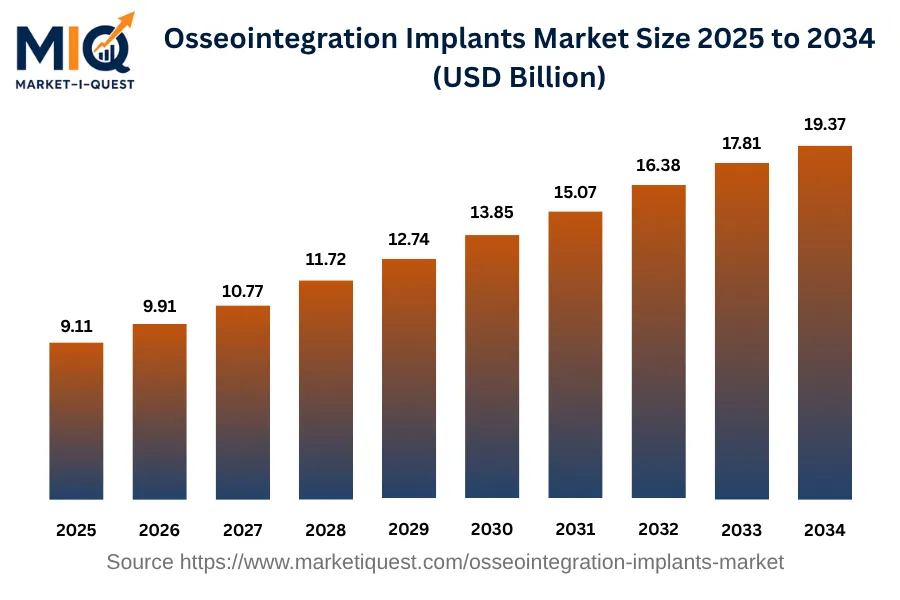
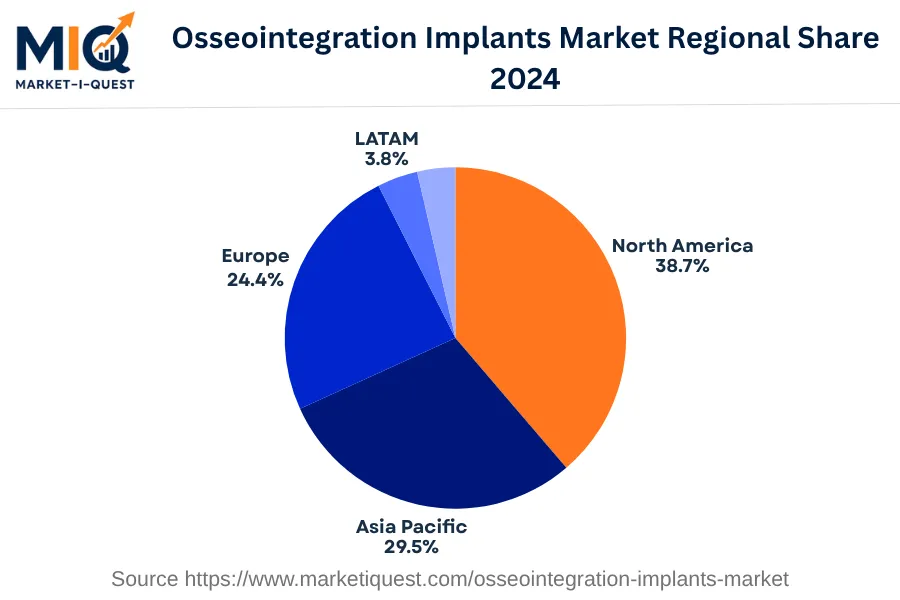
The Osseointegration Implants market was worth $9.11 billion in 2025 and is forecasted to reach $19.37 billion by 2034, with a compound annual growth rate (CAGR) of 8.74% over the period. The consistent increase in the value of the market can be observed over the projected years. Growing from $8.38 billion in 2024 to $9.11 billion in 2025, this rise marks the starting point from which the market sees continuous expansion, culminating in the projected $19.37 billion by 2034. This steady increase in market size over a decade originates mainly from the advancements in dental and orthopedic implants directly impacting the growth of the Osseointegration Implants market. Moving to the regional share in 2024, North America holds the largest slice of the market at 38.7%, followed by Asia Pacific at 29.5%, and Europe at 24.4%. The remaining regions, Latin America and the Middle East and Africa (MEA), have a smaller share, making up 3.8% and 3.6% of the market respectively.

Key Takeaways

  • By Product - Dental Implants led the market accounting for the biggest share in 2024.
  • By Material Type - Metallic became the leading segment holding prime position in 2024.
  • By End User - Hospitals held the highest portion of the market in 2024.
osseointegration-implants-market market size

Key Driving Factors

Increasing Incidence of Bone-Related Disorders and Injuries

The osseointegration implants market is being heavily influenced by the growing occurrence of bone-related disorders such as osteoporosis and osteoarthritis, along with an increase in various types of injuries including sports injuries and fractures. These health concerns often lead to the need for effective, long-term solutions like osseointegration implants, particularly among the aging population. As an increasing number of people are diagnosed with bone conditions or suffer injuries needing extensive bone repair, demand for osseointegration implants concurrently increases. This rise in patient cases notably correlates to an uptick in osseointegration implant procedures, thereby propelling the market growth.
Advent of Robotic Surgery and 3D Printing in Healthcare

Osseointegration implants market growth is also steered by the integration of innovative technologies like robotic surgery and 3D printing in the healthcare sector. Robotic surgery has grown in prevalence due to its potential for increased precision, thereby reducing the risk of complications during osseointegration implant placements. On the other hand, 3D printing is emerging as a promising solution for creating customized implants, increasing the likelihood of successful osseointegration and patient satisfaction. As these technologies become more accessible and widespread, they're set to shape the landscape of the osseointegration implant market, encouraging further advancements and adoption.

Market Evolution by Timeline

2019-2023
The demand for Osseointegration Implants increased in Europe due to high prevalence of dental disorders, particularly in the UK, Germany and France. There was a notable rise in supply due to enhanced surgical methods. However, high costs and complications post-surgery constrained the market growth. FDA's stringent rules for approval affected the introduction of newer products. Most manufacturers opted for cost-based pricing models, affecting affordability. Dental insurance providers started recognizing these implants, resulting in lower out-of-pocket expenses for patients. Notably, Dentsply Sirona and Nobel Biocare set up partnership deals for product development.
2024
In 2024, Asia-Pacific region saw significant demand, particularly from China and India, resulting from improved healthcare infrastructure. Advances in 3D printing technology facilitated custom implant production, widening the product range. Regulatory bodies stressed on additional clinical trials to ensure safety. Pricing models changed towards value-based ones considering the improved patient outcomes. Partnerships between manufacturers and local clinics, like Straumann's deal with dental clinics in Singapore, paved way for increasing market share. The major risk was in slower adoption due to lack of trained professionals, addressed through training programs and CDE courses.
2025-2029
Demand from North America soared due to augmented prevalence of osteoporosis and accidental injuries. Tech advancements led to the introduction of bio-integrated implants, hailed as revolutionary. However, supply struggled due to sterilization issues. FDA's enforcement of the Unique Device Identification (UDI) impacted compliance requirements. There was a significant shift towards success-based pricing models, encouraging higher success rates. Notably, Zimmer Biomet and Orthopedic Implant Company announced mutual collaborations. A key risk was the increased reports of implant rejections, which led to extensive research into improvement of bio-compatibility.
2030-2034
Demand for osseointegration implants saw global expansion. Technological progress included the development of smart implants, although the rise in cyber threats presented a risk. Regulations underscored cybersecurity measures for smart devices. Commercial models moved towards subscription services or leasing to offer affordability. Alliances emerged between tech firms and implant manufacturers promoting integrated solutions, like Medtronic's collaboration with IBM Watson. These advancements posed a security risk, addressed by adopting robust cybersecurity frameworks. The key challenge remained the lack of understanding of these advanced technologies among older medical practitioners.

Future Market Outlook

Future Opportunities

Current trends indicate substantial potential for growth in the osseointegration implants market rooted in shifting demographic demands. With the global aging population expected to increase, particularly noticeable in countries like Japan and Italy, there will be heightened demand for reliable dental implants and orthopedic solutions. In 2023, the World Health Organization reported that approximately 15 percent of the global population was aged 60 years or older, amplifying the urgency for advanced implant technologies that meet the needs of older adults. Furthermore, the increasing acceptance of dental aesthetics and reconstructive surgery in developing markets, such as India and Brazil, opens avenues for osseointegration products, driven by rising disposable incomes and evolving patient expectations. The regulatory framework is also adapting; for instance, the European Union’s Medical Device Regulation, effective in 2021, created a more rigorous approval pathway for new technologies. This change could foster confidence among consumers and healthcare providers alike, leading to enhanced market stability. Educational initiatives, like the ongoing training programs by the International Team for Implantology, are also vital in emphasizing the importance of proper implant use, which could expand adoption rates. Thus, collaborations among key stakeholders, including research institutions and implant manufacturers, will play a fundamental role in shaping the future landscape of osseointegration implants, fostering innovation and knowledge-sharing across borders.

Segmentation Analysis

By Product

The market is divided into subsegments including Bone-Anchored Prostheses, Dental Implants, and Others. Dental Implants accounted for the largest revenue share while Bone-Anchored Prostheses is expected to grow at the fastest CAGR during the forecast period.

Largest Revenue Share

Dental Implants

Market Share Leader

Dental implants have historically accounted for the largest share of revenue within the product market. This largely results from the high global demand, fed by an aging population and rising incidences of oral diseases. The constant innovation within this subsegment, paired with the growing awareness around oral health, also contributes to the high revenue. Moreover, dental implants tend to be quite costly, with pricing impacted by factors such as material costs, implant design, and the technique used for placement. Dental implants are typically considered a superior long-term solution for missing teeth, contributing to continued demand despite their higher cost. Furthermore, the purchasing pattern is often influenced by a combination of strong patient demand and dentist recommendation, reinforcing the market positioning of dental implants. The prominence of this subsegment is also supported by well-established sales channels, primarily via dental clinics and hospitals, and adoption is strong across major geographies due largely to the favorable regulatory context.

Fastest CAGR

Bone-Anchored Prostheses

Forecast Period Growth Leader

Though Bone-Anchored Prostheses do not currently represent the subsegment with the largest revenue, it is projected to grow at the fastest CAGR in upcoming years. Advancements in technology and manufacturing processes are key catalysts fueling this growth. Specifically, developments in osseointegration - the process where the prosthesis anchors directly into the bone - have led to a significant rise in adoption rates. Moreover, partnerships with healthcare services and insurance providers have aided in overcoming barriers related to the high initial cost, creating opportunity for market expansion. A surge in cases of limb amputations due to conditions like diabetes and peripheral arterial disease also present demand potential. However, there remain risks related to regulatory changes and potential complications from surgery, though these are mitigated somewhat by stringent approval processes and advances in surgical techniques. The ability to enhance patient mobility and overall quality of life offers a compelling incentive for adoption, positioning bone-anchored prostheses as the subsegment with the highest growth potential.

By Material Type

The market is divided into subsegments including Metallic, Ceramic, Polymeric and Others. Of these, the Metallic subsegment accounted for the largest revenue share while the Ceramic subsegment is expected to exhibit the fastest CAGR during the forecast period.

Largest Revenue Share

Metallic

Market Share Leader

The metallic subsegment dominates revenue generation within the market due to its broad array of applications and superior characteristics, which are indispensable in numerous fields. For example, metallic materials are noted for their high-strength, toughness, and longevity, making these materials ideal for construction, automotive, and aerospace industries. Moreover, the established manufacturing channels and wide-ranging use cases have resulted in significant scale, which translates to cost advantages. In many areas, there are few substitutes that can compete with metals in terms of the combination of cost, reliability, and performance. On the supply side, mining activities and refining capacities across several geographies ensure adequate availability of these materials. Regulatory standards too often mandate the use of specific metallic materials due to their established safety records. However, potential challenges remain in the form of fluctuating raw material prices and ecological impact.

Fastest CAGR

Ceramic

Forecast Period Growth Leader

Despite current smaller revenue share, the Ceramic subsegment is anticipated to experience rapid growth moving forward. This is due to emerging trends in manufacturing and healthcare sectors, along with its advantages in areas of thermal stability, electrical insulation, and chemical resistance. For example, the use of ceramic materials in 3D printing technologies is a strong catalyst, as it can drive down production costs and enable more intricate designs. Regulatory policies encouraging cleaner manufacturing processes are also advantageous for ceramics because of their lower carbon footprint. Furthermore, the trend of miniaturization in electronics is likely to benefit this subsegment, as ceramics offer superior properties in smaller, more complex components. Despite these positive factors, adoption may be impeded by challenges related to handling and manufacturing such as high sintering temperatures and brittleness. Breakthroughs in molding and forming technologies could dramatically accelerate the growth of this subsegment.

By End User

The market is divided into subsegments including Hospitals, Ambulatory Surgical Clinics, and Others. Hospitals accounted for the largest revenue share while Ambulatory Surgical Clinics are expected to grow at the fastest CAGR during the forecast period.

Largest Revenue Share

Hospitals

Market Share Leader

As of the base year 2024, Hospitals hold the majority share of the market revenue. This can be attributed to the fact that Hospitals are the primary health care centres where most of the patients get directed. Hospitals have a broad gamut of departments dealing with different ailments, making it convenient for patients who require various services. Moreover, because of their large scale, hospitals can purchase supplies in bulk, reducing the per-unit cost of products or services. They are thus able to provide treatments at a lower cost than smaller clinics, attracting a larger customer base. Additionally, most hospitals are well-equipped with sophisticated technologies, skilled healthcare professionals, and offer round-the-clock services, further driving customers preference towards them. It can be inferred that Hospitals will continue to lead in terms of revenue due to their comprehensive services and larger customer traction.

Fastest CAGR

Ambulatory Surgical Clinics

Forecast Period Growth Leader

Despite Hospitals having the largest revenue, Ambulatory Surgical Clinics are projected to grow at an unprecedented rate. The growth of the Ambulatory Surgical Clinics subsegment can be attributed to their specialty in providing surgical procedures that do not require an overnight stay. With advancements in medical technologies, an increasing number of procedures are being performed in these clinics, driving their growth. Furthermore, rising patient awareness and preference for minimally invasive surgeries, cost-effectiveness, and efficiency also catalyze the adoption of services provided by Ambulatory Surgical Clinics. On the regulatory front, increased public-private partnerships for funding ambulatory resources in developing regions promise substantial market growth. However, the risk of unexpected patient referrals to hospitals due to unanticipated complications could pose a constraint to their rapid growth. Hence, these clinics are expected to focus on enhancing patient safety and care quality to bolster their share in the market.

Competitive Analysis

Key Market Players

Manufacturers / OEMs

Zimmer Biomet
US
Stryker Corporation
US
Dentsply Sirona
US

Key Suppliers & Raw Materials

Carpenter Technology Corporation
US
ATI Metals
US
Sandvik AB
Sweden

Distributors, Integrators & Channel Partners

Henry Schein, Inc.
US
Patterson Companies, Inc.
US
Benco Dental Supply Company
US

Porter’s Five Forces Analysis

This analysis explores the competitive dynamics within the Osseointegration Implants Market.

Supplier Bargaining Power

Low

Raw material suppliers have limited power thanks to a wide range of alternatives.

Buyer Bargaining Power

Medium

Buyers can switch providers but face constraints due to the specialized nature of implants.

Threat of Substitutes

Low

Splints and external prosthesis offer limited functionality and comfort compared to osseointegration implants.

Threat of New Entrants

High

The market is lucrative but entry barriers such as high R&D costs and stringent regulations could deter new entrants.

Competitive Rivalry

High

The market is highly competitive with established players investing heavily in R&D to maintain dominance.

Regional Analysis

Geographic market dynamics and growth opportunities across key regions

Global Market Outlook

osseointegration-implants-market market regional share

North America

In the base year of 2024, the North American market for osseointegration implants was considerably mature, especially in the healthcare and orthopedics sectors. Increased demand was driven by a rise in the geriatric population, chronic bone diseases, and the need for highly effective orthopedic surgeries in the US, Canada, and Mexico. Furthermore, technological advancements in implant procedures augmented market growth, along with the implementation of favorable healthcare regulations by the respective governments that supported better access to these surgeries.

Impacting the market drastically were the key trends, primarily the shift towards patient-specific implants. Customized solutions became the norm due to their higher success rate and acceptance by the patient's body. This bespoke approach was further bolstered by the use of leading-edge 3D printing technology. The advent of digital platforms also streamlined consultation and follow-up processes, increasing the efficiency in care provision.

A notable industry trend was the active participation of key market players in concerted growth strategies, including partnerships, and mergers & acquisitions. This highlighted the pursuit of market expansion and product portfolio enhancement. Lastly, stricter policy enforcement in all three countries led to enhanced quality control measures, ensuring improved overall patient safety and satisfaction, which inevitably positioned North America as a reliable market for osseointegration implants in 2024.

Asia Pacific

Asia Pacific’s osseointegration implants market in 2024 was defined by rising healthcare expenditure and an aging population with a high incidence of orthopedic disorders. Demand in the region was driven by increased government and private sector investment in healthcare infrastructure, particularly in China, India, and Japan, where robust healthcare industry expansion enhanced the soft tissue attachment product segment. Further, advancing technology adoption and innovation in countries such as South Korea and Australia promoted the use of osseointegration implants in everyday healthcare practices, thereby driving market growth. Supply dynamics remained skewed towards the established manufacturers, impacting overall pricing, and giving a competitive edge to cost-effective local suppliers.

In terms of trends, buyer behavior in the Asia Pacific significantly evolved in 2024. The growing preference for minimally invasive procedures among patients shifted the demand towards osseointegration implants. In response to increased patient awareness and the need for affordable treatments, the market observed partnerships and M&A activities among manufacturers aiming to deliver innovative, cost-effective solutions. A notable trend was observed in the dental implants sector, where standardization was enforced to improve product quality, driving technological advancements in the region. Furthermore, policy enforcement in prominent ASEAN markets emphasized patient safety and product efficacy, leading to increased scrutiny of osseointegration implants.

Europe

In 2024, Europe's osseointegration implants market was thriving, underpinned by several drivers. Agrowing geriatric population coupled with high incidences of dental and orthopedic diseases boosted demand, particularly in Western economies like the UK, France, and Germany. Regulatory bodies, like the European Union, enforced stringent standards, inciting companies to invest in advanced technology and innovative implants. This led to the introduction of various technologically superior products in the market. The supply dynamic was favorable, with several manufacturing players such as Straumann Group and Dentsply Sirona situated in the region, enabling efficient production, pricing strategy, and distribution of osseointegration implants.

A new trend observed in 2024 was the escalating demand for customization in osseointegration implants. The healthcare sector saw a shift towards personalized implant solutions, catering to specific patient needs, especially in major markets such as Germany and the United Kingdom. Furthermore, there was heightened attention towards collaborations and partnerships among manufacturers and research institutions. Companies like Medtronic and Zimmer Biomet, for instance, partnered with universities to develop advanced osseointegration systems. A significant trend was also the adoption of smart implants, incorporating technologies such as IoT and AI, mainly in highly digitized markets in the Nordics and Benelux region, making the osseointegration implants market more competitive.

Latin America

In 2024, the Osseointegration Implants Market in Latin America (LATAM) has shown considerable growth due to increasing cases of orthopedic disorders and rising demand for non-invasive surgeries. Regulatory support, such as Brazil's Anvisa approving advanced osseointegration devices, has stimulated market expansion. Additionally, substantial capital investments from international healthcare companies like Zimmer Biomet implant technology further add impetus to the market growth. Technological adoption, especially in Mexico and Argentina, has propelled the application of high-quality implants providing enhanced patient comfort and mobility.

Market trends in 2024 largely revolve around customer preferences for personalized implant solutions, pushing for product diversification. A shift toward 3D printed implants seen in LATAM advancements, especially in Brazil's healthcare system, marks a significant shift in the industry. The widespread use of telemedicine in Chile and Peru for pre-surgery consultations and post-surgery follow-ups changes the patient’s accessibility dynamics. A handful of strategic collaborations, such as those between hospital networks and device manufacturers, have streamlined supply chains. Stricter policy enforcements regarding quality standards in Colombia's healthcare sector have underlined the importance of efficient, reliable implant solutions.

The primary customer segments for osseointegration implants in 2024 include healthcare facilities like hospitals and orthopedic clinics. These businesses have seen escalating demand for osseointegration implants, subsequently driving market growth in LATAM.

Middle East & Africa

In 2024, the Osseointegration Implants market saw significant growth in the Middle East and Africa, primarily driven by increased healthcare spending and robust technological adoption.

An increase in the geriatric population in Saudi Arabia, United Arab Emirates, and Qatar triggered high demand for Osseointegration implants. In Egypt and South Africa, advancements in implant technologies, along with a surge in dental tourism, escalated the market potential. In Israel, government initiatives towards dental healthcare and favorable insurance policies facilitated the market's expansion.

Significant trends in the market included a shift towards patient-customized implants, particularly in more affluent regions such as UAE and Qatar. The growing adoption of 3D printing technology in implant production also shaped market dynamics across the region. There was an observed increase in partnerships between implant manufacturers and hospitals or dental clinics, with the objective of improving patient access to advanced solutions, especially in Kenya and Nigeria.

In sectors such as healthcare and manufacturing, the technology's integration reshaped practices and outcomes. The technological leap in healthcare facilities in Israel and Saudi Arabia brought about widespread application of these implants in orthopedic, dental, and ENT treatments. Such developments signaled an upward trajectory for the Osseointegration Implants market in major economies of the Middle East and Africa in 2024.

Recent Industry Developments

Latest market innovations, product launches, and strategic initiatives

September 2025

Exactech, Inc. completed initial clinical deployments for its Vantage Ankle 3D and 3D+ tibial implants integrated with the GPS Ankle intraoperative navigation system, utilizing porous metal surfaces for direct bone ingrowth in total ankle replacement.

February 2025

Delta Electronics entered a industrial partnership with Paonan Biotech to upgrade automated production lines for porous titanium and spinal osseointegration hardware using smart manufacturing software.

Frequently Asked Questions