
Orthodontic Consumables Market Snapshot

Key Players

  • 3M (US)
  • Align Technology (US)
  • American Orthodontics (US)
  • G&H Orthodontics (US)
  • Henry Schein (US)
  • Dentsply Sirona (US)
  • TP Orthodontics (US)
  • DB Orthodontics (UK)
  • Ortho-Care (UK) Ltd (UK)
  • Forestadent Bernhard Förster GmbH (Germany)

Market Size

Base Year 2024
$4.74 Bn
CAGR
8.41%
Forecast 2034
$10.63 Bn

Market Segments

By Product
  • Anchorage Appliances
  • Ligatures
  • Brackets
  • Archwires
  • Others
By End Use
  • Hospitals
  • Dental Clinics

Market Dynamics

Drivers
  • Increasing prevalence of dental disorders
  • Technological advancements in orthodontic products
Restraints
  • High treatment costs
  • Limited insurance coverage
Opportunities
  • Technological advancements in orthodontics
  • Increasing awareness on oral health

Market Size

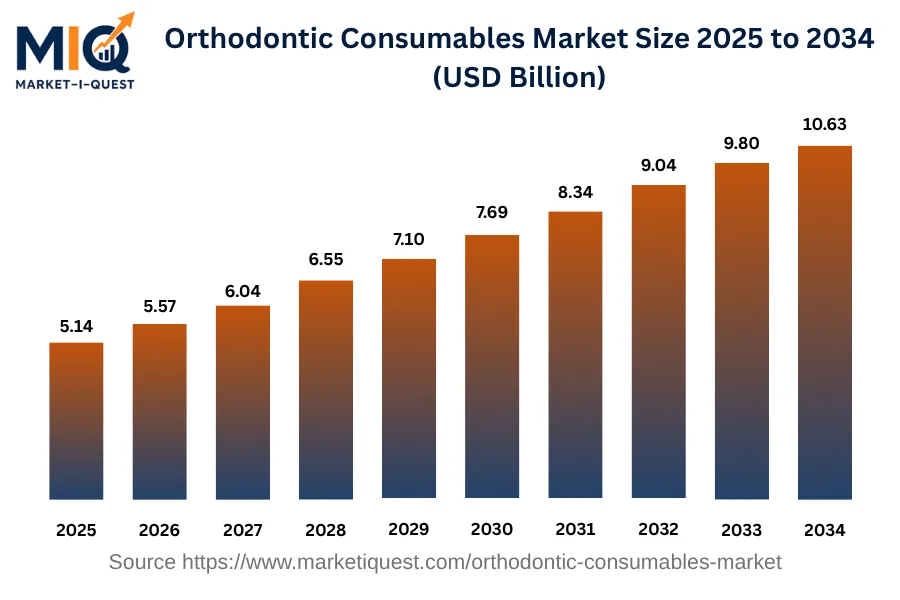
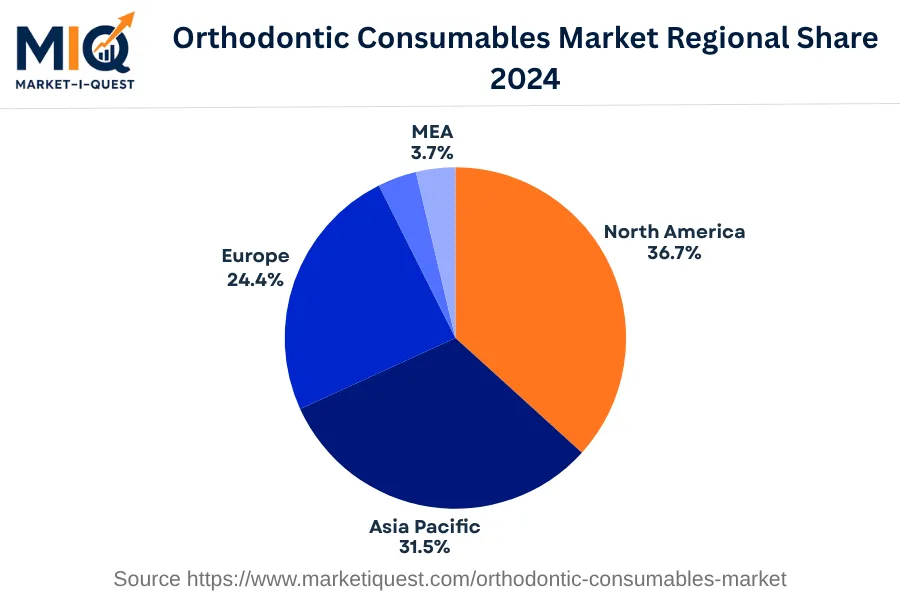
The Orthodontic Consumables Market is projected to expand from USD 5.14 Billion in 2025 to USD 10.63 Billion by 2034, registering a CAGR of 8.41%. This steady growth trajectory is seen as the market value in the preceding year, 2024, was slightly lower at USD 4.74 Billion. The nearly doubled increase within nine years denotes the strong upward trend within this market. Regionally, in the year 2024, North America had the largest share of the Orthodontic Consumables Market with 36.72%, followed by the Asia Pacific at 31.46%, Europe at 24.42%, and much smaller contributions from LATAM and MEA equating to 3.68% and 3.72% respectively. These figures serve to highlight the regional distribution of this market.

Key Takeaways

  • By Product - Brackets held the front-runner position in the market.
  • By End Use - Hospitals emerged as the leading subsegment.
orthodontic-consumables-market market size

Key Driving Factors

Increase in Orthodontic Treatments due to Prevalence of Malocclusions

One significant driving factor for the Orthodontic Consumables Market is the heightened prevalence of malocclusions (misaligned teeth) seen in both adults and children. This increasing number of potential patients is motivating the demand for orthodontic consumables like braces, wires, and aligners. The rise is likely due to a combination of genetic factors, detrimental habitual behaviors such as thumb-sucking, and improper jaw development from various causes. Consequences of untreated malocclusions include ease of food trapping leading to decay, injury risk from protruding teeth, and speech difficulties. As awareness of these problems grows, more people are seeking orthodontic treatment, in turn propelling the market for orthodontic consumables.
Preference for Aesthetically Pleasing Treatment Options

Another specific driver for the Orthodontic Consumables Market is the growing preference amongst patients for less noticeable, aesthetically pleasing orthodontic treatments. The rising demand for cosmetic dentistry has led to a boom in manufactural development of 'invisible' braces and clear aligners. Such treatment options are particularly appealing to adults who require orthodontic work but are self-conscious about wearing traditional metal braces. Perceived self-image and professional credibility often hinge on maintaining a certain aesthetic standard, increasing demand for these non-intrusive alternatives. This trend is shaping the product development strategies of orthodontic consumables manufacturers, driving growth in this sector of the market.

Market Evolution by Timeline

2019-2023
During this period, orthodontic consumables gained popularity because of the increased adoption of dental procedures in developed regions such as North America and Europe. Parents started prioritizing orthodontic treatment for their children to avoid dental complications later. Leading manufacturers launched innovative products like ceramic braces and invisible aligners. However, limited insurance coverage for orthodontic treatment posed a challenge. There was no notable change in policy or regulation. Orthodontic practices preferably chose partnership contracts with suppliers to avail discounts on bulk orders, and payment models typically involved upfront payment agreement. High prices of technologically advanced products and patients' financial constraints hindered market growth.
2024
In 2024, Asia-Pacific started showing interest in orthodontic treatments due to increasing awareness about oral health and appearance. A significant shift was noticed in supply as international manufacturers enter the regional market, widening product diversity. However, integration into local dental practices remained a challenge due to unfamiliarity with the newer technologies. There were still no significant regulatory changes. Vendors continued with the practice of partnership contracts. There was a slight decrease in the prices of orthodontic consumables due to growing competition. The barrier to adoption remained the limited coverage of dental insurance.
2025-2029
Throughout this period, demand for orthodontic consumables witnessed an upswing in developing regions due to the rise in disposable incomes and aesthetic consciousness. Technology providers focused on creating cost-effective solutions to tap potential markets. Strategies to integrate these technologies into dental practices became more streamlined. Regulatory bodies started stressing on stringent quality checks to ensure patient safety. Monthly installments for payments became more accepted to combat the high costs of treatment. However, low penetration of dental insurance and lack of awareness in remote areas posed risks to the market.
2030-2034
The demand for orthodontic consumables is expected to stabilize across developed and developing regions alike by 2030–2034. Supply is expected to evolve with more sustainable and efficient products being introduced to the market to better serve diverse needs. On the regulatory front, it's likely more robust standards for product quality and efficacy will emerge, further boosting consumer confidence. It's anticipated that providers will continue to employ partnership contracts, but with more flexible payment options to encourage adoption. Despite these developments, the high cost of orthodontic procedures without extensive insurance coverage remains a key barrier.

Future Market Outlook

Future Opportunities

As of 2023, the orthodontic consumables market is positioned to capitalize on unmet needs within specific demographics, particularly younger patients and adults seeking aesthetic treatments. Companies are increasingly focusing on clear aligners, with major players like SmileDirectClub scaling their operations to target millennial and Gen Z consumers who favor discreet orthodontic solutions. Simultaneously, the World Health Organization has identified the rising prevalence of malocclusion, indicating a growing need for orthodontic intervention across various age groups. Emerging markets in Latin America are showing increased demand for affordable orthodontic options, presenting an opportunity for new entrants to provide cost-effective consumables. Collaborations between dental professionals and technology firms are likely to enhance the development of innovative treatment plans, especially for patients with complex cases. Initiatives by universities, such as those in the UK and the USA, to provide research grants for developing sustainable orthodontic materials underscore the increasing focus on eco-friendly solutions. Furthermore, remote monitoring technologies are gaining traction as orthodontists seek to improve patient compliance and efficiency. As these trends coalesce, the orthodontic consumables market stands to evolve with a more diverse offering that meets both consumer preferences and regulatory demands, providing fertile ground for exploration and expansion in the coming years.

Segmentation Analysis

By Product

The market is divided into subsegments including Anchorage Appliances, Ligatures, Brackets, Archwires, and Others. Among these, Brackets accounted for the largest revenue share while Archwires is expected to grow at the fastest CAGR during the forecast period.

Largest Revenue Share

Brackets

Market Share Leader

Brackets, the crucial component in orthodontics, accounts for the highest-revenue in this product segment. Considering its universal application in teeth alignment, it underpins a significant portion of treatments - thereby ensuring a steady revenue stream. The broad consumer base, ranging from children to adults seeking orthodontic treatments, contributes to this substantial market share. The demand is particularly high in regions with higher disposable income and an emphasis on dental aesthetics such as North America and Western Europe. Both consumers and dental professionals gravitate towards brackets due to their efficacy and relative affordability. Ongoing innovation by manufacturers, such as the introduction of invisible or clear brackets, adds to this buoyancy. The deep-rooted and extensive distribution channel for dental supply, which includes direct selling, distributors, and e-commerce, offers easy accessibility, further attributing to the substantial market share.

Fastest CAGR

Archwires

Forecast Period Growth Leader

The subsegment projected to demonstrate the fastest growth is Archwires. The primary driver for this robust growth forecast is the continuous technological advancement in material and design. Manufacturers are investing in research and development to enhance archwire performance—reducing discomfort, treatment duration and visits to the orthodontist. Furthermore, adoption barriers such as the initial discomfort and adjustment phase are expected to lessen with advancements in material science, potentially accelerating their growth. However, higher cost versus traditional stainless steel wires may pose a near-term risk to rapid adoption. Emerging partnerships and collaborations between manufacturers and dental associations around the world will boost product awareness among dental professionals and increase its adoption rate. The dichotomy of policy incentives for advanced dental material usage and budget constraints might impact demand - a significant aspect to monitor.

By End Use

The market is further divided into subsegments such as hospitals and dental clinics. Hospitals generated the largest revenue in 2024 while dental clinics are expected to grow at the fastest CAGR during the forecast period.

Largest Revenue Share

Hospitals

Market Share Leader

Hospitals, as a subsegment, account for the most significant revenue share, owing to a few key factors. The nature of services provided by hospitals, which range from diagnostics to treatment and post-treatment care, necessitates a broad spectrum of equipment, contributing to the high volume of purchases. More so, large healthcare systems often have more financial capacity, allowing them to invest in state-of-the-art equipment to stay competitive and meet evolving healthcare standards. Additionally, the high patient inflow prevalent in hospitals, driven by varied demographics and numerous health needs, requries the presence of diversified, superior quality equipment. Regulatory requirements also drive hospitals to constantly update their equipment set, assuring the providers' commitment to patient safety and advanced care. Finally, the procurement process in such institutions is generally structured and repeated, resulting in regular, predictable expenditures and revenue contribution to the market.

Fastest CAGR

Dental Clinics

Forecast Period Growth Leader

Despite the dominant share of hospitals, dental clinics are forecasted to represent the fastest-growing subsegment. Underlying this trend is the increased focus on oral health, resulting in a surge of patients seeking dental care. The rise in cosmetic dentistry and orthodontics fuels this growth further, driven by an increasing societal emphasis on aesthetics and a healthy smile. Acknowledging this demand, dental clinics invest in modern, sophisticated equipment, fostering market growth. Furthermore, technological advancements, such as CAD/CAM and 3D imaging technologies, are driving market penetration in this subsegment, as these innovations offer superior precision and value to the clinics. Partnerships with financing companies also enable smaller clinics to afford such expensive equipment, accelerating adoption rates. However, high initial capital requirement and lack of skilled dental professionals may pose minor barriers, but are unlikely to significantly slow down the overall growth trend of this subsegment.

Competitive Analysis

Key Market Players

Manufacturers / OEMs

3M
US
Dentsply Sirona
US
Align Technology
US

Key Suppliers & Raw Materials

DuPont
US
BASF
Germany
Bayer
Germany

Distributors, Integrators & Channel Partners

Patterson Dental
US
Henry Schein
US
Dental Supply International
US

Porter’s Five Forces Analysis

An analysis of competitive forces in the Orthodontic Consumables Market.

Supplier Bargaining Power

Medium

Suppliers have moderate power due to the specialized nature of orthodontic consumable products.

Buyer Bargaining Power

Low

Buyer power is low due to the high switching costs and lack of viable substitutes.

Threat of Substitutes

Low

Limited options for substitutes because orthodontic care is necessary, unique, and incomparable to alternatives.

Threat of New Entrants

Medium

Regulatory barriers and capital investment can be high, but new entrants may still be attracted by profitable margins.

Competitive Rivalry

High

Highly competitive industry with various players offering similar products, resulting in high rivalry.

Regional Analysis

Geographic market dynamics and growth opportunities across key regions

Global Market Outlook

orthodontic-consumables-market market regional share

North America

In 2024, the North American orthodontic consumables market was driven by diverse factors, resulting in a dynamic and thriving industry landscape. Demand was primarily fueled by an increase in orthodontic patients due to heightened awareness about dental health, aided by dental health campaigns in the US, Canada, and Mexico. Investments were notable in advanced orthodontic products, especially with clear aligners gaining significant traction. Regulatory policies, such as the US FDA's increased scrutiny of orthodontic devices, also influenced the market significantly in ensuring safety standards and fostering consumer trust. The adoption of digital impressions over traditional methods marked a crucial shift in the orthodontic technology landscape, enhancing precision in orthodontic treatment planning.

Trends in 2024 reflected changing consumer behavior, with more patients opting for aesthetic solutions over traditional metal braces, accelerating the product shift towards invisible aligners and ceramic braces. Furthermore, partnerships and M&A activities stimulated the market, such as strategic collaborations between dental practices and orthodontic supplies manufacturers. There was an evident focus on policy enforcement, particularly in the US, around insurance coverage for orthodontic treatments. Additionally, emerging e-commerce sales channels served as a trendsetter, especially amidst the backdrop of COVID-19, as they facilitated customer accessibility to orthodontic products, significantly impacting the distribution dynamics within the orthodontic consumables market throughout North America.

Asia Pacific

In 2024, the Orthodontic Consumables Market in Asia Pacific experienced noteworthy stimuli and trends. Demand substantially surged due to increasing oral health awareness, rapid urbanization in China, and rising disposable income in India, enabling the distribution and adoption of advanced orthodontic consumables. Regulations also played a role, with Japan's health ministry implementing policies to encourage the use of quality orthodontic products, consequently driving the market. Moreover, abundant investments from multinational healthcare firms into the South Korean market reinforced the supply chain.

Trends were discernible in buyer behavior and collaborations. A significant inclination towards aesthetic orthodontics was observed, especially among the youth in cosmopolitan Australian cities. Technological shifts came to the forefront with the increasing adoption of digital orthodontics across dental clinics in key ASEAN markets. The market also saw partnerships and mergers in China with established Western orthodontic firms intending to penetrate this expansive market. There was a strict enforcement of orthodontic consumables production standards in Japan, raising the bar of product quality.

The Orthodontic Consumables Market in 2024 largely catered to the healthcare sector including dental clinics, hospitals, and independent practitioners. Manufacturing, however, also emerged as a significant stakeholder, particularly with local manufacturers in India and China growing in prominence due to cost-effective offerings.

Europe

In 2024, the orthodontic consumables market in Europe was characterized by robust demand and evolving industry dynamics. The primary drivers included an increasing prevalence of dental disorders, a rise in aesthetic consciousness, growing awareness of oral healthcare, and significant investments in orthodontic research and product development. Stringent regulatory standards in countries like Germany and the U.K. supported the enhancement of product quality, while encouraging technological adoption and providing a strong base for market growth.

Dentistry digitization, notably in Italy and Spain, shaped market trends, with a shift towards aesthetic orthodontics, customizable solutions, and innovative materials like clear aligners. Consumer preferences leaned towards less intrusive, invisible orthodontics, which positively impacted the demand for lingual braces and clear aligners. Channel dynamics evolved as partnerships and mergers became more common, notably in Benelux and the Nordics, augmenting market competitiveness and consolidating supply chains. In the healthcare sector, policy enforcement ensured the adoption of high-quality orthodontic consumables across dental clinics and hospitals.

Increased profit margins due to favorable pricing strategies influenced market dynamics within Central and Eastern Europe, assuring an optimistic growth trajectory. In summary, 2024 saw a dynamic orthodontic consumables market in Europe, guided by demand, stringent regulations, innovation, and evolving consumer trends.

Latin America

In 2024, the Orthodontic Consumables Market in Latin America showcased an interesting dynamic. Drivers for the market included an amplified demand due to the awareness campaigns on oral health in countries like Brazil and Mexico. The adoption of advanced technologies in orthodontic treatments in countries like Argentina and Chile increased the efficiency and effectiveness of procedures, driving the market further. Additionally, government investments in healthcare infrastructure and policies promoting dental health in Colombia and Mexico further invigorated the market.

The market trends revolved around a shift in buyer behavior, with a growing consumer preference for esthetic orthodontic consumables such as clear aligners and tooth-colored ceramic braces in Brazil and Argentina. There was also a prevalent trend of collaborations and partnerships among major orthodontic consumable providers across the region, aiming to broaden their product portfolios and geographical reach, especially in Peru and Chile. The implementation of stringent quality and safety standards for orthodontic consumables enforced by the healthcare regulators in the region also shaped the market trends.

The key sectors that are impacted by these drivers and trends were healthcare providers, dentistry institutions, and retail markets selling orthodontic consumables, mainly in urban centers across LATAM. Furthermore, rising government initiatives to improve oral hygiene and dental health in the population was a significant factor influencing these sectors.

Middle East & Africa

In 2024, the Orthodontic Consumables Market in the Middle East and Africa saw substantial development due to several drivers and trends. Key drivers included increased healthcare investment in Saudi Arabia, United Arab Emirates and Qatar, alongside growing technological adaptation in the orthodontic sector in these countries. In Nigeria and Kenya, improved access to healthcare supported the market growth, whereas greater awareness about oral hygiene acted as a push in South Africa and Egypt. Price reductions also played a role, especially in Israel where efforts were made to make orthodontic care more accessible.

Regarding trends, consumers in countries such as Saudi Arabia and the UAE showed a preference for invisible braces, driving the demand for technologically advanced products. Changes in channel dynamics were evident across the region, with companies increasingly leveraging online platforms for sales and consultations. Healthcare policies promoting oral health and orthodontic treatments in Egypt, South Africa and Kenya became more enforced, further bolstering the market. An upswing in partnerships and mergers, particularly in Nigeria where native companies joined forces with international orthodontic firms, was another key trend in 2024. Notably, the healthcare and retail sectors were primary contributors to the market throughout the region.

Recent Industry Developments

Latest market innovations, product launches, and strategic initiatives

May 2025

Align Technology received regulatory clearance from China's National Medical Products Administration (NMPA) for its Invisalign Palatal Expander System, a 3D-printed removable appliance engineered for skeletal and dental arch expansion in growing pediatric patients.

March 2025

Heartland Dental executed a strategic product partnership with Align Technology to standardize affordable clear aligner packages across its national network of Dental Service Organizations (DSOs).

Frequently Asked Questions