Organic Dyes Market Snapshot

Key Players

  • Huntsman Corporation (United States)
  • Atul Ltd. (India)
  • BASF SE (Germany)
  • Kronos Worldwide Inc. (United States)
  • Clariant AG (Switzerland)
  • Kiri Industries Ltd. (India)
  • Styrenics India Pvt. Ltd. (India)
  • PT DyStar Indo Colorant (Indonesia)
  • Lanxess AG (Germany)
  • Matrix Pharma Chem (India)

Market Size

Base Year 2024
$4.63 Bn
CAGR
5.71%
Forecast 2034
$8.07 Bn

Market Segments

By Type
Natural Organic Dyes, Synthetic Organic Dyes, Modified Organic Dyes
By Source
Plants, Animals, Coal Tar, Petroleum
By Product Form
Powders, Liquids, Pastes, Granules
By Function
Colorants, Mordants, Brighteners, Dye Adjuvants
By Application
Textiles, Leather, Paper, Food, Cosmetics, Others

Market Dynamics

Drivers
  • Rising consumer awareness
  • Increasing preference for eco-friendly products
Restraints
  • High production costs
  • Strict environmental regulations
Opportunities
  • Growing consumer organic preference
  • Increasing environmental awareness

Market Size

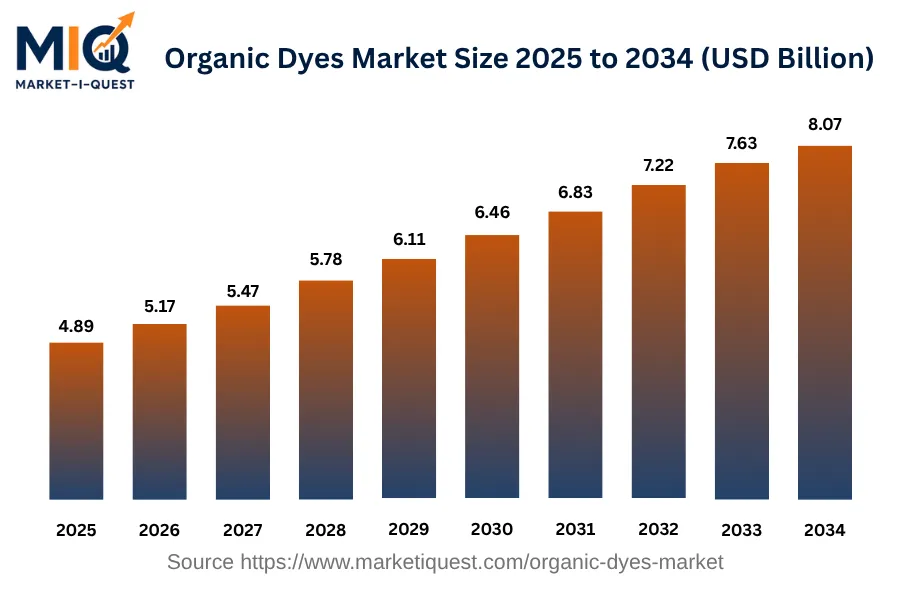
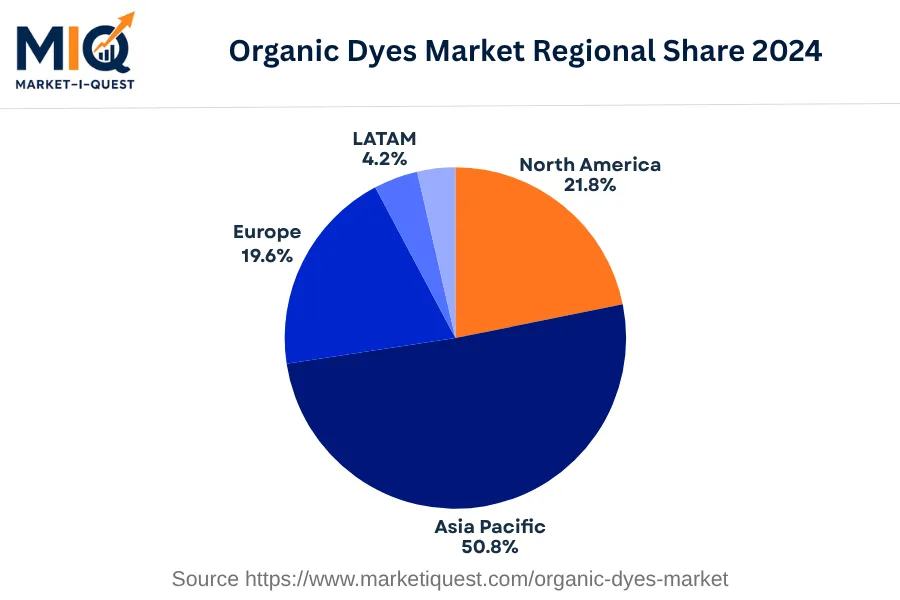
The Organic Dyes Market was 4.89 billion USD in 2025 and is projected to grow to 8.07 billion USD by 2034 with a CAGR of 5.7%. An increasing rate of growth became apparent when the market size incremented from 4.63 billion USD in 2024 to 4.89 billion USD in 2025, and this vigorous escalation is expected to continue until 2034. The expansion of the Organic Dyes Market is primarily due to a substantial escalation in demand and an overall greater utilization of these dyes in various sectors. As of regional data for 2024, the Asia Pacific region held the lion's share in the market with 50.8%, followed by North America at 21.8%, Europe at 19.6%, LATAM at 4.2%, and MEA at 3.6%. These percentages depict a geographical understanding of the distribution of the market around the world.

Key Takeaways

  • By Type - Synthetic Organic Dyes led the market accounting for a significant share.
  • By Source - Petroleum held a dominant position accounting for a substantial market share.
  • By Product Form - Powders emerged as the leader in 2024.
  • By Function - Colorants led the market dynamics driving the demand.
  • By Application - Food contributed for the main segment.
organic-dyes-market market size

Key Driving Factors

Stringent Environmental Regulations

A major driving factor shaping the organic dyes market is increasing environmental regulation regarding the use of synthetic dyes. Numerous governments worldwide are enforcing stricter norms to limit the use and disposal of synthetic dyes due to the environmental harm and health risks they pose. Governments are demanding the use of organic dyes, as they are derived from natural sources, do not release harmful toxins, and are biodegradable, causing less harm to the environment. These regulations are compelling dye manufacturers and industries that use dyes, such as textiles and food processing, to shift their focus from synthetic to organic dyes for reducing environmental impact.

Consumer Preference for Eco-friendly and Non-toxic Products

A second significant driver of the organic dyes market is an observable shift in consumer preferences towards eco-friendly and non-toxic products. With increasing awareness about the harmful effects of synthetic dyes, such as skin reactions and environmental damage, an increasingly large customer base is favoring products colored with organic dyes. These dyes, derived from natural sources, contain no harmful by-products and are generally seen as safer alternatives to synthetic dyes. Customers' rising preference for 'green' products is influencing manufacturers across industries - from apparel to cosmetics - to integrate organic dyes into their production processes, reflecting positively on the market's growth.

Market Evolution by Timeline

2019-2023
During 2019-2023, the primary buyers of organic dyes were the textile and food industries, specifically in regions of Europe and North America. These buyers used organic dyes due to the growing consumer preference for natural and eco-friendly products. There were several organic dyes shipped, primarily from India and China. However, the supply chain faced constraints, particularly in quality control and fragmented delivery routes. The EU initiated strict regulations under REACH (Registration, Evaluation, Authorization, and Restriction of Chemicals) to ensure safe and environmentally friendly production of dyes. Manufacturers usually adopted a volume-based pricing model, giving discounts for bulk purchases, and prompt payment was the typical contract type. Potential risks during this period included unstable pricing due to fluctuating raw material costs and supply disruptions.
2024
In 2024, increased demand from cosmetic and pharmaceutical industries surfaced, particularly from North America due to consumer trends favoring organic products. Producers in South America began integrating vertically to solve quality control issues. Despite promising domestic efforts, imports from India and China dominated, aided by advanced extraction technology. There were no major policy changes, but REACH still influenced the industry standards. The volume-based pricing model remained consistent, and joint ventures appeared as a popular commercial model. Increasing inventory costs was a predominant risk factor, making securing supplies critical for future stability.
2025-2029
The period 2025–2029 saw a shift in demand towards more eco-friendly processing methods. Africa and Asia emerged as new market spaces for organic dyes, including buyers from the automobile industry which started to utilize organic dyes in the manufacturing process. European Union broadened the REACH standards, creating new compliance barriers. However, economies of scale led to lower prices, and long-term contracts began to gain popularity, locking in costs for buyers. The major risk realized in this period was quality inconsistency. Manufacturers began to invest in better quality control methods to minimize this risk.
2030-2034
In 2030-2034, South America started exporting organic dyes following successful vertical integration efforts, serving a diversified buyer range from textile to automotive industries. Demand concentrated in Asia and Africa due to the rising middle class that preferred natural products. Progress in eco-friendly processing technology helped suppliers meet stringent regulation standards, such as the expansion of REACH. Supply chain risks decreased as quality control improved, and manufacturers employed just-in-time inventory models to control costs. License agreements became more common, facilitating knowledge sharing and technology transfer between firms.

Future Market Outlook

Future Opportunities

The ongoing shift towards sustainability in global supply chains opens numerous opportunities for the organic dyes market. For instance, in 2023, the launch of the UN's 2030 Agenda for Sustainable Development has led to heightened interest in sustainable manufacturing practices, encouraging brands worldwide to evaluate their dye sourcing. As consumer demand for transparency and eco-friendly products increases, companies like H&M have pivoted toward utilizing organic dyes in their clothing lines, fostering a trend that others are likely to follow. Additionally, regulatory bodies such as the EPA (Environmental Protection Agency) are likely to impose stricter guidelines on synthetic dye usage, creating further incentives for manufacturers to innovate in organic solutions. In 2024, the implementation of new textile recycling initiatives in Europe will necessitate the use of organic dyes, which are more compatible with recycling processes. Countries in the Asia-Pacific region, particularly China, present growth opportunities, with increasing investments in sustainable textile technologies and processing plants specializing in organic dye production. Industry collaborations are forging pathways for enhanced organic dye applications across sectors, such as a 2022 partnership between the Textile Exchange and a major organic dye manufacturer, focusing on shared sustainability goals. With the continuous evolution of regulatory frameworks and growing consumer awareness, the organic dyes market is positioned to expand across diverse sectors, embracing practices that align with environmentally responsible production standards.

Segmentation Analysis

By Type

The market is divided into subsegments including Natural Organic Dyes, Synthetic Organic Dyes, and Modified Organic Dyes. Among these, Synthetic Organic Dyes accounted for the largest revenue share while Natural Organic Dyes are expected to grow at the fastest CAGR during the forecast period.

Largest Revenue Share

Synthetic Organic Dyes

Market Share Leader

The Synthetic Organic Dyes segment has dominated the market primarily due to their wide range of color possibilities, brightness, and robust properties. Replacement cost and the complexity involved in matching synthetic dye colors with natural counterparts make it a preferred choice among consumers. Additionally, these dyes are widely used in numerous industry verticals like textiles, paper, leather, and plastics due to their cost-effectiveness and ease of use, contributing to the increased revenue share. Lastly, the high degree of regulation and standardization in the synthetic dyes industry has allowed for consistently high-quality production, which influences consumers' purchasing decisions favorably. It should be noted, however, that the dominance of synthetic organic dyes is based on the assumption of standard market conditions.

Fastest CAGR

Natural Organic Dyes

Forecast Period Growth Leader

The market for Natural Organic Dyes is projected to grow at the fastest rate. The primary driver for this trend being consumers' increasing preference for natural and eco-friendly products, especially in the textile industry. The rise in environmental awareness and stringent regulations against synthetic dye production could catalyse the adoption of natural organic dyes. Furthermore, advancements in extraction and processing technologies are likely to boost the market. However, these natural dyes face challenges such as color fastness and brightness, which may act as barriers to adoption. Partnerships focusing on technological advancements can aid overcoming these hurdles and stimulate market growth. Yet, potential risks related to inconsistent raw material supply and higher production costs associated with these dyes could impact early adoption rates. This fast growth forecast rest on the assumption that environmental sustainability remains a key decision factor for consumers and industrial users alike.

By Source

The market is divided into subsegments including plants, animals, coal tar, and petroleum. In the base year, 2024, petroleum accounted for the largest revenue share while plants are expected to grow at the fastest compound annual growth rate during the forecast period.

Largest Revenue Share

Petroleum

Market Share Leader

The prominence of petroleum as the largest source of revenue can be primarily attributed to its ingrained role in the world's energy and industrial sectors. The petroleum product market has historically been abundant, consistent, and relatively inexpensive, classifying it as the preferred source for a broad range of segments in various industries such as automotive, chemical, and power. Moreover, petroleum's applications are not inhibited by geographical constraints. It is a global industry with widespread adoption across developing and developed nations alike. Factors such as rapid urbanization, development of infrastructure, and increasing cross-border trade have driven the growth of this subsegment. The buying behavior of the market is influenced by factors such as availability, price, and adaptability of the product towards the end use application. The sector also has a tried and tested supply chain bolstered by years of refinement, which plays a critical role in operational activities and time-to-market for end products. Looking ahead, the established utility and infrastructure of petroleum operations in the industrial sector make it challenging for alternatives to replace in a short span of time.

Fastest CAGR

Plants

Forecast Period Growth Leader

The plants subsegment is projected to grow at the fastest rate primarily due to evolving consumer preference for sustainable and renewable alternatives to traditional petroleum-based products. Heightened environmental awareness and increasing governmental support for green energy are primary catalysts in this sector. Furthermore, technological advancements in the commercial cultivation and processing of biofuel crops have significantly reduced capital expenditure, propelling the growth of this segment. Despite these advances, barriers still exist, particularly around adoption. Current infrastructure favours petroleum-based products and transitioning to a bio-based economy requires significant investment in new facilities. This, in addition to perception of biofuels as being less efficient, can impede rapid uptake. However, global trends towards sustainability are likely to drive policy changes in favor of plant-based products, offering potentially large growth opportunities for this sector. But nearest risks centre around economic factors and climatic changes which could directly affect the cost and availability of crop yields.

By Product Form

The market is categorized by Product Form which includes Powders, Liquids, Pastes, and Granules. Powders possess the largest revenue share, while Liquids show the most promising growth potential in the forecast period.

Largest Revenue Share

Powders

Market Share Leader

Powders, in 2024, accounted for the largest chunk of market revenue. Several factors contribute to the dominance of powders in the market. Primarily, powders offer several advantages over other forms such as liquids, pastes, and granules. They are easier to package, transport and store due to their physical form, which attracts manufacturers and end users. Plus, they offer a longer shelf life and are relatively less prone to the danger of spilling or leakage, minimizing losses during transportation and storage. Another significant advantage is their versatility in applications. They can be used across a wide range of industries, hence broadening their market scope. Geographically, regions with manufacturing-intensive industries prefer powders as they can easily be incorporated into the production process. The purchasing criteria leans in favor of powders due to their cost-effectiveness and easy integrability into existing systems, making them the most revenue-generating product form in the base year.

Fastest CAGR

Liquids

Forecast Period Growth Leader

Despite the dominance of powders, the Liquids segment shows the fastest Compound Annual Growth Rate (CAGR) outlook. Liquids are gaining favor due to their easier handling and mixing capabilities. As technology advances, industries are seeking materials which can be easily integrated into automated systems. Liquids fit this criterion perfectly as they can be pumped, metered, and applied precisely, aiding in smoother production processes. Moreover, in certain applications, the use of liquids ensures a superior finish and higher product consistency. There are, however, adoption barriers. Handling and storage of liquids require specific infrastructure to prevent spills and leaks. Yet, with increasing technological advancements, and partnerships between manufacturers and logistical sectors, these barriers are gradually being reduced. Wide acceptance of liquids for their better processing traits is driving their rapid growth. However, regulatory risks and fluctuating commodity prices could pose challenges to the growth trajectory in the near term.

By Function

The market is divided into subsegments including Colorants, Mordants, Brighteners, Dye Adjuvants. Of these, Colorants accounted for the largest revenue share while Brighteners is expected to grow at the fastest CAGR during the forecast period.

Largest Revenue Share

Colorants

Market Share Leader

Colorants are the leading subsegment by revenue in 2024 for a variety of reasons directly related to their ubiquity across industries. As the most fundamental input in the textile, paint, and plastic industries, colorants define the aesthetic appeal and market acceptability of final products. Their wide application scope implies a consistent, high-volume demand that directly translates into a high revenue stream. Transitional markets such as Asia and Africa are witnessing a rapid expansion of manufacturing industries, driving the consumption of colorants. Notably, the proliferation of environmentally friendly colorants is curating new demand pools as regulations related to environmental toxicity of industrial effluents become tighter. Stringent regulations are also acting as purchasing criteria that directly influence buying decisions, particularly in developed markets. As switching cost from synthetic to organic colorants is low, manufacturers and users are hastening this transition, thereby cementing the colorants' dominance in revenue terms.

Fastest CAGR

Brighteners

Forecast Period Growth Leader

Brighteners represent the fastest-growing subsegment in the segment. This growth is primarily driven by their escalating integration in various applications such as paper, textiles, and plastic industries. Brighteners are critical in enhancing the perceived whiteness of products, therefore, increasing their attractiveness to consumers. Especially in industries like textiles and detergents, the adoption of brighteners is gaining substantial momentum due to consistent R&D and successful customer trials. Indeed, technological advancements have made introducing brighteners into production processes less cumbersome, reducing barriers to entry and driving faster adoption. A significant emerging risk to the subsegment's growth, however, is the potential for increasing regulatory constraints on chemical additives that could impact product formulations and manufacturing processes. The expanding partnerships between brighteners manufacturers and end-user industries is catalyzing market growth. Despite environmental concerns, the high demand from manufacturers, particularly in developing economies, is likely to ensure sustained growth.

By Application

By application, the market is segmented into Textiles, Leather, Paper, Food, Cosmetics, and Others. Of these, the Food subsegment accounted for the largest revenue share, while the Cosmetics subsegment is expected to expand with the fastest CAGR during the forecast period.

Largest Revenue Share

Food

Market Share Leader

The Food segment has dominated revenue generation in the market, seeming to vouch for a broad and cross-industry demand. The actual drivers trace back mostly to the growing global population and the increasing demand for innovative, high-quality, and nutritious food products. This has compelled manufacturers to invest heavily in research and development activities, in turn influencing the demand for the Food subsegment. High growth economies with rising disposable incomes and changing food habits are contributing significantly to the growth of this segment. Regulatory shifts promoting food safety, and the fluctuating consumer choices towards healthier lifestyles have further generated demand for advanced food-quality-conscious processes. Despite potential risks faced from regulatory bodies concerning certain additives and ingredients, the traditionally strong and stable cash flow from the Food industry is a critical supply chain factor for preventing extreme revenue fluctuations.

Fastest CAGR

Cosmetics

Forecast Period Growth Leader

Despite not being the current major revenue contributor, the Cosmetics subsegment holds promising potential, backed by rapid technological advancements and innovation. The global cosmetics industry is going through a paradigm shift, with consumers increasingly favouring natural and organic products. Emerging economies play a significant role, offering a large customer base, growing per capita income, and evolving consumer preferences. Potential catalysts include growing collaboration among manufacturers and raw material suppliers, anticipated to lower the input costs and provide an impetus to the subsegment's growth. The rising influence of social media and its power as a marketing tool cannot be overlooked, often driving trends and demand in the cosmetics industry. However, pitfalls stem from possible regulatory changes concerning the banning of certain chemicals or ingredients and the competition is intense, demanding constant innovation and expenditure on marketing strategies.

Competitive Analysis: Organic Dyes Market

Key Market Players

Manufacturers / OEMs

Clariant
Switzerland
DyStar
Singapore
Chromatech
US

Key Suppliers & Raw Materials

BASF SE
Germany
Huntsman Corporation
US
Arkema Group
France

Distributors, Integrators & Channel Partners

Univar Solutions
US
Brenntag AG
Germany
Nexeo Solutions
US

Porter’s Five Forces Analysis

An in-depth scrutiny of the competitive dynamics of the Organic Dyes Market.

Supplier Bargaining Power

Medium

Suppliers hold moderate power due to the availability of multiple organic dye sources.

Buyer Bargaining Power

High

Buyers have high bargaining power due to the increasing number of suppliers and product varieties.

Threat of Substitutes

Medium

Availability of synthetic dyes can pose a medium-level threat, contingent upon price and regulation changes.

Threat of New Entrants

Low

High initial setup costs and strict environmental regulations restrict the entry of new players.

Competitive Rivalry

High

Competitive rivalry is high given the growing demand for organic products and the presence of multiple suppliers.

Regional Analysis

Geographic market dynamics and growth opportunities across key regions

Global Market Outlook

organic-dyes-market market regional share

North America

In 2024, the North American market for organic dyes was well-established, defined by key demand factors, regulations, and supply dynamics. High demand came from textile industry, food & beverage manufacturers and the paper industry, driven by consumer preference for eco-friendly products, rewarding 'green' manufacturers. Accelerating adoption of clean technologies also encouraged innovation in organic dyes, with potential breakthroughs in lightfastness and wash-fastness.

Rising regulatory pressure, such as the EPA's ruling on hazardous dye disposal, forced traditional dye manufacturers to adapt or lose market share. Organic dye producers from Canada, US and Mexico saw increased investments to cater to rising environmental obligations of dye-intensive industries. However, uneven pricing stemming from inconsistent raw material supply affected market price stability.

In terms of trends, consumer buying behavior leaned towards environmentally sustainable practices, favoring organic dyes due to less chemical contamination. Technological shifts, including advanced dyeing techniques and efficient extraction methods, further augmented organic dye usage. Mergers and acquisitions observed within the sector ensured wider market accessibility and enhanced product offerings. Latest standards on emission control and restricted use of harmful chemicals in textile, food and paper industries enforced the switch to organic alternatives. Government agencies increased vigilance with tighter policy enforcement, ensuring adherence to standards and directing market norms.

In conclusion, the North American organic dyes market in 2024 was characterized by dependence on industry-wide 'green' shifts, advancements in dye technologies, and evolving regulatory frameworks.

Asia Pacific

In 2024, the organic dyes market in the Asia Pacific region experienced robust growth, mainly driven by increasing demand from the textile and printing industry. Chinese manufacturers ramped up production to meet the rising local demand and outperformed other countries in terms of manufacturing capacity and technology adoption. India, on the other hand, leveraged its vast agricultural resources to lead in the production of natural organic dyes.

Innovative technologies for the production of environmentally friendly and non-toxic organic dyes fueled demand, along with stricter environmental regulations in the region. Government policies aimed at promoting sustainable manufacturing practices in countries like Japan were key in driving this shift.

Changing consumer preferences were central to market trends. The demand for organic products skyrocketed in key markets, with buyers in Australia and South Korea favoring environmentally friendly dyes for personal and household items over their synthetic counterparts.

E-commerce emerged as a significant channel for dye sales, with major players striking partnerships with online retail giants. Regionally recognized standards for organic dyes compliance had an immense impact, shaping manufacturing practices and market dynamics in both China and ASEAN countries.

The healthcare sector, with its use of organic dyes in biomedical research and diagnostics, also played a role, while manufacturers in the region continued to innovatively meet the stringent quality requirements of this sector.

Europe

In 2024, Europe's organic dyes market displayed significant activity catalyzed by intriguing drivers and trends. Regulatory initiatives pushing for environmentally friendly manufacturing practices were substantial market drivers. In Germany, stricter waste management regulations increased the demand for organic dyes within its thriving textiles industry. In the United Kingdom, heightened investment in sustainable fashion resulted in enhanced usage of these dyes. Moreover, advancements in technology across Italy assisted in the adoption of organic dyes in various sectors, including healthcare imaging and manufacturing.

Swift shifts in consumer buying behavior bolstered the market; consumers in France and Spain demonstrated preferences for organically dyed products owing to growing ecological concerns. In the Nordics, the increased adoption of organic dyes signified a shift towards bio-based products. Noted partnerships such as Benelux's collaboration with key organic dye manufacturers reflected an ever-evolving market landscape. Furthermore, Central & Eastern Europe witnessed enhanced policy enforcement pertaining to chemical usage restrictions in manufacturing and retail sectors, buttressing organic dyes' relevance.

Across these varying sectors—manufacturing to healthcare—the observed emphasis on sustainable practices and ecological commitments drove the demand, adoption, and trends for the organic dyes market in Europe for the base year of 2024.

Latin America

In 2024, Latin America’s organic dyes market emerges as a significant segment within the dyeing and textile industry. Dominant factors propelling the market growth include an upsurge in consumer preference for eco-friendly dyeing solutions, reinforced by Brazil and Argentina's strict regulations on synthetic dye production, and substantial investments in the green dye sector by Mexico and Chile. Simultaneously, increasing technology adoption to streamline the production process, as witnessed in the textile hubs of Lima, Peru, and Medellin, Colombia, stimulates market expansion.

The observed market trends manifest in consumer shift towards organic dyes, pushing manufacturers and retailers alike towards product modification. Notable technology shifts include the pervasive application of organic dye in digital printing across most manufacturing sectors in the region. Mexico stands out in channel dynamics as e-commerce emerges as a preferred platform for organic dye purchases. The year also marked increased policy enforcement, with Colombian businesses adopting industry-standard practices in organic dye use, further bolstering market credibility.

The organic dye sector's potential did not escape notice as M&As gain momentum, notably the Brazilian retail giant, Lojas Americanas, integrating with a local dye manufacturer for a color-rich clothing line. This behavioral pivot towards sustainable dye practices, owing predominantly to vigorous policy enforcement and technological advancements, demonstrates the organic dye market's vigorous growth in the Latin American region in 2024.

Middle East & Africa

In 2024, the Organic Dyes Market in the Middle East and Africa experienced significant growth due to various drivers and observable trends. Dominant market drivers included abolition of stringent regulations on dye imports in countries like Saudi Arabia and Egypt, enabling expeditious market investment. The rapid adoption of advanced dyeing technology in textile industries, particularly in South Africa and Nigeria, also spurred growth. In addition, supply dynamics showed a favorable increase with the arrival of new suppliers in Israel and Kenya, stoking competitive pricing.

In terms of trends, buyer behavior showed a clear shift towards organic over synthetic dyes, particularly in retail and manufacturing sectors across the United Arab Emirates and Qatar. The transition was supplemented by successful technology shifts supported by massive technological undertakings and partnerships between local and international dye suppliers. Moreover, rigid policy enforcement triggered a notable standardization of dye quality, particularly within the textile industry throughout the region.

Overall, the Organic Dyes Market in the Middle East and Africa capitalized on relaxed regulations, technology adoption, increasing suppliers, and changing buyer preferences in the base year of 2024. The evolving landscape in countries like Saudi Arabia, UAE, Egypt, South Africa, Nigeria, and Israel potentiated the market's growth further.

Recent Industry Developments

Latest market innovations, product launches, and strategic initiatives

July 2026

SuanNutra executed a definitive agreement to acquire a portfolio of specialty natural ingredient and botanical extraction businesses from International Flavors & Fragrances (IFF). The integrated operations consolidate plant-derived natural colors and organic dye platforms under a unified global manufacturing umbrella.

May 2025

The European Chemicals Agency (ECHA) and regional environmental bodies expanded restrictions on hazardous aromatic amine precursors. This regulatory pressure triggered an industry-wide transition toward certified organic and bio-based dyes, driving fashion and home textile brands to mandate Global Organic Textile Standard (GOTS) compliant colorants across their primary supply chains.

Frequently Asked Questions