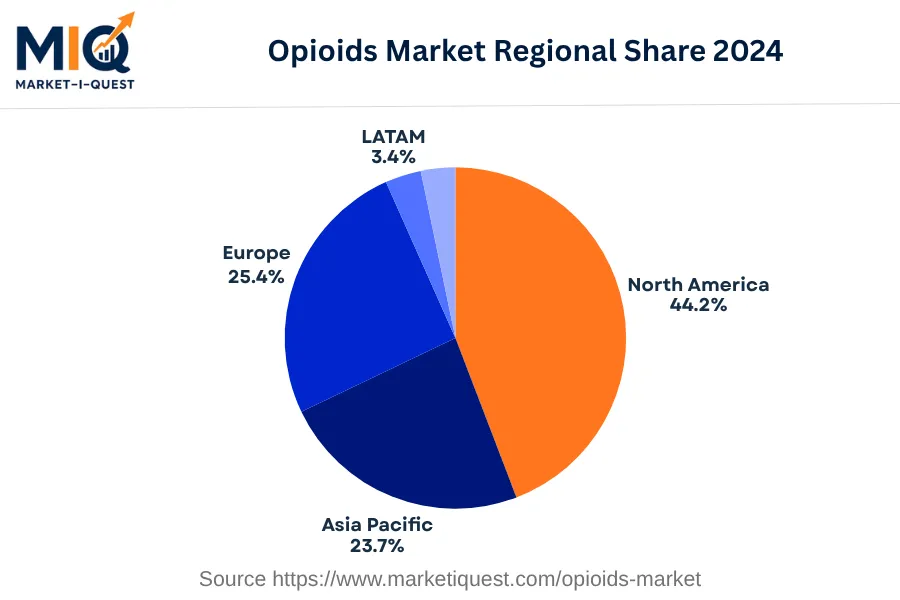
In 2024, the Opioids market in Latin America emerged from significant regulatory movements affecting supply and demand dynamics, particularly within healthcare sectors in key regions such as Brazil, Mexico, Argentina, Colombia, Chile, and Peru. Investments in medical technology adoption were a key driver, resulting in increased accessibility to pharmaceutical opioids. For instance, regulations in Mexico's pharmaceutical sector favored faster approval of opioid-based medications, stimulating market growth. In Brazil, the government’s increased healthcare expenditure resulted in wider availability and consumption of opioids for pain management purposes. Meanwhile, supply dynamics were influenced by the production output of poppy-derived opioids in Colombia and Peru, catering mostly to the domestic demands and, to an extent, Argentina’s consumption.
A fundamental trend observed was a significant shift in buyer behavior, with a surge in demand for opioids in palliative care, particularly in aging populations within Argentina and Chile. As for product development, there was an increasing shift towards long-lasting opioids to improve patient comfort. Technological advancements in these countries supported telemedicine methods for remote prescription and control of opioids usage. Intellectually, partnerships between LATAM-based pharmaceutical companies and larger global corporations presented opportunities for shared standards and improved policy enforcement. Broadly, the LATAM opioid market saw dynamic changes due to a blend of regulatory changes, technology advancement, and evolving customer behavior.