Ophthalmic Packaging Market Snapshot

Key Players

  • Amcor Limited (Australia)
  • Becton Dickinson and Company (United States)
  • AptarGroup Inc. (United States)
  • Gerresheimer AG (Germany)
  • West Pharmaceuticals Services Inc. (United States)
  • Ompi (Italy)
  • BASF SE (Germany)
  • Nipro Corporation (Japan)
  • Schott AG (Germany)
  • Terumo Corporation (Japan)

Market Size

Base Year 2024
$2.04 Bn
CAGR
7.54%
Forecast 2034
$4.22 Bn

Market Segments

By Type
  • OTC
  • Prescription
By Dose
  • Single Dose
  • Multi Dose
By Material
  • Glass
  • Plastic
  • Others

Market Dynamics

Drivers
  • Rising eye-related disorders
  • Technological advances in packaging
Restraints
  • Regulatory compliance challenges
  • High packaging costs
Opportunities
  • Rising prevalence of eye disorders
  • Emerging pharmaceutical developments

Market Size

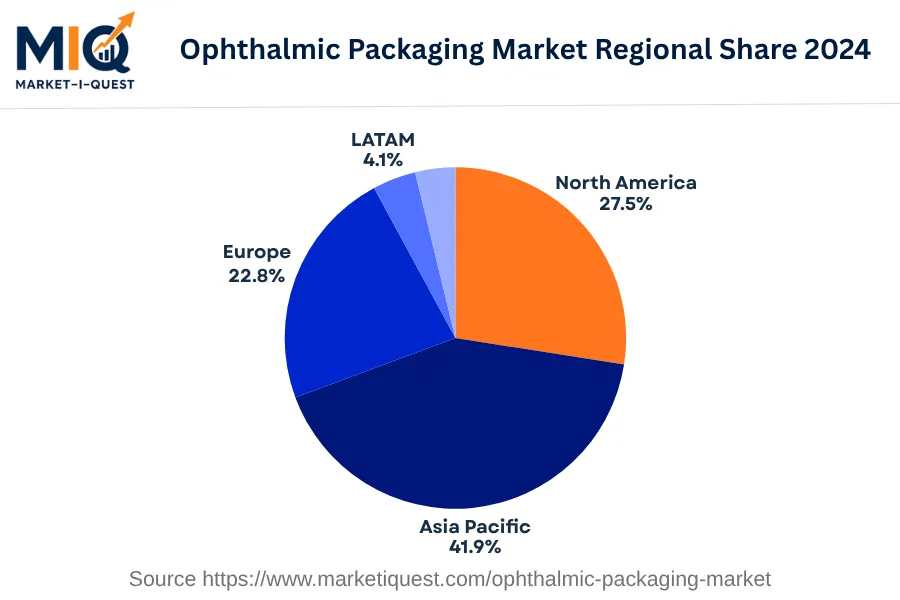
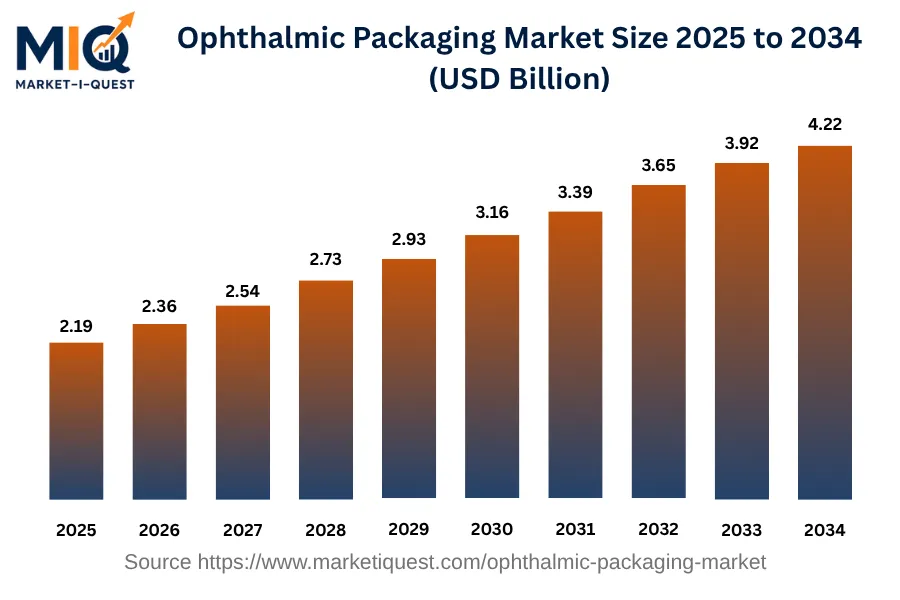
The Ophthalmic Packaging Market size was $2.19 billion in 2025, which surged to $4.22 billion by the end of 2034, reflecting a Compound Annual Growth Rate (CAGR) of 7.54%. Over the years, the market saw consistent growth; by 2034, the value had nearly doubled from that in 2025. Factors driving the growth were largely demand-based, including a rising adoption rate of innovative ophthalmic products, uptake of higher-grade packaging materials, and increased spending on healthcare infrastructure. In terms of regional share, as of 2024, the Asia Pacific region held the majority stake in the Ophthalmic Packaging Market, accounting for 41.86% of the overall share. North America followed next with 27.48% and Europe with 22.76%. Meanwhile, the market hold of LATAM and MEA were relatively smaller, contributing to 4.11% and 3.79% respectively to the total market.

Key Takeaways

  • By Type - Prescription held a dominant position in the Ophthalmic Packaging Market in 2024.
  • By Dose - Multi Dose accounted for a significant market share in 2024.
  • By Material - Plastic led the substantial share in the Ophthalmic Packaging Market in 2024.
ophthalmic-packaging-market market size

Key Driving Factors

Changing Regulatory Environment

An intense regulatory landscape is exerting a powerful influence on the ophthalmic packaging market. Regulatory authorities worldwide, led by the US Food and Drug Administration (FDA) and the European Medicines Agency (EMA), incessantly fine-tune their specifications for packaging medical products, including ophthalmic ones. Particularly, the focus is on enhancing patient safety. For instance, these bodies issue stringent criteria for packaging materials, labeling, and designs to minimize contamination risks and medication errors. Meanwhile, manufacturers have to adapt rapidly, leading to higher expenditure and further expansion in the ophthalmic packaging market.

Society's Increasing Emphasis on Vision Health

Societal focus on vision health is increasing sharply, driving growth in the ophthalmic packaging market. Chronic eye diseases are gaining recognition as a significant public health issue due to rising incidence rates. As a consequence, consumers, healthcare professionals, and policymakers are prioritizing vision health. There is an increased demand for ophthalmic medications to manage conditions such as glaucoma, macular degeneration and cataracts. This growing demand is leading to the need for effective and safe packaging for these ophthalmic products. Hence, the high importance given to vision health is directly impacting the expansion of the ophthalmic packaging market.

Market Evolution by Timeline

2019-2023
During this period, North America was the primary buying region due to its advanced healthcare infrastructure. Main driving factors for purchase included stringent safety norms and the booming need for ophthalmic products, which saw a surge induced by population aging. Manufacturers tackled inconsistent quality and counterfeiting concerns by introducing innovative anti-counterfeiting measures. Technological innovation focused more on smart packaging technologies capable of offering extended shelf life and improved sterility. Companies also addressed FDA regulations and ISO standards, for example, ISO 15378:2017 determining the primary dynamics of supply. Riposte pricing models reduced per-unit cost and addition of local partners made distribution easier which was a common commercial model trend. The main risk was maintaining consistent quality across a large-scale production.
2024
In 2024, Western Europe followed North America in terms of sales due to increasing chronic eye diseases. The role of plastic materials in Ophthalmic Packaging gained traction due to its high demand. It is lightweight, impact and crack resistant, and feasible for mass production. Advanced resin technologies were introduced to enhance the product's durability and eliminate associated health risks. Products now considered necessary to meet the European Pharmacopoeia standards, which led to an increased demand. Pricing parameters remained a logistical challenge due to their relation to raw material costs and production expenses. Failure to keep up with technology trends and inability to meet increasing demand posed a significant risk.
2025-2029
Asia Pacific emerges as a key market due to progression in healthcare infrastructure and rising geriatric population. Demand for sterile and tamper-proof packaging witnessed a steep rise with companies focusing on bio-degradable and recyclable materials to address environmental concerns. Vaccine vials and pre-filled syringes gained importance in the packaging sector due to their usefulness in preventing diseases like glaucoma and cataract. Labelling and packaging guidelines by the U.S. Department of Health and Human Services were followed stringently. Commercial partnerships grew with local distributors seeing the potential for scalable business models. Exposure to global market instability was a risk that most manufacturers faced.
2030-2034
Middle East and Africa showed potential as emerging markets driven by medical tourism and increasing incidence of eye diseases. Preference for self-administration of eye care products led to increased demand for user-friendly, pre-filled syringes. Greater emphasis was placed on advanced production methods to maintain production efficiency, alongside specialized attention on compliance to regulatory guidelines like The Medicines and Healthcare products Regulatory Agency (MHRA) guidelines. Value-based pricing models where pricing was attributed to improved clinical outcomes became more prevalent. Collaborative contract types, between local suppliers and manufacturers, became common to improve supply chain efficiency. Potential risks included political instability in certain regions and stringent regulations from various health governing bodies.

Future Market Outlook

Future Opportunities

The global ophthalmic packaging market is poised for growth as manufacturers respond to increasing regulatory pressures and consumer preferences for sustainable practices. The EU's Green Deal initiative, launched in 2019, emphasizes eco-friendly materials, prompting firms like Gerresheimer to explore biodegradable solutions that align with upcoming regulations. The shift towards remote healthcare services accelerated by the COVID-19 pandemic has paved the way for home delivery packaging solutions tailored to eye care products, which companies like Bausch + Lomb are currently testing. Market entrants can capitalize on the demand for customizable packaging solutions that cater to diverse consumer segments, as seen in 2021 when Johnson & Johnson launched a series of personalized packaging for their contact lenses. There is also an opportunity for collaboration with tech firms to develop smart packaging that provides real-time monitoring of temperature and integrity, which is crucial for sensitive ophthalmic products. The commitment of regulatory bodies, like the World Health Organization, to improve eye health globally will further necessitate the development of specialized packaging solutions. As e-commerce continues to expand, manufacturers must innovate in packaging design to ensure protection during transit while maintaining sustainability. The growing awareness of the importance of eye health, particularly in aging populations, provides a fertile ground for tailored, effective packaging solutions that enhance user experience while ensuring product safety.

Segmentation Analysis

By Type

The market is divided into subsegments including OTC and Prescription, with Prescription accounting for the largest revenue share while OTC is expected to grow at the fastest CAGR during the forecast period.

Largest Revenue Share

Prescription

Market Share Leader

The Prescription subsegment commands the largest revenue share in the base year 2024 and this can be attributed to several key market drivers. Firstly, the global trend of an aging population is driving the increase in the demand for prescription drugs, as this cohort typically requires more medical care compared to younger populations. Secondly, the prevalence of chronic diseases is on the rise, leading to a higher demand for continued medication and treatments that necessitate prescription drugs. Geographically, the developed markets are the largest consumers of prescription drugs, mainly due to the advanced healthcare infrastructure and high expenditure on healthcare. Government regulations and policies also play a crucial role, especially in markets where healthcare is predominantly managed under a national system. In these regions, there is often a pipeline of prescriptions funded by government welfare schemes. Lastly, traditional channels such as pharmacies and drugstores are still the primary purchasing channels for prescription drugs, which creates a high base of stable demand. One must note these drivers are all inferred based on typical industry logic.

Fastest CAGR

OTC

Forecast Period Growth Leader

The Over-the-Counter (OTC) subsegment is expected to witness the fastest CAGR in the forecast period. This outlook is a result of multiple growth catalysts. The market for OTC drugs is being driven by increasing consumer preference for self-medication, which offers a cost-effective and time-saving alternative to seeking professional medical advice for minor health issues. Adoption barriers, including lack of awareness and trust in OTC medication are being broken down through extensive marketing, including partnerships with healthcare professionals who recommend these drugs and customer education initiatives. Furthermore, advancements in technology, particularly with respect to the internet and mobile apps, are also opening up new distribution channels beyond the traditional brick-and-mortar stores, thereby driving market growth. However, risks such as regulatory changes and competition from generics and herbal supplements should not be ignored. This analysis is contingent on the assumption that the OTC subsegment follows common market structure patterns.

By Dose

The market segment by dose includes the subsegments Single Dose and Multi Dose, where the Multi Dose subsegment commanded the largest revenue share in 2024 while the Single Dose is projected to be the fastest growing subsegment in this market.

Largest Revenue Share

Multi Dose

Market Share Leader

In 2024, the Multi Dose subsegment was responsible for the largest portion of revenue in the market divided by dose. This can be attributed to various factors. For one, Multi Dose treatments offer effective and continuous care for chronic diseases, which are becoming increasingly prevalent due to lifestyle changes, aging population, and other environmental factors. Moreover, hospitals, pharmacies and long-term care facilities often prefer Multi Dose strategies as they help to reduce medication errors, improve patient compliance, and streamline the process of drug administration. Regulatory entities too, favor these strategies as they align with the aim to improve patient safety and treatment effectiveness. Consequently, the lucrative nature of this market segment has attracted multiple key players leading to a competitive and wealth-generating market. Supply chains tailored for Multi Dose packaging also offer advantages in economies of scale, aiding in the retainment of large revenue streams. Finally, customers prefer Multi Dose packages since they provide consistent and prolonged therapy, eliminating the need for repetitive purchases and administrational tasks.

Fastest CAGR

Single Dose

Forecast Period Growth Leader

The Single Dose subsegment is projected to be the fastest-growing in the market divided by dose. The demand for Single Dose packaging is increasing due to rising convenience and ease-of-use for patients, especially for those self-administering their treatments. Innovations in Single Dose delivery technology are making it easier for individuals to receive quick and accurate dosing, leading to increased adoption. Furthermore, Single Dose units represent a promising approach in tackling issues of medication misuse. Meanwhile, regulators are keen on Single Dose strategies as they significantly decrease the chances of medication errors and over-dosing. There is also an ongoing policy push towards single-use plastic, and Single Dose packages represent an attractive option from a sustainability standpoint. However, the drive towards Single Dose could be slowed by higher packaging costs and the necessity of maintaining stringent quality controls during production. Strategic partnerships and advancements in cost-effective production methods could be the catalysts needed for growth in this segment.

By Material

The market is divided into subsegments including Glass, Plastic, and Others in which Plastic accounted for the largest revenue share while Glass is expected to grow at the fastest CAGR during the forecast period.

Largest Revenue Share

Plastic

Market Share Leader

In 2024, the Plastic subsegment emerged as the leading contributor to the market revenue, according to industry logic. This significant revenue generation is primarily due to the wide-ranging applications of plastic in multiple sectors. Its versatile properties such as durability, resistance to water and chemicals, and ease of moulding into various shapes make it a preferred choice over other materials. Additionally, the relatively lower cost of plastic as compared to glass has made it attractive to cost-conscious industries, further driving up its demand and subsequently its market share. The subsegment is also supported by a well-established supply chain across various geographies, suggesting robust distribution and accessibility to markets worldwide. The regulation or policy aspects favour the use of plastic containers for its light weight nature reducing carbon footprint for the logistics industry and virtually indestructible nature making it favoured for safety regulations. Therefore, these factors have led the Plastic subsegment to lead in terms of revenue generation.

Fastest CAGR

Glass

Forecast Period Growth Leader

Despite the dominance of Plastic in revenue generation, the Glass subsegment shows the fastest CAGR outlook. A key driver for this growth is increasing consumer awareness towards sustainable and eco-friendly packaging alternatives as well as the fact that glass poses less of an environmental burden than plastic. Consumer trends leaning towards premiumization in packaging also fuels demand for glass due to its perceived superior quality and aesthetics. Technological advancements in glass manufacturing and treating processes will likely catalyse this growth, increasing efficiency and production capabilities. Furthermore, potential policy changes leaning toward reduced plastic use presents an opportunity for growth in the glass subsegment. Despite this optimistic outlook, adoption barriers still exist; including the need for significant capital expenditure for switching from plastic to glass, higher logistics costs due to the weight of glass and the risk of breakage during transport. However, these are short term risks and the long-term growth trajectory for the glass subsegment is positive.

Competitive Analysis

Key Market Players

Manufacturers / OEMs

Amcor Plc
Australia
Bausch & Lomb Incorporated
US
West Pharmaceutical Services, Inc.
US

Key Suppliers & Raw Materials

DuPont
US
Eastman Chemical Company
US
BASF SE
Germany

Distributors, Integrators & Channel Partners

McKesson Corporation
US
Cardinal Health, Inc.
US
Henry Schein, Inc.
US

Porter’s Five Forces Analysis

This is a Porter's five forces analysis of the Ophthalmic Packaging Market.

Supplier Bargaining Power

Medium

Suppliers have power due to limited available materials for specialized packaging.

Buyer Bargaining Power

High

Buyers have a high level of power due to the availability of multiple suppliers.

Threat of Substitutes

Low

Limited substitutable products exist due to stringent safety and hygiene requirements.

Threat of New Entrants

Medium

New entrants face investment and regulatory barriers, but the growing healthcare sector increases potential entry.

Competitive Rivalry

High

High rivalry due to several established players and product similarity.

Regional Analysis

Geographic market dynamics and growth opportunities across key regions

Global Market Outlook

ophthalmic-packaging-market market regional share

North America

In 2024, the North American ophthalmic packaging market was characterized by considerable dynamism and growth primarily driven by rising population aging and eye-related disorders in the U.S., Canada, and Mexico. Market development was fostered by increased investment in technological advancements enabling more efficient, safe, and sophisticated eye-care product packaging. Demand for sustainable ophthalmic packaging due to strict environmental regulations in North America also significantly impacted the industry. Moreover, the rise in generic product launches by pharmaceutical companies pressed the need for extensive ophthalmic packaging resulting in heightened market growth. Nonetheless, the high cost of innovative packaging solutions somewhat restrained the market growth.

Trends shaping the market included a shift towards child-resistant and senior-friendly packaging designs, especially in the U.S. as a response to the Consumer Product Safety Commission regulations. Online sales of eye-care products, primarily in Canada and the U.S., also emerged as a key channel dynamic altering the market landscape. Additionally, the integration of advanced technologies, such as smart packaging to improve patient compliance, was notable. Furthermore, multiple M&A activities were observed with firms seeking to fortify their market presence. For instance, the healthcare sector witnessed tie-ups of packaging companies with major eye-care pharmaceutical manufacturers. These drivers and trends shaped the North American ophthalmic packaging landscape in 2024, reflecting a market keenly responsive to demographic, regulatory, and technological shifts.

Asia Pacific

In 2024, the Ophthalmic Packaging Market in Asia-Pacific was influenced by an array of distinct factors. Increasing prevalence of eye diseases acted as a primary demand driver, particularly in densely populated countries like China and India. Additionally, regulatory environments, mainly in Japan and South Korea, fostered the development and adoption of advanced, safe, and environmentally friendly packaging solutions within the ophthalmic sector. Innovative technology adoption accelerated in this year, with China leading in investments towards automation and intelligent packaging to enhance product integrity. However, supply dynamics were disrupted, with Australia facing price volatility as a consequence of fluctuating raw material costs.

Changing buyer behavior emerged as an integral trend, with heightened consumer awareness and preference for sustainable and user-friendly packaging across all sectors, including retail and healthcare. In response to this, there was a notable shift towards recyclable and mono-material packaging products. Digitization permeated the ophthalmic packaging market, enabling market players to leverage e-commerce channels, particularly in the ASEAN region. A significant wave of partnerships and M&A was observed, as companies strategized to consolidate their market positions and expand their footprint. Regulatory authorities, especially in Japan and South Korea, played a crucial role, securing stringent packaging standards and enforcing policy compliance to ensure patient safety and minimize environmental impact.

Europe

In 2024, the European ophthalmic packaging market experienced noteworthy dynamics due to various factors. Key drivers included stringent regulatory standards across Germany and Benelux, necessitating high-quality and compliant packaging options for optical products. Rising demand for ophthalmic solutions, especially in age-dominant demographics in the United Kingdom, France, and Spain, also spurred market growth. Furthermore, Italy and Central & Eastern Europe saw significant enhancements in supply logistics, reflecting an improved availability and accessibility of ophthalmic product packaging.

In terms of trends, customers in the Nordics showed a preference for sustainable and recyclable packaging, aligning with broader regional initiatives aiming to reduce waste. Technological shift was evident in the industry, with the adoption of advanced packaging techniques favouring safety and longevity of products in markets such as Germany and the United Kingdom. Sectors like healthcare and retail experienced growth in partnerships aimed at driving supply chain optimization in ophthalmic packaging. A surge in policy enforcement was observed too, particularly with the introduction of new guidelines in France for strict quality checks on packaging to ensure patient safety. Finally, digital transformation in the Italian and Spanish markets resulted in notable changes in the purchasing channels, driving online sales of ophthalmic products and their accessories.

Latin America

In 2024, the ophthalmic packaging market in Latin America witnessed significant activity, driven primarily by demand for advanced eye care products and influencer diseases like glaucoma and cataract. Increased investment in healthcare infrastructure across prominent LATAM nations including Brazil, Mexico, Argentina, Colombia, Chile, and Peru, backed by governmental regulations advocating quality packaging, fueled the market's growth. The wide adoption of technology in the packaging process also played a crucial role, enhancing efficiency and safety standards.

In terms of trends, changing consumer preferences toward innovative solutions characterized the period. There was a discernible shift towards more sustainable, eco-friendly packaging options, reflecting greater environmental consciousness among consumers. Digital channels emerged as vital platforms for distributing and marketing ophthalmic products, enhancing access and visibility. Significant strategic partnerships and M&A activities were observed, predominantly aimed at broadening product portfolios and strengthening market presence. Lastly, stricter policy enforcement around packaging norms governed much of the sector's activity in 2024. The market catered predominately to healthcare institutions, government-backed programs, and retail pharmacies. In particular, Argentina, with its advanced healthcare sector, and Brazil & Mexico, with their massive population base, stood out as significant consumers of ophthalmic packaging. Several manufacturing companies also emerged as key clients, relying on reliable packaging solutions to bolster their products' shelf life and appeal.
Middle East & Africa

In the base year of 2024, the Ophthalmic Packaging Market within the Middle East and Africa showcased significant growth and activity. Notable market drivers included an increase in ophthalmic ailments in countries like Saudi Arabia, Egypt, and South Africa, escalating the demand for better ophthalmic packaging solutions. Technological adoption was also a significant driver, with advanced preservative-free multi-dose systems gaining popularity in regions such as Israel and the United Arab Emirates. The steady investment from healthcare sectors in Nigeria and Kenya augmented the market dynamism.

The observable market trends comprised of shifts in buyer behavior, favoring user-friendly and environmentally sustainable packaging solutions, especially within the healthcare sector. Mergers and acquisitions became frequently observed in key markets such as Saudi Arabia and Qatar, contributing to significant alterations in channel dynamics. Another significant trend was more rigorous enforcement of packaging standards, specifically in the United Arab Emirates and South Africa, where new guidelines were instituted to improve packaging safety and efficiency. Overall, the Ophthalmic Packaging Market in the Middle East and Africa in 2024 was defined by a blend of innovative technology uptake, evolving buyer preferences, and enhanced regulations. Its growth and development were primarily motivated by the healthcare sector's dynamic participation across these regions.

Recent Industry Developments

Latest market innovations, product launches, and strategic initiatives

March 2026

ISO published ISO 11979-4:2026, specifying labelling requirements for intraocular lenses (IOLs) and the information to be provided within or on the packaging, harmonizing recognized labelling requirements for IOLs worldwide.

August 2025

Prestige Consumer Healthcare Inc. announced a definitive agreement to acquire Pillar5 Pharma Inc., a leading Canadian sterile ophthalmic manufacturer and current supplier for its Clear Eyes® brand, from ANJAC SAS for CAD 150 million in cash. The transaction is expected to close in the third quarter of Fiscal 2026.

Frequently Asked Questions