Ophthalmic Lasers Market Snapshot

Key Players

  • Lumenis Ltd. (Israel)
  • Carl Zeiss Meditec AG (Germany)
  • Ellex Medical Lasers Limited (Australia)
  • IRIDEX Corporation (United States)
  • Nidek Co. Ltd. (Japan)
  • Topcon Corporation (Japan)
  • Quantel Medical (France)
  • A.R.C. Laser GmbH (Germany)
  • Alcon Laboratories Inc. (Switzerland)
  • Ziemer Ophthalmic Systems AG (Switzerland)

Market Size

Base Year 2024
$1.83 Bn
CAGR
5.87%
Forecast 2034
$3.24 Bn

Market Segments

By Technology
Femtosecond Laser, YAG Laser, Diode Laser, Argon Laser
By Patient Type
Adult, Pediatric
By Application
Glaucoma Treatment, Cataract Surgery, Retinal Procedures, Refractive Surgery, Others
By End Use
Hospitals, Clinics, Ambulatory Surgical Centers

Market Dynamics

Drivers
  • Increasing prevalence of ophthalmic disorders
  • Technological advancements in ophthalmic lasers
Restraints
  • High equipment cost
  • Technological complexity
Opportunities
  • Technological advancements in ophthalmology
  • Increasing prevalence of vision-related disorders

Market Size

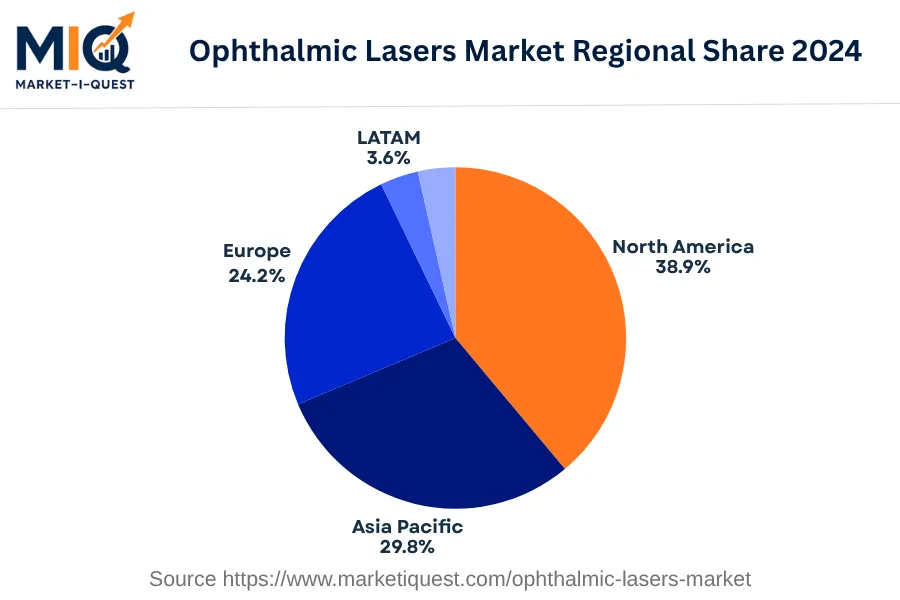
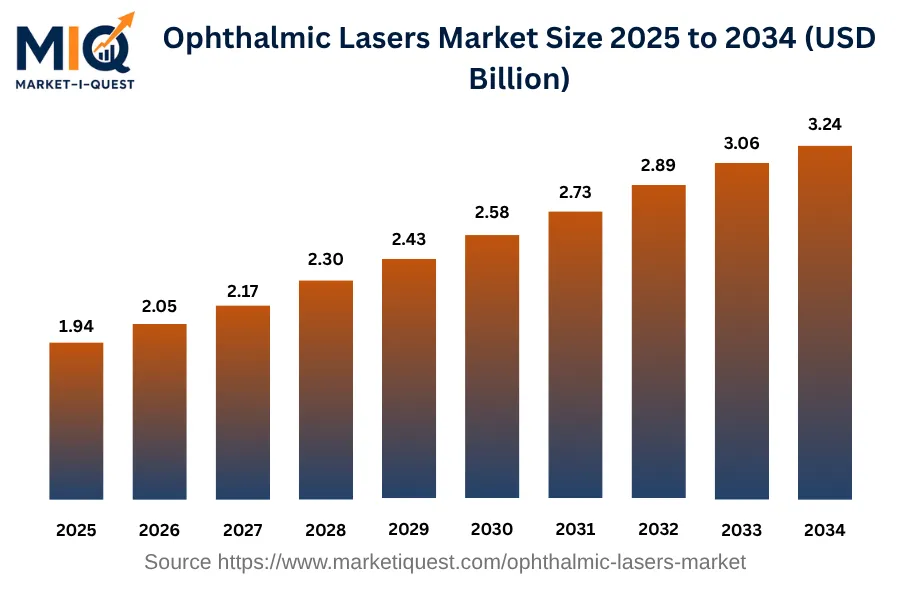
The Ophthalmic Lasers Market started at $1.83 billion in 2024 and experienced a subtle growth to $1.94 billion in 2025. As the years progressed, the market size continued to increase, reaching $3.24 billion in 2034, exhibiting a compound annual growth rate (CAGR) of 5.87% over the decade. This expansion between 2025 and 2034 is attributable to the steady industry growth observed during these years. In terms of regional market shares in 2024, North America maintained the highest influence, standing at 38.9%, followed by Asia Pacific at 29.8%. Europe had a considerable share as well, equating to 24.2% of the market. The remaining shares were held by Latin America and the Middle East and Africa, contributing 3.6% and 3.5% respectively to the global Ophthalmic Lasers Market.

Key Takeaways

  • By Technology - YAG Laser held a significant share leading the market in the base year.
  • By Patient Type - Adults accounted for the major share of market.
  • By Application - Cataract Surgery was the prime segment constituting a market leadership position in the set year.
  • By End Use - Hospitals achieved prominence establishing itself as the dominant sector during the given timeframe.
ophthalmic-lasers-market market size

Key Driving Factors

Escalation of Diabetes-related Eye Complications

A significant portion of the global population is affected by diabetes which, if left untreated or poorly managed, often leads to diabetic retinopathy and other eye disorders. Treatments for such conditions frequently involve the use of ophthalmic lasers. In some regions, the prevalence of diabetes is particularly high, for instance in the USA, India, and certain Middle Eastern countries. This is causing increased need for ophthalmic laser technologies in healthcare settings for the prognosis and management of diabetic eye disorders. The escalating incidence of diabetes and potentially linked eye complications globally is increasingly driving the ophthalmic lasers market.

Implementation of Favorable Insurance Policies

Another crucial factor influencing the ophthalmic lasers market is the implementation of favorable insurance coverage provisions in various countries. Medical insurance policies, particularly those sponsored by governments, often cover laser eye surgeries for conditions like cataracts, which are being identified at escalating rates worldwide due to aging populations. This insurance coverage makes the procedures affordable for patients and accelerates the demand for ophthalmic lasers. In countries such as the UK, Australia, and Canada, government-backed health insurances often cover the costs, fostering growth in the ophthalmic lasers market.

Market Evolution by Timeline

2019-2023
Between 2019 and 2023, buyers in North America dominated demand due to prevalent eyerelated diseases and early adoption of advanced technologies. Femtosecond lasers, marketed for precision and fewer complications, gained popularity for cataract surgeries. However, high cost and lack of skilled personnel were pressing issues. FDA standards for safety and effectiveness heavily influenced adoption. Key suppliers like Alcon and Johnson & Johnson capitalized on demand with improved functionality and user-friendly controls. Typical contracts involved lease agreements, bypassing hefty upfront costs. A major risk was inferior surgical outcomes due to inexperienced surgeons, necessitating training programs.
2024
In 2024, Asia Pacific region emerged as a significant buyer due to rising cases of diabetes-related eye diseases. Photocoagulation lasers were preferred for diabetic retinopathy treatment. As technology sophistication grew, the integration of lasers into hospital systems improved. New regulations were introduced for precision and safety, affecting the demand growth. Meditec and Ellex Medical increased production of low-cost lasers to cater to burgeoning demand in developing economies. Price evaluation was typically based on the unit's lifespan, reliability, and type of laser platform. Training and education remained key risk mitigation strategies.
2025-2029
The period between 2025 and 2029 saw a growing demand from European buyers due to the aging population and support from healthcare infrastructure. The SLT laser segment witnessed an uptick in sales for glaucoma treatment. The lasers' integration with EHR systems saw progress, facilitating better patient care. Slight relaxation of regulations around laser devices encouraged more innovation. The shift in the commercial model from direct sales to subscription saw an uptake due to budget constraints. With increasing adoption, risk of ineffective treatment due to malfunctioning pieces continued to be a challenge.
2030-2034
Between 2030 and 2024, Africa experienced increased demand due to awareness campaigns and better healthcare facilities. Femtosecond lasers were widely procured for LASIK treatment, their penetration enhanced by continuous technological improvements. On the supply side, manufacturers concentrated on creating affordable, reliable machines. New guidelines enforced by the World Health Organization promoted the use of laser therapy for ocular conditions. Novel business models, like Rent-to-Own arrangements, became prominent. The ongoing risk included the possibility of unsuccessful procedures due to overlooked maintenance, necessitating detailed user guidelines.

Future Market Outlook

Future Opportunities

Future opportunities in the ophthalmic lasers market are poised to expand due to ongoing technological advancements and evolving patient needs. The increasing prevalence of conditions such as myopia and diabetic retinopathy necessitates enhanced treatment solutions. With initiatives like the World Health Organization’s Vision 2020 campaign gaining traction, there is a heightened need for effective treatment options, spurring demand for ophthalmic lasers. Companies are exploring strategic collaborations to enhance product offerings; for instance, in 2023, Bausch + Lomb announced a partnership with the University of Toronto to develop next-generation laser technologies for eye care. Moreover, the rise in telemedicine, accelerated by the COVID-19 pandemic in 2020, presents opportunities for remote consultations and follow-ups, enhancing patient access to laser-based treatments. Regulatory frameworks continue to evolve, with the FDA focusing on expediting the approval process for technologically sophisticated devices, improving time-to-market for innovative products. Training programs for healthcare professionals are also becoming more accessible, fostering a more skilled workforce capable of utilizing these advanced technologies. The increasing awareness of preventive eye care is driving patients to seek regular screenings, providing market players a platform to introduce cutting-edge laser solutions. As health systems prioritize patient-centered care, tailored laser treatments are expected to gain traction, creating room for innovative market entries.

Segmentation Analysis

By Technology

The market is divided into subsegments including Femtosecond Laser, YAG Laser, Diode Laser, and Argon Laser. YAG Laser accounted for the largest revenue share while the Diode Laser is expected to grow at the fastest CAGR during the forecast period.

Largest Revenue Share

YAG Laser

Market Share Leader

The YAG Laser holds the largest market share primarily due to its widespread applications, especially in the field of ophthalmology and dermatology. Its ability to cater to diverse procedures coupled with high precision makes it a choice of preference for practitioners. Furthermore, the device's operational simplicity and compact size have been instrumental in boosting its adoption. The subsegment's growth is complemented by the growing aging population, who require treatments for conditions like glaucoma or cataracts where YAG Lasers are commonly used. Major markets, such as North America and Europe, are fueling this demand resulting in higher revenue shares as these regions have advanced healthcare infrastructures coupled with public awareness about laser treatments. The last assumption is that the current legislation does not hamper YAG Laser's usage nor creates a supply crisis, maintaining the subsegment's revenue dominance.

Fastest CAGR

Diode Laser

Forecast Period Growth Leader

While YAG Laser leads in revenue, the Diode Laser subsegment is poised for the fastest growth. One key driver behind this upward trajectory is the lower operational cost these lasers offer, enticing clinics and healthcare facilities with budget constraints. Enhanced efficacy in hair removal and vascular lesions treatment escalates its usage in the dermatology field. Their efficiency is also recognized in dentistry for periodontal treatment, carving another dimension of growth. Barriers to adoption, such as initial purchase cost and the required skill to operate, are gradually coming down with companies offering affordable options and conducting extensive training for practitioners. Potential policy changes encouraging non-invasive treatments could open up even more opportunities for Diode Lasers. However, near-term risks involve technical glitches that could lower efficacy; manufacturers need to address these possible pitfalls to continue this fast pace.

By Patient Type

The market in 2024 is divided into two subsegments including adult and pediatric patients. The adult segment leads with the highest revenue generation, while the pediatric subsegment is expected to exhibit the fastest CAGR during the forecast period.

Largest Revenue Share

Adult

Market Share Leader

The adult segment of the market holds the largest share of revenue due to several dynamics in 2024. Primarily, the adult population globally is significantly higher in number than the pediatric segment, leading to a larger pool of potential patients. Furthermore, adults, especially older individuals, tend to have more chronic conditions requiring frequent medical attention. This amplifies the demand for medical services and products for the adult segment. Additionally, adults generally have higher disposable incomes than pediatrics, meaning they are more capable of spending on healthcare services or products. Geographic distribution also plays a role in this dominance. Regions with larger adult populations, such as Europe and North America, are traditionally more medically advanced and exhibit higher healthcare expenditures. This conjunction of factors collectively makes the adult subsegment the largest contributor to market revenue.

Fastest CAGR

Pediatric

Forecast Period Growth Leader

The pediatric subsegment, while not currently the segment with the highest revenue, is expected to grow at a faster rate. One of the main factors contributing to this is the increasing focus on pediatric health and the rise in funding towards child-specific care and research initiatives. The development and implementation of new technologies, policies, and partnerships impacting child health are also spurring growth. There is also a growing recognition of the unique healthcare needs of children, driving the adaptation and introduction of pediatric-specific services and products. Concurrently, barriers including limited access and affordability of pediatric healthcare, are being targeted by policies and initiatives aimed at their mitigation. There are, however, near-term risks, such as implementation of unsupportive policies or economic downturns, which could potentially impede the predicted fast growth of this subsegment.

By Application

The market, by application, is divided into five subsegments namely: Glaucoma Treatment, Cataract Surgery, Retinal Procedures, Refractive Surgery, and Others. Based on the recent figures in 2024, Cataract Surgery accounted for the largest revenue share, while the Glaucoma Treatment segment is expected to grow at the fastest CAGR during the forecast period.

Largest Revenue Share

Cataract Surgery

Market Share Leader

Cataract surgery is the leading revenue driver in the 'by application' market segment. This is primarily due to the high prevalence of age-related cataracts worldwide. Cataracts gradually develop with age, thus the older one gets, the more likely they are to have a cataract. With the increasing global geriatric population, the demand for cataract surgery is boosted. Also, cataract surgery boasts a high success rate and is widely considered a safe procedure. The convenience, safety and efficacy of the cataract surgery fuels its demand among consumers. Geographically, developed regions have a higher demand due to better access to healthcare and awareness. However, developing nations are expected to increase their demand due to improvements in healthcare infrastructure and increasing awareness about the procedure.

Fastest CAGR

Glaucoma Treatment

Forecast Period Growth Leader

Glaucoma Treatment has the fastest growth rate among the 'by application' market segment. Glaucoma, a chronic condition, requires lifetime management, which drives the demand for related products. Unfortunately, late detection and misdiagnosis are common due to its asymptomatic nature, which serves as a barrier to adoption of glaucoma treatment initially. However, increasing screening programs and awareness initiatives are reducing these barriers, leading to increased uptake. Technological advancements, such as minimally invasive treatments, and partnerships between healthcare providers and tech firms to improve detection and management are serving as significant catalysts for growth. Concerns about the availability and affordability of treatments in developing nations pose near-term risks. However, increased investments and a focus on low-cost solutions are helping to address these issues.

By End Use

The market is divided into subsegments including Hospitals, Clinics, and Ambulatory Surgical Centers, with Hospitals accounting for the largest revenue share while Ambulatory Surgical Centers are expected to grow at the fastest CAGR during the forecast period.

Largest Revenue Share

Hospitals

Market Share Leader

In the base year 2024, the hospital subsegment generated the most revenue in the market. This supremacy is driven by several factors. Firstly, hospitals are usually equipped with advanced medical facilities and resources that aid in diagnosis and treatment, leading to high patient footfall. They also engage in a wide array of services, from minor to major surgeries, that increase their revenue potential. Secondly, the purchasing criteria, which often involve quality of care and reputation, favor large hospitals as they are often perceived to offer better services. Finally, regulations and funding tend to favor large institutions, resulting in a more robust revenue stream for hospitals. Geographically, urban centers, which have a higher density of hospitals, contribute significantly to the revenue. However, rural areas are also relevant due to governmental efforts to improve healthcare services in less densely populated regions.

Fastest CAGR

Ambulatory Surgical Centers

Forecast Period Growth Leader

Ambulatory Surgical Centers are projected to be the fastest-growing segment. This rapid growth can be attributed to various factors. Advances in medical technology have led to increased demand for minimally invasive procedures, a specialty of Ambulatory Surgical Centers. As a result, outpatient surgeries are becoming more prevalent, leading to more traffic for these Centers. Furthermore, policies supporting decentralization of healthcare services and out-of-hospital treatment contribute to the expansion and growth of these Centers. However, high capital expenditure associated with obtaining advanced equipment and acquiring skilled personnel can be barriers to entry. Strategic partnerships with equipment manufacturers and training institutions can alleviate these challenges. near-term risks include regulatory changes that could disrupt the operating structure of these centers or the potential for economic downturns that could slow down their expansion.

Competitive Analysis

Key Market Players

Manufacturers / OEMs

Alcon Laboratories, Inc.
US
Carl Zeiss Meditec AG
Germany
Ellex Medical Lasers
Australia

Key Suppliers & Raw Materials

Thorlabs, Inc.
US
OSRAM GmbH
Germany
Shanghai Optics
China

Distributors, Integrators & Channel Partners

McKesson Corporation
US
Henry Schein, Inc.
US
CooperVision, Inc.
US

Porter’s Five Forces Analysis

This analysis examines the competitive landscape in the Ophthalmic Lasers Market.

Supplier Bargaining Power

Medium

Limited number of suppliers lead to moderately high power.

Buyer Bargaining Power

Low

Professionals' dependency on the technology minimizes bargaining power.

Threat of Substitutes

Low

Few substitutes available due to the specialized nature of these lasers.

Threat of New Entrants

Low

High entry barriers due to significant R&D costs and regulatory hurdles.

Competitive Rivalry

High

Strong competition between existing players given the profit margins.

Regional Analysis

Geographic market dynamics and growth opportunities across key regions

Global Market Outlook

ophthalmic-lasers-market market regional share

North America

In 2024, the North American ophthalmic lasers market displayed enhanced dynamism. Demand for the technology was driven by a rise in eye-related diseases in the US, Canada, and Mexico, alongside an increase in healthcare investments in eye care facilities and services. Additionally, an upsurge in tech adoption in Mexico's healthcare sector, paired with affordable pricing across Canada, led to robust growth in the ophthalmic lasers market.

On the trends front, buyer behavior in the US underscored a marked shift towards minimally invasive laser surgeries like LASIK. In fact, alliances and partnerships between ophthalmologists and laser equipment manufacturers saw an uptick, promoting advanced technology solutions and providing a stimulus to the market. Mexico manifested a surge in policy enforcement for the use of technologically advanced, high-end surgical equipment in eye surgeries, driving the growth of the ophthalmic lasers market. Notably, the healthcare sector in the US, both the government and private entities, reported significant procurement of ophthalmic lasers. Similarly, Canada's federally administered healthcare system also adapted these lasers, proving to be a catalyst for market growth. On the other hand, Mexico's manufacturing sector displayed keen interest in industrial laser applications, consolidating the overall dynamism of the ophthalmic lasers market in North America for the base year 2024.

Asia Pacific

The Ophthalmic Lasers market in Asia Pacific was energetic in 2024, drawing power from several drivers and trends in the region's healthcare sector. Market forces were propelled by increasing prevalence of eye-related diseases, growing geriatric population in countries like China and Japan, and heightened government involvement in healthcare sectors as seen in India's Ayushman Bharat scheme. Technology adoption also fueled growth, with key markets like China and South Korea investing significantly in modern ophthalmic equipment and skill transfer. Moreover, the reduction in the price of ophthalmic lasers encouraged market expansion across the region.

In terms of buying trends, the demand for minimally invasive procedures gained momentum, pulling the market towards advanced lasers. Technological shifts towards femtosecond lasers and Selective Laser Trabeculoplasty (SLT) were prominent, particularly in countries with robust healthcare technology sectors like Japan and Australia. Evolving policy enforcement and adherence to international standards also influenced market dynamics, creating room for cross-border partnerships, especially within ASEAN nations. For instance, companies exhibited a growing interest in M&A activities to broaden their range and solidify their customer base amongst various healthcare facilities. Overall, the Ophthalmic Lasers Market in Asia Pacific in 2024 displayed healthy growth driven by escalating demand, favourable policies, and dynamic technological trends.

Europe

In 2024, Europe's ophthalmic lasers market thrived, reflecting increased demand for advanced eye care treatments among the region’s aging populous. Significant investments in eye care infrastructure, particularly within Germany, France, and the UK, drove robust market expansion. Eye care clinics prioritized the acquisition of laser equipment, leveraging technological advancements that improved both patient outcomes and procedural efficiency. Further, the adoption of cost-effective pricing models by manufacturers supported widespread laser accessibility, including in Italy, Spain, and Eastern Europe.

Simultaneously, several market dynamics emerged. Buying behavior shifted towards favoring technologically advanced laser systems such as femtosecond lasers, especially amongst healthcare providers in the Benelux and the Nordics, who saw their potential for improved surgical outcomes. Partnerships between leading market players in Central and Eastern Europe fostered innovation and qualitative improvements in laser technology. A clear trend of mergers and acquisitions illustrated the increasing market consolidation, with larger companies seeking to expand their product offerings and geographical reach. Implementation of stringent regulations governing laser use became more widespread, reflected in actions by government bodies across Europe, promoting enhanced safety standards and encouraging responsible practices in the sector. Consequently, the ophthalmic lasers market experienced a dynamic and high growth environment region-wide in 2024.

Latin America

In 2024, the Latin American Ophthalmic Lasers market presented robust growth, driven by various factors and exhibiting interesting trends across the region. Rising prevalence of ophthalmic disorders, such as glaucoma and cataracts, particularly in aging populations in Brazil and Argentina, fueled demand for ophthalmic lasers. There was also increased technology adoption in the healthcare sector, with Mexico and Chile making hefty investments in advanced ophthalmic laser equipment. The market witnessed shifting buyer behavior, with hospitals, clinics, and ophthalmic centers opting for minimally invasive, precise laser treatments. For instance, in Colombia, femtosecond lasers grew in popularity, driven by improved cataract and corneal surgery outcomes.

Tangible policy interventions have also shaped market dynamics. An example being the Brazilian Health Regulatory Agency's stringent regulations led to rigorous screening of ophthalmic lasers, ensuring quality and patient safety. Technological advancements have become a key trend with Peru adopting innovative laser technologies that provide optimal treatment options. Collaborations and partnerships were evident among notable market players and local distributors spread across the region to streamline supply chain processes. However, the high cost of ophthalmic lasers, largely due to import taxes especially in Argentina, posed a barrier to market growth. Ergo, the LATAM ophthalmic lasers market, in 2024, reflects both dynamic growth opportunities and challenges centred around cost and regional policies.

Middle East & Africa

In 2024, the ophthalmic lasers market in the Middle East and Africa displayed significant growth. This development was driven by increasing investments in healthcare technology and the pervasive incidences of eye disorders, particularly in countries such as South Africa, Egypt, and Saudi Arabia. A marked increase in government-led initiatives for eye health, especially in UAE and Qatar, also encouraged this growth. Additionally, the reduction in the cost of ophthalmic surgeries pushed demand across Nigeria, Kenya, and Israel.

Among the emerging trends, an increased preference for minimally invasive surgeries was widely noticed in the region. There was an evident shift towards advanced femtosecond lasers, mainly in South Africa and Israel, driven by a growing demand for efficiency and precision in surgical procedures. Technology adoption was swift in larger healthcare facilities, predominantly in Saudi Arabia and UAE due to robust healthcare infrastructure. Partnership among public and private healthcare providers for advanced ophthalmic care services was another significant trend, notably in Egypt and Qatar. A significant increase in policy enforcement for standardizing eye care, particularly in Nigeria and Kenya, had a positive impact on market development. The key sectors contributing to these developments included healthcare, manufacturing (of medical equipment), and financial services (for healthcare investment and insurance).

Recent Industry Developments

Latest market innovations, product launches, and strategic initiatives

February 2026

Quantel Medical received FDA 510(k) clearance for INTEGRE LIO, a battery-powered, headset-mounted ophthalmic laser photocoagulator utilizing 532nm green diode laser for retinal photocoagulation, featuring a head-up display (HUD) and wireless footswitch.

January 2025

Norlase received FDA 510(k) clearance and CE Mark for LYNX™, the world's first and only pattern scanning laser indirect ophthalmoscope, featuring a fully integrated battery-powered headset, multilingual voice control, and full pattern palette.

Frequently Asked Questions