Ophthalmic Knives Market Snapshot

Key Players

  • Alcon (United States)
  • Ophtechnics Unlimited (India)
  • VOLK Optical Inc. (United States)
  • Mani Inc. (Japan)
  • Bausch Health Companies Inc (Canada)
  • CorneaGen (United States)
  • Shanghai Titan Scientific Co. Ltd. (China)
  • Surgistar Inc. (United States)
  • Geuder AG (Germany)
  • Optitech Eyecare (India)

Market Size

Base Year 2024
$0.693 Bn
CAGR
5.7%
Forecast 2034
$1.206 Bn

Market Segments

By Type
MVR Knives, Blade Knives, Micro Knives, Tissue Knives
By Material
Stainless Steel, Carbon Steel, Plastic
By Application
Cataract Surgery, Corneal Surgery, Refractive Surgery, Glaucoma Surgery, Others
By End Use
Hospitals, Ambulatory Surgery Centers, Ophthalmic Clinics

Market Dynamics

Drivers
  • Rising global cataract surgeries
  • Advancements in surgical knife materials
Restraints
  • High initial investment cost
  • Regulatory compliance challenges
Opportunities
  • Emerging laser technology adoption
  • Rising eye-related disorders

Market Size

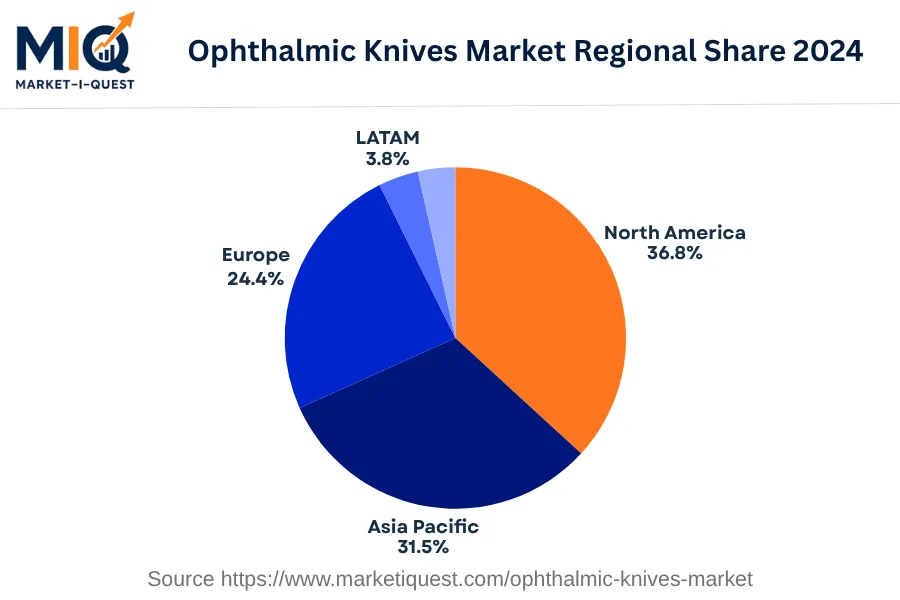
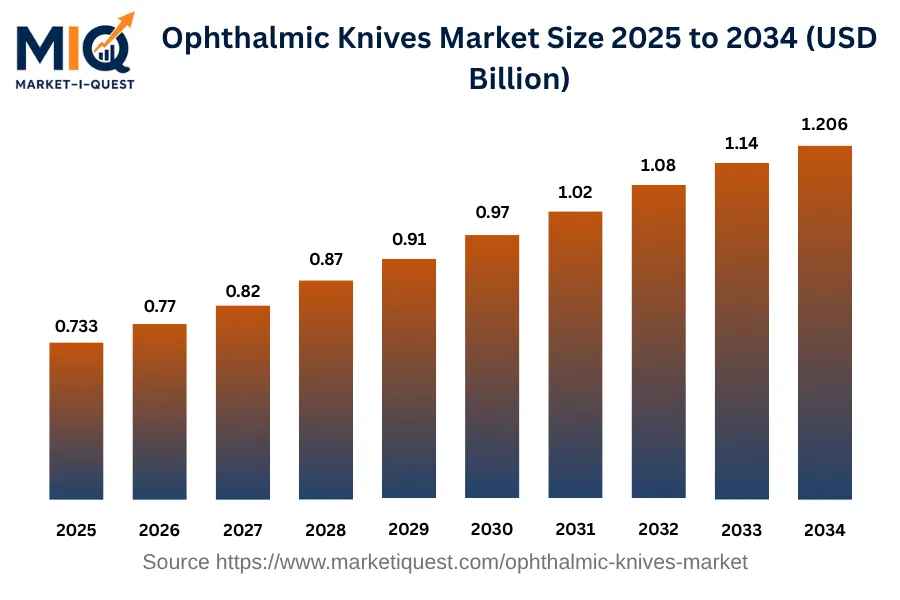
The Ophthalmic Knives Market size was $0.69 billion in 2024, slightly increasing to $0.73 billion in 2025. By 2034, the market size is anticipated to be approximately $1.21 billion. Accordingly, the compound annual growth rate (CAGR) between 2025 and 2034 is projected to be 5.7%. This growth in the Ophthalmic Knives Market from 2024 through 2034 is a steady progression, with the market size incrementing consistently year over year. In terms of regional share in 2024: North America accounted for the largest piece of the pie at 36.82%, closely followed by the Asia Pacific at 31.47%, while Europe held 24.38% representation. The remaining regions, Latin America and the Middle East and Africa, held comparatively smaller shares at 3.79% and 3.54% respectively.

Key Takeaways

  • By Type - Blade Knives held the major share in the Ophthalmic Knives Market in 2024.
  • By Material - Stainless Steel knives led the market accounting for a significant share in 2024.
  • By Application - Cataract Surgery emerged as the top segment in terms of usage in 2024.
  • By End Use - Hospitals remained the leading sector holding majority share in the market in 2024.
ophthalmic-knives-market market size

Key Driving Factors

Increased Prevalence of Ophthalmic Disorders

In recent years, we notice an increasing prevalence of ophthalmic diseases such as glaucoma, cataracts, and age-related macular degeneration. This trend, especially in ageing populations, is driving the demand for ophthalmic surgeries. Therefore, the need for precision instruments like ophthalmic knives has been growing, directly influencing the growth of the ophthalmic knives market. These knives play a crucial role in performing successful eye surgeries, which has led to their high adoption among healthcare professionals globally. With rising patients queuing for ophthalmic surgeries, the need for these instruments stays on a constant rise.

Emergence of Numerous Ophthalmic Clinics and Ambulatory Surgical Centers

The surge in numbers of ophthalmic clinics and ambulatory surgical centers has strongly influenced the growth of the ophthalmic knives market. Patients prefer these services because they have shorter wait times and offer high-quality care, typically at a lower cost than traditional hospital settings. Furthermore, these centers have a high demand for ophthalmic knives to handle the increasing patient load. Consequently, manufacturers of ophthalmic knives have escalated production to meet the soaring demand from these centers. The continuing surge of ophthalmic clinics and ambulatory surgical centers will therefore undoubtedly continue to propel the expansion of the ophthalmic knives market in the near future.

Market Evolution by Timeline

2019-2023
In 2019–2023, the biggest source of demand for Ophthalmic Knives came from countries with a higher elderly population. United States, Europe, and Japan emerged as potential markets. Ophthalmic surgeries related to cataract and glaucoma have been on the rise. This time frame saw the introduction of innovative knife designs such as flat strip knives and pre-loaded systems, resulting from the advancement in knife fabrication technologies. Quality and sterilization standards were strictly followed as per ISO 17664 and EN 550 guidelines that helped build customers' trust. The pricing model was largely volume-based with bulk purchase discounts. Partnerships between manufacturers and hospitals gained traction. The supply was constrained by a shortfall, due to a large number of ophthalmic surgeries performed annually.
2024
In 2024, demand was consistent with prior years, and Asia-Pacific regions became prominent buyers. Innovative technologies such as the femtosecond laser technology for cataract surgeries were gaining ground. The product safety norms were set by ISO 10993 and ISO 13485 which pre-defined the level of biocompatibility. The commercial partnership model continued with the arrival of private equity firms that infuse funds in exchange for shareholding. The significant risk was the availability of insufficient raw materials due to a surge in demand.
2025-2029
During 2025–2029, Asia-Pacific region continued to be the primary buyer. The rising number of minimally invasive surgeries helped sustain the demand for ophthalmic knives. There was a technological shift towards the use of automated force-controlled knives, and diamond knives. ISO 13485:2022 became the standard for quality management. Multi-year contracts between manufacturers and hospitals became common, where the prices were locked in for the contract duration. Defects in knife design posed a challenge in this period as this could seriously affect the outcome of the surgical procedures.
2030-2034
Demand for ophthalmic knives in 2030–2034 retained in regions with significant elderly population, along with emerging markets in Africa. The technology trend shifted towards the use of more precise laser-based ophthalmic tools. Regulatory standards were tightened under the aegis of ISO 15004-2:2022 standard. Both one-time purchase and subscription-based models were prevalent. The main risk was the potential disruption in supply chains, due to international politics and climate change. Preventive measures such as diversifying supply sources were deployed to counteract this.

Future Market Outlook

Future Opportunities

The evolving landscape of the ophthalmic knives market presents numerous opportunities linked to ongoing trends in ophthalmic procedures and patient care technologies. As of 2023, an increasing number of ophthalmologists are advocating for the use of precise, advanced tools that enhance surgical outcomes, particularly in cataract and refractive surgeries. With the World Health Organization highlighting the need for improved access to eye care globally, there arises an expansive market for innovative surgical solutions. The implementation of telemedicine in ophthalmology, accelerated during the COVID-19 pandemic, is now integrating surgical planning tools that require advanced knife technologies. Partnerships are forming between tech companies and healthcare organizations, as seen in collaborations like the one between Eyecare Partners and EHR provider Epic Systems which aims to improve surgical workflows with in-depth analytics. Furthermore, advancements in micro-incision surgical techniques open avenues for developing smaller, more precise ophthalmic knives, catering to a growing demand among surgeons. Training programs supported by industry giants are also emerging, creating a skilled workforce proficient in using these advanced tools. Notably, regulatory bodies continue to streamline approval processes, leading to more rapid adoption of new technologies. This dynamic environment encourages ongoing investment and collaboration, facilitating the expansion of innovative approaches to traditional surgical practices, and enhancing the overall efficiency of eye surgeries.

Segmentation Analysis

By Type

The market is divided into subsegments including MVR Knives, Blade Knives, Micro Knives, and Tissue Knives. Among these, Blade Knives accounted for the largest revenue share while Micro Knives is expected to grow at the fastest CAGR during the forecast period.

Largest Revenue Share

Blade Knives

Market Share Leader

Blade Knives lead the market in terms of revenue owing to their wide range of applications in the medical field, such as surgeries and dissections. These tools are highly favored because of their precision, durability and ease of use, making them a popular choice among surgeons and medical practitioners. Furthermore, the manufacturers are investing heavily in research and development activities to improve the designs, materials, and functionality of Blade Knives, thereby driving growth in this segment. Geographic regions such as North America and Europe contribute significantly to the revenue due to the advanced healthcare infrastructure and the high demand for Blade Knives in these regions. Additionally, government regulations and guidelines promoting the use of standard tools in surgeries are further pushing the growth of the Blade Knives market. The purchasing decision is primarily influenced by the quality, price, and brand reputation. Switching costs are minimal as surgeons often need different types of knives for different types of surgeries.

Fastest CAGR

Micro Knives

Forecast Period Growth Leader

Micro Knives subsegment is projected to witness the fastest growth rate. Their small, precision-engineered blades make them extremely useful in delicate surgical procedures, particularly within Ophthalmology, Neurology and Plastic Surgery. Another major growth driver is the increased adoption of minimally invasive surgeries due to their numerous benefits such as reduced pain, shorter hospital stay, and quicker recovery time. High volume manufacturers are partnering with tech firms to integrate smart technologies and sensors in the knives themselves, enhancing real-time feedback, precision and control which is expected to be a key catalyst for growth. However, the higher capital expenditure for these advanced surgical tools could potentially act as a barrier for market expansion, particularly in less developed healthcare systems. Technology innovation and policy changes that incentivize or mandate the use of such advanced tools could prove beneficial for the growth of this subsegment in the near term. The growth of this subsegment needs to be watched closely as it holds the potential to disrupt traditional surgical methods and tools.

By Material

The market is divided into subsegments including Stainless Steel, Carbon Steel, and Plastic. In 2024, Stainless Steel accounted for the largest revenue share while Plastic is expected to grow at the fastest CAGR during the forecast period.

Largest Revenue Share

Stainless Steel

Market Share Leader

Stainless Steel claimed the highest revenue share in the base year 2024. It predominantly leads due to its outstanding resistance to corrosion, remarkable strength, and malleability. These attributes make stainless steel a highly preferred material in multiple industries, including automotive, construction, and manufacturing. It is especially favored when the applications demand durability in harsh conditions. Geographically, the demand is particularly robust in regions like North America and Asia Pacific due to vibrant industrial sectors. Regulatory encouragement for the usage of sustainable and recyclable materials, like stainless steel, also drives the demand. Purchasing decisions often favor stainless steel due to its longevity and low maintenance costs. As an observation, switching costs are also high in this segment because changing to alternative materials often leads to compromise on product durability and lifespan.

Fastest CAGR

Plastic

Forecast Period Growth Leader

Despite Stainless Steel's dominance, Plastic is expected to outpace other materials in terms of compound annual growth rate. The key driver behind this growth is its versatile nature. Plastic is increasingly adopted as a lightweight and economical alternative to metal in several applications, thus widening its customer base. Technological advancements and innovations further enhance its functionality and value proposition. The ongoing trend towards sustainability also acts as a catalyst. Efforts towards the creation of biodegradable and eco-friendly plastics, backed by regulatory supports, are likely to accelerate adoption. However, near-term risks persist as public sentiment towards plastic remains negative due to environmental concerns. Sound strategies and proactive measures addressing these perceptions would be critical for this subsegments' accelerated growth.

By Application

The market is divided into subsegments including cataract surgery, corneal surgery, refractive surgery, glaucoma surgery, and others. Cataract surgery accounted for the largest revenue share while refractive surgery is expected to grow at the fastest CAGR during the forecast period.

Largest Revenue Share

Cataract Surgery

Market Share Leader

Cataract surgery holds the dominant position in the application segment chiefly due to the high prevalence of cataracts worldwide. Its prevalence is particularly high among the elder population, rendering this demographic a substantial consumer of cataract surgical procedures. Moreover, advancements in cataract surgery techniques, such as the development of femtosecond lasers, have improved the safety and effectiveness of the procedure, leading to increased patient confidence and a subsequent rise in demand. Cataract surgery's dominance is also reinforced by robust medical infrastructure and regulations that promote early detection and treatment of eye conditions, particularly in developed regions. Additionally, the widespread acceptance and reliance on this established procedure contribute to its high switching costs.

Fastest CAGR

Refractive Surgery

Forecast Period Growth Leader

Refractive surgery is expected to exhibit the fastest CAGR in the coming years. This growth is predominantly driven by the increasing prevalence of refractive errors such as myopia, hypermetropia, and astigmatism among younger populations. The increased screen usage and digital reliance in modern lifestyles have amplified this trend. Refractive surgery, being an effective corrective solution, finds rising adoption due to its promise of freedom from corrective eyewear. Technological advancements, including the advent of minimally invasive laser procedures and the roll-out of new-generation intraocular lenses, stir demand as they improve procedural outcomes. However, barriers like the relatively higher cost of refractive surgery and low insurance coverage may moderate the pace of adoption. New partnerships and public awareness programs could serve as catalysts to spur growth in this subsegment.

By End Use

The market is divided into subsegments including hospitals, ambulatory surgery centers, and ophthalmic clinics. In 2024, hospitals accounted for the largest revenue share while ambulatory surgery centers are expected to grow at the fastest CAGR during the forecast period.

Largest Revenue Share

Hospitals

Market Share Leader

Hospitals were the leading end users in 2024 due to several factors. These expansive and multifaceted institutions typically have a wider variety of surgical services compared to specialized clinics and ambulatory surgery centers. As a result, they tend to have higher product usage rates, which translates to more revenue. In the healthcare ecosystem, hospitals are often at the center of surgical procedures due to their high patient footfall, expansive service offerings, and capacity to handle complex cases. Additionally, their ability to offer comprehensive care makes them a preferred choice for most surgeries. The vast consumer base that hospitals cater to has allowed them to capture a large share of the revenue. This is further bolstered by the infrastructural advantages of hospitals such as numerous surgical rooms, the latest equipment, and well-trained professionals. These factors, coupled with robust financing structures, have put hospitals in the leading position in terms of revenue.

Fastest CAGR

Ambulatory Surgery Centers

Forecast Period Growth Leader

Ambulatory surgery centers (ASCs) are expected to show the fastest growth. This is due largely to the evolving landscape of healthcare systems globally. ASCs offer a variety of surgery options in a cost-effective and efficient environment, which is becoming increasingly appealing amid the burdening cost of healthcare. The trend towards outpatient care, where patients are discharged the same day as treatment, is a significant driver for the growth of ASCs. The focus on high-quality care at lower costs is likely to boost the adoption of ASCs. The number of these centers is increasing rapidly due to their benefits such as shorter wait times and decreased risk of hospital-acquired infections, both of which are key considerations for patients. With policy changes and increasing private investments to support the establishment and operation of ASCs, this segment is likely to outweigh others in terms of growth. However, challenges such as the high initial investment and strict regulations could slow this growth rate.

Competitive Analysis

Key Market Players

Manufacturers / OEMs

Duckworth & Kent Ltd.
UK
Hoya Corporation
Japan
Alcon Laboratories, Inc.
US

Key Suppliers & Raw Materials

Sandvik Materials Technology
Sweden
Böhler-Uddeholm
Austria
American Specialty Alloys
US

Distributors, Integrators & Channel Partners

OptiMedica Corporation
US
Ziemer Ophthalmic Systems AG
Switzerland
Topcon Corporation
Japan

Porter’s Five Forces Analysis

An examination of the competitive dynamics within the ophthalmic knives market.

Supplier Bargaining Power

Medium

Limited number of suppliers with specialized production raises their influence.

Buyer Bargaining Power

Low

High switching costs and specificity of products restrict buyer power.

Threat of Substitutes

Low

Availability of substitutes is low due to high technological differentiation.

Threat of New Entrants

Low

High entry barriers due to expensive equipment, and regulatory compliances deter new entrants.

Competitive Rivalry

High

Intense competition due to a limited number of players offering distinctive products.

Regional Analysis

Geographic market dynamics and growth opportunities across key regions

Global Market Outlook

ophthalmic-knives-market market regional share

North America

In 2024, the North American ophthalmic knives market witnessed significant movements shaped by factors ranging from technological advancements to structural changes. Key market drivers included the increasing prevalence of eye disorders, amplified by the aging populace in the United States, Canada, and Mexico. Demand surged alongside growing public awareness related to eye surgeries and conditions. Furthermore, continual investments into R&D in the health-tech sector fostered innovation in blade materials and handle design. Regulatory bodies' strict requirements necessitated replenishment of high-quality surgical instruments—particularly single-use knives—fueling the market traffic.

Emerging trends in the ophthalmic knives market in 2024 involved a noticeable shift towards laser technology, a preference by many surgeons for its precision and less-invasive surgeries. Additionally, the rise of telehealth services sparked a marked increase in remote consultations for eye issues, meaning that direct patient-to-surgeon contact reduced drastically. With e-commerce expansion, more medical supplies started being procured online by healthcare facilities, replacing traditional procurement channels. In response to these movements, businesses in the market were progressively forming partnerships with tech companies to improve digital and logistic capabilities. The U.S. government’s implementation of policy amendments in tandem with these trends put increased pressure on manufacturers to meet more rigorous standards of sterility and quality control for these vital surgical tools.

Asia Pacific

In 2024, the Asia Pacific ophthalmic knives market saw significant growth driven by increasing cataract and refractive surgeries, due in part to a rising aging population in countries such as China and Japan. Technological advancements enhanced the precision and safety of these surgical knives, promoting adoption across healthcare facilities. Three drivers fueled the market. Firstly, upsurge in eye-related disorders, particularly in aging demographics across China and Japan, bolstered demand. Secondly, the swift adoption of advanced ophthalmic technologies across India, South Korea, and key ASEAN markets formed another demand catalyst. Governments' investments in healthcare infrastructures, notably in China and Australia, propelled supply.

Trends in 2024 reflected the evolving landscape. There was a visible shift toward single-use ophthalmic knives to prevent infection risks, notably in India and China's healthcare sectors. There also began to be an emergence of ultrasonic and laser technologies, replacing traditional mechanical cutting in refractive surgeries, particularly in Japan and South Korea. The market witnessed some collaborations between medical device manufacturers and healthcare providers aiming efficiency, especially in ASEAN markets. Last but not least, strict enforcement of product quality standards by authorities like China's National Medical Products Administration essentially tied manufacturers' hands in ensuring premium product quality. These dynamics played a pivotal role in shaping the ophthalmic knives market in the Asia Pacific region that year.

Europe

In 2024, Europe's ophthalmic knives market was vibrant, driven by robust demand factors and adoption of advanced technology. Aging population, amplified prevalence of ophthalmic disorders, along with a mounting focus on minimally invasive surgeries were the significant demand stimulants. In countries like Germany and France, investments in healthcare infrastructure and technology adoption bolstered the market growth. Parallelly, in the United Kingdom and Italy, regulatory norms for surgical tool standardization reinforced the market's vigor.

Shifts in buyer behavior and product dynamics profoundly shaped trends in 2024. A preference for disposable knives over reusable ones was observed, pushing manufacturers to optimally adjust their product offerings in the Nordics, Benelux, and Central & Eastern Europe. Further, a surge in the collaboration between technology innovators and surgical tools manufacturers was noted in Spain, enhancing the market's product variants with higher precision and safety attributes. Lastly, increasing enforcement of policy practices, particularly around sterilization standards across various healthcare sectors in the region, molded the market dynamics substantially. Therefore, primarily, the healthcare sector was the pivotal customer base of the ophthalmic knives market in 2024. Yet, an increased inclination towards these tools was noted amongst private surgical clinics and research academies. Europe's ophthalmic knives market in 2024 was thus influenced by variegated factors, enhancing its performance and impact.

Latin America

In 2024, the Ophthalmic Knives Market emerged as an integral segment of the medical instrument sector in Latin America. Key drivers included rising geriatric demographics with an increased prevalence of eye-related disorders particularly in countries like Brazil and Argentina. An influx of healthcare investments, specifically allocated for ophthalmic research and related medical equipment, boosted the market. The advent of technologically advanced laser blades by major players enhanced surgical precision, and, coherently, market expansion. Simultaneously, in Peru and Mexico, regulations favoring domestic manufacturing over imports led to increased local production of ophthalmic knives. Pricing tensions stemming from these policies influenced the entire supply chain, notably benefiting local manufacturers while challenging foreign stakeholders.

Trends in 2024 exhibited a shift towards disposable ophthalmic knives, attributing to concerns regarding cross-infections in eye surgeries. A marked preference for diamond and laser knives over traditional steel blades was evident, driven by their precision, safety, and sterility. Academic hospitals and private clinics in Chile and Colombia became primary customers, owing to the rising demand for high-quality, hygienic instruments for eye surgeries. The market also witnessed strategic collaborations among major medical device manufacturers to strengthen their regional presence, coupled with rigorous policy enforcement by healthcare authorities ensuring safety standards for ophthalmic knives. Market dynamics in 2024 underscored the importance of enhanced product quality and advanced technology adoption in the pursuing growth of the Latin American Ophthalmic Knives Market.

Middle East & Africa

In 2024, the Middle Eastern and African market for ophthalmic knives sees steady growth, fueled by several key drivers. First, an increased prevalence of eye-related disorders such as cataracts and glaucoma have noticeably increased demand for precision surgical tools in countries like Saudi Arabia and Israel. The introduction of advanced technology by key market players in South Africa and the United Arab Emirates has also played an important role in this growth, as they've invested in high-quality, more accurate ophthalmic knives. Nigeria and Qatar have seen a significant uptick in healthcare spending, which indirectly influences this market.

Notable trends in these regions include a marked preference for disposable ophthalmic knives due to their cost-effectiveness and reduced risk of cross-contamination. Patients in the more developed countries like Israel and the UAE have shown a preference for minimally invasive eye surgeries requiring precision knives. In Kenya and Egypt, due to stricter enforcement of healthcare policies, we have seen an increase in regulatory requirements, leading to manufacturers producing higher quality tools. The African and Middle Eastern governments are focusing on improving their healthcare sectors which, in turn, is driving standardization and purchase of these precision tools in healthcare, specifically targeting cataract and refractive surgeries. These factors are supporting market stability and continued growth.

Recent Industry Developments

Latest market innovations, product launches, and strategic initiatives

December 2025

MANI, INC. acquired approximately 36.67% of the issued shares of iRIS EYE GmbH, its ophthalmic product sales distributor in Germany, making iRIS an equity-method affiliate of MANI.

April 2025

MANI, INC. and its U.S. subsidiary MANI Medical America announced a strategic partnership with Microsurgical Technology (MST), under which MST will serve as a preferred distributor of MANI's ophthalmic surgical knife portfolio in the United States, enabling both companies to enter the U.S. ophthalmic custom kit packing market.

Frequently Asked Questions