
Ophthalmic Drugs Market Snapshot

Key Players

  • Novartis AG (Switzerland)
  • Roche Holding AG (Switzerland)
  • Pfizer Inc. (United States)
  • Regeneron Pharmaceuticals (United States)
  • Allergan Plc (Ireland)
  • Bayer AG (Germany)
  • Shire Plc (Ireland)
  • Santen Pharmaceutical Co. Ltd. (Japan)
  • Alcon Inc. (Switzerland)
  • AstraZeneca Plc (United Kingdom)

Market Size

Base Year 2024
$38.74 Bn
CAGR
7.15%
Forecast 2034
$77.28 Bn

Market Segments

By Disease
Eye Allergy, Eye Infection
By Drug Class
Anti-Allergy, Anti-Inflammatory
By Administration
Systemic, Topical
By Product
Prescription Drugs, Over-the-Counter Drugs

Market Dynamics

Drivers
  • Increasing prevalence of eye diseases
  • Advancements in ophthalmic drug therapies
Restraints
  • Restrictive regulatory frameworks
  • High development costs
Opportunities
  • Growing aging population
  • Advancements in ocular drug delivery

Market Size

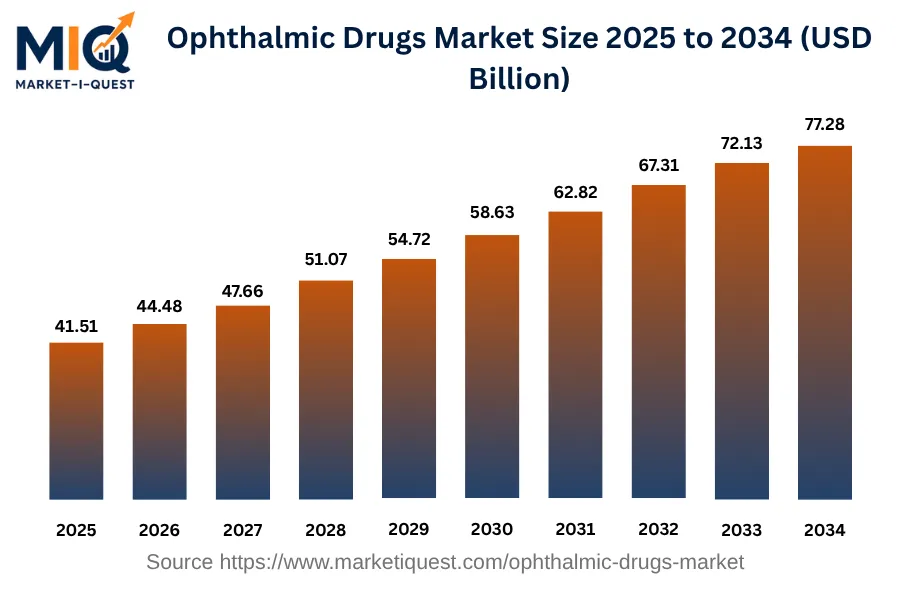
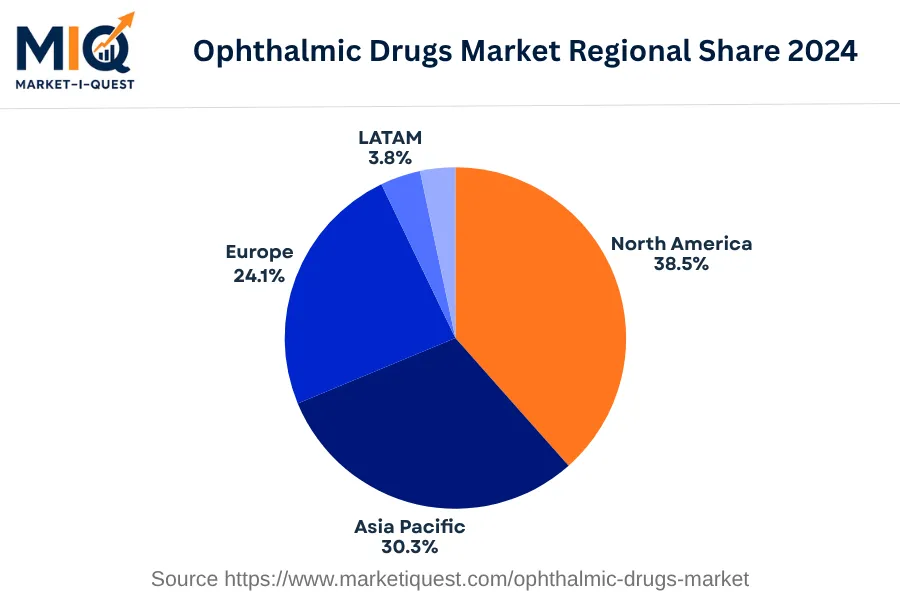
The Ophthalmic Drugs Market was valued at $41.51 billion in 2025 and is anticipated to reach $77.28 billion by 2034, registering a Compounded Annual Growth Rate (CAGR) of 7.15%. The substantial growth trajectory from 2025 to 2034 results from an increase in the market value year-over-year. In terms of market share in 2024, North America led the way with 38.46%, with Asia Pacific trailing in second place at 30.28%. Europe was close behind with 24.12%, while LATAM and MEA held smaller shares of 3.81% and 3.33% respectively. These proportional representations provide useful insight into the global distribution of the Ophthalmic Drugs Market.

Key Takeaways

  • By Disease - Eye Infection held the major share in 2024.
  • By Drug Class - Anti-Allergy drugs had the fastest growth accounting for a significant market share in 2024.
  • By Administration - Topical was the top segment in 2024.
  • By Product - Prescription Drugs led the market accounting for a substantial share in 2024.
ophthalmic-drugs-market market size

Key Driving Factors

Shift Towards Personalized Medicine in Eye Care

In recent years, we've seen a significant shift toward personalized medicine in healthcare, a trend that's now making its way into the ophthalmic sector. Ophthalmologists are increasingly emphasizing the importance of individualized treatment plans. They take into account variables such as the patient's genetic makeup, lifestyle, and underlying health conditions. This move towards personalized medicine is changing buying behaviors in the ophthalmic drugs market. There's a particular shift towards drugs that can be adapted or modified to suit individual patient needs, enhancing treatment effectiveness. It's hoped this tailored approach could lead to better health outcomes and patient satisfaction, driving the demand for more innovative, adaptable ophthalmic drugs. Interestingly, this trend is prevalent in developed countries where the healthcare system can accommodate such tailored treatment strategies.
Increasing Prevalence of Age-Related Ocular Conditions

As the global population ages, we are seeing an increase in the prevalence of age-related ocular conditions such as cataracts, glaucoma, and age-related macular degeneration - conditions that require ophthalmic drugs for treatment and management. This elderly population represents an emerging, distinct consumer segment for the ophthalmic drugs market, and pharma companies are responding to it. They're dedicated to developing new therapies to effectively treat these age-associated diseases. For instance, sophisticated drug delivery systems like nanoemulsion, which enable targeted treatment and a lower frequency of drug administration are being experimented with. Momentum within the field of ocular pharmacology reflects this effort. The increasing incidence of these eye disorders, particularly among the elderly, continues to be a significant factor driving the need for advanced drug therapies, thus influencing the ophthalmic drugs market.

Market Evolution by Timeline

2019-2023
During this period, the primary demand for ophthalmic drugs was driven by the ageing population in developed countries like the USA, Japan, and regions of Western Europe. There was an increase in comprehensive treatments for eye diseases such as cataracts and glaucoma. Advances in molecular biology enabled more targeted treatments. However, the high cost of R&D and strict regulatory policies limited the speed of drug approvals. Commercial practices primarily revolved around patented drug monopolies, leading to high pricing. Risks in this period were the lengthy drug development lifecycle and stringent regulatory scenarios that affected growth.
2024
In 2024, emerging economies such as China, India, and Brazil started showing increased demand due to rising incidences of diabetic retinopathy and other vision-related conditions amongst their growing middle-class population. On the supply side, biotic and abiotic synthesis of drugs saw continued usage. Global and regional regulatory bodies were creating roadmaps for harmonizing regulations to ease approval processes. Companies, to some degree, started moving away from monopolies and entered collaborations with generics companies, which provided some relief on drug pricing. However, a major risk was the increasing pressure on pricing from governments and health insurers.
2025-2029
Demand in the latter half of the decade further diversified geographically with rising eye disease prevalence due to lifestyle changes globally. Novel drug delivery systems like nanoparticles & liposomes, and gene therapy became more dominant. Some regulatory bodies started expediting approval processes simplifying market entries, but regulatory disparity among countries still existed. The commercial model saw a push towards outcomes-based contracts and more strategic alliances between original manufacturers and generics companies. The main risks during this time were cost pressure from payors and patient safety concerns related to novel delivery systems.
2030-2034
By this period, the global demand for ophthalmic drugs had shifted significantly towards preventative care. Gene therapy treatments were routinely used, and integration of AI, big data and machine learning technologies to identify potential indications was common. Regulations were more harmonized globally but the stringency remained high. Outcomes-based contracts gained more traction, and competition increased due to patent cliffs, resulting in affordable pricing. Notably, lack of skilled health workers and facilities remained to be considerable constraints in remote and low-income markets, and thus were seen as significant market risks during this period.

Future Market Outlook

Future Opportunities

Future opportunities in the ophthalmic drugs market are closely linked to the ongoing advancements in connected healthcare technologies and regulatory changes. In 2023, the FDA announced its commitment to supporting the development of digital health tools for ophthalmology, which is expected to open avenues for companies creating innovative treatment solutions. For example, partnerships like those between Johnson & Johnson and Apple aim to enhance ocular health monitoring through integrated wearable devices. The rise of teleophthalmology indicates a market ripe for expansion, particularly in underserved populations where access to specialties is limited. Furthermore, the increasing incidence of chronic eye diseases in aging populations is driving pharmaceutical companies to develop new treatment modalities. As of 2022, the World Health Organization reported an expected increase in the prevalence of diabetes globally, highlighting a growing demand for drugs focused on diabetic retinopathy. Additionally, regulatory bodies, such as the FDA, are streamlining approval processes for novel therapies, creating a more favorable environment for drug developers. Moreover, emerging markets in Asia and Latin America are becoming prime locations for clinical trials, as seen with Novartis establishing research centers in Brazil and China to assess localized disease patterns. The interplay of these factors suggests a landscape where pharmaceutical companies that effectively harness technology and adapt to regulatory frameworks stand to gain a competitive advantage in the ophthalmic drugs market.

Segmentation Analysis

By Disease

The market is divided into subsegments including Eye Allergy and Eye Infection, with Eye Infection contributing more revenue, whereas Eye Allergy is anticipated to demonstrate the quickest growth rate in the market.

Largest Revenue Share

Eye Infection

Market Share Leader

The primary subsegment with the highest revenue in the disease market is Eye Infection. This scenario is led by various factors such as the higher prevalence and recurring nature of eye infections, leading to a more consistent demand for healthcare products and services regarding the same, subsequently driving up revenue. Periodic outbreaks of infectious eye diseases in various geographies also contribute significantly towards the revenue. Aligning with the regulatory and supply perspective, providers have ensured a smooth supply chain for assisting treatment procedures which also bolsters the segment's revenue. Consumer behavior also points out a common observance of immediate medical attention for eye infections, which has a direct impact on boosting the segment's growth. High switching costs associated with drug brands and healthcare providers also contribute significantly to retaining customers within the segment. Further, traditional and online pharmacies act as major distribution channels ensuring the widespread availability of medications.

Fastest CAGR

Eye Allergy

Forecast Period Growth Leader

Eye Allergy is anticipated to be the fastest-growing subsegment in the disease market. This is primarily attributed to the increasing global incidence of allergies, catalyzed by factors such as pollution and changing lifestyles. The expanding awareness about the availability of over-the-counter and prescription allergy medications also encourages higher adoption rates. Partnerships between pharmaceutical companies for the development and distribution of eye allergy products could serve as a key growth driver. However, market growth might be limited by factors such as high competition and patient preferences for home remedies and natural treatments. Disruptions in supply chains caused by geopolitical issues and pandemics also pose near-term risks. The segment's growth hinges largely on the responsiveness to these challenges while maximizing on the existing opportunities for expansion.

By Drug Class

The market is divided into two prominent subsegments such as Anti-Allergy and Anti-Inflammatory. For the base year 2024, the Anti-Inflammatory subsegment accounted for the largest revenue share, while the Anti-Allergy subsegment is projected to grow at the fastest CAGR during the forecast period.

Largest Revenue Share

Anti-Inflammatory

Market Share Leader

The Anti-Inflammatory class of drugs dominates the market due to various factors. Increasing prevalence of inflammatory diseases, such as rheumatoid arthritis and psoriasis, has significantly boosted demand for these drugs. High incidences of acute and chronic pain among geriatric populations further fuels the demand. Diverse applications, from reducing fever to prevention of heart diseases, make this drug class indispensable across many age groups. In terms of geography, developed regions, with greater accessibility to pharmaceutical products, contribute significantly to this dominance. In terms of supply, several pharmaceutical giants manufacture anti-inflammatory drugs, ensuring constant availability. The patient’s reluctance to switch brands due to fear of non-compatibility or allergy, paired with repetitive purchases because of chronic disease prevalence, ensures constant revenue generation from this subsegment. It's, however, important to note that stringent regulatory norms could potentially stunt faster growth in this segment.

Fastest CAGR

Anti-Allergy

Forecast Period Growth Leader

While the Anti-Allergy class of drugs might not lead in terms of revenue, it demonstrates a promising growth forecast. This rapid expected growth in CAGR is driven by a worldwide increase in allergen levels, which is seen a catalyst for allergy prevalence. This global issue is further amplified by the increasing awareness of symptoms and advancements in drug development. The adoption of Anti-Allergy drugs continues to increase due to partnerships between health care providers and pharmaceutical companies, which work to make these drugs more accessible to the general population. However, challenges lie in their side effects profile, which could restrict demand to an extent. As per near-term risks, there are concerns related to the disruption in supply chain due to global situations like the ongoing COVID-19 pandemic, which could potentially hinder market growth.

By Administration

The market is bifurcated into critical subsegments that include Systemic and Topical administrations. The largest revenue share in the base year of 2024 is anticipated to be from the Topical segment while the Systemic segment is projected to grow at the fastest CAGR during the forecast period.

Largest Revenue Share

Topical

Market Share Leader

The topical segment leads the market due to a combination of factors primarily driven by the ease of application and major focus on skin conditions. Its high revenue is as a result of the growing demand for drugs and treatments that target diseases at the application site, avoiding the systemic circulation and consequently minimizing potential side effects. Furthermore, the increasing prevalence of skin diseases around the globe, such as psoriasis and eczema, has escalated the demand for more targeted therapies. Regulatory preferences for topical treatments due to their safer profiles also add to the popularity of this segment. Also, the relatively inexpensive nature of manufacturing these treatments compared to systemic drugs contributes to their large revenue share. The flexibility in drug delivery like creams, lotions or patches and patient compliance also fuels the market growth for the topical segment.

Fastest CAGR

Systemic

Forecast Period Growth Leader

The systemic segment, though it does not carry the largest revenue share, is set to demonstrate the fastest growth in the coming years. This growth can be attributed to the necessity of systemic drugs in treating diseases that affect the entire body or multiple organs, such as cancers, diabetes, and hypertension. Technological advancements and ongoing research have paved the way for more efficient systemic drugs with fewer side effects. Furthermore, several collaborations and partnerships within the pharmaceutical industry aim for the development of novel systemic drugs, which act as a catalyst for this segment's growth. While this subsegment faces adoption barriers in the form of potential side effects and rigorous regulatory scrutiny, the growing incidence of chronic diseases and increased healthcare expenditure worldwide are factors likely to offset these challenges and propel this segment's growth at the fastest CAGR.

By Product

The market of segment_4 is demarcated into subsegments including Prescription Drugs and Over-the-Counter Drugs. Prescription Drugs accounted for the largest revenue share while Over-the-Counter Drugs is anticipated to experience the fastest CAGR during the forecast period.

Largest Revenue Share

Prescription Drugs

Market Share Leader

Prescription Drugs subsegment leads the market in terms of revenue in the base year 2024. This position can be attributed to various factors. Chief among them is the growing global health crisis, which necessitates frequent doctor consultations and subsequently, higher prescription drug output. These prescribed medications often cater to chronic conditions like heart disease, diabetes, and cancer that require constant management, thus ensuring a continuous demand. Regulatory policies also support the prescription drug market by emphasizing stringent processes for drug approval, hence consolidating the market's credibility. Not to forget, the purchasing decision in this subsegment is highly influenced by doctor's advice, creating a trust-based customer relationship that helps in retaining old and gaining new customers. Additionally, the role of key geographies like North America and Europe that have an aging population and well-established healthcare infrastructure substantially contribute to this subsegment's high revenue.

Fastest CAGR

Over-the-Counter Drugs

Forecast Period Growth Leader

Over-the-Counter Drugs subsegment is expected to grow at a rapid pace in terms of CAGR. The growth can be attributed to factors such as the rise in self-medication practices amongst consumers as they allow affordability and accessibility. The technological advancements in digital health platforms and online pharmacies are acting as catalysts, enabling consumers to purchase these drugs more conveniently, all while staying informed about their choices. However, these platforms must continuously combat the barriers of customer trust and regulation compliance to maintain their growth. Furthermore, the growth can be accelerated by strategic partnerships between drug manufacturers and digital platforms, ensuring product availability and range. The near-term risks include regulatory changes concerning the selling of specific categories of drugs and the potential misuse of over-the-counter drugs which could impact the accelerated growth of the subsegment.

Competitive Analysis

Key Market Players

Manufacturers / OEMs

Novartis AG
Switzerland
Allergan
Ireland
Santen Pharmaceutical Co., Ltd.
Japan

Key Suppliers & Raw Materials

BASF SE
Germany
Dow Inc.
US
Ashland Global Holdings
US

Distributors, Integrators & Channel Partners

McKesson Corporation
US
AmerisourceBergen Corporation
US
Cardinal Health, Inc.
US

Porter’s Five Forces Analysis

A comprehensive analysis of competitive dynamics within the Ophthalmic Drugs Market.

Supplier Bargaining Power

Medium

This is driven by the moderate concentration of suppliers and specialist nature of ophthalmic drugs.

Buyer Bargaining Power

Low

Highly specialized products and few substitute treatments limit the bargaining power of buyers.

Threat of Substitutes

Low

Due to the necessity and specificity of ophthalmic drugs, threat of substitutes is low.

Threat of New Entrants

Medium

Stringent regulations and high R&D costs present moderate barriers to entry.

Competitive Rivalry

High

Numerous leading pharmaceutical companies compete intensively on price, innovation, and reach.

Regional Analysis

Geographic market dynamics and growth opportunities across key regions

Global Market Outlook

ophthalmic-drugs-market market regional share

North America

In the base year 2024, the North American ophthalmic drugs market experienced significant activity influenced by diverse factors. Several drivers shaped the market dynamics. Increased prevalence of eye disorders, particularly in the aging population, fueled demand for ophthalmic drugs. Regulatory recognition, like the FDA's approval of various drugs for dry eye and ocular pain, also catalyzed market growth. Investment into research and development for innovative solutions enhanced product portfolios offering targeted treatments for a range of eye conditions. Moreover, technological adoption, like the integration of AI in companion diagnostics, facilitated accurate diagnosis, fostering an efficient supply chain.

Alongside these drivers, notable trends emerged within the industry. Buyer behavior saw preference for treatments offering rapid relief with minimal side effects permeate the customer base. The technology landscape saw firms veer toward minimally invasive delivery techniques. Retail channels experienced a reshuffling with increased online purchases driven by telehealth consultations. Market consolidation occurred via strategic partnerships and acquisitions, such as Allergan's acquisition by AbbVie, fortifying market presence. On the policy front, enforcement of pricing transparency norms pressured manufacturers to rationalize drug prices. These drivers and trends primarily influenced three sectors: healthcare providers, pharmaceutical companies, and retail sectors, catalyzing activity across the ophthalmic drugs market in North America.

Asia Pacific

In 2024, the Ophthalmic Drugs Market in the Asia Pacific region demonstrated noticeable growth due to multiple drivers and evolving market trends. Strong drivers included increasing eye disorders incidence in aging populations, particularly in China and Japan, enhanced investment in healthcare infrastructure in India, and widespread adoption of innovative eye-care technologies in more developed countries like South Korea and Australia. Regulatory support for ophthalmic drug research and development in certain key ASEAN markets also contributed to this growth.

In terms of market trends, buyer behavior witnessed an increased preference for branded drugs over generic alternatives, largely due to their perceived superior quality. Changing lifestyle patterns, increased screen time, air pollution, and a rise in diabetes cases were some of the factors fueling the demand for products and technologies to manage and treat eye disorders. Significant advancements in teleophthalmology, especially in Australia, further stimulated the market. In addition, strategic alliances and M&A amongst global and regional players became more prevalent, leading to a more diversified offering. Policies enforcing strict quality standards were observed in China and Japan, indicating an emphasis on the use of high-quality drugs in the sector. The key customers in 2024 remained concentrated within healthcare, including hospitals, clinics, and homecare.

Europe

In 2024, the European ophthalmic drugs market was primarily driven by an increase in ocular conditions, regulatory amendments, and technological adoption. Heightened demand was observed due to the rising prevalence of eye diseases like glaucoma and dry eye, particularly in ageing populations within Germany, the United Kingdom, and France. Governments across these nations invested heavily in healthcare infrastructure, with a focus on ophthalmic services and treatments. For instance, Italy and Spain witnessed enhanced adoption rates of novel ophthalmic therapies, largely due to organized awareness initiatives and healthcare reforms. Regulatory bodies like the European Medicines Agency worked to expedite approvals for innovative treatments which further stimulated supply dynamics.

Market trends in 2024 reflected shifting buyer preferences and policy enforcement. Teleophthalmology emerged as a prominent trend in the Nordics and Benelux regions, derived from an exponential increase in digital health solutions amidst continued pandemic recoveries. Central & Eastern Europe witnessed major partnership deals and M&A activity among healthcare providers, pharmaceutical firms, and digital health startups. Furthermore, patient adherence to ocular medication regimes surfaced as a key concern, prompting several retail and pharmaceutical enterprises to focus on enhanced drug-delivery mechanisms. Lastly, amendments in healthcare policies highlighted a shift towards preventive care, driving the demand for over-the-counter eye care supplements across the continent.

Latin America

In 2024, the Latin American (LATAM) ophthalmic drugs industry witnessed steady growth driven primarily by rising prevalence of eye disorders. Regulatory reforms, such as Mexico's Law for the Promotion and Protection of the Right to Health, enhanced accessibility and affordability of relevant drugs, stimulating market demand. In Brazil and Argentina, substantial government investments in healthcare infrastructure led to an increased supply of advanced ophthalmic treatment options. Moreover, the adoption of personalized medicine technologies in sectors like retail and healthcare fuelled market growth in countries including Colombia, Chile, and Peru.

Simultaneously, shifts in buyer behaviour strongly impacted the LATAM ophthalmic drugs market in 2024. Consumers’ increased awareness of eye health, encouraged by educational campaigns from multiple public and private health institutions, shifted demand towards preventative ophthalmic solutions. Partnerships between local and multinational pharmaceutical companies, exemplified by Brazil's Biolab and Novartis, diversified product portfolios and established new standards in the industry. Stringent policy enforcement, such as Chile’s Pharmacy Law, ensured appropriate management and distribution of ophthalmic drugs across various sectors (e.g., retail, healthcare), thus reinforcing market stability and growth. The Latin American market in 2024 was thus dynamically shaped by both internal and external drivers, alongside evolving consumer behaviours and regulatory measures.

Middle East & Africa

In 2024, the ophthalmic drugs market in the Middle East and Africa witnessed significant dynamism. Major drivers included increasing prevalence of eye disorders such as glaucoma and cataracts in countries like Saudi Arabia and Egypt, boosting demand for treatment. Regulatory approvals for new eye care medications in South Africa and Israel further spurred growth. Increased healthcare expenditure and investment in the ophthalmic sector in the United Arab Emirates and Qatar facilitated the adoption of advanced ophthalmic technologies.

Trends in 2024 indicated a shift towards more specialised drugs targeting specific ophthalmic conditions, driving product innovation particularly in Kenya and Nigeria. Buyer behaviour leaned towards branded drugs due to higher trust in their efficacy, impacting channel dynamics with a focus on pharmaceutical retail. Partnerships became more prevalent among market players, especially in Israel, aiming at capacity building and expansion. In response to rising eye health awareness, policy enforcements in countries like Saudi Arabia and South Africa strengthened, particularly focusing on quality standards. Main customers stemmed from healthcare and retail sectors, with the government playing a significant role in funding and regulating the market. Thus, the 2024 ophthalmic drugs market in the Middle East and Africa demonstrated robust growth and evolution, shaped by varied demand factors, technological improvements, and policy enhancements.

Recent Industry Developments

Latest market innovations, product launches, and strategic initiatives

July 2026

Harrow announced the commercial launch of BYOOVIZ® in the United States, the first ophthalmology biosimilar approved by the FDA for the treatment of neovascular (wet) age-related macular degeneration (AMD), macular edema following retinal vein occlusion (RVO), and myopic choroidal neovascularization (mCNV).

April 2026

Sunways (India) Private Limited agreed to acquire the ophthalmic business from Indoco Remedies Limited for INR 1.1 billion on April 30, 2026, and completed the acquisition on May 18, 2026.

Frequently Asked Questions