Neurostimulation Devices Market Snapshot

Key Players

  • Medtronic (Ireland)
  • Boston Scientific Corporation (USA)
  • Abbott Laboratories (USA)
  • Stryker Corporation (USA)
  • Nevro Corp (USA)
  • LivaNova (UK)
  • Biotronik (Germany)
  • Aleva Neurotherapeutics (Switzerland)
  • Neuronetics (USA)
  • Nuvectra Medical (USA)

Market Size

Base Year 2024
$8.55 Bn
CAGR
11.38%
Forecast 2034
$25.12 Bn

Market Segments

By Product Type
Spinal Cord Stimulators, Deep Brain Stimulators, Transcranial Magnetic Stimulators, Vagus Nerve Stimulators
By Technology
Electrical Stimulation, Magnetic Stimulation, Chemical Stimulation
By Application
Chronic Pain Management, Movement Disorder Treatment, Depression Treatment, Epilepsy Management
By End User
Hospitals, Specialty Clinics, Home Care Settings

Market Dynamics

Drivers
  • Increasing prevalence of chronic pain
  • Technological advancements in neurostimulation devices
Restraints
  • High cost of devices
  • Stringent regulatory policies
Opportunities
  • Rising neurological disorders prevalence
  • Expanding geriatric population

Market Size

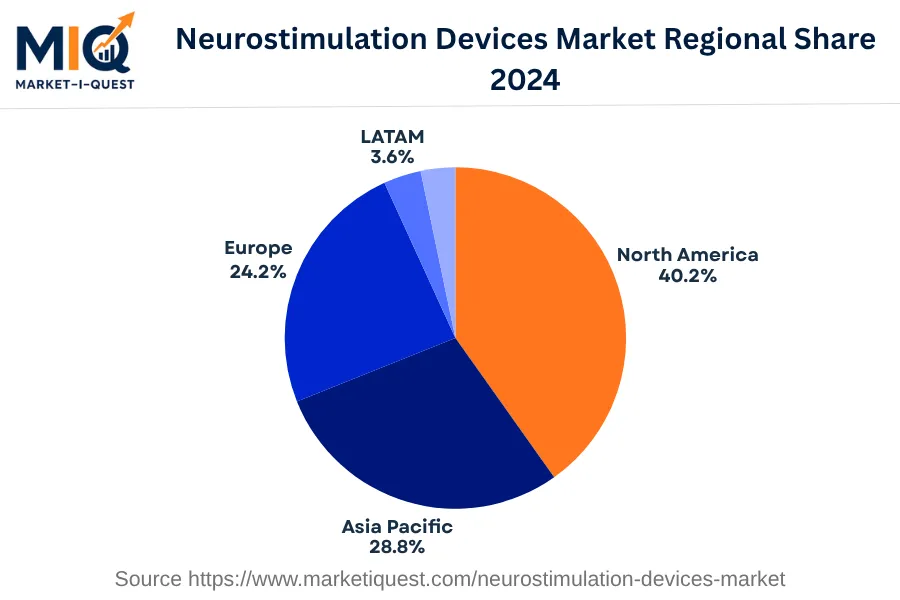
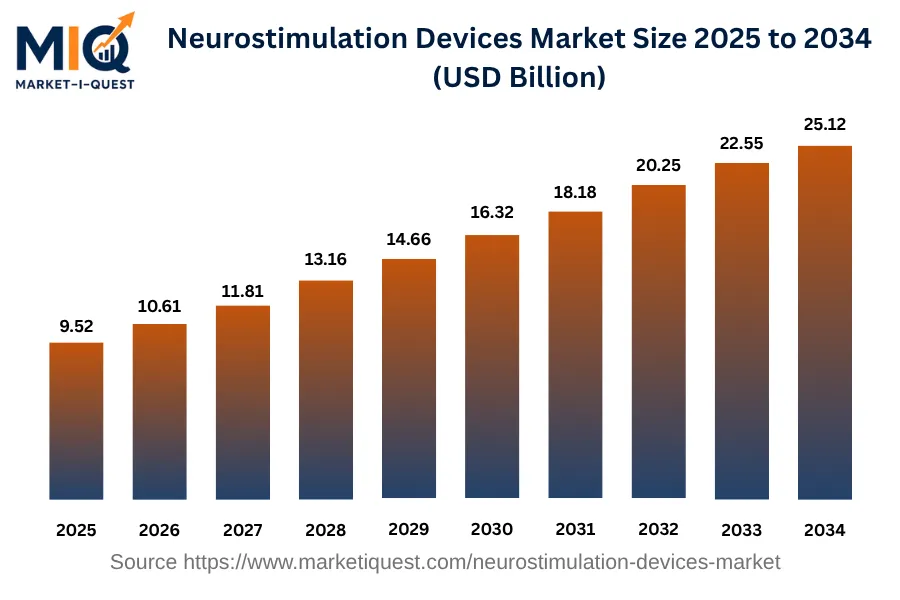
The Neurostimulation Devices Market was valued at USD 9.52 billion in 2025 and is projected to reach USD 25.12 billion by 2034, growing at a CAGR of 11.38%. This consistent increase in market valuation can be linked to the period between these years, where there was a considerable rise in the worth of the market. For instance, during the onset of the period, in 2024, the market size was calculated at USD 8.55 billion, which increased by nearly a billion to USD 9.52 billion in 2025. By the end of 2034, it is expected to nearly triple from the 2025 value. In terms of regional segmentation in 2024, North America held the largest share of 40.18%, followed by the Asia Pacific at 28.76%. Europe constituted a share of 24.23%, with LATAM and MEA contributing 3.56% and 3.27%, respectively, to the total market size.

Key Takeaways

  • By Product Type - Spinal Cord Stimulators held a prominent position in the neurostimulation devices market.
  • By Technology - Electrical Stimulation led accounting for a significant share in the neurostimulation devices market.
  • By Application - Chronic Pain Management ruled representing the largest segment in terms of use.
  • By End User - Hospitals were the leading users of neurostimulation devices in the given period.
neurostimulation-devices-market market size

Key Driving Factors

Increased Prevalence of Neurological Disorders

An increase in the number of patients suffering from various neurological disorders such as Parkinson's disease, epilepsy and chronic pain has been observed. These disorders cause severe functioning impairment & distressed life which in turn necessitates for effective treatments. Neurostimulation devices have been proven to relieve the symptoms & are being recognized as a potential option for treating these disorders. Moreover, resistance and complications associated with conventional treatments, like side-effects of drugs, have led physicians to consider neurostimulation devices as a viable alternative. This transition in the treatment approach is driving the demand for neurostimulation devices in the market.

Favorable Reimbursement Policies

The Neurostimulation Devices market is also propelled by the formulation of favorable reimbursement policies for implantable Neurostimulation devices in developed countries. Government and private insurers majorly in the US and Europe are providing coverage for procedures involving implantation of neurostimulation devices. This has encouraged patients for considering these devices as an option for alleviating their neurological complications. The inclusion of these devices under insurance coverage effectively reduces the overall cost of treatment for patients, thus making these devices more accessible and affordable. This has provided a significant boost to the Neurostimulation Devices Market.

Market Evolution by Timeline

2019-2023
During this period, the main buyers of neurostimulation devices were hospitals and neurology clinics in developed regions such as North America and Europe. The demand was driven by the high prevalence of neurological disorders and a higher acceptance rate of technologically advanced devices. Companies like Medtronic, Boston Scientific, and Abbott had introduced spinal cord, deep brain, and sacral nerve stimulation devices. Despite varying integration maturity, these devices possessed promising therapeutic potential while being constrained by their high costs. Regulatory landscape was shaped mainly by FDA and CE norms favoring product innovation. Typical contracted procurement with cost, volume, and outcomes was standard in the commercial model. High initial device costs and maintenance charges were a major financial risk, although health insurances and medical loans were common response measures.
2024
In 2024, North America remained the largest market for neurostimulation devices due to technological superiority and healthcare infrastructure. Besides hospitals, physiotherapy centers increased their demand. The focus was on advanced pain management devices, led by major players including Medtronic and Boston Scientific. Patients showed a willingness to pay premium prices for advanced pain management. However, the pricing model was pressured by demands for cost-to-performance ratios. Given that manufacturers faced strict FDA regulations and the high cost of compliance, the approval process often posed a risk to product availability.
2025-2029
During this timeframe, an increased demand from Asia-Pacific region was observed due to rising healthcare expenditure in countries like China, India and Japan. Besides clinical usage, homecare segment also emerged as a significant buyer due to the rise in chronic conditions requiring neurostimulation. While manufacturers like NeuroPace introduced responsive stimulation technologies, challenges included device longevity and risk of infection. Regulatory bodies like FDA and MHLW introduced stricter biocompatibility standards for these devices. Across the market, leasing or equipment rental contracts, as opposed to outright purchases, became more prevalent due to high costs. The primary risk factor was the lack of skilled professionals to operate these devices.
2030-2034
In this period, a steady demand is expected from hospitals and homecare sector from developed regions, with growing demand from developing regions as healthcare systems improved. Emphasis would likely shift towards personalized neurostimulation devices offering more efficiency and less adverse effects. Migrating from standalone to integrated systems would be critical for manufacturers while maintaining affordability. Regulatory environment continues to guide the approvals process, with GDPR regulations affecting data privacy and cybersecurity of digital devices. Affordability issues would likely be addressed through procurement contracts encouraging shared risk models, where payment is performance-based. A key risk during this period would be data and device security associated with advanced digital neurostimulation devices.

Future Market Outlook

Future Opportunities

Future opportunities in the neurostimulation devices market are primarily influenced by ongoing clinical research and emerging technology partnerships. In October 2023, researchers at Harvard University revealed promising results for a new neuromodulation technique targeting epilepsy, highlighting the potential to broaden the application spectrum of existing devices. Furthermore, the World Health Organization has indicated an increasing demand for mental health treatments globally, creating a favorable environment for devices targeting mood disorders and anxiety. In 2022, the National Institutes of Health announced additional funding for neurotechnology innovation projects, aiming to accelerate the development of advanced neurostimulation therapies. As patient populations grow, especially among aging societies, companies like Boston Scientific are investing in expanding their product lines to address these demographic shifts. There's also a heightened focus on developing wireless, fully implantable neuromodulation systems, as indicated by the research funded by the European Union Horizon 2020 program, exploring new designs since 2021. Additionally, advancements in artificial intelligence are providing opportunities for enhanced device capabilities, particularly in predictive analytics for treatment personalization. The increasing engagement of regulatory bodies emphasizing evidence-based practices is also likely to facilitate the introduction of robust new therapies, positioning the sector for sustained growth.

Segmentation Analysis

By Product Type

The market is divided into subsegments including Spinal Cord Stimulators, Deep Brain Stimulators, Transcranial Magnetic Stimulators, and Vagus Nerve Stimulators. Of these, Spinal Cord Stimulators accounted for the largest revenue share while Transcranial Magnetic Stimulators are expected to grow at the fastest CAGR during the forecast period.

Largest Revenue Share

Spinal Cord Stimulators

Market Share Leader

Fueled by rising prevalence of chronic back pain, increasing awareness about the benefits of this therapy, and improved reimbursement policies, Spinal Cord Stimulators have been able to gain a significant amount of market share. Chronic back pain, especially in aging populations, drives a consistent demand as it significantly hampers quality of life and spinal cord stimulator has emerged as an effective non-drug treatment. In addition, the purchasing decisions have been favorably influenced by the technological advancements such as wireless connectivity and remote control options. The manufacturers have been investing heavily in research and development to innovate and broaden their product portfolio. Moreover, in the developed markets such as the U.S. and Europe, adoption of spinal cord stimulators has been further boosted by improved coverage under health insurance, making it relatively affordable for patients and thus pushing its demand in these regions.

Fastest CAGR

Transcranial Magnetic Stimulators

Forecast Period Growth Leader

Transcranial Magnetic Stimulators are expected to display the fastest growth patterns in the foreseeable future, underpinned by increased understanding of neurological disorders and growing evidence of their benefits in treating mental disorders. This technology is seen as a promising tool in management of conditions like depression, dementia and even addiction, which are increasingly prevalent globally. Mental health has become a high priority in healthcare policies globally, particularly after the COVID-19 pandemic, thus providing a regulatory push towards adoption of effective therapies. Emerging partnerships between manufacturers and healthcare providers, alongside investments in research and development to maximize the efficacy of these stimulators, are other notable drivers of this anticipated growth trend. However, there are challenges that could hinder growth, such as higher initial costs of these devices, risk of side effects, and lack of awareness in certain regions that require attention from the stakeholders.

By Technology

The market is divided into subsegments including Electrical Stimulation, Magnetic Stimulation, and Chemical Stimulation. Electrical Stimulation accounted for the largest revenue share while Magnetic Stimulation is expected to grow at the fastest CAGR during the forecast period.

Largest Revenue Share

Electrical Stimulation

Market Share Leader

Electrical Stimulation, a process of using electric current for therapeutic purposes, has seen significant adoption due to its wide range of applications. These include treatment of neurological disorders, muscle atrophy, wound healing, pain management, and more. The rising incidence of these health issues, coupled with an increasing ageing population, has bolstered demand. Additionally, advancements in technology have led to the development of more efficient and minimally invasive devices, further driving adoption. Given its inherent nature, this technology is more often used in medical facilities, enhancing its reach to a larger patient pool. Furthermore, favorable reimbursement policies in regions like North America and Europe augment its market dominance. Please note, these observations warrant further granular research for more precise analysis.

Fastest CAGR

Magnetic Stimulation

Forecast Period Growth Leader

While not currently the primary revenue generator, Magnetic Stimulation has the potential for significant growth. Magnetic Stimulation leverages the use of magnetic fields to stimulate nerve cells in the brain. It's gaining increased acceptance for the treatment of depression and other psychiatric disorders, especially when conventional treatments have failed. Technological advancements such as the development of portable devices and home-use systems are expected to fuel growth. Also, the recent FDA approval for treating obsessive-compulsive disorder (OCD) exemplifies the growing acceptance of this technology. However, current adoption barriers include the high costs of equipment and the uncertainty of insurance coverage for this novel treatment method. Strategic partnerships, focused on increasing accessibility and affordability, could act as significant growth catalysts. However, a diligent assessment of the inherent risks associated with evolving regulations and data concerning effectiveness is recommended.

By Application

The market is divided into subsegments including Chronic Pain Management, Movement Disorder Treatment, Depression Treatment, and Epilepsy Management, with Chronic Pain Management accounting for the largest revenue share, while Depression Treatment is expected to grow at the fastest CAGR during the forecast period.

Largest Revenue Share

Chronic Pain Management

Market Share Leader

Chronic Pain Management commands the highest revenue in the base year of 2024 due to several reasons. Firstly, chronic pain is a pervasive problem, affecting millions of people across the globe. This makes the potential customer base for pain management solutions incredibly vast. Secondly, the longevity and persistent nature of chronic pain conditions necessitate ongoing treatments and new innovations, creating sustained demand in the market. Chronic pain is also linked to other health issues like depression and sleep disorders, which create additional opportunities for integrative solutions. Geographically, developed regions with high healthcare spending like North America and Europe contribute significantly to the segment's revenue. Policy support is tangible, with initiatives to enhance chronic pain management and increase healthcare accessibility. However, market dominance is not without challenges. Affordability can make or break purchase choices especially in lower-income regions. The dependency on insurance support may also affect decisions and constrain expansion. Lastly, there might be switching costs involved if customers are entrenched with existing providers or solutions.

Fastest CAGR

Depression Treatment

Forecast Period Growth Leader

The Depression Treatment subsegment is projected to witness the fastest growth in the foreseeable future. The increasing global prevalence of depression and emerging awareness about mental health are primary growth drivers. Technological advancements in treatment methods offer potential for higher acceptance and better patient outcomes, fostering adoption. Increasing collaborations and partnerships in the medical field further promise improved depression treatment methodologies and may boost growth in this segment. On the flip side, the persistent stigma around mental health poses a significant barrier, as it may prevent individuals from seeking treatment. Regulatory uncertainties around novel treatment approaches may also impede growth inadvertently but the overall outlook remains optimistic. As public and private sector initiatives continue to promote mental health importance and address treatment gaps, there is potential for significant market growth in depression treatments.

By End User

The market is divided into the subsegments including Hospitals, Specialty Clinics, and Home Care Settings. Of these, Hospitals accounted for the largest revenue share while Home Care Settings is expected to grow at the fastest CAGR during the forecast period.

Largest Revenue Share

Hospitals

Market Share Leader

Hospitals end up accounting for the largest revenue share due to a multitude of drivers. The foremost reason is the higher patient footfall in hospitals as compared to specialty clinics and home care settings. This indeed leads to a higher demand for products or services. Geographically, hospitals are widely spread and accessible to patients across various socioeconomic backgrounds, significantly contributing to broad-based revenue generation. Additionally, hospitals are typically better funded and have a wider array of services, leading to more comprehensive usage of various medical equipment or services. They are often subject to rigorous regulation, which can necessitate continual investment in up-to-date compliant technologies or practices. Their purchasing decisions are influenced by factors such as efficacy, cost, durability, and after-sales service. Switching costs can be substantial for hospitals due to the complexity of their operations and interdependencies between different technologies. Distribution or sales channels often favor hospitals due to their size and the volume of purchases, which can lead to better pricing and terms compared to smaller entities.

Fastest CAGR

Home Care Settings

Forecast Period Growth Leader

Home Care Settings are forecasted to register the fastest growth during the upcoming years. Growth drivers include technological advances such as telehealth and remote monitoring systems which greatly enable home care services. These developments have lowered the barriers to adoption as they can provide similar levels of care to a hospital or a specialty clinic. A key catalyst is the shift in policy and insurance frameworks which increasingly favor home care due to its cost-effectiveness and patient convenience. Home care also lowers the load on hospitals and clinics, making it a preferred option for management of chronic conditions. However, factors such as lack of skilled personnel at home, and potential for lower care quality could pose near-term risks. The increase in partnership among device companies, tech firms, and home care providers are expected to further boost this trend. While capital spending is needed for setup, the lower ongoing operating costs also make it attractive. The growing elderly population is another significant driver for the growth of Home Care Settings.

Competitive Analysis: Neurostimulation Devices Market

Key Market Players

Manufacturers / OEMs

Medtronic
Ireland
Abbott Laboratories
US
Boston Scientific Corporation
US

Key Suppliers & Raw Materials

Microsemi Corporation
US
ON Semiconductor
US
Molex
US

Distributors, Integrators & Channel Partners

Cardinal Health
US
McKesson Corporation
US
AmerisourceBergen Corporation
US

Porter’s Five Forces Analysis

The analysis outlines the competitive intensity and attractiveness of the Neurostimulation Devices Market.

Supplier Bargaining Power

Medium

Limited suppliers with specialized knowledge can leverage higher prices for components and structures.

Buyer Bargaining Power

Low

High switching costs and specialized requirements restrict buyer bargaining power.

Threat of Substitutes

Medium

Alternative pain management therapies present a medium level threat.

Threat of New Entrants

Low

High capital investments and stringent regulatory barriers deter new entrants.

Competitive Rivalry

High

Intense competition among key players like Medtronic, Boston Scientific, and Abbott.

Regional Analysis

Geographic market dynamics and growth opportunities across key regions

Global Market Outlook

neurostimulation-devices-market market regional share

North America

In the base year of 2024, North America's neurostimulation devices market experienced significant growth informed by various drivers and trends. Supportive regulatory environments favored both product innovation and wider adoption in the healthcare sector. Increased investment in healthcare technology, notably in the United States, drove market expansion, coupled with an elevated demand due to a rising prevalence of neurological disorders. Advances in neurotechnology and proliferation of smartphone-integrated devices contributed to an adoption upswing in Canada and Mexico. However, the high cost of the devices remained a restrictive factor for potential consumers.

In terms of trends, a shift towards home-based care increased the demand for portable and user-friendly neurostimulation devices, particularly in the U.S. with its aging population. Patient preference was leaning towards minimally-invasive devices, pushing manufacturers to innovate within these constraints. The market also witnessed strategic partnerships between key players, such as Medtronic and Boston Scientific, aimed at capacity expansion and product portfolio diversification. Meanwhile, in Mexico, government policies started to emphasize access to neuromedical devices, creating positive market sentiment. Lastly, advancements in wireless technology pushed the adoption of remote patient monitoring systems, contributing to the growth of the neurostimulation devices market in the healthcare and telemedicine sectors.

Asia Pacific

In 2024, Asia Pacific's Neurostimulation Devices Market witnessed significant impact from broadening healthcare provisions, investment inflows, and technological advancements. Rising chronic disease prevalence, driven primarily by aging demographics in China, Japan, and South Korea, elevated the demand for these devices, highlighting the need for advanced neurological solutions. In emerging economies like India and key ASEAN markets, government investments in healthcare infrastructure and policy reform favored the proliferation of neurostimulation devices.
Simultaneously, progressive adoption of cutting-edge technology in the healthcare sector, especially within Australia's robust medical landscape, provided further impetus for the market. Regulatory encouragements for neurostimulation devices, particularly prominent in India and China, reinforced this upward trajectory.

In terms of trends, patient preference began to lean noticeably towards non-invasive neurostimulation devices, arguably prompted by the increasing awareness of the potential side effects of pharmaceutical treatment for neurological disorders. There were significant partnerships and M&A activities, predominantly in China and Japan, aimed at consolidating market share and broadening technological capabilities. In Australia and South Korea's sophisticated healthcare sectors, standards for neurostimulation devices were reinforced, ensuring quality and safety. Lastly, an uptick in direct-to-consumer sales channels was observed, influenced by the rise of e-commerce platforms across the region, most notably in China and key ASEAN markets.

Europe

In 2024, the European neurostimulation devices market experienced significant growth due to key demand factors, regulations, and technological advancements. The healthcare sector's emphasis on new devices and therapies boosted market dynamics as chronic pain and neurological disorders emerged as major public health issues, particularly in Germany, the UK, France, Italy, Spain, the Nordics, Benelux, and Central & Eastern Europe. Budget allocation for neuroscience research spiked, alongside investments in neuro-related businesses and startups, fostering market development. Technology adoption was spurred by the rise in networked and wireless neurostimulation devices and the integration of artificial intelligence algorithms. In terms of supply dynamics, regulatory approvals for novel neurostimulation devices facilitated market expansion.

Market trends highlighted a shift towards patient-centric healthcare delivery and home-based neurostimulation therapy. A surge in partnerships and mergers between major healthtech companies and neuro-device manufacturers reflected the industry's consolidation trend, with an increasing number of healthcare providers integrating neurostimulation therapies into their service offerings. Strict policy enforcement by European Health Authorities ensured the safe usage of neurostimulation devices, thereby maintaining patients' trust. The increased prevalence of neurodegenerative disorders among the aging population and the need for cost-effective treatment methods greatly influenced the market's consistent growth.

Latin America

In 2024, the neurostimulation devices market in Latin America experienced noticeable growth due to a confluence of factors and trends. A rise in the prevalence of neurological disorders, an increase in healthcare investments, and advancements in neurostimulation technologies were key drivers. Specifically, substantial healthcare investments in Brazil and Mexico bolstered the accessibility and affordability of these devices. Additionally, Argentina saw an increased adoption rate due to breakthroughs in neurostimulation advancements.

Moreover, three primary trends were observed in 2024. First, the rising awareness of the benefits of neurostimulation devices influenced buyer behavior, especially in Colombia, encouraging greater market uptake. Second, a shift towards non-invasive neurostimulation technologies was observed across the region, led by advanced healthcare sectors in Brazil and Mexico. Lastly, Chile and Peru experienced a surge in partnerships and mergers among enterprises in healthcare and manufacturing sectors, aiming to improve production capacities for neurostimulation devices.
This burgeoning market primarily served healthcare providers, while secondary customers included retail enterprises and government agencies. Government involvement was especially evident in Chile's policy enforcement aimed at ensuring the quality and safety of the devices. Overall, Latin America's neurostimulation devices market in 2024 exhibited dynamic growth driven by the region’s increasing healthcare investments and technology adoptions, influenced by policy regulations and changing customer trends.

Middle East & Africa

In 2024, the neurostimulation devices market in the Middle East and Africa was a rapidly evolving space driven by several key factors. Increased health expenditure in countries like Saudi Arabia, UAE, and South Africa amplified the demand for neurostimulation devices, as did the rise in neurological disorders in Nigeria and Kenya. The influx of investments in healthcare technology and the adoption of the latest therapeutic technologies, particularly in Egypt and Israel, boosted the supply dynamics.

Trends in this market were a testament to its dynamic nature. A noteworthy shift was observed in buyer behavior, with more healthcare institutions leaning towards sophisticated neurostimulation products, especially in the UAE and Qatar. Technology advancements enhanced product offerings, as observed in the uptake of remote-controlled and MRI-safe devices. In the channel dynamics, notable growth was seen in the online sales of these devices across the region. Mergers and acquisitions were commonplace, especially in Saudi Arabia's healthcare sector, stirring the market further. A positive impact on the market was also attributed to policy enforcement towards standardizing these devices, which was particularly pronounced in South Africa. The primary customers in this market were government healthcare institutions, private hospitals, and clinics. Other sectors included pharmaceuticals and research institutions that extensively used neurostimulation devices across the region.

Recent Industry Developments

Latest market innovations, product launches, and strategic initiatives

June 2026

Resmed closed its $340 million acquisition of Noctrix Health, acquiring a wearable neuromodulation device (Nidra Tonic Motor Activation therapy) for restless legs syndrome, expanding beyond its core sleep apnea business.

January 2026

Boston Scientific completed its $600 million acquisition of Nalu Medical, gaining a battery-free, minimally invasive neurostimulation implant for peripheral nerve stimulation to treat chronic pain.

Frequently Asked Questions