Neurorehabilitation Devices Market Snapshot

Key Players

  • Medtronic (Ireland)
  • Bionik Laboratories (Canada)
  • Ekso Bionics (US)
  • Neuro Rehab VR (US)
  • MindMaze (Switzerland)
  • ReWalk Robotics (Israel)
  • Hocoma (Switzerland)
  • Tyromotion (Austria)
  • AlterG (US)
  • Helius Medical Technologies (US)

Market Size

Base Year 2024
$2.18 Bn
CAGR
14.27%
Forecast 2034
$8.28 Bn

Market Segments

By Type
  • Neuro-Robotic Devices
  • Wearable Devices
  • Non-Invasive Stimulators
  • Brain-Computer Interfaces
By Application
  • Brain Stroke
  • Parkinson's Disease
  • Multiple Sclerosis
  • Spinal Cord Injury
  • Cerebral Palsy
  • Schizophrenia
  • Others

Market Dynamics

Drivers
  • Rising prevalence of neurological disorders
  • Technological advancements in neurorehabilitation devices
Restraints
  • High device costs
  • Limited insurance coverage
Opportunities
  • Aging global population
  • Technological advancements in neurorehabilitation devices

Market Size

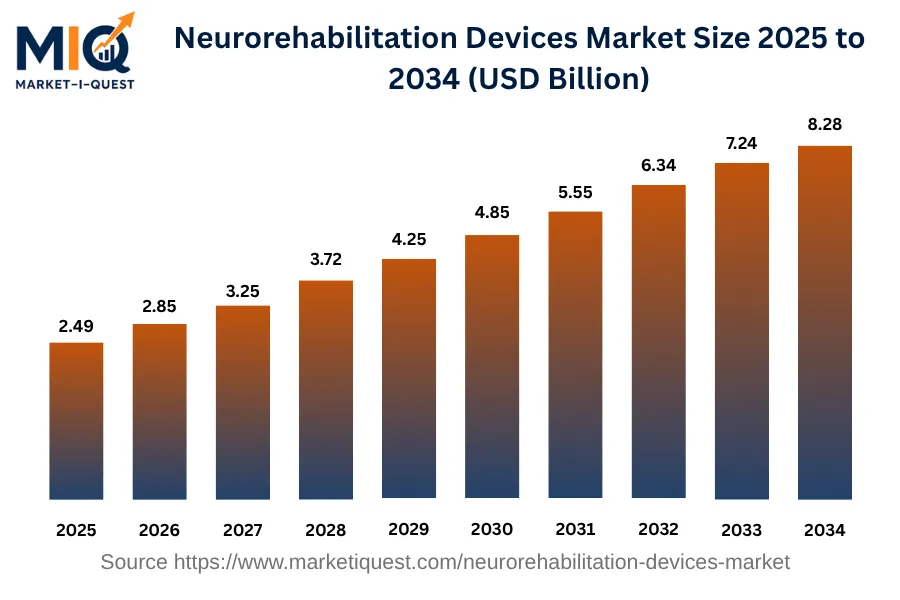
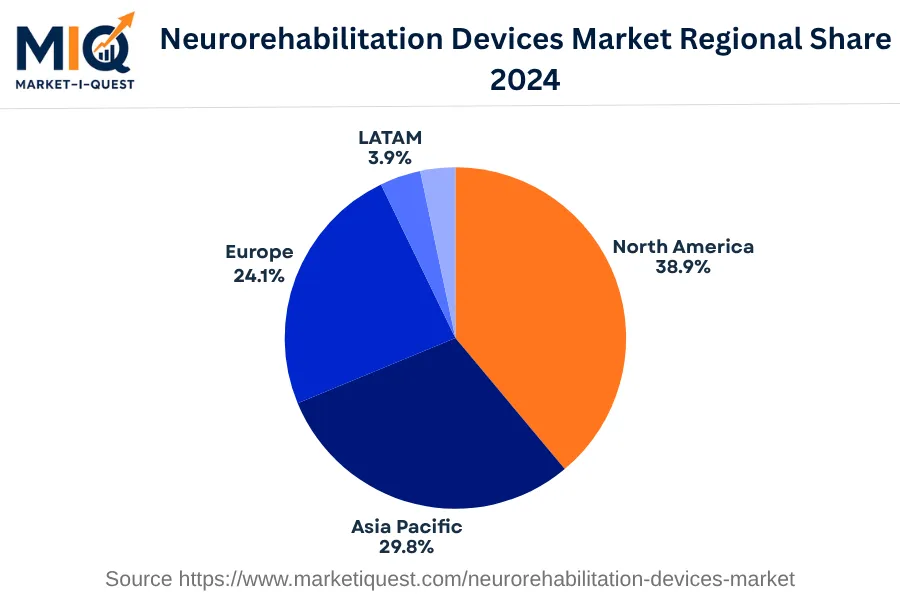
The Neurorehabilitation Devices Market valued at USD 2.49 billion in 2025, and by 2034, it is projected to grow to USD 8.28 billion, with a CAGR of 14.27%. The market witnessed a considerable increase from USD 2.18 billion in 2024. Over the decade from 2025 to 2034, the market has more than tripled its size. The swift development of this market is majorly brought about by technological advancements, increasing prevalence of neurological disorders and rising geriatric population leading to increased requirement for neuro-rehabilitation devices. However, the regional share distribution indicates North America holding the highest market share of 38.93%, followed by Asia Pacific at 29.83%, and Europe at 24.06%. The regions of Latin America and Middle East & Africa accounted for the remaining share at 3.87% and 3.31% respectively.

Key Takeaways

  • By Type - Non-Invasive Stimulators held the majority share in the Neurorehabilitation Devices Market in recent years.
  • By Application - Parkinson's Disease was the prominent contributor in the market performance during the base year.
neurorehabilitation-devices-market market size

Key Driving Factors

Increased Prevalence of Neurological Disorders

The demand for neurorehabilitation devices is significantly influenced by the increased prevalence of neurological disorders globally. These disorders include traumatic brain injury, Parkinson's disease, stroke, spinal cord injury, and multiple sclerosis among others. As per World Health Organization, neurological disorders are one of the greatest threats to public health. This rise has compelled healthcare providers and medical device manufacturers to develop and integrate neurorehabilitation devices in treatment protocols, thereby pushing the growth of the neurorehabilitation devices market. Moreover, initiatives by governments and health organizations to create awareness about neurological disorders and their management also encourage the use of these devices.
Preference for Non-Invasive Procedures

Growing preference of patients for non-invasive procedures is another important driver for the neurorehabilitation devices market. Non-invasive neurorehabilitation devices, such as robotic neurorehabilitation devices and virtual reality systems, offer the advantage of significantly reducing the risks related to invasive procedures, including surgical infections or complications, all while decreasing the recovery time. Differentiating from traditional surgeries, these procedures use computer-based technology and robotic systems which provides efficient, precise and repeatable movements. Hence, the clinical benefits they provide over conventional invasive methodologies are driving their rapid adoption in the health sector, driving the neurorehabilitation devices market's growth.

Market Evolution by Timeline

2019-2023
In this period, the demand of neurorehabilitation devices rose in regions such as North America and Europe, due to the high prevalence of neurological disorders and high healthcare expenditure. The key buyers were hospitals and rehabilitation centers deploying solutions for stroke recovery, traumatic brain injury, and spinal cord injury. Supply was primarily driven by established medical technology companies who shipped robotics and wearable devices. Regulatory frameworks such as the FDA's approval and Medicare coverage were influential, promoting device adoption among healthcare providers. Commercially, payment models were often combined with maintenance contracts.
2024
In 2024, the neurorehabilitation devices market witnessed a shift with increased demand from Asian markets, particularly China and India. This was largely driven by growing awareness and increased healthcare spending in these regions. The technology remained evolving with more advanced robotics and introduction of virtual reality for therapy. However, integration with existing healthcare systems remained a limitation. The regulatory landscape moved towards enforcing stricter standards for device safety. Commercially, vendors were still tackling with affordable pricing models. In addition to affordability, device user-friendliness was a substantial barrier.
2025-2029
Between 2025 and 2029, the devices market might witness increased penetration in rural areas via tele-rehabilitation and mobile clinics. Evolving 5G technology will likely increase internet penetration may support this growth. On the supply side, device integration is expected to improve and artificial intelligence will likely start playing a prominent role. On the regulatory front, GDPR and HIPAA might transition into broader frameworks covering patient data in the digital age. Commercially, private insurance companies started covering the devices, improving affordability. Despite these advancements, the privacy of patient data in remote therapy scenarios might remain a risk factor.
2030-2034
From 2030 onward, neurorehabilitation devices might become mainstream in therapy globally. Demand is willing to rise in Africa, driven by NGO-led healthcare initiatives. The market will likely be fueled by core AI-guided therapies, smooth device-healthcare system integration and IoT-enhanced remote care. Regulatory bodies brought strict cybersecurity measures for digital patient data into play. The commercial model is expected to be dominated by lease-to-own contracts given the expensive nature of the devices. The cost of devices continued to be a risk, especially in less developed regions. Also, more user-friendly devices were needed particularly for the elderly population.

Future Market Outlook

Future Opportunities

The advancement of connectivity technologies, particularly 5G, presents future opportunities for neurorehabilitation devices, allowing for real-time data transmission and interaction between patients and healthcare providers. The World Health Organization published guidelines urging the integration of digital health solutions to support remote patient monitoring and tele-rehabilitation initiatives. As a result, companies like Neurotrax are exploring telehealth platforms that allow therapists to engage with patients in remote areas, making therapy more accessible. The trend toward integration of gamification in rehabilitation, as exemplified by platforms like the Motus NOVA, shows promise in motivating patient engagement and adherence to therapeutic protocols. Furthermore, current partnerships between major tech companies, such as Google Cloud with universities, are driving the development of machine learning algorithms aimed at predicting patient outcomes and optimizing treatment plans, leveraging data collected from neurorehabilitation devices. Regulatory bodies are increasingly supporting innovations, evidenced by the U.S. FDA's Digital Health Innovation Action Plan, which encourages the expedited review of software and digital health products.

Segmentation Analysis

By Type

The market is divided into subsegments including Neuro-Robotic Devices, Wearable Devices, Non-Invasive Stimulators, and Brain-Computer Interfaces. The Non-Invasive Stimulators holds the largest revenue share while the Brain-Computer Interfaces is expected to grow at the fastest CAGR during the forecast period.

Largest Revenue Share

Non-Invasive Stimulators

Market Share Leader

Non-Invasive Stimulators, constitutes the largest revenue share primarily due to its broad application base and higher adoption rate. These stimulators, as opposed to their invasive counterparts, are user-friendly, safer and have minimal side effects, making them a preferred choice for therapeutic applications in the medical sector. Regionally, the demand and revenue inflow is significantly triggered by developed regions such as North America and Europe, largely because of increased awareness, advanced healthcare infrastructure and greater spending capacity. Regulatory bodies in these regions also encourage the use of such technologies due to their proven safety and effectiveness. Furthermore, the purchasing decision of these devices is often driven by factors such as quality, safety, cost-effectiveness, and brand reliability creating a competitive market scenario that fuels revenue growth.

Fastest CAGR

Brain-Computer Interfaces

Forecast Period Growth Leader

The Brain-Computer Interfaces (BCI) subsegment is projected to witness the fastest growth during the forecast period. The key growth propellant is the potential that BCIs have in revolutionizing the healthcare and information technology arenas. Primarily, the technology holds promise in supporting those with severe physical disabilities by allowing them for controlling prosthetic devices using their thoughts alone. Furthermore, BCIs are projecting significant commercial viability beyond healthcare, in industries such as gaming and entertainment, thus offering new revenue-endowed market avenues. These include regulatory hurdles, user skepticism due to the invasive nature of some variants. However, technological improvement reducing the invasiveness, favorable policy developments, and an increase in healthcare expenditure could act as catalysts for potential market growth.

By Application

The market applications are segmented into Brain Stroke, Parkinson's Disease, Multiple Sclerosis, Spinal Cord Injury, Cerebral Palsy, Schizophrenia, and others. Among these, the Parkinson's Disease subsegment commands the largest revenue share, while the Brain Stroke subsegment is projected to witness a significant growth and record the quickest CAGR.

Largest Revenue Share

Parkinson's Disease

Market Share Leader

Parkinson's Disease leads the market revenue due to its global prevalence and the complex treatment it requires. Parkinson's involves multiple drugs and even surgical treatments, making this application expensive and leading to high market revenue. It's a neurological disorder with rising incidence, particularly among aging demographics, driving the growth of this market segment. The focus has increasingly been on managing the disease over the long term, which further adds to the cumulative revenue. The market has a strong reliance on repeat purchases due to the chronic nature of the disease. These factors together push the market revenue for Parkinson’s Disease to the forefront of the application segments.

Fastest CAGR

Brain Stroke

Forecast Period Growth Leader

The Brain Stroke segment is forecasted to grow at the fastest speed during the forecast period. This growth can be primarily attributed to an increase in the incidence of brain strokes globally, driven by factors such as unhealthy lifestyles, stress, and co-morbid conditions such as hypertension, diabetes, and obesity. Technological advancements and improvements in stroke diagnosis and treatment are another stimulus to this growth. The emergence of telestroke services and evolving guidelines for stroke treatment are increasing access to timely and appropriate treatment, catalyzing the market growth.

Competitive Analysis

Key Market Players

Manufacturers / OEMs

Medtronic
Ireland
Bionik Laboratories
Canada
Ekso Bionics
US

Key Suppliers & Raw Materials

Invacare Corporation
US
Johnson & Johnson
US
Siemens Healthineers
Germany

Distributors, Integrators & Channel Partners

ReWalk Robotics
Israel
Hocoma
Switzerland
AlterG, Inc.
US

Porter’s Five Forces Analysis

This assessment delves into the competitive intensity and attractiveness of the Neurorehabilitation Devices Market.

Supplier Bargaining Power

Medium

Availability of multiple component suppliers, but specialized technology can limit options.

Buyer Bargaining Power

Medium

Buyers have medium bargaining power due to the criticality of devices but presence of alternatives.

Threat of Substitutes

Low

Substitutes are low due to the uniqueness and effectiveness of neurorehabilitation devices.

Threat of New Entrants

Medium

Capital-intensive market and regulatory barriers limit threat, but technological advancements could alter landscape.

Competitive Rivalry

High

Competitive rivalry is high due to the presence of several key players and constant innovation.

Regional Analysis

Geographic market dynamics and growth opportunities across key regions

Global Market Outlook

neurorehabilitation-devices-market market regional share

North America

In 2024, the Neurorehabilitation Devices market in North America evidenced remarkable growth through increased demand, advancements in technology and dynamic pricing. The rising prevalence of neurological disorders spurred a demand surge, particularly in the U.S. and Canada where improved healthcare infrastructure and increased spending were beneficial. Moreover, the FDA’s encouragement of device innovation and increased investment in R&D accelerated technology adoption within the sector

Trends observed in 2024 included a shift in buyer preference towards advanced Stroke rehab devices, notably in the U.S where the incidence rate was high. Also of note was the increasing adoption of tele-rehabilitation, a shift catalyzed by the sophistication of digital frameworks in Canada. A litany of strategic alliances and M&A took place, pinning market growth on the bolstering partnerships. The year saw an uptick in policy enforcement, particularly through the observance of CE Marking in Mexico, promoting product standardization and quality assurance within the region.

Asia Pacific

In 2024, the neurorehabilitation devices market in the Asia Pacific experienced a surge as a direct result of growing neurological disease prevalence. Increasing investment from China, India, and South Korea in healthcare infrastructure and technological adoption was a significant driver. Coupled with their positive policies toward mental health, the demand for these devices escalated. Additionally, Australia's move to subsidize neurorehabilitation devices significantly impacted supply dynamics and pricing, boosting market growth.

Market trends in 2024 were heavily influenced by shifts in buyer behavior and technological advancement. As patients in Japan and key ASEAN markets started to show a preference for home-based treatments, telehealth became a favored channel for neurorehabilitation device provision. Simultaneously, partnerships and mergers between tech firms and healthcare providers increased, such as prominent India's Reliance group venturing into the neurorehabilitation domain. Also, updated medical device regulatory standards by the Chinese government further created a conducive environment for market expansion. Key sectors contributing to this market included healthcare institutions, rehabilitative centers, and home care settings.

Europe

In 2024, the European Neurorehabilitation Devices Market experienced significant growth due to various market drivers and trends. Rising incidences of neurological disorders across the region, particularly in the UK, France, and Germany, increased the demand for these devices. Existing healthcare infrastructure in these countries, backed by state funding, facilitated more extensive adoption of advanced neurorehabilitation equipment. Additionally, public awareness and acceptance of modern rehabilitation methods in Benelux, Nordics, and Central & Eastern Europe played crucial roles in driving the growth.

Significant technological advancements transformed the sector, with AI and robotics being incorporated into devices in Italy and Spain, offering more efficient patient care. Moreover, active collaborations between manufacturers, such as Germany's Medtronic and UK-based Bioness, accelerated the development and introduction of new devices to the market. Regulatory bodies, such as the European Medicines Agency and the UK's MHRA, reinforced compliance standards, ensuring optimal patient safety. The healthcare sector remained the primary customer, closely followed by rehabilitation and physiotherapy centers. Large hospitals, especially those in France and the Nordics, increased their spending on neurorehabilitation devices.

Latin America

In 2024, the neurorehabilitation devices market in Latin America (LATAM) experienced notable growth and traction. Drivers of this expansion include the increased prevalence of neurological disorders, notably in Brazil and Mexico, triggering demand for rehabilitation resources. Stricter healthcare regulation across LATAM, especially in Argentina and Chile, pushed for the adoption of improved neurorehabilitation devices. Moreover, significant healthcare investments, primarily in Colombia and Peru, facilitated technology adoption in public hospitals and medical centers.

One prominent trend observed was an increase in buyer preference for non-invasive neurorehabilitation devices, echoing global shifts toward less intrusive methods. With technology advancements, neuro-device capabilities extended beyond hospitals, reaching into homes via telehealth, a growing channel in several LATAM countries. Noticeably, partnerships and M&A activities surged, specifically in the tech and healthcare sectors, fortifying the LATAM neurorehabilitation devices market infrastructure. In terms of sectors, the healthcare industry, both private and public, exhibited stronger demand for these devices, driven by a growing need to improve patient care standards. The retail sector also showed increased interest, particularly for compact and home-use devices, signaling a shift to self-care and outpatient services for neurological rehabilitation in the region.

Middle East & Africa

In 2024, the Neurorehabilitation Devices Market in the Middle East and Africa demonstrated notable growth, driven fundamentally by certain demand factors and technological developments. Rising incidences of neurological disorders, along with an expanding geriatric population, particularly in nations such as Saudi Arabia, South Africa and Israel, spurred a higher demand for Neurorehabilitation Devices. Simultaneously, increasing awareness regarding neurological disorders and advancements in technology observed in the United Arab Emirates and Qatar significantly boosted market growth.

Notable trends in 2024 included the rapid adoption of tele-rehabilitation in many healthcare sectors including Saudi Arabia, Israel, and Kenya, providing these countries with the flexibility to manage neurorehabilitation remotely. In addition, partnerships and M&A activities surged, particularly in the United Arab Emirates, aiding market expansion. Examples of this include the collaboration between healthcare and technological firms to develop advanced neurorehabilitation devices. On a sectoral level, governments' initiatives to promote awareness about neurological disorders and the necessity of neurorehabilitation positively impacted the market. Healthcare sectors in several countries, like Egypt and Nigeria, invested heavily in the purchase and implementation of these devices.

Recent Industry Developments

Latest market innovations, product launches, and strategic initiatives

July 2026

FDA granted 510(k) clearance to Bioness Medical for the PoNS (Portable Neuromodulation Stimulator) System for treatment of dynamic gait deficit due to chronic stroke symptoms, making it the first non-invasive, orally applied neuromodulation device cleared for stroke rehabilitation in the U.S.

June 2026

Bioxtreme launched Dextreme™ 2.0, a next-generation robotic rehabilitation platform for upper extremity recovery after stroke and neurological conditions, featuring patented Error Augmentation technology, adaptive AI, and immersive 3D therapy.

Frequently Asked Questions