
Neuroprosthetics Market Snapshot

Key Players

  • Cochlear Limited (Australia)
  • Med-El Medical Electronics (Austria)
  • Second Sight Medical Products (USA)
  • Advanced Bionics AG (Switzerland)
  • Nervo Corp. (USA)
  • Boston Scientific Corporation (USA)
  • Neuralink Corporation (USA)
  • Sonova Holding AG (Switzerland)
  • Oticon A/S (Denmark)
  • Natus Medical Incorporated (USA)

Market Size

Base Year 2024
$14.83 Bn
CAGR
11.76%
Forecast 2034
$45.08 Bn

Market Segments

By Product Type
Cochlear Implants, Retinal Implants, Functional Electrical Stimulation Devices, Deep Brain Stimulators, Vagus Nerve Stimulators
By Technology
Invasive Neuroprosthetics, Non-Invasive Neuroprosthetics, Brain-Computer Interface
By Application
Pain Management, Hearing Restoration, Vision Restoration, Motor Function Restoration, Neurological Disorders
By End User
Hospitals, Rehabilitation Centers, Home Care Settings, Research Institutions

Market Dynamics

Drivers
  • Increasing neurological disorders
  • Technological advancements in neural prosthetics
Restraints
  • High development costs
  • Regulatory approval hurdles
Opportunities
  • Technological advancements in neuroprosthetics
  • Rising prevalence of neural disorders

Market Size

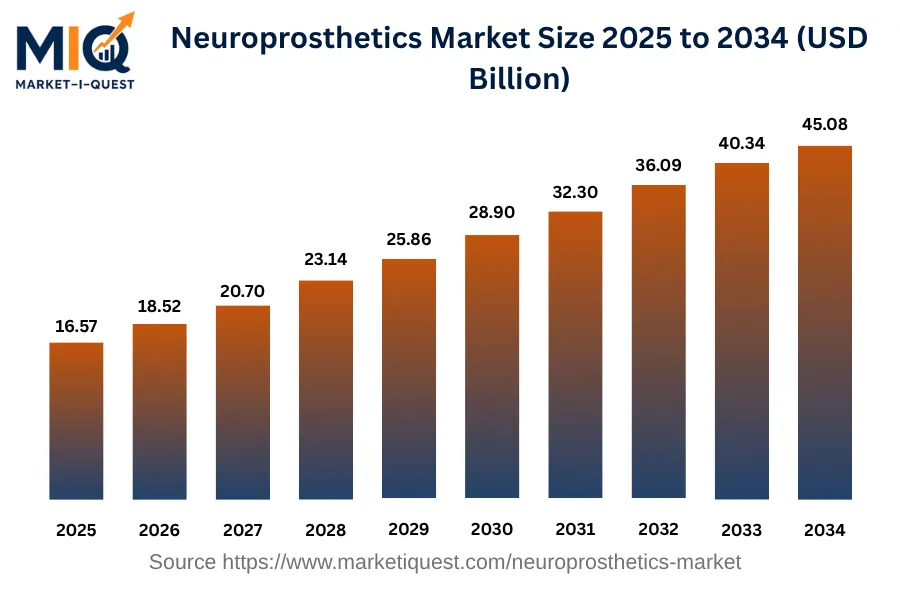
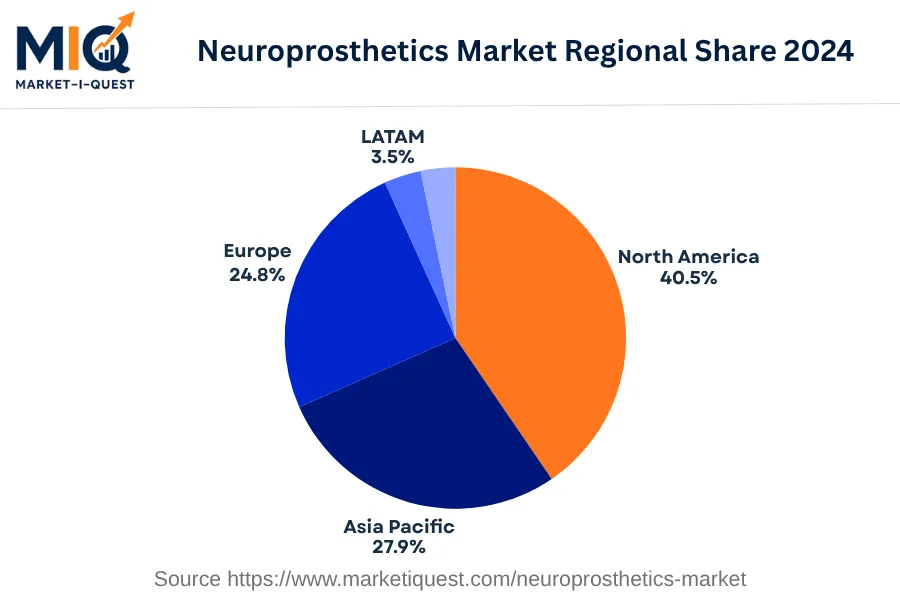
The Neuroprosthetics Market was valued at USD 14.83 billion in 2024 and increased to USD 16.57 billion in 2025. By the end of 2034, the market size is estimated to reach USD 45.08 billion, growing at a CAGR of 11.76%. This consistent growth over a decade is indicative of the increasing advancements and developments within the neuroprosthetics field. The demand in this market is growing due to rising cases of neurological disorders and improving neurologics healthcare facilities across the world. In the year of 2024, regional market shares were divided as follows: North America accounted for 40.5%, followed by Asia Pacific with a proportion of 27.9%, wheras Europe held 24.8%. The regions with the smallest shares were LATAM and MEA, contributing 3.5% and 3.3% respectively to the global Neuroprosthetics market.

Key Takeaways

  • By Product Type - Cochlear Implants held the predominant share in the Neuroprosthetics Market.
  • By Technology - Invasive Neuroprosthetics led the sector in the base year.
  • By Application - Pain Management emerged as the top subsegment in the Neuroprosthetics Market.
  • By End User - Hospitals accounted for the majority share dominating the market segment.
neuroprosthetics-market market size

Key Driving Factors

Increasing Prevalence of Sensory and Motor Disorders

The rise in the number of people suffering from sensory and motor disorders is a key force propelling the neuroprosthetics market. Conditions such as amputations, paralysis, and hearing loss significantly impact the quality of life, leading affected individuals to seek effective treatments and solutions. Neuroprosthetics, providing a chance to regain lost motor and sensory capabilities, have thus garnered significant interest and acceptance. The health care sector, including doctors and therapists, plays a pivotal role in driving adoption by prescribing these devices as alternatives or adjuncts to conventional rehabilitation approaches. Essentially, the escalating patient pool for sensory and motor disorders is a crucial element steering growth in this market.
Innovations in Minimally Invasive Neurosurgical Procedures

The neuroprosthetics market is also being largely driven by the advancement of minimally invasive neurosurgical procedures. Neurosurgeons are increasingly opting for these procedures for their lower risk factors and improved post-operative outcomes. The integration of neuroprosthetics into these procedures can lead to further improvements, such as reduced recovery times and increased precision, which is recognized by healthcare providers globally. This is incentivizing researchers and manufacturers to develop more sophisticated and minimally invasive neuroprosthetic devices. Hence, the pursuit of innovative application advancements in minimally invasive neurosurgical procedures is a noticeable driving factor for the neuroprosthetics market.

Market Evolution by Timeline

2019-2023
Buyers in the neuroprosthetics market during this period consisted predominantly of healthcare facilities in wealthier countries such as the U.S and Germany. Key reasons for this interest included a rise in degenerative diseases and ageing populations in these regions. On the supply side, companies such as Stryker Corporation and Medtronic Plc released commercially viable neuroprosthetics. Although integration was a challenge due to issues like device compatibility. The U.S FDA's rules, including human testing requirements, impacted product approval timings. Prices of neuroprosthetics remained high due to the significant R&D costs, making insurance coverage critical for patient access. Risks in this period revolved around patient safety along with ethical concerns related to the emerging technology.
2024
This year marked a key development in the neuroprosthetics field with the implementation of AI to improve functionality and precision. Demand surged particularly from Asia, due to the increasing incidence of spinal cord injuries and stroke. Supply was constrained due to manufacturing complexities and the need for specialised skills. Stringent international standards, such as ISO 13485, guided the development and manufacture of neuroprosthetic devices. The commercial model saw a trend of strategic partnerships between tech companies in AI and neuroprosthetics manufacturers. Risks included potential security issues related to data breaches with any AI implementation.
2025-2029
Demand for neuroprosthetics plateaued during this timeframe, with buyers being major health institutions in Europe and North America. Use cases expanded to include more complexity such as limb and movement control to enhance the quality of life. Supply and technology evolved to leverage cloud-based data analysis and remote patient monitoring capabilities. Regulation tightened around data privacy and security as exemplified by the European General Data Protection Regulation (GDPR). The commercial model focused on long-term leases to hospitals along with a service component for upkeep and updates. Risks comprised cyber threats and ethical implications of data usage.
2030-2034
In these years, the market saw an increased demand from emerging markets such as India, China due to improved healthcare infrastructure. Advances in wireless technology improved the functionality and convenience of neuroprosthetic devices, sparking the development of home-based rehabilitation products. However, manufacture remained complex, especially for devices requiring high information transfer rates. The regulatory landscape became more harmonised globally, with WHO's Essential Diagnostics List including key neuroprosthetic devices. Subscription-based commercial models became popular, providing a steady income for suppliers and reducing upfront costs for buyers. Risks included technology obsolescence and interoperability issues between devices from different manufacturers.

Future Market Outlook

Future Opportunities

The future for neuroprosthetics is poised for growth due to ongoing collaborations between technological firms and healthcare entities. In 2023, the American Association of Neurological Surgeons endorsed new guidelines for integrating neuroprosthetics in clinical practice, paving the way for more widespread use and acceptance in clinical settings. Furthermore, trials are currently underway, like the one initiated by the National Institutes of Health in November 2022, which focuses on developing interfaces for severely disabled individuals. This initiative has garnered interest from various stakeholders including rehabilitation centers, highlighting a need for targeted solutions in neuroprosthetics. Additionally, the rise in traumatic brain injuries, reported by the World Health Organization in their 2022 global sum-up, creates an impetus for developing practical applications for neuroprosthetic devices. Another promising area is chronic pain management, where companies like Abbott are researching closed-loop systems to automate neurostimulation in real-time, improving patient outcomes. The emphasis on remote healthcare amplified during the COVID-19 pandemic has led to increased interest in tele-Neuroprosthetics solutions, enabling remote monitoring and therapy adjustments. Countries such as Germany have implemented funding programs specifically aimed at facilitating research in neurotechnology, showing governmental recognition of potential benefits. This increasing institutional support and collaboration between disciplines is likely to foster advancements that could integrate neuroprosthetics into broader healthcare solutions, thus enhancing accessibility and effectiveness in treatment options globally.

Segmentation Analysis

By Product Type

The market is divided into subsegments including Cochlear Implants, Retinal Implants, Functional Electrical Stimulation Devices, Deep Brain Stimulators, and Vagus Nerve Stimulators. Among these, Cochlear Implants accounted for the largest revenue share while Functional Electrical Stimulation Devices are expected to grow at the fastest CAGR during the forecast period.

Largest Revenue Share

Cochlear Implants

Market Share Leader

Cochlear Implants dominate the product type segment due to multiple factors at play. Notably, the increasing incidence and prevalence of hearing loss, coupled with the availability of favorable reimbursement policies in developed nations, propel this segment. Cochlear implants have found extensive acceptance among the ageing population globally who are more prone to hearing issues. According to typical industry logic, these implants' high price point coupled with a relatively large number of unit sales ensures a dominant revenue position. That said, the success of this subsegment has also been driven by strong infrastructure development for surgical procedures, highly sophisticated healthcare systems, and broad insurance coverage in more affluent regions of the world. Also crucial are the patient advantages: Cochlear implants are a proven, effective remedy for severe hearing loss, thus driving patient preference for this solution, stimulating demand, and boosting revenue.

Fastest CAGR

Functional Electrical Stimulation Devices

Forecast Period Growth Leader

On the horizon, Functional Electrical Stimulation Devices are projected to register rapid growth. This growth will be driven by technological innovations that enhance these devices' efficiency and convenience, making them more widely adopted in therapeutic care. Technological development and improvement in battery life, wearable form factors for FES devices, and increased payor coverage are key catalysts accelerating this market segment. Amid the rise of chronic conditions, such as stroke and spinal cord injuries, demand for products or therapies that can enhance motor recovery and improve patients' quality of life is on the rise. Functional Electrical Stimulation Devices play a critical role here, promising growth. There are, however, adoption barriers. The high cost of these devices and limited reimbursement could hinder growth, highlighting the importance of cost-effective production and robust distribution strategies. Finally, it should be noted that this is inferred from common market structure as the inputs were thin.

By Technology

In the area of Neuroprosthetics technology, the market is classified into three major subsegments: Invasive Neuroprosthetics, Non-Invasive Neuroprosthetics, and Brain-Computer Interface. In terms of revenue, the Invasive Neuroprosthetics subsegment holds the largest share while Brain-Computer Interface is projected as the fastest growing subsegment.

Largest Revenue Share

Invasive Neuroprosthetics

Market Share Leader

Invasive Neuroprosthetics dominate the market in terms of revenue generation, primarily due to the technological advancements and the effectiveness of the treatment. As patients prefer effective and long-term solutions for neural disabilities, the demand for invasive neuroprosthetics has seen a significant increase. As these devices are internally placed, they provide a better control and functionality as compared to non-invasive neuroprosthetics. The use of these implants to treat conditions like Parkinson’s disease, Dystonia, and Epilepsy also bolsters the revenue in this segment. Developed geographies like North America and Europe, with considerable healthcare expenditure and technologically advanced infrastructure, contribute significantly towards augmenting the market for invasive neuroprosthetics. A favorable regulatory pattern and insurance coverage in these regions also influence the demand positively.

Fastest CAGR

Brain-Computer Interface

Forecast Period Growth Leader

While invasive neuroprosthetics hold the largest market share, Brain-Computer Interface (BCI) technology projects the fastest growth prospective. The significant acceleration in BCI technology could be attributed to the extensive research and technology collaborations aimed at integrating artificial intelligence with neuroprosthetics. BCIs provide a direct communication pathway between an enhanced or wired brain and an external device, thereby aiding in improving the quality of life for people with neurological disorders. The technology also appeals to the general population seeking cognitive enhancement, making BCI a lucrative area for investors. However, the growth comes with challenges, as affordability and basic understanding of the brain's complex structure could present barriers. Adaptations and advancements in technology, along with supportive policies and funding, would help mitigate these limitations and propel the growth of the BCI subsegment.

By Application

By application, the market is divided into subsegments including Pain Management, Hearing Restoration, Vision Restoration, Motor Function Restoration, and Neurological Disorders. Pain Management accounted for the largest revenue share in 2024, while Vision Restoration is expected to grow at the fastest CAGR during the forecast period.

Largest Revenue Share

Pain Management

Market Share Leader

In 2024, the Pain Management subsegment dominated the market in terms of revenue primarily due to a significant increase in chronic pain patients worldwide. The rising prevalence of conditions associated with chronic pain, such as cancer, arthritis, fibromyalgia, and neuropathy, has propelled the need for advanced pain management techniques. Governments, healthcare providers, and insurance companies have recognized the need to alleviate chronic pain, leading to favorable regulations and reimbursement policies. Moreover, the development and adoption of innovative products, such as wearable devices and intelligence-driven models, continue to foster the substantial growth of this segment. The purchasing criteria for these devices largely depend on their effectiveness and reliability in managing pain, durability, ease of application, and availability of reimbursement. Brand credibility and post-sale service quality also significantly influence decision-making, creating considerable barriers to entry for new competitors.

Fastest CAGR

Vision Restoration

Forecast Period Growth Leader

The Vision Restoration subsegment is forecasted to exhibit the most rapid growth. This growth is largely attributed to the rise in eye-related disorders, especially among the elderly population, and advancements in restorative techniques and devices. While the market is seeing significant technological breakthroughs, including cell therapy and retinal implants, adoption barriers include concerns around safety, efficacy, complexity of procedures, and high costs. However, the accelerating pace of research and increased health care spending on eye disorders, coupled with policies promoting innovative therapies, are poised to overcome these impediments to growth. Furthermore, the increasingly strategic partnerships between device manufacturers, technology companies, and research institutes are speeding up the commercialization of innovative products. The market's growth is nonetheless contingent on regulatory approval for new technologies, and potential near-term risks include unpredicted clinical trial outcomes and changes in reimbursement policies.

By End User

The market is divided into subsegments including Hospitals, Rehabilitation Centers, Home Care Settings, and Research Institutions. In the base year 2024, Hospitals accounted for the largest revenue share while Home Care Settings is expected to grow at the fastest CAGR during the forecast period.

Largest Revenue Share

Hospitals

Market Share Leader

The dominant revenue share of hospitals can be ascribed to several key factors. First, hospitals represent the frontline of healthcare, catering to a wide variety of health conditions ranging from emergencies to preventive care. Generally, hospitals provide a broader array of services compared to other end use segments, driving higher revenue generation. Secondly, hospitals often have the budget to invest in cutting-edge technologies and services, differentiating them from other service providers. Thirdly, population growth and aging demographics contribute to elevated healthcare demands, pushing hospitals to constantly expand and innovate. The concentration of healthcare services, especially specialized services, in hospitals makes them a critical part of the healthcare industry, leading to higher revenues comparatively. Additionally, regulation or supply primarily benefits this subsegment, whose purchasing power usually implies lower switching costs, and therefore more stable revenue. Nevertheless, relying on customer centrality inevitably exposes hospitals to systemic risks and the imperative need of perpetual adaptation to technological advancements.

Fastest CAGR

Home Care Settings

Forecast Period Growth Leader

The subsegment with the fastest growth projected is Home Care Settings. This growth is driven by the increasing desire for personalized, comfortable, and cost-effective health care options. Home Care Settings are becoming increasingly favorable due to the convenience they offer patients, particularly the elderly and chronic disease patients who require consistent long-term care. Amid growing healthcare costs, home care often represents a more economical solution than traditional hospitalization or rehabilitation centers. Additionally, advancements in technology – from telemedicine to advanced wearable health monitors – have mitigated professional care constraints, making home care a feasible and often preferred choice. It's also worth noting that policy support and incentives for home care have been gaining traction, further bolstering growth in this segment. Despite such potential, challenges do exist including adoption barriers pertaining to technology integration, patient safety, and professional staffing for sophisticated home care services, which could influence the pace of growth.

Competitive Analysis

Key Market Players

Manufacturers / OEMs

Cochlear Ltd.
Australia
Medtronic Plc
Ireland
Boston Scientific Corporation
US

Key Suppliers & Raw Materials

Novartis AG
Switzerland
Johnson & Johnson
US
Hoffmann-La Roche Ltd.
Switzerland

Distributors, Integrators & Channel Partners

Advanced Bionics AG
Switzerland
Sonova Holding AG
Switzerland
William Demant Holding A/S
Denmark

Porter’s Five Forces Analysis

An analysis of the neuroprosthetics market using Porter’s Five Forces Model.

Supplier Bargaining Power

Medium

Specialized resources and components limit supplier choices, increasing supplier power.

Buyer Bargaining Power

Low

Limited alternatives and high switching cost reduces buyer bargaining power.

Threat of Substitutes

Low

Due to technological advancements, neuroprosthetics have few direct substitutes.

Threat of New Entrants

Low

High capital cost and significant technological expertise act as strong barriers to entry.

Competitive Rivalry

Medium

Competition exists among several established players offering advanced neuroprosthetics.

Regional Analysis

Geographic market dynamics and growth opportunities across key regions

Global Market Outlook

neuroprosthetics-market market regional share

North America

In 2024, the North American Neuroprosthetics market continues to mature, spurred by advancements in medtech, heightened demand, and supportive regulatory frameworks. The market's expansion is fueled by growing neurodegenerative disorder incidence and trauma injuries in the U.S., Canada, and Mexico. These medical needs, coupled with technology adoption, particularly in the U.S., accelerate neuroprosthetics adoption. Investment in biomedical research and development, especially in the U.S., also propels this market. Moreover, regulatory bodies across North America, including the FDA, facilitate the market's advancement, further stimulating the device manufacturing and supply processes.

Simultaneously, emerging trends reshape the neuroprosthetics sector. Patient preference for minimally invasive procedures, underscored by the advent of wireless neuroprosthetics, steers buyer behavior. Research shifts towards developing sophisticated devices--exemplified by biohybrid implants--also signal a notable trend. In addition, healthcare providers lean more towards integrated care models, influencing channel dynamics in the procurement and use of neuroprosthetics. Furthermore, an increase in strategic alliances between tech enterprises and healthcare institutions marks a new phase of partnerships in the industry. Regulatory enforcement also factors in, with enhanced application of Health Insurance Portability and Accountability Act (HIPAA) standards to neuroprosthetic data management. Given the market's critical intersection of healthcare, tech and policy, this symbiosis seems set to deepen.

Asia Pacific

In 2024, the Neuroprosthetics market in Asia Pacific emerged as a significant sector in the healthcare and technology fields. This development was driven by increased government investment in healthcare technology, particularly in Japan and South Korea, leading to advanced neuroprosthetic research and innovation. Infrastructure development, particularly in India and China, facilitated the distribution and consumption of neuroprosthetics, while a rise in chronic neurological disorders and successful reimbursement policies grew the consumer base across the region.

The market was marked by technological evolution, especially in Australia and key ASEAN markets where neuroprosthetics advanced from being solely mobility aids to cognitive assistance devices, refining diagnosis and treatment protocols. China’s strict regulation and standard enforcement played a critical role in ensuring the quality of these products. Purchasing trends saw a shift towards non-invasive neuroprosthetics due to their better patient compliance and fewer side effects. The market also experienced a few significant mergers and acquisitions, especially in Japan and South Korea, aimed at consolidating for greater market shares and technological innovation. Considerable uptake was observed in the healthcare sector, particularly in the areas of chronic neurology and physical therapy rehabilitation. Meanwhile, rapidly advancing technology in the region triggered potential applications in the manufacturing sector with the development of cognitive assistance devices and brain-machine interfaces.

Europe

The Neuroprosthetics market in Europe, particularly in Germany, the UK, France, Italy, Spain, the Nordics, Benelux, and Central & Eastern Europe, saw considerable growth in 2024. Drivers included increased demand due to rising neurological disorders, enhanced investments in research and technological advancements like the miniaturization of complex circuits, and favorable regulations promoting neuroprosthetic devices. For instance, the NeuroPro pilot project in Germany, funded by the government, significantly drove innovations.

Simultaneously, several key trends reshaped the market landscape. A shift towards non-invasive neuroprosthetics gained traction, evidenced by clients' growing interest across sectors - healthcare, manufacturing, and retail. Rapid digitalisation also led to the emergence of digital platforms for neurological rehabilitation in countries like the UK and France. Furthermore, partnerships and M&As were common; an example being Medtronic's acquisition of France-based Stimgenics, reflecting the dynamic competition within the sector. Standardization efforts were in full swing in Italy and Spain, with organizations striving for consistent policies regarding neuroprosthetic device usage, primarily focusing on safety and efficacy. In conclusion, universally relevant factors - investment, demand, and regulations - combined with sector-specific trends like technology shifts, partnerships, standardization efforts have driven the neuroprosthetics market in Europe, particularly in the cited countries in 2024.

Latin America

In 2024, the Neuroprosthetics Market in Latin America (LATAM), cited as an emerging technology in healthcare, showed significant development patterns. Drivers for this growth included higher demand due to an increasing number of neurological disorders in Mexico and Brazil, considerable investment in Colombia and Chile's healthcare infrastructure, and the rise of technology adoption in Argentina and Peru. A rise in cases like Parkinson's disease, epilepsy, and strokes in the region further drove the demand. The introduction of technologically advanced neuroprosthetic devices enhanced the market.

Trends observed in 2024 involved customers' increased awareness about the benefits of these devices from sectors like healthcare and utilities. There was a notable shift towards non-invasive neuroprosthetics in medical procedures. Doctor-led patient education played a crucial role in this transition. Significant partnerships between Brazilian and Argentinian hospitals with manufacturers drove technology access and adoption. A named policy, the LATAM Healthcare Reformation Act, established standards and facilitated policy enforcement in this sector. Advancements in neuroprosthetic technology have led to increased usage of these devices in several healthcare institutions, particularly in the neurology departments. The market for neuroprosthetics in LATAM, specifically in countries like Brazil, Mexico, Argentina, Colombia, Chile, and Peru, played a significant role in the region's healthcare sector in 2024.

Middle East & Africa

In 2024, the Neuroprosthetics Market in the Middle East and Africa experienced a surge in activity. This surge was driven largely by increased healthcare investment in countries such as Saudi Arabia, United Arab Emirates, Qatar, and South Africa. Demand from growing aging populations, coupled with rising neurological disorder rates in these countries, prompted governments and healthcare institutions to enhance their neuroprosthetics capabilities. Additionally, advancements in neuroprosthetic technology, fuelled by robust research and development activities in Israel, accelerated the market's development in the region.

Market trends centered on increasing customer demand for more efficient and minimally invasive neuroprosthetic devices, driving manufacturers to innovate. Greater adoption of telemedicine, primarily in Egypt and Kenya, influenced the market, steering a shift towards remote neurological consultation and neuroprosthetics management. Cross-border partnerships were evident, primarily between UAE's health sector and Israeli neuroprosthetic firms, seeking mutual market penetration benefits. Significant use of neuroprosthetics in the healthcare sectors of countries like Nigeria was recorded, primarily for therapeutic purposes in patients suffering from neural disorders. Meanwhile, nations with developed medical device regulations, like Saudi Arabia, emerged as key markets, influenced by enforced standards for neuroprosthetic devices' safety and efficacy. Furthermore, insurance coverage for neuroprosthetic devices became a central policy in the healthcare sectors of these regions.

Recent Industry Developments

Latest market innovations, product launches, and strategic initiatives

April 2026

Boston Scientific acquired Valencia Technologies, a developer of a coin-sized fully-implanted neurostimulator for peripheral nerve stimulation to treat chronic conditions including urge urinary incontinence.

January 2026

Boston Scientific completed the $600 million acquisition of Nalu Medical, gaining a battery-free, minimally invasive neurostimulation implant for chronic pain relief.

Frequently Asked Questions