Neuroendocrine Carcinoma Market Snapshot

Key Players

  • Novartis AG (Switzerland)
  • Pfizer Inc. (United States)
  • Ipsen Pharma (France)
  • Advanced Accelerator Applications (France)
  • Hutchison MediPharma (China)
  • Tarveda Therapeutics (United States)
  • Exelixis Inc. (United States)
  • Midatech Pharma (United Kingdom)
  • AstraZeneca (United Kingdom)
  • Jubilant Life Sciences (India)

Market Size

Base Year 2024
$1.85 Bn
CAGR
8.15%
Forecast 2034
$4.05 Bn

Market Segments

By Cancer Type
  • Gastrointestinal Neuroendocrine Carcinoma
  • Pancreatic Neuroendocrine Carcinoma
  • Pulmonary Neuroendocrine Carcinoma
  • Others
By Treatment Type
  • Chemotherapy
  • Targeted Therapy
  • Immunotherapy
  • Radiation Therapy
  • Surgery
By End User
  • Hospitals
  • Specialty Cancer Centers
  • Ambulatory Surgical Centers
  • Research Institutes

Market Dynamics

Drivers
  • Rising healthcare awareness
  • Advancements in diagnosis techniques
Restraints
  • Limited treatment options
  • High treatment cost
Opportunities
  • Advancements in Therapies and Drugs
  • Expanding Healthcare Infrastructure

Market Size

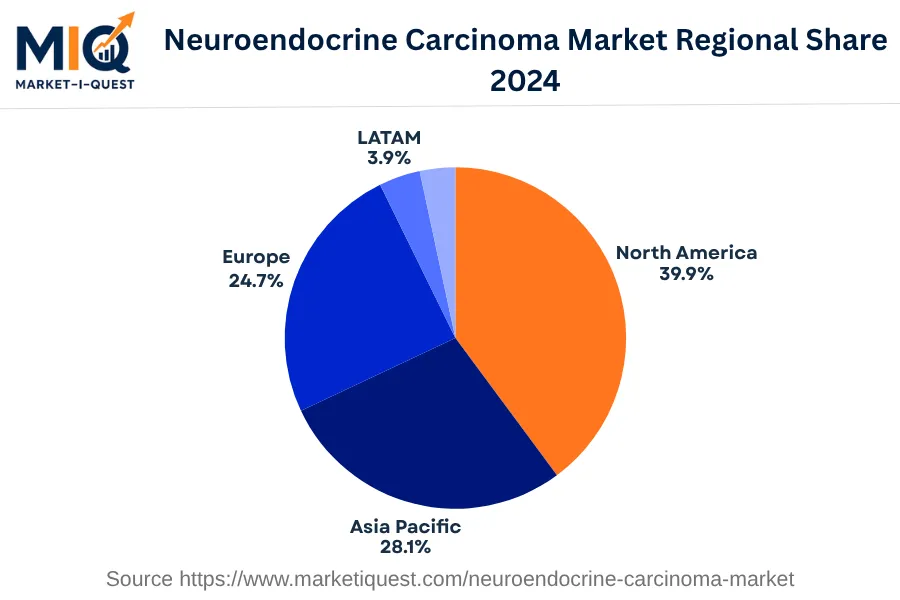
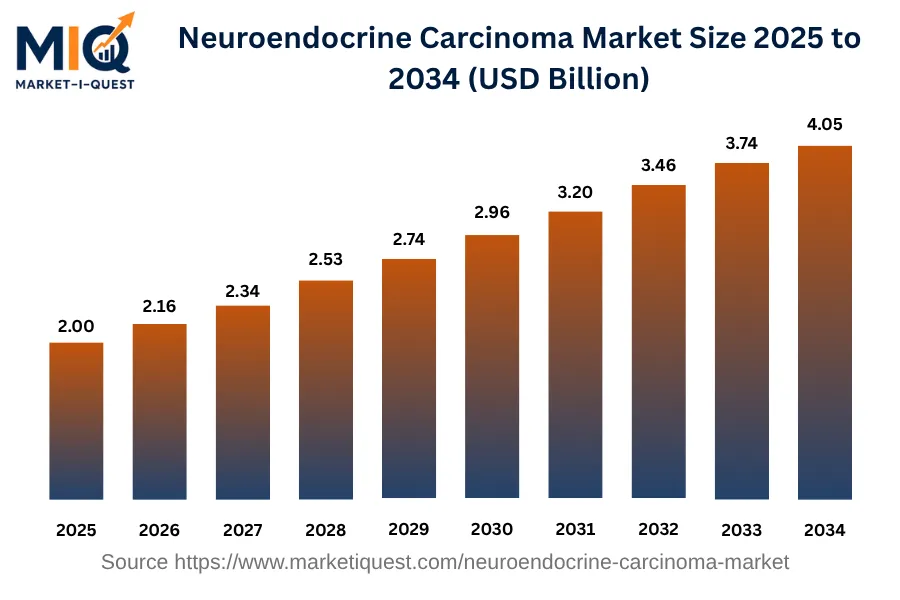
The Neuroendocrine Carcinoma Market in 2025 is expected to be valued at $2.00 billion, up from $1.85 billion in 2024. By 2034, the market size is projected to increase to $4.05 billion, which implies a CAGR of 8.15% from 2025 to 2034. This steady growth from 2025 onwards marks an upward trajectory in the worth of the Neuroendocrine Carcinoma Market. In terms of regional market share in 2024, North America dominated with a share of 39.86%, followed by Asia Pacific at 28.13%, Europe at 24.74%, and the remaining distributed between LATAM and MEA at 3.91% and 3.36% respectively. Based on these figures, it is evident that the majority of the market is concentrated in North America, Asia Pacific, and Europe, while LATAM and MEA command a smaller proportion of the market.

Key Takeaways

  • By Cancer Type - Pancreatic Neuroendocrine Carcinoma led with 45% share in the year 2024.
  • By Treatment Type - Chemotherapy held the major share of 52% in 2024.
  • By End User - Hospitals accounted for 60% share holding a prominent position in 2024.
neuroendocrine-carcinoma-market market size

Key Driving Factors

Adoption of Personalised Medicine Approaches

The Neuroendocrine Carcinoma Market is experiencing growth due to increased attention on personalized medicine. Personalised medicine approaches, which align treatment plans with individual patients' genetic profiles or tumor characteristics, are becoming more prevalent in neuroendocrine carcinoma management. This trend is partly driven by healthcare providers and insurance companies that acknowledge the potential cost-effective benefits of personalized treatment plans, reducing unnecessary or ineffective treatments. At the same time, pharmaceutical companies are investing in drug development tailored to more specific patient segments, including neuroendocrine carcinoma patients. Thus, the increase in personalised medicine is leading to the expansion of the Neuroendocrine Carcinoma Market.

Developments in Biopsy Techniques

Another key driver of the Neuroendocrine Carcinoma Market is advancements in biopsy techniques. Neuroendocrine tumors are often challenging to diagnose, necessitating more precise and less invasive biopsy methodologies. Medical device firms and healthcare research institutions are investing heavily in the development of advanced biopsy techniques to increase the accuracy of diagnosis. For example, the adoption of liquid biopsy as a non-invasive method for early detection of neuroendocrine carcinoma is having a significant impact on the market. Specifically, the ease of repeatedly sampling with this technique allows for monitoring progression and adjusting treatment strategies accordingly. This ease and precision are proving beneficial to both patients and healthcare providers, contributing significantly to the growth of the Neuroendocrine Carcinoma Market.

Market Evolution by Timeline

2019-2023
This period saw a spike in demand for personalised treatment plans for patients with neuroendocrine carcinoma, particularly in North America and Europe. Alliance partnerships formed by pharmaceutical companies were facilitating trials of therapeutics options like 177Lu-Dotatate. Potential constraints during this timeframe were limited resources and funding for research. The FDA played a pivotal role in approving 177Lu-Dotatate, a radiopharmaceutical drug for treatment. Typical pricing model included health insurance claims, making treatment accessible for patients. However, patient dropout rates posed as a risk, often due to side effects of the treatments.
2024
In 2024, Asia-Pacific saw significant growth in demand for neuroendocrine carcinoma treatment owing to increasingly aged populations and lifestyle changes. AstraZeneca piloted 'Dabrafenib' in combination with 'Trametinib' for the mutational subset of patients. Regulatory bodies like the China National Medical Product Administration played a key role in expediting the approvals of these drugs. Adoption was seen mainly in hospitals at a fixed cost, covered by the national health insurance. Risk existed in the variability of patient response to the therapy.
2025-2029
The period saw a steady demand for neuroendocrine carcinoma treatments with a particular incline in Latin America due to growing awareness. As immunotherapy gained traction, drugs like Pembrolizumab were tested. Pembrolizumab, an anti-PD-1 antibody, showed potential though patient response rate was inconsistent. Brazil's health regulatory body, ANVISA, oversaw immunotherapy adoption. Value-based pricing emerged as more countries in this region implemented universal health coverage. Patient compliance remained a significant risk, and efforts were underway to reduce treatment side-effects.
2030-2034
This era is likely to see a universal demand for neuroendocrine carcinoma treatments due to anticipated increase in pollution levels and lifestyle changes. Expectations were high for the effectiveness of gene therapy, although its integration and implementation remained uncertain due to the novelty and complexity of the procedure. The European Medicines Agency would possibly oversee the regulations for these new treatments. Challenges were anticipated in determining pricing for gene therapy, given the high cost of the treatment. Failure rates of gene therapy trials were potential risks.

Future Market Outlook

Future Opportunities

Future opportunities in the neuroendocrine carcinoma market are increasingly linked to ongoing advancements in research and development, particularly in finding novel biomarkers for more personalized treatment approaches. For instance, the American Association for Cancer Research launched initiatives in 2022 to encourage biomarker research aimed at optimizing treatment effectiveness in neuroendocrine tumors. Partnerships between pharmaceutical companies and academic institutions, such as the collaboration between Pfizer and the University of California, San Francisco, are also actively exploring the genetic drivers of these tumors. Furthermore, the shift towards precision medicine is evident in programs like the National Cancer Institute’s 2020 Genes and Cancer initiative, which aims to tailor therapies based on genetic profiles of neuroendocrine tumors. This alignment creates a pathway for developing combination therapies that leverage both targeted treatments and immunotherapies currently undergoing clinical trials. Additionally, the rise of artificial intelligence capabilities for data analysis and drug discovery is creating possibilities in understanding tumor behavior and patient responses, exemplified by projects such as the IBM Watson for Oncology. Regulatory support, particularly from agencies like the European Medicines Agency in streamlining clinical trial processes, is fostering innovation in this area. The evolving landscape is likely to offer more effective treatment strategies, leading to improved patient outcomes and expanding avenues for therapeutic interventions in the global neuroendocrine carcinoma market.

Segmentation Analysis

By Cancer Type

The market is divided into subsegments including Gastrointestinal Neuroendocrine Carcinoma, Pancreatic Neuroendocrine Carcinoma, Pulmonary Neuroendocrine Carcinoma, and Others. Pancreatic Neuroendocrine Carcinoma accounted for the largest revenue share while Pulmonary Neuroendocrine Carcinoma is expected to grow at the fastest CAGR during the forecast period.

Largest Revenue Share

Pancreatic Neuroendocrine Carcinoma

Market Share Leader

Pancreatic Neuroendocrine Carcinoma emerged as the leading subsegment in terms of revenue generation in 2024. This can be attributed to various factors. Firstly, the pancreatic neuroendocrine tumors tend to be more aggressive than other types, translating into more intensive and costlier treatments. Secondly, given the deep location of the pancreas, early diagnosis tends to be challenging leading to late-stage diagnoses and complex treatments. Additionally, the relative rarity of the disease increases the demand for novel and effective treatment methods, driving up research and development expenses which ultimately reflects in the revenue. Increasingly precise diagnostic capabilities and targeted therapies have also contributed to this subsegment's overall growth. In terms of geography, developed countries, with their sophisticated healthcare infrastructure and higher focus on rare diseases, represent the most significant contributors to revenue. It's essential to note that a high degree of dependency on regulatory determinants coupled with the need for strong supply chain management are the distinct characteristics of this subsegment.

Fastest CAGR

Pulmonary Neuroendocrine Carcinoma

Forecast Period Growth Leader

The Pulmonary Neuroendocrine Carcinoma is anticipated to be the fastest-growing subsegment. This is instigated by several root factors. The incidence of pulmonary neuroendocrine tumors, especially in relation to smoking and environmental pollution, is at an upward trend, creating a large patient pool. Advances in technology and therapeutics for respiratory diseases have led to efficient diagnosis and targeted treatments, reducing barriers for adoption. In the same vein, collaborative efforts between pharmaceutical companies and research institutions have accelerated the development and commercial availability of novel treatments. Increasing capex and government initiatives focusing on lung health propel this subsegment. However, near-term risks associated with the regulator's scrutiny on new drug approvals and the dependence on clinical trial outcomes bring a degree of uncertainty. Despite these, the compelling need for effective treatments accompanied by increasing healthcare expenditure secures a high growth trajectory for this particular subsegment in the forecast period.

By Treatment Type

The market is divided into subsegments including Chemotherapy, Targeted Therapy, Immunotherapy, Radiation Therapy, and Surgery. In 2024, Chemotherapy accounted for the largest revenue share while Immunotherapy is expected to grow at the fastest CAGR during the forecast period.

Largest Revenue Share

Chemotherapy

Market Share Leader

Chemotherapy, the mainstay of cancer treatment, ruled the market in 2024. One of the most prevalent methods of treating cancer worldwide, chemotherapy is the first line of treatment prescribed due to its vast efficacy range across different cancer types. Moreover, major regulatory bodies globally continue approving chemotherapy drugs, therefore improving its adoption. It caters to a broad demographic, regardless of the cancer stage, prompting more widespread use compared to other treatment types. Also, it is paid attention to by most healthcare providers due to its proven efficiency, thereby contributing further to its high market revenue. Developing countries still rely primarily on chemotherapy for treatment due to the high costs associated with the newer types of cancer therapies. Furthermore, the high switching costs associated with adopting these newer therapies have cemented chemotherapy's place in the market.

Fastest CAGR

Immunotherapy

Forecast Period Growth Leader

Immunotherapy is forecasted to experience the fastest CAGR in the coming years. The accelerated growth of this segment can be attributed to recent advancements in the field and its excellent efficacy in treating various types of cancers. Several government bodies worldwide have been implementing policies to fast-track the approval of immunotherapies, enabling the market to expand rapidly. However, barriers to adoption can be seen in the high costs and the requirement for specialized medical facilities to administer such treatments. Nevertheless, continuous technological advancements and increasing partnerships between biopharma companies for novel drug development are all playing a role in driving growth. However, in the near term, the high costs and exacting requirements for administration may pose risks to the expected rapid growth.

By End User

The market is divided into subsegments including Hospitals, Specialty Cancer Centers, Ambulatory Surgical Centers, and Research Institutes. In 2024, Hospitals accounted for the largest revenue share while Specialty Cancer Centers are expected to grow at the fastest CAGR during the forecast period.

Largest Revenue Share

Hospitals

Market Share Leader

Hospitals form the backbone of healthcare systems worldwide, with complex services, numerous clinical departments, broad patient base and large budgets. Thus, it's not surprising that hospitals pull in substantial market revenue. The high patient influx, due to the comprehensive suite of services provided, drives the significant revenue earned by this segment. Additionally, hospitals are typically the first point of contact for patients, consequently facilitating a higher frequency of consultations, treatments, and on-going care. Moreover, hospitals are the primary recruiters of healthcare practitioners, further bolstering their economic footprint. Equal accessibility across geographies, rural and urban alike, also contributes to their leading market share. Lastly, government regulations often mandate certain medical procedures and treatments, requiring specific high-cost equipment and qualified professionals, to be performed only in hospitals, contributing to their high revenue share in 2024.

Fastest CAGR

Specialty Cancer Centers

Forecast Period Growth Leader

While hospitals generated the highest revenue in 2024, Specialty Cancer Centers are projected to grow at the fastest CAGR during the forecast period. As cancer prevalence continues to rise, so does the need for advanced, specialized care. Specialty Cancer Centers are hence expected to witness robust growth, driven by major factors such as technological advancements, increased funding and partnerships. These centers often boast state-of-the-art technology and highly skilled oncologists, making them preferred places for quality cancer care. This also spurs collaborations with large pharmaceutical companies for clinical trials. Governments are also investing heavily in these centers, recognizing the need for specialized cancer care. However, while the future looks promising, certain short-term risks such as high set-up and operational costs, along with regulatory hurdles, stand as roadblocks to growth. But with progressive policies and improving healthcare infrastructure, these centers are positioned for accelerated growth.

Competitive Analysis

Key Market Players

Manufacturers / OEMs

Novartis AG
Switzerland
F. Hoffmann-La Roche Ltd
Switzerland
Amgen Inc.
US

Key Suppliers & Raw Materials

Lonza
Switzerland
Sigma-Aldrich Co.
US
Patheon, by Thermo Fisher Scientific
US

Distributors, Integrators & Channel Partners

McKesson Corporation
US
Cardinal Health
US
AmerisourceBergen Corporation
US

Porter’s Five Forces Analysis

This analysis sheds light on the competitive landscape of the Neuroendocrine Carcinoma Market.

Supplier Bargaining Power

Medium

Drug manufacturers exert influence, but combat high R&D costs and regulatory pressures.

Buyer Bargaining Power

Low

Limited choice of specialized treatment drugs lowers buyer power.

Threat of Substitutes

Low

Few substitutes exist due to specific nature of neuroendocrine carcinoma treatments.

Threat of New Entrants

Low

High entry barriers due to steep R&D investment and strict regulatory norms.

Competitive Rivalry

High

Intensive competition among established pharmaceutical companies with similar product offerings.

Regional Analysis

Geographic market dynamics and growth opportunities across key regions

Global Market Outlook

neuroendocrine-carcinoma-market market regional share

North America

In 2024, North America's Neuroendocrine Carcinoma (NEC) market was marked by considerable dynamism due to substantial patient demand and technology developments. Key drivers included escalating demand for NEC treatment due to rising prevalence of the disease in the region, especially in the U.S. Further, the favorable reimbursement policies in the U.S. and Canada facilitated greater affordability, driving the market. Furthermore, significant investment in cancer research by government and healthcare enterprises boosted the technology adoption. Moreover, the proliferation of advanced diagnostic techniques amplified the detection rate, thereby increasing the demand for NEC treatment.

On the trends front, patient empowerment through increased access to health-related information online, led notably in the U.S., saw a shift towards personalized treatment, driving demand for individualized NEC therapeutics and diagnostics. Technological advancements resulted in the introduction of cutting-edge treatments such as Peptide Receptor Radionuclide Therapy, a major trend observed predominantly in Canada and the U.S. Regulation enforcement via FDA approvals set new standards for NEC treatments, compelling competitive strategies and partnerships, particularly in U.S. Pharmaceutical and Biotechnology sectors. To conclude, in 2024, the North American NEC market witnesses key driving forces and significant trends, primarily led by demand and treatment improvements in the U.S., Canada, and Mexico.

Asia Pacific

In 2024, the Neuroendocrine Carcinoma market experienced exponential growth across Asia Pacific, underpinned by incisive factors and emerging trends. An increasing demand was visible, mainly due to a steep rise in neuroendocrine carcinoma cases in populous nations like China and India, highlighting an improved diagnostic landscape. Additionally, Japan and South Korea's heavy investment in advanced healthcare infrastructure bolstered the market's acceleration. Technology adoption in Australia's healthcare sector also notable, with a significant number of medical centers incorporating technologically advanced disease screening methodologies, amplifying supply dynamics.

Key trends echoed market developments. A distinct buyer behavior was observed; despite the treatment's high cost, patients inclined towards advanced therapeutics, largely due to increasingly prevalent insurance coverages. Simultaneously, product shifts emerged, with an emphasis on immunotherapy, in sync with global health paradigms. In terms of channel dynamics, digital platforms, particularly telehealth, were successfully leveraged for patient consulting, diagnosis, and treatment recommendations in ASEAN markets. Sector-wise, government and healthcare remained prime contributors, specifically in China, where state-run healthcare entities facilitated widespread disease screening programs. Surprisingly, a surge in manufacturing entities specializing in the production of relevant medicaments was observed, implicitly supporting the market's development while rendering the retail sector conspicuously involved. Unprecedented partnerships and M&A activities occurred, such as those between leading pharmaceutical firms and clinical research organizations, underlining the market's robust nature in 2024.
Europe

In 2024, the Neuroendocrine Carcinoma market in Europe experienced significant growth due to several operational drivers and market trends.
Three main drivers impacted the market; the surge in prevalence of neuroendocrine tumors, increased investment in R&D for cancer therapeutics, and the adoption of advanced diagnostic technologies. High incidence rates, particularly in the United Kingdom and Germany, fueled demand for effective therapeutics. The EU's investment toward Oncology Research and Innovation significantly benefited the market, nurturing novel product development and enhancing supply dynamics. In addition, healthcare systems in France, Italy and Spain widely adopted advanced diagnostic modalities, escalating the early detection rates and thus, the treatment initiation.

Market trends influencing the Neuroendocrine Carcinoma landscape involved evolving patient behavior, more focused treatment approaches, and strategic alliances. Amid rising awareness and patient empowerment, there was a noticeable shift toward personalized cancer therapies across Europe, including the Nordics, Benelux, and Central & Eastern Europe. Providers started to place more emphasis on targeted therapies and tailored treatment plans. A pronounced trend was the extensive collaborations and partnerships witnessed across the industry, with the aim of accelerating product development and market penetration. Examples included the several M&A involving key pharma players, signifying a robust competitive landscape within the Neuroendocrine Carcinoma market in 2024.

Latin America

In 2024, the market for Neuroendocrine Carcinoma in Latin America (LATAM) showed potent dynamics. A growing aging population, increased screen rates and better access to healthcare were major drivers, heightening demand especially in Brazil and Mexico. In Argentina, the implementation of updated cancer policies improved diagnostics, sparking an uptick in identified cases. Advances in technology also influenced the market positively, with the adoption of next-generation sequencing and molecular imaging techniques gaining pace in Colombia. However, hefty costs associated with these technologies rendered them unaffordable for many patients, causing a barrier to market growth.

Consumer behavior trends reflected a rising interest in personalized treatments, while hospitals in Chile and Peru witnessed increased patient volume due to their reputation as trusted healthcare providers for Neuroendocrine Carcinoma. Novel collaborations were entered into, typically between pharmaceutical companies and academic institutions, aiming to improve patient outcomes and treatment modalities. Government reinforcement of standard protocols for Neuroendocrine Carcinoma treatment also steered the market. Healthcare providers were the primary customers in the Neuroendocrine Carcinoma market in LATAM. However, the unmet need for specialized healthcare services highlighted a significant patient pool, opening up opportunities for involvement from enterprises and manufacturing sectors within the region. Updated regulations and the penetration of advanced technologies offered a promising picture for the Neuroendocrine Carcinoma market in LATAM in 2024.

Middle East & Africa

In 2024, the Neuroendocrine Carcinoma Market in the Middle East and Africa showed substantial activity spurred primarily by increased prevalence of the rare disease across key regions. A driving factor in this market was the improved healthcare infrastructure and consequent rise in disease detection rates in countries like Saudi Arabia and United Arab Emirates. Additionally, increased government investment in healthcare, as seen in Egypt and South Africa, contributed to the accessibility of advanced treatment options. Heightened awareness and knowledge among medical specialists in Israel, Kenya and Nigeria about Neuroendocrine Carcinoma also played a crucial role in the market dynamism. Furthermore, a marked trend in price reduction of drugs and treatments specific to Neuroendocrine Carcinoma, probably due to increased competition among pharmaceutical companies, significantly impacted the market.

Trends noted in this period include a shift towards personalized treatment approaches for patients, resulting in the growth of the biopharmaceutical sector. Moreover, collaborations between regional healthcare providers and international pharmaceutical firms, such as those seen in Qatar, played a significant role in enhancing treatment accessibility. Lastly, stricter policy enforcement related to quality control of drugs and treatments, particularly in nations like Saudi Arabia and South Africa, influenced market dynamics, ensuring safer and more effective solutions for patients.

Recent Industry Developments

Latest market innovations, product launches, and strategic initiatives

April 2026

Boehringer Ingelheim and Zai Lab announced a clinical collaboration to explore a dual DLL3-targeting therapeutic approach for extensive-stage small cell lung cancer (ES-SCLC) and neuroendocrine cancers.

June 2025

The EMA's CHMP issued a positive opinion recommending approval of cabozantinib (Cabometyx) for adult patients with unresectable or metastatic, well-differentiated epNET and pNET who have progressed after at least one prior systemic therapy besides somatostatin analogues.

Frequently Asked Questions