
Nerve Monitoring Devices Market Snapshot

Key Players

  • Medtronic (Ireland)
  • Nihon Kohden (Japan)
  • Dr. Langer Medical GmbH (Germany)
  • Neurosign Surgical (United Kingdom)
  • Checkpoint Surgical (United States)
  • EMS Handels Gesellschaft (Austria)
  • Neurowave Systems (Canada)
  • Magstim (United Kingdom)

Market Size

Base Year 2024
$1.82 Bn
CAGR
6.54%
Forecast 2034
$3.43 Bn

Market Segments

By Product Type
Devices, Consumables, Software
By Technology
Electromyography (EMG), Intraoperative Neuromonitoring (IONM), Continuous Nerve Monitoring
By Application
Orthopedic Surgery, Neurosurgery, ENT Surgery, Spine Surgery
By End Use
Hospitals, Ambulatory Surgical Centers (ASCs), Clinics

Market Dynamics

Drivers
  • Increasing neurological disorders
  • Technological advancements in devices
Restraints
  • High Equipment Cost
  • Regulatory Compliance Complexity
Opportunities
  • Rising neurological disorder prevalence
  • Technological advancements in devices

Market Size

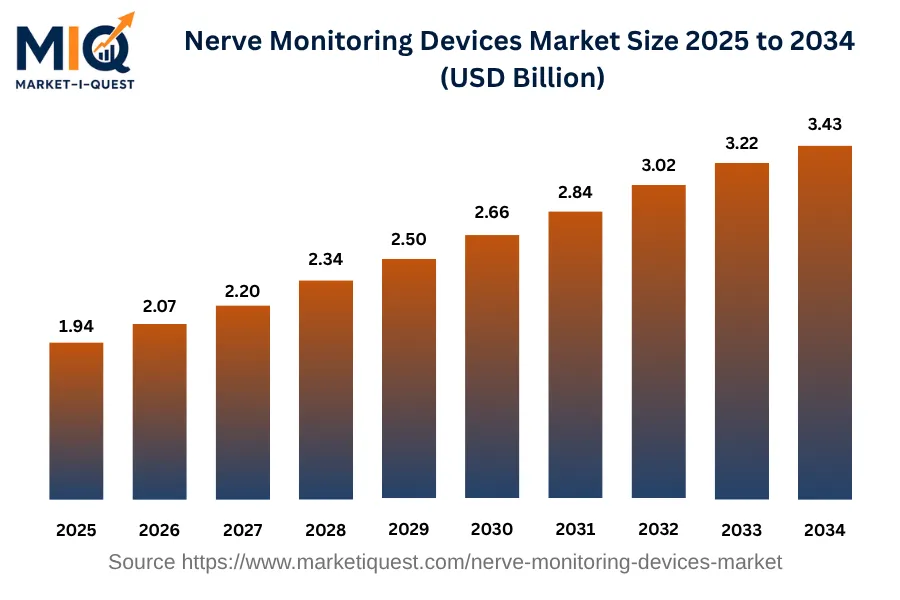
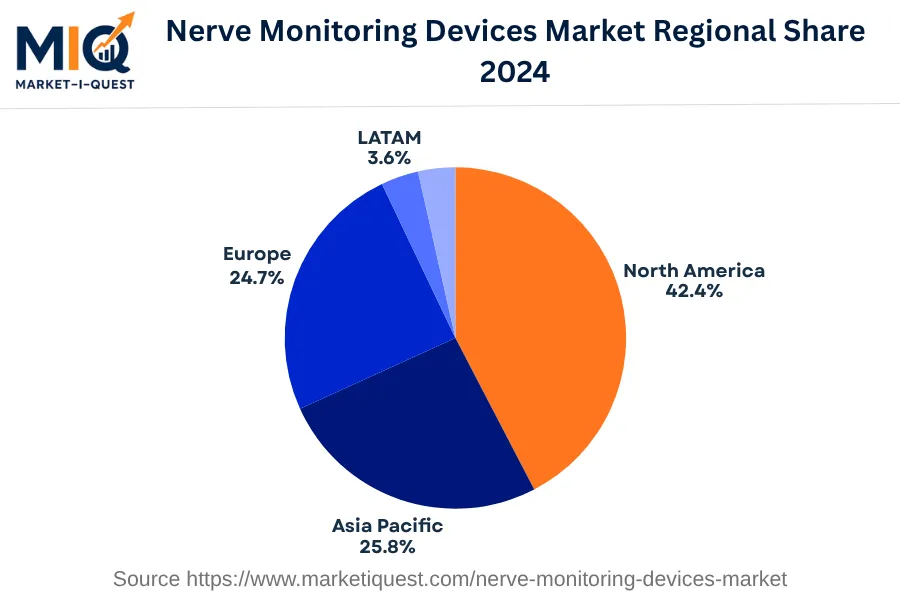
The Nerve Monitoring Devices Market was valued at $1.94 billion in 2025, up from $1.82 billion in 2024. By 2034, the market size is projected to reach $3.43 billion, yielding a compound annual growth rate (CAGR) of 6.54%. The increase over the period from 2025 to 2034 could be attributed to various factors such as technological advancements and the rise in the number of surgeries requiring nerve monitoring. By region, in 2024, North America held the largest share of the market at 42.4%, followed by Asia Pacific at 25.8% and Europe at 24.7%. The markets in Latin America and the Middle East & Africa (MEA) were smaller, each accounting for about 3.5% of the global total.

Key Takeaways

  • By Product Type - Devices maintained leadership with highest market share in 2024.
  • By Technology - Intraoperative Neuromonitoring (IONM) showed fastest expansion reflecting promising innovation trajectory.
  • By Application - Orthopedic Surgery remained the top segment due to rising demand in 2024.
  • By End Use - Hospitals held the dominant position underpinning the critical role of institutional health care.
nerve-monitoring-devices-market market size

Key Driving Factors

Surge in Neurological Disorders

The incidence of neurological disorders is rising globally, largely due to population ageing. Disorders such as Alzheimer's, Parkinson's, epilepsy, and multiple sclerosis require nerve monitoring for diagnosis, management, and treatment, creating a robust driving factor for the nerve monitoring devices market. The high prevalence of these health conditions leads to an increased demand for nerve monitoring devices, pushing healthcare providers to procure these devices to cater to the growing needs of patients. This scenario is especially prominent in developed markets, such as the United States and Europe, where healthcare infrastructure is advanced, and the elderly population is considerable.
Regulatory Support for Medical Device Innovation

Regulatory authorities like the U.S.'s Food and Drug Administration (FDA) and European Union's European Medicines Agency (EMA) are actively endorsing innovation in medical device technology, including nerve monitoring devices. They have implemented regulatory pathways like the FDA's Breakthrough Devices Program to expedite the development and review process of these innovative devices. A supportive regulatory environment encourages manufacturers to develop new and more efficient nerve monitoring device models, which healthcare providers are keen to adopt. Such accelerating innovations, therefore, surge the growth of the nerve monitoring devices market.

Market Evolution by Timeline

2019-2023
In this period, customers were predominantly from health institutions in the United States, Europe, and Asia, with increasing use in nerve surgeries to prevent inadvertent nerve damage. The primary technology utilized was electromyography (EMG) devices. However, there were challenges in the integration with existing health tech infrastructure due to compatibility issues and high costs. The regulation was primarily driven by policies such as FDA's enforcement of stringent premarket approval. With respect to pricing tendencies, there was a noticeable increase due to the surge in demand and high manufacturing costs. A common practice was the indulgence in strategic partnerships with hospitals for supply contracts.
2024
This year saw a shift in demand towards developing countries, attributed to increased healthcare budget allocation for advanced surgery tools. Supply included the introduction of Intraoperative peripheral nerve monitoring (IPNM), facilitating real-time feedback. However, these devices created a higher barrier to entry due to the required investment. Regulatory matters were dominated by global norms for manufacturing, notably ISO 13485 for Medical Device Quality Management. Partnerships with regional distributors were noticed as an emerging trend for commercial agreements. Risks included low product differentiation leading to stiff competition among manufacturers.
2025-2029
Customers for this phase were primarily from Middle East and Africa owing to surge in orthopedic and ear, nose, and throat (ENT) surgeries. The introduction of Mixed-nerve monitoring devices was significant, with some maturity in integration with other systems. Regulatory shield was seen with the introduction of EU MDR (European Union Medical Devices Regulation). Value-based pricing model became dominant, with a focus on patient outcome over procedural usage. Risk was seen in low market penetration due to poor understanding of technology's benefits and inadequate training of healthcare professionals.
2030-2034
The buyers were majorly from pediatric sector in the period due to increased instances of pediatric surgeries requiring nerve monitoring. The technology was focused on Neuromuscular monitoring devices facilitating complex surgeries. The introduction of AI in nerve monitoring devices was a constraint due to data privacy norms. FDA's Medical Device Development Tool (MDDT) program influenced the adoption of AI. Commercial model transitioned to purchasing through leasing agreements. The major risk stemmed from AI-related ethical and legal issues, which necessitated formal responses including industry-wide standards.

Future Market Outlook

Future Opportunities

As the demand for nerve monitoring devices continues to rise, new opportunities are emerging in areas such as outpatient and minimally invasive surgeries. In 2022, a partnership formed between Dr. Ziv Haskel’s team and Siemens Healthineers set the stage for integrating nerve monitoring in outpatient settings, demonstrating the market's direction toward widespread adoption. Furthermore, regulatory bodies, including the European Medicines Agency, are increasingly advocating for comprehensive standards in nerve monitoring, which may encourage manufacturers to develop advanced products that ensure safety and efficacy. The growing awareness of nerve injuries during surgical procedures is prompting institutions globally, especially in regions like North America and Europe, to prioritize the training of surgical teams on these technologies. Additionally, there is a notable push towards developing devices that are compatible with robotic surgical systems, as seen in ventures like Intuitive Surgical’s enhancements to the da Vinci system in 2023. This adaptation is likely to open new avenues for innovation in surgical practices. Moreover, the increasing use of telemedicine is likely to create a greater demand for remote monitoring solutions, allowing specialists to evaluate patients virtually. These trends signal possible expansions in nerve monitoring applications, positioning the market for significant growth as healthcare systems adapt to a more technologically integrated approach to patient care.

Segmentation Analysis

By Product Type

The market is divided into subsegments including Devices, Consumables, and Software. The Devices subsegment accounted for the largest revenue share while the Software subsegment is expected to grow at the fastest CAGR during the forecast period.

Largest Revenue Share

Devices

Market Share Leader

The Devices subsegment has the commanding share in terms of revenue, which comes as no surprise. This is largely attributable to pervasive consumer and commercial need for hardware and physical technology in business operations and personal use across diverse industries. Most fundamentally, myriad devices such as computers, peripherals, smartphones, and IoT hardware are ubiquitous and indispensable for daily operations and connectivity. Geographically, these market trends extend globally, irrespective of industry, predominantly in developed regions with high technology adoption rates. The purchasing criteria for these devices often relate to quality, durability, compatibility, functionality, and brand reputation, with strong consumer and business loyalty making for high switching costs. These devices are typically sold through various channels including direct manufacturer sales, retailers, and e-commerce platforms, thereby promoting broad access and availability. Future market modification could involve device evolution and demand shifts, but the sheer scale of this subsegment means revenue leadership is not easily assailable.

Fastest CAGR

Software

Forecast Period Growth Leader

The fastest growing subsegment is expected to be Software. This growth is largely driven by increased demand for automation, data analysis, and cyber security. As digital transformation accelerates across sectors, companies are investing more into software-based solutions to streamline processes, enhance productivity, safeguard valuable data, and remain competitive. However, barriers to adoption can include cost, technical skills requirements, and compatibility with existing systems. Policy changes relating to data protection and cyber security could also accelerate the adoption of software, as organizations seek to comply with regulations. Capex investment in digital infrastructure, emerging partnerships between software companies, as well as the development and implementation of advanced technologies like AI and machine learning are further catalyzing software adoption. Nevertheless, near-term risks could arise from economic downturns, regulatory constraints, and cyber threats impacting investment in and deployment of software.

By Technology

The technology-based market segments consist of Electromyography (EMG), Intraoperative Neuromonitoring (IONM), and Continuous Nerve Monitoring. In 2024, Continuous Nerve Monitoring accounted for the largest revenue share, while Intraoperative Neuromonitoring is poised to grow at the fastest pace.

Largest Revenue Share

Continuous Nerve Monitoring

Market Share Leader

In the base year 2024, Continuous Nerve Monitoring emerged as the subsegment with the highest revenue in the technology-based market segments. Its dominance can be attributed to a variety of factors, including the increasing number of surgeries involving nerves and the growing prevalence of neurological disorders. This subsegment's revenue growth is also driven by geographical reach, with increased adoption in developed regions due to advancement in technologies, availability of skilled specialists, and improved healthcare infrastructure. Customers in these regions readily utilize continuous nerve monitoring to reduce the risk associated with surgeries, particularly those related to spinal cord, head, and neck. Additionally, regulations in some regions require the use of nerve monitoring technologies in surgical procedures posing risk to neurological functionalities, further driving the subsegment. Lastly, the high switching cost associated with monitored surgeries acts as a deterrent for switching to other technologies, further cementing Continuous Nerve Monitoring's revenue leadership.

Fastest CAGR

Intraoperative Neuromonitoring (IONM)

Forecast Period Growth Leader

Projected to be the fastest-growing subsegment in the forecast period, Intraoperative Neuromonitoring (IONM) is expected to see significant growth because of numerous catalysts. Key among them is the growing adoption of minimally invasive surgeries and the accompanying demand for real-time monitoring tools. Advances in technology, particularly in artificial intelligence and machine-learning algorithms, have increased the efficiency and accuracy of IONM, encouraging more healthcare providers to adopt this solution. Furthermore, the potential cost-saving aspect of IONM, which minimizes the risk of surgical complications and subsequent treatments, is a significant driver for its adoption. Government policies and regulatory bodies are also playing a crucial role. In particular, they are promoting the use of intraoperative monitoring technology to ensure patient safety during complex surgical procedures. Near-term risks include initial high capex and the need for trained specialists to interpret the monitored data, which could restrict the adoption of IONM, especially in developing regions.

By Application

By application, the market segments span Orthopedic Surgery, Neurosurgery, ENT Surgery, and Spine Surgery. Of all, Orthopedic Surgery accounted for the largest revenue share, while the Spine Surgery subsegment is expected to witness the highest growth rate during the forecast period.

Largest Revenue Share

Orthopedic Surgery

Market Share Leader

Orthopedic Surgery leads in terms of revenue in 2024. The primary reasons for this trend rest with the rising prevalence of musculoskeletal disorders such as osteoarthritis, rheumatoid arthritis, and osteoporosis, coupled with an increasingly aging demographic and a rise in sports-related injuries. These result in a high demand for orthopedic surgeries and, subsequently, for relevant surgical tools and devices. Further driving growth in this sub-segment is the increased adoption of minimally invasive surgical procedures among healthcare professionals. Advanced healthcare infrastructure in regions such as North America and Europe provides an added boost. Even though the initial investment could be relatively high, the long-term returns expected from improved patient outcomes and shorter hospital stays make the proposition a justified investment for healthcare institutions.

Fastest CAGR

Spine Surgery

Forecast Period Growth Leader

Spine Surgery is expected to be the fastest-growing sub-segment. One of the main catalysts is the advancement in technology and subsequent improvements in surgical techniques, driving up the adoption rates. In addition, to combat the increasing prevalence of chronic back pain and spinal disorders among the global population, healthcare professionals are turning to spine surgeries as an effective solution. Policy supports such as favorable reimbursement schemes and an increasing number of partnerships between hospitals and spine surgery device manufacturers add to the growth impetus. However, potential risks in the short term include stringent regulatory approval processes and the high costs associated with spinal surgeries, which could pose as adoption barriers.

By End Use

The market is divided into subsegments including Hospitals, Ambulatory Surgical Centers (ASCs), and Clinics, with Hospitals having the largest revenue share and Ambulatory Surgical Centers (ASCs) expected to grow at the fastest CAGR during the forecast period.

Largest Revenue Share

Hospitals

Market Share Leader

Hospitals have a notably larger share of the market revenue due to multiple factors. Their sheer size and capacity allow them to serve a larger patient base. In addition, hospitals manage a wide variety of complex and critical treatments, which drives higher revenue compared to other subsegments. Also, hospitals are better funded, often receiving support from government and private entities. More so, their ability to invest heavily in advanced technology, facilities, and skilled professionals further increases their revenue generation capabilities. Also, the existence of high-acuity patients that require specialized care and extended stays contribute alarmingly to their high revenue generation. Lastly, the high purchasing power of hospitals due to economies of scale and volumes further consolidates their dominant position in terms of revenue share.

Fastest CAGR

Ambulatory Surgical Centers (ASCs)

Forecast Period Growth Leader

Ambulatory Surgical Centers (ASCs) are projected to grow at the fastest pace in the market. The key driver of this growth is the shift toward outpatient care which is less costly and more convenient for patients. Advances in technology have allowed ASCs to conduct a wide range of complex procedures safely, and this has increased patient trust and acceptance. Furthermore, ASCs offer significant cost advantages for patients and insurance companies alike, as they eliminate the need for hospitalization. Also, a growing patient preference for minimally invasive surgeries, improved surgical methods, and fast recovery times are encouraging the shift towards ASCs. However, potential adoption barriers include stricter regulation and accreditation procedures, and patient eligibility criteria for surgeries in these centers. The anticipated partnerships between hospitals and ASCs, major health reforms favoring outpatient shift, and significant capital investment in this sector will spur rapid growth.

Competitive Analysis

Key Market Players

Manufacturers / OEMs

Medtronic Plc
Ireland
Nihon Kohden Corporation
Japan
Dr. Langer Medical GmbH
Germany

Key Suppliers & Raw Materials

STERIS Instrument Management Services
US
Leica Microsystems
Germany
RAUMEDIC AG
Germany

Distributors, Integrators & Channel Partners

Integra LifeSciences Corporation
US
B. Braun Melsungen AG
Germany
Stryker Corporation
US

Porter’s Five Forces Analysis

The analysis provides a comprehensive understanding of the various forces shaping the Nerve Monitoring Devices Market.

Supplier Bargaining Power

Medium

Suppliers are few and the complex manufacturing process of nerve monitoring devices influence their bargaining power.

Buyer Bargaining Power

High

Buyers, comprised of healthcare providers, have high negotiating power due to various options available.

Threat of Substitutes

Low

Few alternatives to nerve monitoring devices exist, limiting substitution threat.

Threat of New Entrants

Low

High capital investment and strong regulatory barriers inhibit entry of new players in the market.

Competitive Rivalry

High

The market is dominated by well-established manufacturers leading to intense competition.

Regional Analysis

Geographic market dynamics and growth opportunities across key regions

Global Market Outlook

nerve-monitoring-devices-market market regional share

North America

In 2024, the North American market for nerve monitoring devices was significantly shaped by regulatory changes, technological advancements, and dynamic pricing strategies. Increased investment in healthcare infrastructure, coupled with a shift towards minimally invasive surgeries in the U.S., Canada, and Mexico, drove demand for these devices. Despite pricing pressure from insurance companies and hospitals to control costs, manufacturers maintained their profitability due to product differentiation strategies and innovations.

Product development was a major trend, with manufacturers releasing nerve monitoring equipment integrating Artificial Intelligence and Machine Learning capabilities, enhancing precision and proving instrumental for applications such as neurosurgeries. The market saw increased adoption in healthcare facilities, fueled by the need for efficient nerve monitoring during intricate surgical procedures.

Consumer behavior changed drastically with hospitals and clinics making a deliberate move toward ambulatory surgical centers. Mergers and acquisitions were plentiful, with leading manufacturers seeking to consolidate market share, add innovative products to their portfolio, and expand their geographical reach within North America. Increased enforcement of stringent regulatory policies focusing on patient safety contributed to the elevated demand. In particular, the U.S. witnessed a demand surge in the neurology sector, endorsing the importance of nerve monitoring devices in medical practice. Amidst the central role of healthcare institutions, manufacturers maintained a central focus on diversifying their product offerings while ensuring compliance with regional regulations.

Asia Pacific

In 2024, the Asia Pacific market for nerve monitoring devices showed robust growth. Market drivers included increasing neurosurgical procedures, favourable reimbursement scenarios, especially in nations like China, Japan, and Australia, and heightened investment in healthcare infrastructure across the region. Technology adoption was accelerating, with leading manufacturers from India and ASEAN countries escalating their production capacity to meet demand. On the supply side, reductions in device prices fueled further market expansion.

Key trends indicated a shift in buyer behavior towards technologically advanced nerve monitoring systems and disposable electrodes, particularly in large-scale hospitals in China, India, and Japan. Many manufacturers were strategically partnering with local distributors to strengthen their market presence in key Asia Pacific markets. Channels for direct-to-customer sales expanded, particularly in Australia and South Korea, where online purchases of medical equipment grew significantly. The implementation of regulations on medical device standards and policy reinforcement contributed considerably to market maturity. The Asia Pacific nerve monitoring market in 2024 was primarily driven by end-users from the healthcare segment, including hospitals, specialized neurology clinics, ambulatory surgical centres, and academic research institutes. Comprehending these drivers and trends helps to better understand the 2024 state of the nerve monitoring devices market in the Asia Pacific region.

Europe

In 2024, Europe's Nerve Monitoring Devices Market experienced significant expansion due to product innovation and increased demand in healthcare facilities. Investor interest heightened, particularly in Germany and the United Kingdom, where ageing populations prompted greater adoption of neurological monitoring equipment. Italy, Spain, and France also saw a surge in demand due to improved regulatory compliance in medical device technology, alongside a rise in neurological disorders. Central & Eastern Europe saw new investments in healthcare infrastructure that fueled market growth as well.

Trends in 2024 included a shift towards minimally invasive nerve monitoring devices, particularly in the Nordics, where an emphasis on patient comfort and faster recovery times are paramount. The digitalization of healthcare in Benelux and Germany also led to increased integration of smart nerve monitoring devices, enabling real-time data collection and analysis. Acquisitions and partnerships amplified, specifically in the United Kingdom, with firms seeking to consolidate their market position and expand their product portfolios. Policies to enforce stricter standards on device manufacturing and patient safety also influenced market trends, assuring customers of the quality and reliability of nerve monitoring devices.

Key sectors driving demand included hospitals, clinics, and diagnostic centers across Europe's healthcare landscape, underlining the essential role of nerve monitoring devices in contemporary medical practice.

Latin America

In 2024, the Nerve Monitoring Devices Market witnessed significant growth in Latin America. Various drivers enhanced this growth including high demand in Brazil's healthcare sector, increased investment in nerve monitoring technology from nations such as Mexico and Argentina, and Peru's accelerated adoption of these devices due to a surge in complex surgeries that particularly require nerve monitoring. Additionally, favorable regulatory dynamics in countries like Chile, which promulgated optimised laws supporting nerve monitoring devices, boosted the market.

Among key market trends, a shift was observed in Colombia, where buyer behavior leaned towards portable nerve monitoring devices due to their cost-effectiveness and convenience. Furthermore, new partnerships emerged in the region; for instance, renowned medical device manufacturers sought alliance with local healthcare institutions to facilitate easier market penetration. Technological advancements also played a critical role as adoption of wireless nerve monitoring devices became more prevalent, particularly in Mexico's healthcare sector which focused on minimally invasive surgeries. Lastly, an increased emphasis on policy enforcement concerning device quality set a high standard in the market.

Specifically, the healthcare sector, including hospitals and clinics, remained the major end-user of these devices, while a noticeable demand was witnessed from the research and educational sector, with Argentina leading this surge.

Middle East & Africa

In 2024, the Nerve Monitoring Devices Market within the Middle East and Africa was propelled mainly by advancements in technology and increased health consciousness. Notably, technological innovation in countries such as Israel and the United Arab Emirates drove the adoption of nerve monitoring devices by hospitals, clinics, and ambulatory surgical centers. High healthcare investments in Saudi Arabia and the United Arab Emirates also fueled the market growth.

Improving healthcare infrastructure and growing healthcare expenditure in nations such as Qatar, Egypt, and South Africa contributed to increased demand. The rise in neurological disorders and an aging population in countries like Nigeria and Kenya necessitated the use of these devices, further bolstering the market. Pricing dynamics were also a significant factor, with competitive prices facilitating wider adoption of these devices.

In terms of trends, a shift toward minimally invasive surgeries and the rising preference for portable and wireless devices defined the market. This trend was prominent in countries with well-established healthcare sectors like Israel and Saudi Arabia. Patient safety concerns also steered the development and adoption of advanced nerve monitoring systems. A surge in partnerships and collaborations between device manufacturers and healthcare institutions, particularly in the United Arab Emirates and Qatar, influenced the market dynamics positively. Enforcement of stricter healthcare regulations, especially in South Africa and Nigeria, spurred the utilization of certified nerve monitoring devices.

Recent Industry Developments

Latest market innovations, product launches, and strategic initiatives

April 2026

BCC Research reported that AI-powered nerve monitoring systems are fundamentally reshaping the market landscape, with medical device manufacturers and healthcare providers rapidly adopting AI-driven solutions to address critical workforce shortages and enhance surgical safety. The industry is experiencing a fundamental shift from hardware-centric to software-driven solutions.

December 2025

Technomed Medical Accessories launched a new line of Neurosign® double and triple hooked stimulating probes for intraoperative nerve monitoring. The next-generation probes are engineered to deliver improved precision and efficiency, helping surgical teams locate and preserve nerves during complex procedures.

Frequently Asked Questions