Nephrology and Urology Devices Market Snapshot

Key Players

  • Baxter International Inc. (US)
  • Boston Scientific Corporation (US)
  • Medtronic Plc. (Ireland)
  • B. Braun Melsungen AG (Germany)
  • Nipro Corporation (Japan)
  • Stryker Corporation (US)
  • Cook Medical Inc. (US)
  • Olympus Corporation (Japan)
  • Teleflex Incorporated (US)

Market Size

Base Year 2024
$9.87 Bn
CAGR
6.81%
Forecast 2034
$19.07 Bn

Market Segments

By Type
  • Dialysis
  • Urinary Stone
  • Urinary Incontinence & Pelvic Organ Prolapse
  • Benign Prostatic Hyperplasia (BPH)
  • Endoscopy
  • Others
By End User
  • Ambulatory Surgical Centers (ASCs)
  • Home Care
  • Hospitals & Clinics
  • Others

Market Dynamics

Drivers
  • Increasing kidney diseases prevalence
  • Advancements in medical technology
Restraints
  • High equipment costs
  • Stringent regulatory frameworks
Opportunities
  • Rising prevalence of kidney diseases
  • Advancements in technological research

Market Size

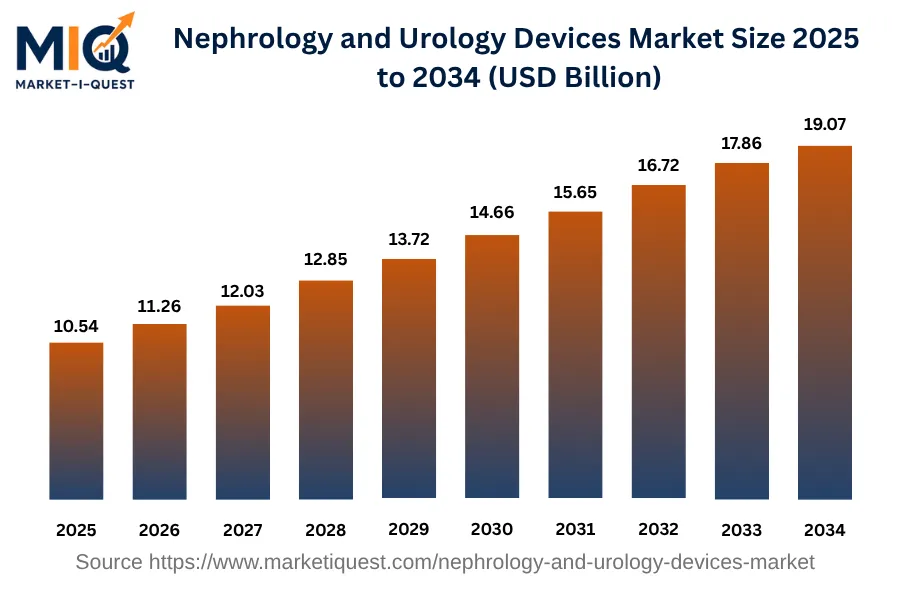
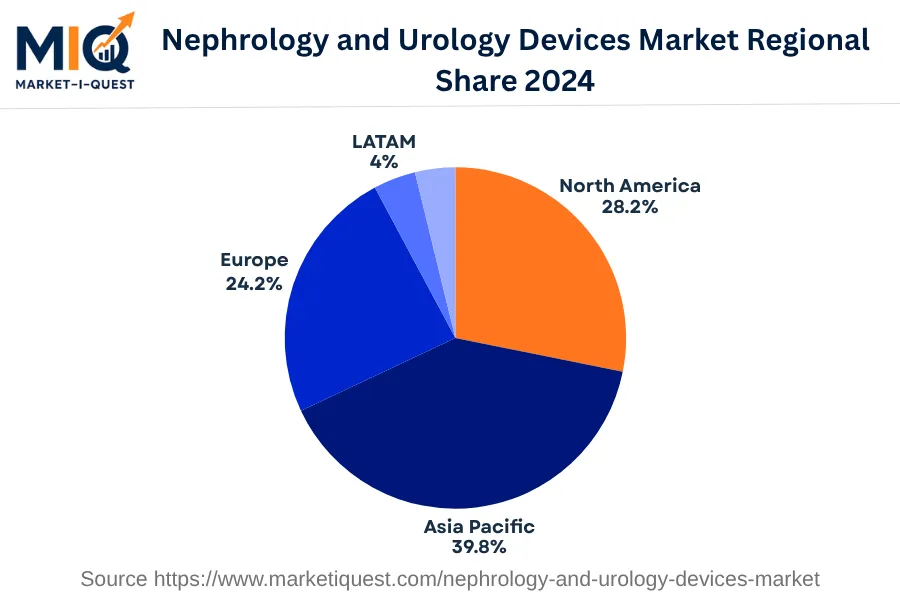
The Nephrology and Urology Devices Market was worth $10.54 billion in 2025, growing to $19.07 billion by 2034 with a CAGR of 6.81%. The market's growth from $9.87 billion in 2024 to $10.54 billion in 2025 signaled the beginning of an upward trend. The sustained growth till 2034 highlights the increased adoption of these devices during the period. The market's expansion can be attributed to advancements in technology and the growing prevalence of kidney diseases and urinary tract infections that necessitate the use of these devices. Regionally, the distribution in 2024 was as follows: North America accounted for 28.2%, the Asia Pacific had the largest share with 39.8%, Europe comprised 24.2%, Latin America held 4.01%, and the Middle East and Africa made up 3.81%.

Key Takeaways

  • By Type - Endoscopy emerged as the leading subsegment in the Nephrology and Urology Devices Market.
  • By End User - Hospitals & Clinics have made up the largest portion of revenue in 2024.
nephrology-and-urology-devices-market market size

Key Driving Factors

Increasing Prevalence of Kidney Diseases and Urinary Tract Infections

One prominent factor driving the Nephrology and Urology Devices Market is the increase in the prevalence of kidney diseases and urinary tract infections worldwide. Such conditions often require the use and application of nephrology and urology devices for diagnosis and treatment. According to the National Kidney Foundation, about 10% of the global population is affected by chronic kidney disease (CKD). Additionally, urinary tract infections (UTIs) are a common condition, leading to a surge in demand for diagnostic and treatment devices. These chronic conditions necessitate regular monitoring and treatment, thereby contributing to the market's growth.

Adaption of Minimally Invasive Surgical Procedures

The expanded acceptance and adaptation of minimally invasive surgical procedures is another key driver for the Nephrology and Urology Devices Market. These procedures provide advantages such as shorter hospital stay, less post-operative discomfort, quicker recovery times, and less scarring compared to traditional open surgeries. Nephrology and urology devices, such as urinary stone treatment devices and urinary incontinence & pelvic organ prolapse devices, are often central to such minimally invasive surgeries. Their ability to improve patient outcomes and reduce healthcare costs, has been a key trend favoring their wider adoption within healthcare setups globally.

Market Evolution by Timeline

2019-2023
During this period, the global market was significantly driven by an aging population and the increasing prevalence of kidney diseases and urinary tract infections. North America represented a significant share of the market, primarily due to the high healthcare expenditure in this region. Notably, companies heavily invested in R&D to develop advanced nephrology and urology devices. Lack of proper reimbursement policies was a major limiting factor for market growth. Most transactions followed the subscription model, enabling healthcare facilities to regularly update their technologies. However, the high cost of treatments posed a challenge for cost-sensitive markets, particularly in developing regions.
2024
In 2024, telemedicine applications in urology surged, partly due to the global COVID-19 pandemic. The Asia Pacific market gained prominence due to China's rising healthcare spending, and India's emerging healthcare facilities. The United States Food and Drug Administration implemented refined guidelines for urological medical devices in this year. Newer, cost-effective models were introduced with an aim to penetrate the untapped markets. However, the adoption rate of these devices was slowed down by a lack of trained healthcare professionals in minimal invasive surgical procedures.
2025-2029
This period witnessed a significant demand for home-based dialysis treatment, paving the way for portable dialysis machines. Western Europe and North America being the primary markets for these machines. Companies frequently collaborated with software and tech-firms to integrate AI capabilities into their devices for improved patient outcomes. Genomic profiling was incorporated as a standard protocol to determine treatment plans for kidney diseases. Governments started issuing mandates for the use of certain devices to minimalize the risk of infections. Nevertheless, regulatory complexities at a global level were recurrently pointed as a market hurdle.
2030-2034
By 2030, the nephrology and urology devices market had become truly global, with strong uptake across developed and developing nations. A shift towards value-based reimbursement models encouraged the use of cost-effective and efficient devices. AI-backed devices became mainstream, leading to more precise and personalized treatment. The rise in public-private partnerships facilitated the adoption of advanced technologies in public health facilities. On the flip side, the need for continuous technological upgrades posed significant challenges for smaller clinics and hospitals due to high investment costs.

Future Market Outlook

Future Opportunities

The nephrology and urology devices market holds various future opportunities that are shaped by current trends and advancements in technology. With the increasing prevalence of chronic kidney disease worldwide, particularly in regions like North America and Europe, there is a growing demand for innovative interventions and management devices. The U.S. National Kidney Foundation introduced updated guidelines in 2020 to improve patient outcomes, signaling an urgent need for effective therapeutic devices. Companies are investing in advanced dialysis technologies as the aging population increases the incidence of end-stage renal disease. For instance, companies like Fresenius Medical Care and Baxter International have made significant strides in developing portable and home dialysis solutions, demonstrated through multiple clinical trials published in 2022 and 2023. The integration of AI into clinical decision support systems offers additional avenues for improving patient care, as healthcare providers can leverage real-time data analysis. Collaborations between tech companies and healthcare providers are also on the rise, illustrated by the partnership between Google Health and various healthcare organizations to utilize machine learning models for kidney disease risk assessment in 2023. Additionally, with the rising popularity of personalized medicine, device manufacturers have opportunities to leverage genetic testing to develop tailored treatment options. Thus, the industry's current developments position it well for advancements that can significantly improve patient management and outcomes in nephrology and urology.

Segmentation Analysis

By Type

The market is divided into subsegments including Dialysis, Urinary Stone, Urinary Incontinence & Pelvic Organ Prolapse, Benign Prostatic Hyperplasia (BPH), Endoscopy, and Others. Of these, Endoscopy accounted for the largest revenue share while Urinary Incontinence & Pelvic Organ Prolapse is expected to grow at the fastest CAGR during the forecast period.

Largest Revenue Share

Endoscopy

Market Share Leader

Endoscopy represents the subsegment with the highest revenue within the market. This can be attributed to several key drivers. First, there has been an increase in diseases such as cancer and gastritis which require endoscopic procedures for diagnosis and treatment. Second, technological advancements have resulted in the development of innovative endoscopic equipment with higher accuracy and less invasiveness, aiding widespread adoption. Also, the elderly population, who are more prone to gastrointestinal, urology, and gynecological issues, is on the rise globally, and this enhances the demand for endoscopic procedures. Furthermore, the extensive use of endoscopy in different healthcare settings, from clinics to hospitals, further diversifies its market reach. Lastly, favorable reimbursement policies from insurance companies have eased the burden of the cost of endoscopic procedures, making them more accessible to patients. All these factors contribute to the high revenue of this subsegment.

Fastest CAGR

Urinary Incontinence & Pelvic Organ Prolapse

Forecast Period Growth Leader

Urinary Incontinence & Pelvic Organ Prolapse is projected to be the fastest-growing subsegment in the market. There's a significant increase in the number of women suffering from these conditions due to the rising elderly population, obesity, and childbirth related complications. Moreover, increased social acceptance, improved patient awareness, and technological advancements are driving the growth in this segment. Treatment innovations like minimally invasive surgeries and advancements in biofeedback therapy, provide alternatives to traditional invasive surgeries, increasing the treatment options for patients. The growth is being further fueled by strategic partnerships and collaborations in the industry aimed at research and development. Nevertheless, high treatment costs, lack of awareness in developing regions, and stigma associated with these conditions may slow down the growth. But these barriers are likely to diminish over time as healthcare infrastructures improve and public health education continues to expand.

By End User

The market is divided into subsegments including Ambulatory Surgical Centers (ASCs), Home Care, Hospitals & Clinics, and Others. Hospitals & Clinics accounted for the largest revenue share while Home Care is expected to grow at the fastest CAGR during the forecast period.

Largest Revenue Share

Hospitals & Clinics

Market Share Leader

Hospitals & Clinics have made up the largest portion of revenue in 2024 because they are typically the primary providers of healthcare services in most regions worldwide. Hospitals regularly perform complex diagnostic tests, surgeries, and other high-cost procedures, which contribute significantly to their revenue. Additionally, hospitals and clinics serve a more extensive patient base, encompassing all age groups, genders, and a wide array of medical conditions, thus naturally drawing in more revenue. Moreover, they are also often best positioned to leverage economies of scale due to their larger patient volumes compared to other subsegments. Furthermore, hospitals and clinics are more likely to receive substantial governmental funding and insurance payouts, further bolstering their revenue generation capabilities. Lastly, they have traditionally been the backbone of the healthcare infrastructure, thus contributing to their strong market presence and revenue lead.

Fastest CAGR

Home Care

Forecast Period Growth Leader

The Home Care subsegment is expected to grow at the quickest CAGR during the forecast period. The primary reasons for this fast growth include an aging population, the rising prevalence of chronic illnesses, and better health outcomes associated with home care. In addition, advances in medical technology have made more at-home treatment options available, thereby increasing the demand for home care services. Other socioeconomic factors such as the desire for elder independence, family member support, and cost-effectiveness compared to hospital stays are also driving the shift towards home care. However, barriers to this growth could include the high initial setup costs for patients and potential resistance from traditional healthcare providers. Advancements in telemedicine technologies and innovative partnerships between home care providers and mainstream health systems could help to overcome these challenges.

Competitive Analysis

Key Market Players

Manufacturers / OEMs

B. Braun Melsungen AG
Germany
Coloplast
Denmark
Fresenius Medical Care
Germany

Key Suppliers & Raw Materials

3M Company
US
Sartorius Stedim Biotech
France
Ashland Global Holdings
US

Distributors, Integrators & Channel Partners

Henry Schein Inc
US
McKesson Corporation
US
Cardinal Health
US

Porter’s Five Forces Analysis

This analysis examines the competitive dynamics in the Nephrology and Urology Devices Market.

Supplier Bargaining Power

Medium

Dominance of few large manufacturers restricts supplier power, while critical nature of supplies elevates it.

Buyer Bargaining Power

Low

High switching costs and need for specialized devices reduce the bargaining power of buyers.

Threat of Substitutes

Low

Lack of therapeutic substitutes for most nephrology and urology devices curbs substitution threat.

Threat of New Entrants

Low

High entry barriers due to rigorous regulatory frameworks, patent rights, and substantial R&D investments.

Competitive Rivalry

High

Strong competition due to presence of global players and innovation-driven market.

Regional Analysis

Geographic market dynamics and growth opportunities across key regions

Global Market Outlook

nephrology-and-urology-devices-market market regional share

North America

In 2024, the North American market for nephrology and urology devices showcased noteworthy growth, spurred by a variety of factors. Key drivers included an increasing incidence of kidney diseases and urological disorders, reinforced by an aging population. Regulatory dynamics played a significant role, with the U.S. FDA increasing investments in technologies for faster device approvals, which fueled market growth. Canada witnessed an uptick in demand due to the proliferation of advanced care settings, while Mexico's market expanded owing to improved healthcare access and affordability of such devices.

Trends encompassed a significant shift towards minimally invasive procedures, propelled by the inherent benefits of reduced recovery times and postoperative complications, especially pivotal among the elderly. Telehealth services gained traction, amplifying the reach of specialized consultation in rural areas of the U.S. and Canada. Companies like Boston Scientific and Medtronic pursued strategic acquisitions to broaden their product portfolios and bolster market dominance. With the implementation of the United States–Mexico–Canada Agreement (USMCA), cross-border trade of these devices intensified, favoring robust competition and product quality enhancements. This rigorous market environment catered predominantly to healthcare providers and hospitals, majorly impacting the clinical outcomes and care delivery in nephrology and urology across the region.

Asia Pacific

The Asia Pacific Nephrology and Urology Devices market in 2024 experienced steady growth driven by an aging population, increased prevalence of kidney and urinary diseases, and advanced healthcare facilities. Rising healthcare spending, especially in China and India, along with increased governmental support in formulating favorable regulations for product approvals propelled the market. Technological advancements like adoption of minimally invasive surgical instruments and devices provided an impetus to market growth. Moreover, patient preference towards non-invasive therapies boosted demand for nephrology and urology devices across countries like Japan and South Korea. Furthermore, increasing foreign investments in Australia's healthcare sector, allowed accessibility to cutting-edge medical devices.

Market trends include increased buyer preference for home-based healthcare devices due to convenience and affordability, especially noticeable in key ASEAN markets. Technology shift towards wearable and implantable devices also underscored market development. Collaborations and M&A activities among key players facilitated enhancement of product portfolio and geographic reach. Strict implementation of quality standards and regulations by governments across the Asia Pacific influenced company strategies ensuring safety and efficacy of the devices. The primary customers of nephrology and urology devices included hospitals, dialysis centers and home healthcare providers. Retail pharmacies also contributed to device sales due to increased consumer preference for purchasing medical devices from physical stores.

Europe

In 2024, the nephrology and urology devices market in Europe experienced substantial growth, primarily driven by an aging population, increasing prevalence of kidney diseases and advances in technology. Germany and the United Kingdom saw increased demand due to a rise in chronic renal illnesses, augmented by unhealthy lifestyles and obesity. In contrast, France observed high investment in the sector following policy changes promoting better care for renal patients. Innovative technology adoption was ubiquitous across Europe, especially in Italy and Spain, where new minimally invasive procedures for treating urologic conditions became increasingly prevalent. Meanwhile, reduced costs of devices in Central and Eastern Europe further propelled market growth by making treatments more accessible.

Several significant trends emerged in 2024. A notable shift was observed in buyer behaviour towards home-based treatment modalities, thanks in part to advancements in dialysis equipment technology, particularly observed in the Nordics and Benelux. Product innovation in urinary incontinence management and benign prostatic hyperplasia devices also gained traction. On the channel side, companies turned their attention to strategic partnerships and mergers/acquisitions, intending to enlarge their portfolio and strengthen market presence. Additionally, regulatory bodies particularly in the United Kingdom and France, enforced stricter guidelines for market entry and product approvals, driving further industry compliance and enhancing overall patient safety.

Latin America

In 2024, the Nephrology and Urology devices market in Latin America experienced significant momentum due to rising incidence of kidney diseases and an aging population. Key drivers were the expansion of public and private healthcare coverage in countries like Brazil and Mexico, increased investment in healthcare infrastructure, and adoption of advanced kidney care technologies. In particular, Mexico's universal healthcare initiative drove demand for hemodialysis and peritoneal dialysis devices, while Brazil saw heavy investments in hospital modernisation, benefiting urinary tract surgical devices. Nevertheless, pricing challenges persisted. High costs limited accessibility across the region, notably in nations like Peru, where lower-income populations dominate.

Industry trends included a shift toward home dialysis due to its convenience and cost-effectiveness, predominantly in healthcare-forward nations like Chile and Argentina. In addition, digitization was prevalent in the nephrology and urology devices sector, with seamless data sharing and remote patient monitoring growing in importance amidst a global pandemic. For instance, telehealth services saw increased adoption in Colombia. Ventures included partnerships between local hospitals and device manufacturers to ensure supply. For example, there was active collaboration between hospitals and suppliers in Brazil to secure dialysis equipment. Policy enforcement on medical device requirements remained stringent across LATAM, solidifying its reputation as a region that prioritises safety and product standards.

Middle East & Africa

In 2024, the Nephrology and Urology Devices Market across the Middle East and Africa plays a pivotal role especially in countries like Saudi Arabia, United Arab Emirates, Qatar, Egypt, South Africa, Nigeria, Kenya, and Israel. High prevalence of kidney diseases and urological conditions, rapid adoption of technologically advanced medical devices, and improving healthcare infrastructure have been the major drivers of this market. Stringent regulatory environment prioritizing patient safety, fruitful investments by major international companies paired with local government initiatives added vigor to the supply dynamics. Consumer preference significantly steered towards minimally invasive procedures boosted demand for devices like dialysis equipment and urinary catheters. Increase in partnerships and M&A activities among leading global and regional medical devices manufacturers prompted expansion of product offerings. Strategic alliances between hospitals and private clinics additionally replicated a thriving market.

Penetrating into sectors such as healthcare and manufacturing, the market exploration was fruitful. The healthcare sector massively capitalized on these devices to offer better patient care, while the manufacturing industry witnessed enhanced production capabilities. The transformation in the market was primarily dictated by regulatory policies such as Saudi Arabia's Vision 2030 healthcare goals and South Africa's National Health Insurance. Being a crucial year for this sector, 2024 saw a substantial and influential growth in the Nephrology and Urology Devices Market across these regions.

Recent Industry Developments

Latest market innovations, product launches, and strategic initiatives

June 2026

Boston Scientific was reported to be planning the acquisition of Penumbra in a cash-and-stock transaction valuing the latter at $374 per share. The deal would significantly expand Boston Scientific's neurovascular and urology portfolios.

January 2025

The Competition Tribunal conditionally approved CP Spruce Holdings' acquisition of Baxter International's kidney care segment, Vantive. Baxter announced in August 2023 that it would spin off its renal care business as an independent, publicly traded company called Vantive, a plan which was later superseded by this acquisition.

Frequently Asked Questions