Neglected Tropical Diseases Diagnosis Market Snapshot

Key Players

  • FIND Diagnostics (Switzerland)
  • Alere Inc. (US)
  • Bio-Rad Laboratories (US)
  • Siemens Healthcare (Germany)
  • BD Biosciences (US)
  • Grifols (Spain)
  • Thermo Fisher Scientific (US)
  • Leica Biosystems (Germany)
  • Olympus Corporation (Japan)
  • Abbott Laboratories (US)

Market Size

Base Year 2024
$3.54 Bn
CAGR
7.43%
Forecast 2034
$7.25 Bn

Market Segments

By Diagnostic Method
Serological Testing, Molecular Diagnostics, Microscopy, Immunological Assays
By Disease Type
Lymphatic Filariasis, Schistosomiasis, Leprosy, Chagas Disease, Dengue
By Technology
PCR Technology, Rapid Test Kits, Next-Generation Sequencing (NGS), Automated Analyzers
By End User
Hospitals, Diagnostic Laboratories, Research Institutions, Public Health Organizations

Market Dynamics

Drivers
  • Rising global health awareness
  • Advancements in medical diagnostics
Restraints
  • Limited Funding for R&D
  • Public Awareness Deficiency
Opportunities
  • Expanding healthcare infrastructure
  • Increased awareness campaigns

Market Size

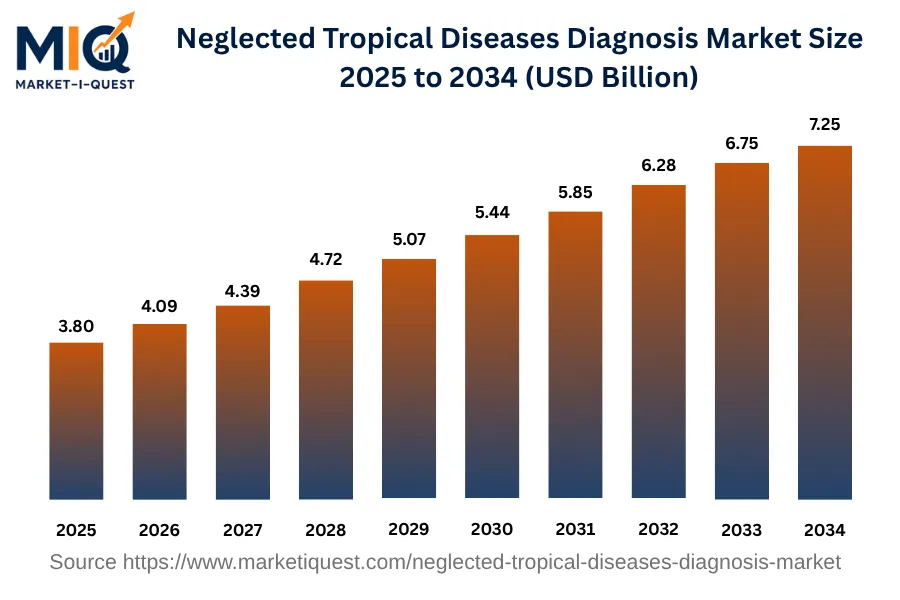
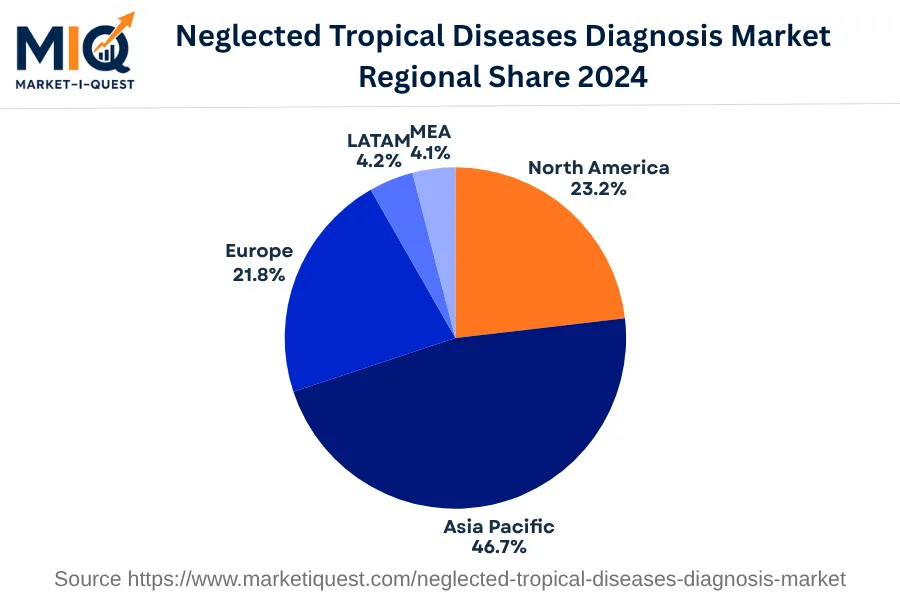
The Neglected Tropical Diseases Diagnosis Market size is expected to grow from USD 3.80 billion in 2025 to USD 7.25 billion in 2034, exhibiting a compound annual growth rate (CAGR) of 7.43%. The market's trajectory of growth can be illustrated by its value in 2024, which stood at USD 3.54 billion, followed by a noticeable increase to USD 3.80 billion in 2025. The significant growth expected over the period can be attributed to rising prevalence of neglected tropical diseases globally, and escalating healthcare efforts directed towards diagnosing these ailments. The regional share of the market in 2024 was divided with Asia Pacific at 46.7%, North America at 23.2%, Europe at 21.8%, Latin America at 4.2%, and the Middle East & Africa at 4.1%.

Key Takeaways

  • By Diagnostic Method - Molecular Diagnostics held the top position in recent years.
  • By Disease Type - Chagas Disease was the highest globally in recent years.
  • By Technology - Next-Generation Sequencing (NGS) experienced the fastest growth owing to its easy-to-use feature.
  • By End User - Hospitals held the major share due to the rising number of tests performed.
neglected-tropical-diseases-diagnosis-market market size

Key Driving Factors

Increased Global Health Initiative Programs

In recent years, worldwide health initiatives, such as the World Health Organization's 2021-2030 roadmap for the control, elimination, and eradication of neglected tropical diseases, have emerged. These multi-stakeholder initiatives are instrumental in directing public and private sector resources towards addressing neglected tropical diseases. For instance, non-profit organizations like the Gates Foundation are investing substantially in disease control and eradication initiatives. This engagement is encouraging pharmaceutical and diagnostic companies to develop diagnostic kits and solutions to identify these diseases early and accurately. Consequently, these concerted global efforts serve as a key driving force behind the significant growth in the Neglected Tropical Diseases Diagnosis Market.
Prevalence in Low-Income Populations in Developing Regions

Neglected tropical diseases disproportionately affect low-income populations, especially in developing regions such as sub-Saharan Africa, South Asia, and Latin America where access to diagnosis and treatment facilities is limited. These underserved communities often endure compromised living conditions and lack access to clean water or proper sanitation, augmenting the spread of neglected tropical diseases. International development agencies and governments are hence intensifying their efforts to extend diagnostic services to these vulnerable groups. A focus on affordable, easy-to-use, and reliable diagnostic methods has become integral. This demographic reality and the associated intervention efforts are driving significant traction in the Neglected Tropical Diseases Diagnosis Market.

Market Evolution by Timeline

2019-2023
In this period, demand for diagnostics for Neglected Tropical Diseases (NTDs) came primarily from low and middle-income countries in Africa, Asia, and Latin America. The supply side included portable diagnostic kits and point-of-care testing devices, although challenges included limited healthcare infrastructure and trained personnel. The World Health Organization's Expanded Special Project for Elimination of Neglected Tropical Diseases (ESPEN) influenced adoption, assisting African countries in conducting disease mapping, providing technical assistance, and developing policy documents. Commercial models often involved partnership with international donors and NGOs, while prices were constrained by the economic conditions of the target countries. Risks were mainly associated with funding constraints and disease resurgence due to conflict or disaster.
2024
By 2024, countries like India, Brazil and Nigeria exhibited rising demand due to increased awareness and availability of diagnostics. Rapid diagnostic tests were prominent in the market due to their affordability and ease of use. Challenges involved integration into existing healthcare systems. The international health regulations (IHR) influenced product approvals and policy adaptations. Pricing was still a critical consideration, with tiered pricing being a common practice. Local manufacturing partnerships escalated due to the push for self-reliance in healthcare. The shift towards self-sufficiency though, came with associated risks such as quality control and skill gaps.
2025-2029
Increasing demand was evident from South-East Asia and South America due to intensified NTD control and elimination efforts. Molecular diagnostics were used due to improvements in technology. Despite advancements, logistical and technical issues remained, inhibiting point-of-care testing. The World Health Assembly's resolutions on NTDs impacted regulatory landscapes and investment decisions. Value-based pricing gained traction over volume-based, reflecting appreciation for more efficient, cost-effective solutions. Collaborations with private service providers increased, offering better reach. Risks related mainly to political instability, affecting funding and consistency in program implementation.
2030-2034
By this stage, market saturation led to reduced demand in countries previously hit hard by NTDs. Latest supplies included AI-based and digital diagnostic tools, overcoming earlier technical barriers. The 'One World Health' principle drove global health practices, integrating veterinary and human diagnostic efforts. Public-private partnerships (PPPs) underscored funding solutions while procurement strategies focused on long-term value over low cost. However, the risk of diminishing political will persisted due to the perceived success in the control and elimination of NTDs, which could potentially undermine sustained commitment to the cause.

Future Market Outlook

Future Opportunities

The neglected tropical diseases diagnosis market is poised for several promising developments over the coming years, primarily driven by funding and collaborative initiatives. The Global Health Security Agenda (GHSA), launched in 2014, emphasizes strengthening laboratory capacity in low-resource settings, directly impacting NTDs’ diagnostic capabilities. In 2023, the Coalition for Epidemic Preparedness Innovations (CEPI) allocated resources for the development of vaccines and diagnostics for NTDs, fostering innovation through partnerships with pharmaceutical firms. Regulatory bodies, such as the European Medicines Agency (EMA), are increasingly focused on NTDs, leading to streamlined approval pathways for novel diagnostic tools. Furthermore, investment in healthcare infrastructure is expanding in regions heavily impacted by NTDs, including Southeast Asia and sub-Saharan Africa, which sets the stage for better disease management and diagnostic resource distribution. Enhanced collaboration between NGOs and national health systems, seen in projects managed by the Bill and Melinda Gates Foundation, is likely to improve awareness and availability of diagnostic services. Additionally, with the increasing integration of data analytics into healthcare, real-time tracking of disease patterns is anticipated, fostering earlier interventions. Companies like Roche and Abbott are developing solutions specifically tailored to the needs of low- and middle-income countries, ensuring accessibility and usability of diagnostic tools. These developments indicate a future where diagnostic services for NTDs become more robust and widespread.

Segmentation Analysis

By Diagnostic Method

The market is divided into subsegments including Serological Testing, Molecular Diagnostics, Microscopy, and Immunological Assays. Molecular Diagnostics accounted for the largest revenue share, while Serological Testing is expected to grow at the fastest CAGR during the forecast period.

Largest Revenue Share

Molecular Diagnostics

Market Share Leader

The Molecular Diagnostics subsegment leads in terms of revenue due to various factors. A key driving force is the high precision of this method, which ensures accurate and rapid diagnosis of diseases. This reliability has driven adoption by healthcare providers globally. Additionally, technological advancements have reduced the cost and time of testing, while increasing efficiency, further boosting demand. Strict regulations regarding patient safety have also fueled the growth of Molecular Diagnostics. The purchasing decision for this method hinges on these factors, rather than cost alone. Due to the high accuracy and reliability of results, switching costs for alternatives are potentially high as compromising on these could lead to serious consequences. Also, channels such as hospital laboratories and private commercial laboratories predominantly use molecular diagnostics due to its efficacy. However, it is important to note that this dominance could vary by geography, due to differing healthcare regulations and patient treatment guidelines.

Fastest CAGR

Serological Testing

Forecast Period Growth Leader

The Serological Testing subsegment is projected to grow the fastest in the diagnostic methods market. Its growth is driven by its high use in diagnosis of various infectious diseases, identifying antibodies and immunity levels caused by vaccinations or prior infections. In light of recent health crises, governments and health institutions globally are ramping up their disease prevention and control measures. This scenario creates demand for Serological Testing, a reliable method of determining immunity and infection. Additionally, technological progress, such as the increased sensitivity and specificity of tests, alongside government partnerships and collaborations, are improving the accessibility and availability of these tests. These advances address some of the major adoption barriers, like cost and accessibility. Despite the promising outlook, potential risks to growth include data privacy concerns, the existence of faulty tests, and the challenge of achieving large scale production in the short term.

By Disease Type

The market is divided into subsegments including Lymphatic Filariasis, Schistosomiasis, Leprosy, Chagas Disease, and Dengue. Chagas Disease accounted for the largest revenue share while Dengue is expected to grow at the fastest CAGR during the forecast period.

Largest Revenue Share

Chagas Disease

Market Share Leader

Chagas Disease leads in terms of revenue in our current market split. There are numerous reasons for this. First, the disease's endemic presence in 21 countries across Latin America makes this region a high-revenue market, as they have the highest population burden of the disease. Second, although not as extensive, Chagas Disease is also present in other parts of the world due to population mobility. This, coupled with increasing efforts for disease control and awareness, stimulates the need for diagnostic and treatment interventions, contributing to its market lead. Furthermore, the availability of few drugs for Chagas Disease treatment with a pressing need for improved therapeutic strategies maintains the constant demand. Another contributing factor is the increasing support from WHO and other health organizations to combat the disease, leading to fund allocation for research and development, fostering revenue growth. Customer segment largely include hospitals and clinics in endemic areas as well as research and development sectors.

Fastest CAGR

Dengue

Forecast Period Growth Leader

Dengue is identified as the fastest growing market segment. The sheer burden of Dengue worldwide, with an estimated 390 million infections per year, presents a broad market base. The increased incidence and geographic expansion of Dengue in recent years, driven by urbanization, population growth, increased international travel, and inadequate vector control have boosted demand for effective diagnostic and therapeutic solutions. Additionally, warmer climates due to climate change poses an increased risk of Dengue, extending its transmission season and geographic spread. Although there are a couple of vaccines available, they present adoption challenges due to specific usage recommendations, which calls for advanced solutions. New partnerships, such as that between Takeda Pharmaceuticals and the Government of Brazil to co-develop a new Dengue vaccine, provide an impetus for growth. However, overcoming the barriers of a complex disease pathology and four distinct virus serotypes may pose a near-term risk. The need for ongoing research and public health investment, hence, persists.

By Technology

The market is divided into subsegments including PCR Technology, Rapid Test Kits, Next-Generation Sequencing (NGS), and Automated Analyzers. Of these, Rapid Test Kits accounted for the largest revenue share in 2024, while Next-Generation Sequencing (NGS) is expected to grow at the fastest CAGR during the forecast period.

Largest Revenue Share

Rapid Test Kits

Market Share Leader

Rapid Test Kits lead the market in terms of revenue. This is largely due to their widespread utilization in multiple fields such as disease diagnosis and preventive healthcare. These kits are preferred due to the ease of use, quick results, and cost-effectiveness. This broad appeal means they have a wide customer base ranging from hospitals and diagnostic centers to home users. Additionally, their demand has surged in recent years due to increasing awareness of preventive healthcare and disease surveillance efforts. Rapid Test Kits are particularly popular in developing regions thanks to their affordability and the need for quick disease diagnosis in areas where access to healthcare is limited. Furthermore, regulatory policies supporting the adoption of these kits for early diagnosis and control of infectious diseases also bolster their market position.

Fastest CAGR

Next-Generation Sequencing (NGS)

Forecast Period Growth Leader

Next-Generation Sequencing (NGS) holds the promise of the fastest growth among these segments. The primary drivers behind this accelerated growth include technological advancements in the sequencing process and growing applicability in fields such as precision medicine, genetic research, and forensics. The lowering of sequencing costs and increasing capacity of NGS platforms are also contributing to this growth. The ongoing collaborations among key players in the sector to further refine the technology opens up opportunities for its mass adoption. While its initial high setup cost presents a barrier to entry, the long-term cost efficiency of NGS coupled with its enhanced accuracy is expected to catalyst its growth. However, ethical and security concerns related to genomic data could pose a roadblock in its adoption trajectory.

By End User

The market is divided into subsegments including hospitals, diagnostic laboratories, research institutions, and public health organizations, with hospitals accounting for the largest revenue share, while public health organizations are expected to grow at the fastest CAGR during the forecast period.

Largest Revenue Share

Hospitals

Market Share Leader

Hospitals dominate the revenue share due to several contributing factors. Firstly, the sheer volume of patients and variety of treatments offered directly contribute to a sizeable total revenue. Hospitals also benefit from a well-established, robust infrastructure and well-trained personnel which results in higher service demand. Furthermore, hospitals normally have advanced diagnostic and treatment technologies, thus can offer more diverse and complex procedures compared to the other end users. They also have a wider geographical reach and a broader patient demographic. Regulatory norms also play a role in their revenue generation, as many procedures and treatments are mandated to be conducted in a hospital setting due to safety and complexity. Additionally, a large part of hospital revenues comes from recurring patient visits, further stabilizing their financial position. However, the cost of maintaining and upgrading technology, medical supplies, and skilled personnel can also decrease their profitability.

Fastest CAGR

Public Health Organizations

Forecast Period Growth Leader

Public health organizations are forecasted to grow rapidly during the forecast period, primarily driven by global health initiatives and increased government funding targeting public health. Demand for their services is rising, particularly in developing nations, due to growing health literacy and awareness of preventable diseases. Public health organizations are often the first point of contact for population-wide health initiatives and preventative measures, thus experiencing a high volume of interactions. They have also shown adaptability to emerging challenges, such as the recent pandemic, demonstrating their critical role in the health sector response mechanisms. This responsiveness shows a potential for growth as we anticipate more frequent global health emergencies. However, barriers include high operational costs, reliance on external funding, and the struggle to attract and retain qualified staff. Sustainable, long-term funding and policy support is crucial for these organizations to maintain growth.

Competitive Analysis

Key Market Players

Manufacturers / OEMs

Abbott Laboratories
US
Thermo Fisher Scientific
US
BioMérieux
France

Key Suppliers & Raw Materials

Roche Diagnostics
Switzerland
Bio-Rad Laboratories
US
Randox Laboratories
UK

Distributors, Integrators & Channel Partners

Danaher Corporation
US
Siemens Healthineers
Germany
Alere Inc.
US

Porter’s Five Forces Analysis

Analysis of the key forces that influence the Neglected Tropical Diseases Diagnosis Market's competitiveness and attractiveness.

Supplier Bargaining Power

Medium

Limited suppliers of specialized diagnostic equipment and reagents contribute to medium bargaining power.

Buyer Bargaining Power

High

Presence of multiple providers and intense competition gives buyers high negotiating power.

Threat of Substitutes

Low

Due to the specific nature and high accuracy requirements, the threat of substitutes is low.

Threat of New Entrants

Medium

Technological advancements may reduce entry barriers, but stringent regulations and certification barriers remain.

Competitive Rivalry

High

High rivalry due to presence of several key players and continuous product innovation.

Regional Analysis

Geographic market dynamics and growth opportunities across key regions

Global Market Outlook

neglected-tropical-diseases-diagnosis-market market regional share

North America

In 2024, the Neglected Tropical Diseases Diagnosis Market in North America consisted of diverse stakeholders, including diagnostic manufacturers, healthcare providers, and research institutions. Key drivers included the increasing prevalence of these diseases, enhanced awareness, and proactive government policies. In particular, the U.S. government increased funding for disease control, pushing more diagnostic manufacturers into the market. At the same time, technology adoption, such as rapid diagnostic tests in healthcare settings, moved at a great pace, especially in Canada, which led to quicker and accurate diagnosis. Furthermore, charitable investments by organizations such as the Gates Foundation played a significant role in facilitating research.

Several trends stood out in 2024, reflecting changing dynamics in the sector. Firstly, buyer behavior shifted towards prioritizing early detection, due to growing awareness of the health and economic consequences of Neglected Tropical Diseases. Additionally, there was a noticeable rise in partnerships between diagnostic manufacturers and research institutions, mainly in the U.S., aiming to enhance existing technologies and develop new solutions. A distinct shift was also seen towards policy enforcement in Mexico, with stricter regulatory controls implemented by the government for disease detection to improve patient outcomes. These forces, deriving from sectors such as healthcare, research, and government, shaped and defined the Neglected Tropical Diseases Diagnosis Market in North America for the base year of 2024.

Asia Pacific

In 2024, the Neglected Tropical Diseases (NTD) Diagnosis Market in the Asia Pacific region presented defined growth arenas within public health sectors, driven by several key factors. The surge in disease prevalence in populous countries like China and India, increased governmental emphasis on public health infrastructure, and higher levels of investment in diagnostic technologies acted as significant growth catalysts. Further, the adoption of molecular diagnostic techniques in advanced healthcare settings of Japan, South Korea, and Australia supplemented this market expansion. The supply-demand dynamics were tilted towards an increased demand, further heightened by cost-effective NTD diagnostics.

The market behavior witnessed trending shifts, mainly centered around an informed buyer approach, the digitization of diagnosis channels, and an increased bilateral exchange of diagnostic technologies especially within the ASEAN region. Stringent healthcare standards set by government bodies became more prominent, resulting in policy-driven procurement and high-quality assurance tendencies. Collaborations between diagnostic technology firms and health bodies, mainly focused on accelerating the reach of NTD diagnostics, were prevalent. In particular, partnerships were observed to flourish within the healthcare sectors of China and India, while Australia reported significant mergers and acquisitions in this space. Thus, 2024 marked enhanced public health involvements and cooperation in Asia Pacific's NTD diagnosis market.

Europe

In 2024, the Neglected Tropical Diseases (NTD) diagnosis market in Europe experienced a significant surge of activity, reflecting both maturing technologies and shifts in healthcare policies. An increasing demand for effective NTD diagnosis, strengthened by public health initiatives such as the European Commission’s action plan against NTDs, drove investment into innovation and development. Technology adoption became prevalent, with countries like Germany and the UK incorporating digital diagnostic tools within healthcare systems to enhance disease surveillance accuracy. However, supply dynamics were challenging due to cost inconsistencies across different regions, impacting market accessibility.

Trends indicated a shift in buyer behaviour towards cost-effective and rapid diagnostic solutions, amplified by the accelerating adoption of telemedicine in Italy and Spain. Cutting-edge technologies like DNA sequencing emerged, offering precise NTD identification. Partnerships and M&As flourished, with companies in the Nordics, Benelux, and Central & Eastern Europe seeking to expand their reach and accelerate market growth. Clearer standards and policy enforcement were also noticed, aligning with the World Health Organisation's commitment to combat NTDs. These developments significantly influenced various sectors, most notably healthcare and government, underscoring an increased willingness towards collaborative efforts for managing NTDs.

Latin America

In 2024, the Neglected Tropical Diseases Diagnosis Market in Latin America witnessed significant reconfigurations. The drivers for this market were largely impacted by government investments in countries like Brazil, Argentina, and Colombia, where financial influx into healthcare systems was directed towards improving diagnostic technologies for tropical diseases. Regulatory modifications in Mexico enhanced access to specific diagnostic care, initiating a ripple effect across sectorial supply dynamics. Additionally, an uptick in technology adoption streamlined the diagnosis of these diseases, especially in rural areas of Chile and Peru. Trends in 2024 revealed a shift in buyer behavior, as healthcare providers sought advanced diagnostic tools to improve detection rates. Notably, Colombian and Argentine companies ventured into partnerships and mergers, seeking synergies to boost diagnostic efficiency and output. The enforcement of health policies increased in scale and stringency, especially across Brazil and Peru's government and healthcare sectors, pushing the demand for more effective disease diagnosis.

In 2024, the diagnostic market expansion was led by increased healthcare spending on neglected tropical diseases, technology adoption, and policy regulation. This affected the broader healthcare ecosystem, leading to diversified public-private collaborations and compliance. In conclusion, the Neglected Tropical Diseases Diagnosis Market in LATAM indicated a transformative phase, propelled by demand, investment, technology, policy reforms, and collaborative strategies during 2024.

Middle East & Africa

In 2024, the Neglected Tropical Diseases (NTD) Diagnosis Market in the Middle East and Africa gained significant momentum. Investment in healthcare infrastructure, especially in Saudi Arabia, United Arab Emirates, and Qatar, alongside greater adoption of advanced diagnostic technologies, accelerated market growth. Regulatory measures, such as Nigeria's National Policy on NTDs, fostered proactive disease management, formulating an increased demand for early diagnostic services. Conversely, supply constraints were evident in less-developed areas like Kenya, where limited access to healthcare services hindered market progress. However, the pricing dynamics remained largely favorable across the region, keeping diagnostic services accessible even to the low-income population. The growing awareness of NTDs influenced buyer behavior, leading to an uptick in voluntary screening practices. Technological advancements spurred the shift towards home-based diagnostic kits, specifically in progressive regions like Israel. Partnerships among healthcare providers, such as those seen in South Africa's healthcare sector, improved diagnostic capabilities, amplifying market growth.

Moreover, policy enforcement was a notable trend. The swift implementation of Egypt's Comprehensive Health Insurance Law involved the inclusion of NTD diagnosis in insurance coverage, prompting large-scale adoption. The key sectors impacted were governments, healthcare, and manufacturing, underlining their responsibility in disease control. By setting a robust market foundation in 2024, the Middle East and Africa demonstrated its commitment to combating Neglected Tropical Diseases.

Recent Industry Developments

Latest market innovations, product launches, and strategic initiatives

May 2026

Indonesia's Ministry of National Development Planning (Bappenas), with technical support from WHO, initiated a national background study to inform the development of a Presidential Regulation on neglected tropical diseases control, focusing on leprosy, rabies, and schistosomiasis.

July 2025

A new regional initiative was launched to address Female Genital Schistosomiasis (FGS) in Africa. Running from July 2025 to August 2026, the project aims to close persistent gaps in data, diagnosis, and regional strategy for this underdiagnosed condition affecting up to 56 million women and girls.

Frequently Asked Questions