Needle Free Drug Delivery Devices Market Snapshot

Key Players

  • Insulet Corporation (US)
  • 3M (United States)
  • Novartis (Switzerland)
  • Johnson & Johnson (US)
  • Antares Pharma (US)
  • PharmaJet (US)
  • Injex Pharma AG (Germany)
  • Ypsomed Holding AG (Switzerland)
  • Becton Dickinson and Company (US)

Market Size

Base Year 2024
$17.26 Bn
CAGR
13.48%
Forecast 2034
$61.13 Bn

Market Segments

By Technology
  • Inhaler Technology
  • Transdermal Patch Technology
  • Novel Needle-Free Technologies
By Application
  • Vaccine Delivery
  • Pain Management
  • Insulin Delivery for Diabetes
  • Pediatric Injections
  • Others

Market Dynamics

Drivers
  • Rising prevalence of diseases
  • Advancements in technology
Restraints
  • High Initial Investment Costs
  • Regulatory Hurdles
Opportunities
  • Rising prevalence of chronic diseases
  • Increasing geriatric population

Market Size

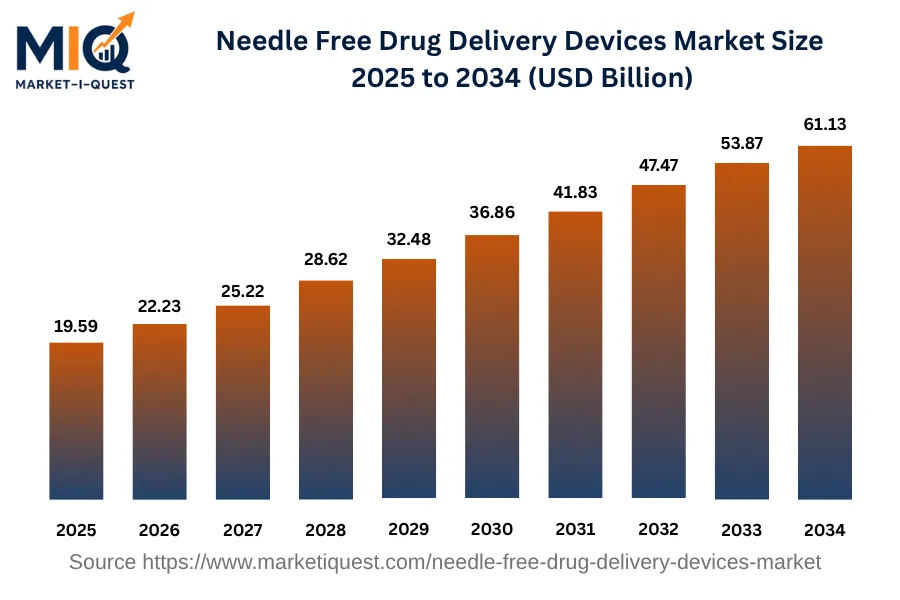
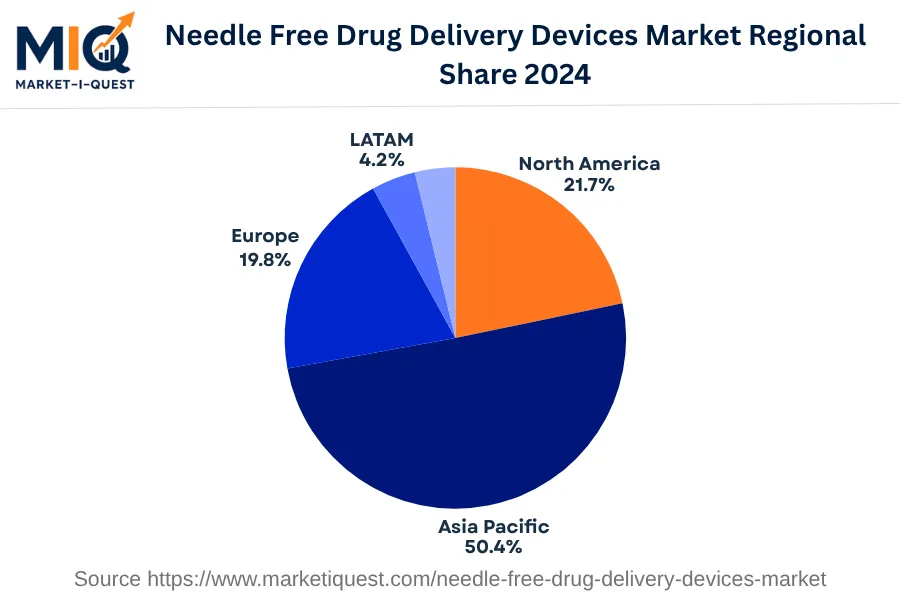
The Needle Free Drug Delivery Devices Market was valued at 19.59 billion USD in 2025 and is expected to expand to 61.13 billion USD by 2034, achieving a compound annual growth rate (CAGR) of 13.48%. The market saw a considerable elevation from its previous value of 17.26 billion USD in 2024. This substantial growth can be traced back to advancements in the technology of needle-free drug delivery devices, along with an increased preference for non-invasive medication administration methods. Additionally, campaigns and initiatives aimed at reducing needle-stick injuries contributed to the growing demand for these devices in the market. As per regional shares in 2024, Asia Pacific led with a 50.4% stake, followed by North America with a 21.7% share. Europe maintained a descriptive proportion with a share of 19.8% while Latin America and the Middle East & Africa held smaller slices of the market, with 4.2% and 3.8% respectively.

Key Takeaways

  • By Technology - Inhaler Technology led the market accounting for a significant share in 2024.
  • By Application - Insulin Delivery for Diabetes held the majority market position in 2024.
needle-free-drug-delivery-devices-market market size

Key Driving Factors

Vaccine Administration in Mass Immunization Programs

Mass immunization programs, often driven by public health organizations such as the World Health Organization (WHO), are increasingly adopting needle-free drug delivery methods. Needles present several challenges such as safety concerns due to potential needle-stick injuries, cross-contamination risks, and vaccine wastage due to overfill to cater for possible spillage. In contrast, needle-free devices minimizes these challenges, increases administration efficiency, and improve patient comfort levels, hence the adoption. This trend significantly contributes to the market growth of needle-free drug delivery devices, and it is primed to continue in the near term, particularly with the spike in global immunization efforts due to the COVID-19 pandemic.
Treatment of Chronic Disorders

The escalating prevalence of chronic diseases such as diabetes and multiple sclerosis requires routine medication injections. For patients who have needle phobia or those needing to self-administer drugs, needle-free drug delivery devices come as an innovative solution. These devices ensure accurate dosing, minimize the risk of infections, adhesive reactions or bruising from needle use, and improve patient compliance, especially among elderly patients who may have difficulty handling standard injection methods. Healthcare providers are therefore leaning towards needle-free drug delivery devices for treatment management of chronic illness, thereby driving the market growth of these appliances.

Market Evolution by Timeline

2019-2023
During this period, the primary buyers were large pharmaceutical companies, hospitals and healthcare facilities in developed countries, especially in North America and Europe, driven by a desire to increase patient comfort and reduce needle-stick injuries. Jet injectors were a key technology, supplying precise, fast, and deep medication delivery without needles. Regulatory compliances such as ISO 13485 for medical devices influenced product adoption. Commercial arrangements featured partnerships between device manufacturers and pharmaceutical companies. Capacity build-out predominated in the US, Germany, and Japan. A significant constraint was the high cost of devices, therefore, bulk purchasing became a typical procurement model. Critics expressed concerns about cross-contamination risks where device reuse occurred.
2024
In 2024, the adoption of needle-free drug delivery devices expanded beyond North America and Europe to include rapidly developing markets such as China and India. Demand arose from increasing acceptance of self-care practices and home healthcare services. Transdermal patch technology gained traction, providing targeted controlled-release medication delivery. The US FDA regulation on needlestick prevention in healthcare settings remained a key policy driver. Licensing agreements were observed to be a prevalent commercial model. Supply chain challenges loomed as a risk, particularly in low and middle-income countries, impacting product accessibility and affordability.
2025-2029
During this time, customer demand diversified to include individual users for personal health tracking devices. In terms of technology, inhaler devices for pulmonary drug delivery were increasingly shipped, predominantly in urban areas with high pollution rates. Countries with stricter regulations on single-use medical devices, like the European Union's Medical Device Regulation (MDR), saw higher adoption rates. Innovative pricing strategies included pay-per-use pricing models in a move to make devices more affordable for consumers. However, the risk of mechanical failures, leading to inaccurate dosages, was a primary concern, triggering widespread user education initiatives.
2030-2034
This period saw the convergence of needle-free drug delivery devices and digital health technology. Demand surged in countries with ageing populations, like Japan. Smart patches, linked to smartphones for automatic health data collection and drug delivery, emerged as a standout technology. Regulatory changes such as Japan's Pharmaceuticals and Medical Devices Agency's (PMDA) revised regulation aimed at advancing digital health influenced the market. Outcome-based pricing models were observed where payments were linked to patient health improvements. Risks included potential cybersecurity threats to connected devices, prompting strong emphasis on data security measures in device design.

Future Market Outlook

Future Opportunities

The future of the needle-free drug delivery devices market appears promising as consumer preferences evolve, and regulatory frameworks adapt. In 2021, Pfizer announced plans to explore needle-free vaccine delivery systems to enhance distribution efficiency. Such initiatives reflect a shift in addressing global health challenges, as seen in the WHO's push for equitable vaccine access in regions like Southeast Asia. With increasing attention on chronic disease management, companies like MedImmune are expanding their offerings to include needle-free technology for administering biologics, a movement prompted by the rising prevalence of conditions like diabetes and autoimmune disorders. The partnership established between nFusion and Upward Health in June 2023 focuses on advancing needle-free insulin delivery systems; such collaborations are indicative of strategic positioning for future market expansion. Additionally, ongoing clinical trials incorporating microneedle technology, such as those involving the SmartPatch platform in Australia, are furthering the application within personalized medicine. Regulatory bodies in North America continue to evolve their guidelines surrounding the approval of such devices, which may encourage manufacturers to invest in development. Consequently, the stage is being set for broader acceptance and use of needle-free systems in diverse settings, including home care, to accommodate patient autonomy. As healthcare becomes increasingly patient-centered, the needle-free drug delivery market is poised to capitalize on these trends, creating a pathway for significant advancements in patient care.

Segmentation Analysis

By Technology

The technology segment in the market is divided into subsegments including Inhaler Technology, Transdermal Patch Technology, and Novel Needle-Free Technologies. Inhaler Technology accounted for the largest revenue share while Novel Needle-Free Technologies is expected to grow at the fastest CAGR during the forecast period.

Largest Revenue Share

Inhaler Technology

Market Share Leader

The dominance of the Inhaler Technology subsegment in revenue generation can be attributed to a number of factors. One key driver is the rise in respiratory conditions, especially among the older population. This has been coupled with the convenience and effectiveness of inhaler technology in delivering medication directly to the respiratory tract. Inhalers are typically straightforward to use, enabling individuals to manage treatment schedules more independently. Furthermore, strong distribution channels, including hospitals, physical pharmacies, and increasingly, e-commerce platforms, have improved the availability and accessibility of this technology. The stringent regulations regarding medical device prescriptions increase customer stickiness, adding to the switching costs and thereby enhancing the growth of the segment. Based on industry trends, the dominance of Inhaler Technology should remain in the near future.

Fastest CAGR

Novel Needle-Free Technologies

Forecast Period Growth Leader

The Novel Needle-Free Technologies subsegment is projected to lead growth, spurred by several drivers and catalysts. One primary growth driver is the reducing adoption barriers, namely, patient discomfort and disposal issues associated with traditional methods. Technological innovations are paving the way for a higher adoption rate as they offer painless delivery of medications and eliminate needlestick injuries. Partnerships between technology developers and pharmaceutical companies are speeding up the development and commercialization of these new technologies, signaling a positive outlook for this segment. Furthermore, favorable policies backing the development and uptake of innovative, patient-friendly technologies could provide an added boost. However, potential risks such as higher initial investment, and adoption resistance from healthcare providers and patients trusting traditional methods could somewhat limit the pace of adoption.

By Application

The market is divided into subsegments including Vaccine Delivery, Pain Management, Insulin Delivery for Diabetes, Pediatric Injections and others. Insulin Delivery for Diabetes accounted for the largest revenue share while Vaccine Delivery is expected to grow at the fastest CAGR during the forecast period.

Largest Revenue Share

Insulin Delivery for Diabetes

Market Share Leader

The Insulin Delivery for Diabetes segment is leading the market in terms of revenue. This can largely be attributed to the increasing prevalence of diabetes across the globe. Specific demographic shifts, such as an aging population and rise in obesity rates, are contributing to the surge in diabetes diagnoses, thereby driving the demand for efficient insulin delivery systems. Moreover, the widespread adoption of sedentary lifestyles and unhealthy diets also contribute to this trend. Technological advancements in insulin delivery systems, including development of smart insulin pens and insulin pumps, are improving patient convenience and therapy adherence. The high purchasing power of diabetes patients in developed economies such as the USA, Germany, and Japan also boosts demand in this segment. Finally, increased awareness and accessibility to insulin delivery systems in developing nations offer further momentum.

Fastest CAGR

Vaccine Delivery

Forecast Period Growth Leader

The Vaccine Delivery segment is forecasted to be the fastest-growing segment. This dynamic growth can be traced primarily to an increasing global focus on immunization programs and the frequent outbreak of infectious diseases. Technological advancements and development of novel vaccines against various diseases are acting as catalysts for growth within this segment. Further impetus comes from government initiatives and partnership programs aimed at promoting the distribution of vaccines, especially in underserved regions. Capex is generally directed towards developing efficient delivery systems and promoting widespread vaccine availability. However, adoption barriers such as vaccine hesitancy and access limitations in certain geographies pose near-term risks. Still, vaccine-preventable diseases remain a significant global health concern, and this urgency fuels continued growth in this segment.

Competitive Analysis: Needle Free Drug Delivery Devices Market

Key Market Players

Manufacturers / OEMs

3M
US
Antares Pharma
US
Injex Pharma AG
Germany

Key Suppliers & Raw Materials

Becton Dickinson and Company
US
Gerresheimer AG
Germany
Schott AG
Germany

Distributors, Integrators & Channel Partners

Medtronic
US
Fresenius Kabi AG
Germany
F. Hoffmann-La Roche Ltd
Switzerland

Porter’s Five Forces Analysis

Analysis of competition, entry barriers, buyer and supplier power, and substitutes in the Needle Free Drug Delivery Devices Market

Supplier Bargaining Power

Medium

Suppliers impose substantial influence as they control key raw materials and components.

Buyer Bargaining Power

Low

High switching costs and limited alternatives reduce buyer's bargaining power.

Threat of Substitutes

Low

Traditional drug delivery methods are the only real substitutes, but offer less convenience.

Threat of New Entrants

High

Increasing demand and technological advancements lower barriers to entry.

Competitive Rivalry

High

Market is competitive with several established medical device manufacturers.

Regional Analysis

Geographic market dynamics and growth opportunities across key regions

Global Market Outlook

needle-free-drug-delivery-devices-market market regional share

North America

In 2024, the North American market for needle-free drug delivery devices showcased considerable growth stirred by multiple stimuli and evolving trends. The rising prevalence of chronic diseases, including diabetes and heart conditions, augmented the demand for innovative, painless, and user-friendly drug delivery solutions. Heightened healthcare investments across the U.S., Canada, and Mexico further catalyzed market expansion, complemented by robust technology adoption in the healthcare sector. Policymakers' intensified focus on ensuring safe injections and reducing needlestick injuries fueled the device demand, making safety regulations a pivotal market driver.

Concurrently, shifting consumer preferences marked a vital trend, with growing inclination toward self-administration of medications tracing a rise in home healthcare. An observable shift toward minimally invasive technologies signaled a change in product preference, spurred by their convenience and efficacy. Evolving channel dynamics witnessed an upsurge in online sales of medical devices, attributed to ease of purchase and broad product availability. Furthermore, mergers and acquisitions became a strategic norm among key players, exemplified by the Medtronic-Covidien mega-merger, enhancing market competition and product portfolios. Strict policy enforcement on healthcare waste management underscored the critical role of regulations in shaping the market landscape. Thus, 2024 saw remarkable vigor in the North American market for needle-free drug delivery devices, steered by an interplay of market drivers and trends.

Asia Pacific

In 2024, the Asia Pacific market for needle-free drug delivery devices witnessed steady growth due to several contributing factors and emerging trends. Key drivers included increasing patient preference for painless drug delivery, stringent regulatory controls related to needle-stick injuries, and significant investment in healthcare technology across the region, especially in countries such as China, India, and Japan. In Australia and South Korea, the rapid adoption of advanced healthcare technology led to an increased supply of needle-free drug delivery devices. Plus, the competitive pricing in the ASEAN markets fueled the demand for these non-invasive devices.

Trends noticed in 2024 were significant wherever these devices were employed. In response to the growing demand, manufacturers focused on developing innovative needle-free drug delivery technologies, which, in turn, influenced buyer behavior. There was a notable shift from traditional methods to needle-free injection systems in sectors like healthcare and retail. Another trend witnessed was the rise of strategic partnerships and mergers and acquisitions activities, mainly driven by the need to improve product offerings, expand customer base, and penetrate new markets. The implementation and enforcement of stringent policies and standards, especially in China, fostered the market growth and promoted the widespread acceptance of these devices.

Europe

In 2024, the European market for needle-free drug delivery devices saw significant growth due to various demand factors and technological innovations. The increasing incidence of chronic diseases, a growing elderly population, and an escalating need for self-administration of medication drove the demand for these devices in key countries like Germany, the United Kingdom, France, Italy, Spain, the Nordics, Benelux, and Central & Eastern Europe. Government regulations promoting safer drug delivery methods, along with high investments in healthcare technology adoption, spurred the supply dynamics of the market.

Trends in the market were shaped by changes in buyer behavior and technological shifts. Patients favored needle-free devices over traditional delivery methods due to their non-invasive nature and ease of use. Technological advancements in device manufacturing led to reduced product cost and improved efficiency, further enhancing market growth. Heated partnerships and mergers & acquisitions among leading manufacturers like Pharmacircle and Antares Pharma served to broaden the market landscape and offered diversified product portfolios to customers. In areas like healthcare and manufacturing, stringent policy enforcement ensured the quality and standardization of these devices. Despite the market's robust growth, pricing challenges remained due to varying economic conditions across the region. Nevertheless, the 2024 market for needle-free drug delivery devices in Europe remained promising and dynamic.

Latin America

In 2024, the Needle-Free Drug Delivery Devices market in Latin America, primarily driven by nations such as Brazil, Mexico, Argentina, Colombia, Chile, and Peru, witnessed significant growth. Increased health awareness, a surge in chronic disease, and government initiatives to improve healthcare infrastructure fueled this expansion. Investment in biotechnology and pharmaceutical sectors also contributed to these devices' adoption. High adoption rates were noted, particularly in diabetes treatment due to rising prevalence. Market trends included a spotlight on pharmaceutical advancements resulting in more convenient and less painful drug delivery systems. This shift was largely consumer-driven, with growing demand for less invasive treatment methods compelling manufacturers to innovate.

Particularly in Mexico and Brazil, partnership and M&A activities with local manufacturers were on the rise, aimed to capitalize on the expanding market. Regulatory policy enforcement also played a role, with governments pursuing stricter regulations to ensure product safety and efficacy. Needle-free drug delivery devices were predominantly adopted in healthcare settings, including hospitals, clinics, and home care. In parallel, the devices saw growing usage in retail channels such as pharmacies, highlighting an increase in self-administered treatment. The rapid uptake of these devices attests to the changing landscape of drug delivery in Latin America during the 2024 base year.

Middle East & Africa

In 2024, the market for needle-free drug delivery devices was marked by steady advancement in the Middle East and Africa, boosted by technological incorporation in healthcare and growing patient preference for non-invasive procedures. Investment in healthcare modernization, especially in Saudi Arabia, UAE, and Israel, was vital to market growth. Regulatory guidelines pushing for safer drug delivery as well as cost-effectiveness brought about by minimally invasive procedures also underpinned market expansion. Moreover, increased local manufacture and supply of such devices in countries like Egypt and South Africa had a positive effect on pricing and availability.

On the trends front, buyer inclination towards easier and pain-free drug administration methods was evident, with increasing adoption by hospitals in the UAE and Nigeria. In Qatar and Kenya, a noticeable shift was seen towards insulin jet injectors from conventional needle-based insulin delivery - a development supporting the prevalence of diabetes in these regions. Partnerships and collaborations among healthcare, manufacturing and retail sectors, notably in Israel and Saudi Arabia, have enabled the proliferation of these advanced medical devices. Meanwhile, standards on drug delivery safety were enforced more rigorously across the board, further consolidating the overall market growth in 2024.

Recent Industry Developments

Latest market innovations, product launches, and strategic initiatives

March 2026

NuGen Medical Devices Inc. filed a patent for a ready‑to‑fill COP/COC needle‑free injection nozzle, enabling scalable manufacturing of needle‑free, prefilled drug delivery systems. Samples are qualified for pre‑clinical testing by the end of 2026.

August 2025

NuGen Medical Devices Inc. (TSXV: NGMD) announced the research and development of a next-generation needle-free injection system that integrates sterile internal insulin cartridges directly into its proprietary autoinjector platform. The company’s flagship InsuJet™ system is already approved in 42 countries.

Frequently Asked Questions