
Natural Zeolites Market Snapshot

Key Players

  • Zeolyst International (United States)
  • Clariant International Ltd (Switzerland)
  • BASF SE (Germany)
  • Bear River Zeolite (United States)
  • Gordes Zeolite (Turkey)
  • KMI Zeolite (United States)
  • Zeochem AG (Switzerland)
  • Zeotech Corporation (United States)
  • Zeochem Ltd (Hungary)

Market Size

Base Year 2024
$2.38 Bn
CAGR
5.91%
Forecast 2034
$4.23 Bn

Market Segments

By Type
Clinoptilolite, Mordenite, Chabazite, Erionite, Ferrierite
By Grade
Chemical Grade, Industrial Grade, Food Grade, Pharmaceutical Grade
By Granule Size
0–1 mm, 1–3 mm, 3–5 mm, 5–10 mm, 10–20 mm
By Application
Agriculture, Aquaculture, Construction, Industrial Water Treatment, Pharmaceuticals, Wastewater Treatment, Others

Market Dynamics

Drivers
  • Increasing environmental concerns
  • Growing agriculture sector
Restraints
  • Limited product availability
  • Potential health hazards
Opportunities
  • Increasing awareness of green technologies
  • Expanding wastewater treatment industry

Market Size

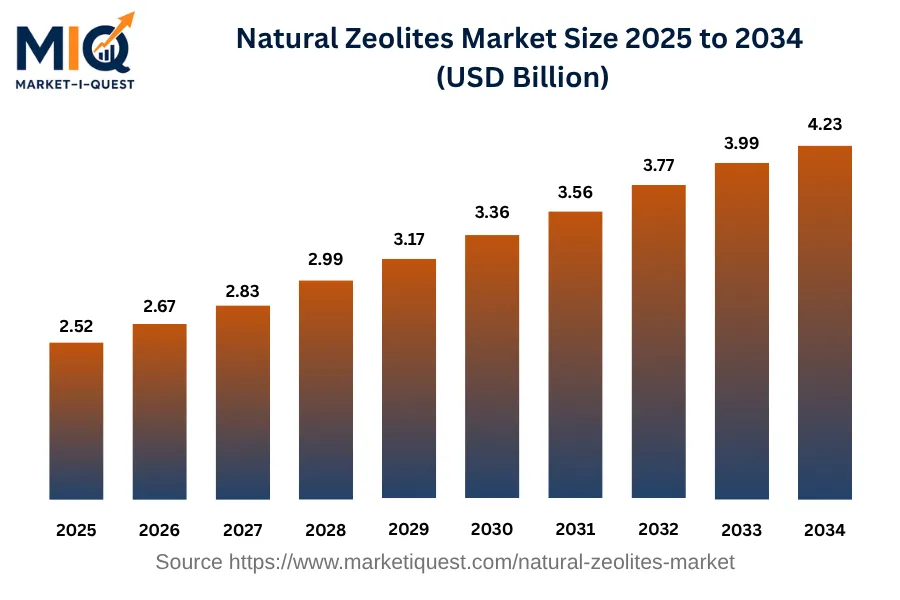
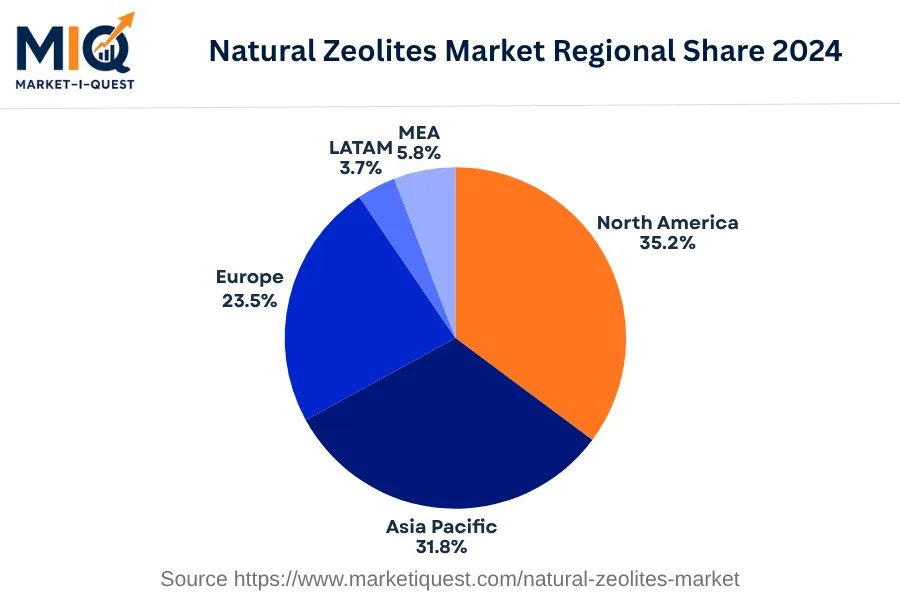
The Natural Zeolites Market was valued at 2.52 billion USD in 2025, which increased from 2.38 billion USD in 2024. By 2034, the market value is projected to reach 4.23 billion USD, representing a compound annual growth rate (CAGR) of 5.91%. The market expansion over this period was underpinned by several factors, which are not specified in the provided data. In terms of regional market shares in 2024, North America held the largest proportion with 35.18%, closely followed by the Asia Pacific region with a share of 31.84%. Europe accounted for a further 23.46% of the market, leaving smaller shares for the LATAM and MEA regions, which held 3.68% and 5.84% respectively.

Key Takeaways

  • By Type - Clinoptilolite led the market
  • accounting for the largest share in 2025.
  • By Grade - Industrial Grade held the dominant position in 2025.
  • By Granule Size - 1-3 mm segment expanded most rapidly within the specified period.
  • By Application - Industrial Water Treatment had the major share in 2025 reflecting its high demand in this market.
natural-zeolites-market market size

Key Driving Factors

Regulation of Chemical Fertilizer Use in Agriculture

Strict government regulations regarding the use of chemical fertilizers in agriculture are driving the natural zeolites market. Many countries aim to decrease chemical pollution in soil and water bodies, linked to the overuse of synthetic fertilizers. In response, farmers are increasingly turning to zeolites - minerals which are known to improve soil health and productivity, naturally. Zeolites absorb and retain water well, slowly releasing important nutrients to the plants. Therefore, encouraging a reduction in the reliance on chemical fertilizers. These regulatory efforts to minimize environmental impact, combined with the demands for organic produce from health-conscious consumers, are pushing the need for a natural substitute - hence, the drive in natural zeolites market.
Increased Use in Wastewater Treatment

Another factor contributing to the growth of the natural zeolites market is their increased usage in wastewater treatment applications. This comes as many industries and municipalities are seeking efficient and cost-effective methods to treat wastewater. Natural zeolites are recognized for their ability to adsorb toxic and hazardous substances such as heavy metals. The use of zeolites not only results in cleaner water discharge but is also often more cost-effective than other conventional wastewater treatment options, given the low cost and high availability of zeolites. The pressing need to comply with clean water discharge regulations and the desire to reduce operational cost is compelling industries and municipalities to utilize zeolites in their wastewater treatment processes thereby fueling the natural zeolites market.

Market Evolution by Timeline

2019-2023
During this period, key buyers of natural zeolites were primarily found in sectors like construction, water purification, and agriculture, with Asia, specifically China, leading in consumption. Technological advancements led to cost-effective extraction and processing, enabling supply to keep pace with demand. There were limited regulatory measures impacting the market, but industry standards urged sustainable mining practices. Sellers typically opted for long-term contracts to ensure price stability. Still, volatility in natural gas prices, used in processing, posed significant risks to product pricing and profitability.
2024
In 2024, the increasing uses of zeolites in renewable energies enhanced demand, particularly in North America and Europe. Suppliers had to innovate, developing synthetic zeolites to supplement the natural supply. In US and EU, regulations around cleaner fuel and waste management drove the market trends. This led to partnerships between suppliers and renewable energy companies, with pricing models adapting a cost-plus approach. The restriction in natural supply and uncertainty around synthesis of zeolites remained the central risks.
2025-2029
The demand for use in carbon capture and storage, air purification, and nuclear waste treatment has increased from 2025-2029, primarily in the United States, Canada, and Western Europe. Technological limitations and cost constraints on synthetic zeolites saw a shift in the industry's focus to optimizing mining and processing of natural zeolites. Regulations on emissions standards fostered the market growth. Commercially, towards the end of this period, suppliers leaned towards outcome-based contracts, partnering with end users for best results. The rising environmental concerns and potential decline in natural resources posed major risks.
2030-2034
In this period, demand surged for natural zeolites for carbon capture, associated particularly with heavy industrial processes across developed and emerging economies. A significant breakthrough allowed for scalable, cost-effective synthetic zeolite production, alleviating natural supply constraints. Combating climate change saw stringent environmental regulations, incentivizing zeolite usage. Suppliers started to partner with large-scale emitters utilizing a value-based pricing model. However, the reliability and scalability of synthetic zeolite manufacturing remained the central risk, potentially impacting the overall market dynamics.

Future Market Outlook

Future Opportunities

The future of the natural zeolites market is poised for expansion, prompted by existing environmental regulations and escalating energy needs. Countries such as Japan have already initiated projects centered on carbon capture technologies that incorporate natural zeolites to enhance efficiency, reflecting a growing trend towards leveraging these minerals in climate change mitigation. Additionally, following the 2023 directive by the United Nations on achieving sustainable development, there is increased interest in using natural zeolites in wastewater treatment processes, an area where significant investment is expected to be directed. Companies like ZeoSys are also developing innovative applications such as zeolite-based catalysts in energy production, spurred by the global transition towards greener fuel sources. The mining sector is adapting as well, with initiatives focusing on responsible sourcing of natural zeolites, in line with standards set by the International Organization for Standardization (ISO). Furthermore, ongoing research at institutions like MIT emphasizes the role of zeolites in electric vehicle technology, particularly in enhancing battery materials. This technological evolution opens avenues for partnerships between zeolite producers and technology firms, driving research and product development. Given the regulatory frameworks in place and the emerging needs across industries, the natural zeolites market stands at a pivotal point for future development, where current practices are expected to evolve into comprehensive solutions for environmental challenges.

Segmentation Analysis

By Type

The market is divided into subsegments including Clinoptilolite, Mordenite, Chabazite, Erionite, and Ferrierite, among which Clinoptilolite accounted for the largest revenue share while Mordenite is expected to grow at the fastest CAGR during the forecast period.

Largest Revenue Share

Clinoptilolite

Market Share Leader

The Clinoptilolite subsegment leads the market in terms of revenue due to its extensive applications in various fields. It is predominantly used in water and wastewater treatment, agriculture, and construction industries, which register a substantial demand for this type of zeolite. Its competitive edge lies in its unique chemical properties, mainly its ion-exchange capacity, which make it the preferred choice over other zeolites in environmental applications. Clinoptilolite's superior ability to filter and adsorb harmful elements and pollutants has also stimulated its adoption in the burgeoning aquaculture sector, which further contributes to its revenue growth. Geographically, the robust construction and agriculture sectors in Asia-Pacific and North America have been driving the demand for Clinoptilolite. The global regulatory focus on environmental sustainability additionally favors the segment as Clinoptilolite is a natural, eco-friendly material. Lastly, its cost-effectiveness and easy availability have solidified its strong position in the global market.

Fastest CAGR

Mordenite

Forecast Period Growth Leader

Mordenite is anticipated to grow at the fastest pace among all the zeolite types. Despite its smaller market size compared to Clinoptilolite, Mordenite has demonstrated promising growth potential due to its high thermal stability and increased acidity. These characteristics make it particularly suitable for refinery and petrochemical applications where it is employed as a catalyst. Its role in the conversion of methanol to olefins is a critical growth driver given the rising demand for olefins in the production of polymers. Concerns regarding energy conservation have also turned the spotlight onto Mordenite since it insulates heat efficiently and is utilized in advanced ceramics. While the current adoption levels of Mordenite are relatively low due to high switching and regulatory costs, partnerships between zeolite producers and end-use industries can help overcome these barriers and capitalize on the growth opportunities in the Mordenite segment. However, the growth trajectory of Mordenite faces near-term risks from fluctuating crude oil prices, which can disrupt the supply chain of petrochemical products.

By Grade

The market is divided into subsegments including Chemical Grade, Industrial Grade, Food Grade, and Pharmaceutical Grade. Out of these, the Industrial Grade subsegment accounted for the largest revenue share, while the Food Grade subsegment is expected to grow at the fastest CAGR during the forecast period.

Largest Revenue Share

Industrial Grade

Market Share Leader

The Industrial Grade subsegment leads the market in revenue generation largely due to the wide range of applications it accommodates. Sectors such as manufacturing, construction, and automotive heavily rely on Industrial Grade products due to their versatile nature and superior performance under extreme conditions. As these sectors continue to grow, especially in developing markets, the demand for Industrial Grade goods is likely to rise correspondingly. Apart from these demand-side factors, supply dynamics also favor this subsegment. Geographies rich in the necessary raw materials, primarily in Asia and the Middle East, further facilitate the growth of this subsegment. Additionally, regulatory favors and subsidies in certain regions have also created an environment conducive to the growth of the Industrial Grade subsegment.

Fastest CAGR

Food Grade

Forecast Period Growth Leader

The Food Grade subsegment, despite not being the largest in terms of revenue, is projected to grow at the fastest rate. This projection is mainly supported by increasing global demand for processed and convenience foods, driving the need for Food Grade products which are critical in maintaining food safety and quality. Technological advancements in food processing, along with recognition of the role of Food Grade materials in extending shelf life and enhancing nutritional content, act as significant growth catalysts. However, risks exist in the forms of stringent food safety regulations and the significant capex required for compliance. These can pose barriers to adoption, especially for smaller players. Despite such challenges, partnerships between Food Grade material providers and food processors, along with policy support in some regions, are expected to drive this subsegment's growth in the coming years.

By Granule Size

The market is divided into subsegments including 0–1 mm, 1–3 mm, 3–5 mm, 5–10 mm and 10–20 mm granule sizes. In 2024, the subsegment of 5–10 mm accounted for the largest revenue share, while the 1–3 mm subsegment is expected to grow at the fastest CAGR during the forecast period.

Largest Revenue Share

5–10 mm

Market Share Leader

The 5–10 mm granule size subsegment leads the market primarily due to its versatility and wide application range. This granule size is widely used in key industries including construction, mining, and chemical processing, where larger granule sizes are less applicable and smaller sizes may not provide sufficient performance characteristics. This industry preference is shaped by the granule's inherent physical properties such as superior strength, durability, and resistance to abrasion compared to smaller granule sizes. Specific demand drivers include robust construction industry growth, urbanization, and infrastructure projects. Major markets with significant usage of this granule size are Asia, Europe, and North America. Currently, regulations around these industries impose no significant hindrance to the applicable use of this granule size. Its dominance is also furthered by easy accessibility, reasonable pricing points, and low switching costs for the end-users compared to other granule size ranges.

Fastest CAGR

1–3 mm

Forecast Period Growth Leader

The 1–3 mm granule size subsegment stands as the fastest-growing segment. This robust growth is propelled by trends in industries such as manufacturing and bio-medical, demanding multiple, precision applications where smaller granule sizes are optimal. Adopting these smaller granules could increase product efficiency and yield. Yet, inherent barriers exist for full-scale adoption, chiefly pertaining to production challenges. Technological developments, however, are gradually overcoming these barriers, with advances in grinding and sieving techniques allowing cost-effective production of smaller granules. Equally, capital investments in these technologies are being justified with the promise of high yield returns from offering more precise and efficient products. Risk elements tied to the rate of adoption include the speed of technological development and the willingness of industries to invest heavily in new, pricier options. Nevertheless, the reward of achieving greater product efficiency and outperforming conventional methodologies is likely to drive adoption at an accelerated pace.

By Application

The market is divided into subsegments including Agriculture, Aquaculture, Construction, Industrial Water Treatment, Pharmaceuticals, Wastewater Treatment, and Others. As of 2024, the Industrial Water Treatment accounted for the largest revenue share while the Agricultural sector is anticipated to grow at the fastest CAGR during the forecast period.

Largest Revenue Share

Industrial Water Treatment

Market Share Leader

Industrial water treatment comprises one of the largest shares in the segment due to its considerable usage in multiple industries ranging from food and beverages to petroleum and automotive. The increasing need for purified water in industries leads to the adoption of advanced treatment solutions, thus driving revenue. Moreover, industries are facing stringent water quality standards imposed by regulators globally, triggering a shift towards the adoption of comprehensive water treatment techniques. Additionally, the recurring need to maintain equipment and optimize operational efficiency in industries fuels the demand for periodic water treatment, creating a constant revenue stream. The presence of numerous large-scale industries in areas such as North America and Europe additionally consolidate this segment's major revenue share, as these regions have advanced industrial infrastructure and adhere strictly to environmental guidelines.

Fastest CAGR

Agriculture

Forecast Period Growth Leader

The agricultural sector is projected to witness the fastest growth in the coming years, based on its increasing adoption of advanced water treatment systems for irrigation and animal husbandry. With a growing global population, the demand for agricultural produce is on the rise, and so is the pressure on water resources. As a result, the implementation of sophisticated water treatment solutions can give a higher yield, which serves as a strong growth driver. However, the adoption rate faces the challenge of initial high costs and technological unawareness among the rural farming community. The critical accelerants for growth will include supportive governmental policies aiming to increase water use efficacy in agriculture, widespread education about the benefits of treated water, technology advancements that lower capital expenses, and strategic partnerships aimed at increasing accessibility to these solutions in developing countries in the near future. Near-term risks could involve reluctancy of adoption due to traditional farming methods and the period required to realize return on investment.

Competitive Analysis for Natural Zeolites Market

Key Market Players

Manufacturers / OEMs

Teague Mineral Products
US
Zeo, Inc.
US
Gordes Zeolite
Turkey

Key Suppliers & Raw Materials

Clariant
Switzerland
Tosoh Corporation
Japan
BASF
Germany

Distributors, Integrators & Channel Partners

Zeocem, Ltd.
Slovakia
KMI Zeolite
US
Zeotech Corporation
US

Porter’s Five Forces Analysis

The analysis evaluates the intensity of competition and attractiveness in the Natural Zeolites market.

Supplier Bargaining Power

Medium

Medium power due to limited sources and extraction challenges of natural zeolites.

Buyer Bargaining Power

High

High power due to availability of alternative adsorbents and ion exchangers.

Threat of Substitutes

High

Prominent threat from synthetic zeolites and other industrial sorbents.

Threat of New Entrants

Low

High entry barriers such as mining regulations and specialized equipment needs.

Competitive Rivalry

Medium

Medium rivalry due to the presence of a few global suppliers and various local players.

Regional Analysis

Geographic market dynamics and growth opportunities across key regions

Global Market Outlook

natural-zeolites-market market regional share

North America

In 2024, the North American natural zeolites market witnessed significant activity due to various drivers and trends. Favorable regulations such as the United States Environmental Protection Agency's Clean Power Plan mandated the reduction of toxic pollutants, driving the demand for natural zeolites that are used to control air and water pollution. Moreover, tech adoption in mining processes led to efficient extraction, augmenting supply. Additionally, the competitive pricing of zeolites in comparison to active carbon stimulated utilization across sectors. Significant trends included a shift towards sustainable agriculture, leading to increased use of zeolites as soil treatment in the U.S., Canada, and Mexico.

Buyers particularly in the manufacturing sector demonstrated a preference for natural zeolites due to their eco-friendly properties. Furthermore, strategic partnerships characterized the market landscape, boosting technology sharing and market reach. One example was the collaboration between Teague Mineral Products and St. Cloud Mining, consolidating their stake in the market. Major sectors driving demand included the healthcare sector where zeolites were used in biomedical applications, the utilities sector for water filtration, and the Government sector in environmental cleanup efforts. Energy-efficient practices particularly in these sectors further strengthened the North American zeolite market in 2024.

Asia Pacific

The natural zeolites market in Asia Pacific made significant strides in the base year 2024. Key growth drivers primarily revolve around increased demand for natural zeolites in water treatment, agriculture, and construction industries across the region, particularly in China, India, and Japan, due to stringent regulatory norms and a growing focus on sustainable practices. The unveiling of China's new environmental regulations, for instance, propelled the demand for zeolites in gas separation and catalysis. Concurrently, India’s infrastructural growth catalyzed the market with a surge in demand for asphalt concrete. Trends shaping the market in 2024 included a pronounced shift towards zeolite-based detergent builders in South Korea, precipitated by policies banning phosphates. Furthermore, a preference for green building materials was evident in the Australian construction sector, favoring the use of zeolites.

E-commerce platforms also played an instrumental role in boosting product visibility and distribution across key ASEAN markets. Technological advancement, such as in situ synthesis of zeolites, witnessed wider adoption by leading regional manufacturers, fostering market growth. Alterations in regulatory environments and a consistent shift towards sustainable practices across industries reflected in enterprise, government, and retail sectors made a discernible impact on the natural zeolite market in the Asia Pacific region for the year 2024.

Europe

In 2024, the European natural zeolites market experienced a steady rise as influenced by several key factors. Infrastructure development across Germany, France, the United Kingdom, Italy, Spain, the Nordics, Benelux, and Central & Eastern Europe increased demand for natural zeolites, owing to their robust attributes in construction applications. Regulatory shifts promoting sustainable practices amplified market growth, as the region adopted green tech solutions in various fields, including the wastewater treatment sector. Increased investment in research and development spurred technology adoption, enhancing the versatility and efficiency of natural zeolite products.

In terms of trends, the year 2024 saw buyer behaviors in the region influenced by the transition to sustainable and environmentally friendly products. As a direct impact of this shift, there was a significant development of new technology to enhance the effectiveness of natural zeolites in the sectors of agriculture, manufacturing, and construction. This coupled with the exploration of partnerships and mergers and acquisitions between market-leading enterprises synthesized solid growth for the natural zeolites market. European policy enforcement around environmental conservation and sustainable development further accounted for the surging adoption of natural zeolites in industrial operations. For instance, new regulations in the wastewater treatment industry across the region stipulated the use of natural, sustainable materials, favoring the use of zeolites.

Latin America

In 2024, the Natural Zeolites Market in Latin America saw considerable growth due to a combination of factors, chiefly increased demand in the industrial and agricultural sectors. Elevation in infrastructure spending, particularly in Brazil and Mexico, resulted in increased demand for natural zeolites in the construction industry. Strict environmental regulations in Argentina and Chile boosted the market as well, with the adoption of natural zeolites in water treatment processes becoming more mainstream. Additionally, in countries like Peru and Colombia, the rise in organic farming led to a surge in the use of natural zeolites as soil amendments, stimulating growth in the agricultural sector.

Several major trends marked the natural zeolites market in the region. Notably, increased awareness and implementation of sustainability practices influenced buyer behavior. A noticeable shift towards using eco-friendly, natural materials such as zeolites in various industrial processes is discernible. This shift is evident in sectors such as utilities and manufacturing with a focus on lowering pollution levels. Markets experienced robust channel dynamics, with strong integration processes between mining companies and end-users. Strategic partnerships and acquisitions among mining companies, particularly in Brazil and Argentina, were characteristic, providing a more efficient supply chain. Lastly, the enforcement of sustainability policies reaffirmed the position of natural zeolites within the framework of the circular economy.

Middle East & Africa

In 2024, the Natural Zeolites Market within the Middle East and Africa was a focal point of interest in sectors such as oil and gas, and agriculture due to its unique properties. The demand was driven by the regulation of harmful emissions in countries like Saudi Arabia and South Africa, compelling industries to adopt zeolite-based solutions. The increasing investment in wastewater treatment in Qatar and the United Arab Emirates also shaped the market dynamics. Price stability in the mining sectors of Nigeria and Kenya due to the ample supply of natural zeolites supported this demand.

Trends in 2024 saw a shift in buyer's attention towards the use of natural zeolites in construction, catalysis, and soil amendment. Utilization of zeolites in manufacturing emissions regulation systems gained popularity in Israel, following strict environmental policy enforcement. Major partnerships occurred in Egypt's agriculture sector, fostering zeolites usage for controlled-release fertilizers. In Saudi Arabia, telecom companies adopted zeolite-infused concrete for radiation shielding, demonstrating a significant technological shift. South Africa saw an increase in retail sales of natural zeolite-based health products, reflecting changing consumer behavior.

Recent Industry Developments

Latest market innovations, product launches, and strategic initiatives

March 2026

Advanced hierarchical zeolite structures gained prominence, combining micro and mesoporosity to enable improved mass transfer and catalytic efficiency compared to traditional microporous zeolites. These materials are commanding premium positioning in high-value applications such as biomass conversion and pharmaceutical synthesis.

June 2025

The Z-ONA4LIFE project convened a mid-term workshop in Gijón, Spain, bringing together stakeholders from industry, academia, and policy to discuss the project's progress and broader implications for circular economy innovation in Europe. Zeocel Italia provided natural zeolite samples for comparative testing, exploring new applications for zeolite in catalysis and gas separation.

Frequently Asked Questions