Melamine Formaldehyde Market Snapshot

Key Players

  • BASF SE (Germany)
  • Huntsman Corporation (United States)
  • Hexza Corporation Bhd (Malaysia)
  • Ineos Group (United Kingdom)
  • Georgia Pacific Chemicals LLC (United States)
  • Teijin Ltd. (Japan)
  • Nan Ya Plastics Corp (Taiwan)
  • Dynea Oy (Finland)
  • Eternal Materials Co. Ltd. (Taiwan)
  • Qatar Melamine Company (Qatar)

Market Size

Base Year 2024
$0.768 Bn
CAGR
6.24%
Forecast 2034
$1.41 Bn

Market Segments

By Type
  • Methylated
  • Non-Methylated Formaldehyde
By End Use
  • Automotive
  • Construction and Building
  • Wood & Furniture
  • Electronics
  • Packaging
  • Chemicals
  • Other

Market Dynamics

Drivers
  • Increasing demand in automotive industry
  • Growing interest in high-performative resins
Restraints
  • Stringent Environmental Regulations
  • Health Hazards of Formaldehyde Exposure
Opportunities
  • Rising construction industry demand
  • Increasing furniture manufacturing activities

Market Size

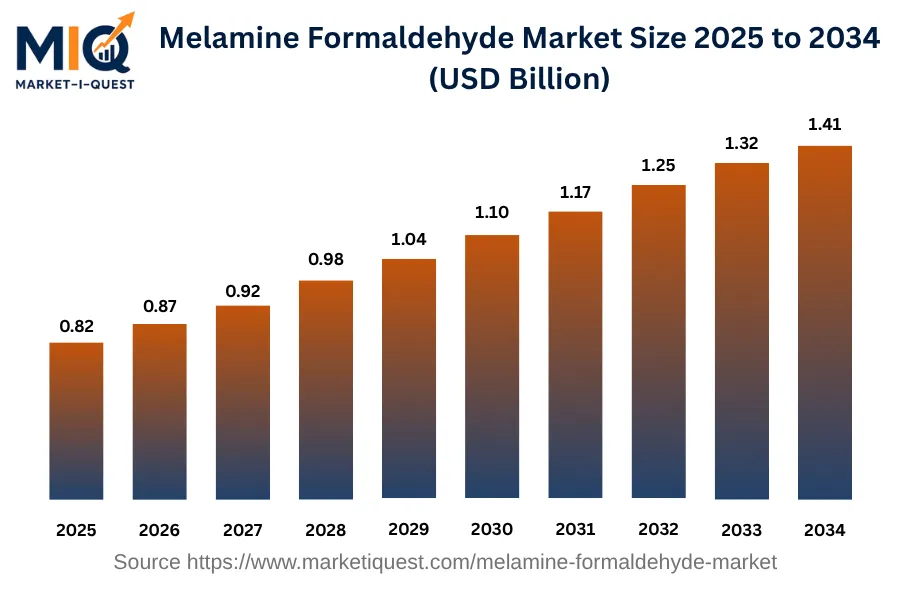
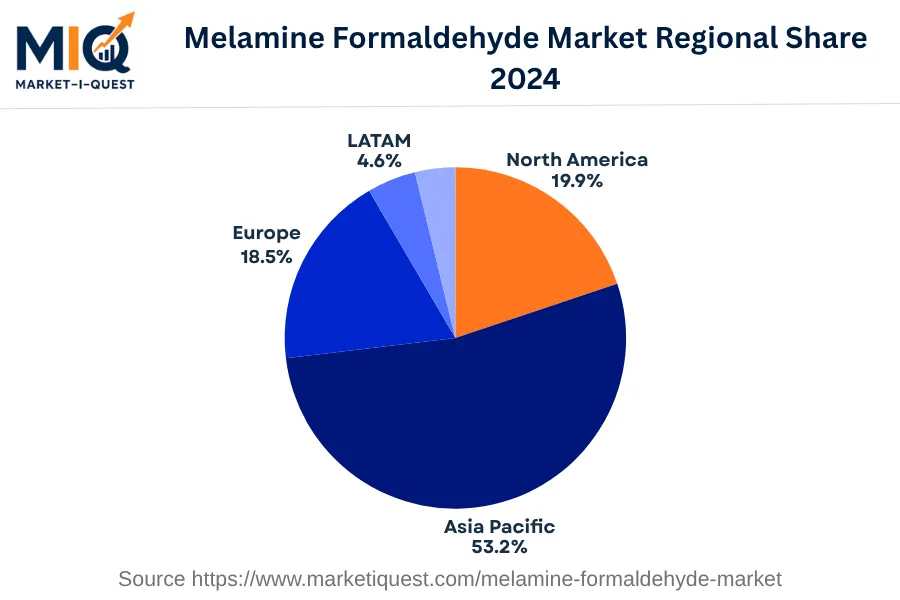
The Melamine Formaldehyde Market in 2025 is anticipated to be USD 0.82 Billion in size, an increase from 2024's size of USD 0.77 Billion. In terms of growth, by the year 2034, the market is projected to expand to USD 1.41 Billion, exhibiting a CAGR of 6.24% during the time frame. Between 2025 and 2034, a consistent upward growth trajectory is evident, defined by a steady yearly rise in market value, driven predominantly by demand and improvements in manufacturing processes. When considering regional shares in 2024, the market was primarily dominated by the Asia Pacific, which held 53.2% of the market share, followed by North America and Europe, which accounted for 19.9% and 18.5% respectively. The remaining share was divided between LATAM and MEA, holding 4.6% and 3.8% of the market, respectively.

Key Takeaways

  • By Type - Methylated led market in terms of share in 2024.
  • By End Use - Automotive segment held the largest share in 2024.
melamine-formaldehyde-market market size

Key Driving Factors

Stricter Regulations on Emissions and VOCs

Evolving global standards and regulations around environmental sustainability are having a significant impact on the Melamine Formaldehyde market. One such critical regulation is limiting the emission of volatile organic compounds (VOCs) in many industries, including the manufacturing and furnishings sectors. As Melamine Formaldehyde is extensively used as a binding and laminating agent in these industries due to its heat and scratch resistance properties, the need to comply with these regulations is influencing companies to invest in researching lower-emitting alternatives and technologies related to Melamine Formaldehyde. This continued research into compliant and efficient applications of Melamine Formaldehyde is consequently driving the growth of this market.
Increased Usage in Automobile Industries

The automobile industry's continuing shift toward lightweight and fuel-efficient vehicles is acting as a strong driving factor for the Melamine Formaldehyde market. Melamine Formaldehyde resins are being increasingly incorporated into automobile components due to their light weight, superior tolerance to heat, and exceptional mechanical strength. These properties make them ideal for use in internal parts such as instrument panels, and for external components such as headlamp reflectors. As more automobile manufacturers prioritize building lighter, more efficient vehicles without compromising on the performance or lifespan of the parts, this increased utilization of Melamine Formaldehyde in automobile production is acting as a growth catalyst for this market.

Market Evolution by Timeline

2019-2023
During this period, the primary buyers for the melamine formaldehyde products included manufacturers of kitchenware, laminates, and adhesives, majorly in Asia and North America. With melamine formaldehyde being used to increase heat resistance and improve product durability, the demand significantly increased. However, the supply was constrained due to the production cost and environmental regulations, especially in Europe. Pricing underwent moderate fluctuations as production cost and raw material prices varied. Regarding regulations, companies faced stringent environmental standards such as the EU's REACH. The primary risk involved limiting the greenhouse emissions while producing melamine formaldehyde, and companies were investing in greener production methods.
2024
In 2024, the automobile sector emerges as a new key buyer segment, using melamine products in surface coatings. Especially in Germany and China, the demand rose, considering the extensive automobile industries. However, production remained a challenge due to the strict environmental regulations. The US EPA regulation on formaldehyde emissions puts a significant constraint on melamine formaldehyde production. Pricing indicators pointed towards a moderate increase due to the rise in production costs. The risk factor continued to be the environmental impact of production, prompting businesses to explore alternatives or modifications in the production process.
2025-2029
During this period, demand from electronics and automobile sectors grew due to the increasing use of melamine formaldehyde in electronic components and car finishes. Countries like Japan and South Korea witnessed a surge in demand. Production technologies matured, and manufacturers started deploying more efficient and less pollutant methods, though constraints related to environmental regulations persisted. The pricing trend during this period remained stable with minor fluctuations. As for commercial models, long-term contracts and partnerships with raw material suppliers became a popular trend, providing a buffer against price uncertainties.
2030-2034
The demand maintained an upward trend during these years, with electronics, automotive, and construction sectors being the primary buyer segments, especially in developing countries. In terms of supply, recently developed greener production methods started gaining momentum. The stringent emission standards such as the 'Formaldehyde Standards for Composite Wood Products Act' continued to influence the market. Companies increasingly adopted price locking contracts with suppliers to manage price fluctuations during this period. The significant challenge was to meet the increased demand while complying with the stringent environmental laws, pushing companies to invest in greener technologies.

Future Market Outlook

Future Opportunities

Looking ahead, emerging market dynamics present several opportunities for stakeholders in the melamine formaldehyde sector. In 2024, ongoing shifts towards greener housing projects in Western Europe will increase demand for melamine-based solutions that comply with sustainability regulations. As countries like Germany enact policies promoting energy efficiency, the need for high-performance insulation materials derived from melamine formaldehyde will likely rise. Furthermore, the Asia-Pacific region, particularly India and China, is expected to continue expanding its construction and automotive sectors, creating avenues for melamine formaldehyde applications in coatings and adhesives throughout the coming years. Recent partnerships, such as the collaboration between Huntsman Corporation and leading automotive manufacturers in 2023, underscore the growing interest in advanced materials that enhance product longevity and performance. Innovations in 3D printing technology and the introduction of customized melamine products by firms like Krones AG are anticipated to offer new manufacturing possibilities. Furthermore, the emphasis on circular economy principles will push companies to explore recycled and waste-derived inputs, a trend gaining traction as of mid-2023. The integration of digital supply chain solutions to better manage logistics and reduce lead times will also become pivotal in meeting the swift market demands. Overall, the convergence of regulatory pressures, technological advancements, and evolving consumer preferences is likely to nurture a favorable environment for melamine formaldehyde applications moving forward.

Segmentation Analysis

By Type

The market is divided into subsegments including Methylated and Non-Methylated Formaldehyde, of which Methylated Formaldehyde accounted for the largest revenue share while Non-Methylated Formaldehyde is expected to grow at the fastest CAGR during the forecast period.

Largest Revenue Share

Methylated Formaldehyde

Market Share Leader

Methylated formaldehyde has captured the highest revenue share in the market due to its extensive usage across various industry verticals. One major driving factor is its pervasiveness in the manufacturing of plastics, resins, textiles, and coatings. Methylated formaldehyde is known for improving hardness and strength of materials, thus leading to its broad industrial application. The high demand in developing countries, owing to their buzzing industrial sectors, also fosters the growth of this subsegment. Regulatory encouragement towards safer industrial chemicals could also be playing a role in keeping Methylated Formaldehyde ahead in terms of revenue share. Customers and manufacturers alike prefer it due to its consistent supply and predictable pricing. Purchasing is typically done in bulk, creating high-entry barriers and cementing its position as the market leader in revenue generation.

Fastest CAGR

Non-Methylated Formaldehyde

Forecast Period Growth Leader

Despite the dominance of Methylated Formaldehyde in terms of market share, Non-Methylated Formaldehyde is expected to exhibit the fastest growth ahead. This growth is primarily driven by advancements in technology and proactive environmental policies that favor compounds with lesser ecological impact. One potential catalyst is the increasing investment in safe production technologies that are expected to lower production costs, thereby speeding up its adoption. Partnerships between manufacturers and distributors are also emerging as a key trend to expedite sales. However, the segment faces risks in terms of stricter regulations and the potential for supply chain disruptions, which may present challenges to its growth rate. It is crucial for stakeholders to navigate these obstacles to maximize their position within this rapidly evolving subsegment.

By End Use

The market is divided into subsegments including Automotive, Construction and Building, Wood & Furniture, Electronics, Packaging, Chemicals, and Other. Among these, the Automotive subsegment accounted for the largest revenue share in 2024 while the Electronics subsegment is expected to grow at the fastest CAGR during the forecast period.

Largest Revenue Share

Automotive

Market Share Leader

The Automotive dominated the market in 2024 due to several factors. Firstly, growth was driven primarily by the consistent increase in vehicle production and sales globally. The increasing demand for luxury and comfort features in vehicles has also led to the higher adoption of advanced products and technologies, thereby boosting the market size. Moreover, automotive manufacturers have been focusing on weight reduction and emissions regulations, necessitating constant innovation and development in this segment. These manufacturers have also initiated substantial investments for the adoption of new technologies, further driving the market growth. Additionally, the revamping of the commercial vehicles sector has led to increased demand in emerging markets. Finally, the impact of regulatory changes and policies plays an essential role in this subsegment, as it often leads to shifts in manufacturing strategies and product development, directly influencing the sector’s revenue.

Fastest CAGR

Electronics

Forecast Period Growth Leader

Electronics is projected to be the fastest growing sub-segment. The increasing worldwide consumer electronics demand, driven by the rising disposable income of the middle-class population and changing lifestyles, anchors its accelerated growth. Innovations in technology have led to higher adoption rates of products such as smartphones, wearables, and smart home appliances, catalyzing market expansion in this subsegment. Moreover, the need for miniaturization and the integration of electronics in various industries have expedited advancements, paving a path for growth. Significant market players are forming strategic partnerships to access high-growth markets and produce innovative products, fuelling expansion. However, there are near-term risks such as sudden changes in consumer preferences, fluctuations in raw material prices, and potential supply chain disruptions due to geopolitical issues or global health crises. Despite these challenges, the Electronics subsegment is anticipated to continue its upward trend.

Competitive Analysis Melamine Formaldehyde Market

Key Market Players

Manufacturers / OEMs

BASF SE
Germany
INEOS Group
Switzerland
OCI Nitrogen
Netherlands

Key Suppliers & Raw Materials

Saudi Basic Industries Corporation (SABIC)
Saudi Arabia
Mitsui Chemicals, Inc.
Japan
Qatar Melamine Company
Qatar

Distributors, Integrators & Channel Partners

Maroon Group LLC
US
Polytek Development Corporation
US
Univar Solutions Inc
US

Porter’s Five Forces Analysis

Unveiling the competitive dynamics of the melamine formaldehyde market.

Supplier Bargaining Power

Low

Wide availability of input materials mitigates supplier power.

Buyer Bargaining Power

Medium

Diverse application sectors allow ample options for buyers.

Threat of Substitutes

High

Intensifying demand for bio-based chemicals increases substitution threat.

Threat of New Entrants

Medium

Technological requirements and capital investment create barriers to entry.

Competitive Rivalry

High

Vast number of global and regional players intensifies competition.

Regional Analysis

Geographic market dynamics and growth opportunities across key regions

Global Market Outlook

melamine-formaldehyde-market market regional share

North America

In 2024, the North American market for Melamine Formaldehyde (MF) centered on demands from the construction, automotive, and packaging sectors. Regulatory emphasis on reducing formaldehyde emissions bolstered the adoption of MF-based resins, known for their low emission properties. Investments focused on augmenting production capabilities and technology enhancements in manufacturing these resins, responding to a surge in demand. Meanwhile, high raw material prices influenced pricing dynamics, enforcing meticulous supply chain management.

Constructive trends in the market emphasized eco-friendly alternatives, reflecting consumer preferences for green living. Switch to MF-based products, eliminating conventional formaldehyde-based items, amplified across multiple channels, including construction, packaging, and automotive. Mergers and acquisitions characterized the North American market landscape, with companies seeking to optimize production costs and expand their consumer base. The U.S. Environmental Protection Agency's emission standards for composite wood products substantially dictated policy enforcement, catalyzing a strategic shift towards MF-based products. The consumer electronics sector emerged as a new segment with high demand, showcasing the versatility and wide acceptance of MF-based products. Overall, in 2024, the North American MF market demonstrated expansive growth driven by regulatory measures, technology advancements, and evolving consumer preferences toward eco-friendly products in sectors such as construction, automotive, and packaging.

Asia Pacific

In 2024, the Asia Pacific melamine formaldehyde market shows significant activity, primarily driven by robust demand from industries like construction, automotive, and packaging. The proliferation of urban infrastructure projects in China and India necessitates high-performance, durable materials - melamine formaldehyde has emerged as a preferred choice due to its resistive properties, facilitating its extensive use in these sectors. Technological advancements in Japan, South Korea, and Australia around the production process of melamine formaldehyde reduce production costs, also stir its adoption in these countries. Increased consumer spending power and outward-oriented policies in the key ASEAN markets stimulate demand, particularly within the furniture industry.

Regarding trends, manufacturers are increasingly shifting focus towards eco-friendly production techniques to adhere to government-implemented environmental regulations in India and China. Digitization and automation of sales channels in Japan and Australia accelerate traceability and improve customer satisfaction. In South Korea, manufacturers tend to form strategic partnerships and M&A to drive economies of scale and strengthen market position. Enforcement of stricter quality standards across ASEAN countries sets a higher bar for the inscription of melamine formaldehyde-based products. As a result, companies are undertaking rigorous testing to ensure compliance, which effectively boosts the perceived value of their products.

Europe

In 2024, the Melamine Formaldehyde Market in Europe displayed robust performance. Key drivers included stringent regulations on unhealthy Volatile Organic Compound emissions, influencing manufacturers to opt for Melamine Formaldehyde which emits less than conventional plastics, particular in areas such as Germany and France. The soaring demand for heat-resistant products within the automotive, construction and sanitary ware sectors, especially in Italy and the UK, fueled market activity significantly. Aggressive technological adoption in the Nordics and Benelux, backed by substantial investment in research and development, led to an enhanced production of high-quality Melamine Formaldehyde.

Trends exhibited in 2024 highlight a shift towards environment-friendly products, with Melamine Formaldehyde leading the change due to its low toxicity and recyclability. Notably, the construction sector in Spain and Central & Eastern Europe showed a marked preference for using Melamine Formaldehyde in laminate flooring and insulation materials due to its high resistance properties. Mergers and acquisitions were also prominent, creating deeper supply-and-value chains and fostering market consolidation. Furthermore, policy enforcement, particularly in Germany, bolstered compliance with safety standards for Melamine Formaldehyde, assuaging consumer concerns about product safety and instilling market confidence. These factors put together provided a significant impetus to the Melamine Formaldehyde market in Europe for the base year.

Latin America

In 2024, Latin America's Melamine Formaldehyde market has grown influenced by various factors and evolving dynamics. The drivers propelling this market growth include stringent government regulations as in Brazil, where the environmental policies have mandated the use of environment-friendly resins like Melamine Formaldehyde for manufacturing. Innovative product development spurred by technological adoption in countries like Mexico and Argentina has fuelled the market's expansion. Investment in production facilities, especially in growing economies like Colombia and Chile, has boosted supply dynamics, and competitive pricing strategies have played a crucial role.

Simultaneously, specific trends have marked the market landscape. Advanced manufacturing processes have led to a shift toward more efficient and eco-friendly production of Melamine Formaldehyde. In terms of buyer behavior, demand has increased from sectors such as construction, automotive, and textiles in economies like Peru due to the product's superior characteristics. The market in Chile and Colombia is seeing significant channel dynamics change, with increasing focus on direct distribution over traditional wholesaling. Additionally, enforcement of safety and quality standards imposed by governments has led to stricter compliance, affecting the market dynamics.

Middle East & Africa

In 2024, the Melamine Formaldehyde market in the Middle East and Africa experienced a dynamic period of growth and transition. Several market drivers contributed to this, including stringent environmental regulations in Saudi Arabia, UAE, and South Africa which aimed to promote the use of eco-friendly materials, thereby increasing demand for melamine formaldehyde. In addition, the booming construction industry in countries like Qatar and Egypt propelled the need for durable and heat-resistant materials. Evidently, the adoption of advanced production technologies in the manufacturing sector was particularly high in Nigeria and Kenya which helped meet the increasing product demand cost-effectively.

On the trends front, buyer behavior shifted towards products that promise sustainability and durability. Manufacturing industry in Israel invested in melamine formaldehyde for the production of high-pressure laminates, thus enhancing product demand. Partnership or M&A activity was especially prevalent in the South African market where local manufacturers collaborated with international giants to expand product offerings. Moreover, in the Middle Eastern countries, the enforcement of strict policy regarding formaldehyde emission standards intensified the demand for melamine formaldehyde in the furniture and interior decoration market. Government, construction, manufacturing, and retail sectors were among the high-value customers in the market landscape in 2024.

Recent Industry Developments

Latest market innovations, product launches, and strategic initiatives

March 2025

Ashland Global Holdings Inc. officially completed the acquisition of S.D. Warren's Melamine Formaldehyde Resins business. This strategic acquisition directly expands Ashland's market presence and enhances its overall product portfolio.

Frequently Asked Questions