Medical Pendant Market Snapshot

Key Players

  • Draeger Medical Gmbh (Germany)
  • Koninklijke Philips N.V. (Netherlands)
  • Surgiris (France)
  • Hunan Taiyanglong Medical (China)
  • Ondal Medical Systems Gmbh (Germany)
  • Baxter International Inc (US)
  • Megasan Medical Gas Systems (Turkey)
  • Novair Medical (France)

Market Size

Base Year 2024
$0.894 Bn
CAGR
6.75%
Forecast 2034
$1.72 Bn

Market Segments

By Type
Single Arm Pendant, Double Arm Pendant, Multifunctional Pendant
By Installation Type
Ceiling Mounted, Wall Mounted, Mobile
By Application
Surgery, Critical Care, General Patient Room
By End Use
Hospitals, Clinics, Long-Term Care Facilities

Market Dynamics

Drivers
  • Increasing hospital infrastructure
  • Rising demand for surgeries
Restraints
  • High installation costs
  • Regulatory compliance challenges
Opportunities
  • Growing healthcare industries
  • Technological advancements in medical devices

Market Size

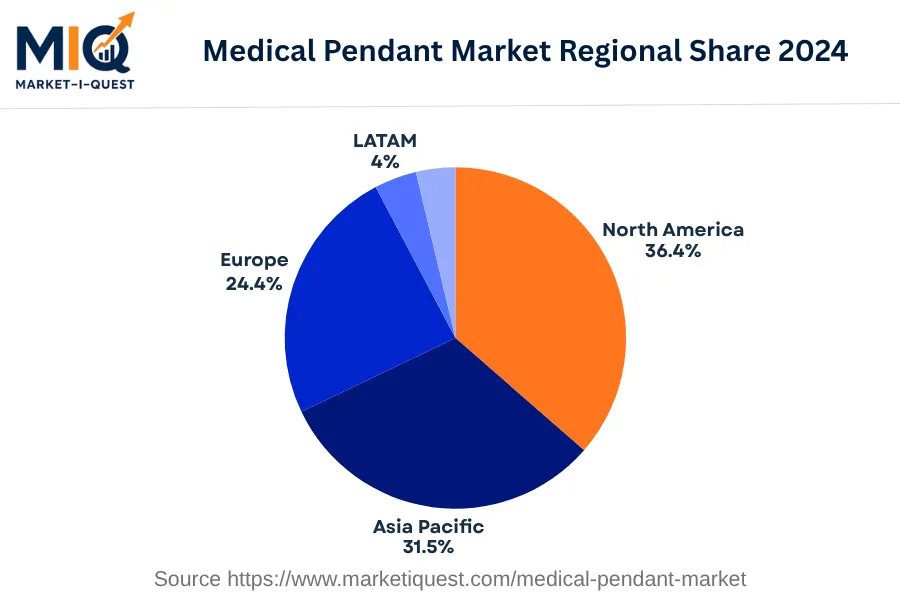
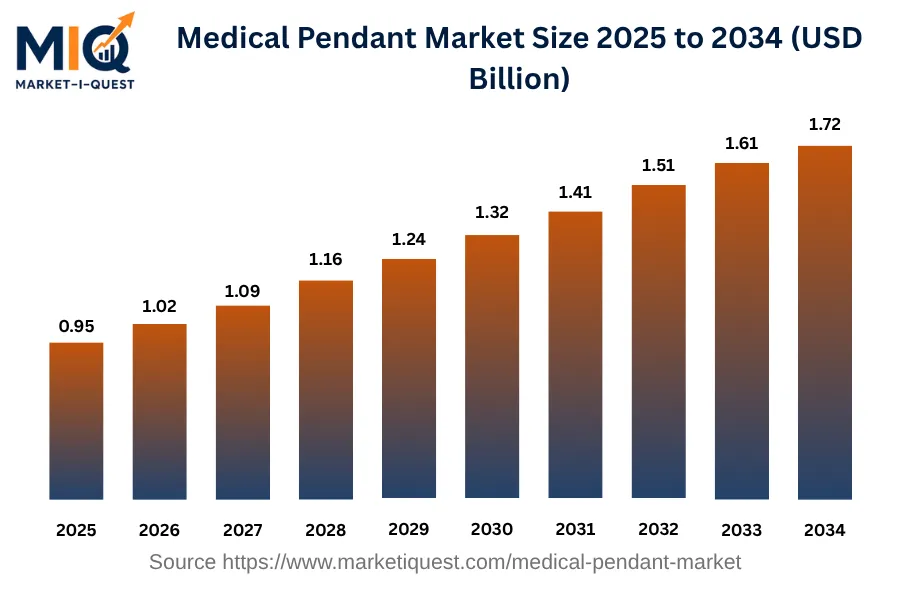
The Medical Pendant Market stood at $0.95 billion in 2025, growing from $0.89 billion in 2024. By the end of 2034, this market is projected to reach $1.72 billion, representing a CAGR of 6.75% over this period. This steady increase in market value over a period of nine years is indicative of continual product demand and market penetration. On a regional basis, the market shares in 2024 were distributed among North America representing the highest with 36.4%, Asia Pacific following closely with 31.5%, Europe with 24.4%, and smaller shares by LATAM and MEA with 4% and 3.7% respectively.

Key Takeaways

  • By Type - Double Arm Pendant led accounting for a high share in the recent years.
  • By Installation Type - Wall Mounted held a dominant position in the base year.
  • By Application - Surgery was the leading segment with a significant share.
  • By End Use - Hospitals held the major share in the base year due to high demand.
medical-pendant-market market size

Key Driving Factors

Adoption of Minimal Invasive Surgeries

Globally the medical pendant market is strongly stimulated by the growing adoption of minimal invasive surgeries. These surgical procedures demand a high level of precision and efficiency. As a result, there is an increased need for medical pendants that can maximize the usage of operating room spaces, reducing clutter, and ensuring that vital medical equipment is easily accessible when needed. The agility and placement flexibility offered by medical pendants make them indispensable in such surgical environments. This trend is particularly pronounced in developed countries, where innovative surgical procedures are being implemented rapidly, thus driving the demand for medical pendants.

Strict Regulations for Medical Equipment Safety

Increasing stringency in regulations regarding medical device safety is another significant driver for the medical pendant market. Regulatory bodies such as the FDA in the U.S. and the MHRA in the U.K. have set stringent safety standards for medical devices used in patient care, especially in potentially high-risk environments such as operating rooms. Medical pendants play an important role in maintaining these safety standards due to their ability to organize and manage essential equipment, minimizing the risk of accidental damage or mishandling, and ensuring patient safety during surgical procedures. In response, manufacturers are focusing on providing medical pendants that meet all regulatory requirements, stimulating the expansion of the medical pendant market.

Market Evolution by Timeline

2019-2023
In this period, demand for advanced and convenient medical resources was primarily driven by hospitals and clinics in North America and Europe. ICU and operation theatres were commonly using medical pendants for critical positioning of necessary medical aids. Key drivers involved enhancing operability and patient comfort. On the supply side, product manufacturers such as Drägerwerk AG & Co. KGaA and STERIS plc innovated designs to increase functionality. However, insufficient installation spaces in hospitals often posed a constraint. Certain policies such as EU Medical Device Regulation impacted standardization and safety, encouraging more advanced solutions. Fixed pricing models were frequent with a tendency towards bundled contracts with medical service providers for bulk purchases. Notably, Contract partnerships between hospitals and manufacturers were formed. The main risk factor was product recall due to device failure, typically addressed via strict quality control measures.
2024
This year witnessed North America's dominance in consumption, largely driven by the high healthcare standard and aging population. Medical facilities continued to equip ICU, anesthesia, and endoscopy rooms with medical pendants. Global manufacturers like Mindray, Pneumatik Berlin, and BeaconMedæs launched uniquely designed products with higher load capacities. However, the adoption rate was affected by the high installation cost. The mandatory Medical devices regulations (MDR) and In Vitro Diagnostic Regulations (IVDR) by the EU enhanced safety, usability, and traceability. Pricing trends saw a movement towards value-based models. However, high purchase and maintenance cost still posed a risk, dealt with by the offering of complementary services or extended warranties by manufacturers. Partnerships between manufacturers and healthcare providers became widespread.
2025-2029
Asia-Pacific, particularly India and China, are expected to start emerging as significant markets due to increasing healthcare spending and infrastructure upgrade. Demand will likely high from multi-specialty hospitals and outpatient surgery centers. Manufacturers like Brandon Medical and Surgiris might aim at designing multifunctional and space-efficient products. A challenge will likely in insufficient technical skills for installation and use. American and European regulatory bodies might still continue to enforce stricter safety and installation standards. A greater emphasis on cost-efficient models might witness the rise of lease agreements and monthly rental schemes. The use of refurbished equipment may become an option to tackle the prevalent cost-related issues. Networking and strategic alliances amongst manufacturers and healthcare providers will likely become more routine.
2030-2034
This period might see a boost in the demand for medical pendants in low/middle-income countries, given their health infrastructure upgrades. Key demand drivers would continue to be the ambulatory care centers and large hospital systems. Technological advancements could result in manufacturers exploring AI and IoT integrated pendants, although the lack of infrastructure in less developed countries may act as a constraint. Regulatory rulings such as the European EN 60601-1-2:2015 standard could drive manufacturers to prioritize electromagnetic compatibility. Value-based contracting might become more prevalent, with pay-per-use models potentially addressing affordability issues. Risks involving equipment malfunction could perhaps be met by insurance coverage by manufacturers. Collaboration with local retailers could emerge as a resilient distribution channel.

Future Market Outlook

Future Opportunities

The medical pendant market presents significant opportunities for growth, driven by the ongoing digital transformation in healthcare. Organizations like the World Economic Forum are promoting digital health strategies to improve patient outcomes and operational efficiencies. This is pushing healthcare facilities to adopt advanced medical pendant systems that can integrate with existing architectures such as electronic health record systems, a trend emphasized by the American Health Information Management Association in their policy recommendations. Furthermore, the aging population in regions like North America and Europe is increasing the demand for remote monitoring solutions, underscoring the necessity for scalable medical pendants that cater to this demographic. Companies like GE Healthcare are already exploring new features, such as fall detection and emergency alerts, aimed specifically at elderly patients. Collaborative partnerships are becoming common; for instance, IBM partnered with various hospitals to pilot AI-enhanced monitoring systems that leverage medical pendants for proactive health management. Moreover, regulatory support for telehealth initiatives, as seen with the U.S. government's updates in 2023, is paving the way for easier adoption of these systems in daily healthcare practices.

Segmentation Analysis

By Type

The market is divided into subsegments including Single Arm Pendant, Double Arm Pendant, and Multifunctional Pendant. The Double Arm Pendant accounted for the largest revenue share while the Multifunctional Pendant is expected to grow at the fastest CAGR during the forecast period.

Largest Revenue Share

Double Arm Pendant

Market Share Leader

The Double Arm Pendant subsegment currently dominates the market revenue-wise. This is due largely to its wider range of applications compared to its counterparts. Double Arm Pendants offer more flexible usability in multiple scenarios and are typically more durable and robust. This makes them ideal for use in heavy-duty settings such as industrial environments, where they are often favored over other types. Additionally, they cater to a more diverse target market - from residential users who value aesthetics and functionality to commercial users who require effectiveness and longevity. This broad customer base contributes significantly to their high revenue generation. Their popularity is also bolstered by the extensive distribution channels, making them easily accessible.

Fastest CAGR

Multifunctional Pendant

Forecast Period Growth Leader

The Multifunctional Pendant is predicted to have the fastest Compound Annual Growth Rate (CAGR). This is largely driven by increasing technology integration and the escalating demand for innovative, high-performance products. The Multifunctional Pendants' unique selling proposition lies in their ability to serve multiple functions with a single unit, which is highly desirable for space and cost-efficient settings. Additionally, consistent technological advancements and increased strategic partnerships within the industry act as catalysts for his subsegment growth. On the flip side, high initial capital expenditure may pose as an adoption barrier. But with the continuous tech development decreasing costs over time, this issue may be mitigated in the near future.

By Installation Type

The market, by installation type, is divided into subsegments including Ceiling Mounted, Wall Mounted, and Mobile. The Wall Mounted subsegment accounted for the largest revenue share, while the Mobile installation is expected to grow at the fastest CAGR during the forecast period.

Largest Revenue Share

Wall Mounted

Market Share Leader

Wall Mounted installation types dominate in terms of revenue, a result of their wide applicability and preference in various settings. Their suitability for different environments, including residential, commercial, and industrial spaces, contributes significantly to their large market share. Additionally, being a more practical and less expensive option compared to other alternatives, this type of installation is the most common in the sector. Wall Mounted installations have gained wide acceptance owing to their easy installation process, cost-effectiveness, and efficient use of space, making them the preferred option for most consumers. Moreover, emerging markets are picking up on this trend, which is driving up their volume of sales and contributing to their substantial revenue share.

Fastest CAGR

Mobile

Forecast Period Growth Leader

The Mobile subsegment, while not currently the largest in terms of revenue, is projected to witness the fastest CAGR. Factors driving the growth of this segment include increased flexibility, reduced installation costs, and the ability to move and adjust the products as needed. This flexibility is particularly appealing in dynamic environments or spaces where fixed installations are not practical or possible. Technological advancements and partnerships with tech companies are serving as catalysts for this growth, boosting adoption rates. Policy support for innovative, flexible solutions is also contributing to the rapid expansion of this segment.

By Application

The market is divided into subsegments including Surgery, Critical Care, and General Patient Room. As of the base year 2024, Surgery accounted for the largest revenue share while General Patient Room is expected to grow at the fastest CAGR during the forecast period.

Largest Revenue Share

Surgery

Market Share Leader

Surgery subsegment held the largest revenue share. This dominance is fueled by a rising global demand for surgical procedures, driven by an aging population and an increase in chronic diseases. Additionally, advances in surgical technologies add to the growing demand. For instance, the adoption of minimally invasive surgeries (MIS) has provided cost-saving benefits and has improved patient outcomes. As such, this expanding need for surgeries across various medical areas contributes significantly to the subsegment’s revenue. Geographically, developed regions with higher purchasing power and healthcare infrastructures contribute significantly to the Surgery subsegment's market share, but developing nations are gradually comprising a larger share of the market due to their rising healthcare expenditures, demographic trends, and policy initiatives towards improving healthcare systems.

Fastest CAGR

General Patient Room

Forecast Period Growth Leader

Projected to grow at the fastest CAGR during the forecast period is the General Patient Room subsegment. Driving this growth is the overall rise in hospital admissions, attributed to various factors such as population aging, increase in chronic diseases, and expanded healthcare access in emerging economies. Further, the push for improvement in patient room designs and functionalities as part of patient-centered care initiatives are pushing hospitals to invest in overhauling their general patient rooms. This subsegment faces adoption barriers centered on budget constraints in lower-income regions and hospitals. Yet, partnerships between hospitals and equipment suppliers, increased capital expenditure in healthcare, and supportive government policies are all catalysts expected to overcome these barriers and spur growth.

By End Use

The market in end-use terms is compartmentalized into Hospitals, Clinics, and Long-Term Care Facilities. Among these, Hospitals generated the highest revenue whereas Long-Term Care Facilities is expected to grow at the fastest rate in the coming years.

Largest Revenue Share

Hospitals

Market Share Leader

Hospitals have consistently been the most income generating subsegment within this market. The reasons for this trend are multi-dimensional. Primary among these is the fact that Hospitals have a higher patient footfall as compared to Clinics and Long-term Care Facilities. The range and complexity of services offered in Hospitals are larger which attracts a wider demographic of patients. Further, Hospitals typically have the investment capacity to incorporate expensive but crucial medical equipment earlier than other medical facilities which often leads to a higher revenue generation. Additionally, due to their size, the procurement costs for supplies and services are often lower, which makes operations financially more sustainable. Hospitals often have the advantage of offering multiple services under one roof which aids patient retention. While the existence of private as well as state funded hospitals is a regional factor, it is safe to assume the dominant role of Hospitals in revenue generation on an overall global scale.

Fastest CAGR

Long-Term Care Facilities

Forecast Period Growth Leader

Long-Term Care Facilities are predicted to exhibit the highest growth rate among the subsegments. The increasing aging population, coupled with rise in chronic illnesses, is driving the demand for specialized long-term care services. Further, these facilities are becoming more accepted and prevalent due to changing societal norms and the value placed on quality end-of-life care. Technological advances are also playing a critical role in driving high speed growth in this sector. Implementation of advanced clinical decision support systems and telehealth services are streamlining operations and improving patient care quality. Partnerships with other care providers, such as home care service companies, are removing traditional barriers and enabling a seamless care continuum.

Competitive Analysis

Key Market Players

Manufacturers / OEMs

Drägerwerk AG & Co. KGaA
Germany
Atmos MedizinTechnik GmbH & Co. KG
Germany
STERIS plc
Ireland

Key Suppliers & Raw Materials

Thermo Fisher Scientific Inc.
US
BASF SE
Germany
Henkel AG & Co. KGaA
Germany

Distributors, Integrators & Channel Partners

Henry Schein, Inc.
US
Siemens Healthineers
Germany
GE Healthcare
US

Porter’s Five Forces Analysis

This is an analysis of the competitive environment of the Medical Pendant Market using Porter’s five forces framework.

Supplier Bargaining Power

Medium

Despite few suppliers, the existence of alternative materials tempers their bargaining power.

Buyer Bargaining Power

High

Buyers, mainly hospitals and clinics, have multitude of diverse options leading to high bargaining power.

Threat of Substitutes

Low

Substitute products are scarce due to unique functionality and medical certification requirements.

Threat of New Entrants

Low

High capital investment, regulatory barriers limit new entrants' viability in the market.

Competitive Rivalry

High

Prevalence of established firms and product differentiation leads to intense competition.

Regional Analysis

Geographic market dynamics and growth opportunities across key regions

Global Market Outlook

medical-pendant-market market regional share

North America

In the base year of 2024, North America, predominantly the U.S., Canada, and Mexico, witnessed a robust Medical Pendant Market shaped by advancing healthcare infrastructure and technological integration. Investments in healthcare infrastructure development predominantly drove the market, with hospitals and clinics prioritizing ergonomically advanced medical pendants. This trend was particularly prevalent in the United States, where a push for improving ICU environments led to increased adoption of these medical aids. This adoption also gained momentum in Canada and Mexico given the stringent norms focused on enhancing patient safety and efficient medical procedures.

Digitalization trends accelerated the market as next-generation medical pendants streamlined work processes. Advances in sensor technology and IoT integration allowed for user-friendly touchscreen operation, height adjustments, and easy access to medical gases, electrical services, and data communication services. This was further propelled by strengthened partnerships between tech firms and healthcare companies. The market also saw the enforcement of rigorous standards by bodies such as Health Canada and the FDA, ensuring medical pendants met the criteria for safety, reliability, and quality. While these standards positioned some pricing challenges, they concurrently enhanced customer trust, encouraging further adoption among healthcare institutions. Thus, the rise of smart hospitals, adherence to professional standards, and infrastructural advancements dictated the contours of the Medical Pendant Market in North America in 2024.

Asia Pacific

In 2024, the Medical Pendant market in the Asia Pacific region experienced significant momentum due to several factors. Primary drivers included increasing demand in healthcare facilities, beneficial government regulations across China and India, increased investment in healthcare infrastructure, and rapid technology adoption, particularly in Japan and Australia. The introduction of advanced products, featuring superior maneuverability and capacity to handle heavier loads, also boosted demand.

Several key trends were observed. A noticeable shift towards more technologically advanced overhead medical pendant systems was evident, particularly in tertiary healthcare centers in China, India, and South Korea. Increased partnership activities among major market players resulted in market consolidation, an example being the acquisition of certain Australian healthcare chains by Japanese corporations. Increasing enforcement of stringent healthcare policies in South Korea and key ASEAN markets influenced an inevitable upshift towards higher quality standards in medical pendant systems. Prominent customers in 2024 included hospitals, clinics, and specialized healthcare centers, primarily in the areas of surgery, anesthesia, endoscopy, and ICU services. The market was significantly impacted by the procurement policies of government, enterprise-level healthcare providers, and private clinics. Popular distribution channels included direct sales, online platforms, and resellers, with a different mix preferred by different countries.
Europe

In 2024, the European medical pendant market witnessed robust growth, shaped by high demand, technological innovation, and sector investments. Demand was spurred by the increased need for efficient healthcare delivery in critical care units and operating rooms. Specific regulations, such as those demanded by the European Union's Medical Device Regulation, insisted on the higher commitment towards patient safety, which bolstered the adoption of these systems. Significant investment in healthcare infrastructure, notably in Germany and France, also fueled market expansion. Rapid technology adoption, especially in the United Kingdom and Nordics, fashioned a competitive, dynamic supply landscape.

Market trends in 2024 primarily reflected shifts in buyer behavior and product innovations. The healthcare sector observed a preference for multi-functional medical pendants that integrate medical equipment, gas, power, and data outlets. The critical care units in Italy and Spain demonstrated this trend. This shift was evident in Benelux and Central & Eastern Europe regions, which adopted highly advanced ceiling mounted systems. Finally, strategic partnerships and mergers aimed at broadening product portfolios and augmenting market reach were substantial in 2024. They included deals between major hospital networks and medical device manufacturers, stimulating market activity and strengthening product accessibility.

Latin America

In 2024, the Medical Pendant Market in Latin America (LATAM) represented a key segment in the healthcare infrastructure. Driving this market was the increasing prevalence of chronic diseases such as cardiovascular disorders and cancer, particularly in prominent economies such as Brazil and Mexico. The expansion of healthcare facilities and increased healthcare spending in Argentina, Colombia, Chile, and Peru further stimulated the medical pendant market. Technological advancements in medical pendants, especially the adoption of digitized systems that facilitate numerous medical services into a single console, resulted in the market expansion.

The market trend in 2024 highlighted consumer preference for multifunctional medical pendants equipped with hi-tech features such as integrated communication tools, display monitors, and adjustable workstations. The rising partnership and mergers between local and international companies, such as Mexican medical equipment providers partnering with overseas technology firms, significantly influenced market dynamics. Critical factors also included regulatory policies enforcing safety and quality standards for medical equipment, impacting modified designs for medical pendants across LATAM. The sectors primarily utilizing these medical pendants comprised healthcare institutions, including hospitals, clinics, and diagnostic centers as they progressively modernized their healthcare infrastructure.

Middle East & Africa

In 2024, the Middle East and Africa's medical pendant market saw significant growth, largely dominated by Saudi Arabia, UAE, and South Africa. Robust healthcare infrastructure investment, a spike in medical tourism, and technology adoption were primary market drivers. For instance, Saudi Arabia's Vision 2030 program led to increased healthcare spending, contributing to greater demand for advanced medical equipment including medical pendants. Similarly, as South Africa's private healthcare sector began accepting more international patients, medical pendant usage also rose.

Market trends showed an inclination towards digitized, multifunctional pendants across hospitals and clinics, driven by their ability to streamline workflows and increase patient safety. Telehealth adoption played a crucial role, as the demand for such advanced equipment was evident in regions like UAE and Israel where telemedicine emerged as a healthcare norm. Cross-regional partnerships fostered this trend; notable was an agreement between Israel's Med-Tech and Nigeria's Rigicare Innovation to supply advanced medical pendants. Government institutions were the key customers, with significant purchases made by hospitals and clinics serving the public healthcare sector. Private medical facilities in high-income economies like UAE and Qatar also contributed significantly to market demand. Additionally, emergency services in oil and gas industries, and larger manufacturing units in these regions, purchased medical pendants for their on-premise clinics.

Recent Industry Developments

Latest market innovations, product launches, and strategic initiatives

March 2025

Getinge announced a strategic partnership with Philips to integrate Getinge's ceiling-pendant systems with Philips' surgical visualization and analytics platform, delivering a connected operating room solution

Frequently Asked Questions