Medical Laser Systems Market Snapshot

Key Players

  • Alma Lasers (Israel)
  • Bausch and Lomb Incorporated (US)
  • Cynosure Inc. (US)
  • Cutera Inc. (US)
  • Fotona D.O.O. (Slovenia)
  • Lumenis Ltd. (Israel)
  • Sciton Inc. (US)
  • Spectranetics Corporation (US)
  • Syneron Candela (US)
  • Topcon Corporation (Japan)

Market Size

Base Year 2024
$5.94 Bn
CAGR
11.35%
Forecast 2034
$17.41 Bn

Market Segments

By Product
  • Diode Lasers
  • Solid State Lasers
  • Gas Lasers
  • Dye Lasers
By Application
  • Dermatology
  • Ophthalmology
  • Gynecology
  • Urology
  • Dentistry
  • ENT
  • Others

Market Dynamics

Drivers
  • Increasing medical aesthetical procedures
  • Advancements in laser technology
Restraints
  • High equipment costs
  • Strict regulatory protocols
Opportunities
  • Emerging telemedicine sector
  • Advanced aesthetic procedures demand

Market Size

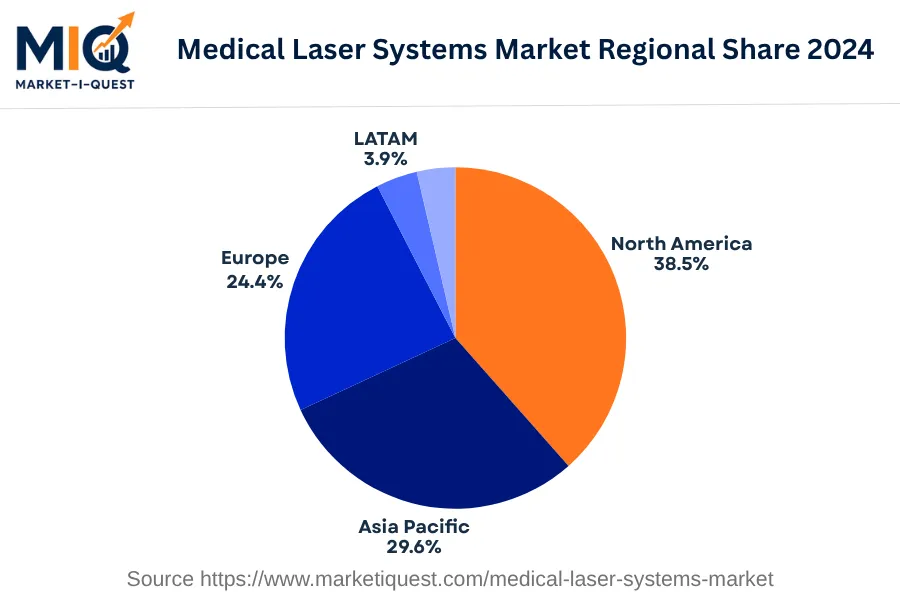
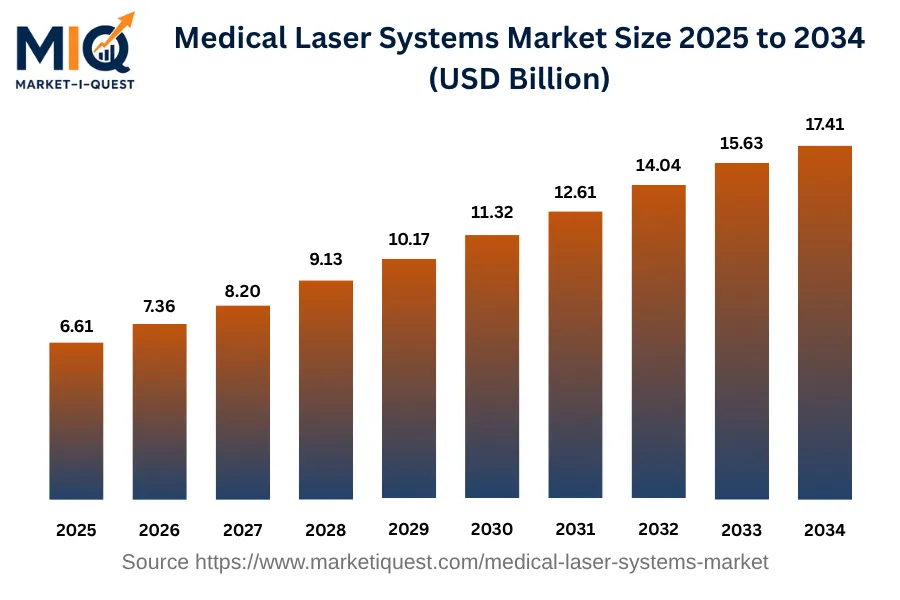
The Medical Laser Systems Market stood at USD 5.94 billion in 2024 and increased to USD 6.61 billion in 2025. By 2034, the market size is projected to reach USD 17.41 billion, growing at a CAGR of 11.35%. This rural surge from 2025 to 2034 is attributed, in part, to continual advancements in technology and the increased demand in medical procedures requiring such systems over the course of approximately a decade. In terms of regional share in 2024, North America accounted for 38.5%, followed by Asia Pacific amounting to 29.6%. Europe made up 24.4% of the market, while Latin America and the Middle East & Africa held smaller shares, with 3.9% and 3.6% respectively. These shares reflect the distribution of the Medical Laser Systems Market in that year across these regions.

Key Takeaways

  • By Product - Diode Lasers held the leading position in the Medical Laser Systems Market.
  • By Application - Dermatology led the market with a significant market share.
medical-laser-systems-market market size

Key Driving Factors

Increasing Adoption of Minimally Invasive Procedures

Medical practitioners are increasingly shifting towards minimally invasive procedures that represent lower risk and faster recovery times for patients. Medical laser systems allow for precisely targeted treatments, reducing potential harm to surrounding tissue. As a result, specialty branches like dermatology, urology, and ophthalmology are increasing their use of these systems. This shift in clinical practice is driving significant demand in the medical laser systems market. An example is the procedure of laser-assisted in situ keratomileusis (LASIK) which corrects vision and reduces or eliminates the necessity for glasses or contact lenses.

Enforcement of Stringent Regulatory Standards

Global regulatory bodies such as the FDA and European Medical Device Regulation (MDR) mandate rigorous safety testing and quality assurance for medical laser systems. This necessity ensures that these devices are effective and patient-friendly, driving manufacturers to design and produce high-quality, certified laser systems. The FDA, for instance, requires that these systems meet specific safety standards in order to obtain market approval. Across international markets, manufacturers striving to maintain compliance with such stringent regulatory standards hence contribute to the overall dynamics and growth of the medical laser systems market.

Market Evolution by Timeline

2019-2023
During 2019-2023, hospitals and dermatology clinics emerged as primary buyers of medical laser systems in regions such as North America, Europe and Asia due to increased cases of skin disorders and eye conditions. In terms of supply, Class 4 laser systems which encompass high-power lasers used in surgeries were prevalent. Integrations of medical lasers systems into ambulatory surgical centers was in infancy stages. One key constraint was the high costs associated with the acquisition of these systems. Pricing trend was heavily inclined towards leasing models due to high upfront costs. Risks were tied to stringent FDA regulations for market approval, potentially slowing adoption rates.
2024
In 2024, aging populations and the rise in chronic diseases such as diabetes and obesity in high-income economies amplified the demand for medical laser systems. On supply side, manufacturers like MedX Health Corp. and IRIDEX Corporation launched advanced laser systems allowing better integration. However, development and adoption faced constraints, namely ongoing need for staff training. Perceived risks largely revolved around potential patient harm from undertrained staff. Policy-wise, the European Standard EN 207 relating to laser safety impacted the adoption practices in European countries.
2025-2029
During 2025-2029, demand increased centrally in lower-income countries as focus shifted to affordable healthcare solutions. Reducing costs of components and improved logistics enabled suppliers to lower prices, favouring adoption in such regions. Uptake significantly increased as these systems were integrated into larger digital health ecosystems. Partnerships with training institutions became common as manufacturers sought to address system-usage competence gap. Practically, risks arose from potential errors in calibration of these systems, addressed through increased calls for rigorous repair and maintenance schedules. In response to growing cybersecurity threats, ISO/IEC 27001:2013 was introduced, demanding higher security from these laser systems.
2030-2034
Lastly, the period 2030-2034 saw a conjoint rise in demand for medical laser systems among both health institutions and personal users. This was driven by the increased prevalence of home-based treatments for conditions such as arthritis and other chronic ailments. The supply side was dominated by miniature laser systems that boasted mobile compatibility. Constraints involved energy consumption of these latter devices. Governments instituted incentives for energy-efficient medical devices, encouraging wider adoption. Contractual agreements between suppliers and buyers transitioned to monthly subscription models, making these systems more accessible. Risks pivoted towards potential misuse by untrained personal users, prompting greater calls for over-the-counter regulations.

Future Market Outlook

Future Opportunities

As the medical laser systems market evolves, several future opportunities are emerging driven by current technological advancements and market trends. The continuous integration of artificial intelligence is anticipated to enhance the efficacy of laser systems; a 2023 study by the National Institutes of Health detailed AI's role in optimizing treatment applications across various laser technologies. In particular, this integration could lead to improved precision in targeting tissues, enabling better patient outcomes. Furthermore, advancements in photonics technology are paving the way for more versatile laser platforms, expanding their utility in surgery and aesthetic medicine. For instance, in 2022, researchers at Stanford University developed a novel laser technique aimed at non-invasive tumor removal, indicating a shift toward less invasive procedures. As regulations evolve, new opportunities for international market expansion arise, particularly in Asia-Pacific regions, where rising healthcare expenditures are present. The physicians' increasing focus on personalized medicine reinforces the demand for tailored laser treatments. Between 2021 and 2023, many hospitals across Europe began to adopt niche laser treatments that cater to individual patient needs, reflecting a directional shift towards customization. Increased emphasis on educating healthcare providers about laser technologies will further support market growth, as highlighted by the launch of specialized training programs initiated by laser device manufacturers in 2023 aimed at improving procedural knowledge and skills.

Segmentation Analysis

By Product

The market is divided into subsegments including Diode Lasers, Solid State Lasers, Gas Lasers, and Dye Lasers. Diode Lasers accounted for the largest revenue share while Dye Lasers are expected to grow at the fastest CAGR during the forecast period.

Largest Revenue Share

Diode Lasers

Market Share Leader

Diode Lasers command the largest piece of the pie in the laser products market, primarily due to their widespread usage across numerous industry applications. Their comparative cost-effectiveness, high efficiency, and prolonged durability make them a preferred choice for customers across sectors, including manufacturing, medical, telecommunications, and research. Additionally, geographical factors also contribute to the high revenue of Diode Lasers. Regions with a high concentration of technologically advanced sectors like North America and Asia Pacific show a substantial demand for Diode Lasers. Moreover, robust supply chain networks for Diode Lasers further facilitate sales, thereby increasing their revenue share. However, it's important to note that strict regulations in some regions might represent a barrier to sales, which impacts market dynamics. Other influencing factors include customer purchasing criteria, such as consistency, ease of use, and after-sales support, and switching costs related to the replacement of existing laser systems with more advanced alternatives.

Fastest CAGR

Dye Lasers

Forecast Period Growth Leader

Although Dye Lasers do not currently hold the majority market share, they are forecasted to be the fastest-growing subsegment in the near future. Significant technological advancements are acting as catalysts for this projected growth. For instance, Reduced operating costs and the introduction of more sophisticated dye laser systems are increasing their attractiveness to prospective buyers. Additionally, evolving purchasing habits with a bias towards environmentally friendly, energy-efficient products are likely to favor the adoption of Dye Lasers. On a different note, strategic partnerships between manufacturing firms and research institutions are accelerating the development and commercialization of Dye Lasers. However, a potential hurdle may be the high initial CapEx required, as well as policy-related uncertainties in the global regulatory landscape. Despite these challenges, given the positive growth drivers, Dye Lasers, are predicted to experience rapid uptake in the forthcoming years.

By Application

The market is divided into subsegments including Dermatology, Ophthalmology, Gynecology, Urology, Dentistry, ENT, and Others. Among these, Dermatology accounted for the largest revenue share while Gynecology is anticipated to grow at the fastest CAGR during the forecast period.

Largest Revenue Share

Dermatology

Market Share Leader

Dermatology dominates the market revenue due to the increased prevalence of various skin conditions globally, from common ones such as acne to chronic conditions such as psoriasis. The growing awareness, prompted by social media and other digital platforms, about the importance of skincare and routine check-ups leads to increased consultations and treatments, thereby driving market revenue. Moreover, advances in dermatological procedures, expansion in treatment options, and a high rate of insurance coverage for dermatology-related procedures contribute to the revenue. Developed regions with strong healthcare infrastructure and high disposable income, such as North America and Europe, significantly contribute to this subsegment's revenue. Furthermore, the rise in dermatological research and the entry of innovative products are anticipated to sustain its position as the highest revenue contributor.

Fastest CAGR

Gynecology

Forecast Period Growth Leader

The Gynecology segment is expected to register the fastest growth. This is attributed to an increased focus on women's healthcare globally, advances in medical technology, and more women visiting gynecologists regularly as part of preventive healthcare. Moreover, strategic partnerships between healthcare providers and technological companies have opened new avenues for digitization and virtual consultations, broadening services reach. Policies enhancing women's access to healthcare and the adoption of necessary services are also stimulating growth. Capital investment in research and development of women-centric health products is noteworthy. However, certain risks such as resistance towards new technologies in underdeveloped regions and potential data security issues in digital services may present near-term hurdles. Nonetheless, continued technological advancements and increased healthcare spending are expected to propel this segment's growth.

Competitive Analysis

Key Market Players

Manufacturers / OEMs

Lumenis Ltd.
Israel
BIOLASE, Inc.
US
Cynosure, LLC.
US

Key Suppliers & Raw Materials

Coherent, Inc.
US
Alma Lasers, LTD
Israel
IPG Photonics Corporation
US

Distributors, Integrators & Channel Partners

LASERVISION USA
US
Medelco Inc.
Canada
FOBA Laser Marking + Engraving
Germany

Porter’s Five Forces Analysis

This analysis explores the competitive landscape of the Medical Laser Systems Market.

Supplier Bargaining Power

Medium

Limited number of suppliers leads to moderate power, offset by strong competition between them.

Buyer Bargaining Power

High

Buyers have high bargaining power due to availability of multiple vendors and low switching costs.

Threat of Substitutes

Low

Low threat due to the specific and precision nature of medical laser systems, hard to substitute.

Threat of New Entrants

Low

Significant capital expenditure (capex), technical expertise, and regulatory hurdles deter new entrants.

Competitive Rivalry

High

Numerous existing competitors and constant technological advances fuel fierce market competition.

Regional Analysis

Geographic market dynamics and growth opportunities across key regions

Global Market Outlook

medical-laser-systems-market market regional share

North America

In 2024, the North American market for medical laser systems witnessed significant investment and growth. Drivers for this market expansion included increasing prevalence of chronic diseases such as cancer and vision disorders, rising demand for minimally invasive procedures, and advancements in technology. Regulation-wise, positive FDA policies around the use of medical lasers served to further bolster market growth. Additionally, shifts in supply dynamics proved influential, with cheaper semiconductor lasers broadening market accessibility.

In terms of trends, consumer preference moved in favor of technologically advanced medical laser systems. Adoption of lightweight and portable devices spiked, indicating a clear shift in buyer behavior. On the channel front, digital sales stood out, with healthcare institutions increasingly purchasing systems online to streamline procurement. Changes were also observed in the landscape of partnerships and M&As; major industry participants like Coherent, Lumenis, and Candela consolidated their positions via strategic partnerships to expand product offerings. Finally, rigid policy enforcement took central-stage, driving industry standards and maintaining market uniformity. In 2024, the key customers for these systems included healthcare institutions, government agencies, and enterprise organizations carrying out medical research. In particular, the high prevalence of derma-related diseases propelled the use of medical laser systems in dermatology clinics and other skincare establishments. Market progression was thus significantly driven by the healthcare sector's uptake and integration of these advanced medical devices.

Asia Pacific

In 2024, the Asia Pacific medical laser systems market recorded significant growth, notably stimulated by factors such as wider healthcare sector investment, progressive regulatory outlook, and advancing technology adoption. Greater emphasis on minimally invasive surgeries across countries like China, India, and Japan resulted in a more considerable demand for medical laser systems, whereas favourable healthcare policies, such as China's "Healthy China 2030," encouraged investment inflow into the market. The local production scale touched a new high, with South Korean, Australian, and key ASEAN markets considerably contributing, given their technological advancements and lowering production costs.

Noticeably, customer preference shifts to technologically sophisticated, user-friendly systems influenced the market dynamics. Providers resorted to technological enhancements and strategic partnerships, as seen with Canon's approach in Japan, to cater to this evolved buyer behavior. However, the increased use of e-commerce platforms for procuring medical laser systems marked a significant trend within distribution channels throughout the year. Moreover, stringent rules on product standardization reinforced quality measures, with governments in regions like India setting more rigorous policy enforcement to safeguard patient safety. These 2024 dynamics signified a transitioning phase for the medical laser systems market across the Asia Pacific, dominated by innovation-driven competition and guided by customer satisfaction and policy regulations.

Europe

In 2024, the Medical Laser Systems Market in Europe witnessed substantial growth. The expansion is notably attributed to an increase in demand due to escalating occurrences of chronic diseases, advancements in medical technology, the enforcement of stringent regulations for manufacturing processes, and widespread adoption of minimally invasive therapies. Notably, Germany led with significant investment in high-tech surgical lasers, owing to its robust healthcare infrastructure. Market trends predominantly center around patient safety and enhanced surgical outcomes. A discernible shift towards non-invasive laser surgeries has been observed in Italy and Spain for dermatological issues and eye disorders. The UK showed innovative strides in collaborations, such as partnerships between hospitals and laser manufacturers aimed at improving patient access to advanced laser treatments. Importantly, France mandated the use of stricter safety regulations on laser manufacturing, reflecting policy enforcement that upholds patient safety.

The majority of customers in this market are from the healthcare sector, with demand for Medical Laser Systems across various disciplines including dermatology, ophthalmology, cardiology, and dentistry. Demand from utility companies remained stable due to long-standing contracts that cater to maintenance and repair of medical laser equipment. Meanwhile, certain manufacturers in Central & Eastern Europe have begun exploring alternative supply dynamics to secure raw materials, thereby ensuring uninterrupted production.

Latin America

In 2024, the Medical Laser Systems Market in Latin America showed significant growth due to various factors. Enhanced government spending in healthcare systems across countries like Brazil, Mexico, Argentina, Colombia, Chile, and Peru, was a major driver of the increase in demand for advanced medical technologies. Additionally, efforts for modernization in urban healthcare facilities boosted the adoption of medical laser systems in the region. Rising incidence of chronic conditions, requiring less invasive surgical procedures, also played into the escalated demand.

Shifts in buyers' behavior were observed as hospitals and clinics, the primary customers, leaned towards healthcare technology and innovation. This trend was particularly evident in Brazil and Argentina, where urbanization fueled technological transitions in healthcare services. A significant trend was seen in product development, with a considerable number of manufacturers focusing on introducing medical laser systems suited to specific medical procedures in eye care and dermatology. A meaningful trend in strategic partnerships and mergers was evident, allowing better market penetration, particularly in Colombia and Chile. To ensure standardized usage and patient safety, various countries reinforced policies regarding the operation and maintenance of these laser systems, influencing the overall market dynamics across the region.

Middle East & Africa

In 2024, the Medical Laser Systems Market in the Middle East and Africa experienced significant growth driven by various factors and reflected distinct trends. HEIGHTENED DEMAND from the healthcare sector, thriving on the region's continuous investment in advanced medical technologies, acted as a key growth driver. With countries like Saudi Arabia, United Arab Emirates, and Nigeria investing in the expansion of their healthcare services, demand for these systems soared. REGULATORY BACKING, particularly in Israel and South Africa, supported the adoption of medical laser systems, stimulating the market further. Moreover, INNOVATIVE TECHNOLOGY like fiber lasers was adopted at an accelerated rate, especially in Egypt and Kenya, feeding the market upswing.

Buyer behavior indicated an INCREASED PREFERENCE FOR NON-INVASIVE TREATMENTS, and medical laser systems catered to this trend effectively. A significant shift was noticed towards use of AESTHETIC LASER SYSTEMS, particularly in affluent nations like Qatar and UAE. PARTNERSHIP BETWEEN LOCAL AND INTERNATIONAL PLAYERS marked another evolution in this domain, aiming to facilitate technology transfer. The Israeli Health Ministry's POLICY ENFORCEMENT on safe use of medical laser systems grew stricter, impacting procurement practices. Conclusively, increased demand, regulatory support, and the adoption of new technologies drove the market, while shifting buyer preferences, the rise of aesthetic laser systems, and regulatory enforcement dictated market trends.

Recent Industry Developments

Latest market innovations, product launches, and strategic initiatives

March 2026 —

Potent Medical entered into a strategic partnership with Dornier MedTech, designating Dornier as its exclusive distributor across Europe, the Americas, and Asia-Pacific for its Holmium:YAG laser and Thulium Fiber Laser solutions.

January 2026

NUBURU, through its wholly-owned subsidiary, completed the acquisition of Italian laser manufacturer Lyocon Srl, whose products are widely used in biomedical applications.

Frequently Asked Questions