
Medical Imaging Workstations Market Snapshot

Key Players

  • Agfa-Gevaert Group (Belgium)
  • Canon Medical Systems Corporation (Japan)
  • GE Healthcare (US)
  • Carl Zeiss Meditec AG (Germany)
  • Koninklijke Philips N.V. (Netherlands)
  • Hologic Inc. (US)
  • Siemens Healthineers AG (Germany)
  • Esaote SpA (Italy)
  • Fujifilm Holdings Corporation (Japan)
  • Carestream Health (US)

Market Size

Base Year 2024
$6.84 Bn
CAGR
7.45%
Forecast 2034
$14.03 Bn

Market Segments

By Type
Modality Specific Workstations, Multi-Modality Workstations, Cloud-Based Workstations
By Deployment
On-Premises, Cloud-Based
By Application
Radiology, Cardiology, Oncology, Orthopedics, Others
By End Use
Hospitals, Diagnostic Imaging Centers, Research Institutions

Market Dynamics

Drivers
  • Rising prevalence of chronic diseases
  • Rapid technological advancements
Restraints
  • High equipment costs
  • Regulatory compliance challenges
Opportunities
  • Growing healthcare infrastructure
  • Increasing chronic disease prevalence

Market Size

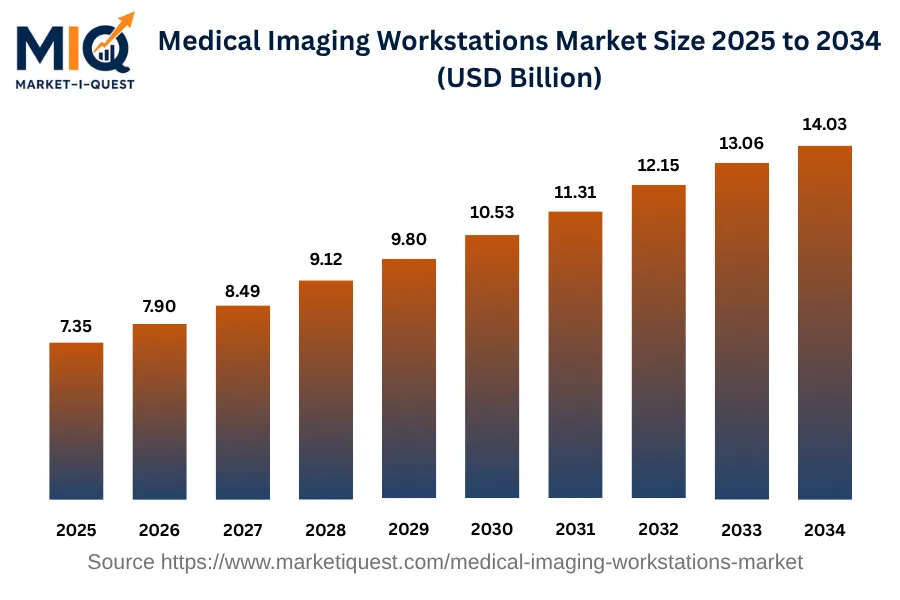
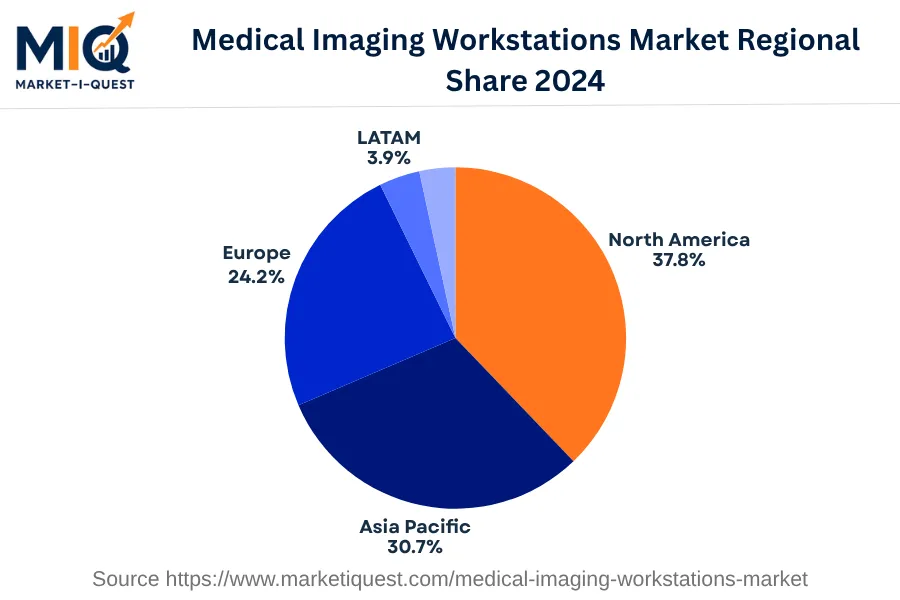
The Medical Imaging Workstations Market was valued at USD 6.84 billion in 2024 and increased to USD 7.35 billion by 2025, growing at a CAGR of 7.45%. By 2034, the market size is projected to further grow to USD 14.03 billion. From 2025 to 2034, the market experienced monetary growth due to advances in technology, which made medical imaging workstations more precise and reliable, hence, more widely accepted and used in the medical industry. Additionally, demand for such technology increased due to its critical role in diagnosing and treating a wide range of medical conditions. In terms of regional shares in 2024, North America accounted for 37.8% of the market share, closely followed by the Asia Pacific region with 30.7% share. Europe held 24.2% of the market, while Latin America and the Middle East and Africa (MEA) held less significant shares in the market, at 3.9% and 3.4% respectively.

Key Takeaways

  • By Type - Multi-Modality Workstations held a significant share in the Medical Imaging Workstations Market.
  • By Deployment - On-Premises experienced substantial growth.
  • By Application - Oncology dominated the market with a significant presence.
  • By End Use - Hospitals led the market in terms of demand for Medical Imaging Workstations.
medical-imaging-workstations-market market size

Key Driving Factors

Imposition of Mandates for Use of Electronic Medical Records (EMRs)

The introduction and implementation of health technology legislation worldwide, such as the Health Information Technology for Economic and Clinical Health (HITECH) Act in the United States, are compelling healthcare providers to adopt digital platforms for record-keeping. These legal mandates require the transition from traditional paper-based patient record management to Electronic Medical Records (EMRs), which necessitate the digitalization and better organization of medical imaging results. Medical imaging workstations, which provide digital storage, easy access, and advanced visualization capabilities for medical images, are a critical technology in compliance with these regulations. Physicians and medical institutions are driving the uptake of these workstations to streamline the process of integrating imaging data into EMRs, accelerating patient diagnosis and treatment, and ensuring legislative compliance.
Increasing Prevalence of Chronic Diseases

The increasing prevalence of chronic illnesses such as heart disease and cancer across the globe is fueling the necessity for advanced diagnostic capabilities. Medical imaging workstations, with their capacity to handle complex imaging tasks associated with these conditions, are integral to disease diagnosis, monitoring, and treatment evaluation. The precision and detail possible with these workstations support healthcare professionals in making informed and accurate clinical decisions while encountering a rise in patients with chronic conditions. As the patient population with these long-term diseases continues to grow, the need for advanced, reliable imaging workstations in hospitals, specialized clinics, and diagnostic centers accordingly ratchets up, driving growth in the medical imaging workstations market.

Market Evolution by Timeline

2019-2023
During 2019 to 2023, hospitals were the main buyers in the medical imaging workstations market, driven specifically by the demand for advanced diagnostic solutions. Predominantly, the adoption rate was higher in North American and European regions considering their technological preparedness and medical infrastructure. Regarding supply, vendors began to integrate AI technologies into workstations to facilitate more accurate readings. However, this posed an adoption constraint due to the complexity of these solutions. Clear regulation on data privacy and confidentiality became integral in this phase, guided by concerns related to patient data. Transparency and ease of use primarily shaped the commercial model with vendors providing training for complex systems. Risk management involved rapidly adjusting to tech complexities and the changing regulatory landscape.
2024
In 2024, the market experienced a surge in demand from diagnostic centers apart from hospitals. Workstation vendors worked on optimizing the integration of machine learning technologies, which, though complex, became a norm in this year. North America remained the dominant adopter. Standardization of patient data management became more stringent, influenced by incidents of data breaches. Commercial models started focusing on customization, letting clients choose specific features suiting their needs. The risk of operating in a less familiar ecosystem of diagnostic centers posed a challenge, but populous countries like China and India emerged as new potential markets largely untapped by workstation vendors.
2025-2029
The period 2025–2029 witnessed a wider adoption of workstations by private practices and small clinics, especially in Asia and Africa. These regions were driven by government initiatives promoting better healthcare infrastructure. As the technology matured, the AI integration became more seamless and easy to use. AI ethics and non-bias were the regulatory focus, and audits became common. Subscription-based models gained prominence due to cost-effectiveness and scale versatility. The ample market opportunity came with the risk of an intensely competitive landscape with both global and local vendors
2030-2034
In 2030 to 2034, the market saw demand from emerging sectors like veterinary practices, signifying a diversified user base spanning continents. AI became a basic feature of almost every shipped workstation, and regulations were rigidly compliant with AI ethics. Transparency in algorithm functioning became a priority. The transition to usage-based commercial models occurred as it provided maximum value. Analyzing buyer needs across varied sectors and adapting accordingly emerged as the primary risk and challenge. Demand was still highest in North America, but Asia and Africa were major markets in terms of growth rate.

Future Market Outlook

Future Opportunities

The medical imaging workstations market presents diverse opportunities driven by ongoing technological advancements and regulatory developments. The FDA's evolving recognition of advanced therapeutic radiology, as of April 2023, aligns with the increasing integration of machine learning algorithms into imaging tools. Companies like Canon Medical Systems are already exploring machine learning solutions to improve diagnostic accuracy, indicating a potential increase in demand for AI-enhanced imaging capabilities. Moreover, as remote healthcare continues to gain traction, there are further opportunities for developing telehealth capabilities within imaging workstations. The partnership between Royal Philips and Oracle, announced in January 2023, aims to enhance telehealth services, showcasing the increasing focus on remote imaging and diagnostics. Additionally, diverse data standards such as DICOM and FHIR, emphasized by the International Organization for Standardization in 2022, pave the way for better interoperability among devices. Countries like Japan, which was recognized for its advanced adoption of health IT, can serve as benchmarks for implementing comprehensive imaging systems. Furthermore, the trend towards personalized medicine, supported by regulations focusing on individualized therapies, offers pathways for evolving imaging technologies tailored to specific patient needs. Overall, the confluence of regulatory focus and technological progression positions the medical imaging workstations market for significant opportunities in accessibility, functionality, and patient care improvement.

Segmentation Analysis

By Type

The market is divided into subsegments including Modality Specific Workstations, Multi-Modality Workstations, and Cloud-Based Workstations. Multi-Modality Workstations account for the largest revenue share while Cloud-Based Workstations are expected to grow at the fastest Compound Annual Growth Rate (CAGR) during the forecast period.

Largest Revenue Share

Multi-Modality Workstations

Market Share Leader

Multi-Modality Workstations is the subsegment with the highest revenue largely due to its ability to handle various kinds of modalities, giving it a versatile function that serves a broader range of customer needs. The ability to interpret and combine images from multiple sources provides clinicians with a comprehensive picture for diagnosis, driving demand. Geographically, developed markets generated a higher share of their revenue due to greater adoption rates and more mature healthcare infrastructure. Regulatory and supply factors also played a key role, with favorable policies regarding medical technology boosting the segment's growth. The purchasing criteria revolve around product usability, compatibility with various modalities, and offerings of enhanced features. The high switching costs attached to adopting new technology serve as a deterrent to customer churn. Distribution is usually carried out through direct sales channels or via partnerships with healthcare institutions.

Fastest CAGR

Cloud-Based Workstations

Forecast Period Growth Leader

Cloud-Based Workstations are anticipated to show the fastest growth due to the increasing adoption of cloud technology across all sectors, including healthcare. Despite initial adoption barriers like security concerns and initial setup costs, a variety of catalysts are driving growth. Technological advancements in the field of data security combined with falling costs of cloud computing services are increasingly making it an attractive option. More importantly, cloud-based solutions offer healthcare professionals flexible and remote access to medical data, which aligns with the growing trend toward remote healthcare services. Furthermore, the scalability it offers allows facilities of all sizes to adopt the technology as per their need, fostering growth. In the near term, partnership with cloud service providers and investments in cloud technology in the healthcare sector can serve as significant growth opportunities. However, data privacy concerns and regulatory hurdles could pose challenges to the predicted growth rate.

By Deployment

The market is divided into subsegments including On-Premises and Cloud-Based deployment. In 2024, On-Premises accounted for the largest revenue share while Cloud-Based is expected to grow at the fastest CAGR during the forecast period.

Largest Revenue Share

On-Premises

Market Share Leader

The on-premises subsegment was the leading revenue generator in 2024 due to numerous factors. First and foremost, organizations, particularly those in sectors with stringent data protection regulations such as finance and healthcare, preferred on-premise deployments due to the level of security and control they offer. On-premises solutions ensure that highly sensitive data is securely stored within organisational boundaries, which significantly reduces the risk of data breaches. Moreover, businesses might have significant investment in on-premises infrastructure, making a switch to cloud-based solutions costly and complex. Furthermore, many businesses prefer on-premises deployment as it provides better control over system updates, customization, and system integrations. Geographically, developed regions, particularly North America and Europe, continue to be significant revenue contributors due to large enterprise preference for on-premises solutions.

Fastest CAGR

Cloud-Based

Forecast Period Growth Leader

Despite On-Premises holding the largest share initially, the Cloud-Based subsegment is expected to experience the highest growth. This is driven by small and medium-sized enterprises' rapid adoption of cloud computing services. These businesses are attracted by the scalability, cost-effectiveness, and easy access offered by the cloud. Furthermore, technological advancements such as Big Data, the Internet of Things, and artificial intelligence have increased the demand for cloud-based deployment. Ongoing investments in IT Infrastructure by companies in regions such as Asia-Pacific and Latin America have also been a catalyst for growth. However, certain challenges could slow growth, like security concerns, especially in highly regulated industries. Therefore, service providers' efforts to enhance cloud security and promote strong encryption measures are crucial to the subsegment's future growth.

By Application

The market is divided into subsegments including Radiology, Cardiology, Oncology, Orthopedics, and Others. In 2024, Oncology accounted for the largest revenue share while Cardiology is expected to grow at the fastest CAGR during the forecast period.

Largest Revenue Share

Oncology

Market Share Leader

Oncology, as an application, accounted for the highest market revenue in 2024. The surge in the prevalence of cancer cases globally has escalated diagnosis and treatment rates, thereby driving the demand in the oncology segment. Besides, advancements in technological innovation have permitted more precise, timely, and early detection of various cancer forms, significantly contributing to the segment's growth. Geographically, dominant economies with a higher burden of cancer like North America, parts of Europe, and developed Asian countries have spurred this demand further. Government-led initiatives on cancer awareness and stringent regulatory policies about early detection have boosted screenings, leading to increased usage of medical solutions in oncology. Moreover, a greater investment by hospitals in advanced radiology equipment focusing on cancer diagnosis is another driver pushing oncology to the forefront of revenue generation.

Fastest CAGR

Cardiology

Forecast Period Growth Leader

The Cardiology subsegment is expected to exhibit the fastest growth. This can be ascribed to several factors including the rising prevalence of cardiovascular disorders, increase in the elderly population, and lifestyle changes promoting cardiac ailments. Innovations in diagnostic technology, such as the advent of portable and less invasive devices, are driving the adoption of cardiovascular medical devices, fostering the cardiology segment's growth. The ever-increasing healthcare expenditure and investments in research and development in sectors like biomedical imaging and radiology tools for cardiovascular diseases also act as catalysts. There can be adoption barriers in terms of costs and accessibility, especially in poorer economies. New policy changes promoting preventive care, collaborations amongst device manufacturers for tech advancements, will further aid the growth. Conversely, regulatory risks due to the stringent approval processes for new devices pose a near-term risk that could slow down the expected growth rate.

By End Use

The market is divided into subsegments including Hospitals, Diagnostic Imaging Centers, and Research Institutions. In 2024, Hospitals accounted for the largest revenue share while Diagnostic Imaging Centers are expected to grow at the fastest CAGR during the forecast period.

Largest Revenue Share

Hospitals

Market Share Leader

Hospitals, being pivotal to the healthcare ecosystem, generate immense demand for high-quality diagnostic and treatment solutions. Given the range and volume of procedures conducted, hospitals often reserve extensive budgets for acquiring, updating, and maintaining reliable medical and diagnostic equipment. To ensure quick and accurate diagnosis, they invest in advanced technologies, thus contributing significantly to the sector's revenue. Moreover, escalating healthcare expenditure, improving healthcare infrastructure, and the push to optimize patient outcomes further accelerate this demand. Geographically, developed nations with robust healthcare systems and emerging economies prioritizing healthcare improvements add to this revenue stream. Additionally, regulations mandating specific equipment standards can drive hospitals to purchase new devices regularly. Another factor is the low switching costs due to the constant need for upgraded technology and reducing misdiagnosis. Their purchasing criteria often involve quality, accuracy, and speed of diagnosis, longevity of equipment, and vendor support.

Fastest CAGR

Diagnostic Imaging Centers

Forecast Period Growth Leader

Diagnostic Imaging Centers are charting the fastest growth trajectory, driven primarily by increasing preferential shift towards these clinics for enhanced patient comfort and quicker results. Their specialised focus on imaging gives them an edge in terms of technology adoption and process efficiency. Moreover, breakthroughs in imaging technologies and software have revolutionized the diagnostic landscape, stimulating the demand and adoption in these dedicated centers. Furthermore, capital investments in advanced imaging modalities and collaborations with technology providers for regular upgrades play a crucial role in driving growth. However, high initial investment and maintenance expenses represent a barrier for smaller and newly established centers. Near-term risks include regulatory changes around usage and disposal of imaging devices and radioisotopes, and need for continuous technical upgradation to stay competitive. Strategic partnerships and technology leasing offer actionable routes to overcome these challenges.

Competitive Analysis

Key Market Players

Manufacturers / OEMs

General Electric Company
US
Koninklijke Philips N.V.
Netherlands
Siemens Healthineers
Germany

Key Suppliers & Raw Materials

Barco NV
Belgium
EIZO Corporation
Japan
Sony Corporation
Japan

Distributors, Integrators & Channel Partners

Alliance Medical
UK
Canon Medical Systems Corporation
Japan
Hitachi Medical Systems America, Inc.
US

Porter’s Five Forces Analysis

This analysis evaluates the competitive scenario within the Medical Imaging Workstations Market.

Supplier Bargaining Power

Medium

Suppliers have moderate leverage due to the specialized technology and intellectual property involved.

Buyer Bargaining Power

Low

Given the high complexity and implementation costs, buyers have limited bargaining power.

Threat of Substitutes

Low

Few substitutes exist due to strict quality and performance requirements.

Threat of New Entrants

Low

High entry barriers exist due to regulatory compliance, high R&D expenses, and technical expertise.

Competitive Rivalry

High

Major players engage in intense competition to innovate and secure market share.

Regional Analysis

Geographic market dynamics and growth opportunities across key regions

Global Market Outlook

medical-imaging-workstations-market market regional share

North America

In the base year of 2024, the North American Medical Imaging Workstations market was characterized by a rising demand for advanced imaging technologies in healthcare facilities across the U.S., Canada, and Mexico. Increased spending on healthcare infrastructure, coupled with advancements in imaging technologies, drove market growth. The high prevalence of chronic diseases necessitated diagnostics, thereby stimulating the demand for medical imaging workstations. Governments in the region provided funding and regulatory support for the adoption of these workstations in healthcare facilities, amplifying market dynamics.

In terms of trends, the market witnessed a surge in the use of Artificial Intelligence (AI) applications for diagnostics and treatment planning. Mobile workstations gained traction due to their flexibility and convenience, especially in the wake of remote healthcare services. Agreements, collaborations and merger & acquisition activities characterized market competition as firms sought to expand their presence or introduce innovative solutions. Notably, the enterprise sector emerged as a significant stakeholder. Large-scale hospitals and medical institutions opted for these workstations for improved services. However, utilities such as radiology clinics also contributed to the demand, given the rise in outpatient imaging centers. Additionally, government healthcare facilities and some manufacturing industries showed interest due to the increased focus on employee health and safety. Throughout North America, the expansion of the medical imaging workstations market is mirroring the advancements in medicine and healthcare technology.

Asia Pacific

In 2024, the Asia Pacific Medical Imaging Workstations Market is robust, fueled by multiple drivers and shaped by emerging trends. Increased healthcare expenditures in countries like China and India, combined with high demand due to a growing elderly population, notably in Japan and South Korea, are among the key stimulants for the market. The brisk adoption of cutting-edge technology in imaging workstations and heavy government investments into healthcare infrastructures across these countries are enhancing the supply dynamics. However, high costs linked to advanced imaging workstations pose a strong countervailing force.

Aligned with these drivers, trends in the Asia Pacific medical imaging workstation sphere feature diverse aspects. There's a shift towards ergonomically designed workstations, especially in Australia and key ASEAN markets, as buyer preferences lean towards user-friendly interfaces. A surge in partnerships and mergers among market players is evident, underscoring the pursuit of mutual growth strategies while consolidating industry standards. Policy enforcement, primarily around patient data security, is strengthening, with medical imaging vendors in markets like China being more vigilant about adherence to stringent regulations. Despite these trends, the sector continues to cater prominently to healthcare providers, bolstered by the rapid digitization wave inundating hospitals and care units throughout the region.

Europe

In 2024, the European market for medical imaging workstations was in high demand, particularly defined by activity within Germany, the United Kingdom, France, Italy, Spain, the Nordics, Benelux, and Central & Eastern Europe. Pivotal growth drivers included the increasing prevalence of chronic diseases, which amplified the need for accurate diagnostic tools. Regulatory bodies, like the European Medicines Agency, endorsed advancements in imaging technology, fostering a supportive climate for medical innovation. Investment in healthcare IT infrastructure strengthened the groundwork for these technologies, heartening suppliers. High-resolution imaging technologies, such as 4D imaging, were gaining popularity, expediting clinical outcomes and patient care.

Several trends emerged alongside these drivers. The shift towards non-invasive and remotely accessible imaging workstations became more pronounced due to pandemic-induced safety measures. AI-integrated imaging systems gained traction, as they increased diagnostic accuracy and cut down interpretation times. Moreover, strategic partnerships and acquisitions between imaging technology firms and healthcare providers were observed, aiming to enhance operational efficiency and collaborative advancement. Finally, strict enforcement of data protection laws urged vendors to incorporate robust security measures into their imaging workstations. Sectors heavily engaging with these workstations included healthcare facilities, research institutions, and pharmaceutical organizations.

Latin America

In the base year 2024, the medical imaging workstations market in Latin America (LATAM) exhibited substantial growth driven by several factors. Technology adoption was a pivotal driver, with Brazil and Mexico investing significantly in upgrading their imaging workstations to improve diagnostic accuracy, guided by the rising incidence of chronic diseases. Regulatory frameworks also spurred cancer screening programs across Argentina, enhancing the demand for advanced medical imaging workstations. Investments in healthcare infrastructure, particularly government-driven projects in Colombia and Chile, further broadened the market scope. An increase in public-private partnerships, specifically in the arena of diagnostic centers, underpinned market expansion. Simultaneously, affordable pricing strategies adopted by key players boosted the market growth in price-sensitive countries like Peru.

Trends in the LATAM region pointed towards a shift towards digital and portable workstations, largely fueled by the need for interoperability, data consolidation, and enhanced patient care in hospital settings. Notably, cloud-based imaging workstations gained traction, driven by demand for remote patient monitoring. The rise of teleradiology partnerships marked a significant trend, with cross-border collaborations proliferating for real-time image sharing. The healthcare sector, notably hospitals and diagnostics centers, remained the key customers, while the retail sector played an integral role in distributing imaging workstations. The enforcement of stringent accreditation standards across all LATAM countries fostered adherence to quality and safety measures in the deployment of these workstations.

Middle East & Africa

In 2024, the Medical Imaging Workstations Market in the Middle East and Africa stood poised for growth. Demand for efficient diagnostics was ecalating, driven notably in key economies like Saudi Arabia and South Africa, where burgeoning middle classes sought better healthcare services. Regulatory frameworks, particularly in the United Arab Emirates and Qatar, incentivized advancements in imaging technology, spurring investment and facilitating technology adoption. Subsidies in Israel bolstered the supply of imaging workstations, creating a favorable pricing environment.

Significant trends shaping the market included an inclination towards digitization of health records, observed particularly in Nigeria and Egypt, prompting a shift towards digital imaging workstations. Channel dynamics revealed a surge in online procurement in the healthcare sector, due to the convenience offered and a growing internet penetration. There was a noticeable emergence of cross-border collaborations, as companies like Kenya's Imaging Solutions partnered with international firms to increase their market reach. A wave of standardization swept across the region with respect to the quality and precision of imaging, as seen in the compliance policies in place in the South African and Saudi Arabian health sectors. This regional market, therefore, witnessed a dynamic interplay of these drivers and trends across its landscape in 2024.

Recent Industry Developments

Latest market innovations, product launches, and strategic initiatives

March 2026

GE HealthCare received FDA 510(k) clearance for View, a next-generation diagnostic viewer within the Genesis Radiology Workspace. Designed as a fast, zero‑footprint, cloud‑native viewer, it delivers 2D/3D visualization with AI‑enabled tools for remote diagnostic access.

November 2025

GE HealthCare completed the $2.3 billion all-cash acquisition of Intelerad, a medical imaging software company specializing in enterprise workflow solutions, extending its enterprise imaging capabilities into ambulatory settings and teleradiology.

Frequently Asked Questions