
Medical Imaging Reagents Market Snapshot

Key Players

  • Bracco Imaging S.p.A. (Italy)
  • Bayer AG (Germany)
  • GE Healthcare (US)
  • Jubilant Life Sciences (India)
  • Eli Lilly and Company (US)
  • Thermo Fisher Scientific Inc. (US)
  • Lantheus Medical Imaging Inc. (US)
  • Siemens Healthcare Private Limited (Germany)
  • Invicro LLC (US)
  • FujiFilm Holdings Corporation (Japan)

Market Size

Base Year 2024
$16.53 Bn
CAGR
6.98%
Forecast 2034
$32.46 Bn

Market Segments

By Class
  • Contrast Reagents
  • Optical Reagents
  • Nuclear Reagents
By Technology
  • Nanoparticles
  • Fluorescent Dyes & Probes
  • Radiopharmaceuticals
  • Fluorescent Proteins
  • Quantum Dots
By End Use
  • Diagnostics
  • Drug Discovery & Development
  • Educational Research

Market Dynamics

Drivers
  • Increasing prevalence of chronic diseases
  • Technological advancements in imaging techniques
Restraints
  • Regulatory approval challenges
  • High cost of development
Opportunities
  • Technological advancements in imaging
  • Rising prevalence of chronic diseases

Market Size

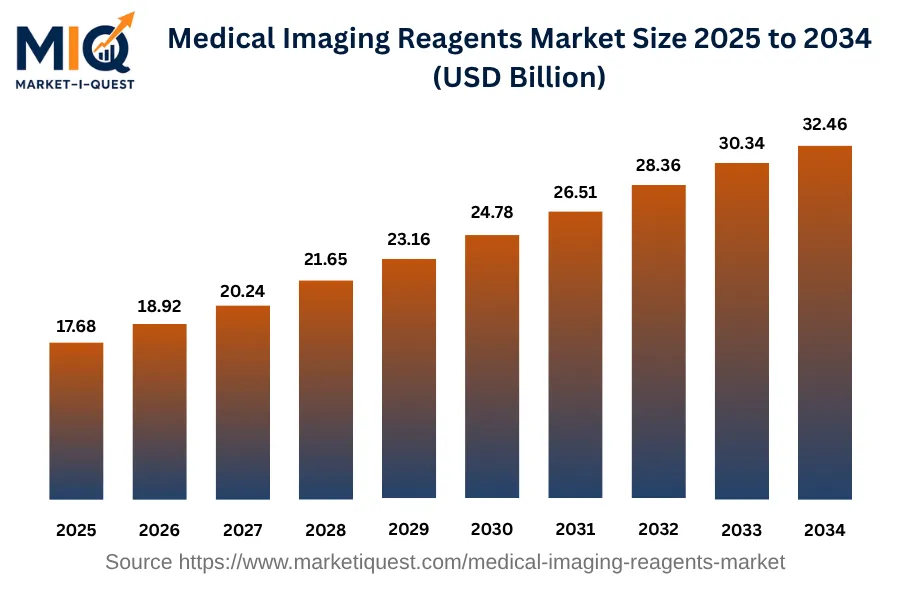
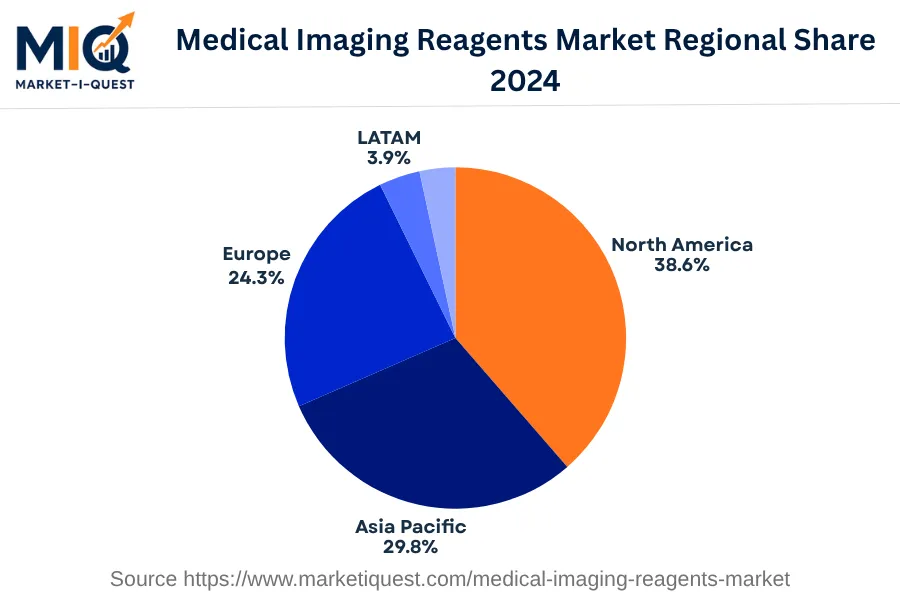
The Medical Imaging Reagents Market is anticipated to increase from USD 16.53 billion in 2024 to USD 17.68 billion in 2025 and further to a value of USD 32.46 billion by 2034, showcasing a CAGR of 6.98%. The substantial growth of the market over a span of 10 years from 2025 to 2034 can be attributed to advancements in technology, increased expenditure in the healthcare sector, and rising demand for personalized medicine. Further, the growing prevalence of chronic diseases and the expanding geriatric population requiring medical imaging procedures also contribute to the rising market size. Regarding the regional distribution of the market in 2024, North America holds the largest share at 38.62%, followed by Asia Pacific at 29.84%, Europe at 24.27%, Latin America contributing 3.89%, and the Middle East and Africa comprising 3.38% of the total market.

Key Takeaways

  • By Class - Contrast Reagents held the dominant position in the Medical Imaging Reagents Market.
  • By Technology - Radiopharmaceuticals emerged as the leading subsegment within the market.
  • By End Use - Drug Discovery & Development was the leading subsegments accounting for a significant market share.
medical-imaging-reagents-market market size

Key Driving Factors

Early Detection and Screening of Chronic Diseases

The surge observed in the medical imaging reagent market primarily leans on society's growing emphasis on preventive health care and the early detection of diseases, particularly chronic conditions. Chronic diseases like cancer, heart diseases, and diabetes show high prevalence rates globally, making early identification vital for effective treatment. Medical imaging reagents facilitate this process by offering real-time views of anatomic structures and their functioning, enabling healthcare professionals to make accurate diagnoses. As such, healthcare institutions are increasingly incorporating imaging reagents into their workflow, pushing the market's expansion. Furthermore, governments worldwide are supporting routine health screenings with initiatives and policies that enable widespread access, magnifying the demand for medical imaging reagents.
Transition towards Personalized Medicine

The shift towards personalized medicine is another pivotal driver pushing the medical imaging reagents market. Several sectors of healthcare, including oncology, neurology, and cardiology, are increasingly incorporating personalized treatment plans into their practices. This approach hinges on precise diagnoses and monitoring to tailor treatments to individual patient fingerprints. Medical imaging reagents play a pivotal role in this approach by offering high-resolution, highly specific images of structures and functionalities at a molecular level, which are essential for constructing treatment plans and monitoring progress. This inclination towards personalized medicine has a cascade effect on multiple allied sectors, encouraging continuous innovation and market expansion of medical imaging reagents to keep pace with evolving demands. Consequently, the burgeoning personalized medicine field actively propels the medical imaging reagents market.

Market Evolution by Timeline

2019-2023
During this period, demand for medical imaging reagents continued to surge particularly from hospitals and diagnostic centers seeking to enhance diagnostic precision for neurology and oncology disorders. North America and Europe remained dominant due to increased healthcare expenditures and well-established healthcare infrastructures. Main suppliers included Siemens Healthineers, GE Healthcare, and Bracco Imaging. Constraints revolved around limited innovation due to strict regulations and high research and development costs. Policymakers globally grappled with balancing healthcare regulations versus fostering technological innovation. Contracts commonly involved long-term partnerships with hospitals, with pricing models largely remaining volume-based. Risks were associated with misdiagnosis and potential adverse patient reactions which required robust safety tests and ethics approvals.
2024
In 2024, imaging reagent use in hospitals remained high, yet direct consumer sales started to rise as personalized healthcare and home diagnostics became more popular, driven by increased digital health tech sophistication. The Asia-Pacific saw surge in demand due to rising healthcare expenditures, predominantly in India and China. Integration of artificial intelligence in medical imaging software began with FDA approving Aidoc's AI-powered radiology solution. There emerged a notable shift towards 'pay-per-use' model, replacing the traditional volume-based. Risks became more technology-centered, with regulations lagging behind AI implementation causing concern about machine learning errors and data security.
2025-2029
Demand from direct consumers increased further with improved access to at-home imaging diagnostics and a greater emphasis on personalized healthcare. Suppliers diversified their offerings, with companies like Lantheus Medical Imaging venturing into theranostics - diagnostic therapy combo. While North America and Europe maintained dominant presence, parts of Africa such as Kenya and South Africa demonstrated interest due to improved healthcare infrastructure. Progress in AI and machine learning transparently impacted procurement models, with shifts towards AI-integrated solutions and digital adoption. Cybersecurity became more crucial for reagent suppliers as risks linked to data privacy and machine errors became more pronounced.
2030-2034
In this timeframe, it was typical for medical imaging reagents to be procured alongside AI software for integrated medical solutions. North America, Europe, and Asia-Pacific remained dominant with growing interests in Middle-Eastern countries like the United Arab Emirates. AI-enhanced imaging reagents became the norm, with increased clinical trials of AI-integrated imaging solutions, such as Subtle Medical's SubtlePET. Pricing dynamics continued shifting to subscription service from pay-per-use models, notably with larger health organizations. Risks surrounding data privacy remained high, calling for stronger cybersecurity measures and prudent policy updates.

Future Market Outlook

Future Opportunities

As the medical imaging reagents market evolves, multiple opportunities exist for growth driven by current technological advancements and regulatory changes. For instance, the U.S. FDA's ongoing initiatives, such as the Digital Health Innovation Action Plan launched in 2021, aim to fast-track the approval process for novel imaging agents that integrate digital tools. This presents a crucial opportunity for companies to expedite the entry of innovative reagents into the market. Moreover, in July 2023, the World Health Organization highlighted significantly increasing needs for accurate diagnostic tools in low-resource settings, positioning medical imaging reagents as a vital aspect of global health initiatives. Companies like Bracco Imaging are actively exploring partnerships with non-profit organizations to address healthcare disparities in regions like Sub-Saharan Africa through the provision of accessible imaging solutions. In Australia, the Health Department's initiative in 2022 to enhance telehealth services has generated interest in remote imaging techniques that require reliable imaging reagents. Consequently, businesses that focus on creating cost-effective and versatile reagents could see heightened demand in various healthcare settings. Furthermore, as the global population ages, organizations must address the increasing diagnostic requirements of geriatric patients. Addressing these unmet needs presents immense potential for companies focused on developing reagents tailored to age-related conditions such as Alzheimer's disease and osteoporosis.

Segmentation Analysis

By Class

The market is divided into subsegments including Contrast Reagents, Optical Reagents, and Nuclear Reagents. Out of these, Contrast Reagents accounted for the largest revenue share while Nuclear Reagents are expected to grow at the fastest CAGR during the forecast period.

Largest Revenue Share

Contrast Reagents

Market Share Leader

Contrast Reagents have shown a significant lead in market revenue. This can be attributed to their wide usage and demand in multiple areas – most notably, their application in medical imaging techniques, particularly in CT scans and MRIs. Medical imaging, being a non-invasive method, is widely adopted, contributing immensely to the demands of Contrast Reagents in healthcare. Furthermore, due to advancements in medical imaging, being a safer alternative to traditional methods like surgery, the adoption has seen an upsurge. Customers majorly include hospitals and radiology clinics worldwide. Their use is prevalent in developed countries, marking a higher regional demand due to advanced health infrastructure. Moreover, regulations and policies supporting the use of safer imaging mediums indirectly drive the demand for Contrast Reagents. High switching costs to alternatives and established distribution channels in the healthcare sector further increase this sub-segment's attractiveness.

Fastest CAGR

Nuclear Reagents

Forecast Period Growth Leader

Nuclear Reagents, even though not leading in terms of current market share, are expected to show the fastest growth rate in the coming years. This projection is premised on the increasing adoption of nuclear medicine across therapeutics and diagnostics. There is a significant trend towards greater use of nuclear technology in healthcare due to its potential in treating conditions such as Alzheimer's and heart disease. While there are some barriers to adoption, including regulatory constraints and high costs, the promise of superior diagnostic capabilities is driving growth. Additionally, partnerships between key players for sharing technology and the increasing capital expenditure on healthcare infrastructure serve as significant catalysts for growth. However, near-term risks, such as potential policy changes and the current high costs, need to be considered.

By Technology

By Technology, the market is divided into subsegments including Nanoparticles, Fluorescent Dyes & Probes, Radiopharmaceuticals, Fluorescent Proteins, and Quantum Dots. Of these, Radiopharmaceuticals accounted for the largest revenue share while Nanoparticles are expected to grow at the fastest CAGR during the forecast period.

Largest Revenue Share

Radiopharmaceuticals

Market Share Leader

In the base year 2024, Radiopharmaceuticals have emerged as the subsegment with the largest revenue in the technology market segment. The primary driver for this subsegment's leading position is its widespread use in both diagnostic procedures and therapeutic treatments. As radiopharmaceuticals deliver radiation directly to the site of disease, they are increasingly utilized in the field of oncology. Additionally, advancements in imaging technologies such as PET and SPECT have further heightened demand for radiopharmaceuticals. The prevalence of chronic diseases like cancer and cardiovascular disease globally, and the growing aging population prone to these diseases have contributed significantly to the revenue share of radiopharmaceuticals. Also, the stringent regulatory framework which maintains the quality and safety of these pharmaceuticals ensures a continual high-standard supply, meeting the increasing demand effectively.

Fastest CAGR

Nanoparticles

Forecast Period Growth Leader

Nanoparticles, although yet to reach the revenue heights of radiopharmaceuticals, are the fastest-growing subsegment in the technology segment. The projected growth of nanoparticles is driven primarily by their diverse application in biomedical imaging, drug delivery, and therapeutics. Advances in nanotechnology have led to enhanced precision and targeted drug delivery, minimizing the adverse side effects of traditional treatments. The adoption of nanoparticle-based diagnostics and therapeutics has been catalyzed by both public and private partnerships investing in research and development initiatives. Despite promising growth prospects, potential regulatory challenges, and lingering concerns about the long-term biocompatibility and toxicity of nanoparticles present near-term risks. Nevertheless, the projected high CAGR for nanoparticles reflects the confidence in overcoming these barriers and exploiting their full potential.

By End Use

The market's end-use segment is divided into Diagnostics, Drug Discovery & Development, and Educational Research. In terms of revenue, Drug Discovery & Development accounted for the largest share in 2024, while Diagnostics is projected to experience the sharpest acceleration in terms of CAGR during the forecast period.

Largest Revenue Share

Drug Discovery & Development

Market Share Leader

Drug Discovery & Development segment plays a pivotal role as it focuses on developing drugs to meet the unmet needs of patients. This segment has seen extensive growth due to the increased demand for innovative drugs driven by a rise in global disease burden. The increasing prevalence of chronic diseases, such as diabetes and cancer, necessitates the development of effective drugs. Furthermore, the advancements in genetics, proteomics, artificial intelligence, and biosimilars have catalyzed the progress in this field. Companies are rigorously investing in R&D to expedite drug development, making this segment a key revenue contributor. In addition, supportive regulations and initiatives from regulatory bodies have further propelled the segment's growth. Particularly, the expansion of personalized medicine and targeted therapies have driven substantial growth in drug discovery and development.

Fastest CAGR

Diagnostics

Forecast Period Growth Leader

The diagnostics subsegment is anticipated to grow at the quickest pace due to significant enhancements in diagnostic technologies and a growing need for early disease diagnosis. Technological advancements such as next-generation sequencing, liquid biopsy, and bioinformatics are fueling the growth in diagnostic services. These advancements vastly improve accuracy and speed, resulting in faster and more reliable diagnostics. Moreover, the increasing incidence of chronic diseases and a rising aging population will further intensify the demand for diagnostics. Partnerships between diagnostics companies and healthcare providers are also expected to catalyze growth. However, barriers like stringent regulatory requisites and high capital expenditure can potentially slow down the growth. In addition, the capex required to adopt these latest technologies remains substantial, and thus forms a significant hurdle in the growth outlook of this segment.

Competitive Analysis

Key Market Players

Manufacturers / OEMs

Bayer AG
Germany
Bracco Imaging S.p.A.
Italy
Lantheus Medical Imaging
US

Key Suppliers & Raw Materials

Luminex Corporation
US
Molecular Devices, LLC.
US
BioVue Technologies
US

Distributors, Integrators & Channel Partners

Siemens Healthineers
Germany
Canon Medical Systems
Japan
GE Healthcare
US

Porter’s Five Forces Analysis

A comprehensive analysis of the competitive dynamics within the Medical Imaging Reagents Market.

Supplier Bargaining Power

Medium

Mainly driven by the specialized nature of products and limited number of suppliers.

Buyer Bargaining Power

Low

High switching costs and lack of alternatives restrict buyer's bargaining power.

Threat of Substitutes

Low

Lack of viable alternatives further strengthens the market position of medical imaging reagents.

Threat of New Entrants

Medium

Barrier to entry is moderate due to high R&D expense and regulatory compliance needs.

Competitive Rivalry

High

Large OEMs hold significant market share, leading to stiff competitive rivalry.

Regional Analysis

Geographic market dynamics and growth opportunities across key regions

Global Market Outlook

medical-imaging-reagents-market market regional share

North America

In 2024, the North American medical imaging reagents market presented an evolving landscape influenced by various drivers and trends. Increased demand for diagnostic and therapeutic equipment in healthcare facilities across the U.S., Canada, and Mexico drove up the need for medical imaging reagents. Notably, a spike in investments in advanced technology and new age diagnostic methods seeded growth in the market. Regulatory policies, such as the FDA Security and Innovation Act in the U.S., also helped streamline the approval process for new reagents, accelerating their market entry.

On the trend spectrum, the shift towards patient-friendly, non-invasive imaging technologies defined the market in 2024. Buyers showed a mounting preference for reagents offering enhanced image clarity and resolution, influencing product development agendas. Channel dynamics were marked by a noticeable rise in partnerships and mergers among major stakeholders to expand their product portfolios, fostering market competition. The enforcement of stricter quality control and safety standards by the American College of Radiology and local health authorities amplified this trend, instigating a recalibration of manufacturing practices. Major takers of these products, namely healthcare providers and research institutions, had a significant bearing on market dynamics, with their procurement policies primarily driven by considerations of efficiency, accuracy and patient safety. Especially in the U.S. and Canada, the demand was notably high among private healthcare enterprises.

Asia Pacific

In 2024, the Asia Pacific Medical Imaging Reagents market experienced significant growth due to various market drivers and emerging trends. Drivers included the rising demand for diagnostic and therapeutic procedures in countries such as China, Japan, and South Korea due to their increasing geriatric population and high prevalence of chronic diseases. Furthermore, government policies towards healthcare advancements like India's Ayushman Bharat Yojana were substantial contributors. Investment in technological infrastructure was seen in Australia and key ASEAN markets, leading to increased adoption of sophisticated imaging techniques.

Trends observed in this year included a shift toward molecular imaging as it offers precise and quick diagnosis, mainly driven by Japan's healthcare sector. Channel dynamics also evolved, with more partnerships between hospitals and manufacturing companies to ensure efficient supply. For example, South Korea exhibited such alliances to increase accessibility of advanced medical imaging reagents, largely encouraged by government policy enforcement. The market's growing preference for organic imaging reagents, especially in markets like China and India, also marked a key product shift, mirroring regulatory and environmental concerns.
This year showcased sustained enterprise focus in developing well-differentiated products that led to increased market competitiveness.

Europe

In 2024, Europe's medical imaging reagents market witnessed notable developments owing to a myriad of drivers and trends. A rise in healthcare expenditure, advanced diagnostic procedures, and the increasing prevalence of chronic diseases significantly spurred the market growth. Regulations mandating the dispersal of contrast agents for better imaging and a surge in research and development investments particularly in Germany and the United Kingdom reflected well on the market performance.

Notable trends observed in the market include an escalated adoption of targeted medical imaging approaches, particularly in countries such as France and Italy, to devise tailored therapeutic treatments. This was considerably backed by advancements in nanotechnology. Additionally, the growing preference for outpatient services in Spain showed a shift in end-user behavior. Partnerships and mergers were key strategies observed in the Nordics and Benelux regions, aiding access to broader markets and novel technologies. The demand was largely driven by sectors such as healthcare, government, and research institutions due to evolving policies and healthcare reforms. In Central & Eastern Europe, there was a drive towards consolidating the standard of diagnostic procedures resulting in stringent policy enforcement, which further influenced the market dynamics during this period.

Latin America

In 2024, the Medical Imaging Reagents Market demonstrated significant growth in Latin America, particularly in nations such as Brazil, Mexico, Argentina, Colombia, Chile, and Peru. Influential drivers primarily include increased healthcare investment from both private and public sectors, substantial technological advancements in imaging reagents types such as nuclear imaging reagents, and rising disease awareness and prevention strategies. Regulatory environments, particularly in Brazil and Argentina, endorsing the use of imaging reagents, bolstered the market expansion, while competitive pricing across the region further enhanced accessibility and uptake.

Dominant trends observed encompass a noticeable shift toward personalized medicine, specifically in Brazil and Mexico, which intensified demand for precision diagnostic tools such as imaging reagents. The increase in strategic partnerships and M&A, notably in Colombia and Chile, is another significant trend contributing to consolidated market growth. There was an evident rise in the use of medical imaging reagents in sectors including healthcare (both private and public) and research institutions. Rampant adoption of advanced imaging techniques by renowned hospitals and diagnostics centers, along with the enforcement of quality control standards pertaining to imaging reagents, further strengthened the market's robust performance in 2024.

Middle East & Africa

In 2024, the Middle East and Africa's Medical Imaging Reagents Market experienced substantial growth driven by increasing demand, technological advancements, and investment influxes from public and private entities. Specifically, the market's expansion was propelled by the escalating needs for advanced diagnostic methods in healthcare systems, particularly in Saudi Arabia, United Arab Emirates, South Africa, and Israel. Furthermore, regional focus on AI-driven imaging technologies for improved diagnostic accuracy spurred the market's growth, especially in technologically advanced nations like Israel and UAE. Aggressive investments within the region's healthcare infrastructure, such as Saudi Arabia's Vision 2030, facilitated this growth by allocating resources for systemic improvements.

The year also witnessed trends in buyer behaviour, technology shifts, and more. Patients in regions like Nigeria, Kenya, and Egypt began to prefer personalized healthcare services, compelling healthcare providers to opt for tailored imaging reagents. Moreover, the rapid adoption of nanotechnology-based imaging reagents facilitated precise diagnosis and treatment, reinforcing their prominence in the market. Channel dynamics, such as partnerships between government bodies, healthcare providers, and imaging reagent manufacturers, fostered market diversification and expansion. Regulatory constraints tightened, enforcing stringent standards for image quality, safety, and efficacy, marking an undeniable shift towards policy enforcement and product standardization.

Recent Industry Developments

Latest market innovations, product launches, and strategic initiatives

March 2026

Agilent Technologies entered into a definitive agreement to acquire Biocare Medical, a leading provider of immunohistochemistry (IHC) instrumentation and reagents, in an all-cash transaction valued at $950 million, expected to close by Agilent's fourth fiscal quarter of 2026.

January 2026

Bayer entered into definitive agreements to acquire AT-01 and AT-05, two investigational molecular imaging agents for the diagnosis of cardiac amyloidosis, from U.S.-based biotech company Attralus, marking Bayer's entry into diagnostic tracers and molecular imaging.

Frequently Asked Questions