
Manual Resuscitators Market Snapshot

Key Players

  • Medtronic (Ireland)
  • Laerdal Medical (Norway)
  • VBM Medizintechnik (Germany)
  • Ambu A/S (Denmark)
  • ZOLL Medical Corporation (USA)
  • Cardinal Health (USA)
  • Hamilton Medical (Switzerland)
  • Intersurgical Ltd (United Kingdom)
  • Smiths Medical (USA)
  • Medline Industries (USA)

Market Size

Base Year 2024
$0.714 Bn
CAGR
5.83%
Forecast 2034
$1.26 Bn

Market Segments

By Type
Self-Inflating, Flow Inflating, T-Piece
By Modality
Disposable, Reusable
By Material
Silicone, PVC, Rubber
By Application
Chronic Obstructive Pulmonary Disease (COPD), Cardiopulmonary Arrest, Others
By End Use
Hospital, Out-of-Hospital, ICUs, Ambulatory Surgery Centers (ASCs), Military, Others

Market Dynamics

Drivers
  • Growing healthcare industry
  • Increase in emergency medical situations
Restraints
  • Lack of standardized production
  • Untrained healthcare professionals
Opportunities
  • Rising prevalence of respiratory diseases
  • Surging emergency healthcare services demand

Market Size

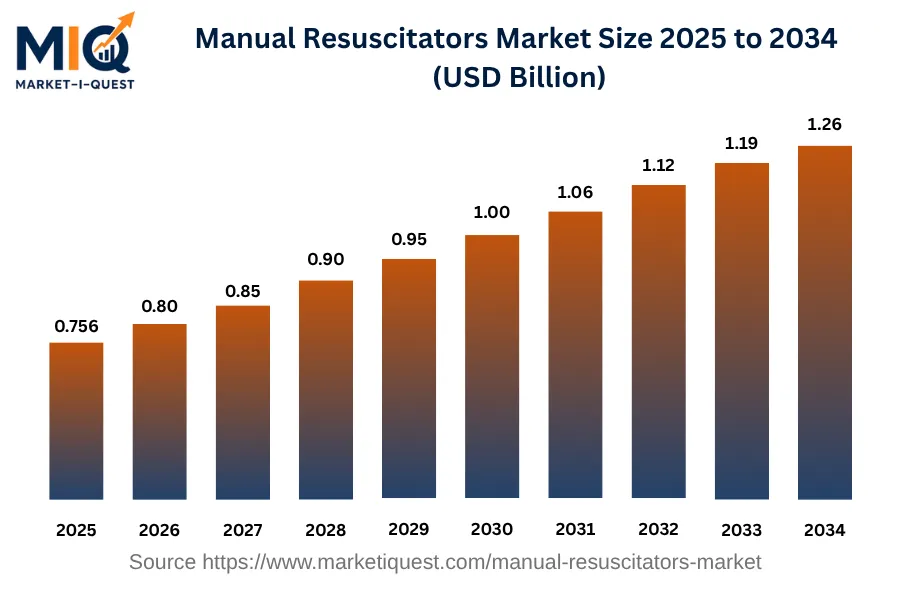
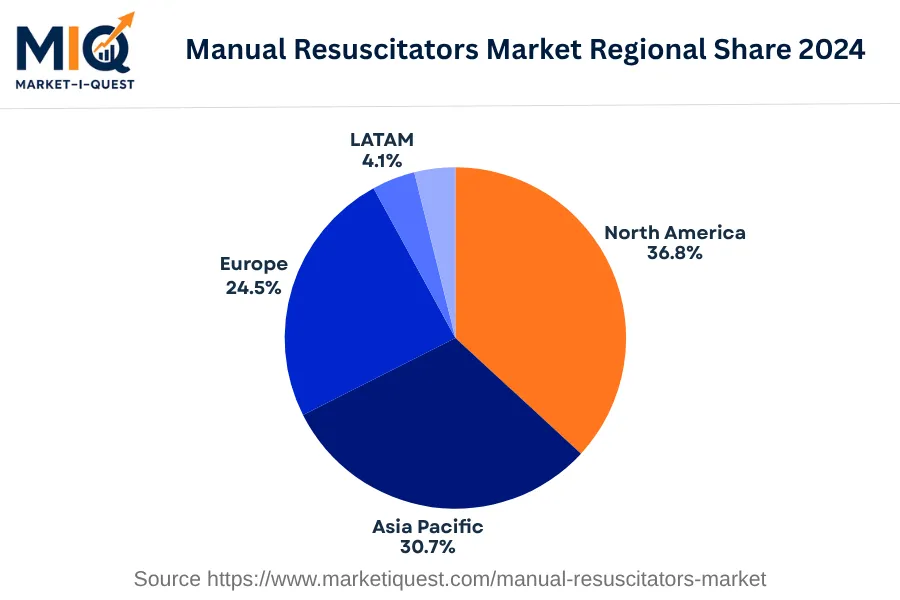
The Manual Resuscitators Market was valued at 0.76 billion USD in 2025 and is projected to achieve a size of 1.26 billion USD by 2034, demonstrating a CAGR of 5.83%. From 2024 to 2025, the market expanded from 0.71 billion USD to 0.76 billion USD, arching along a steady growth path over the decade to its projected value of 1.26 billion USD in 2034. The rise in market size is due to the increasing demand for resuscitation devices across medical fields. Furthermore, product advancements are expected to aid the market's growth in the forecast period. A glance at the regional share data from 2024 reveals that North America held the largest share at 36.8%, followed by Asia Pacific at 30.7%, Europe at 24.5%. LATAM held 4.1%, while the MEA region had a 3.9% share of the global Manual Resuscitators Market.

Key Takeaways

  • By Type - Self-Inflating segment led in the Manual Resuscitators Market.
  • By Modality - Disposable modality held a strong position in recent years.
  • By Material - Silicone emerged as the leading material used for Manual Resuscitators.
  • By Application - Chronic Obstructive Pulmonary Disease (COPD) had the highest prevalence indicating strong demand.
  • For End Use - Hospitals held the dominant share reflecting the essential role of Manual Resuscitators in critical care settings.
manual-resuscitators-market market size

Key Driving Factors

Increased need due to global pandemics

With the outbreak of global health crises like the COVID-19 pandemic, the role of emergency medical instruments, such as manual resuscitators, have become more critical than ever. Healthcare facilities worldwide have faced tremendous pressures on their intensive care capabilities, resulting in heightened demand for critical care devices like manual resuscitators, which are crucial for patient resuscitation. Particularly in lower-income countries with strained medical infrastructures, there has been a significant rise in reliance on manual resuscitators as they are cost-effective alternatives to automatic resuscitation systems.
Strict Regulatory Standards

Regulations and standards set forth by healthcare regulatory bodies and organizations also play a significant role in driving the manual resuscitators market. For instance, the American Heart Association (AHA) and the European Resuscitation Council (ERC) have developed guidelines stipulating the necessity of manual resuscitators in a range of healthcare settings, from hospitals to basic ambulance services. Such precise regulations augment the adoption of manual resuscitators, as healthcare providers aim to comply with management practices and ensure patient safety, thereby propelling the market trajectory of manual resuscitators.

Market Evolution by Timeline

2019-2023
During 2019–2023, hospitals and ambulatory centers were the primary buyers of manual resuscitators, often used in emergency and anesthesia departments. U.S. and European markets, with their advanced healthcare systems and wide adoption of these devices, accounted for the dominant regional shares. Top manufacturers during this period included Medline Industries and Ambu A/S, offering products that typically boasted enhanced grip and transparent masks. The regulatory landscape was primarily guided by FDA and CE standards. Common pricing practices hovered around volume-based discounts with stock arrangements often secured via multi-year contracts. On the downside, these years uncovered a risk associated with an over-reliance on single-source manufacturers, leading to supply shortages when unexpected disruptions occurred.
2024
The year 2024 was marked by a significant surge in demand from home care settings, attributable to the ongoing COVID-19 pandemic and an aging global population. Demand continued to be high from regions with advanced healthcare systems, namely North America and Europe. The technology offered in manual resuscitators saw efforts in improving patient-valve synchronization, but still faced limitations in delivering controlled ventilation. Regulatory standards continued to be robust, with ISO 10651-5 specific to resuscitators gaining prominence. Price competition intensified this year, as manufacturers sought to maintain their market share. Some manufacturers began exploring the viability of dual sourcing to mitigate supply risks.
2025-2029
From 2025 to 2029, there was an observed shift in the market towards disposable resuscitators, as hygiene standards became a more critical concern for buyers in hospitals and home care settings alike. This trend was particularly visible in regions like Asia-Pacific, due to their rapidly developing healthcare infrastructure. Ventlab and Hopkins Medical Products were among the manufacturers that pivoted to meet this need, focusing on their disposable offerings. Responding to the 2024 dual sourcing insights, by this period more manufacturers adopted this approach, ensuring continuity of supply. Regulatory standards further shifted, with increasing audits for device safety. As for pricing, despite the shift to disposable models, the costs remained quite stable owing to the competitive landscape.
2030-2034
In the period of 2030 to 2034, the manual resuscitators market saw increased demand from regions with evolving healthcare systems, such as Africa and Latin America. While hospitals remained crucial buyers, emergency medical services also emerged as significant customers. Technology saw notable advancements with the inclusion of user-friendly features like pressure monitoring capabilities. Compliance to regulatory standards saw a more global acceptance of ISO 13485, while commercial partnerships with local distributors became commonplace. The pricing tendencies of manual resuscitators remained competitive, and risk mitigation strategies, such as stockpiling and supply diversification, were well-integrated into the business models of most manufacturers.

Future Market Outlook

Future Opportunities

The future of the manual resuscitators market presents a wealth of opportunities, particularly in emerging markets due to increasing healthcare investments. Countries such as India, where public health initiatives are on the rise, are experiencing enhanced demand for quality resuscitation equipment, driven by a growing emphasis on emergency medical response capabilities. The World Health Organization’s efforts to bolster access to lifesaving devices through campaigns and partnerships are creating fertile ground for manufacturers to introduce affordable and effective products. Additionally, the expanding trend of telemedicine is paving the way for integrating manual resuscitators with mobile health applications, allowing healthcare professionals to receive real-time guidelines and protocols during emergencies. Companies like LUCAS are positioning themselves well by introducing automated solutions that maintain chest compressions, which could foster interest in supplemental manual devices during high-stress medical situations. The introduction of evidence-based guidelines will further influence product development, as seen through the latest resuscitation guidelines published in 2020 by the International Consensus on Cardiopulmonary Resuscitation. As healthcare professionals continue to seek reliable equipment, the alignment of product offerings with ongoing training programs and support services provided by firms will be crucial. Regions such as Africa, with inadequate emergency response infrastructure, stand to benefit greatly from innovations that enhance accessibility and usability for first responders in high-stakes situations.

Segmentation Analysis

By Type

The market is divided into subsegments which include Self-Inflating, Flow Inflating, and T-Piece. Of these, Self-Inflating accounted for the largest revenue share, while T-Piece is expected to grow at the fastest CAGR during the forecast period.

Largest Revenue Share

Self-Inflating

Market Share Leader

Self-Inflating ranks highest in terms of revenue primarily due to its user-oriented advantages. The mechanism of self-inflation provides ease of use to consumers and reduces the requirement for human effort. This has allowed this subsegment to dominate higher revenue markets such as North America and Europe where convenience is critical. Furthermore, the introduction of regulatory standards that necessitate specific safety measures in inflatables amplifies the demand for self-inflating products. The consistency in quality and standards compliance gives the subsegment a competitive advantage. The established purchasing dynamics of the customers, who prioritize safety and convenience, further consolidate its position in the market. Additionally, efficient distribution channels amplify the accessibility of self-inflating products, thereby driving their adoption. Notably, the switching costs for consumers are generally high due to brand familiarity and trust in safety standards of trusted products, further cementing revenue stability for this segment.

Fastest CAGR

T-Piece

Forecast Period Growth Leader

The T-Piece subsegment is projected to grow at the fastest rate predominantly due to its technical superiority and burgeoning applications. The unique T-Piece design caters to a broader range of market needs, serving as a significant growth catalyst. Technological advancements in terms of innovative and user-friendly design have lowered barriers of adoption, propelling growth. Policies aimed at encouraging consumer safety and product efficiency likewise catalyze this growth. Furthermore, capital investments aimed at enhancing product versatility and customization have the potential to increase consumer attraction to T-Piece inflatables. Strategic partnerships with suppliers and retailers are anticipated to enhance distribution reach. However, potential near-term risks to this growth trajectory include volatility in raw material prices and compliance to increasingly stringent safety standards, which could impact cost and therefore the pace of market adoption.

By Modality

The market is segmented into subsegments including disposable and reusable modality. The disposable modality subsegment accounted for the largest revenue share, while reusable modality is expected to grow at the fastest CAGR during the forecast period.

Largest Revenue Share

Disposable modality

Market Share Leader

In the base year of 2024, the disposable modality subsegment holds the largest revenue in the market, mainly due to the advantages it inherently possesses over its counterpart. The trend towards disposable products is usually attributed to their ease and convenience of use. They are typically intended for single-use which eliminates the need for sterilization and reduces the chances of cross-contamination, particularly relevant given the heightened concerns about infection control. Furthermore, they are often designed to be user-friendly with minimal or no assembly needed which accelerates the adoption rate among healthcare providers. The purchasing decision for disposable resources also tends to be driven by its cost-effectiveness as it potentially reduces overhead costs related to the maintenance and sterilization of reusable products. Moreover, increased availability through various distribution channels enhances market penetration. The regulatory landscape also favors disposable products due to reduced risk, further driving up adoption. While these drivers effectively contribute to the market attractiveness of disposable modality, it's the cumulative influence that leads to its dominance in revenue share.

Fastest CAGR

Reusable modality

Forecast Period Growth Leader

Though not currently leading the market in terms of revenue, the reusable modality subsegment shows the greatest potential for growth in the projected period. Key factors contributing to its fast-paced growth are increasing environmental concerns and the long-term economic benefits. With strict regulations against medical waste and burgeoning calls for sustainability, the healthcare industry is pushed to adopt reusable products to comply with green initiatives. Technological advancements and improvements in product designs have also led to reusable modalities that are not only durable but also more efficient, helping they gain acceptance. Moreover, the long-term financial benefits can outweigh initial purchasing costs, making reusable options a cost-effective solution for healthcare providers. Strategic partnerships and investments in the sector are expected to serve as catalysts for the adoption of reusable modalities. However, the path to high growth is not without challenges. High upfront costs, rigorous sterilization requirements, and resistance from users accustomed to disposable options can act as growth barriers. Nevertheless, it was evident in 2024, and remains so, that the reusable modality market has the momentum to outperform the growth of disposable modality subsegment.

By Material

The market is divided into subsegments including Silicone, PVC, and Rubber. Of these, Silicone accounted for the largest revenue share while Rubber is expected to grow at the fastest CAGR during the forecast period.

Largest Revenue Share

Silicone

Market Share Leader

Silicone materials are known for their high-performance characteristics, including resistance to temperature, UV and ozone, chemical inertness, and electric insulation, which allows for versatile application across multiple industries. The medical industry, in particular, has shown a high dependence on silicone due to its biocompatibility, making it ideal for medical tools, implants, and prosthetics. Furthermore, the automotive and electronics industries are increasingly adopting silicone due to its robust features and cost-effectiveness. Geographically, the Asia-Pacific region could be a significant driver for silicone demand due to the booming manufacturing sector, with countries like China and India leading the way. Supply factors, such as the stable availability of raw materials, have also contributed to silicone's leading position. The base year 2024 marks significant advancements in production technology that facilitate the mass production of Silicone, further lowering costs and increasing access.

Fastest CAGR

Rubber

Forecast Period Growth Leader

Rubber is anticipated to be the fastest-growing subsegment, given its extensive uses across various industries, the primary being automotive for tire manufacturing. Advancements in technology have expanded the applicability of rubber to include products such as gloves, footwear, balloons, and rubber bands. Rubber's superior elasticity, water resistance, and electrical insulation properties make it an attractive option for manufacturers. One of the significant growth catalysts for rubber is the anticipated increase in automobile production worldwide. Recent policy revisions focusing on sustainable practices and greener vehicles have indirectly boosted the demand for rubber in tire manufacturing. Also, Research and Development initiatives facilitating improved synthetic rubber production with better properties and lower production costs will further propel growth in the rubber subsegment. However, the price volatility of raw materials could pose a near-term risk to this subsegment's growth trajectory.

By Application

The market is segmented into applications including Chronic Obstructive Pulmonary Disease (COPD), Cardiopulmonary Arrest, and Others. COPD application is observed to have the largest revenue share, whereas the 'Others' application segment is projected to grow at the fastest CAGR during the forecast period.

Largest Revenue Share

Chronic Obstructive Pulmonary Disease (COPD)

Market Share Leader

Chronic Obstructive Pulmonary Disease (COPD) is the segment that accounted for the largest revenue share in 2024. This can be primarily attributed to the rising prevalence of COPD globally, driven by increasing levels of pollution and smoking. The high smoking rates in both developed and emerging nations, coupled with the exposure to environmental pollutants have accelerated the incidence of COPD. Moreover, the growing geriatric population, who are more susceptible to developing COPD increases the demand for COPD treatments. Additionally, the improvement in rescue medication and the availability of long-acting bronchodilators introduced recently in the market have proved effective which is driving the market growth. Lastly, with governments and health organizations running intensive campaigns about COPD and its harmful effect, the knowledge and consciousness about COPD have increased, thus propelling the demand in this segment.

Fastest CAGR

Others

Forecast Period Growth Leader

Others' application segment in 2024 shows the fastest CAGR growth. This category includes a multitude of emerging applications and treatments, gaining traction due to technological advances and increased Research & Development initiatives. As the medical field progresses, novel conditions and diseases are identified which requires new treatments. These advancements in technology and heightened awareness of rare diseases underline the growth in this segment. However, adoption barriers can be significant as these treatments are often expensive, requiring approval from health insurance companies or other funding sources. Still, growth can be catalysed by policy changes, increased funding for R&D, as well as strategic partnerships between companies to share the high development costs. The current trend of personalized medicine is also contributing to the growth of this segment, as treatments are becoming more tailored for individual patients. A potential immediate risk for this segment is regulatory approvals as these new treatments are subject to stringent scrutiny by health authorities.

By End Use

The market is divided into subsegments including Hospitals, Out-of-Hospital, ICUs, Ambulatory Surgery Centers (ASCs), Military, and Others. In the base year 2024, Hospitals held the largest revenue share, while the Out-of-hospital subsegment is expected to grow at the fastest CAGR during the forecast period.

Largest Revenue Share

Hospitals

Market Share Leader

In 2024, hospitals held the majority share in end-use market segment thanks to a high patient inflow and the comprehensive healthcare services they provide. Given the vast scope of medical services offered, hospitals require diverse and advanced technologies and services, which drive high demand. Another factor contributing to the leading position is the increasing rate of hospitalization due to the prevalence of severe illnesses and chronic diseases. Additional drivers include the surge in the aging demographic, which has higher susceptibility to health disorders, and the advancements in healthcare infrastructure particularly in developed countries. The size and complexity of hospital operations necessitate substantial investments in resources, driving up revenue for this segment. Furthermore, the widespread geographical presence of hospitals makes them an essential part of the healthcare sector in terms of revenue generation.

Fastest CAGR

Out-of-Hospital

Forecast Period Growth Leader

The Out-of-Hospital subsegment is projected to record the fastest CAGR during the forecast period. This can be attributed to the growing popularity of home healthcare and community health services. The rise in chronic diseases and the aging population, coupled with the surge in healthcare costs, have led individuals to seek cost-effective and convenient healthcare services. Technological advancements have also facilitated the shift from inpatient care to outpatient care, hence driving growth in this segment. These advancements have enabled remote patient monitoring, telehealth services, and mobile health applications–all of which have made it possible for patients to receive medical care outside the traditional hospital setting. This shift towards out-of-hospital care is a global trend, but it will be most noticeable in the developed world where healthcare infrastructure and regulations support this transition. However, the adoption of these services can face barriers such as lack of infrastructure in remote areas and resistance from older consumers who are less familiar with technology.

Competitive Analysis

Key Market Players

Manufacturers / OEMs

Medtronic
Ireland
Smiths Medical
US
Ambu
Denmark

Key Suppliers & Raw Materials

General Electric
US
Siemens Healthcare
Germany
CareFusion
US

Distributors, Integrators & Channel Partners

Cardinal Health
US
Henry Schein
US
McKesson
US

Porter’s Five Forces Analysis

This is an assessment of the competitives forces influencing the Manual Resuscitators Market.

Supplier Bargaining Power

Medium

Manufacturers and suppliers have balanced power due to standardization of products and high competition.

Buyer Bargaining Power

High

Buyers have high power because of the availability of substitutes and relatively low switching costs.

Threat of Substitutes

High

Increased innovation in medical technology leads to high availability of alternatives.

Threat of New Entrants

Medium

Entry barriers exist due to certification requirements and the need for R&D and production facilities.

Competitive Rivalry

High

Rivalry is high due to the presence of multinational corporations and price-based competition.

Regional Analysis

Geographic market dynamics and growth opportunities across key regions

Global Market Outlook

manual-resuscitators-market market regional share

North America

In 2024, the North American Manual Resuscitator market was characterized by consolidated growth. Key drivers included rising incidences of chronic obstructive pulmonary disease (COPD) and the increasing prevalence of cardiovascular ailments in the U.S., Mexico, and Canada. A surge in demand was propelled by the reinforcement of regional healthcare infrastructure, particularly in remote areas. Concerning technology adoption, healthcare facilities widely adopted silicone-based resuscitators in line with infection control strategies. Furthermore, the market noticed a shift towards disposable manual resuscitators, fueled by the need for ensuring hygiene and mitigating cross-contamination. Government policies favoring such shifts reinforced this trend. The distribution of manual resuscitators saw notable growth in the online sector, boosted by the digital transformation in the healthcare supply chain.

Moreover, strategic alliances between manufacturers, such as partnerships and M&A, underpinned the push for product enhancement in line with regulatory standards. Customers ranged across government and private hospitals, ambulatory surgery centers, trauma centers, along with home-care settings. The North American manual resuscitator market in 2024 demonstrated a dynamic response to healthcare needs, redefined through significant trends and drivers, especially in the face of evolving health concerns.

Asia Pacific

In 2024, the Asia Pacific manual resuscitators market had a significant market presence due to increased demand in healthcare settings. Drivers included rising prevalence of chronic respiratory diseases in populous nations like India and China, necessitating investment in resuscitation equipment. Countries like Japan and South Korea witnessed advanced technology adoption, as healthcare providers sought to enhance efficiency and patient outcome, consequently propelling the market. Additionally, the robust supply chain and competitive pricing across ASEAN markets intensified the market activity in the region.

Shifting trends in 2024 started redefining the market landscape predominantly revolving around consumer behavior and technological integration. Customers across China and Australia showed preferences for disposable manual resuscitators over reusable types due to heightened infection concerns. Technology-wise, improvements in bag-valve-mask device design increased their usage in paramedical services. Simultaneously, strategic partnerships and mergers amplified, particularly in key ASEAN markets to expand market footholds, contributing to the dynamism of the channel dynamics. Enforcement of rigorous standards by regulators to ensure product safety and efficacy came into sharper focus, significantly impacting the market across this geographically crucial region. As such, 2024 witnessed a thriving manual resuscitators market in the Asia Pacific initiated by healthcare and supported by the manufacturing sector, driven by demand, technology adoption, and regulatory policies.

Europe

In 2024, the Manual Resuscitators Market in Europe was characterized by significant demand and supply dynamics across healthcare sectors. One of the drivers was the increased investment in healthcare infrastructure in countries like Germany and the UK, opening up new channels for the distribution and adoption of manual resuscitators. Furthermore, advancements in resuscitation technology, spurred by widespread adoption and favorable regulations in countries such as France and Italy, amplified the market competition and proliferation of these devices. However, pricing remained a key challenge, particularly in Central & Eastern Europe, where cost constraints weighed on demand.

Notable trends included shifts in buyer behavior, especially in the healthcare sector. Heightened awareness around patient safety and technological effectiveness prompted hospitals and clinics to prioritize premium manual resuscitator models, particularly in Spain and the Nordics. There was also an evident rise in strategic partnerships and mergers among leading market players in Benelux, aimed at enhancing product offerings and bolstering market presence. Additionally, regulatory authorities across Europe enforced stringent standards for manual resuscitators to ensure patient safety and product efficacy, impacting the market reciprocally. Despite these challenges, the market demonstrated resilience, driven primarily by demand in critical healthcare applications.

Latin America

In 2024, the manual resuscitators market in Latin America (LATAM) demonstrated significant growth, particularly in countries such as Brazil, Mexico, Argentina, Colombia, Chile, and Peru. The market's expansion was primarily driven by increased healthcare investment, broadening adoption of advanced medical technologies, and the burgeoning demand for out-of-hospital emergency care. Regulatory changes in these countries further cemented manual resuscitators' pivotal role in emergency medical services, contributing to the market growth. Trends in the LATAM manual resuscitators market in 2024 reflected changes in buyer behavior and product technology.

Increased demand from healthcare sectors for high-quality, efficient resuscitation devices prompted product optimization and innovation. The emphasis on portable, user-friendly, and reusable manual resuscitators significantly shaped the market landscape. Furthermore, partnerships among key players and targeted acquisitions played a crucial role in consolidating market position and fostering competition. Finally, stricter enforcement of medical standards boosted customer confidence and ensured product safety and efficacy, ultimately benefiting the market. In conclusion, 2024 witnessed an impressive growth in the manual resuscitators market in LATAM thanks to strategic investments, regulatory changes, and demand from the healthcare sector, shaping the region's manual resuscitators market dynamics significantly.

Middle East & Africa

In 2024, the Manual Resuscitators Market in the Middle East and Africa exhibited steady growth, with a notable rise in demand for healthcare services and equipment. Regulatory requirements, such as the Saudi FDA policy on medical device registration, encouraged industry participants to invest in quality-assured products, thereby increasing the market competitiveness. Rapid adoption of technology in healthcare sectors, particularly in the United Arab Emirates and Qatar, further stimulated market expansion. Furthermore, pricing concessions offered by manufacturers, due to increased supply dynamics in countries like Egypt and Israel, boosted the sales volume.

Shifts in buyer behavior were witnessed as healthcare facilities in South Africa, Nigeria and Kenya increasingly prioritized cost-effective and efficient equipment. Technological advancements led to the emergence of disposable manual resuscitators in the market, promoting better infection management. The healthcare sectors in Saudi Arabia and the United Arab Emirates emerged as significant buyers due to government support and focus on healthcare infrastructure development. Mergers and Acquisitions, such as the prominent partnership between Asean Partners and ILC Group LLC, fostered market consolidation, fostering access to diversified product catalogs. Governments across the region reinforced policies to ensure appropriate product standardization and patient safety, influencing the procurement procedures for manual resuscitators and the market trajectory in general.

Recent Industry Developments

Latest market innovations, product launches, and strategic initiatives

August 2025

Cardio Partners, a division of Sarnova, acquired RescueStat, a healthcare technology company specializing in AED program management and remote monitoring. The acquisition, completed on August 8, 2025, strengthened Cardio Partners' emergency readiness solutions and expanded its ability to deliver life-saving solutions to more communities across the U.S..

Frequently Asked Questions