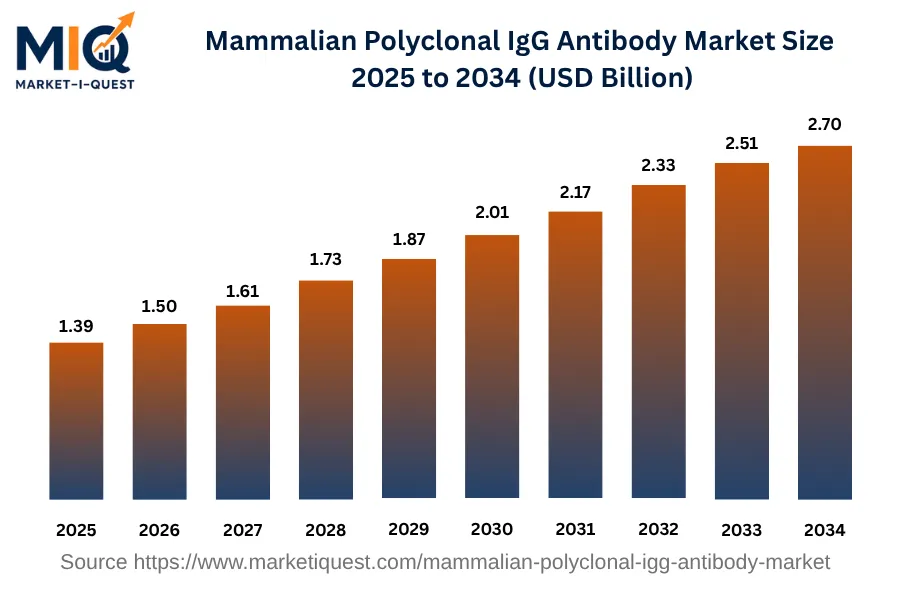
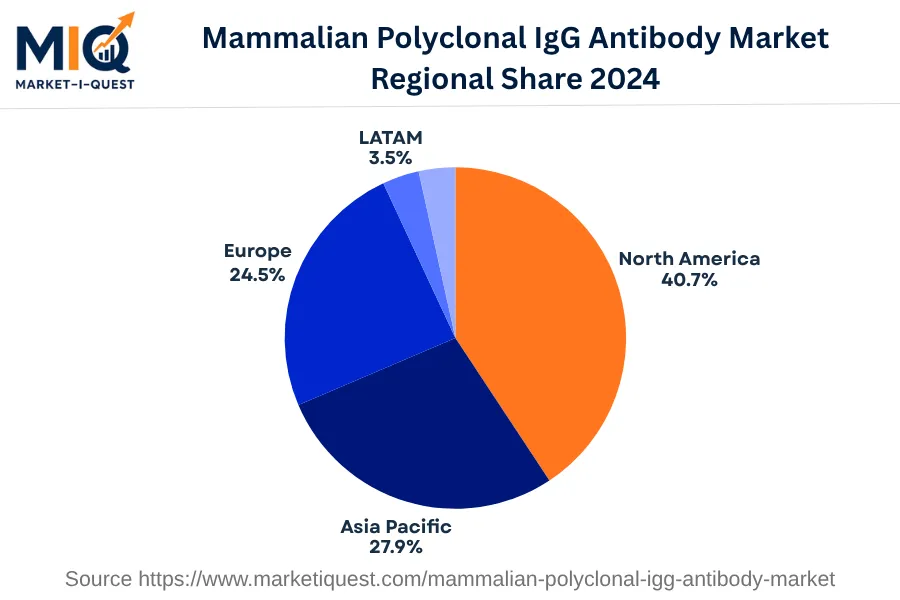
In 2024, the mammalian polyclonal IgG antibody market in the Asia Pacific region showcases a robust landscape driven by several factors. Market Drivers Regulatory developments, growth of biotechnological companies, and further investments are driving the demand for Antibodies Market. With this, China has promising innovative biomedicine development policies, India is witnessing a booming biotech industry, and the strength of R&D investments in Japan is spurring the growth of market. Adoption of technology is high in Australia, with the introduction of new technologies and innovation in lab techniques, while South Korea is mostly focused on high throughput techniques. Movement towards personalized medicine is accelerating the development of innovative products, especially in Japan and Australia.
Increased focus on improving efficacy and precision is influencing partnerships and mergers to strengthen the supply chain. Introduction of GMP standards in China, India, and ASEAN countries has guaranteed the quality and safety of products. The manufacturing process for antibodies is expensive due to the high capital needed; hence, high price competition is anticipated to be high. Due to, the prices for the antibodies are expected to range between expensive to moderately expensive. Few of the key customers are healthcare, biotech companies, and research institutions. As the prevalence of chronic diseases is high in this region, hospitals and healthcare centres are key end users. Simultaneously, the rising demand for antibodies from the agricultural sector is likely to be high due to their continued use in disease diagnosis. The market also experiences strong demand from academic and research institutes across all mentioned countries, symbolising the region's dedication towards advanced research and development.