
Loyalty Management Market Snapshot

Key Players

  • Aimia Inc (Canada)
  • Capillary Technologies (India)
  • TIBCO Software Inc. (US)
  • Comarch SA (Poland)
  • Oracle Corporation (US)
  • IBM Corporation (US)
  • SAP SE (Germany)
  • Epsilon (US)
  • Bond Brand Loyalty (Canada)
  • Maritz Holdings Inc. (US)

Market Size

Base Year 2024
$12.59 Bn
CAGR
16.18%
Forecast 2034
$56.41 Bn

Market Segments

By Component
Solution, Service
By Deployment
On-Premises, Cloud
By Organization Size
Large Enterprises, SMEs
By Vertical
Transportation, IT & Telecommunication, BFSI, Media & Entertainment, Retail & Consumer Goods, Hospitality, Others

Market Dynamics

Drivers
  • Increasing consumer expectations
  • Advancements in digital technology
Restraints
  • High program implementation cost
  • Risk of data breaches
Opportunities
  • Rising demand for digitized services
  • Emerging eCommerce trend

Market Size

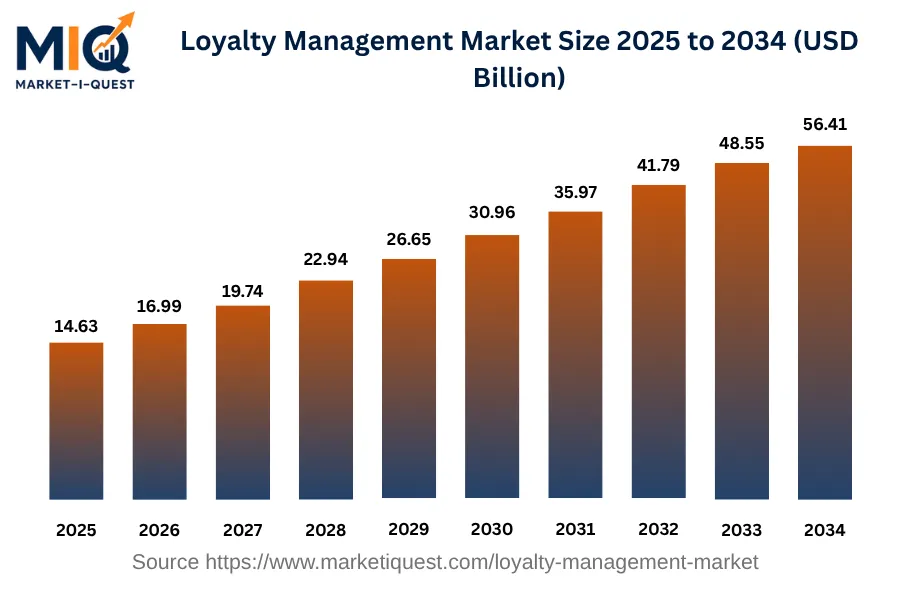
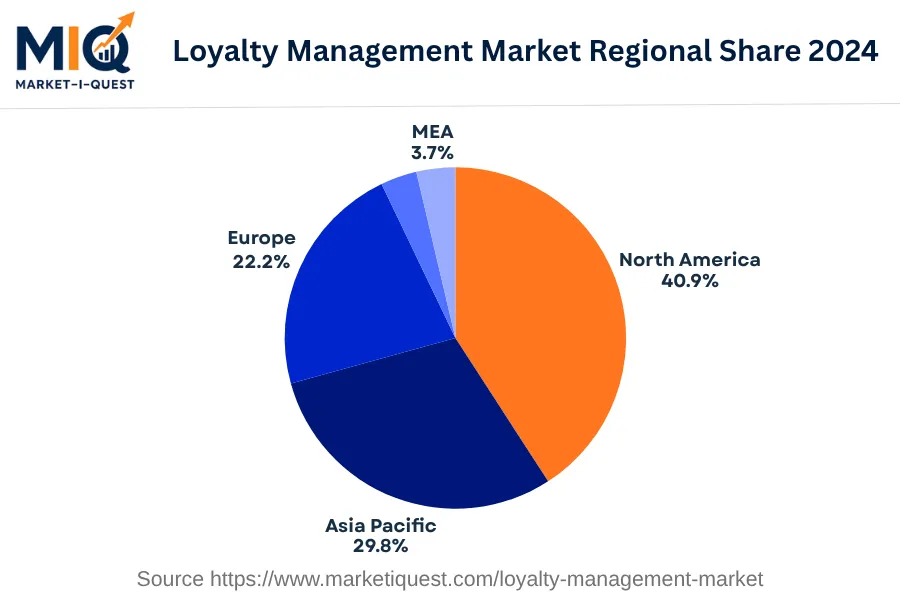
The Loyalty Management Market size was $14.63 billion in 2025 and it is projected to expand to $56.41 billion by 2034, corresponding to a CAGR of 16.2%. The market has followed a consistent growth trajectory from $12.59 billion in 2024 to its standing in 2025, and this upward trend is expected to continue through to 2034. The main factors contributing to this growth include increasing demand for customer retention, an amplified focus on customer-centric strategies, and the adoption of omnichannel loyalty programs. Regional shares in the market for the year 2024 were as follows: North America led with a 40.9% share, followed by Asia Pacific at 29.8%, Europe at 22.2%, the Middle East and Africa at 3.7%, and Latin America at 3.4%.

Key Takeaways

  • By Component - Service led accounting for a significant share in the base year.
  • By Deployment - On-Premises held a dominant position in the market.
  • By Organization Size - SMEs expanded at the fastest pace indicating the high adoption rate of loyalty management systems.
  • By Vertical - IT & Telecommunication showed the highest growth.
loyalty-management-market market size

Key Driving Factors

The Impact of Customer Retention Strategies

Market players in different industries have been actively implementing customer retention strategies to gain an advantage over their competitors. This arises from the understanding that retaining existing customers often costs less than acquiring new ones. The Loyalty Management Market caters to this need by providing software and platforms that allow businesses to create and manage loyalty programs more efficiently. These management tools promise superior customer experiences and personalized reward structures, thereby increasing customer loyalty. Consequently, the demand for loyalty management solutions, especially from industries with high consumer interaction like retail, airlines, and hospitality, is significantly driving growth in this market.
Influence of Data Analytics on Customer Interaction

The rise of data analytics has drastically changed the way businesses interact with customers. Utilizing data science techniques, businesses can now predict customer behavior, understand their preferences, and create a more personalized interaction strategy. The Loyalty Management Market takes advantage of this by integrating data analytics into their platforms, which allows companies to design improved customer loyalty programs based on customer insights and purchase history. This elevated level of customization has been instrumental in enhancing customer satisfaction, thereby encouraging businesses to invest in loyalty management solutions. The confluence of data analytics and loyalty programs is, therefore, a critical contributor to the growth of this market.

Market Evolution by Timeline

2019-2023
During this period, the loyalty management market pivoted towards personalized and data-driven incentives. Retail businesses, airline industries, and e-commerce platforms were key buyers, primarily from North America and Europe. The integration of machine learning and AI in loyalty management platforms enabled businesses to use customer behavior data for personalized campaigns. High costs of technology implementation was a major constraint. The General Data Protection Regulation (GDPR) influenced the handling and processing of customer data. Pricing models were mostly based on subscription, with strategic partnerships between e-commerce platforms and retailers. Challenges included potential security breaches and privacy issues, handled by strengthening cybersecurity measures.
2024
By 2024, loyalty management software solutions expanded further into mobile-owned customer experiences. Companies in hospitality, banking, and retail from Asia-Pacific started becoming prominent buyers. Real-time analytics in customer experience data enabled immediate rewards and personalization in loyalty programs. Despite the rise of open-source platforms, integration maturity was still in progress. The adoption was under regulation influences like the California Consumer Privacy Act. The commercial models saw more adoption of pay-per-use pricing, with cross-industry partnerships becoming common. The increasing data breaches raised privacy concerns that were mitigated through encryption and authentication features.
2025-2029
This period saw the demand surge in less developed markets such as Africa and South America, with telecom and banking sectors taking the lead. Supply-side technology innovations centered around integrating blockchain to establish transparency and build trust. The lack of skilled professionals for technology implementation posed a challenge. Regulatory influences saw local data protection laws being implemented in many countries worldwide. Pricing dynamics shifted towards performance-based models, and businesses formed partnerships with technology companies for efficient integration and management. Identification of genuine customers became a typical problem due to increased online fraudulent activities.
2030-2034
In the early 2030s, the demand for omnichannel loyalty management services grew specifically in media and entertainment sectors predominantly from evolving markets. On the supply side, there was significant progress towards creating collaborative ecosystems using Internet of Things (IoT) and AI. However, interoperability of various technologies posed constraints. Policy influences observed notable updates in existing Data Protection Acts to ensure alignment with technological advancements. Subscription-based pricing model returned to prominence in commercial terms. The risks primarily involved ethical concerns around AI use, tackled through implementation of defined AI ethics guidelines.

Future Market Outlook

Future Opportunities

Current trends in the loyalty management market highlight a shifting landscape ripe for future opportunities across various sectors. The growing adoption of artificial intelligence in analytics allows for improved customer insights that can drive more effective loyalty strategies. As companies like Dunkin' Donuts leverage AI to personalize offers and boost customer engagement, the potential for tailoring experiences increases. There is also a notable trend toward integrating sustainability into loyalty programs, exemplified by companies like H&M promoting eco-friendly practices through reward systems linked to sustainable shopping, initiated in 2021. The ongoing shift toward omnichannel approaches presents additional opportunities; retailers are increasingly merging digital and physical strategies to engage customers effectively. The partnership between Walmart and TikTok in 2022 highlights how social commerce can enhance loyalty initiatives by reaching customers through popular platforms. Countries like Canada are witnessing increased regulatory scrutiny, prompting businesses to adapt their loyalty strategies to comply while maintaining customer trust. The concept of community-centric loyalty programs, seen in companies like Patagonia, which fosters brand loyalty through missions aligned with social issues, can also gain traction. As the market evolves, addressing diverse consumer needs through innovative loyalty solutions will be crucial for brands looking to stay competitive and foster lasting customer relationships.

Segmentation Analysis

By Component

The market is divided into subsegments including Solution and Service, with Service accounting for the largest revenue share, while Solution is expected to grow at the fastest CAGR during the forecast period.

Largest Revenue Share

Service

Market Share Leader

In the technology-driven market world, the 'Service' segment has held the banner for the largest revenue generator. An array of factors contribute to this dominance. The integral role of services, such as maintenance, updates, and customization in optimizing product performance and longevity is a primary driver. With rapid technological advancements, businesses often lack the technological expertise required to adapt, turning to service providers for assistance. Particularly in geographies with a higher concentration of commercial sectors such as North America and Europe, services are in high demand. Further, regulations necessitate technological compliance, increasing the uptake of services. The decision criteria for purchasing generally revolve around the quality, timely delivery, and after-sales service, making the service segment pivotal. Additionally, the potential presence of switching costs in sticking to an outdated component can deter businesses, leading to a preference for regular services and updates. Thus, the combination of these factors cement Service's position as a prime revenue contributor.

Fastest CAGR

Solution

Forecast Period Growth Leader

Despite the substantial current revenue of the Service segment, the 'Solution' segment is primed for rapid growth with the highest CAGR during the forecast period. This is fueled by several growth drivers such as the global push for digitization and automation in business operations. Regulatory developments, tightening data security and privacy norms are also pushing enterprises towards comprehensive solutions for compliance. Technological advancements act as catalysts for this segment's growth. Items such as artificial intelligence, cloud computing, and data analytics are increasingly being integrated into solutions, boosting their efficiency and comprehensive appeal. Capital investments in tech infrastructure are also on the rise, further supporting this segment. However, barriers to adoption could include businesses' reluctance to change existing structures and associated costs. Also, near-term risks may include fluctuating regulatory landscapes and the rapid pace of technological change, which requires continuous improvements. Given these dynamics, it's projected that the Solutions segment will grow the fastest, marking important transitions in market structure.

By Deployment

The deployment segment of the market is bifurcated into On-Premises and Cloud deployment. In the year 2024, On-Premises accounted for the largest revenue share while the Cloud subsegment is expected to witness the most rapid growth rate.

Largest Revenue Share

On-Premises

Market Share Leader

From an industry perspective, the On-Premises model tends to dominate in revenue terms due to diverse factors. Companies that prioritize data security over other benefits usually tend to adopt an On-Premises deployment model. This model provides high-level control and privacy which appeal majorly to large enterprises with complex operations and sensitive information. Primarily, industries like Banking, Healthcare, and Government Services, which require a high degree of privacy, are driving the revenue for the On-Premises subsegment. The demand is especially strong in the mature markets where substantial infrastructure is already in place, minimizing the up-front cost that could be a significant barrier otherwise. The regulatory standards in these markets also force the organizations to go for on-premises installation leading to a larger revenue generation from this subsegment. However, given the current rate of digital shift, this dominance may not remain the same in the coming years.

Fastest CAGR

Cloud

Forecast Period Growth Leader

The Cloud sub-segment, although not the leader in terms of revenue, is expected to grow at the fastest Compound Annual Growth Rate (CAGR). This forecast is primarily due to the numerous technological advancements that are influencing organizations to shift towards cloud-based solutions. Cloud software deployment reduces the cost of IT infrastructure and offers improved scalability and flexibility. With the increase in remote work models, the need for cloud-based solutions has amplified, acting as a catalyst for this subsegment's growth. The opportunities for partnerships with cloud service providers also play a major role in enticing companies towards cloud adoption. However, certain risks exist such as data privacy concerns and reliance on internet connectivity that may impede development. But considering the overall tech advancement, the future outlook of Cloud looks very promising in contrast to On-Premises deployment.

By Organization Size

The market is segmented by organization size into Large Enterprises and Small and Medium Enterprises (SMEs). Of these, Large Enterprises had the major share of the revenue in the base year 2024, however, SMEs are predicted to witness the fastest growth in the upcoming years.

Largest Revenue Share

Large Enterprises

Market Share Leader

Large Enterprises came out as the chunk holders in terms of revenue generation in 2024. The primary driving factors for their significant revenue are their high purchasing power capacity and extensive operation scopes, which require advanced and diversified software solutions and larger infrastructure. They are in a position to make substantial investments in advanced systems and technologies, and their investments are not confined by budget constraints. Furthermore, large organizations have a broad client base to cater to, resulting in the requirement of advanced IT infrastructure. On top of that, they always need to upgrade their strategies and systems to beat competitors and maintain their market position, therefore, investing heavily in innovative and successful technologies. These key factors drive the increased revenue share of large organizations in the total market size by organization in the base year of 2024.

Fastest CAGR

SMEs

Forecast Period Growth Leader

Despite that Large Enterprises contributed the largest revenue share in 2024, it's the Small and Medium-sized Enterprises (SMEs) that are expected to grow at the fastest CAGR in the subsequent years. Several factors are contributing to this accelerated growth. SMEs are increasingly realizing the advantages of implementing advanced technology solutions to improve business efficiency and productivity. Adoption of latest technologies provides them with an opportunity to compete with large organizations and also expand their market presence. Technology advancements, coupled with governmental regulations and policy initiatives aimed at supporting SMEs, have reduced barriers to technology adoption. However, high initial investments and lack of skilled professionals remain near-term risks. Despite these challenges, a promising trend towards digitization and investment in advanced business solutions is projected to drive the fast-paced growth of SMEs.

By Vertical

The market is divided into subsegments including Transportation, IT & Telecommunication, BFSI, Media & Entertainment, Retail & Consumer Goods, Hospitality, and Others. The IT & Telecommunication subsegment accounted for the largest revenue share while Retail & Consumer Goods is expected to grow at the fastest CAGR during the forecast period.

Largest Revenue Share

IT & Telecommunication

Market Share Leader

The IT & Telecommunication subsegment leads the market in terms of revenue generation in the base year 2024. A significant driver of this revenue is the increased global demand for advanced technologies to manage, maintain, and analyze a massive amount of data that is generated daily. A crucial sector such as Banking, Financial Services, and Insurance (BFSI) depend heavily upon IT infrastructure for transactional and data security purposes, thus boosting the industry's revenue. Furthermore, telecommunication networks underpin the modern globalized and interconnected world. The increasing digitalization and adoption of cloud-based services in developed and developing regions contribute significantly to the revenue. Rapid urbanization and improved infrastructure lead to an increase in the number of data centers, propelling demand. Regulation favoring IT infrastructure and services in various regions has also played a role in the growth of this segment. Strong purchasing criteria stem from the reliability, data handling capacity, and network capabilities of these technologies. The customers being large-scale businesses ensures high switching costs, securing revenue for this subsegment.

Fastest CAGR

Retail & Consumer Goods

Forecast Period Growth Leader

Retail & Consumer Goods is expected to witness the fastest growth in the subsequent years. This growth can be attributed to the emergence of digital technologies that have redefined traditional retail models and consumer behavior. E-commerce platforms, for instance, have gained immense popularity and continue to expand their penetration into markets previously centered around brick-and-mortar stores. The purchasing capabilities of consumers have been bolstered by increased disposable income, fostering growth in this sector. Notably, strategic partnerships and collaborations between key players in the retail sector and technology providers have fostered innovation in retail solutions, further driving the market growth. Additionally, the elevated preferences for personalized shopping experiences and real-time product availability has led to the integration of technologies like AI, Machine Learning, and IoT in this sector. Despite this, potential barriers such as data security and privacy could pose challenges to growth. However, industry players are gradually addressing these issues through tech advancements. Thus, the adoption of cutting-edge technology by this sector serves as a prominent catalyst for its growth.

Competitive Analysis

Key Market Players

Loyalty Program Service Providers

Epsilon
US
Aimia Inc.
Canada
TIBCO Software
US

Loyalty Management Software Providers

Oracle Corporation
US
IBM Corporation
US
SAP SE
Germany

Loyalty Management Platform Distributors and Integrators

Capillary
India
Bond Brand Loyalty
Canada
Maritz Motivation Solutions
US

Porter’s Five Forces Analysis

This analysis studies the competitive landscape of the Loyalty Management Market.

Supplier Bargaining Power

Medium

Power is influenced by the number of providers and specialized service requirements.

Buyer Bargaining Power

High

Rising demand and multiple service providers enhance customer negotiation power.

Threat of Substitutes

Low

Weak threat due to the specialized nature and distinct value of loyalty management services.

Threat of New Entrants

Medium

Market entry barriers are moderate due to technological and human capital requirements.

Competitive Rivalry

High

Rivalry is high due to the presence of several key brands and the need for constant innovation.

Regional Analysis

Geographic market dynamics and growth opportunities across key regions

Global Market Outlook

loyalty-management-market market regional share

North America

In 2024, the Loyalty Management Market in North America showed meaningful growth fueled by several driving factors and industry trends. Innovative technology adoption and increased consumer demand significantly accelerated the market, with enterprises committing substantial investment towards enhancing customer retention strategies. Regulatory policies in the U.S., Canada, and Mexico further motivated the market expansion, with data protection laws requiring businesses to adopt secure, tailored loyalty solutions. Enhancements in supply chain operations and competitive pricing strategies also bolstered growth in this sector. Trends in 2024 showed a shift towards digitized loyalty programs, particularly in the retail and manufacturing sectors which had been steadily implementing advanced data analytics tools to gain customer insights. There was a significant increase in partnerships and mergers & acquisitions among loyalty management market players, aiming to offer comprehensive customer-centric services.

Largely represented in the hospitality and healthcare industries, policy enforcement regarding customer data usage added another dimension to the market landscape. Customers in government sectors exhibited enhanced interest in loyalty management systems, seeking to strengthen citizen trust and engagement. Key utilities providers also adopted loyalty programs to increase customer retention and reduce churn rates. Overall, drivers and trends in 2024 indicate a vibrant and evolving Loyalty Management Market in North America.

Asia Pacific

In 2024, the Loyalty Management Market in Asia Pacific emerged as a major segment, driven by increasing customer retention strategies, technology adoption, and investment. The growth was significantly propelled by the retail and e-commerce sectors in China and India, where customer retention has become a paramount focus due to intensifying competition. Regulatory support in Japan and South Korea also encouraged companies to invest in loyalty management systems, fostering market growth. The market saw transformative trends, with digitalization demonstrating a profound effect on buyer behavior. Key markets, such as Australia and ASEAN countries, experienced a shift from traditional loyalty programs to digital platforms, closely aligning with online shopping trends.

There was also an observable spike in partnership and M&A activities, particularly in the retail and enterprise sectors, which leveraged loyalty programs for mutual growth. For example, leading retail brands integrated their loyalty programs, facilitating seamless point collection and redemption across platforms. As for policy enforcement, standards like Australia's Privacy Act 1988 and India's Information Technology Act governed the use of customer data in loyalty programs, promoting transparency and fostering trust. Driven by these dynamics, the Loyalty Management Market in Asia Pacific witnessed a substantial market consolidation in 2024.

Europe

In 2024, Europe saw a significant expansion in its Loyalty Management Market. Driving this growth were factors such as rapid digitisation, customers’ growing expectations for personalized experiences, and the rise of omnichannel marketing strategies. Notably, Germany saw a surge in businesses investing in customer retention programmes, spurred by a saturated market and competitive differentiation needs. In the UK, stricter data privacy regulations necessitated more secure, yet innovative loyalty strategies, accelerating technological adoption in the sector.

Trending in this year was the increasing use of data analytics in loyalty programmes. Businesses across France and Italy, particularly in the retail and hospitality sectors, harnessed customer data to refine their loyalty offerings. This paradigm shift towards data-driven decision making was also evident in Spain and Central and Eastern Europe, where Artificial Intelligence was incorporated in loyalty management tools to predict customer behavior. In addition, emerging collaboration between the loyalty management companies and payment solution providers in the Nordics, pointed towards a growing trend of symbiotic partnerships. The Benelux region demonstrated the impact of digitisation on the loyalty management market, with a proliferation of mobile loyalty apps amongst all business sectors. Therefore, the emphasis in the Europe loyalty management industry in 2024 was on innovative, technology-driven solutions to better understand and engage with customers.

Latin America

In 2024, the Loyalty Management Market in Latin America significantly impacted sectors such as retail, utilities, and manufacturing. Several key factors drove this development. A surge in e-commerce and digital payment solutions across Brazil and Mexico bolstered customer reward programs, setting the environment for increased adoption of loyalty management systems. Additionally, government regulations in Argentina advocating for data transparency promoted the use of these services. Lastly, significant investment in CRM technology by businesses in Colombia highlighted a strengthening supply dynamic for loyalty management solutions.

Trends in 2024 were largely shaped by shifting buyer behaviors and evolving technology. As Chilean consumers showed preference for personalized, value-added services, companies responded by integrating advanced analytics into their loyalty management systems. In Brazil and Peru, mobile loyalty apps saw increased use as more customers preferred engaging with brands digitally. Encouraged by policy enforcement in Colombia, partnership and M&A activities in the loyalty management sector blossomed, contributing to a consolidated market landscape. Moreover, the adoption of open standards for data management also emerged as a notable trend, particularly within Argentina's enterprise segment. This underpinned the more widespread use of multi-channel loyalty platforms, thus enabling businesses to offer more tailored customer experiences.

Middle East & Africa

In 2024, the Loyalty Management Market in the Middle East and Africa experienced significant growth. This expansion was driven by factors such as the increased adoption of digital platforms for loyalty programs, the surge in e-commerce, and evolving customer expectations. Countries like Saudi Arabia and the United Arab Emirates pushed technological adoption in sectors such as retail, telecom, and financial services. In contrast, oil-rich nations like Qatar increased investment in loyalty management programs to foster more robust customer relationships. Market trends in 2024 showed increasing use of data analytics, machine learning, and artificial intelligence in loyalty programs, influenced significantly by countries like Israel known for technological prowess.

More diversified rewards and personalized experiences were more common in Nigeria and South Africa due to enhanced consumer data analytics. Partnerships between different sectors, notably retail and financial services, became more pronounced in Egypt, leading to cross-sector loyalty programs. On the regulatory aspect, governments in these regions enforced stricter data privacy policies, indirectly influencing the ways companies managed their loyalty programs. For example, in Kenya, the Data Protection Act played a significant role in shaping practices around customers' data handling, significantly affecting the loyalty management market.

Recent Industry Developments

Latest market innovations, product launches, and strategic initiatives

July 2026

Zepto launched Zepto Club, an invite-only paid membership programme offering cashback, priority delivery, and exclusive discounts. The launch sharpened the quick-commerce platform's customer retention strategy ahead of its proposed IPO.

August 2025

Marriott Bonvoy and Flipkart SuperCoins launched a strategic partnership in India, integrating their respective loyalty programs. The collaboration enabled members to earn and exchange points between the two platforms, connecting Marriott's global rewards ecosystem with Flipkart's loyalty program.

Frequently Asked Questions