Liquid Synthetic Rubber Market Snapshot

Key Players

  • Sumitomo Chemical Co. Ltd. (Japan)
  • Bridgestone Corporation (Japan)
  • PetroChina Company Limited (China)
  • China National Petroleum Corporation (China)
  • Kuraray Co. Ltd (Japan)
  • Royal Dutch Shell Plc. (Netherlands)
  • LANXESS AG (Germany)
  • TSRC Corporation (Taiwan)

Market Size

Base Year 2024
$9.67 Bn
CAGR
6.36%
Forecast 2034
$17.91 Bn

Market Segments

By Polymerization Process
Emulsion Polymerization, Solution Polymerization, Bulk Polymerization
By Chemical Composition
Styrene-Butadiene Rubber (SBR), Polybutadiene Rubber (BR), Ethylene-Propylene-Diene Monomer Rubber (EPDM)
By Application
Tires & Rubber Products, Belts & Hoses, Plastic Modifications, Footwear, Others

Market Dynamics

Drivers
  • Rising demand for tires
  • Increase in industrial applications
Restraints
  • Environmental impact concerns
  • High production costs
Opportunities
  • Growing automotive industry
  • Increasing urbanisation and industrialisation

Market Size

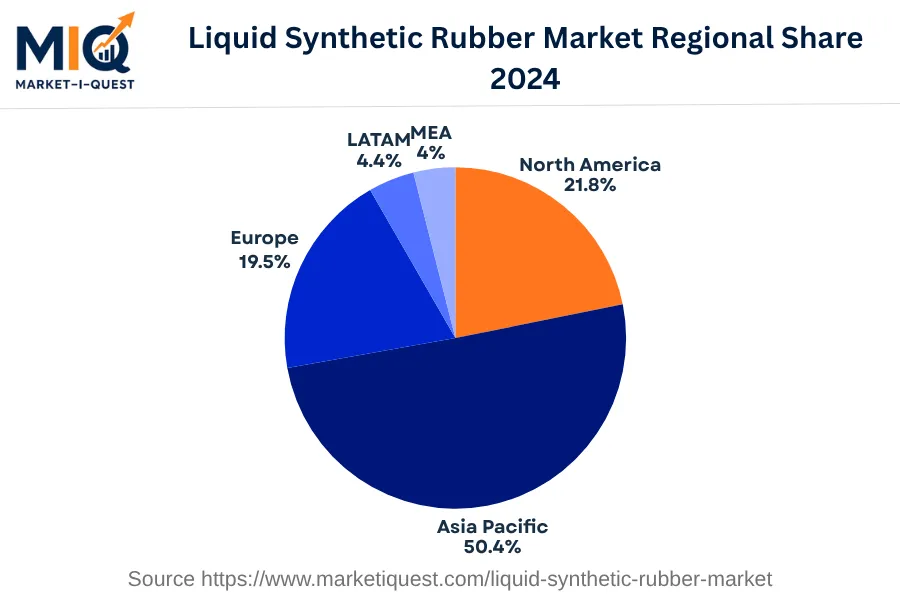
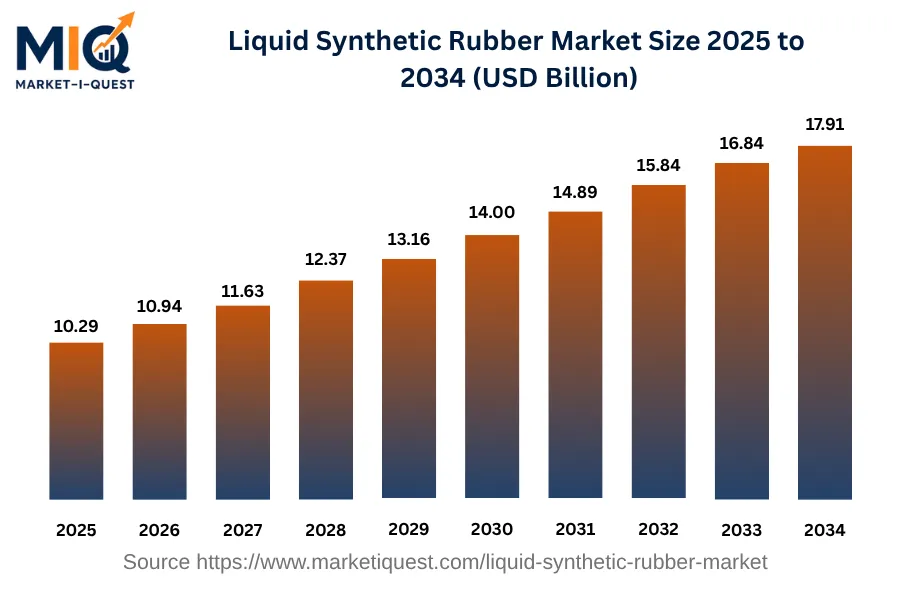
The Liquid Synthetic Rubber Market was valued at USD 10.29 billion in 2025 and it is expected to reach USD 17.91 billion by 2034, growing at a compound annual growth rate (CAGR) of 6.36% during the forecast period. This steady financial expansion over the decade is indicated by notable values in interim years. Looking at the regional distribution in 2024, the Asia Pacific region had the largest share in the market with 50.4%, whereas North America accounted for 21.8%. Europe closely followed North America's proportional contribution with a 19.48% share. More minor contributions came from Latin America and the Middle East and Africa regions, at 4.4% and 4.0% respectively. The market is thus geographically varied, with over half the share accounted for by the Asia Pacific region.

Key Takeaways

  • By Polymerization Process - Emulsion Polymerization stood as the leading process in 2024.
  • By Chemical Composition - Polybutadiene Rubber (BR) held a major share in the market in 2024.
  • By Application - Tires & Rubber Products led the market accounting for the largest share in 2024.
liquid-synthetic-rubber-market market size

Key Driving Factors

Shift Towards Eco-Friendly Products in Tyre Industry

One of the critical driving factors for the liquid synthetic rubber market is the shift towards eco-friendly products in the tyre industry. Tyre manufacturers around the world have been pressured by environmental agencies to reduce their carbon footprint. Liquid synthetic rubber, an alternative to natural rubber, can be produced with significantly lower emissions. Moreover, it has comparable, if not superior, product qualities such as toughness and resistance to heat and chemicals. The strategic need for sustainable production in this industry aligns with the ecological benefits of liquid synthetic rubber, thus boosting its market.

Dependency on Monsoons for Natural Rubber Production

Dependency on monsoons for natural rubber production is another specific driver for the liquid synthetic rubber market. Natural rubber is primarily cultivated in tropical regions where weather conditions, particularly rainfall, play a pivotal role in rubber yield. Inconsistent monsoons, potentially exacerbated by climate change, can negatively impact the production and pricing of natural rubber. Liquid synthetic rubber, on the other hand, produced in controlled industrial environments, offers a reliable alternative. Tyre and non-tyre manufacturers alike turn towards liquid synthetic rubber as the uncertainties associated with natural rubber production grow, further propelling the market for this synthetic alternative.

Market Evolution by Timeline

2019-2023
In this period, the primary buyers of liquid synthetic rubber were predominantly manufacturers in the automotive sector, with a notable demand from the tire industry, specifically from regions like North America and Asia-Pacific. Moreover, the rising preference for high-performance tires increased the demand. Most suppliers shipped their products through wholesale or distribution channels, facing constraints in supply chain disruption. Policies such as the United States Environment Protection Agency's Resource Conservation and Recovery Act (1976) potentially constrained the market. Commercially, sellers generally adopted a contract model, with fixed unit prices or volume-based pricing. The central risk during this period was owing to global trade instability affecting supply chains.
2024
In 2024, the demand pattern remained similar, with the automotive sector leading, however, a significant increase was noticed from building and construction sector, especially in developing economies. The suppliers experienced difficulty in meeting increasing demand because of limited production capacities. In response to the evolving environmental concerns, European Union's REACH regulations directly impacted the market. The market was characterised by long-term agreements with fixed prices. Fluctuating raw material prices introduced potential risks in this period, leading to irregularities in production costs.
2025-2029
During 2025-2029, the usage of liquid synthetic rubber skyrockets in the aerospace industries, fueled by increased space exploration and satellite launches, especially in the United States and Russia. However, suppliers faced hurdles in maintaining the quality consistency required by this new sector. Further, regulations like the European Union's End of Vehicle Life directive influenced the market dynamics by encouraging recycling. A shift towards indexed pricing contracts was observed, often linking the price to raw material costs. This period was characterized by higher R&D investments to overcome the challenge of producing aerospace-grade synthetic rubber.
2030-2034
By 2030-2034, the consumer goods sector, particularly footwear, became a significant buyer demographic, specifically in Brazil and India. Suppliers incorporated advanced technologies to scale up production while maintaining quality. The use of synthetic rubber in 'green' products got a push from policy programs like Clean Production Agreements in Chile. The emerging preference for cost-plus pricing contracts signified a shift in the commercial model. However, there remained a risk due to the still-growing technological capabilities required for high-quality, eco-friendly synthetic rubber.

Future Market Outlook

Future Opportunities

The future of the liquid synthetic rubber market is poised to expand with the increasing adoption of electric vehicles (EVs) and advancements in tire performance. As of 2023, major automobile manufacturers such as Tesla and Volkswagen are implementing liquid synthetic rubber in tire production, which offers better durability and performance under varying conditions. Additionally, the European Union’s Green Deal, initiated in 2019, encourages manufacturers to explore sustainable alternatives, creating a fertile ground for the growth of eco-friendly synthetic rubber products. In July 2022, a consortium including Michelin and the University of Lyon announced plans to investigate the integration of synthetic rubber derived from renewable resources, which could reshape the market dynamics. The rising demand for high-performance materials in industrial applications is another significant driver; companies like DuPont are enhancing their product lines to meet these needs. Furthermore, the implementation of stricter regulations concerning automotive emissions will push manufacturers to innovate in rubber formulations that improve fuel efficiency and reduce the environmental impact. In 2020, the International Organization for Standardization introduced ISO 14001:2015, which promotes effective environmental management systems in manufacturing. Consequently, firms that are proactive in adopting these regulations and sustainable practices are likely to capture significant market share as consumer preferences shift toward greener products in this sector.

Segmentation Analysis

By Polymerization Process

The market is divided into subsegments including Emulsion Polymerization, Solution Polymerization, and Bulk Polymerization. Emulsion Polymerization accounted for the largest revenue share while Solution Polymerization is expected to grow at the fastest CAGR during the forecast period.

Largest Revenue Share

Emulsion Polymerization

Market Share Leader

The Emulsion Polymerization process accounts for the largest share in the Polymerization Process market. Optimal conditions and specific, identifiable advantages drive its dominance. In contrast to other processes, Emulsion Polymerization enables the production of polymers with high molecular weight in a relatively short time. This higher efficiency leads to higher outputs and consequently greater revenue. Notably, Emulsion Polymerization is favored for producing latex products such as paints, adhesives, and sealants widely used in several industries, including construction, automotive, and packaging. The broad application scope feeds demand and thereby market growth. Geographies demonstrate differentiated uptake patterns. Regions rich in these industries, such as North America and Europe, contribute largely to this segment’s revenue. At the same time, emerging markets in the Asia-Pacific region are expanding rapidly, speculating a dynamic future. Finally, regulatory support for environmentally safe products encourages the use of Emulsion Polymerization, adding another layer of market preference.

Fastest CAGR

Solution Polymerization

Forecast Period Growth Leader

The Solution Polymerization process, while not the largest in terms of revenue, shows the highest growth rate. Its rise is attributed to wide functionality, versatility, and applicability resulting from the polymer's solution state. Efficiency improvements through technological advances pose a powerful catalyst for faster adoption. In addition, partnerships and collaborations are helping bridge the gap across various stakeholder ecosystems. The cost advantages offered are boosting the trend for substitution in use leading to increased market share, especially in markets where polymers command a high-volume usage such as the automotive and electronics industries. However, the adoption can face barriers in the form of environmental regulations given the relatively high-volatile organic compounds (VOCs) associated with the process. Nonetheless, on-going R&D towards green chemistry is expected to resolve this, rendering a robust outlook for the Solution Polymerization segment. Given this context, the prospect of future growth for Solution Polymerization appears quite strong.

By Chemical Composition

The market is segmented into various chemical compositions including Styrene-Butadiene Rubber (SBR), Polybutadiene Rubber (BR), and Ethylene-Propylene-Diene Monomer Rubber (EPDM). In the base year 2024, Polybutadiene Rubber (BR) accounted for the largest revenue share while Styrene-Butadiene Rubber (SBR) is anticipated to grow at the highest CAGR during the forecast period.

Largest Revenue Share

Polybutadiene Rubber (BR)

Market Share Leader

Polybutadiene Rubber (BR) dominates the chemical composition market segment in terms of revenue due to its vast and diverse range of applications. BR is extensively used in the manufacturing of tires, which makes it a significant contributor to the overall market growth owing to the continuous increase in automotive production. The polymer's excellent abrasion resistance and high tensile strength have fueled its demand in the automotive, construction, and industrial sectors. Geographically, Asia-Pacific is a significant consumer of BR due to its advancing automotive industry, particularly in countries like China, India, and South Korea. The stringent regulatory environment, advocating for energy-efficient vehicles with low rolling resistance tires, has further bolstered the market position of BR. Furthermore, the supply chains in these regions are well-established, reducing purchasing and switching costs, thus positively influencing BR's market hold.

Fastest CAGR

Styrene-Butadiene Rubber (SBR)

Forecast Period Growth Leader

Styrene-Butadiene Rubber (SBR) is projected to experience the fastest growth rate in the coming years. The primary driver for this accelerated growth is its increasing usage in non-tire applications in diverse industries such as construction, footwear, and adhesives due to its balance of good processability and mechanical characteristics. The advancements in polymer technology and manufacturing processes have expanded the application base of SBR, thereby catalyzing its market growth. While high capital expenditure remains a significant barrier, strategic partnerships and joint ventures appear to be a viable solution for companies to mitigate this challenge. The evolving automotive sector's emphasis on high-performance and eco-friendly tires can provide an incremental opportunity for SBR's market growth. However, fluctuating raw material prices and regulatory issues surrounding environmental concerns present near-term risks which could potentially hinder growth.

By Application

The market is divided into subsegments including Tires & Rubber Products, Belts & Hoses, Plastic Modifications, Footwear and Others. Tires & Rubber Products accounted for the largest revenue share while Plastic Modifications is expected to grow at the fastest CAGR during the forecast period.

Largest Revenue Share

Tires & Rubber Products

Market Share Leader

Tires & Rubber Products emerges as the subsegment with the highest revenue in 2024. The rising demand for automobiles globally, driven by a growing middle-class population, increasing urbanization, and high disposable incomes, predominantly fuels this. Additionally, consistent advancements in tire technology and the growing demand for high-performance tires further spur the demand for tires and rubber products. Alongside, stringent regulations regarding vehicle safety and emissions also act as a driver, as they mandate safety features, including tires that are in sync with the latest regulations. Geographically, Asia-Pacific, led by countries like China and India with substantial automobile sectors and high vehicle ownership rates, is a significant contributor to the subsegment's revenue. Key purchasing criteria include durability, compatibility, cost-effectiveness, and regulatory compliance, while switching costs can be high due to brand loyalty and the core nature of the product to the automotive industry.

Fastest CAGR

Plastic Modifications

Forecast Period Growth Leader

Plastic Modifications is forecasted to maintain the fastest growth rate among the subsegments. Increasing environmental concerns and legislative regulations aimed at reducing carbon footprint are propelling the market towards eco-friendly alternatives, with many businesses increasingly opting to replace conventional materials with polymers, thus driving the surge in plastic modifications. High capital investment in research and development by key market players to meet the demand for high-performance polymers and to find innovative polymer applications are acting as the principal growth catalysts. Adoption barriers include the initial high cost and potential resistance from traditional industries less versed in the possibilities of polymer transformations. In the short term, ambiguous raw material prices and their availability pose risks to the growth of this subsegment. Remarkably, the emergence of partnerships between manufacturers and end-users to develop customized solutions also marks a significant market trend.

Competitive Analysis

Key Market Players

Manufacturers / OEMs

Arnette Polymers Inc.
US
Kuraray Co. Ltd.
Japan
The Dow Chemical Company
US

Key Suppliers & Raw Materials

LG Chemical Ltd.
South Korea
Global Polymer Industrial LLC
US
LANXESS
Germany

Distributors, Integrators & Channel Partners

Bolder Industries
US
Krishna International Co., Ltd.
Japan
Niramax Group Limited
UK

Porter’s Five Forces Analysis

This analysis provides insights into the competitive scenario within the liquid synthetic rubber market.

Supplier Bargaining Power

Medium

Power is balanced due to the presence of several global and local raw material suppliers.

Buyer Bargaining Power

High

Large-scale buyers dominate the market, exerting pressure on prices and contract terms.

Threat of Substitutes

Low

Limited alternate materials are available that can compete with the synthetic rubber's performance.

Threat of New Entrants

Medium

Significant initial investments and technological know-how serve as entry barriers but aren't insurmountable.

Competitive Rivalry

High

Intense rivalry exists among established players, driven by differentiation, product quality, and pricing.

Regional Analysis

Geographic market dynamics and growth opportunities across key regions

Global Market Outlook

liquid-synthetic-rubber-market market regional share

North America

In 2024, the Liquid Synthetic Rubber Market in North America consolidated its presence in various sectors due to its increased demand. Drivers such as technology adoption have contributed to this consolidation. For instance, the U.S. automobile industry extensively utilized engineered elastomers for their fuel efficiency and waste reduction properties. Regulatory conversions also stimulated market growth. Canada, with its stringent environmental policies, paved the way for increased production and usage of eco-friendly rubber alternatives. In Mexico, foreign investment fueled expansions in its petrochemical industry, ensuring ample supply and affordable pricing, boosting demand.

Simultaneously, trends altering buyer behavior and market perceptions became noticeable across North America. A shift towards green manufacturing standards, notably in the U.S., prompted businesses to reconsider their material sourcing tactics drastically. Mexico observed a significant shift in channel dynamics, with e-commerce playing a key role in the procurement and sale of liquid synthetic rubber due to its cost-effectiveness and operational efficiency. Notably, partnerships and M&As became prominent as major corporations across the region sought to gain competitive advantage, such as the highly publicized merger of two major industrial players in the Canadian market. The impact of these trends and drivers was particularly evident in the manufacturing sector. The utilities and retail sectors also experienced substantial usage of synthetic rubber, underscoring its pivotal role in North America’s economic structure in 2024.

Asia Pacific

In 2024, the Liquid Synthetic Rubber Market in Asia Pacific demonstrated substantial dynamism, largely attributed to a confluence of demand factors, investments, and technological advancements. There was a heightened demand for synthetic rubber driven by the burgeoning automotive industry, particularly in China, India, and Japan. Additionally, government regulations emphasizing environmental sustainability, as in South Korea and Australia, drove industry players to invest in the production of eco-friendly synthetic rubber alternatives. Furthermore, the adoption of advanced rubber technology in key ASEAN markets along with favorable pricing dynamics catalyzed the market growth.

Shifting consumer preferences towards environmentally friendly products warranted significant shifts in production strategies, with manufacturers realigning their processes with sustainable practices. Technology became integral in shaping the market landscape, with the integration of artificial intelligence and machine learning in manufacturing processes witnessing prominence. Interestingly, e-commerce channel surfaced as a key sales avenue with an uptick in online purchases of synthetic rubber for industrial supply by manufacturing, utilities, and retail industries. Additionally, the prevalence of stringent policy enforcement, especially in Japan and Australia, resulted in a wave of mergers and acquisitions, as companies sought to meet the requisite standards and secure more extensive market coverage. Across the highlighted region, the clientele predominantly constituted enterprises in manufacturing and retail, and government bodies, driving significant demand for liquid synthetic rubber.

Europe

In 2024, the Liquid Synthetic Rubber Market in Europe was significantly defined by technological advancements and stringent environmental regulations. The predominantly automotive-focused industry witnessed growth, largely driven by the demand for environmentally friendly and sustainable materials in Germany, the United Kingdom, and France. Similarly, the mandate for reduced volatile organic compound emissions from the European Union encouraged numerous innovations in the development of low-emission synthetic rubbers, providing a significant boost to the market. A surge in investments in research and development, especially in the Nordics and Central & Eastern Europe, was a key driver in adopting advanced technologies for improved production efficiency and quality.

In terms of trends, a notable shift was observed in buyer behavior, as industries increasingly preferred synthetic rubber over its natural counterpart, owing to its performance advantages and consistent supply. This was particularly evident in sectors like manufacturing and utilities. Collaborative efforts and strategic partnerships became widespread to foster product innovation and market competitiveness, evident in the Benelux region. Simultaneously, the enforcement of stringent standards and policies by European regulatory bodies played a crucial role in shaping the Liquid Synthetic Rubber Market, compelling businesses to reckon with more sustainable and controlled manufacturing practices.

Latin America

In the base year 2024, the Liquid Synthetic Rubber Market in Latin America (LATAM) exhibited a dynamic nature due to various drivers and trends. Increased demand for durable and efficient materials in the automotive and construction sectors, particularly in Brazil and Mexico, drove market growth. A wave of technological adoption, most notably in Argentina, enhanced production efficiencies, leading to supply availability at competitive prices. Additionally, environmental regulations imposed by governments in Colombia and Chile stimulated market players to invest in eco-friendly synthetic rubber inventories. Major trends encompassed a noticeable shift toward bio-based liquid synthetic rubber, triggered by heightened consumer awareness and sustainability initiatives across LATAM. On the channel front, digital sales platforms gained traction, given the rise of e-commerce in Peru and beyond. Mergers and acquisitions were prevalent, with market leaders seeking to consolidate their positions and diversify product portfolios.

Furthermore, in Mexico and Argentina, stricter enforcement of quality standards impacted market behavior, demanding higher product specifications. The said drivers and trends were widely observed across industries such as automotive, construction, healthcare, manufacturing, and retail, signifying a diverse customer base. The Liquid Synthetic Rubber market in LATAM bore witness to these developments, indicating significant adaptations by market players within a rapidly evolving ecosystem, throughout the base year.
Middle East & Africa

In the base year 2024, the Liquid Synthetic Rubber Market in the Middle East and Africa registered noteworthy activity. Several drivers influenced this market's growth. Increasing demand for high-quality tire and non-tire automotive applications in Saudi Arabia and United Arab Emirates boosted consumption. Regulatory emphasis on reducing carbon footprint led countries like Qatar and South Africa to invest in eco-friendly components, hence adopting Liquid Synthetic Rubber due to its recyclable nature. Frequent technological advancements in Nigeria and Kenya's manufacturing sector also fueled its adoption, as the compound offers durability, resistance, and excellent adhesion qualities. China's active supply of raw materials aided cost-effective production in Israel.

In terms of trends, a shift towards the usage of LSR in healthcare devices was prevalent in Egypt due to its bio-compatibility. In South Africa's utility sector, silane-terminated polymers' incorporation for sealants and adhesives emerged as a trend. Moreover, strategic partnerships between UAE's oil and gas companies and global rubber manufacturers for secured supply chains were noted. Israel and Kenya enforced strict product standards and policies, urging LSR manufacturers to upgrade their processes. In Saudi Arabia's telecom sector, an upswing was seen in the use of Liquid Synthetic Rubber for cable applications due to its flame resistance attribute.

Recent Industry Developments

Latest market innovations, product launches, and strategic initiatives

January 2026

China's revised national food contact material standard (GB 4806.10) was scheduled to take effect on September 2, 2026, updating the regulatory framework for synthetic rubber materials in contact with food.

December 2025

Shandong Dawn Polymer Co. Ltd signed an agreement to acquire an 80% equity stake in Ningbo SK Synthetic Rubber Co., a joint venture between SK Geo Centric and Ningbo Chemical Development, for 516 million yuan (approximately €62 million). The acquisition included the transfer of EPDM patents, technologies, and trademarks from SK Group.

Frequently Asked Questions