
Liquid Nitrogen Market Snapshot

Key Players

  • Praxair Inc. (United States)
  • Air Liquide S.A. (France)
  • Linde Plc (Ireland)
  • Taiyo Nippon Sanso Corporation (Japan)
  • Messer Group GmbH (Germany)
  • Pune Gas (India)
  • Fujian Shenyuan Liquide Co. Ltd. (China)
  • Energas Technologies (South Africa)
  • Ellenbarrie Industrial Gases Ltd. (India)

Market Size

Base Year 2024
$19.22 Bn
CAGR
5.76%
Forecast 2034
$33.65 Bn

Market Segments

By Storage Type
  • Packaged Gas
  • Cylinder
By Function
  • Coolant
  • Refrigerant
By End-User Industry
  • Chemical & Pharmaceutical
  • Transportation
  • Food & Beverage
  • Electronics & Semiconductor
  • Others

Market Dynamics

Drivers
  • Increased industrial applications
  • Rising healthcare sector demand
Restraints
  • High storage cost
  • Strict transportation regulations
Opportunities
  • Rise in cryogenic applications
  • Development in frozen food industry

Market Size

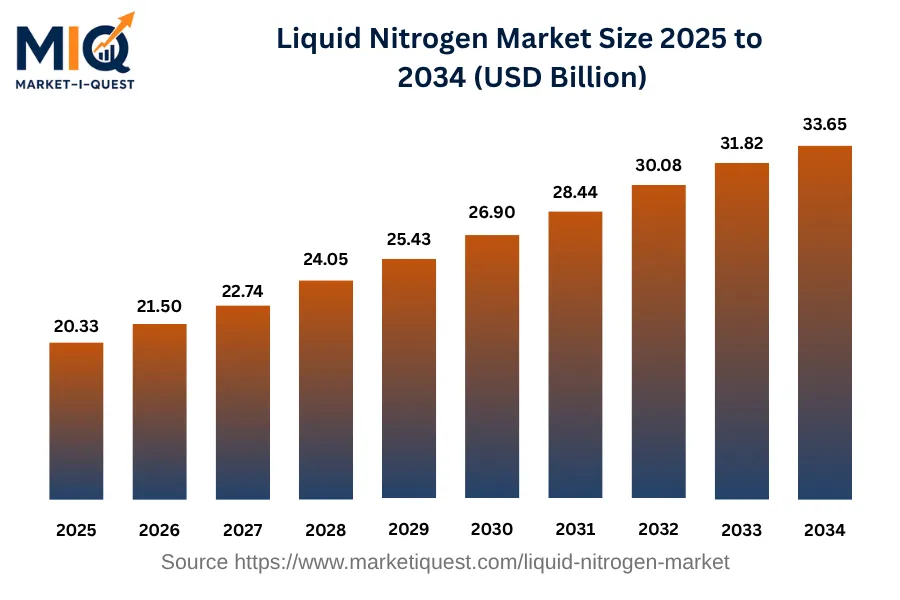
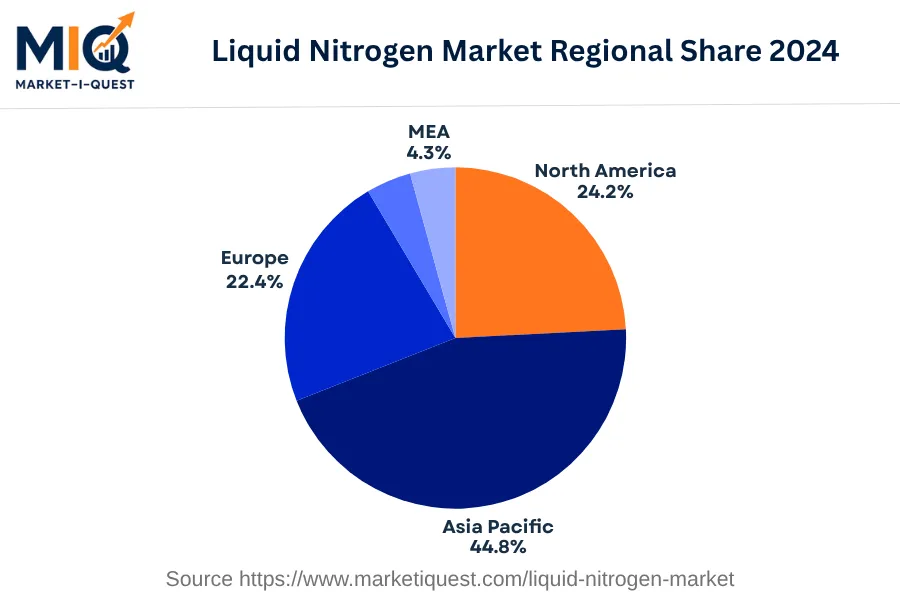
The Liquid Nitrogen Market in 2025 is assessed at USD 20.33 billion, growing from USD 19.22 billion in 2024. This growth influence continues through 2034, where the market size is projected to be USD 33.65 billion. This expansion trajectory from 2025 to 2034 yields a CAGR of 5.76%. The ascent in the market size over these years is rooted in the rising demand for liquid nitrogen across various sectors. Looking at the regional market share in 2024, the Asia Pacific region is the largest contributor, with a share of 44.84%. North America follows with a 24.18% share and Europe with a 22.43% share. Lastly, the LATAM and MEA regions account for 4.27% and 4.28% of the market share respectively.

Key Takeaways

  • By Storage Type - Packaged Gas led in the Liquid Nitrogen Market in 2024.
  • By Function - Coolant dominated the market holding the largest segment in 2024.
  • By End-User Industry - Chemical & Pharmaceutical was the leading segment in the Liquid Nitrogen Market in 2024.
liquid-nitrogen-market market size

Key Driving Factors

Medical and Healthcare Sector's Increased Need for Preservation

The medical and healthcare sector incorporates a large consumption of liquid nitrogen owing to its vital role in cryopreservation. It is primarily used in the cryogenic preservation of blood, stem cells, bone marrow, tissue samples, and other substantial biological elements. Specifically, due to surge in organ transplant cases globally, it necessitates the use of liquid nitrogen for preserving organs in a viable state for a protracted period. Moreover, the proliferation of in-vitro fertilization (IVF) clinics has accelerated, which fuels the requirement of maintaining the viability of sperm and ova for considerable durations, thus pushing the consumption of liquid nitrogen. Herein, the increased need for preservation supplies a critical driving factor for the liquid nitrogen market.
Adherence to Food Safety Regulations

Another substantial driver for the liquid nitrogen market is the stringent adherence to food safety regulations by companies in the food and beverage industry. Liquid nitrogen has become a popular choice for rapid freezing and chilling processes since it prevents the formation of large ice crystals that can damage food cells and lead to a loss in food texture and nutritional content. Furthermore, regulatory bodies, such as the US Food and Drug Administration (FDA) and European Food Safety Authority (EFSA), advocate strict quality standards. These stringent standards demand effective preservation methods to inhibit bacterial growth, enhancing the demand for liquid nitrogen in food preservation and packing operations, thereby propelling the market adoption rate.

Market Evolution by Timeline

2019-2023
In this period, buyers in Asia, particularly China and India showed increased purchase of liquid nitrogen, due to increased industrialization and demand in areas such as electronics, manufacturing, and pharmaceuticals. Supply was led by companies such as Praxair and Linde Group, who capitalized on the trend of gas outsourcing, where customers preferred buying from suppliers rather than producing in-house. Regulation became stricter, with authorities like the United States Environmental Protection Agency introducing standards for nitrogen oxide emissions, which impacted the industry. The commercial model revolved mostly around contract-based supply, with companies entering long-term agreements with customers. Pricing was relatively stable, with slight increases tied to global crude oil prices. A significant risk was safety concerns, with increasing industrial accidents leading to calls for improved safety measures.
2024
This year saw a shift in demand, with the liquid nitrogen market becoming more concentrated in North America, owing to growing end-users like healthcare, food & beverages, and metal fabrication. Existing suppliers continued to dominate the market, but there was an observed increase in small-scale suppliers with a regional focus. In terms of regulation, the focus was on implementation of previously set standards and rules. Pricing was influenced by the global economic situation, particularly the impact of the COVID-19 pandemic. The commercial model saw a trend towards short-term contracts, likely due to market uncertainties. Primary risks were related to interruptions in supply chain due to global scenarios.
2025-2029
In this period, demand and applications of liquid nitrogen expanded, particularly in Europe's energy sector, in response to the growth in renewable energy adoption. Innovation in cryogenic technology pushed the boundaries of how liquid nitrogen was used. Increased regulatory focus on environmental impact led to introduction of more robust regulations regarding nitrogen emissions. Pricing in this period was characterized by periodic volatility, driven by variations in global crude oil prices. Collaborations and partnerships between suppliers and major customers became a more common commercial model. The risk of non-compliance to regulations posed significant challenges.
2030-2034
The demand for liquid nitrogen was strong in Latin America due to developments in industrial and healthcare segments. Progress in cryogenic technology allowed suppliers to offer innovative solutions to various industries. Compliance to norms and regulations related to carbon footprint continued to govern industry practices. Majority of pricing arrangements transitioned to dynamic pricing due to increased market fluctuations. Partnership approaches gained momentum where suppliers collaborated with end-user industries to offer customized solutions. Supply chain disruptions due to climate change posed potential risks.

Future Market Outlook

Future Opportunities

Future opportunities within the liquid nitrogen market are shaped significantly by current regulatory landscapes and industry needs. In 2023, the Food and Drug Administration began formulating new guidelines for cryogenic preservation methods, creating potential pathways for innovation in biomanufacturing and clinical applications in the United States. Moreover, the increase in population health initiatives, particularly across Southeast Asian countries, has amplified the necessity for high-quality healthcare services, presenting a ground for liquid nitrogen’s deployment in medical applications. Partnerships between machinery manufacturers and research institutions, like that established between Air Products and the Massachusetts Institute of Technology in 2021, reflect active engagements to innovate preservation technologies, likely enhancing operational efficiencies. The education sector, particularly in countries like Canada and Australia, is increasingly focusing on STEM fields, which could lead institutions to adopt liquid nitrogen applications for experiments, driving demand. Furthermore, growing awareness of sustainability in food technology among consumers provides an opportunity for liquid nitrogen to emerge as a critical component in environmentally friendly food preservation methods. As industries explore methods to reduce their carbon footprints, liquid nitrogen's role as a safe and effective cooling agent is likely to emerge, supported by current environmental goals and regulations aimed at promoting sustainable practices on a global scale.

Segmentation Analysis

By Storage Type

The market is divided into subsegments including Packaged Gas and Cylinder. Packaged Gas accounted for the largest revenue share while Cylinder is expected to grow at the fastest CAGR during the forecast period.

Largest Revenue Share

Packaged Gas

Market Share Leader

Packaged Gas dominated in terms of revenue in the base year 2024 owing to several factors. Primarily, the ease of use and relative safety of Packaged Gas make it mostly preferred by consumers. Its utility in various sectors such as hospitality, industries, and domestic uses for cooking purposes has driven its demand significantly. Additional factors propelling the dominance of Packaged Gas include favorable regulations concerning safety and limited environmental impact, and its wide availability. Geographically too, its usage and purchase extend across a wide array of regions due to easy and efficient delivery systems, thus further enhancing its revenue share. The purchasing criteria frequently involve considerations of safety and supply reliability, for which Packaged Gas often stands out. It is observed that customers who have once switched to Packaged Gas encounter high switching costs when considering other alternatives, thereby ensuring a steady customer base. Its sale through numerous channels including online platforms has also enabled a wider reach.

Fastest CAGR

Cylinder

Forecast Period Growth Leader

Cylinder market is set to experience the fastest growth in terms of CAGR. Even though the current market size is smaller than the Packaged Gas segment, several influencing factors promise encouraging progress. Technological advancements and innovations in the design and function of gas cylinders can be significant catalysts in driving this growth. Barriers to adoption, such as safety concerns and transportation difficulties, are being mitigated with the advent of lightweight and safe-to-use cylinders. Strategic partnerships and alliances between gas providers and cylinder manufacturers too are fostering a conducive environment for its growth. Policy support from governments regarding the use of cleaner fuels could further serve as a catalyst. Near-term risks to such growth could include fluctuating raw material prices and stringent regulations, but with appropriate planning and efficiency measures, these risks can be effectively managed.

By Function

The market is divided into subsegments including Coolant and Refrigerant. In 2024, Coolant accounted for the largest revenue share while Refrigerant is expected to grow at the fastest CAGR during the forecast period.

Largest Revenue Share

Coolant

Market Share Leader

The Coolant subsegment dominates the market in terms of revenue largely due to its wide range of applications. Coolants are crucial in regulating the temperature of engines and machinery across various industries, including automotive and manufacturing, driving steady demand. Geographically, coolant demand is particularly high in regions with substantial industrial and automotive activities, such as North America and the Asia Pacific. Additionally, stringent regulations relating to engine emissions and the rising adoption of energy-efficient solutions act as drivers for the Coolant subsegment. Purchasing criteria often revolve around the coolant's effectiveness, durability, and cost, leading consumers to prioritize trusted brands and high-quality products. Channels for purchase differ based on the customer, with large-scale industries opting for direct purchase from manufacturers, while smaller businesses and individuals often go through retailers or online marketplaces.

Fastest CAGR

Refrigerant

Forecast Period Growth Leader

The Refrigerant subsegment is expected to experience the fastest growth during the forecast period. The growing need for climate control solutions in residential, commercial, and industrial settings fuels this growth. Technological innovations making refrigerants more efficient and eco-friendly provide additional catalysts for expansion. However, this subsegment also faces significant barriers to adoption, including regulatory pressures due to environmental concerns associated with traditional refrigerants. Many countries are implementing stricter regulations on the use of certain refrigerants that have a high Global Warming Potential (GWP), requiring producers and consumers to adapt to alternatives. Potential risks in the near term include volatility in raw material prices and potential supply chain disruptions due to geopolitical factors. Long-term success in this subsegment will likely hinge on continuous innovation, compliance with environmental regulations, and robust manufacturing and distribution partnerships.

By End-User Industry

The market is divided into subsegments including Chemical & Pharmaceutical, Transportation, Food & Beverage, Electronics & Semiconductor, and Others. In 2024, the Chemical & Pharmaceutical subsegment accounted for the largest revenue share, while the Electronics & Semiconductor subsegment is expected to grow at the fastest CAGR during the forecast period.

Largest Revenue Share

Chemical & Pharmaceutical

Market Share Leader

The Chemical & Pharmaceutical segment demonstrated the highest revenue generation in 2024, primarily driven by increasing global demand for pharmaceuticals and the fashioning of advanced chemical compounds. Its position as a cornerstone of economic development and wellbeing both increases its market penetration and drives its purchasing volumes. Developed countries and emerging markets bolster this segment's revenue as they dedicate significant resources to healthcare, research, and development. The strict regulatory standards present a high barrier to entry, giving established chemical and pharmaceutical businesses an edge that further drives their revenue. Additionally, the purchasing criteria favour safety and efficacy, wherein established brands excel. An ongoing trend towards outsourcing manufacturing to lower cost regions also expands the margins. With high customer switching costs associated with testing and compliance, an expected consolidation within the industry, and growth in relevant sectors, the Chemical & Pharmaceutical segment is projected to maintain its leading position.

Fastest CAGR

Electronics & Semiconductor

Forecast Period Growth Leader

The Electronics & Semiconductor subsegment is forecasted to experience the fastest CAGR. This growth is fuelled by digital transformation trends and technological advancements such as the increasing popularity of IoT, automation, AI, and the robust demand for consumer electronics. There is a continual shift towards smart and connected devices, which has boosted the semiconductor industry significantly. However, adoption barriers such as high capital cost and complex manufacturing processes might temporarily hinder growth. Strategic partnerships and collaborations could act as catalysts, enabling players to share expertise, technology, and financial risk. Innovation and concurrent policy development promoting electronics manufacturing may field opportunities for businesses. Near-term risks include trade tensions and supply chain disruptions upset by geopolitical instability or natural disasters. Appeal will rely on how well challenges can be navigated, if met with sound strategic decision-making, it could indeed be a period of remarkable growth for the Electronics & Semiconductor subsegment.

Competitive Analysis

Key Market Players

Manufacturers / OEMs

The Linde Group
Germany
Praxair Inc.
US
Air Liquide
France

Key Suppliers & Raw Materials

Air Products and Chemicals, Inc.
US
Taiyo Nippon Sanso Corporation
Japan
Messer Group
Germany

Distributors, Integrators & Channel Partners

Southern Industrial Gas Sdn Bhd
Malaysia
Gulf Cryo
Kuwait
Emirates Industrial Gases Co. LLC
UAE

Porter’s Five Forces Analysis

Analysis of the competitive forces in the liquid nitrogen market

Supplier Bargaining Power

Medium

Suppliers are limited due to high production costs and stringent safety requirements

Buyer Bargaining Power

Medium

Numerous buyers with a broad range of applications, yet specific product requirements restrict choice

Threat of Substitutes

Low

Few viable substitutes due to liquid nitrogen’s unique properties and applications

Threat of New Entrants

Low

Entry barriers are high due to significant capital expenditure, stringent regulations, and technical expertise requirements

Competitive Rivalry

High

Intense rivalry among major players due to the high market concentration and growth potential

Regional Analysis

Geographic market dynamics and growth opportunities across key regions

Global Market Outlook

liquid-nitrogen-market market regional share

North America

In 2024, the North American market for liquid nitrogen saw considerable expansion driven by a variety of factors. The increasing demand for liquid nitrogen in the healthcare sector, specifically for cryopreservation and cryosurgery procedures, was a key driver. Advancements in technology adoption for improved liquid nitrogen production also fueled this growth. Rising investment in research and development, particularly within the United States, complemented by favorable government policies for scientific exploration, was additionally propelling the market. With liquid nitrogen also playing a crucial role in waste management across various industries, it indirectly gained from the sustainable practices push in Canada and Mexico.

Concurrently, several trends were seen on the market. An evolving preference towards cryogenic food freezing anchors the food industry's buyer behavior, utilizing liquid nitrogen for its rapid and efficient freezing capabilities. Increased usage of LIDAR technology in autonomous driving also kept the demand high in the automotive sector. Amidst concerns for environmental sustainability, emerging partnerships between waste management sectors and nitrogen suppliers revealed a shift towards using liquid nitrogen for novel waste treatment methods. The enforcement of stringent safety regulations for storage and transport by regulatory bodies like OSHA and NIOSH influenced the market dynamics, encouraging safer, more secure liquid nitrogen handling practices throughout the continent.

Asia Pacific

In 2024, the Liquid Nitrogen Market in Asia Pacific portrays substantial vigour due to various drivers and trends. Pertinent demand factors include amplified uptake in sectors such as healthcare, for cryogenics and surgical procedures; manufacturing, for component cooling applications; and utility companies, for energy storage solutions. Regulation-wise, China and India's more stringent food safety and environmental mandates bolster liquid nitrogen usage for quick-freeze food processing and industrial emission control respectively. Investment into technology adoption, led notably by Japan and South Korea, propels the market, opening new commodity and specialty applications in electronics manufacturing and advanced material production.

On the trend front, commercial buyers, especially in China and key ASEAN markets, increasingly prefer outsourcing to on-site nitrogen generation for cost and reliability reasons. In product shifts, ultra-high-purity liquid nitrogen gains traction chiefly among healthcare and manufacturing clients in Australia and Japan. Channel-wise, supplier consolidation is evident, with multinational gas companies acquiring local industrial gas providers to strengthen their market foothold and supply chain capabilities. Lastly, enforcement of safety standards for liquid nitrogen handling and storage across the region intensifies, largely prompted by industrial accidents in past years. This trend underscores quality-centric and accredited vendors' strengthening industry positions, also incentivizing non-compliant suppliers to enhance safety provisions.

Europe

In 2024, the European Liquid Nitrogen market exhibited significant activity due to various factors across different sectors. Key drivers include increased demand for liquid nitrogen in the food and beverage industry, especially in countries like the United Kingdom and France, for freezing and packaging purposes, enhancing the shelf life of products. Furthermore, stringent health regulations in Germany and the Nordics mandated temperature-specific storage in pharmaceutical and healthcare sectors, bolstering demand. Technological advancements also played a role, with Italy and Spain adopting nitrogen-based power generation systems, consequently escalating the supply dynamics.

From a trends perspective, the year witnessed the shift in buyer behavior towards environmentally-friendly alternatives for the storage and transportation of medical specimens, particularly in healthcare-oriented markets like the Benelux countries and central and eastern Europe,directly boosting the liquid nitrogen market. Partnerships were also prevalent, with German manufacturing companies merging with liquid nitrogen providers for efficient metal fabrication processes. There was also a shift towards using liquid nitrogen in waste treatment processes, driven by new environmental policies enforced across Europe. In retail, supermarkets across France and the United Kingdom capitalized on in-store cryopreservation services for food products, evidencing the expanding scope of liquid nitrogen application. These factors underpinned the dynamic landscape of the liquid nitrogen market in Europe for the base year.

Latin America

In 2024, the Liquid Nitrogen market in LATAM experienced significant growth catalyzed by several key factors. One notable driver was the expansion of the healthcare sector in countries like Brazil and Mexico, resulting in increased demand for liquid nitrogen used in cryogenic preservation and dermatology procedures. Additionally, regulatory changes in Argentina spurred greater investment in innovative cryogenic technologies, contributing to market growth. Adoption rate of such technologies was also pushed by progressive governmental policies in Colombia, encouraging the use of liquid nitrogen in utilities for waste disposal and cooling processes. In Chile, expanding industrial operations, particularly manufacturing, required liquid nitrogen for metal processing and freezing applications, bolstering supply dynamics in the market. Finally, competitive pricing across the region, especially in Peru, where affordable resources are available, enhanced the market's attractiveness.

In terms of trends, concerted efforts to standardize policy enforcement around liquid nitrogen use in healthcare were observed across LATAM. Furthermore, evolving buyer behavior was depicted through increased preference for medical procedures using liquid nitrogen. A shift towards more efficient nitrogen distribution channels also became apparent, while notable partnerships were formed between liquid nitrogen suppliers, enterprise customers, and retail chains to ensure consistent supply. Lastly, an uptick in technology partnerships and M&A activity sought to edge ahead in this escalating market competition, underscoring a dynamic year for the Liquid Nitrogen market in the LATAM region.

Middle East & Africa

In 2024, the Liquid Nitrogen Market in the Middle East and Africa demonstrated significant dynamics. Primary drivers included rising industrialization, with Saudi Arabia, UAE, and Nigeria experiencing robust demand in healthcare, manufacturing, and oil & gas sectors. Regulatory changes, particularly in South Africa and Israel, fostered increased adoption of liquid nitrogen technologies due to enhanced environment standards. Investment sentiments remained high in UAE, with dominant players expanding their supply facilities to cater to the skyrocketing demand. On the trends front, customers in Egypt and Qatar exhibited shifts towards technologically advanced nitrogen products for food preservation and medical applications, bolstering market favorability. Kenya's focus on channel optimization through strategic partnerships encouraged market expansion. Israel and Saudi Arabia witnessed increased policy enforcement around the safe and efficient use of liquid nitrogen, stimulating market growth.

Interestingly, the oil and gas sector in Saudi Arabia, UAE and Qatar stood out as a notable consumer segment, buoyed by application in oil recovery processes. Similarly, healthcare sectors in South Africa, Nigeria, and Egypt registered sizeable demand driven by liquid nitrogen’s utility in cryosurgery, cryotherapy, and cryopreservation. Additionally, the manufacturing sectors in UAE and Israel boosted consumption, influenced by the use of liquid nitrogen in metal treatment and cooling applications. Across regions, retail services also emerged as key beneficiaries, exploiting liquid nitrogen's advantageous properties in food preservation and packaging.

Recent Industry Developments

Latest market innovations, product launches, and strategic initiatives

July 2026

Beijing LabTech Instruments launched the LNG Series Liquid Nitrogen Generator, a plug-and-play solution featuring a built-in PSA nitrogen generator, cryocooler, helium compressor, and internal Dewar. The system reduces liquid nitrogen loss by 25% during transport and lowers operating costs to one-third of purchased liquid nitrogen. Applications include NMR spectroscopy, blood and stem cell sample preservation, metal treatment, IVF clinics, and superconductivity research.

April 2025

China's National Medical Products Administration (NMPA) initiated the national standard development for "Medical Liquid Nitrogen Storage Systems" (plan number 20251207-T-464), with key technical specifications including storage temperature, static evaporation rate, maximum sample capacity, liquid level control, anti-condensation, emergency sample protection, and automation requirements.

Frequently Asked Questions