Liquid Handling System Market Snapshot

Key Players

  • Thermo Fisher Scientific Inc. (US)
  • Hamilton Company (US)
  • Eppendorf AG (Germany)
  • Beckman Coulter Inc. (US)
  • Corning Incorporated (US)
  • Agilent Technologies (US)
  • Tecan Group Ltd. (Switzerland)
  • Sartorius AG (Germany)
  • PerkinElmer Inc. (US)
  • Bio-Rad Laboratories (US)

Market Size

Base Year 2024
$6.33 Bn
CAGR
8.74%
Forecast 2034
$14.63 Bn

Market Segments

By Fusion Type
Anterior Interbody Fusion, Anterior Liquid Handling System, Posterior Fusion
By Type
Metal, Polymer, Others
By Surgery
Minimally Invasive Spine Surgery, Open Spine Surgery
By End User
Orthopedic Clinics, Multispecialty Hospitals, Neurology Clinics, Others

Market Dynamics

Drivers
  • Increasing biomedical research
  • Advancements in lab automation technology
Restraints
  • High Equipment Costs
  • Stringent Regulatory Requirements
Opportunities
  • Rising biotechnological advancements
  • Increasing demand in pharmaceuticals

Market Size

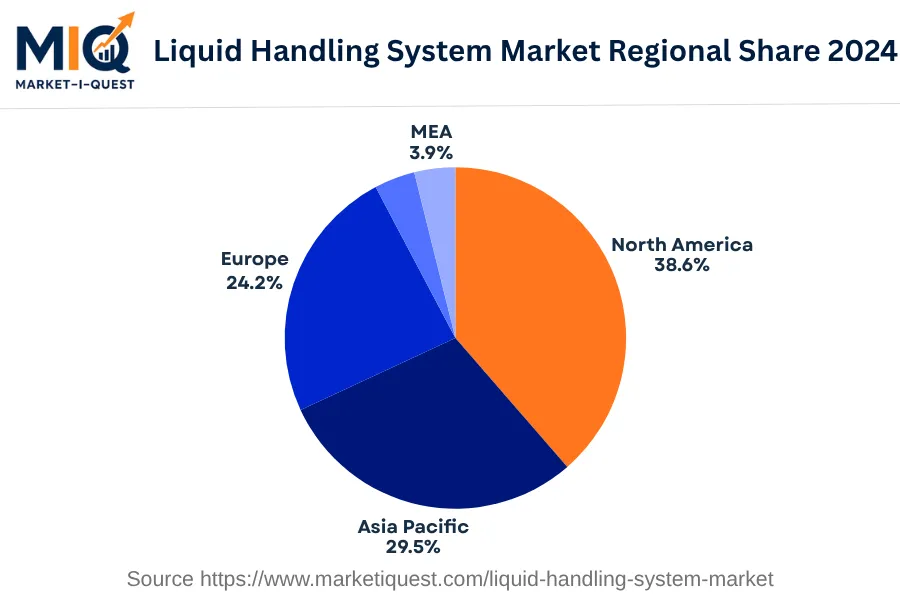
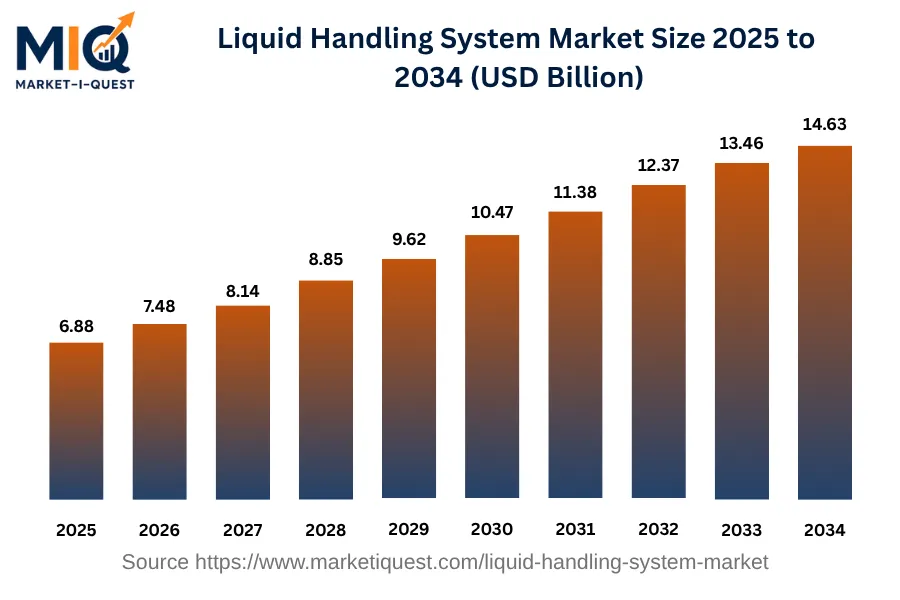
The Liquid Handling System Market is estimated to be $6.88 Billion in 2025 and is projected to grow to $14.63 Billion by 2034, reflecting a CAGR of 8.74%. The defined market displayed a value of $6.33 Billion in 2024 before increasing to the aforementioned valuation in 2025. It will maintain this growth trajectory over the next decade, nearly doubling its total size by 2034. The growth journey will be characterized by consistent capital influx and technological advancements. The regional market share in 2024 is distributed with North America leading the pack at 38.62%, closely followed by Asia Pacific accounting for 29.46%. Europe has a substantial market share of 24.18%, while LATAM and MEA hold smaller shares at 3.86% and 3.88% respectively. The market growth is spread across different geographical regions, giving it a diverse and broad landscape. The market is poised for substantial growth in the coming years.

Key Takeaways

  • By Fusion Type - Posterior Fusion led in market standing accounting for a significant portion in the base year.
  • By Type - Metal held a dominant position in the Liquid Handling System Market.
  • By Surgery - Minimally Invasive Spine Surgery stood as the fastest-growing segment.
  • By End User - Multispecialty Hospitals led the market accounting for the highest share.
liquid-handling-system-market market size

Key Driving Factors

Implementation of Molecular Diagnostic Testing

An increase in the implementation of molecular diagnostic testing is serving as a unique driver for the Liquid Handling System market. Diagnostic laboratories are extensively using liquid handling systems to automate the process of developing a diagnosis from patient samples. The reason behind this adoption is the requirement for precise measurement and transferring of fluids in these tests as it directly impacts the accuracy of diagnostic results. Especially in the time of COVID-19, where large scale testing is required, these systems are seeing a heightened level of usages, thereby boosting their market.

High-Throughput Screening in Drug Discovery

High-throughput screening (HTS) in the process of new drug discovery is another key driving factor in the liquid handling system market. Pharmaceutical and biotechnology firms are executing HTS to screen and analyze multiple compounds quickly. The implementation of liquid handling systems is necessary in this scenario for its qualities of testing large numbers of biological modulators and effectors upon biological molecules, cells, or microorganisms, which creates the demand for precise and high-speed liquid handling systems. Thus, for increasing the efficiency and speed of drug discovery, pharmaceutical companies are making significant investments in liquid handling systems, bolstering the market growth.

Market Evolution by Timeline

2019-2023
During 2019-2023, research-based organizations in North America became the prime buyers of liquid handling systems, driven by the need for automated lab processes. Bioplastics with pipetting systems became a trend, most often shipped for integration into liquid handling systems. Constraints revolved around the high cost of the devices. The US FDA ruled regulations for equipment validation affecting overall usage. Contract-based agreements with manufacturers dominated commercial models. However, inexperienced staff led to a potential risk of implementation errors.
2024
In 2024, demand from European biomedical laboratories increased impacting distribution channels. Several products shipped were marked by interoperability with diagnostic equipment. Technology integration remained slow due to an unmatched standard for data transfer protocol between diverse machines. The European Commission's Medical Device Regulation impacted product standardization and market adoption. A rental model was noted wherein small enterprises could access high-cost equipment. The major risk was the inadequate number of skilled professionals.
2025-2029
The period 2025-2029 saw an upward shift with Asia-Pacific joining the large pool of buyers, particularly for microfluidic setups. More products shipped were incorporating cloud connectivity. Labor tightness limited implementation. The Real-Time Locating Systems (RTLS) Standard for Active Medical Devices pushed the market for connected devices. Cost-sharing collaborations became the norm. Nonetheless, cybersecurity stood as a big threat to the adoption of connected systems.
2030-2034
Between 2030 and 2034, the rise in personalized medicine and genomics in regions like the Middle East and Africa drove demand for liquid handling systems. Products began to feature advanced automation aligned with AI. Yet, ethical concerns regarding data privacy slowed adoption. Global harmonization of device software regulations was on the agenda for policymakers. Pay-per-use became a typical commercial model, broadening accessibility. Even so, the substantial upfront investment in automation was a key constraint.

Future Market Outlook

Future Opportunities

There are numerous opportunities for growth within the liquid handling system market, primarily influenced by ongoing developments in healthcare and life sciences. The increasing focus on personalized medicine and biologics is pushing laboratories to seek advanced liquid handling solutions that can efficiently manage complex workflows. In 2023, the FDA proposed new guidelines encouraging the use of automated systems to enhance reproducibility in drug development processes, which could lead to increased demands for sophisticated liquid handling technologies among pharmaceutical companies. Additionally, academic and research institutions are increasingly investing in liquid handling automation to support high-throughput screening and genomics projects, as seen with the University of California's extensive upgrades to their laboratory capabilities. The demand for cloud-based platforms that enable collaborative research efforts is also on the rise, as exemplified by the partnerships between companies like Beckman Coulter and various universities to integrate liquid handling systems into distributed research networks. Furthermore, advancements in nanotechnology are opening doors for innovative applications in healthcare diagnostics, where precision liquid handling will be critical, illustrated by MIT's recent research endeavors using microfluidic technologies. Enhanced global outreach of liquid handling manufacturers into emerging markets, coupled with rising R&D budgets among biotech firms, creates a favorable landscape for future innovations and deployments in the liquid handling sector.

Segmentation Analysis

By Fusion Type

The market is divided into subsegments including Anterior Interbody Fusion, Anterior Liquid Handling System, and Posterior Fusion. Posterior Fusion accounted for the largest revenue share, while the Anterior Liquid Handling System is expected to experience the fastest CAGR during the forecast period.

Largest Revenue Share

Posterior Fusion

Market Share Leader

The Posterior Fusion subsegment leads the revenue share in base year 2024, driven by various market factors. The prime driver is its extensive utilization in spinal surgeries, given its high efficiency and success rate. Most surgeons prefer this technique due to its demonstrated performance in providing stabilizing the spine and reducing patient discomfort. Moreover, the prevalent back pain and spine conditions worldwide contribute significantly to its high demand. Geographically, it has been observed that regions with an aging population, like North America and Europe, comprise a substantial share of the revenue due to the prevalence of spine-related afflictions. This factor is amplified by the high healthcare expenditure and medical insurance coverage in such regions. The regulative landscape also supports this subsegment through approvals of sophisticated surgical systems for posterior fusion. Importantly, patients focus on the success rate and safety of the surgical procedure, leading to a higher preference for this technique.

Fastest CAGR

Anterior Liquid Handling System

Forecast Period Growth Leader

The Anterior Liquid Handling System is predicted to grow at the fastest CAGR. Although it currently doesn't hold the highest revenue share, its future prospects strongly suggest it is a growth segment. Key growth drivers include technological advancements and a shift to minimally invasive procedures, which this system is designed to facilitate. Its adoption is further catalyzed by strategic partnerships and alliances between medical device manufacturers and healthcare providers, aiming to provide integrated solutions. Increasing capital expenditure in healthcare infrastructure, particularly in emerging economies, provides an impetus for the adoption of novel technologies like this. However, barriers exist, primarily related to the elevated costs of these systems and the need for advanced skills to operate them, which may slow down penetration. Near-term risks could also include regulatory challenges as these systems involve sophisticated technology requiring high scrutiny. Still, given the overall industry trend towards advanced technology and minimally invasive surgeries, the subsegment is primed for rapid growth.

By Type

The market is divided into subsegments including Metal, Polymer, and Others. The Metal subsegment accounted for the largest revenue share while Polymer is expected to grow at the fastest CAGR during the forecast period.

Largest Revenue Share

Metal

Market Share Leader

The Metal subsegment leads in revenue in the base year 2024 due to a variety of driving factors. Primarily, the inherent strength, durability, and resistance to environmental conditions of metal products make them preferable for many applications. Metal components are integral to sectors including construction, automotive, and aerospace, supporting robust sales. The steady demand from these sectors, combined with the high purchasing power in developed nations, has allowed the Metal subsegment to maintain its lead. Government regulations, especially around construction and safety standards, have also favored metal over other alternatives. Stable supply chains and longstanding business relationships ensure a steady metal supply to manufacturers, lessening the switching costs. Finally, diverse distribution channels, both online and offline, offer convenience to customers, further boosting sales in the Metal subsegment.

Fastest CAGR

Polymer

Forecast Period Growth Leader

The Polymer subsegment is projected to grow at the fastest rate. Major growth catalysts include technological innovations, significant capital investment in the sector, and strategic partnerships in the industry. Polymers, with their versatility and adaptability, offer a range of applications in numerous sectors like automotive, packaging, and electronics. Emerging technologies are enabling the creation of advanced polymers, surpassing the capabilities of traditional materials. This spurs their adoption even further. However, barriers to adoption exist in the form of environmental concerns and stringent regulations. The industry, however, is tackling this by investing in bio-based and sustainable polymers. Public-private partnerships and collaborative research initiatives also contribute to the growth of this subsegment. In the near term, risks may include volatile raw material prices and potential supply chain disruptions, yet the sector's potential and the ongoing innovation make it the fastest-growing subsegment.

By Surgery

The market is divided into subsegments including Minimally Invasive Spine Surgery and Open Spine Surgery. Open Spine Surgery accounted for the largest revenue share while Minimally Invasive Spine Surgery is expected to grow at the fastest CAGR during the forecast period.

Largest Revenue Share

Open Spine Surgery

Market Share Leader

Open Spine Surgery continues to dominate the market due to its extensive application in severe spinal complications. Despite the introduction of minimally invasive procedures, open spine surgery is preferred for complicated cases due to its superior accessibility and visibility for surgeons. Moreover, patients suffering from multiple levels of spine deformity or degenerative diseases often require open surgery for a comprehensive treatment outcome. In terms of geography, developed markets like North America and Europe contribute significantly to this subsegment's revenues due to the prevalence of spinal disorders and availability of advanced healthcare infrastructure. Additionally, the mature regulatory framework governing these surgeries and the reimbursement policies contribute to the high usage of open spine surgery. However, the high costs associated with these surgeries and longer recovery periods might constrain the growth in developing markets.

Fastest CAGR

Minimally Invasive Spine Surgery

Forecast Period Growth Leader

Minimally invasive spine surgery, while currently smaller in revenue, exhibits the highest growth rate for a number of reasons. The foremost driver is the increasing technological advancements which are making these procedures safer and more effective. These technological leaps are reducing the perceived risk associated with surgeries, promoting adoption amongst both healthcare professionals and patients. The shorter recovery time, lower rate of infection, and less post-operative discomfort offered by minimally invasive procedures further fuel their adoption. Additionally, increased investments and partnerships within the healthcare tech industry are enhancing the accessibility of such surgeries to patients worldwide. However, implementation challenges like high upfront costs, lack of skilled professionals, and reluctance in adoption due to unfamiliarity with new technology may act as near-term growth barriers.

By End User

The market is divided into four subsegments including Orthopedic Clinics, Multispecialty Hospitals, Neurology Clinics, and Others. Multispecialty Hospitals accounted for the largest revenue share while Neurology Clinics are expected to grow at the fastest pace during the forecast period.

Largest Revenue Share

Multispecialty Hospitals

Market Share Leader

Multispecialty Hospitals have been leading the market in terms of revenue, owing to an array of factors. A key reason includes their broad spectrum services that cater to diverse health issues, thus attracting a wider patient base. They often have dedicated orthopedic departments, driving demand in this market segment. The presence of an array of medical specialties under one roof makes it convenient for patients, thereby leading to more visits. Advanced facilities and availability of specialists also contribute to better patient outcomes, which in turn, increases the trust and a subsequent increase in patient visits. Furthermore, multispecialty hospitals have a better capacity for investment in cutting-edge medical technology and infrastructure, providing them an edge over others. The higher inpatient volume is also a contributing factor to more significant revenue generation in multispecialty hospitals. Finally, these hospitals are strategically located in urban areas where patient population is dense and has a higher ability to pay.

Fastest CAGR

Neurology Clinics

Forecast Period Growth Leader

Neurology Clinics are projected to be the fastest-growing segment, driven by the proliferation of neurological conditions and the rise in demand for specialized care for these disorders. The growing adoption of new-age technologies and treatments in the neurology domain, such as cutting-edge neuroimaging and neuroendoscopy techniques, has significantly improved the treatment outcomes driving more patients towards these clinics. Additionally, the advancement in and the availability of genomic medicine have led to personalized treatment plans, resulting in swifter recovery and better patient satisfaction. Furthermore, partnership between neurology clinics and research institutions for deploying evidence-based treatment methods can serve as a catalyst for growth in this segment. However, barriers like the high cost of treatments are a constant challenge and may define its growth trajectory in the short term. Despite this, steady investment in research, clinical trials, and the development of cheaper treatment alternatives could mitigate this risk and support sustained growth.

Competitive Analysis

Key Market Players

Manufacturers / OEMs

Thermo Fisher Scientific Inc.
US
Tecan Group Ltd.
Switzerland
Agilent Technologies
US

Key Suppliers & Raw Materials

Hamilton Company.
US
Corning Incorporated
US
Greiner Bio-One International GmbH
Germany

Distributors, Integrators & Channel Partners

Bio-Rad Laboratories
US
Sigma-Aldrich Co.
US
Beckman Coulter, Inc.
US

Porter’s Five Forces Analysis

This analysis evaluates the competitive intensity and market attractiveness of the Liquid Handling System Market.

Supplier Bargaining Power

Medium

Competition between suppliers and moderate switching costs create moderate bargaining power.

Buyer Bargaining Power

High

The presence of many alternative systems affords buyers high bargaining power.

Threat of Substitutes

Medium

Other techniques pose a medium threat due to their potential effectiveness and lower costs.

Threat of New Entrants

Low

High entry barriers due to costly capital equipment and technology sophistication limit new entrants.

Competitive Rivalry

High

Intense competition due to the presence of major, well-established firms in the market.

Regional Analysis

Geographic market dynamics and growth opportunities across key regions

Global Market Outlook

liquid-handling-system-market market regional share

North America

In 2024, the North American liquid handling system market stabilized, becoming an essential part of lab automation in sectors such as healthcare, pharmaceuticals, and academia. The technological adoption augmented demand for liquid handling systems with the core drivers being automation in laboratories reducing human error, optimizing workflow, and increasing efficiency. Advances in compliance protocols across healthcare, biotechnology, and pharmaceutical sectors due to stricter regulatory measures on laboratory practices helped maintain quality control, thus enhancing system adoption. Additionally, an increase in clinical trials targeting various diseases and conditions in North America contributed to the escalated need for liquid handling systems.

Market trends for 2024 showed a shift towards microfluidics technology for precise fluid manipulation creating a fresh wave of interest among end-users in the healthcare and life sciences sectors. The rise in partnerships and mergers was also witnessed, strengthening the suppliers' position and expanding the product offering range. A considerable change in channel dynamics was observed with direct online sales gaining traction over traditional distribution systems. Increased enforcement of research integrity standards by governmental and academic institutions also shaped the market course in the base year. In 2024, the demand was primarily driven by the healthcare sector, primarily for diagnostics and drug discovery, followed by academic institutions for research purposes. Meanwhile, the manufacturing sector's investment intensified, focusing on quality control during product development processes.

Asia Pacific

In 2024, the Liquid Handling System Market in Asia Pacific presented a vibrant landscape, driven by dynamic demand factors and trends. Among the primary drivers was the surge in genomics research, particularly in China and India, which necessitated robust liquid handling systems. Additionally, regulations governing laboratory operations across Asia Pacific, including Japan and South Korea, stressed an increased reliance on these systems to ensure precision and reduce human error. Sweeping digital transformation initiatives in Australia and key ASEAN economies also propelled technology adoption, with investments in automation and robotics notably boosting supply dynamics.

Trends mirrored these drivers, showcasing discernible shifts in buyer behavior and channel dynamics. A growing preference for automated over manual systems was evident in fields as diverse as healthcare, utilities, manufacturing, and, to some extent, retail. A wave of partnerships and mergers and acquisitions swept across the sector, pushing towards standardization and fostering interoperability between systems, while policy enforcement aimed to ensure service quality and consumer protection. Technological advances fostered shifts towards cloud-based platforms and integrated liquid handling systems, a trend particularly noticeable within enterprise environments. Consequently, the year 2024 marked a significant turning point for the Liquid Handling System Market in Asia Pacific, reflecting a synthesis of demand, regulation, technology, and progressive market trends.

Europe

In 2024, the European liquid handling system market demonstrated significant dynamism driven by various industry-specific and regional factors. The market's growth was powered by the accelerating demand for advanced diagnostic solutions, primarily from healthcare, pharmaceutical, and biotechnological sectors. These industries' increased investment in automation and digitization characterized this rise, seeking improved accuracy and efficiency in their liquid handling requirements. Germany and the United Kingdom led the way in adopting innovative liquid handling technologies, driven by their substantial pharmaceutical sectors and robust regulatory enforcement supporting high standards in laboratory practices. Italy's pharmaceutical manufacturing sector also contributed to the upsurge, driven by its emphasis on quality assurance and control.

The key trends included the shift towards automated liquid handling systems, stimulated by their opportunity for reducing human errors and increasing efficiency. Alongside this, knowledge-sharing partnerships and mergers between major healthcare providers and technology developers were increasingly evident – a strategy geared towards exploiting shared capabilities to deliver superior results. In the Nordics and Benelux regions, advanced liquid handling systems were rapidly adopted into standard laboratory practices as the method of choice for handling biological samples. Throughout 2024, Central and Eastern Europe steadily increased their reliance on automated liquid handlers, inspired by developments in the western counterparts. The market also witnessed a growing demand from the utilities sector, recognizing the systems' value in ensuring quality and safety in water and wastewater management.

Latin America

In 2024, the Latin American Liquid Handling System Market was characterized by increased laboratory automation and growth of bio-pharmaceutical industries. Investment in healthcare by governments in Brazil, Mexico, Argentina, Colombia, Chile, and Peru drove demand for advanced liquid handling technologies. The implementation of new health and safety regulations spurred market growth as businesses sought compliant solutions. Technological adoption also influenced the market, particularly the introduction of electronic systems replacing manual pipetting in a range of enterprises.
Consumer behavior shifted towards premium, high precision liquid handling systems within bio-pharma and clinical research sectors, contributing to elevated pricing. Advancements in microfluidics technology appeared to be the main product-shift, as it allowed conducting tests using minimal sample volumes. Notably, cooperation between major market players in LATAM and global tech companies became more common to leverage growth, indicating a trend towards partnerships and M&A.

In terms of policy enforcement, standards dictated by the Brazilian Health Regulatory Agency (ANVISA) impacted the regional market dynamics significantly. Furthermore, there was a notable upswing in adoption by government laboratories, healthcare facilities, and the biotechnology sector. Therefore, the Latin American Liquid Handling System Market in 2024 marked distinguished transformations driven by regulatory changes and technology trends across key sectors.

Middle East & Africa

In 2024, the Liquid Handling System Market in the Middle East and Africa saw strategic growth driven by increasing demand, investment, and technological development. The healthcare sector's increasing demand for precision in sample preparation in countries like Saudi Arabia and South Africa acted as a principal growth driver. Moreover, substantial investment in developing advanced automation technologies in countries, notably Israel and the United Arab Emirates, further stimulated the market. Regulatory support in Nigeria and Egypt for technology implementation to enhance operational efficiency also positively impact the supply dynamics.

Shifts and trends in the market were perceptible in the changing buyer behaviour and technological evolution. Due to technology advancement, customers, particularly from the healthcare and biotechnology sectors, started prioritizing products ensuring high throughput and precision. The adoption of smart liquid handling systems with AI integration marked a significant shift in the market. In terms of channel dynamics, direct sales gained prominence given the demand for customized solutions. On the policy and partnerships end, regulatory cooperation in biotechnology research drove partnerships, mergers, and acquisitions, with the Kenyan government's standards and policy enforcement showing considerable influence. The telecom and retail sectors in markets like Qatar and the UAE witnessed noteworthy developments in aligning with these trends.

Recent Industry Developments

Latest market innovations, product launches, and strategic initiatives

January 2026

Beckman Coulter Life Sciences announced a strategic partnership with Automata to integrate Beckman's liquid handling, genomic, and cell analysis technologies with Automata's AI-ready automation platform, enabling faster, more scalable, and data-driven research workflows worldwide.

June 2025

Adelphi Manufacturing launched the next-generation XYZ Distributor II, a high-precision liquid filling system incorporating a dual-channel, multi-roller peristaltic filling mechanism that improves filling accuracy and consistency.

Frequently Asked Questions