In-Game Advertising Market Snapshot

Key Players

  • Anzu.io (Israel)
  • Adverty AB (Sweden)
  • Bidstack Group PLC (UK)
  • InMobi Pte Ltd (India)
  • Lockwood Publishing Ltd (UK)
  • AdColony (US)
  • AppLovin Corporation (US)
  • IronSource Ltd (Israel)
  • Unity Technologies SF (US)
  • Tencent Holdings Ltd (China)

Market Size

Base Year 2024
$11.63 Bn
CAGR
11.86%
Forecast 2034
$35.67 Bn

Market Segments

By Type
  • Static Ads
  • Dynamic Ads
  • Advergaming
By Device Type
  • PC/Laptop
  • Smartphone/Tablet

Market Dynamics

Drivers
  • Increasing mobile gaming popularity
  • High ROI potential
Restraints
  • Ad Blocker Usage Rise
  • End-User Ad Fatigue
Opportunities
  • Increasing mobile gaming popularity
  • Expansion into untapped geographies

Market Size

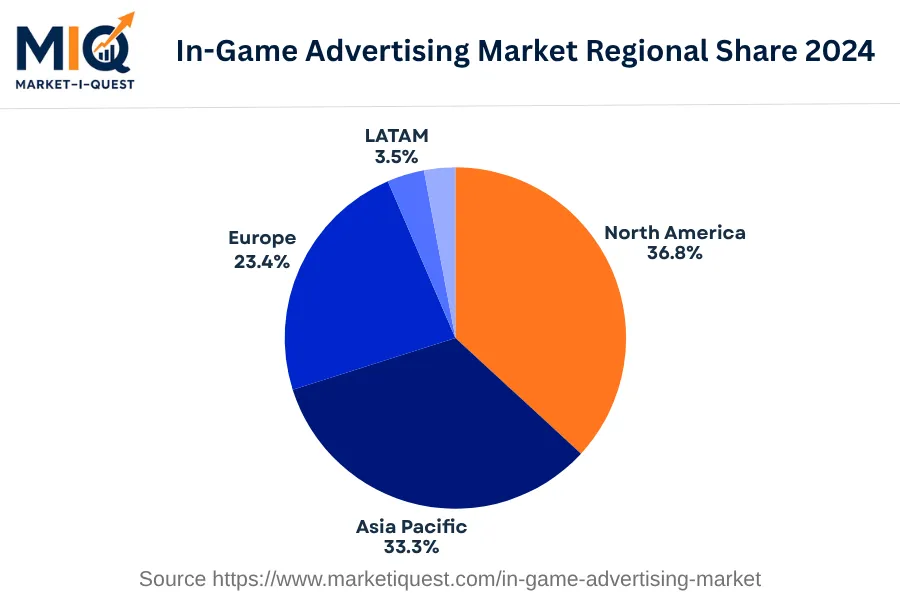
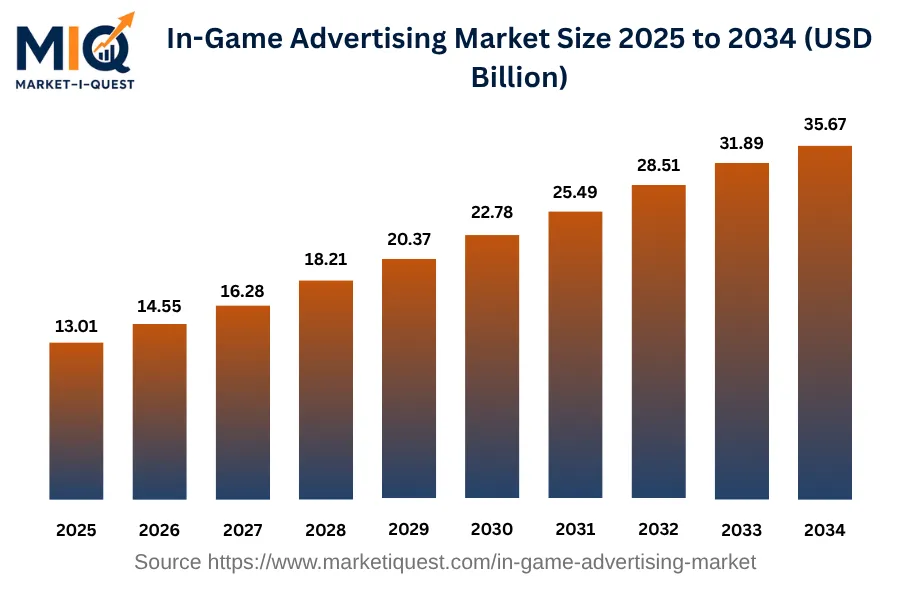
The In-Game Advertising Market valued at $13.01 Billion in 2025 is expected to grow to $35.67 Billion by 2034, showing a CAGR of 11.86%. This increase reflects continuous growth over the specified period of nine years, as the market size, which was $11.63 Billion in 2024, enhances year by year to reach the projected 2034 value. The growth trajectory for the stipulated timeline reveals a substantial increase in market size. Moving on to the regional share distribution in 2024, North America led the way with 39.8% of the market, closely followed by Asia Pacific with 35.16%. Europe held a lesser 18.42% share, while LATAM and MEA constituted a minor portion of the market with 3.06% and 3.52% respectively. This suggests that while the dominant market share was held by North America and Asia Pacific, regions such as Europe, LATAM, and MEA also contributed toward the In-Game Advertising Market.

Key Takeaways

  • By Type - Static Ads held a significant portion in the In-Game Advertising Market for the base year.
  • By Device Type - Smartphones/Tablets led the market segment in terms of usage for In-Game advertising.
in-game-advertising-market market size

Key Driving Factors

Market Saturation in Traditional Advertising Channels

Traditional advertising mediums such as television, radio, and print are gradually reaching market saturation. Given that people are spending more and more time playing games, there is a significant opportunity for businesses to reach a bigger audience. Gaming platforms offer a more immersive and interactive environment compared to conventional channels, allowing targeted ads to be embedded within games in a non-disruptive manner. This shift from traditional to more personalised and interactive form of advertising via gaming platforms is a significant driving factor in the in-game advertising market.

High Mobile Gaming User Engagement

The global rise in mobile gaming, attributed to the proliferation of smartphones and affordable internet access, has led to a significant increase in user engagement with mobile games. People are spending more hours gaming on their mobile devices, providing advertisers ample time slots and opportunities to reach players with their ads. Advertisers are harnessing this opportunity to make their commercials more interactive, enabling players to engage directly with their product or service. This high engagement rate makes in-game advertising an attractive route to a broader, more engaged and potentially receptive audience, thereby driving the growth in the in-game advertising market.

Market Evolution by Timeline

2019-2023
Between 2019 and 2023, the In-game advertising market noticed an increase in mobile gaming advertising due to the rise of smartphone users worldwide. Developers began integrating ads into games to subsidize costs and offer free usage. In North America and Europe, console and PC games primarily used static IGA, whist dynamic IGAs were popular among Asian countries. Technical constraints like integration issues and the slow adoption rate were barriers to growth. Industry standards, like IAB's 'Guidelines for Ad Placement in Games', regulated ad placement and content. Fixed price contracts were typical and partnerships like that between Anzu.io and Axis Games for ads in Axis Football emerged. The risk of ad-blocking technologies and user backlash resulted in developers carefully embedding ads into gameplay.
2024
In 2024, the adoption of Cross-media measurement standards played a key role in the In-game advertising market, as it facilitated the measurement of ad effectiveness across multiple platforms. The demand for in-game advertising shifted towards middle-aged demographics as they became more engaged with casual and mobile gaming. This demand mainly came from North America and Asia. Real-time bidding became more common in commercial contracts, providing a transparent and efficient pricing structure. Technological advancements improved integration, but high costs remained a challenge. The revised Guidelines for Ad Placement in Games introduced by IAB established stricter regulations. The market continued to face risks associated with ad-blocking technologies and user privacy concerns.
2025-2029
During 2025–2029, programmatic in-game advertising experienced significant growth due to improved integration technologies. The demand for in-game advertising increased in India and Southeast Asia due to a surge in mobile gaming. The adoption of regulations like the Europe's ePrivacy Regulation had an increasing significance, impacting user privacy and data protection. The market saw a shift towards personalized advertising, making effective use of user data for targeted campaigns. The commercial model began to incorporate performance-based pricing, with revenue shared based on ad impressions or clicks. While technological progress reduced integration costs, the market faced risks from the misuse of user data and the increased use of ad-blocking tools.
2030-2034
The period 2030–2034 saw widespread use of VR and AR technologies, revolutionizing the In-game advertising market. Ads became more immersive and interactive, creating an entire virtual advertising space. Demand for such advertising rose notably in regions with high VR/AR adoption, such as Japan and North America. Regulations like the revised ePrivacy Regulation enforced stricter user privacy rules and the use of anonymized data. The commercial model mostly relied on data sharing agreements and revenue sharing based on Ad viewability. Despite the rapid technological advancements, the misuse of user data and growing privacy concerns posed a significant risk to the market.

Future Market Outlook

Future Opportunities

With the gaming landscape shifting significantly in 2023, there are ample opportunities for brands and developers to explore new advertising methods. Companies like Meta have started investing heavily in metaverse projects that enable brands to create immersive experiences tailored to consumers. This initiative opens up new revenue streams, especially in hybrid gaming environments blending traditional gameplay with social interaction. In March 2023, Activision Blizzard announced partnerships with major brands to create in-game events, indicating a solid avenue for experiential marketing where users can engage meaningfully. Furthermore, the growing acceptance of cross-platform gaming will allow for cohesive advertising strategies across different devices, as evidenced by Microsoft's Xbox Cloud Gaming service becoming more prevalent. A regulatory landscape that emphasizes transparency and user privacy also enhances consumer trust, allowing brands to forge deeper connections with gamers. As technology evolves, the rise of 5G will accelerate mobile gaming experiences and enable richer advertising formats through higher data speeds. Likewise, businesses looking to target younger demographics could leverage platforms like TikTok and its burgeoning gaming sector. As of 2023, more brands are likely to experiment with non-fungible tokens (NFTs), enabling new ways for players to interact with branded content. This convergence of technology and creativity represents a pivotal shift in how advertisers engage audiences within games.

Segmentation Analysis

By Type

The market is divided into subsegments including Static Ads, Dynamic Ads, and Advergaming, with Static Ads accounted for the largest revenue share while Advergaming is expected to grow at the fastest CAGR during the forecast period.

Largest Revenue Share

Static Ads

Market Share Leader

Static ads, traditionally the mainstay of advertising, continue to generate the highest revenue. Established advertisers have long used this form of advertising due to its proven effectiveness. Arguably, static ads' simplicity and straightforwardness contribute to its appeal. These ads, ubiquitous across print, outdoor, and digital mediums, offer advertisers a wide customer base. Geographically, static ads have deep penetration in both urban and rural regions, enhancing their revenue generation potential. Additionally, regulatory concerns are generally lower for static ads compared to dynamic ads or advergaming, as they typically do not involve data collection or privacy issues. As static ads are based on traditional purchasing models, they are inviting to marketers who may be hesitant to navigate the complexities of dynamic advertising or advergaming. The lack of any significant switching costs and the widespread reach of static ads via various channels contribute significantly to its dominant revenue standing in the market.

Fastest CAGR

Advergaming

Forecast Period Growth Leader

Advergaming, although not the current revenue leader, shows the most promise in terms of growth. This growth is driven by several catalysts, most notably technology and partnerships. Technologically, the improved interactivity and engagement provided by advergaming is expected to drive growth. As consumers, particularly younger ones, increasingly prefer interactive and engaging content, advergaming represents a promising avenue. Partnerships with gaming studios and platforms have allowed advertisers to tap into the growing gamer customer base. While adoption barriers exist, primarily the initial investment (Capex) required and the need for technical expertise, it is foreseen that the potential returns on investment could be high. There are near-term risks, such as potential regulation and backlash from gamers against intrusive advertising. However, if these are adequately managed with well-crafted, enjoyable advergaming content, this subsegment could grow rapidly.

By Device Type

The market, categorized by device type, is divided into two main subsegments – PC/laptops and smartphones/tablets. In the base year of 2024, the smartphones/tablets subsegment is seen to have generated the most revenue while the PC/laptop subsegment is projected to witness the highest growth rate.

Largest Revenue Share

Smartphones/Tablets

Market Share Leader

The smartphone/tablet subsegment commands the most revenue share, primarily due to the widespread adoption of these devices across various strata of society. The constantly improving mobile technology, coupled with innovative smartphone designs that optimize user experience, have pushed consumer preference towards this subsegment. This, combined with a rise in disposable income, has steered the mass consumer base to regularly upgrade their devices, thereby driving revenue. Smartphones/tablets also offer the advantage of mobility, making them a favored choice over their PC/laptop counterparts. Not to mention, the advent of mobile applications has opened up a plethora of new avenues, expanding the uses of smartphones/tablets beyond traditional boundaries. Geographically, emerging markets have witnessed an exponential surge in smartphone/tablet users, providing impetus to the revenue growth in this subsegment.

Fastest CAGR

PC/Laptop

Forecast Period Growth Leader

While the smartphone/tablet subsegment dominates in revenue share, the PC/laptop subsegment is expected to grow at an accelerated pace. Here are a few growth drivers of this subsegment: First, despite the proliferation of smartphones, PCs/laptops still hold significant sway in professional environments, specifically industries that demand high-processing speed and data-handling capabilities. Second, the ongoing trend of remote work arrangements post-pandemic continues to drive the demand for PCs/laptops, desirable for their larger screen sizes and powerful hardware, further facilitating the need for complex tasks at hand. Lastly, the gaming industry's exponential growth and the rush towards digital transformation in various sectors have generated a growing demand for high-performance PCs/laptops. Although the upfront investment and lack of mobility pose potential adoption barriers, partnerships with tech giants and policy-driven digital literacy programs are potential catalysts for future growth.

Competitive Analysis: In-Game Advertising Market

Key Market Players

Manufacturers / OEMs

Google
US
Microsoft
US
Sony Interactive Entertainment
Japan

Key Suppliers & Raw Materials

Unity Technologies
US
Anzu.io
US
Adverty
Sweden

Distributors, Integrators & Channel Partners

DoubleVerify
US
Twitch
US
Zeta Global
US

Porter’s Five Forces Analysis

This analysis assesses the competitiveness and attractiveness of the In-Game Advertising Market.

Supplier Bargaining Power

Medium

Varied supplier landscape with software providers, developers, and platforms dictating ad capabilities.

Buyer Bargaining Power

Low

High demand from marketers and limited alternatives to reach engaged audiences.

Threat of Substitutes

Medium

Other forms of digital marketing like social media and search advertising are viable alternatives.

Threat of New Entrants

High

Low entry barriers, but need for technological capabilities and partnerships with game developers.

Competitive Rivalry

High

Intense competition among ad platforms, game developers, and marketing firms.

Regional Analysis

Geographic market dynamics and growth opportunities across key regions

Global Market Outlook

in-game-advertising-market market regional share

North America

In 2024, the North American in-game advertising market witnessed a rise due to increased video gaming popularity, technological advancements, and significant investment. Demand boomed as more players, particularly in the U.S., spent longer periods immersed in gaming universes, providing increased interaction opportunities for advertisers. The introduction of 5G in Canada furthered market expansion, offering augmented and virtual reality advertising possibilities that created a highly engaging platform for brands. Additionally, increased investment in the sector demonstrated confidence in in-game advertising's commercial effectiveness, especially in the context of Mexico's burgeoning digital advertising landscape.

Trends propelling market dynamics primarily dwell on technology evolution and changing consumer behaviors. A clear shift towards mobile gaming, witnessed across all three countries, saw brands tailoring adverts for smaller screen formats, while programmatic advertising emerged as a preferred method for ad delivery. Furthermore, strategic collaborations, such as that between Unity Technologies and Snap Inc, bolstered the market growth, driving towards more tailored and immersive advert experiences. The prominence of eSports in North American culture led to its integration into advertising strategies, with brands targeting the large, engaged audiences of these competitive gaming events. Finally, ethical discussions around advertisement placement and data privacy also influenced the landscape, prompting businesses to refine their approaches based on regulatory changes and consumer sentiment.

Asia Pacific

In 2024, the Asia Pacific In-Game Advertising Market experienced vigorous growth driven by several major factors. Increasing internet penetration, particularly in populous nations such as China and India, spurred exponential demand with a massive influx of new gamers. The rise of 5G infrastructure in developed nations like South Korea and Australia facilitated faster, flawless in-game ads, bolstering market vitality. Regulatory policies emerging within key ASEAN markets, formulated to ensure consumer-friendly advertising landscapes, have further propelled market progression. Trends shaping the market comprised a multitude of aspects. Shifts in buyer preference towards mobile gaming, with Japan leading in this domain, stimulated the need for tailored in-game mobile ads. Technology advancements in immersive ads - an emerging form originally innovated in China - gained traction as a go-to channel for advertisers.

The market saw growth in strategic partnerships and mergers, notably in the Indian industry, to leverage common assets and enhance ad delivery. Increased enforcement of data privacy regulations affected how data from gamers was collected and used, consequently influencing personalized ad approaches. In terms of sectors, predominantly, the retail, entertainment, and technology industries stood out in the investment and utilization of in-game advertising due to the increased online consumer presence. Overall, the 2024 Asia Pacific In-Game Advertising market was subjected to remarkable growth and changes, dictated by demand, regulatory shifts, technology adoption, and customer behavior.

Europe

In 2024, the European in-game advertising market thrived as advertisers increasingly capitalized on the expansive and engaged gaming audience. Rapid growth in mobile and console gaming in countries such as Germany, the UK and France played a significant role, as brand visibility became intrinsic to user experience in games. Regulations around digital advertising also facilitated market expansion, particularly the General Data Protection Regulation, which ensured safe and ethical practices. Dominating trends witnessed were brands leveraging AI and AR technologies, primarily in the UK and Spain, to customize and streamline in-game product placements. Cross-industry partnerships soared, mainly seen in Italy and Benelux - collaborations between gaming companies and diverse sectors like retail and healthcare, to capitalize on market synergies. Brands experimented with integrating advertisements into game narratives, creating a more immersive user experience.

Demand drivers were mainly consumer-oriented. The massive consumer engagement in sectors ranging from retail to utilities and manufacturing drove advertisers to shift digital marketing spending towards in-game advertising. Aggravating this, in Central & Eastern Europe and the Nordics, widespread tech adoption created a conducive environment for sophisticated, IoT-based in-game advertising. Consequentially, pricing dynamics trended towards premium rates given the targeted exposure and robust return on investment that this advertising medium offered.

Latin America

In the base year 2024, the Latin American in-game advertising market is strongly influenced by digitalization, lucrative investments, and regulatory support. Various factors bolstered its standing: the surge in demand for online gaming in Brazil and Mexico due to increased internet penetration and mobile device usage, government initiatives in Argentina and Chile endorsing the growth of digital industries—nudging companies to invest in in-game advertising. Furthermore, the adoption of advanced data analytics in Peru and Colombia has helped advertisers target consumers more efficiently, shaping both supply dynamics and advertising pricing in these countries.

Emerging trends in this market include changing buyer behaviors, increased focus on personalized advertisements, and the implementation of stricter standards. Most players in the market are shifting towards mobile games as consumers increasingly prefer their convenience. Spurred by advancements in Artificial Intelligence, products are increasingly able to offer personalised advertising experiences to gamers. In the base year, it was observed that mergers and acquisitions became a common growth strategy among leading companies in the market, indicating a highly competitive landscape. Lastly, various LATAM countries like Mexico and Argentina were seen emphasizing on maintaining ethical advertising standards in games, influencing policy enforcement in this sector. Sectors like retail and manufacturing were especially active in leveraging in-game ads, given their consumer-focused nature.

Middle East & Africa

In 2024, the in-game advertising market in the Middle East and Africa experienced substantial evolution. Investments in digital platforms and a boom in mobile gaming drove demand, particularly in UAE, Saudi Arabia, and South Africa where the adoption rate of technology was significantly high. Regulations in countries such as Nigeria and Kenya promoted ethical advertising, resulting in increased investment in the space. Several trends emerged; notably, advertisers started targeting specific player demographics, customized in accordance to the geographical and cultural nuances of regions like Egypt and Qatar. In contrast, partnerships expanded across sectors, leading telecommunications firms in Israel to collaborate with gaming companies for targeted ads.

A shift towards real-time bidding systems was observed, reshaping the pricing dynamics of in-game advertising. Furthermore, the soaring popularity of e-Sports in Saudi Arabia and UAE created a new avenue for advertisers. Industries such as retail, telecom, and financial services leveraged these opportunities to increase their brand visibility. Lastly, policy enforcement by the governments of South Africa and Israel ensured the preservation of user privacy within the realm of in-game advertising, hence increasing user trust and further boosting the market.

Recent Industry Developments

Latest market innovations, product launches, and strategic initiatives

June 2026

Electronic Arts (EA) built a full advertising platform inside its games, with 120 million players as the audience. The move comes as EA is推进 a $55 billion acquisition by a Saudi-led consortium — the largest leveraged buyout in history.

September 2025

EA agreed to be acquired by a Saudi-led consortium in a $55 billion deal. EA shareholders approved the transaction in December 2025, with the deal's long-stop date set for June 30, 2026, subject to regulatory approval.

Frequently Asked Questions