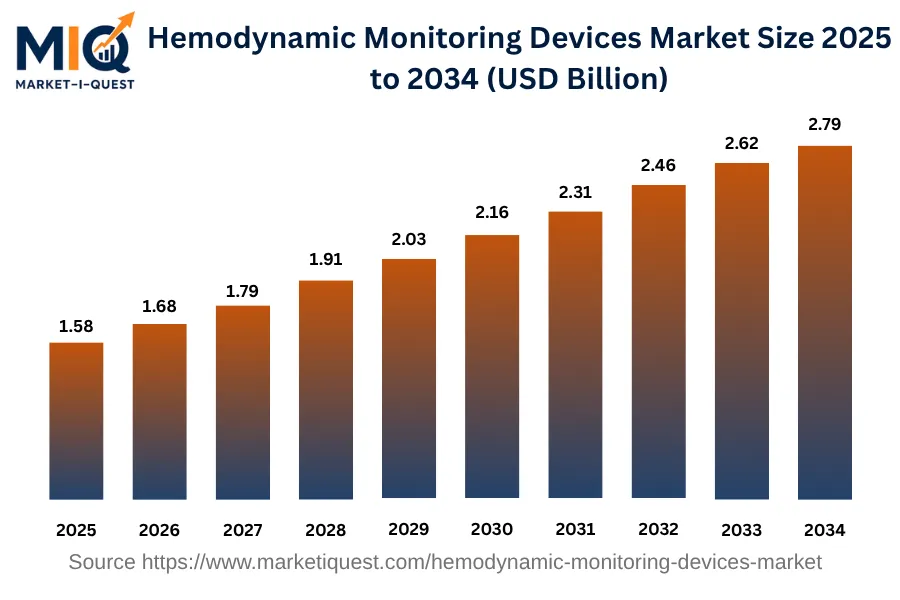
Increasing Complexities in Critical Care Patient Treatment
In the recent years, there has been a continuous increase in medical cases requiring intensive care. This includes cardiovascular diseases, neurovascular disorders, and respiratory disorders among others. These critical cases require constant monitoring of the hemodynamic status of patients as the diagnosis and treatment greatly depend on these measurements. Moreover, the critical cases often exhibit swift and drastic changes in their hemodynamic parameters. By providing real-time, continuous, and accurate measurements of multiple parameters, hemodynamic monitoring devices are becoming essential in contemporary healthcare settings. Along with traditional vital signs, these devices enable healthcare providers to monitor advanced parameters such as cardiac output, stroke volume variation, and fluid responsiveness, thereby helping them in making timely and informed treatment decisions.