Head Mounted Display Market Snapshot

Key Players

  • Sony Corporation (Japan)
  • Microsoft Corporation (United States)
  • Google Inc (United States)
  • Samsung Electronics Corp (South Korea)
  • HTC Corporation (Taiwan)
  • Facebook Technologies LLC (United States)
  • Seiko Epson Corporation (Japan)
  • Fujitsu Limited (Japan)
  • Daqri LLC (United States)
  • Lenovo Group Limited (China)

Market Size

Base Year 2024
$5.42 Bn
CAGR
26.4%
Forecast 2034
$56.42 Bn

Market Segments

By Type
Integrated HMD, Slide On HMD
By Technology
VR, MR, AR
By Component
Processors and Memory, Display, Lenses, Sensors, Controllers, Cameras, Cases and Connectors, Others
By End Use
Consumer, Commercial, Enterprise & Industry, Engineering & Design, Healthcare, Aerospace & Defence, Education, Others

Market Dynamics

Drivers
  • Increasing VR/AR Applications
  • Technological Advancements
Restraints
  • High production costs
  • Limited battery life
Opportunities
  • Rising VR gaming popularity
  • Advancements in AR technology

Market Size

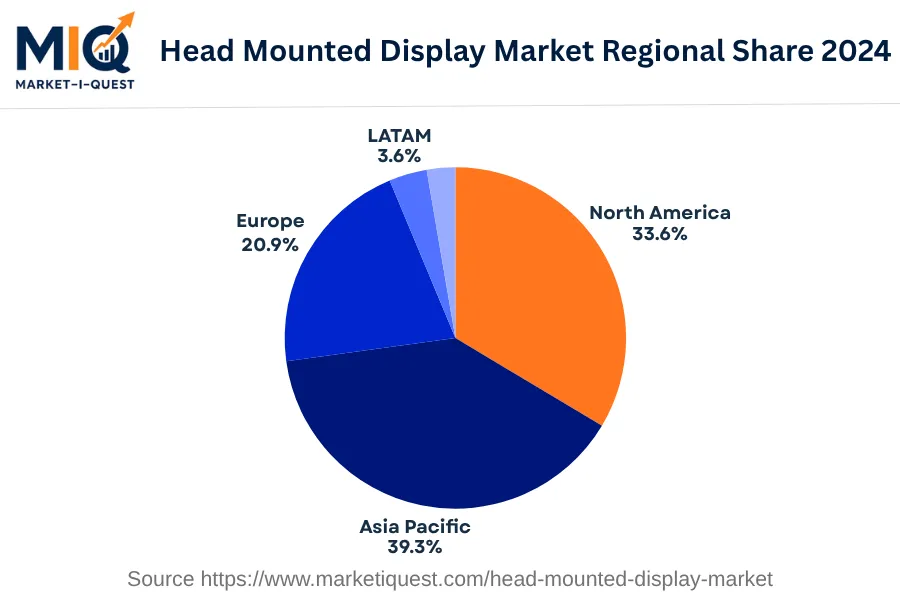
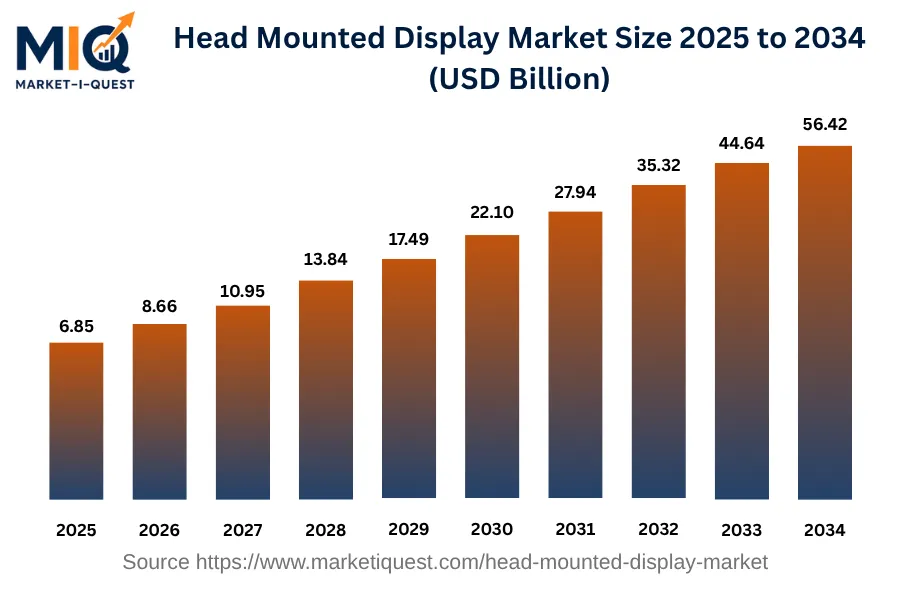
The Head Mounted Display Market was valued at $6.85 billion in 2025 and is anticipated to attain a valuation of $56.42 billion by 2034, recording a CAGR of 26.4%. This notable growth trajectory is demonstrated by the initial size in 2024, valued at $5.42 billion and the significant leap in the subsequent year of 2025 reaching $6.85 billion. This upward trend continues throughout the decade ending the period in 2034 at a peak of $56.42 billion. In terms of regional shares in 2024, the Asia Pacific registered the largest proportion of the market at 39.3%, followed by North America with 33.6%. Europe held a 20.9% share, while the Latin American and Middle East and Africa regions held smaller shares at 3.6% and 2.7% respectively.

Key Takeaways

  • By Type - Integrated HMD held a leading position in the Head Mounted Display Market in 2024.
  • By Technology - VR was the dominant segment in 2024.
  • By Component - Processors and Memory accounted for the largest market share in the year 2024.
  • By End Use - Enterprise and Industry segment led the market in 2024.
head-mounted-display-market market size

Key Driving Factors

Adoption of Augmented Reality (AR) in e-commerce

One significant driver for the Head Mounted Display Market is the growing implementation of augmented reality in the e-commerce industry for virtual fitting rooms. This trend has manifested as online retailers seek to match the traditional in-store experience digitally. By leveraging head-mounted displays, consumers can virtually 'try on' items like apparel or eyewear from the comfort of their homes. This not only enhances the buying experience but also helps reduce product return rates, a common challenge for online retailers. This value-added utilization of AR technology in the e-commerce space is driving higher demand for head-mounted display devices, reinforcing their contribution to the market.

Usage of Virtual Reality (VR) in employee training

Another influential driver in the Head Mounted Display Market is the growing application of Virtual Reality (VR) in employee training across diverse industries. Companies in sectors like healthcare, logistics, and manufacturing are turning to VR technology to train their workforce in a more engaging, immersive, and risk-free environment. Head-mounted displays are instrumental in such training scenarios, offering a hands-free, immersive experience that can simulate real-world situations without the potential dangers. This growing commitment to VR-based training programs has escalated the demand for head-mounted display devices and positively influenced the market size.

Market Evolution by Timeline

2019-2023
During this period, the Head Mounted Display (HMD) market witnessed growing demand from sectors like gaming, defense, education, and healthcare in regions such as North America and Asia-Pacific. Gadget producers introduced models like Oculus Rift S and HP Reverb G2, focused on better video quality and virtual reality. Technological integration was in the primary phase due to supremacy battles between VR and AR. The lack of regulatory standards for HMD use in public spaces was a marked feature. Typical contracts involved retail sales, losing out on the potential of B2B deals. Key challenges included the need for high-performance hardware and discomfort caused by prolonged use.
2024
In 2024, adoption of HMDs in workplaces increased due to work-from-home policies. Regions like Europe and South America began leveraging the technology. New models like PlayStation VR2 focused on integration with gaming consoles. OEMs, software developers, and content creators collaborated to overcome fragmentation, leading to tentative maturity of integration. Concerns over data privacy led to regulatory developments centered around user rights and safety, with EU's General Data Protection Regulation amending to include HMDs. Rental models became more common in commercial sectors. Eyestrain and vertigo risks from prolonged HMD use were addressed by introducing rest periods in work protocols.
2025-2029
Over these years, industrial sectors in the Middle East and Africa increased their reliance on HMDs for training and operations. Technologies like Microsoft's HoloLens 2 and Google Glass Enterprise Edition 2 led the market with advanced mixed reality (MR) capabilities. It was a period of technological consolidation driven by MR. New safety standards emerged, like ISO/IEC 23000-13, regulating HMDs. 'As-a-service' contracts evolved for HMD provision in industries. However, this time also saw concerns regarding social isolation due to immersive technology. To counter this, manufacturers invested in program designs encouraging moderated use.
2030-2034
During the early 2030s, the market shifted towards developing countries as they adopted HMD technology for education and social welfare programs. Innovations focused on the development of lightweight HMD devices, battery advancements allowed for longer use, marking the evolution of HMD technology. The United Nations adopted regulatory guidelines for HMDs under 'Information Society' initiatives. Growing collaborations between device manufactures and content providers led to bundled sales contracts, with subscriptions gaining popularity. The risk of psychological disorders from over-exposure to immersive VR led to 'digital wellbeing' initiatives advocating for balance between digital and physical realities.

Future Market Outlook

Future Opportunities

The HMD market is poised for substantial development, particularly in sectors such as telemedicine, education, and remote collaboration. One opportunity emerges from the growing demand for telehealth services, especially within the United States, where the pandemic accelerated the adoption of digital health technologies. Companies like Varjo and Microsoft are already exploring specialized HMD solutions for healthcare providers, integrating real-time data visualization. Another significant avenue appears in the education sector, with numerous educational institutions in Australia commencing pilot programs for virtual classrooms using HMDs, which optimize learning experiences through immersive environments. Notably, companies like ClassVR have tailored products for classroom settings, seeking to advance engagement in educational content. In the gaming industry, 2023 has witnessed a surge in VR content creation, with platforms like Steam increasingly hosting interactive HMD-compatible games, resulting in higher consumer engagement. Additionally, as regulations evolve, countries like Japan are preparing to address data privacy concerns related to immersive technologies, potentially paving the way for more comprehensive HMD applications in enterprises. Partnerships among tech companies and educational authorities, as well as developments in wireless technology such as 5G's rollout in regions like Europe, will likely enhance the use of HMDs in collaborative work environments. These trends indicate a landscape ripe with opportunities for HMD adoption across diverse sectors, driven by current technological advancements and emerging regulatory frameworks.

Segmentation Analysis

By Type

The market is divided into subsegments including Integrated HMD and Slide On HMD. The Integrated HMD subsegment accounted for the largest revenue share while the Slide on HMD is expected to grow at the fastest CAGR during the forecast period.

Largest Revenue Share

Integrated HMD

Market Share Leader

The Integrated Head Mounted Display (HMD) subsegment leads the market revenue due to its seamless integration into various devices enabling real-time data visualization and immersive experiences to the users. There is an increasing demand from various sectors including gaming, education, healthcare, and military due to its ability to provide sophisticated virtual reality and augmented reality experiences. This product is often preferred over its counterparts because of its user-friendly design and better adaptability. Moreover, geographically speaking, technologically advanced regions such as North America and Europe have been leading the demand due to the higher adoption rate of integrated HMD in various industries. Also, the regulatory landscape in these regions promotes the use of such advanced technology. However, it's crucial to mention that this assumption is based on common industry logic, and the actual scenario might vary.

Fastest CAGR

Slide On HMD

Forecast Period Growth Leader

The Slide On HMD subsegment is projected to be the fastest growing in the market. Growth in this segment is driven by its affordability, portability and ease of use. Unlike Integrated HMDs, Slide On HMDs enable users to transform their smartphones into HMDs, thereby reducing the upfront cost and enabling wider audience accessibility. Adoption barriers for this technology are relatively low due to the widespread prevalence of smartphones. Additionally, technology catalysts such as improved visual effects and better gaming experiences are driving the demand for Slide On HMDs. In terms of partnerships, collaborations between smartphone brands and Slide On HMD manufacturers can provide a significant boost to the market. However, near-term risks include the rapid advancement in AR/VR technology which could render some Slide On HMDs outdated. Once again, it's noted that these conclusions are made based upon common market structures and the actual scenario may differ.

By Technology

The market is divided into subsegments including VR, MR, and AR. VR accounted for the largest revenue share while AR is expected to grow at the fastest CAGR during the forecast period.

Largest Revenue Share

VR

Market Share Leader

Virtual Reality (VR) suffices the largest revenue share in the technology category. The primary reasons for VR’s dominance can be attributed to several factors. The rise of immersive experiences in the entertainment and gaming industry, which demand high-quality VR interfaces, has been a strong driver for growth. VR provides an unprecedented gaming experience which has driven its demand up in recent years. Industries such as real estate and tourism are also increasingly adopting VR technologies for virtual tours, thereby driving revenue growth. Geographically, developed regions like North America and Europe have been the biggest contributors owing to high consumer purchasing power, technological advancement, and extensive VR applications in industries. Regulatory landscape also favors VR as there hasn't been major restrictions or constraints related to its usage. High initial investment and infrastructure in countries in these regions contribute to increased purchasing and consequently, revenue generation.

Fastest CAGR

AR

Forecast Period Growth Leader

While VR holds the largest market share, Augmented Reality (AR) is rapidly growing and expected to grow at the fastest CAGR. AR’s growth is fueled by several drivers and catalysts. The technology is gaining traction due to its ability to provide real-time data and on-the-job assistance in industries like manufacturing, healthcare, and logistics thereby increasing efficiency and accuracy. AR application in mobile devices for consumer applications like shopping, remote collaboration and gaming are also catalysts for its growth. Falling prices of AR glasses and increased investments in AR technology are making it more accessible. Partnerships between tech giants and AR development companies are expected to boost the segment's growth. However, there are near-term risks associated with AR technologies related to user privacy and data security that could potentially slow down the rate of adoption.

By Component

The market is divided into subsegments including Processors and Memory, Display, Lenses, Sensors, Controllers, Cameras, Cases and Connectors, and Others. From these, the 'Processors and Memory' subsegment accounted for the largest revenue share while 'Cameras' is expected to grow at the fastest CAGR during the forecast period.

Largest Revenue Share

Processors and Memory

Market Share Leader

The 'Processors and Memory' subsegment currently holds the largest revenue share in the base year of 2024. This is primarily due to the rise in tech requirements demanding high-end computing performances. An augmented focus on device agility, coupled with the need for data storage, has significantly contributed to the demand for advanced processors and memory, fueling revenue growth. Economic geographies are investing heavily in technology, fueling demand for these components. Regulatory circumstances support the digitization process and prefer infrastructured societies, tilting the market dynamic in favor of processors and memory. And as device sophistication increases, customers prioritize performance, driving the market towards better processors and memory technologies. Additionally, expensive switching costs deter customers from frequently changing these components, reinforcing their significant share in revenue. Reliable supply-chain networks ensure steady availability without drastic price fluctuation, making it a preferred choice.

Fastest CAGR

Cameras

Forecast Period Growth Leader

The 'Cameras' subsegment is expected to grow at the fastest CAGR in the forthcoming years. The main growth drivers for this subsegment are the rapid adoption of technologically advanced cameras with superior image and video capturing features. With technology advancements such as AI and VR becoming prevalent, the demand for high-end cameras is similarly increasing. However, adoption barriers like high costs could limit growth potential. Additionally, collaborations with technology companies who focus on enhancing image processing capabilities can provide an impetus for growth. Investments in R&D for better picture quality and the development of compact, high-performance cameras will continue to serve as catalysts. Near-term risks include rapid technology changes, which could render current models obsolete and increased competition, potentially leading to aggressive pricing strategies.

By End Use

The market is divided into subsegments including Consumer, Commercial, Enterprise & Industry, Engineering & Design, Healthcare, Aerospace & Defence, Education, Others. Among these, Enterprise & Industry accounted for the largest revenue share while Healthcare is expected to grow at the fastest CAGR during the forecast period.

Largest Revenue Share

Enterprise & Industry

Market Share Leader

The Enterprise & Industry sector has consistently shown robust revenue generation. This sector enforces large-scale operations, integrating resources and expertise over a wide range of applications. The propensity of industrial organizations to invest in upgrading technological equipment, capabilities, and integration systems drives the high revenue pattern for this segment. Regulatory standards which require the maintenance of up-to-date systems further ensure continuous financial influx. The diversification of this subsegment, encompassing multiple kinds of institutions, from manufacturing plants to resource extraction industries, amplifies its consumer base. The purchasing pattern within this sector is recurrent due to depreciation and wear and tear of used technologies, leading to a higher turnover. Value-added resellers play a significant role in supplying equipment and systems, lowering switching costs and further promoting sales.

Fastest CAGR

Healthcare

Forecast Period Growth Leader

The Healthcare sector is anticipated to grow significantly and at the fastest rate due to numerous influential factors. An aging global population along with increasing health issues have intensified the demand for modernized healthcare systems. The advent of advanced technologies and digitalization creates promising growth prospects. It aids in more precise diagnosis, improved patient outcomes, and streamlined healthcare processes. Technical innovations like telemedicine, AI-integrated tools, Intelligent Hospital Systems, and increased use of EHRs are catalyzing the growth pace. However, potential barriers such as high implementation costs, inadequate technical know-how among health workers, and concerns related to data security could somewhat hinder a more rapid adoption, posing near-term risks. Government initiatives, partnerships with technology providers, and increased capital expenditure in health technology infrastructure promise to overcome such barriers and boost adoption.

Competitive Analysis

Key Market Players

Manufacturers / OEMs

Oculus VR
US
Sony
Japan
HTC
Taiwan

Key Suppliers & Raw Materials

Samsung Electronics
South Korea
LG Display
South Korea
Sharp Corporation
Japan

Distributors, Integrators & Channel Partners

Alibaba
China
Amazon
US
Best Buy
US

Porter’s Five Forces Analysis

This is a comprehensive overview of the competitive dynamics within the Head Mounted Display Market.

Supplier Bargaining Power

Medium

Limited number of component suppliers, but significant diversity of product inputs reduces supplier power.

Buyer Bargaining Power

High

Wide range of alternatives and low switching costs gives buyers significant bargaining power.

Threat of Substitutes

Medium

Though alternatives exist, the unique functionality of HMDs moderates threat of substitutes.

Threat of New Entrants

Low

High R&D costs, complex technology and stiff competition creates barriers for new entrants.

Competitive Rivalry

High

The market witnesses intense competition with established tech giants dominating the market.

Regional Analysis

Geographic market dynamics and growth opportunities across key regions

Global Market Outlook

head-mounted-display-market market regional share

North America

In 2024, the North American Head Mounted Display (HMD) market registered substantial growth driven by several key factors. Technological advancements in virtual and augmented reality systems demanded by sectors such as healthcare, enterprise, manufacturing and government fuelled market expansion. In the U.S., increased investment in defense-related AR and VR projects boosted HMD adoption. Additionally, Mexico’s industrial manufacturing sector saw significant HMD utilization due to improvements in supply-chain management.

In terms of trends, North American buyers showed a preference for wireless HMDs, driven by the growing demand for ease of mobility in sectors like retail and utilities. In Canada specifically, training and education programs in remote areas pivoted to augmented reality using HMDs. Partnerships and mergers, such as Google's acquisition of North, marked substantial collaboration in the HMD space, pointing to a consolidated market. Meanwhile, updates to privacy policies following data misuse scandals affected user confidence and industry standards, albeit slightly restraining the HMD market's growth. In response to these trends, regulations throughout North America tightened around data privacy and device interoperability, resulting in the need for manufacturers to adapt their technologies and strategies. Therefore, while growth was robust, the HMD market in North America also had to confront an evolving regulatory landscape in 2024.

Asia Pacific

In 2024, the Head Mounted Display (HMD) market in the Asia Pacific witnessed dynamic competition and technology adoption. Multiple factors drove this vigorous market environment. Firstly, rapid technological advancements in virtual and augmented reality in countries like China, Japan, and South Korea fueled an increased demand for HMDs. Additionally, the relaxation of regulations in India, Australia, and key ASEAN markets stimulated substantial investment in the sector, opening up new jolts of unprecedented market growth. The availability of favorable manufacturing conditions across the aforementioned markets prompted manufacturers to intensify their operations, further propelling the supply dynamics.

Shifting trends played a crucial role in shaping the HMD market. For instance, consumers increasingly preferred wireless HMDs, prompting product realignment by major manufacturers. The online retail channels became preferred platforms for purchase, facilitating easy accessibility and broader choices for consumers. Sectors such as healthcare, manufacturing, and gaming saw increased uptake of HMDs, driven by specific industry demands. Policy enforcement by regional governments, particularly in China and Japan, dictated safety and quality standards for manufacturing and selling HMDs, altering the competitive landscape. Lastly, there was an uptick in strategic partnerships and M&As in the Asia Pacific to strengthen market presence, offering significant potential for innovative technology integration.

Europe

In 2024, the Head Mounted Display (HMD) market in Europe demonstrated strong growth potential. Robust demand came from sectors such as healthcare, utilities, and manufacturing. Advancements in virtual and augmented reality technologies spurred investment into applications of HMDs in diverse fields like remote patient monitoring and industrial training simulations. Concurrently, Europe's stringent data privacy regulations incentivized the adoption of personal viewing devices in workplaces to ensure secure data visualization. In addition, competitive supply dynamics and affordable pricing contributed to making HMDs more accessible to average consumers.

In terms of trends, buyer behavior indicated a preference for integrated systems, with companies like Oculus, Sony, and HTC leading the charge on comprehensive platform development. The retail sector saw increased use of HMDs for virtual shopping experiences, whilst e-learning platforms explored their utilization for immersive educational content. Significant partnerships and M&A activity also characterized the market landscape, with cross-industry collaborations aiming to unlock new applications for HMD technology. On the policy front, enforcement of emission standards was seen affecting production processes. These factors defined the market context for Head Mounted Displays in Europe in 2024.

Latin America

In 2024, the Head Mounted Display (HMD) Market in Latin America composed a well-established segment of the technology sector. Increased penetration of internet connectivity and rising digital literacy drove demand, with high uptake noted particularly in Brazil and Mexico. The implementation of government policies promoting digital transformation in public services across Argentina, Chile, and Colombia contributed by providing an additional push for HMD market expansion. This growth was further stimulated by substantial investments in immersive technology across sectors, particularly from healthcare, retail, and manufacturing entities. Moreover, declining prices of raw materials augmented the supply dynamics favoring market growth.

Purchasing patterns in 2024 indicated a mounting preference for wireless HMDs, demonstrating a significant technology shift. In addition, an upsurge was observed in collaborations and partnerships between regional and international players seeking to leverage the burgeoning market, linked to an emphasis on enhancing customer experience. Aggravated by policy enforcement, strict data security standards were maintained, shaping HMD solutions to ensure secure user experiences. Lastly, a rise in B2B online sales was seen, indicating a changing channel dynamic that provided diverse customer touchpoints and increased market penetration. Therefore, the HMD market in Latin America in 2024 presented considerable opportunities across prominent sectors and demonstrated a proactive response to shifting demand and supply dynamics.

Middle East & Africa

In 2024, the Head Mounted Display (HMD) Market in the Middle East and Africa exhibited substantial dynamism. Increased demand from sectors such as healthcare, defense, and real estate fueled this market expansion. Technology adoption, as observed in Saudi Arabia's oil and gas industry and UAE's finance sector, facilitated by supportive government regulations, manifested itself as a key growth driver. Enhanced investment in research and development, particularly in countries like Israel and South Africa, served to augment HMD market growth in the region.

Accommodating trends included a surge in online retail channel for HMD equipment in Egypt and Kenya, highlighting a shift in buyer behavior from traditional physical stores. Technological advancements such as Virtual Reality (VR) and Augmented Reality (AR) also prominently influenced the HMD market. There was a visible uptick in partnerships and mergers, especially in Israel's tech sector and Nigeria's telecom industry, aimed at capitalizing on these advancements. Additionally, stricter policy enforcement in regions like Qatar concerning AR/VR safety in public and commercial domains was noted. Overall, the prevalent drivers and trends in the Middle East and Africa underscored a significant thriving environment for the Head Mounted Display market in 2024. The cohesive blend of demand factors, tech adoption, regulatory landscape, and strategic partnerships cohesively crafted a market of impressive potentials.

Recent Industry Developments

Latest market innovations, product launches, and strategic initiatives

May 2026

NHK showcased a new virtual reality headset designed to significantly reduce eye strain. This new model is much thinner than traditional headsets and uses alternative light-display methods to show 3D images more naturally to the user, addressing the visual fatigue that currently limits long-term wear.

April 2026

Sony announced the upcoming release timeline for its new spatial capture headset and ring controllers. Rather than gaming, this system is built specifically for professional engineers and artists to create 3D graphics and manipulate digital designs directly within a virtual environment.

Frequently Asked Questions