Geriatric Medicine Market Snapshot

Key Players

  • Eli Lilly and Company (US)
  • Sanofi S.A. (France)
  • Novartis AG (Switzerland)
  • AstraZeneca PLC (UK)
  • Bayer AG (Germany)
  • Pfizer Inc. (US)
  • GlaxoSmithKline plc (UK)
  • Allergan plc (Ireland)
  • Merck & Co. Inc. (US)
  • Takeda Pharmaceutical Company Limited (Japan)

Market Size

Base Year 2024
$164.8 Bn
CAGR
7.3%
Forecast 2034
$333.39 Bn

Market Segments

By Therapeutics
  • Analgesics
  • Antihypertensive
  • Statins
  • Antidiabetic
  • Proton Pump Inhibitors
  • Anticoagulant
  • Antipsychotic
  • Others
By Application
  • Cardiovascular Diseases
  • Arthritis & Bone Health
  • Neurological Disorders
  • Cancer
  • Diabetes and Metabolic Disorders
  • Respiratory Diseases
  • Others
By Distribution Channel
  • Hospital Pharmacy
  • Retail Pharmacy
  • Online Pharmacy

Market Dynamics

Drivers
  • Rising elderly population
  • Increased chronic disease incidence
Restraints
  • Limited healthcare budget
  • Missing medical insurance coverage
Opportunities
  • Increasing elderly population
  • Rising chronic disease prevalence

Market Size

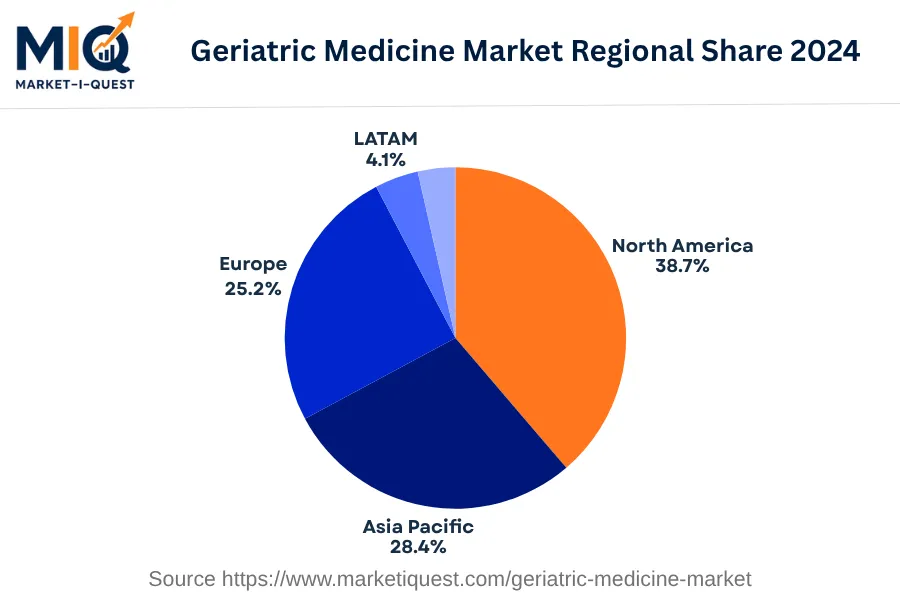
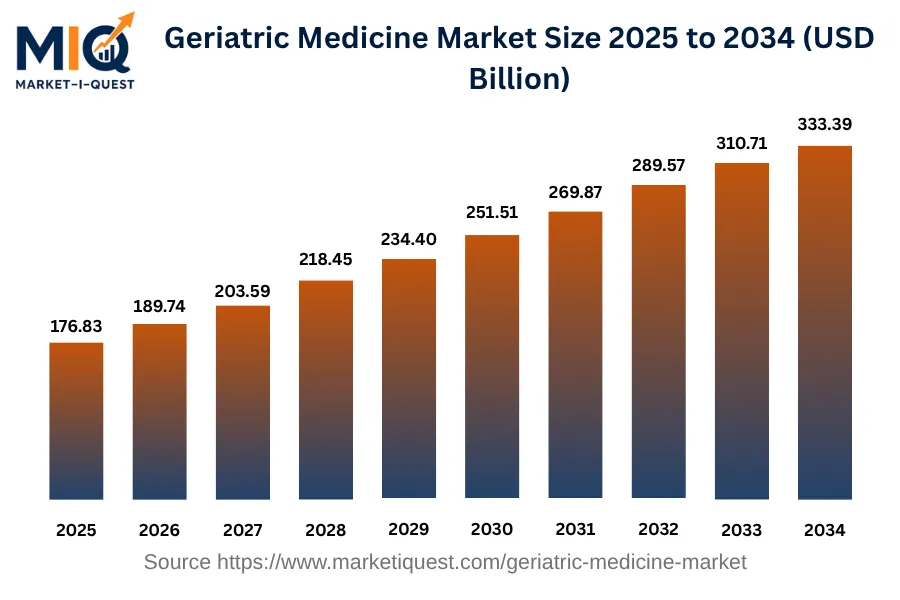
The Geriatric Medicine Market size in 2025 is $176.83 billion and it grows significantly by 2034 reaching $333.39 billion, exhibiting a CAGR of 7.3%. The market witnesses a consistent increase in value over the decade, rising from an initial value of $164.8 billion in 2024. Factors contributing to the substantial growth include increasing global geriatric population, advancements in medical technology, and rising incidences of chronic diseases among older people. In 2024, the regional market shares were distributed as follows: North America had the largest share at 38.7%, followed by Asia Pacific with 28.4% and Europe with 25.2%. Significantly lower shares were noted for LATAM and MEA at 4.1% and 3.5%, respectively.

Key Takeaways

  • By Therapeutics - Statins led the Geriatric Medicine Market accounting for the largest share in 2024.
  • By Application - Cardiovascular Diseases held a leading role in 2024 due to the growing prevalence among the aged population.
  • By Distribution Channel - Retail Pharmacy expanded fastest digital platforms in healthcare.
geriatric-medicine-market market size

Key Driving Factors

Implementation of the Patient Protection and Affordable Care Act (PPACA)

The implementation of the Patient Protection and Affordable Care Act (PPACA) is a key driving factor for the Geriatric Medicine Market. This particular legislation, which aims to provide affordable healthcare for all Americans, has led to an increase in elderly populations with access to healthcare services, specifically those related to geriatric medicine. The PPACA has enforced regulations that ensure insurance companies cannot deny coverage to individuals with pre-existing conditions, a scenario often applicable to the geriatric population. This facilitates easier access to geriatric medicine for elderly patients who may previously have struggled to gain much-needed healthcare access. Further, the act's emphasis on disease prevention and wellness, which coincides with the proactive health management goals of geriatric care, is directly propelling growth in the geriatric medicine market.

Transition from Hospital Care to Home Care Services

Another major driver for the Geriatric Medicine Market is the strategic shift from hospital care to home care services for elderly patients. This transition is largely due to emerging care models developed to prioritize patient comfort and significantly reduce healthcare costs. With in-home care treatments and telemedicine applications, elderly patients can receive comprehensive medical care within their homes' strength, increasing the demand for geriatric specialists and associated medical services. Additionally, home healthcare helps to prevent unnecessary hospital readmissions, which is beneficial for both the patients and the healthcare system overall. As the healthcare industry continues to adopt this patient-centric approach, the geriatric medicine market anticipates continued growth.

Market Evolution by Timeline

2019-2023
During this period, age-related chronic diseases drove the need for enhanced geriatric care, particularly in developed regions like North America and Europe. Providers launched integrated care models, majorly influenced by Medicare's decision to reimburse for chronic care management. But, substantial integration challenges persisted due to complex coordination. Cybersecurity emerged as a critical risk due to the increased digitalization of health records. Joint ventures became commonplace, boosting capacity. Pricing followed a value-based model, ensuring providers are paid based on patient health outcomes.
2024
In 2024, massive advances in technology, particularly in the realm of telemedicine, became more prevalent. This allowed patients to receive treatments at home, reducing hospital stays. Major regions for this growth were North America, Europe, and Asia. However, this transition came with challenges, such as broadband accessibility and technology literacy among older adults. Policies like the 'CONNECT for Health Act' promoted telehealth adoption. Partnerships between traditional health providers and tech companies significantly redefined the commercial model.
2025-2029
Over these five years, the market navigated a rapid shift toward digital health platforms and AI. This was widely adopted for diagnosis and treatment planning. While the uptake was high in North America, the acceptance of AI in other regions like Europe and Asia varied, mainly due to regulatory and ethical concerns. Policy efforts, such as the 'Artificial Intelligence in Health Act', aimed to mitigate these concerns. The predominant risks involved privacy breaches and incorrect diagnoses. AI and healthcare firms jointly produced solutions and shared revenue, altering the commercial model.
2030-2034
The aging population and higher life expectancy rates continued to bolster demand for geriatric medicine in the early 2030s, particularly in regions with extensive elderly populations like Japan. Genomics and personalized treatment plans became an established practice. However, genetic research's ethical and data privacy concerns presented noticeable risks. Policy efforts focused on the secure handling of genomic data, spurring standardized guidelines for genome-based treatments. The commercial model favored pay-for-performance contracts, with costs largely associated with the complexity of the genetic analysis.

Future Market Outlook

Future Opportunities

As the elderly population increases globally, opportunities abound within the geriatric medicine market by leveraging current technologies and policies. For example, the World Health Organization's 2021 Global Strategy on Ageing and Health has highlighted the significance of accessible healthcare for older adults, positioning providers to innovate services tailored to this demographic. Additionally, in 2023, several countries launched national elder care programs aimed at enhancing community-based services for seniors, creating demand for home health technologies. Companies like UnitedHealth Group have already begun exploring integrated care models that emphasize preventative health, underlining a shift toward holistic approaches in geriatric care. The increasing emphasis on mental health for seniors, evidenced by initiatives launched in 2022 by the National Institute of Mental Health, also presents opportunities for targeted solutions in mental well-being. Vaccination policies, such as the rollout of the COVID-19 vaccine, highlight potential areas for collaboration between biomedical firms and local health authorities, which can further drive advancements in immunization strategies for older populations. Moreover, the introduction of the European Union’s Digital Green Certificate in 2021 illustrates the potential for digital health records to be seamlessly integrated into geriatric care, thereby improving patient management. As these trends evolve, strategic collaborations and transitions toward more efficient care models will likely shape the future landscape of geriatric medicine.

Segmentation Analysis

By Therapeutics

The market is divided into subsegments including Analgesics, Antihypertensive, Statins, Antidiabetic, Proton Pump Inhibitors, Anticoagulant, Antipsychotic, and Others. Statins accounted for the largest revenue share while Antidiabetic segment is expected to grow at the fastest CAGR during the forecast period.

Largest Revenue Share

Statins

Market Share Leader

Statins, a subsegment of the therapeutics market, hold the largest revenue share, and this holds true when considering industry logic. This is primarily because of the prevalence of lifestyle-induced diseases such as high cholesterol and heart diseases. Statins are extensively used to lower cholesterol levels, thereby reducing the risk of heart disease. Furthermore, in more developed markets, unhealthy lifestyles featuring factors such as high-fat diets and sedentary behavior contribute to the prevalence of these conditions, driving the demand for statins. In emerging markets, the rapid urbanization and adoption of western lifestyle patterns are leading to an increase in cholesterol-related health issues, contributing to the growing demand. Regulatory support for statins in multiple geographies, coupled with the lack of alternative treatments with equal efficacy and safety, reinforce the dominant market position of statins.

Fastest CAGR

Antidiabetic

Forecast Period Growth Leader

Antidiabetic medications are projected to witness the fastest growth in the therapeutics market. This rapid growth is a consequence of the increasing global prevalence of diabetes due to shifting lifestyles, unhealthy dietary habits, and physical inactivity, leading to a higher rate of obesity. Coupled with the aging population, we have a catalyst for the rapid expansion of this market. As governments continue to ramp up expenditure on healthcare and awareness programs against diabetes, it is reasonable to forecast quick adoption. However, despite the promising growth, the high cost of novel antidiabetic drugs and lack of access in low and middle-income countries might hamper the growth to an extent. Another key risk hindering growth could be the rise in alternative therapies and natural remedies. Despite these barriers, partnerships between pharmaceutical companies are expected to boost product enhancements, leading to market growth.

By Application

The market is divided into subsegments including Cardiovascular Diseases, Arthritis & Bone Health, Neurological Disorders, Cancer, Diabetes and Metabolic Disorders, Respiratory Diseases and Others. Among these, Cardiovascular Diseases accounted for the largest revenue share while Arthritis & Bone Health is expected to grow at the fastest Compound Annual Growth Rate (CAGR) during the forecast period.

Largest Revenue Share

Cardiovascular Diseases

Market Share Leader

Cardiovascular Diseases segment took the lead in terms of revenue in 2024, owing to an aging global population and an increase in the prevalence of heart diseases. In majority of the developed and developing countries, cardiovascular diseases are the leading cause of death and this segment is fueled by the rise in risk factors like hypertension, diabetes, dyslipidemia, and obesity. Similarly, technological advancements in diagnostic services along with government initiatives towards increasing the awareness of these diseases have augmented the growth of this segment. Lack of physical activity, improper diet, stress, and changing lifestyles are other significant contributors. Moreover, advancement in medications and treatments, coupled with growing patient population, has paved the path for stakeholders to invest more in cardiovascular disease treatments.

Fastest CAGR

Arthritis & Bone Health

Forecast Period Growth Leader

Arthritis and Bone Health segment is anticipated to be the fastest growing subsegment, primarily due to the rise in age-related bone disorders, including osteoporosis and arthritis. The demand is further propelled by the growing geriatric population and increased incidence of nutritional deficiencies leading to bone health issues. Moreover, the use of modern technology and innovative techniques for treatment, as well as the development of effective preventive medications, is set to fuel the growth of this subsegment. Potential factors such as large clinical trials, increased R&D spending, public-private partnerships and government funding are driving the upliftment of this sector. However, potential barriers include the high cost of innovative treatments and a lack of awareness regarding the diseases affecting bone health.

By Distribution Channel

The market is divided into subsegments including Hospital Pharmacy, Retail Pharmacy, and Online Pharmacy. The Retail Pharmacy subsegment accounted for the largest revenue share, while Online Pharmacy is predicted to grow at the highest pace during the next years.

Largest Revenue Share

Retail Pharmacy

Market Share Leader

The Retail Pharmacy category continues to lead in terms of revenue generation. This significant lead is primarily driven by the large presence of retail pharmacies globally, making them easily accessible for customers. Additionally, retail pharmacies tend to stock a wide range of products, offering customers multiple options to choose from. This convenience factor combined with personalized services, counseling, and guidance offered by the pharmacists contributes to customer loyalty and hence, a steady revenue stream. Furthermore, regulation favoring over-the-counter sales for specific medication categories also contributes to revenues. Regularly needed medicines and healthcare products are often purchased at these establishments, adding to their consistent revenue. Certain medications require prescriptions and entail consultation with the pharmacist, which is easily afforded by the retail pharmacy setup. Assuming typical market trends, these factors contribute to Retail Pharmacy leading in the base year of 2024.

Fastest CAGR

Online Pharmacy

Forecast Period Growth Leader

The Online Pharmacy segment is expected to exhibit the fastest growth. This can largely be credited to the increasing internet penetration and the convenience offered in terms of home delivery, price comparison, and time-saving. The growing trend of e-commerce has also entered the pharmacy sector, catalyzing its growth. A larger demographic, particularly the younger population, prefer shopping online, including for their healthcare needs. This trend has been further accelerated in light of the recent global pandemic prompting a shift towards contactless transactions and encouraging the health-conscious public to switch to online platforms. Additionally, partnerships between these online platforms and healthcare providers are also emerging, further widening their customer base. Despite potential risks concerning counterfeit medicines, stringent policies and technological advancements ensuring secure transactions and safety regulations limit such threats. Therefore, the online pharmacy subsegment is poised for significant growth.

Competitive Analysis

Key Market Players

Manufacturers / OEMs

Novartis AG
Switzerland
Pfizer Inc.
US
Merck & Co., Inc.
US

Key Suppliers & Raw Materials

BASF SE
Germany
Dupont
US
Ashland Global Specialty Chemicals Inc.
US

Distributors, Integrators & Channel Partners

McKesson Corporation
US
Cardinal Health
US
Walgreens Boots Alliance
US

Porter's Five Forces Analysis

This analysis showcases the competitive dynamics of the Geriatric Medicine Market.

Supplier Bargaining Power

Medium

Drug manufacturers have moderate power due to regulations and patent protections.

Buyer Bargaining Power

Low

End-users, primarily elderly patients, have low bargaining power due to lack of alternatives.

Threat of Substitutes

High

Alternative treatments like homeopathy and naturopathy pose a significant threat.

Threat of New Entrants

Low

High capital investment and regulatory barriers limit new entrants.

Competitive Rivalry

High

Intense competition due to the presence of several large pharmaceutical firms.

Regional Analysis

Geographic market dynamics and growth opportunities across key regions

Global Market Outlook

geriatric-medicine-market market regional share

North America

In 2024, the North American geriatric medicine market experienced substantial growth due to an aging population, advanced healthcare facilities, and government investment in health sectors. Several drivers contributed to the expansion of this market. The rising prevalence of chronic diseases among the elderly population fueled the demand for geriatric medicine, and increased life expectancy, in particular in the U.S. and Canada, further amplified this demand. Technological advancements also played a significant role, with the adoption of telemedicine and AI-powered medical tools improving access and treatment quality. Investment in geriatric health care was also a significant driver, with the U.S. government allocating substantial funds to Medicare.

Trends shaping the market included a shift in patient preferences towards home-based care, prompting pharmaceutical companies and healthcare providers to develop patient-centric models while accommodating these changes. Another major trend was a surge in partnerships and mergers between healthcare and technology companies, as exemplified by telehealth services. Companies also started observing a regulation-centric approach, adhering to policies like the Affordable Care Act in the U.S. This led to increasingly standardized products and services, enhancing overall patient care quality across the nation. Across all sectors, from government to healthcare to tech, decision-makers increasingly recognized the importance of catered medical care for the elderly, reflecting the market's value.

Asia Pacific

In 2024, the Geriatric Medicine Market in the Asia Pacific experienced substantial growth driven by a surge in the aging population, advancements in healthcare technology, and increased government spending on healthcare in China, India, Japan, South Korea, Australia, and key ASEAN markets. A rapid increase in the geriatric population across the region spurred robust demand for specialized geriatric medical care. Governments, notably China and Australia, responded by intensifying healthcare investments and bolstering policy enforcements around geriatric care, fostering market growth. Technological adoption, particularly in Japan and South Korea, proved critical in overcoming supply constraints and fueling growth. Innovations in remote health monitoring and telemedicine made geriatric care more accessible, while AI-powered diagnostic tools improved care quality.

Trends in 2024 saw a shift in consumer behavior, with elderly patients increasingly embracing digital health platforms, a move encouraged by governments such as India under its Digital India initiative. Partnerships flourished as hospitals and geriatric care centers collaborated with tech firms to digitize care provision, while M&A activity in healthcare technology was robust. In sector terms, a close symbiosis was observed between the healthcare and technology sectors, accelerated by governments' digitization drives. Lastly, rigorous policy enforcement ensured strict adherence to geriatric care standards across the region, maintaining high care quality amidst rapid market growth.

Europe

In 2024, Europe's geriatric medicine market observed heightened dynamism, fueled by demographic shifts, investments in healthcare, and evolving patient needs. The growing aging population across Europe intensifies the demand for geriatric care, most notably in Germany, the United Kingdom, and Benelux, pushing the sector's growth. Regulatory amendments, such as policies favouring home-based care in Italy, Spain, and France, increased government and private-sector investment in geriatric medicine. Widespread technology adoption was evident, particularly in the Nordics, with telemedicine platforms catering to the elderly population, thereby transforming the delivery of care and enhancing accessibility.

Trending in 2024 were shifts in buyer behaviour, with a preference for holistic, integrated care plans for the elderly. Technology played an instrumental role, with advanced diagnostic and treatment devices incorporated in the geriatric care offerings. Increased mergers and partnerships within healthcare providers in Central and Eastern Europe led to the development of comprehensive geriatric services under one network. Additionally, there was a notable policy enforcement aimed at improving the quality of elderly care. With these trends, the geriatric medicine market in Europe in 2024, comprising sectors like enterprise, government, and healthcare, showcased significant advancement in delivering personalized and effective healthcare solutions for the elderly population.

Latin America

In the base year 2024, the Latin American geriatric medicine market is significantly influenced by varying health demographics, investment concentrate in healthcare infrastructure, policy environment and digitization. Aging population boosted demand for geriatric medicine in countries with more noteworthy demographic transition, such as Brazil and Mexico, primarily driven by the high prevalence of chronic conditions. In contrast to Brazil's Brazil's mature healthcare system, other countries like Peru and Chile showed rapid geriatric growth due to investment in healthcare infrastructure and adoption of advanced technology. Legislative mandates for geriatric medicine in Argentina and Mexico propelled the market. For instance, Argentina's law 27.360 mandates comprehensive geriatric care, fostering market expansion. Meanwhile digitization of medicine across LATAM propagated telehealth among the geriatric population.

On the demand side, consumer preferences transitioned towards personalized medicine and home care, giving rise to home health agencies and specialized geriatric services, especially in urban areas like Sao Paulo and Buenos Aires. Medicine providers across these major LATAM cities supported the growing demand by investing in workforce development and digitization, trending towards integrated care. Regulatory enforcement bolstered quality of geriatric care and transparency, exemplified in standards introduced by Mexico's Sistema Nacional de Salud. These dynamics imply the significance of continuous market iteration and adaptation to sustain growth in the LATAM geriatric medicine market.

Middle East & Africa

In 2024, the Geriatric Medicine Market in the Middle East and Africa underwent noteworthy expansion, driven by medical advancements and an aging population. In Saudi Arabia, government investments in healthcare infrastructure propelled the market, mobilizing opportunities for private investors in geriatric care. The implementation of eHealth strategies in the United Arab Emirates spurred the adoption of digital health technologies, amplifying the demand for electronic health records in geriatric services. South Africa's National Health Insurance policy influenced the market accessibility, opening geriatric care to a larger population.

Consumer trends echoed these advances, particularly in Israel and Kenya where a shift towards personalized care was notable. In Egypt and Nigeria, the demand for home healthcare solutions rose, challenging traditional hospital-based care models. A significant trend across the region was the progressive partnerships between financial entities and health providers, largely driven by Qatar's precedent, to facilitate healthcare funding thereby robustly supporting the geriatric medicine market. Increased enforcement of quality standards, particularly in the healthcare sector of the UAE, set new service expectations in geriatrics and became a market norm. The emphasis on innovative therapeutic offerings introduced advanced drugs into the geriatric medicine market, resulting in an elevated customer expectation and stronger market competition.

Recent Industry Developments

Latest market innovations, product launches, and strategic initiatives

February 2026

Building on momentum from the previous year, industry leaders in "AgeTech" accelerated the integration of AI-powered remote patient monitoring (RPM) into standard geriatric care packages. Major players are increasingly partnering with wearable manufacturers to transition from reactive care to predictive models, using real-time vitals and fall-detection data to trigger automated caregiver alerts. This shift is becoming a standard service requirement for premium assisted-living and home-care providers to reduce hospital readmission rates.

March 2026

Main Post Partners successfully established a new home-care platform through the acquisition of HomeWell Franchising. Simultaneously, the global provider Dovida marked its entry into the U.S. market by acquiring the franchise network A Place At Home. These moves reflect a wider industry shift where private equity and international players are aggressively acquiring franchise networks to achieve rapid geographic scale in the fragmented home-care sector.

Frequently Asked Questions