
Geotextile Tubes Market Snapshot

Key Players

  • Tencate Geosynthetics (Netherlands)
  • Officine Maccaferri (Italy)
  • Huesker Group (Germany)
  • GSE Environmental (United States)
  • ACE Geosynthetics (Taiwan)
  • NAUE GmbH & Co. KG (Germany)
  • Fibertex Nonwovens (Denmark)
  • Techfab India Industries Ltd. (India)
  • Koninklijke TenCate BV (Netherlands)
  • Geofabrics Australasia (Australia)

Market Size

Base Year 2024
$ 4.68 Bn
CAGR
9.72%
Forecast 2034
$ 11.83 Bn

Market Segments

By Type
  • Woven
  • Nonwoven
By End Use
  • Marine & Hydraulic
  • Environmental Engineering
  • Construction

Market Dynamics

Drivers
  • Coastal erosion control measures
  • Rising demand for dewatering solutions
Restraints
  • High initial installation costs
  • Limited awareness in emerging regions
Opportunities
  • Coastal erosion control initiatives
  • Wastewater treatment infrastructure development

Market Size

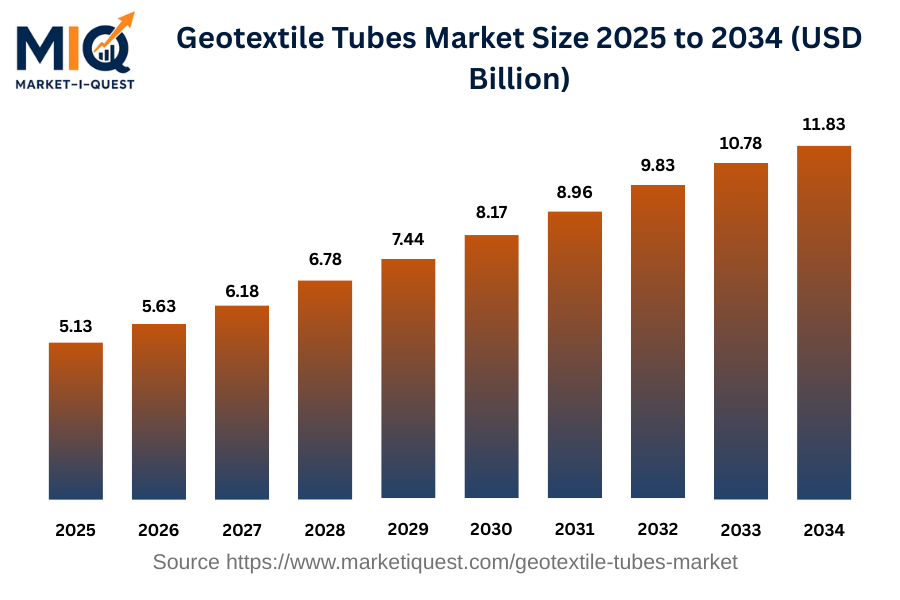
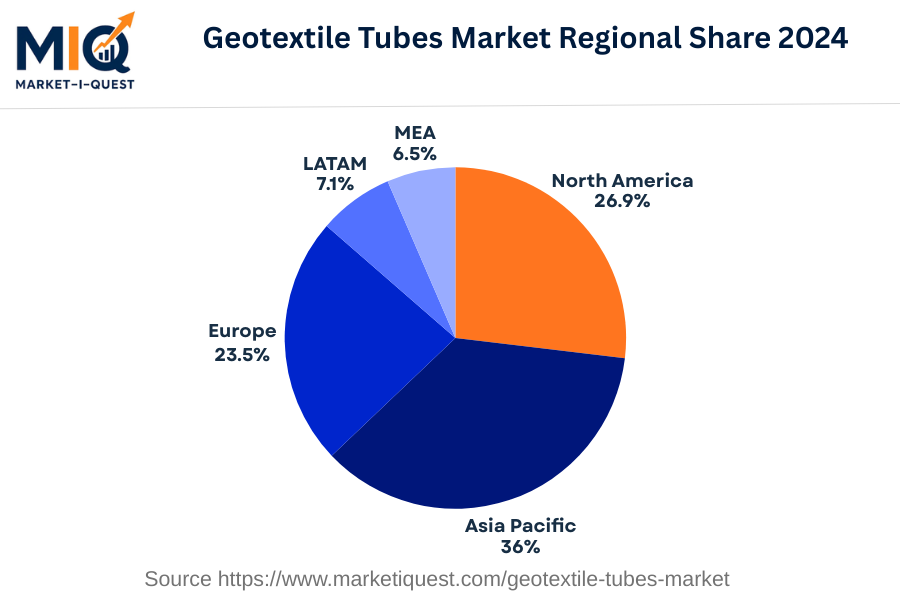
The Geotextile Tubes Market size in 2025 is 5.13 billion USD, and it expands to 11.83 billion USD by 2034, with a CAGR of 9.72%. The market starts at 4.68 billion USD in 2024 and displays a consistent growth trajectory towards 2034. The increase in market size is attributed to rising demand for geotextile tubes in various applications, leading to expanded production capabilities and innovations in material technology. The regional share mix in 2024 comprises North America at 26.9%, Asia Pacific at 36.0%, Europe at 23.5%, LATAM at 7.1%, and MEA at 6.5%.

Key Takeaways

  • By Type - Nonwoven led the market accounting for a substantial share in 2024.
  • By End Use - Construction held the largest share reflecting strong demand in 2024.
  • By End Use - Marine & Hydraulic is forecasted to grow rapidly enhancing market dynamics through 2034.
  • By End Use - Environmental Engineering maintains significant relevance supporting sustainable development and project initiatives in the period ahead.
geotextile-tubes-market market size

Key Driving Factors

Implementation of Tighter Environmental Regulations

Increasing enforcement of stringent environmental regulations worldwide, such as the Environmental Protection Agency (EPA) standards in the U.S., are driving the growth of the geotextile tubes market. These regulations require industries to adopt sustainable practices in waste management, especially in preventing erosion and contamination in water bodies. Geotextile tubes are an efficient solution for dewatering operations and sediment control, making them highly important for meeting these regulatory standards. Specifically, their ability to retain fine-grained sediments and repurpose them in a sustainable, environmentally-friendly manner makes them favorable in the eyes of regulatory authorities. This regulatory pressure is pushing many industries toward adopting geotextile tubes as a standard feature of their waste management operations.
Surge in Infrastructure and Construction Projects

The ongoing surge in infrastructure and construction projects, particularly in developing regions like Asia and Africa, is significantly propelling the demand for geotextile tubes. These projects often require large-scale excavation, triggering concerns about soil erosion and sediment control. Geotextile tubes offer a practical solution as they can contain and dewater large amounts of spoils and waste material conveniently, leaving behind reusable dry soil. Their usage in these projects provides security against potential erosion problems and helps maintain integrity of nearby bodies of water. Decision-makers in the construction industry, motivated by these beneficial properties, are increasingly incorporating geotextile tubes in their project strategies, fueling the geotextile tubes market growth.

Market Evolution by Timeline

2019-2023
Between 2019 and 2023, demand for geotextile tubes grew, particularly in coastal regions such as Florida and Louisiana, driven by projects for beach nourishment and stormwater management. Public agencies like the U.S. Army Corps of Engineers initiated various projects utilizing geotextile tubes to control coastal erosion. Despite increasing demand, the supply chain faced some constraints due to raw material shortages and high logistics costs. Technologies related to fabric manufacturing and permeable designs had varying levels of integration maturity, with some innovations emerging from research institutions. Regulatory standards like ASTM D6818 influenced the adoption of geotextile tubes in civil engineering projects. Particularly, states like California implemented California Environmental Quality Act (CEQA) guidelines affecting such projects. Pricing stayed relatively stable but fluctuated based on raw material costs. Long-term contracts often involved government entities, while commercial models were predominantly based on unit pricing. Risks included environmental concerns leading to permit delays, which prompted manufacturers to enhance sustainability features in their offerings.
2024
In 2024, the geotextile tubes market saw a notable shift towards sustainability as more local governments adopted eco-friendly materials for construction projects. Cities like Miami launched programs emphasizing natural and green infrastructure, thereby increasing demand for geotextile tubes. Key partnerships emerged between manufacturers and environmental organizations to promote responsible use. Supply chain improvements became evident as companies began sourcing recycled materials, though availability of high-quality inputs remained inconsistent. Notable regulations, including revisions in EPA guidelines, began to affect the industry's operational standards. Price dynamics indicated slight increases, primarily due to the rising cost of biodegradable materials. Contracts typically focused on fixed-price arrangements, reducing the budgetary impact for public agencies. Risks included potential pushback from environmental groups regarding the ecological impacts of tube deployment, urging companies to prove the environmental benefits through life-cycle assessments and compliance documentation. Overall, this year marked a transitional phase towards greener practices without significant disruption to market stability.
2025-2029
From 2025 to 2029, the geotextile tubes market expanded as urban areas increasingly integrated these solutions into flood management systems. Cities such as New Orleans adopted geotextile tubes as part of larger flood mitigation initiatives funded by federal grants and state budgets. This period saw significant advancements in manufacturing technology, with automated production processes enhancing efficiency and reducing costs. Regulatory frameworks continued to evolve with the introduction of guidelines from the International Organization for Standardization (ISO) on geotextile tube applications, which further standardized performance metrics. Pricing trends revealed more competitive market conditions, leading to various contract types including performance-based contracts that linked payments to project effectiveness. However, barriers remained, primarily related to project approval timelines and local community resistance to new infrastructure. Companies addressed these risks by engaging with stakeholders early in project planning and demonstrating long-term societal benefits. The overall market growth was marked by diversification of applications, especially in sediment control and environmental restoration efforts.
2030-2034
During the period from 2030 to 2034, the geotextile tubes market is likely to see integration into large-scale infrastructure projects, particularly in rapidly urbanizing regions such as Southeast Asia and parts of Africa. Governments may launch initiatives aimed at improving resilience to climate change, resulting in increased adoption of geotextile tubes for managing stormwater and preventing land erosion. Technological advancements, including smart materials with self-monitoring capabilities, are expected to enhance functionality and extend the lifecycle of geotextile products. New regulations may emerge, aligning local laws with international best practices for environmental protection, possibly influenced by the United Nations' Sustainable Development Goals. Expect price stabilization as manufacturing tactics evolve and competition increases. Commercial contracts can shift to involve more public-private partnerships, leveraging shared resources to minimize costs. Risks may include unpredictable weather patterns impacting project scheduling and execution, which may prompt companies to develop adaptive project management strategies. This timeframe may define the maturity of the market as it aligns with global sustainability efforts.

Future Market Outlook

Future Opportunities

Future opportunities for the geotextile tubes market are closely linked to ongoing environmental challenges and infrastructure needs, particularly in coastal and flood-prone regions. With accelerating climate change, nations like the Netherlands are increasingly investing in flood mitigation projects, which may lead to higher demand for geotextile tubes for their ability to provide effective erosion control and sediment management. In 2023, the World Bank acknowledged the critical role of sustainable construction materials in disaster resilience, prompting initiatives that may favor geotextile tube solutions. Additionally, as the circular economy concept gains traction, recycling and repurposing opportunities for geotextile materials could open new markets. In 2022, the American Society of Civil Engineers emphasized the integration of geotechnical innovations in urban development, suggesting potential partnerships between public authorities and manufacturers to optimize urban flood defenses. Moreover, advancements in smart material technologies, as seen in research from institutions like MIT in 2021 who explored self-healing properties in synthetic materials, could inspire novel applications of geotextile tubes. The expanded adoption of geotextile tubes in land reclamation projects, as demonstrated by ongoing developments in Asia-Pacific countries, is also a clear indicator of their future relevance in infrastructure projects. As sustainability drives policy-making globally, expanding the usage of geotextile tubes offers a tangible pathway towards resilient infrastructure while addressing pressing environmental concerns.

Segmentation Analysis

The geotextile tubes market is segmented by Type (Woven, Nonwoven) and by End Use (Marine & Hydraulic, Environmental Engineering, Construction).

By Type

The market is divided into subsegments including Woven and Nonwoven. Woven accounted for the largest revenue share while Nonwoven is expected to grow at the fastest CAGR during the forecast period.

Largest Revenue Share

Woven

Market Share Leader

The Woven subsegment leads the market primarily due to its strong demand across various industries such as apparel, home textiles, and technical textiles. The durability and strength of woven materials make them highly sought after by customers looking for high-performance applications. Additionally, woven products often align with fashion and design trends, appealing to manufacturers aiming to meet consumer expectations for quality and aesthetics. Geographically, regions known for textile manufacturing, like Asia-Pacific and Europe, have established supply chains that further enhance the Woven subsegment's revenue generation. Regulatory standards in certain industries also dictate the use of woven textiles due to their reliability and longevity. These factors combined drive demand, making it clear why Woven retains the market's largest revenue share. Clients are typically less sensitive to switching costs given the established reputation and performance of woven products. Overall, as the market shifts toward sustainability, advancements in the production and use of woven materials align well with current consumer preferences and regulatory frameworks, sustaining their dominance in future projections.

Fastest CAGR

Nonwoven

Forecast Period Growth Leader

The Nonwoven subsegment is expected to experience the fastest growth driven by several factors. The rising demand in healthcare applications, such as surgical gowns and masks, necessitated by global health challenges, has significantly contributed to this growth trajectory. Additionally, nonwoven materials are becoming increasingly popular in hygiene products, driven by consumer preferences for convenience and disposability. Adoption barriers include the perception of nonwoven materials as less durable than woven products, but ongoing innovations in production techniques are addressing these concerns by improving strength and performance. Moreover, partnerships between manufacturers and technology firms are enhancing production capabilities and expanding applications for nonwovens. Regulatory support for hygiene and safety standards has also acted as a catalyst, encouraging greater adoption across sectors. Near-term risks include potential supply chain disruptions and fluctuating raw material costs, which could impact production timelines and pricing structures. However, the overall trend toward increased usage in multiple industries positions Nonwoven materials for significant growth in the coming years.

By End Use

The market is divided into subsegments including Marine & Hydraulic, Environmental Engineering, and Construction. Marine & Hydraulic accounted for the largest revenue share while Environmental Engineering is expected to grow at the fastest CAGR during the forecast period.

Largest Revenue Share

Marine & Hydraulic

Market Share Leader

The Marine & Hydraulic subsegment leads the market due to consistent demand from industries reliant on navigation and transportation. The growing global trade emphasizes the need for efficient marine logistics and hydraulic systems, thus driving revenue in this area. Customers include shipping companies, government agencies, and infrastructure developers focused on enhancing marine operations. The geographical factors play a crucial role, particularly in regions with extensive coastlines or the presence of major shipping routes. Regulations concerning pollution control and safe hydraulic practices further boost demand for compliant systems and technologies. Additionally, purchasing criteria favor innovative solutions with superior reliability and maintenance support, which consumers prioritize to minimize operational disruptions. The relatively low switching costs for companies within the industry enable them to adapt to cutting-edge marine technologies that improve efficiency and cost-effectiveness. As a result, this subsegment not only captures the largest revenue share but also ensures sustainability in maritime operations, positioning it as a key player in the overall market landscape.

Fastest CAGR

Environmental Engineering

Forecast Period Growth Leader

Environmental Engineering is poised for the fastest growth due to increasing global awareness regarding environmental sustainability and regulatory pressures. The rising need for companies to minimize their carbon footprint and comply with stringent environmental regulations acts as a significant catalyst for this subsegment. Companies are investing heavily in technologies that enhance waste management, pollution control, and resource conservation. Despite this promising outlook, there are adoption barriers including high initial capital expenditure and a lack of skilled workforce to implement and manage advanced environmental systems. Legislative support, such as government incentives for sustainable practices and grants for environmental projects, aids in overcoming these barriers. Moreover, partnerships between private sector companies and governmental entities foster innovation and broader adoption of environmental solutions. However, near-term risks include fluctuating regulatory landscapes and potential delays in project approvals, which can create uncertainty for investors. Overall, as businesses increasingly prioritize sustainability initiatives, Environmental Engineering will benefit substantially from these ongoing trends.

Competitive Analysis

Key Market Players

The geotextile tubes industry is competitive, with a mix of large established companies and smaller regional players. Most companies focus on improving their products/services, keeping prices attractive, and strengthening relationships with key customers. They also use partnerships, acquisitions, and new launches to expand their presence in existing and new markets. Overall, players compete on quality, reliability, and value, and competition is expected to remain strong over the forecast period.

Manufacturers / OEMs

TenCate Geosynthetics
US
Huesker Synthetic GmbH
Germany
ACE Geosynthetics
Taiwan

Key Suppliers & Raw Materials

Polymer Group Inc.
US
BASF SE
Germany
Dow Inc.
US

Distributors, Integrators & Channel Partners

Geosynthetics International
Canada
GEO-Solutions Inc.
US
Tensar International
UK

Porter’s Five Forces Analysis

This analysis evaluates the competitive dynamics within the Geotextile Tubes Market. It highlights the power of suppliers, buyers, potential substitutes, new entrants, and overall competitive rivalry.

Supplier Bargaining Power

Medium

Suppliers have moderate power due to the specialized nature of materials and limited number of manufacturers.

Buyer Bargaining Power

High

Buyers can exert high pressure owing to the availability of alternative solutions and significant price sensitivity.

Threat of Substitutes

High

The presence of various erosion control solutions increases the threat of substitutes significantly.

Threat of New Entrants

Medium

Moderate barriers exist due to capital requirements and compliance standards for product certification.

Competitive Rivalry

High

Intense competition stems from numerous players and the necessity for innovation in product performance.

Regional Analysis

Geographic market dynamics and growth opportunities across key regions

Global Market Outlook

geotextile-tubes-market market regional share

North America

The Geotextile Tubes Market growth in North America in 2024 is shaped by increasing infrastructure development and environmental management needs. Demand is driven by rising investments in coastal protection projects, particularly in the U.S. and Mexico, as municipalities face flooding and erosion challenges. Regulatory frameworks, such as the Clean Water Act, further promote the use of geotextile tubes for sustainable construction practices, leading to increased adoption across government and private sectors. Advances in technology, including improved materials and manufacturing processes, enhance the effectiveness and cost-efficiency of geotextile products, encouraging broader use.

Trends indicate a shift toward environmentally sustainable solutions, with buyers increasingly favoring products that meet stringent environmental standards. Partnerships between manufacturers and engineering firms are becoming more common as companies seek innovative applications of geotextile tubes in various civil engineering projects. The influence of policy enforcement is evident, as local government agencies prioritize eco-friendly practices in procurement guidelines. Moreover, the growing emphasis on climate resilience among coastal municipalities drives demand, particularly in sectors such as water management and urban planning, where geotextile tubes serve vital roles in flood control and shoreline protection.

Asia Pacific

The Geotextile Tubes Market share in Asia Pacific in 2024 is characterized by increasing applications in sediment control, coastal protection, and wastewater management. Key drivers include heightened investments in infrastructure projects by governments in China and India, particularly for flood control and coastal development, which elevate demand for geotextile tubes. Stringent environmental regulations in these countries further compel construction firms and local authorities to adopt geotextile technologies to comply with standards addressing soil erosion and ecological protection. Technological advancements, including the development of more durable and environmentally friendly materials, have enhanced product offerings, leading to greater market acceptance.

Trends indicate a growing preference among buyers for sustainable solutions, resulting in a shift towards the use of biodegradable geotextiles, particularly in Japan and Australia. Partnerships among manufacturers, government agencies, and research institutions are increasingly common as stakeholders look to innovate and ensure compliance with local regulations. Additionally, the rise of online channels for procurement is changing how clients in utilities and construction sectors engage with suppliers. The adoption of national policies, such as the National Water Framework in India, supports the integration of geotextile tubes in public works, reinforcing their relevance across various infrastructure projects.

Europe

In 2024, the Geotextile Tubes Market in Europe reflects a growing demand driven by increasing infrastructure projects aimed at flood control and coastal protection. The enforcement of the EU Floods Directive stimulates investment in innovative solutions, while local governments prioritize geotextile tubes for their efficiency and cost-effectiveness in managing sediment and erosion. Advances in material technology enhance the durability and environmental compliance of these products, further bolstering their appeal among contractors and civil engineers.

Buyer behavior is shifting towards sustainable practices, with public sector entities emphasizing eco-friendly materials in procurement policies. Increased collaboration between private firms and governmental bodies leads to more integrated project approaches, including the use of geotextile tubes in urban development and landscape restoration across the Nordics and Benelux countries. The construction sector shows a preference for composite materials that facilitate quicker deployment and longer lifespan. Additionally, standardization initiatives in France and Germany enhance product reliability, promoting wider adoption among utilities and manufacturing sectors. In Central and Eastern Europe, heightened awareness of climate change impacts is driving increased use of geotextile tubes for both flood mitigation and land reclamation initiatives, linking environmental policy with practical engineering solutions.

Latin America

In 2024, the geotextile tubes market size in Latin America is characterized by a growing demand for erosion control and sediment management solutions, particularly in coastal and river projects. Key drivers include increased infrastructure investments, with governments in Brazil and Mexico emphasizing flood protection and coastal resilience initiatives, leading to heightened demand for geotextile applications. Regulatory frameworks, such as Brazil's National Policy on Water Resources, stimulate the adoption of sustainable practices, thereby enhancing market growth.

Trends in buyer behavior indicate a shift toward environmentally friendly materials and techniques, with municipalities and private sector players in Colombia and Chile increasingly prioritizing sustainable construction methods. Strategic partnerships are emerging among geotextile manufacturers and engineering firms to innovate product offerings, particularly in resource-rich Peru, which favors local procurement for public works. Additionally, a rising emphasis on standards compliance, driven by international bodies, is influencing procurement decisions across the region, compelling suppliers to align with environmental and safety regulations. The growing influence of technology, such as improved manufacturing processes and material performance enhancements, is reshaping product dynamics, catering to sectors including construction, agriculture, and waste management.

Middle East & Africa

In 2024, the geotextile tubes market expansion in the Middle East and Africa is characterized by rising demand due to increased investment in infrastructure and coastal protection projects. Key drivers include government initiatives in Saudi Arabia and the UAE aimed at enhancing flood control and waste management capabilities, which necessitate the use of geotextile tubes in construction. Furthermore, stringent environmental regulations in Qatar and Egypt are promoting the adoption of these materials to minimize ecological impacts during land reclamation activities. The growth of the oil and gas sector in Nigeria and South Africa also boosts demand for geotextile solutions in pipeline installation and stabilization.

Trend-wise, there is a noticeable shift towards innovative manufacturing technologies, enabling improved material durability and functionality. Buyers, particularly in government and utilities sectors, are increasingly favoring sustainable materials, aligning with global sustainability goals. Partnerships are emerging among local and international suppliers to enhance distribution channels, notably in Kenya and Israel, facilitating access to advanced geotextile solutions. Additionally, policy enforcement regarding construction standards is gaining momentum, shaping procurement strategies and prompting companies to prioritize compliance with regional regulations to secure contracts. This synergy between government policy and market supply dynamics is vital in defining the geotextile tubes landscape in the region.

Frequently Asked Questions