General Surgery Devices Market Snapshot

Key Players

  • Johnson & Johnson (US)
  • Medtronic Plc (Ireland)
  • Becton Dickinson and Company (US)
  • Getinge AB (Sweden)
  • Boston Scientific Corporation (US)
  • Intuitive Surgical Inc. (US)
  • ConMed Corporation (US)
  • Olympus Corporation (Japan)
  • Karl Storz GmbH & Co. KG (Germany)
  • Stryker Corporation (US)

Market Size

Base Year 2024
$17.85 Bn
CAGR
7.9%
Forecast 2034
$38.18 Bn

Market Segments

By Product Type
Electrosurgical Devices, Handheld Surgical Instruments, Laparoscopic Devices, Sutures, Staplers
By Procedure Type
Open Surgery, Minimally Invasive Surgery
By Application
Cardiothoracic Surgery, Orthopedic Surgery, General Surgery, Obstetrics, Gynecology
By End Use
Hospitals, Ambulatory Surgical Centers, Specialty Clinics

Market Dynamics

Drivers
  • Rising incidence of surgeries
  • Technological advancements in devices
Restraints
  • High device costs
  • Strict regulatory standards
Opportunities
  • Emerging economies' healthcare advancements
  • Technological innovations in surgery devices

Market Size

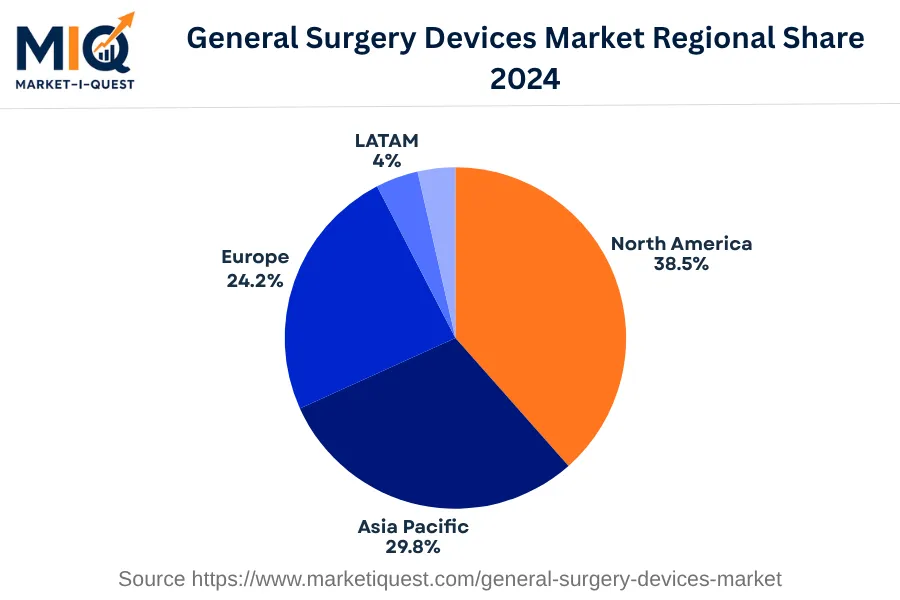
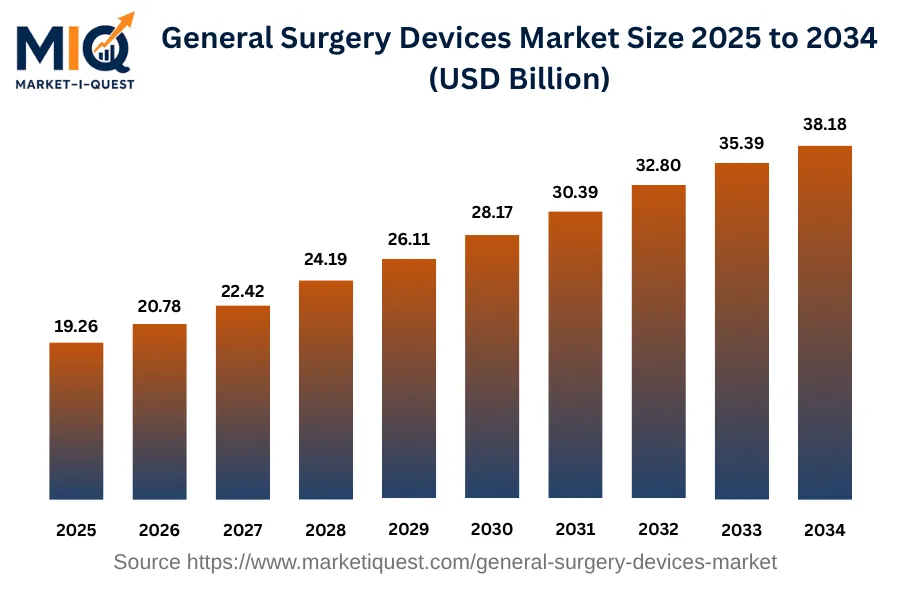
The General Surgery Devices Market was valued at $19.26 billion in 2025 and is projected to swell to $38.18 billion by 2034, yielding a compound annual growth rate (CAGR) of 7.9%. This extensive growth pattern can be tracked through a decade of progressive expansion in the medical devices sector, substantiated by a consistent annual increase in market value. This growth trend is driven primarily by the continuous progression of minimally invasive surgical procedures, the technological advancements in surgical devices, and the rising prevalence of diseases requiring surgical intervention. As of 2024, North America held the largest share in the General Surgery Devices Market, accounting for 38.5% of global market revenue. It was followed by Asia Pacific with 29.8%, Europe with 24.2%, Latin America with 4%, and Middle East and Africa with 3.6%.

Key Takeaways

  • By Product Type - Sutures led the market accounting for a significant share in 2024.
  • By Procedure Type - Open Surgery held the largest market share in 2024.
  • By Application - Orthopedic Surgery led the sector accounting for a large market share in 2024.
  • By End Use - Hospitals held the lead in the market accounting for the major share in 2024.
general-surgery-devices-market market size

Key Driving Factors

Standardization of Surgical Procedures Compliance

Regulatory bodies globally are pressing for the standardization of surgical procedures to minimize errors and increase operative efficiency. As a result, the use of general surgery devices has become a crucial component in enforcing these standards. For example, organizations such as the World Health Organization and the American College of Surgeons provide guidelines that specify the utilization of certain devices for specific procedures. With hospitals and clinics striving to comply with these standards, the demand for general surgery devices is set to increase and will drive growth in the general surgery devices market.

Shift Towards Minimally Invasive Surgeries

The trend in surgery is shifting towards less invasive, or laparoscopic, procedures. These surgeries require specialized devices like endoscopes, energy systems, and laparoscopic instruments, collectively falling under general surgery devices. The shift to laparoscopic surgery is being driven by several benefits including reduced patient trauma, shortened recovery time, and cost savings from shortened hospital stays. As this trend continues to grow in popularity among surgeons and patients alike, it will significantly impact the general surgery devices market by driving increased procurement of these specialized devices.

Market Evolution by Timeline

2019-2023
In the block of 2019–2023, North America dominated the general surgical devices market due to the rising prevalence of chronic conditions like cancer, cardiovascular diseases, and diabetes. Innovative devices like robotic surgical systems saw broader use. Restrictions imposed by the FDA and other regulatory bodies kept quality and safety standards high. Typically, vendors priced these high-tech devices higher, affecting affordability, particularly in lower-income markets. Acquiring surgical tools commonly occurred through annual contracts with suppliers. Risk factors included surgical errors due to device malfunctions.
2024
In 2024, the trend towards minimally invasive surgical procedures amplified due to their fewer complications and faster recovery times increasing demand for associated devices. Laparoscopic instruments were the most commonly used type. Advancements in biomedical sensors integrated into devices matured, despite challenges in standardizing this technology. Regulatory bodies imposed stringent requirements for their approval and usage. Prices for these devices remained high due to the intricate technology involved. Order procurement typically happened through regular purchases, usually every quarter. Robotic system failures were the most significant risk.
2025-2029
Between 2025–2029, use of hand-held surgical devices such as trocars and staples saw a massive uptick, particularly in Asia-Pacific region due to increasing healthcare infrastructure. The integration of AI technology into general surgical devices started to take shape, yet remained largely in pilot phases due to complex compliance issues. The Affordable Care Act in the United States ensured covering such tools under insurance policies. Market partnerships among manufacturers and healthcare providers flourished during this period, offering bundled package deals. Cybersecurity appeared as a new risk with the emergence of connected devices.
2030-2034
From 2030–2034, reusable surgical devices dominated the market due to their cost-effectiveness, especially in developing countries. Nano technology used in surgical devices improved significantly, offering high precision in surgeries, though often limited by high production costs. The ISO 13485:2030 became the standard regulation. Various manufacturers offered installment payment options, addressing affordability issues. Strategic alliances among manufacturers, distributors, and hospitals improved supply chain efficiency. Device malfunctions presented potential physical risk to patients, while high production costs posed an economic risk to manufacturers.

Future Market Outlook

Future Opportunities

The opportunities within the general surgery devices market are being shaped by several factors driving innovation and demand. For instance, the rising prevalence of chronic diseases like obesity has led to increased surgical interventions, creating an urgent need for effective surgical devices. In 2023, the World Health Organization emphasized the growing epidemic of obesity and its surgical management, prompting device manufacturers to focus on scalable and efficient solutions. In addition, regulatory reforms in various countries, including the implementation of fast-track approval processes by the FDA, are expected to accelerate the introduction of novel devices. In 2022, the FDA launched the Digital Health Center of Excellence to support the development of software-based surgical applications, signaling potential for swift advancements in digital surgical devices. Collaborations between technology companies and healthcare providers are also gaining momentum, as seen in 2021 when a partnership between Siemens Healthineers and a leading hospital in Germany focused on integrating imaging technologies with surgical devices. Furthermore, as hospitals strive to reduce operational costs, demand for cost-effective, multifunctional surgical devices is increasing. This trend is exemplified by advances in single-use surgical instruments gaining traction in European markets, especially after the COVID-19 pandemic highlighted the need for safety and efficiency. These evolving market dynamics suggest a fertile ground for future innovations and developments in general surgery devices.

Segmentation Analysis

By Product Type

The market is divided into subsegments including Electrosurgical Devices, Handheld Surgical Instruments, Laparoscopic Devices, Sutures, and Staplers with Sutures accounting for the largest revenue share. On the other hand, Laparoscopic Devices are projected to register the quickest growth during the forecast period.

Largest Revenue Share

Sutures

Market Share Leader

In the medical industry, sutures hold a dominant position in relation to revenue generation. This prominence is driven by their universal application across multiple surgical disciplines, fueling a consistently high demand. Sutures hold a vital role in wound management and healing, making them indispensable in surgeries. The end users for sutures range from hospitals to ambulatory surgical centers and clinics. Sutures have been proven to be cost-effective and reliable over time, hence enjoying a consistent purchase preference. The decision for purchasing sutures often lean towards their reliability, ease of use, and costs, strengthening their demand in the market. Despite the advent of alternative wound closure products, sutures retain their dominance due to their entrenched position and the high switching costs involved with alternatives. Geographically, the demand for sutures is strong worldwide, further solidifying their majority revenue share. Regulatory environment also favors sutures as they have a long history of proven safety, further driving the market forward.

Fastest CAGR

Laparoscopic Devices

Forecast Period Growth Leader

Although Sutures dominate the current market landscape, Laparoscopic Devices are projected to grow at the fastest pace. As technological advancements progress, newer, less invasive surgical methods are becoming more prevalent and accessible, providing impetus for the growth of Laparoscopic Devices. The primary catalyst driving this growth is the increasing demand for minimally invasive procedures. Patients are increasingly favoring Laparoscopic procedures due to their shorter healing time, less post-operative discomfort, and lower risks of infection, leading to an accelerated adoption of these devices. Additional factors contributing to this rapid growth include healthcare policy shifts favoring minimally invasive procedures and increasing Capital Expenditures in healthcare technology. Despite the promising outlook, it is key to acknowledge potential barriers to growth. The high cost of Laparoscopic Devices and limited surgical expertise in laparoscopy could pose challenges. Nonetheless, with the continuing advancements in technology and an increasing number of partnerships and training opportunities, the rapid growth of the Laparoscopic Devices segment is likely to persist.

By Procedure Type

The market is divided into subsegments including Open Surgery and Minimally Invasive Surgery. In the base year 2024, Open Surgery accounted for the largest revenue share while Minimally Invasive Surgery is expected to grow at the fastest CAGR during the forecast period.

Largest Revenue Share

Open Surgery

Market Share Leader

Open surgery commands the lion's share in revenue terms, predominantly due to its widespread preference and usage. Across geographies, open surgery is not only established but is also characterized by a robust support structure comprising medical practitioners adept in these procedures and health infrastructure. It continues to be the primary choice for critical and complex procedures that necessitate a high degree of precision, thereby cementing its stronghold in the procedure type market. Factors such as regulatory support, extensive training of physicians, improved patient outcomes, and the higher switching costs associated with transitioning to newer surgical types are contributing to its substantial revenue lead. We can expect to see this trend continue in the short to medium term, considering its deep-seated influence in the space. However, we should note the increasing acceptance and improvements in minimally invasive surgical methods that could pose a challenge to open surgery's dominance.

Fastest CAGR

Minimally Invasive Surgery

Forecast Period Growth Leader

Minimally Invasive Surgery (MIS) is pegged as the fastest-growing segment in the forecast period, albeit from a smaller base than open surgery. Its growth drivers include the increasing preference for less invasive procedures, resulting in shorter hospital stays, quicker recovery time, less post-operative pain, and fewer complications. Technological advances have worked as great enablers, promoting adoption of MIS across healthcare facilities. Equally importantly is the role of regulatory bodies and policy makers, who have set conducive policies and guidelines that encourage adoption of such procedures. Despite these potential tailwinds, barriers such as high capital expenditure, requirement for specialized training, and technology adoption could pose interim challenges for MIS. Nevertheless, the trend toward digitization in healthcare and the continued advancement in surgical technology are anticipated to propel the faster growth of this segment.

By Application

The market is divided into subsegments including Cardiothoracic Surgery, Orthopedic Surgery, General Surgery, Obstetrics and Gynecology. In the base year 2024, Orthopedic Surgery accounted for the largest revenue share while Cardiothoracic Surgery is expected to grow at the fastest CAGR during the forecast period.

Largest Revenue Share

Orthopedic Surgery

Market Share Leader

Orthopedic Surgery has shown strong performance, leading in terms of revenue generation in 2024. This dominance can be attributed to various factors such as the rising prevalence of musculoskeletal conditions, driven by an aging global population and a growing issue of obesity. Concurrently, advances in orthopedic technology and devices, such as biodegradable implants and robotic-assisted surgeries, have enabled more effective and efficient treatment of these conditions, increasing willingness among patients to opt for these surgeries. Furthermore, the high cost associated with these procedures contributes significantly to the revenue in this subsegment. Demand has been further stimulated by a growing focus on health and fitness leading to an increase in sports-related injuries which often require orthopedic interventions. Key geographies driving this revenue include developed regions with high healthcare expenditure such as North America and Europe.

Fastest CAGR

Cardiothoracic Surgery

Forecast Period Growth Leader

Cardiothoracic Surgery, while not the largest revenue generator, is projected to outpace other subsegments in terms of growth. Although this subsegment has traditionally been characterized by high barriers to entry given the complex nature of the procedures and high level of expertise required, recent advances in technology have begun to break down these barriers. The growing prevalence of heart diseases globally, driven primarily by unhealthy lifestyles, is the primary driver of the increasing need for cardiothoracic surgeries. Factors fueling growth include advancements in minimal invasive surgery techniques, increasing availability of sophisticated medical infrastructure, and greater investment in R&D activities to develop advanced heart-lung machines and other supporting tools. Still, potential risks include changes in hospital reimbursements and regulatory standards, which could affect the adoption rate of new technologies and the supply of specialized practitioners.

By End Use

The market is divided into subsegments including Hospitals, Ambulatory Surgical Centers, and Specialty Clinics, with Hospitals accounting for the largest revenue share, while Ambulatory Surgical Centers are expected to grow at the fastest CAGR during the forecast period.

Largest Revenue Share

Hospitals

Market Share Leader

Hospitals, as a subsegment, garnered the most significant revenue in 2024. This is largely attributable to the comprehensive services they offer, coupled with their broad reach. Hospitals typically have a greatly diversified patient pool, ranging from simple outpatient visits to complex surgical procedures. The vast array of medical equipment, professional expertise, and advanced treatment options they offer often necessitate significant investment and consumption of market products and services. Further, large scale hospitals often have more room for technology adoption and implementation, making them key purchasers in the market. Moreover, a hospital's capacity to cater to diverse medical emergencies and the predominance of insurance-based treatments also play a vital role in generating substantial market revenue. Their authority to command higher prices, owing to their scale and service breadth, also feeds into revenue growth. Regulatory aspects also favor hospitals, as governments worldwide continue to focus on strengthening their healthcare infrastructure.

Fastest CAGR

Ambulatory Surgical Centers

Forecast Period Growth Leader

Ambulatory Surgical Centers (ASCs) are anticipated to have the fastest CAGR through the forecast period. This growth can be attributed to several factors. First, there is a growing preference for ASCs due to their cost-effectiveness and efficiency. With escalating healthcare costs, these centers provide an affordable alternative to hospital care while maintaining high-quality service. Secondly, technological advancements, improved procedural techniques, and the rise of minimally invasive surgeries are leading to a greater number of procedures being shifted from hospitals to ASCs. Meanwhile, partnerships with healthcare providers and favorable reimbursement policies are catalyzing this transition. However, adoption barriers exist, including stringent regulations and high initial setup costs. The near-term risk includes uncertainties caused by changing healthcare regulations and policies. Despite these hurdles, the rapid growth sentiment surrounding ASCs remains strong, underpinned by evolving patient preferences for outpatient care and lower-cost treatment options.

Competitive Analysis

Key Market Players

Manufacturers / OEMs

Johnson & Johnson
US
Medtronic
Ireland
Stryker
US

Key Suppliers & Raw Materials

Carpenter Technology
US
Sandvik
Sweden
ATI Metals
US

Distributors, Integrators & Channel Partners

McKesson Medical-Surgical
US
Henry Schein
US
Cardinal Health
US

Porter’s Five Forces Analysis

An analysis of the competitive landscape within the General Surgery Devices Market.

Supplier Bargaining Power

Medium

Suppliers influence cost, delivery timing, and quality of specialized components.

Buyer Bargaining Power

High

Numerous alternatives and low switching costs provide buyers with significant power.

Threat of Substitutes

Low

Few substitutes exist due to stringent certification and validation requirements.

Threat of New Entrants

Low

High barriers via stringent regulatory requirements and high initial capital investment.

Competitive Rivalry

High

Numerous established players and aggressive competition to provide the latest advancements.

Regional Analysis

Geographic market dynamics and growth opportunities across key regions

Global Market Outlook

general-surgery-devices-market market regional share

North America

In 2024, the North American market for General Surgery Devices was characterized by significant advancements in medical technology and changing regulatory landscapes. The key driving factor was the increasing demand for minimally invasive devices amidst rising incidents of chronic diseases across the U.S., Canada, and Mexico. In the U.S healthcare sector, a surge in hospital and ambulatory surgery center investments, set a strong base for market expansion. Regulatory changes streamlined the approval of new devices in Canada, fostering an encouraging environment for innovation. Additionally, Mexico's increased adoption of advanced surgical devices reflected a positive influence on the market.

Trends such as the tightened safety protocols in the U.S and Canada aligned with the increased focus on patient well-being. There was a noted shift among medical professionals towards robotics-assisted devices, owing to their precision and reliability, leveraging new regulations for tech adoption. Multi-national manufacturers sought cross-border partnerships resulting in cross-pollination of device innovation throughout North America. Incorporation of machine learning and AI capabilities in surgical devices emerged as a key trend underpinning market growth. Health authorities further imposed stringent standards for these technologies, ensuring their secure and meaningful use in the surgical setting. Industries spanning from enterprise to healthcare realized the market's potential, paving the way for advancements in general surgery device production and application.

Asia Pacific

In the base year 2024, the General Surgery Devices Market in Asia Pacific was a distinguished territory with drivers and trends sculpting a dynamic landscape. The market thrived on the strengthened government regulations promoting manufacturing quality, the burgeoning aging population necessitating increased surgical interventions, and substantial investments in healthcare infrastructure mainly in countries like China, India, and South Korea. Accessibility to advanced technology and steady demand fueled the market, with suppliers in Japan and Australia adopting robotics and minimally invasive technologies in surgical procedures. Cost-effective manufacturing in the ASEAN markets led to competitive pricing, producing a ripple effect on supply dynamics.

While consumer preference tilted towards technologically enhanced, reliable equipment, acquisitions and alliances emerged as the cardinal strategy to expand product offerings and consolidate market positions. For instance, multinationals partnered with local companies for effective penetration of products and technologies. State policy enforcement in China in terms of uniform quality standards significantly influenced market trends. The sector's largely comprehended stakeholders were healthcare institutions (public and private) and specialty clinics. The influx of retail clinics in India was another customer base that greatly influenced the market behavior in 2024. Digital platforms, simultaneously, played a pivotal role as a novel selling medium for general surgery devices, bridging gaps between providers and consumers.

Europe

In 2024, the general surgery devices market in Europe demonstrated a steady progression due to health infrastructure development, technology integration, and aging population. Enhanced healthcare facilities and robust policies in countries such as Germany, the UK, and France catalysed demand: advanced equipment acquisitions increased in hospitals and surgical units. A shift towards minimally invasive surgical procedures, predominantly in Italy and Spain, stimulated growth in the devices sector, driving the need for specialized tools. The embrace of HealthTech in the region was another significant driver; electronic medical records and wearable devices paved the way for a more personalized approach in general surgery, making several European countries, including those in the Nordics and Benelux, adopt sophisticated surgical devices. Economic growth in Central & Eastern Europe also boosted their healthcare investment, leading to increased uptake of these devices.

Consumer trends revealed a growing preference for quality healthcare, with patients in key markets prioritizing facilities with the latest surgical equipment for procedures. Telemedicine's rise in regions like the UK and France have influenced the market; surgical device suppliers casting an eye towards remote monitoring tools for post-surgical care. The technology shift also garnered interest in large-scale acquisitions and partnerships, with firms eager to expand their portfolio and streamline the supply chain. Policies under the European medical device regulations have enforced higher standards, impacting the quality and diversity in the surgical devices market.

Latin America

In 2024, the Latin American market for general surgery devices exhibited significant growth partly due to health infrastructure investments by the governments of Brazil, Mexico, Argentina, Colombia, Chile, and Peru. The rebound in demand for surgeries following the Covid-19 pandemic became a primary driver for growth in this sector. For instance, countries like Brazil and Mexico saw a surge in regulatory approvals for these devices in line with elevated health precautions. Meanwhile, Peru’s healthcare sector's ongoing technological upgrade boosted monopoly-resistant competition and ushered new products into the market, igniting supply dynamics.

Developments in minimally invasive surgical technology also positively impacted this market. Investment into specialized medical training in Argentina, to adopt advanced surgical procedures, created a ripple effect on device demand. Another key trend has been hospitals, particularly in Chile and Colombia, opting for domestic suppliers for reduced delivery times and pricing advantage, a shift from prior reliance on imports. Moreover, influencing this market has been the formation of healthcare partnerships across all six countries, specifically hospital group purchases and shared procurement agreements. As governments enforce stricter sterility standards in operating theaters, demand for single-use surgical tools has seen an upward trajectory, prompting corporations to rethink their sustainable disposal strategies. Altogether, these factors have sculpted the LATAM general surgery devices market in 2024.

Middle East & Africa

In 2024, the General Surgery Devices Market in the Middle East and Africa demonstrated significant growth. Key drivers were the increasing demand for advanced surgical products due to rising surgical procedures in countries like Nigeria, Kenya, and South Africa. Regulatory developments particularly in Saudi Arabia and United Arab Emirates provided a favorable environment for international manufacturers. Investments in healthcare infrastructure and technology adoption in Israel and Egypt further propelled the market.

Emerging trends were marked by a shift towards minimally invasive surgical techniques in countries such as Qatar, prompting enhanced innovation in surgical devices. Changing buyer behavior was evident in a growing preference for high quality, accredited surgical tools, particularly in the private healthcare sector in Saudi Arabia. Channel dynamics were influenced by the collaboration and M&A activities amongst multinational manufacturers and local healthcare agencies, especially in South Africa and the United Arab Emirates. Advancements in safety standards and rigorous policy enforcement reshaped the industry, particularly in sectors such as government, healthcare, and manufacturing. As such, the General Surgery Devices Market was positively impacted by demand factors, regulatory frameworks, and innovation, significantly shaping the market landscape in key regions within the Middle East and Africa in 2024.

Recent Industry Developments

Latest market innovations, product launches, and strategic initiatives

June 2026

Medtronic announced a major expansion for its Hugo™ robotic-assisted surgery (RAS) system, submitting 510(k) filings to the FDA for broad indications in general and gynecologic surgeries in the United States. Simultaneously, the company received FDA clearance for its ProGrip™ Advanced robotic mesh, designed specifically to improve deployment and handling during robotic-assisted hernia repairs.

December 2025

Medtronic secured FDA clearance for the Hugo™ RAS system for urologic surgical procedures, marking the beginning of its commercial rollout across major U.S. medical centers. This milestone significantly increased the competitive pressure in the robotic surgery space, forcing other market incumbents to accelerate the development of their own integrated energy and instrumentation platforms.

Frequently Asked Questions