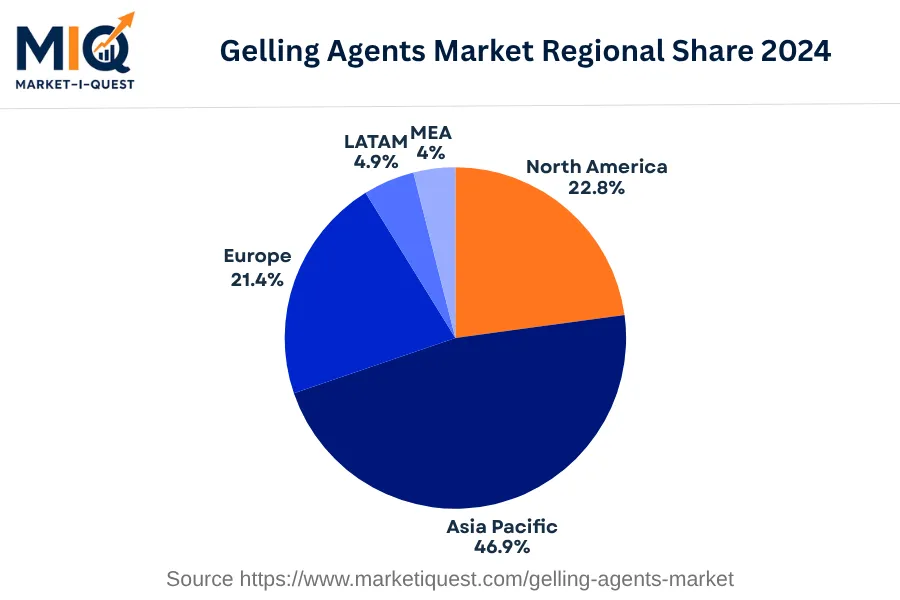
In 2024, the Gelling Agents Market witnessed substantial growth in the Middle East and Africa, driven by increasing demand and strategic business decisions. The drivers included significant investments from Saudi Arabia and the United Arab Emirates (UAE), encouraging domestic production and technology adoption. Nigeria and South Africa saw a surge in demand for gelling agents owing to the expansion in their manufacturing sectors. It was underpinned by the development of food, pharmaceutical, and cosmetic industries, illustrating a supply-demand dynamism.
Trends that dictated the market were primarily based on buyer behavior and technology shifts. The widespread adoption of modern retail distribution channels, especially e-commerce, was prominent in Egypt and Israel, providing easy access to products. Meanwhile, Saudi Arabia and UAE witnessed an increase in partnerships and M&A activities. These countries prioritized capacity and technology enhancements in the gelling agents segment because of state-led industrial diversification policies. Regulations focused on food safety and labeling standards, significantly influencing the market. The gelling agents had a considerable customer base, which included government bodies, oil and gas, healthcare, and retail sectors. For instance, Qatar's healthcare sector observed a rise in gel caps used in medicinal products. Meanwhile, Saudi Arabia's retail industry used gelling agents for various food products. However, the dominating sector remained oil and gas, primarily in countries like UAE and Saudi Arabia, where gel-forming agents were utilized extensively to enhance oil recovery.