Gastrointestinal Stents Market Snapshot

Key Players

  • Boston Scientific Corporation (United States)
  • Medtronic Plc (Ireland)
  • W. L. Gore & Associates (United States)
  • Olympus Corporation (Japan)
  • Cook Medical (United States)
  • Braun Melsungen AG (Germany)
  • ELLA-CS
  • s.r.o. (Czech Republic)
  • MiTech Medical (Ireland)

Market Size

Base Year 2024
$0.538 Bn
CAGR
5.4%
Forecast 2034
$0.91 Bn

Market Segments

By Product Type
Biliary Stents, Duodenal Stents, Esophageal StentsColonic Stents, Pancreatic Stents
By Technology
Anti-Migratory Stents, Drug-Eluting Stents, Radioactive Stents, Anti-Reflux Stents, Shape-Modified Stents, Others
By Material
Plastic Stents, Self-Expanding Metal Stents, Covered Self-Expandable Metallic Stents, Biodegradable or Drug Eluting Stents
By End User
Hospitals, Specialty Clinics, Ambulatory Surgical Centres, Others

Market Dynamics

Drivers
  • Rising geriatric population
  • Increased gastrointestinal diseases prevalence
Restraints
  • High device cost
  • Regulatory compliance hurdles
Opportunities
  • Increasing geriatric population
  • Technological advancements in stent designs

Market Size

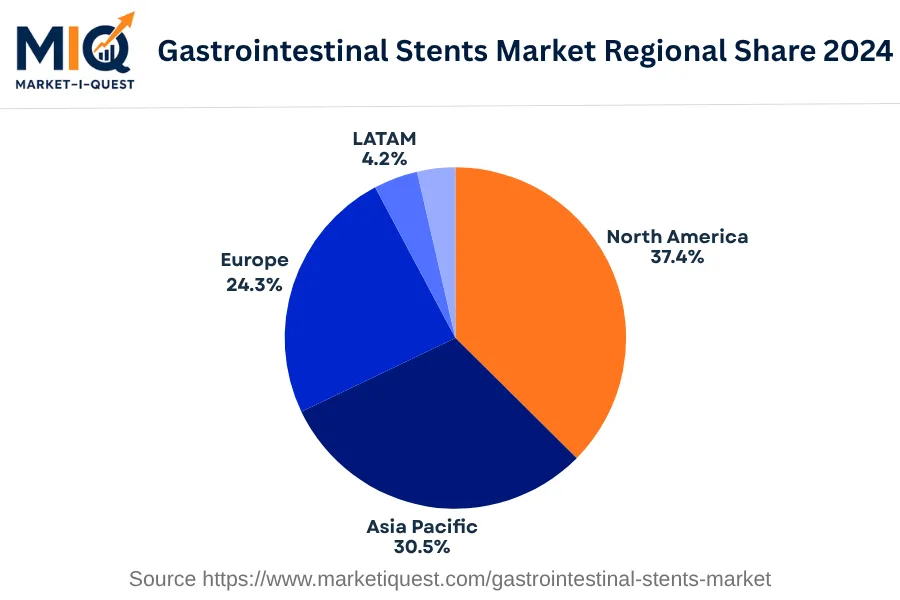
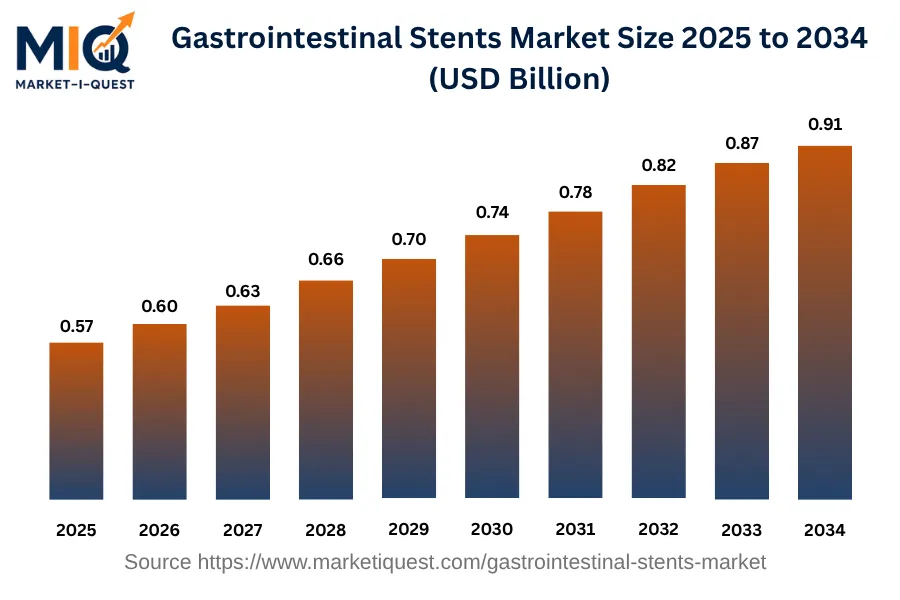
The Gastrointestinal Stents Market is estimated at USD 0.57 billion in 2025, showing growth from its 2024 value of USD 0.54 billion. As per the available structured data, it is projected to reach approximately USD 0.91 billion by 2034, which represents a CAGR of 5.42%. This growth over the course of about ten years indicates a steady rise in the market size. Considering the regional distribution in 2024, North America holds the largest share of the market at 37.4%, followed by Asia Pacific at 30.5%. Europe comes next, representing 24.3% of the market, while LATAM and the Middle East and Africa (MEA) hold less significant shares of 4.2% and 3.6% respectively.

Key Takeaways

  • By Product Type - Esophageal Stents led the market holding the majority share in 2024.
  • By Technology -Drug-Eluting Stents ranked as the top subsegment in terms of market dominance in 2024.
  • By Material - Covered Self-Expandable Metallic Stents held a leading position in the Gastrointestinal Stents Market in 2024.
  • By End User - Hospitals served as the major contributor representing the highest market share in 2024.
gastrointestinal-stents-market market size

Key Driving Factors

Increasing incidence of colorectal cancer

The Gastrointestinal Stents Market is influenced strongly by the increasing incidence of gastrointestinal cancers, particularly colorectal cancer. As per the American Cancer Society, colorectal cancer is the third most common cancer diagnosed among adults in the United States. This rise in cases has led to increased usage of gastrointestinal stents in non-surgical treatments and symptomatic palliation in advanced stages. This application helps to improve patients' quality of life, lowering the necessity for colostomy bags. Essentially, stents enable hollow structures like the esophagus and small intestines to remain open, significantly alleviating patients' symptoms and contributing to this market's growth.

Surge in minimally invasive procedures

In recent years, the medical world has experienced a significant shift towards minimally invasive procedures, a trend that's particularly evident in gastrointestinal treatments. This trend is driven in part by the potential for such procedures to reduce post-operative complications, accelerate recovery times, and shorten hospital stays. This has spurred the demand for gastrointestinal stents, one of the essential tools used in these minimally invasive procedures. Gastrointestinal stents help to prevent complications such as strictures and obstructions, significantly contributing to successful outcomes of minimally invasive procedures, hence driving the market forward.

Market Evolution by Timeline

2019-2023
In this period, the demand for gastrointestinal stents primarily came from hospitals and ambulatory surgical centers in regions such as North America and Western Europe. Major players incorporated materials technology to produce self-expanding metallic stents (SEMS). Constraints include device migration and availability of other treatments like surgery. The US FDA regulated the approval of new stents based on the 510(k) clearance model. Pricing was dependent on stent type and clinical usage. Revenue sharing partnerships between stent manufacturers and hospitals increasingly became popular. However, a key risk was the possibility of postoperative complications.
2024
In 2024, demand was heightened in the Asia-Pacific region. Evidence-based medicine fueled the adoption of SEMS in palliative care for malignant obstructions. Increased clinical trials resulted in the development of biodegradable stents. Governments took a keen interest in defining regulatory standards for medical device manufacturing. Pricing shifted towards performance-based contracts. Strategic collaborations between medical device manufacturers and research institutions became a norm. Nonetheless, the lack of skilled professionals operating the stents remained an operative risk.
2025-2029
This period was marked by widespread acceptance of gastrointestinal stents in emerging markets. Stents for non-vascular applications emerged. Innovations increased biocompatibility and reduced migration risks. Government policies encouraged new market entrants. Pay-per-use pricing models and annual maintenance contracts became popular. Upskilling of healthcare staff initiated by manufacturers helped mitigate risk. A significant shift occurred with procurement models moving towards online channels due to ease and variety.
2030-2034
By this time, the global prevalence of gastrointestinal diseases had driven demand. 3D printing changed the landscape of stent manufacturing delivering customized solutions. Regulations imposed by government bodies were stricter due to concerns about biocompatibility. New players entered the market on the viability of 3D printing stents. Bundled pricing models that included installation, service, and warranty were adopted by manufacturers to retain customers. Handling of biodegradable stents was the major risk because of their time bound functioning.

Future Market Outlook

Future Opportunities

The gastrointestinal stents market is poised for expansion as current trends indicate a rising demand for personalized treatment options. The World Health Organization reported in June 2023 that gastrointestinal diseases are increasing globally, creating a need for more effective management strategies. As healthcare systems adopt value-based care models, there is a growing emphasis on developing stents that can be tailored to individual patient needs. Companies like Medtronic are actively exploring custom-fit solutions, such as stents that can be adjusted based on real-time patient monitoring data. The emergence of telemedicine has also opened doors for remote post-operative care, enhancing stent management and patient follow-up. Partnerships between technology firms and medical device manufacturers are expected to accelerate the development of these integrated solutions. In March 2023, a collaboration was announced between a major medical device company and a leading data analytics firm aimed at harnessing big data to optimize stent designs and placement techniques. Policy initiatives focused on healthcare accessibility could further spur market growth; for instance, the United States has implemented programs to expand insurance coverage for advanced stent technologies. Such synchrony between policy shifts and technological advancements suggests a future ripe with opportunities for stakeholders in the gastrointestinal stents market, fueling innovation and enhancing patient outcomes.

Segmentation Analysis

By Product Type

The market is divided into subsegments including Biliary Stents, Duodenal Stents, Esophageal Stents, Colonic Stents, and Pancreatic Stents. The Esophageal Stents accounted for the largest revenue share while the Pancreatic Stents sub-segment is expected to grow at the fastest CAGR during the forecast period.

Largest Revenue Share

Esophageal Stents

Market Share Leader

The Esophageal stent sub-segment is leading today due to several eventualities. Primarily, it's down to the high prevalence of esophageal cancer, which often requires the insertion of stents to maintain esophageal patency, provide palliative treatment, and improve the quality of patient life. This is coupled with the aging global population, which is most susceptible to esophageal disorders. The demand is particularly high in regions with increasing lifestyle disorders and higher alcohol and tobacco consumption, such as North America and Europe. Regulatory approval procedures in these regions have streamlined stent placements, further fuelling the segment growth. In terms of purchasing criteria, ease of insertion, cost-effectiveness, and fewer complications associated with stents are major influencers. With respect to distribution channels, although hospitals remain the primary entities, the rise in outpatient endoscopic procedures is increasing, broadening the reach of esophageal stents. The first-mover advantage and high switching costs contribute to this segment's large market share. Because these stents are medical devices, switching costs can be rather high due to the need for regulatory re-approvals, quality assurance, and end-user adaptation.

Fastest CAGR

Pancreatic Stents

Forecast Period Growth Leader

The Pancreatic Stents sub-segment is poised to grow at the fastest CAGR during the forecast period. The key driver for this growth is the rising incidence of pancreatic diseases - primarily pancreatitis and pancreatic cancer. Advanced stenting techniques have emerged as an effective therapeutic approach to manage pancreatic leakages and blockages, leading to widespread adoption. Furthermore, improvements in endoscopic procedures, technological innovations in stent designs, and the sustained efficacy of these stents are acting as critical growth catalysts. Financial support from governments and healthcare organizations for research and development activities is further catalyzing innovation in this segment. A key barrier to adoption, however, might be the relatively high cost associated with advanced pancreatic stents. Yet, the development of cost-effective stents via strategic partnerships and investments can potentially unlock untapped markets. It is worth noting that any abrupt regulatory changes might pose a near-term risk to this otherwise auspicious growth projection. Despite this, growth prospects remain high, due to the pronounced unmet need and the escalating global burden of pancreatic diseases.

By Technology

The technology segment in the market is divided into subsegments including Anti-Migratory Stents, Drug-Eluting Stents, Radioactive Stents, Anti-Reflux Stents, Shape-Modified Stents, and Others. Drug-Eluting Stents accounted for the largest revenue share while Anti-Reflux Stents is expected to grow at the fastest CAGR during the forecast period.

Largest Revenue Share

Drug-Eluting Stents

Market Share Leader

In 2024, the Drug-Eluting Stents held the largest share in the technology segment of the market. This dominance is likely due to their myriad benefits, the most important of which include the reduction in the likelihood of stent restenosis and the need for repeated procedures. Furthermore, the efficiency of these stents in preventing arterial narrowing and improving blood flow is a major factor in their wide adoption. In terms of geography, the demand for these stents remains high in developed regions, where there are more cases of heart diseases, and the healthcare infrastructure is robust. Regulations in these regions are also conducive to the adoption of Drug-Eluting Stents over other alternatives. Additionally, the supply chain, dominated by leading medical devices manufacturers, ensures the availability of these stents, further driving their market share.

Fastest CAGR

Anti-Reflux Stents

Forecast Period Growth Leader

Anti-reflux stents, although not contributing the largest to the technology segment, are forecasted to grow at the fastest CAGR in the following years. This rapid growth is primarily fueled by the rising prevalence of gastroesophageal reflux disease (GERD), for which these stents provide effective solutions. As public awareness of GERD continues to grow, so too does the demand for Anti-Reflux Stents. Enhancements in technology and design, making these stents more effective and easier to use, are further catalysts for growth. In terms of barriers, high cost and risks associated with stent implantation might hinder the widespread adoption. However, the benefits in managing GERD often overshadow these concerns. Policy support and capital investments in healthcare are likely to promote the development and uptake of these stents in the near future.

By Material

The market is divided into subsegments including Plastic Stents, Self-Expanding Metal Stents, Covered Self-Expandable Metallic Stents, and Biodegradable or Drug Eluting Stents. The Covered Self-Expandable Metallic Stents subsegment accounted for the largest revenue share while Biodegradable or Drug Eluting Stents are expected to grow at the fastest CAGR during the forecast period.

Largest Revenue Share

Covered Self-Expandable Metallic Stents

Market Share Leader

Covered Self-Expandable Metallic Stents (SEMS) have established a strong position in the stent market due to several factors. SEMS are predominantly used in the management of malignant obstructive disorders, assisting in palliative care. The adaptability of these stents and their ability to be employed in different body organ systems also adds to their appeal. Their metallic structure provides excellent support, reducing the risk of restenosis, a common issue in stent implantation. Furthermore, the covering on these stents helps prevent tissue growth through the stent, further ensuring patency. Geographically, widespread adoption of SEMS can be seen, particularly in developed countries with strong healthcare infrastructure like USA and countries in Europe. Current regulations in these geographies promote the use of SEMS, contributing to their leading revenue. Lastly, the procurement of these stents occurs through hospital networks and specialty clinics, ensuring a steady flow of customers.

Fastest CAGR

Biodegradable or Drug Eluting Stents

Forecast Period Growth Leader

Biodegradable or Drug Eluting Stents (DES) are anticipated to have the fastest growth in the forecast period. The primary growth driver for DES is their ability to reduce complications such as restenosis and thrombosis, common issues with other stent types. With DES, the release of medication over time helps prevent these issues, improving patient outcomes. However, their high cost is a key adoption barrier, offset by their long-term benefits. Technological advancement is a strong catalyst for DES growth. The continuous R&D in this space propels the development of newer drug combinations and absorption rates for these stents. Changes in healthcare policy, that promote cost effective, long-term solutions, will also contribute favorably. Potential risks loom over the DES market, such as any regulatory changes or shifts in healthcare policy. Emerging collaborative strategies between device manufacturers and healthcare providers can boost their adoption in geographies where DES uptake is currently low. In summary, DES's superior patient outcomes coupled with technological advancements and favorable policies favour high, near-term growth.

By End User

The market is segmented into Hospitals, Specialty Clinics, Ambulatory Surgical Centres, and Others. Hospitals generated the highest revenue in 2024, while Specialty Clinics are expected to grow at the fastest CAGR during the forecast period.

Largest Revenue Share

Hospitals

Market Share Leader

In 2024, hospitals dominated the market in terms of revenue. There are several contributing factors to this. Primarily, hospitals carry out a wide range of medical procedures and treatments, which underpins their substantial market share. Additionally, hospitals' ability to procure and utilize high-cost equipment, due to their larger budget allocations, also positions them as the leading subsegment. They can afford more advanced technology, which in return attracts more patients and derives more revenue. In terms of geography, hospitals are evenly dispersed and easily accessible, contributing to their significant market share. Regulatory policies that advocate for better healthcare infrastructure also positively affect hospitals more than other subsegments due to their scale and broad service offering. Their purchasing ability, also supported by government and private funding, further solidifies their position in the market.

Fastest CAGR

Specialty Clinics

Forecast Period Growth Leader

Specialty Clinics, despite not being the largest revenue generator in the base year, are expected to grow at the fastest CAGR. The growth of this subsegment can primarily be attributed to the increasing demand for specialized medical services and the proliferation of various diseases requiring expert treatments. These clinics typically offer treatments for specific conditions and employ professionals with expertise in those areas, making them the preferred choice for patients seeking quality care for specific health issues. Consumer preferences for specialized care are likely to serve as a significant catalyst for growth, and advancements in medical technology should support this trend further. However, barriers such as the high cost of setting up specialty clinics and stringent regulations may pose challenges to the growth of this subsegment. Nevertheless, partnerships with healthcare organizations and increased healthcare spending could mitigate these barriers, paving the way for a robust growth outlook.

Competitive Analysis

Key Market Players

Manufacturers / OEMs

Boston Scientific Corporation
US
Medtronic
Ireland
Cook Medical
US

Key Suppliers & Raw Materials

Johnson Matthey
UK
Heraeus Holding
Germany
Materion Corporation
US

Distributors, Integrators & Channel Partners

Cardinal Health
US
McKesson Corporation
US
Henry Schein
US

Porter’s Five Forces Analysis

This is an analysis of the competitive forces affecting the Gastrointestinal Stents Market.

Supplier Bargaining Power

Medium

Suppliers influence cost & quality of raw materials, impacting final stent production.

Buyer Bargaining Power

High

Healthcare institutions can choose from numerous stent suppliers and technology options.

Threat of Substitutes

Low

Alternatives like invasive surgeries exist, but stents provide distinct health advantages.

Threat of New Entrants

Low

Significant regulatory requirements and high R&D costs deter new entrants.

Competitive Rivalry

Medium

Existing companies compete on innovation, effectiveness of stents, and pricing strategies.

Regional Analysis

Geographic market dynamics and growth opportunities across key regions

Global Market Outlook

gastrointestinal-stents-market market regional share

North America

In 2024, the North American market for gastrointestinal stents experienced a surge due to increasing prevalence of gastrointestinal diseases in the U.S., Canada, and Mexico. Demand for these medical devices was boosted by the rising incidence of digestive disorders, such as esophageal and pancreatic cancers which demand non-surgical interventions. Further, there was a higher acceptance of technologically advanced stents that offered durability and flexibility, reducing patient discomfort during placement and replacement procedures. The regulatory landscape, particularly the U.S. FDA's rigorous evaluation processes, pushed manufacturers towards creating high-quality, safe gastrointestinal stents.

Simultaneously, changes in patient preferences steered the market trend towards minimally invasive therapies. A significant shift was observed from surgical operations to stent implantations in the primary healthcare settings, as they proved efficient in managing obstructions in the digestive tract. The easing of acceptance and reimbursement policies by insurance sectors in North America also influenced the adoption of these stents. Enhanced cooperation among players in the industry also led to increased mergers and acquisitions, promoting the proliferation of innovative gastrointestinal stenting solutions. Furthermore, health authorities' initiatives to standardize policies around usage of gastrointestinal stents ensured patient safety and product efficacy, further underpinning the market's growth.

Asia Pacific

In 2024, the gastrointestinal stents market in Asia Pacific presented a dynamic landscape dominated by key regional markets such as China, India, Japan, South Korea, Australia and ASEAN countries. Driving this market were multiple factors such as increasing prevalence of gastrointestinal diseases, escalating investment in healthcare infrastructure, and the rapid adoption of advanced medical technologies. Additionally, favourable governmental regulations, prompted by a growing awareness of gastrointestinal health, stimulated the market. Nevertheless, pricing dynamics, centered on the higher costs of innovative stenting technologies, presented challenges.

Notably, several trends defined the market scenario in 2024. The growing preference for minimally invasive procedures led to an increased demand for self-expandable metallic stents. Secondarily, standardization of endoscopic procedures shaped buyer behaviour, particularly in the healthcare sectors of China, Japan and Australia. The market also witnessed strategic partnerships and mergers, with prominent medical device manufacturers seeking to enhance their product portfolio and regional presence. It became evident that stringent policy enforcement by healthcare authorities played a crucial role in moulding market trends, especially in key markets such as India and South Korea. Notably, the retail sector contributed substantially to the market, as over-the-counter sales of balloon dilatation products surged in response to an uptick in self-managed gastrointestinal care among consumers.
Europe

In 2024, the gastrointestinal stents market in Europe experienced significant growth predominantly steered by technological advancements, healthcare investments, and demographic changes. The increased demand for minimally invasive procedures led to higher acceptance of self-expandable metallic stents across the prominent healthcare institutions in Germany and the United Kingdom. In France and Italy, regulatory approval for novel biodegradable stents, designed for benign gastrointestinal tract obstructions, facilitated market expansion. Increased healthcare investment across Central & Eastern Europe triggered a rise in the regional supply of these stents.

Market trends indicated a shift towards patient-centric design that led to the emergence of anti-reflux stents across Spain and Benelux. Meanwhile, healthcare providers in the Nordics adopted fully covered stents to overcome complications, such as stent migration and tumour in-growth. They also observed an uptick in combined modality therapy, using chemotherapy along with stenting for esophageal cancer treatment. Partnership deals between medical devices manufacturers and healthcare provider networks contributed to advancements in stent technology. There was notable enforcement of policies promoting hospital accreditation and guidelines, enhancing adoption of approved stents across European countries. Thus, in 2024, the European gastrointestinal stents market was driven by technological adoption, regulatory landscape modulation, partnership advancements, patient-customized designs, and policy enforcement.

Latin America

In 2024, the Latin American (LATAM) Gastrointestinal Stents Market exhibited significant growth. Key drivers included rising incidence of gastrointestinal diseases, particularly in countries like Brazil, Mexico, and Colombia. Increasing investment in medical devices industry across LATAM, notably by Argentina, paved ways for innovative stent technologies. In Peru and Chile, government regulations encouraged adoption of these advanced stents, and their supply dynamics indicated favorable pricing for healthcare providers.

The LATAM market also pointed towards distinct trends. In Brazil, buyer preference leaned towards minimally invasive procedures, thus driving demand for gastrointestinal stents. Patient awareness and proactive healthcare measures witnessed a surge in Mexico and Colombia, further boosting the market. In terms of technology, Argentina showed remarkable shifts towards bioabsorbable stents, while regulatory bodies in Chile and Peru enforced stringent standards for stent quality and safety. The market saw partnerships between medical device manufacturers and healthcare institutions in Brazil and Argentina, aimed at catering to the growing demand. Customers included not just hospitals but also research institutions in the healthcare sector seeking advanced gastrointestinal stent solutions. Overall, the LATAM Gastrointestinal Stents Market in 2024 was shaped by demand factors, investment dynamics, technological advancements, and a robust regulatory environment.

Middle East & Africa

In 2024, the Gastrointestinal (GI) Stents market in the Middle East and Africa showcased a significant growth pivot. The notable drivers included increased prevalence of gastrointestinal diseases, favorable reimbursement policies in countries like Saudi Arabia, and the adoption of cutting-edge medical technologies in nations such as Israel and UAE. For instance, Saudi Arabia's Royal Decree No. M/6 enacted in 2020 providing a comprehensive health insurance policy, triggered a surge in demand of advanced healthcare products including GI Stents. Egypt benefited from increased government investment in healthcare infrastructure, triggering a supply uptick in GI stents.

Price competitiveness, prevalent especially in South Africa and Kenya, also shaped the market dynamics. A robust distribution channel with medical giants helped Qatar maintain stable GI Stent supplies.

In terms of trends, collaboration and M&A activities spiked, particularly in Israel, a known hub for healthcare innovation. Technological shifts towards minimally invasive GI stents gained traction, driven by a growing preference for shorter hospital stays and faster recovery. In Nigeria, the public sector's augmented engagement in healthcare boosted the procurement of GI stents. The swift policy enforcement in regions like UAE and Saudi Arabia ensured standardization, reinforcing trust in the market offerings. In short, the interplay of disease prevalence, favorable policies, and demand for quick recovery shaped the GI Stents market in the Middle East and Africa in 2024.

Recent Industry Developments

Latest market innovations, product launches, and strategic initiatives

March 2026

The FDA officially cleared the Niti-S SPAXUS Stent for commercial use in the United States. This approval gives physicians a new, specialized option for draining the pancreas, which will increase the overall volume of pancreatic treatments performed this year.

November 2025

Medicare began providing broad financial coverage for inserting stents into the upper digestive tract. By establishing a dedicated billing code for this procedure, the agency removed a major cost barrier that previously prevented smaller clinics from adopting the technology.

Frequently Asked Questions