Gas Discharge Tubes Market Snapshot

Key Players

  • Littelfuse (United States)
  • EPCOS (Germany)
  • Bourns (United States)
  • TDK Corporation (Japan)
  • TE Connectivity (Switzerland)
  • Laird Performance Materials (United Kingdom)
  • Sankosha (Japan)
  • Yageo Corporation (Taiwan)
  • HVC Capacitor Manufacturing (China)
  • ProTek Devices (United States)

Market Size

Base Year 2024
$ 1.35 Bn
CAGR
7.2%
Forecast 2034
$ 2.71 Bn

Market Segments

By Product Type
  • Surface-mounted
  • 2-electrode
  • 3-electrode
By Capacity
  • Low-medium Surge
  • Medium-high Surge
  • High Surge
By End User
  • Telecommunications
  • Power Supply
  • TV Equipment
  • Others

Market Dynamics

Drivers
  • Growing demand for surge protection
  • Expansion of telecommunications infrastructure
Restraints
  • High initial implementation cost
  • Limited compatibility with modern electronics
Opportunities
  • Increased demand for surge protection
  • Expansion of smart grid infrastructure

Market Size

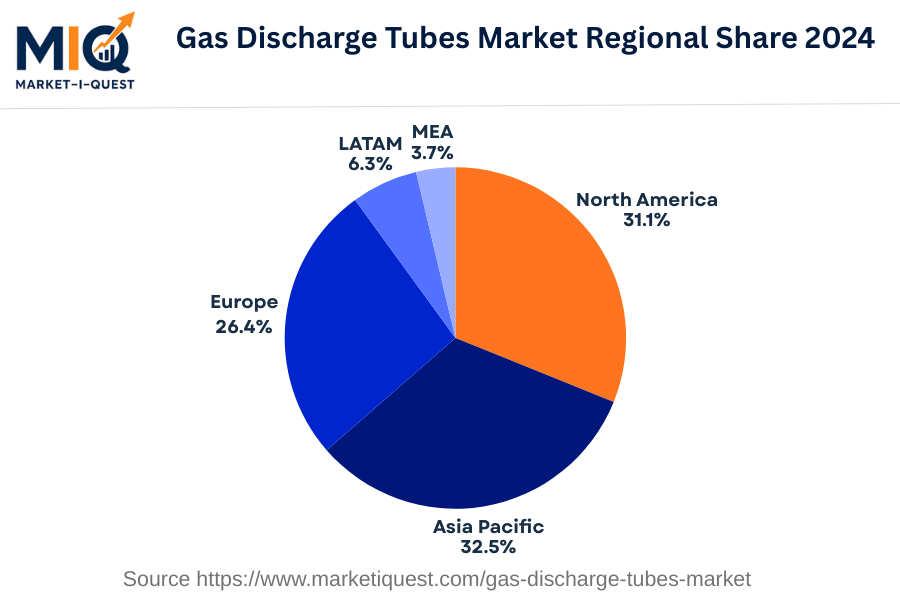
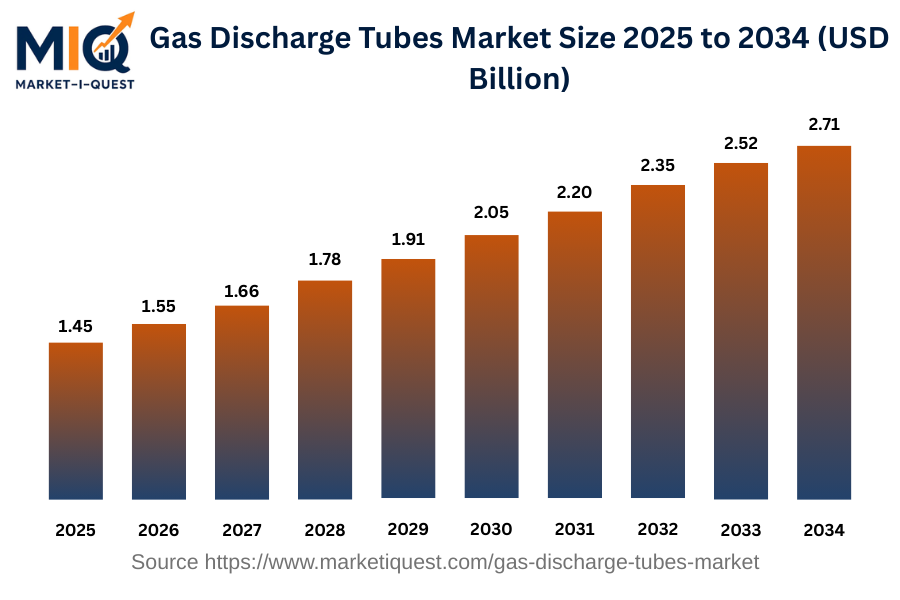
The Gas Discharge Tubes Market is valued at 1.35 billion USD in 2024 and 1.44 billion USD in 2025. It is projected to reach 2.71 billion USD by 2034, with a CAGR of 7.2%. The market has shown steady growth from 1.35 billion USD in 2024, increasing to 1.44 billion USD in 2025, and is expected to follow this upward trend towards 2.71 billion USD by 2034. This growth is attributed to advances in technology and increasing applications of gas discharge tubes across various sectors. In 2024, the regional share consists of North America at 23.0%, Asia Pacific at 24.1%, Europe at 19.6%, LATAM at 4.7%, and MEA at 2.7%.

Key Takeaways

  • By Product Type - Surface-mounted led the market accounting for a notable position in 2024.
  • By Capacity - Medium-high Surge grew fastest indicating a strong demand trend in recent years.
  • By End User - Telecommunications held the largest share reflecting its critical role in the Gas Discharge Tubes Market.
gas-discharge-tubes-market market size

Key Driving Factors

Implementation of the 5G Network

As constraint of uninterrupted communication becomes a significant concern, service providers are deploying 5G networks on a large scale. Gas discharge tubes (GDTs) are essential components of these networks as they protect telecommunication equipment from damage caused by fluctuating voltages. Their essential capacity to handle power surges a fundamental contribution in preserving the health of 5G installations. The massive expansion of these networks around the globe, primarily driven by hyper-connected smart cities and industrial IoT applications, has led to an upsurge in the demand for GDTs within the telecommunications industry.

Increase in High-End Commercial Applications

A surge in the adoption of GDTs can be observed in sophisticated commercial applications, particularly in aviation and nautical communication sectors. GPS systems, distress signal transmitters, and VHF radios equipped in aircraft and ships need advanced communication protection modules to ensure seamless operation. The aviation sector is seeing an increase in the number of fleets with advanced communication systems due to stringent safety regulations imposed by aviation authorities like Federal Aviation Administration (FAA) and European Union Aviation Safety Agency (EASA). These developments, combined with the necessity of GDTs in maintaining optimal communication systems in these several sectors, are driving substantial market growth.

Market Evolution by Timeline

2019-2023
During this period, the demand for gas discharge tubes (GDTs) primarily came from utility companies and telecommunications providers in North America and Europe. These sectors used GDTs for surge protection in high-voltage applications. The supply chain saw manufacturers like Littelfuse and Bourns expanding their production capabilities to meet this demand. Pilots in electric vehicle infrastructure in cities such as San Francisco and Berlin presented GDT applications for voltage regulation. The IEC 61643 standard shaped the regulatory framework, focusing the need for surge protective devices in electrical installations. Commercial models often featured long-term contracts with utilities, focusing on pricing categories based on volume. However, challenges included supply chain disruptions from the COVID-19 pandemic, which led to delays in product availability. Companies responded by diversifying suppliers and increasing inventory to mitigate risks. As a result, while the market growth proceeded, it faced interruptions that necessitated agile supply chain management and strategic partnerships.
2024
In 2024, the market saw a noticeable shift towards renewable energy projects that incorporated GDTs for grid stability. Countries like China and India boosted investments in solar and wind, driving demand for GDTs in managing voltage surges. Manufacturers adapted their offerings with customized products fit for these applications. The International Electrotechnical Commission recommended updates to existing surge protection standards to reflect new technology. Pricing in the market remained stable, with most contracts reverting to yearly contract to ensure the consistency within pricing in volatile supply chain. Partnerships between GDT manufacturers and renewable energy firms emerged, promoting joint ventures aimed at research and development. Risks included regulatory discrepancies across regions, as inconsistent standards in Europe and North America created complications in international deployments. Companies began to engage policy advocate to align policies and standards to facilitate seamless market entry. Overall, 2024 marked a transitional period focused on enhancing the role of GDTs in the green energy sector.
2025-2029
The period from 2025 to 2029 witnessed significant advancements in GDT technology, with manufacturers launching integrated surge protection devices suitable for smart grid applications. Regions like Southeast Asia began adopting these technologies to safeguard their growing energy markets. Notable projects included smart city initiatives in Singapore, where GDTs protected critical communications infrastructure. Market players adopted flexible pricing models, including lease options for utility companies, aiming to reduce initial costs. The introduction of updated IEEE standards further solidified GDTs' position in electrical systems, persuasive stakeholders to align their products with these norms. Risk factors during this period included increased competition from alternative surge protection technologies, such as temporary voltage suppression diodes. Therefore, companies increased their focus on differentiating their technical features and enhancing customer service to retain market share. Strategic alliances with tech firms also strengthened their market positioning, enabling collaborative innovations that expanded application fields for GDTs.
2030-2034
In the timeframe of 2030 to 2034, the GDT market is expected to integrate more closely with Internet of Things (IoT) technologies, driving further demand in smart building applications across North America and Europe. Use cases are anticipated to evolve, focusing on connected devices requiring robust surge protection mechanisms. The development of aligned global standards aims to streamline product certifications, addressing previous regional discrepancies. Pricing strategies are likely to shift towards subscription-based models, serving to the growing trend of as-a-service contributing in the energy sector. Partnerships among GDT manufacturers, IoT developers, and energy service providers will facilitate the innovation of new solutions that meet emerging market requirements. Training within GDT integration for engineers and technicians is expected to become more crucial as the technology matures. Risks during this period might include outdatedness concerns, where older models could become ineffective against emerging threats. As a result, continuous R&D investments will be essential to maintain competitive advantage and ensure product relevance in the rapidly changing technological landscape.

Future Market Outlook

Future Opportunities

The gas discharge tubes market is poised for various opportunities deriving from regulatory initiatives and technological advancements. The ongoing expansion of renewable energy, accelerated by the 2020 Paris Agreement commitments, necessitates the integration of GDTs in solar panels and wind turbine systems to protect against transients. In countries such as Germany and Denmark, renewable installations are rapidly increasing, leading to enhanced demand for reliable surge protection like GDTs. Additionally, 2022's advancements in smart home technologies have fueled the market for intelligent surge protection devices that incorporate GDTs, enabling better performance monitoring and fault detection. Companies are forming strategic partnerships to enhance their R&D capabilities in GDTs tailored for data centers and cloud computing infrastructure. In recent years, data centers have expanded across Asia-Pacific, particularly in China and India, where stringent data protection regulations, including the Cybersecurity Law of 2017, drive the requirement for robust power protection solutions. On the industrial front, the integration of GDTs in automated manufacturing systems offers significant potential, especially as countries like Japan and South Korea prioritize Industry 4.0 initiatives. Additionally, developments in automotive technologies and increasing electrification in vehicles present productive prospects for GDT applications as manufacturers navigate evolving safety standards defined by agencies like UNECE. These factors indicate a robust future for GDTs as industries adapt to new technologies and regulatory environments.

Segmentation Analysis

The gas discharge tubes market is segmented by Product Type (Surface-mounted, 2-electrode, 3-electrode), by Capacity (Low-medium Surge, Medium-high Surge, High Surge), and by End User (Telecommunications, Power Supply, TV Equipment, Others).

By Product Type

The market is divided into subsegments including Surface-mounted, 2-electrode, and 3-electrode. Surface-mounted accounted for the largest revenue share while 3-electrode is expected to grow at the fastest CAGR during the forecast period.

Largest Revenue Share

Surface-mounted

Market Share Leader

The Surface-mounted subsegment leads in revenue due to its widespread application across several industries, notably automotive, consumer electronics, and industrial automation. This subsegment benefits from a high demand for dense, lightweight designs that are crucial in today's market trends favoring reduction in size. Surface-mounted devices are known for their efficiency in space utilization and are favored by manufacturers looking to optimize product performance while following to strict space and weight constraints. Geographically, regions such as North America and Asia-Pacific exhibit robust markets, driven by advanced manufacturing capabilities and a focus on innovation. Regulatory standards mandating higher efficiency and performance in electronic devices further enhance the attractiveness of surface-mounted options. The purchasing criteria often revolve around reliability, cost-effectiveness, and compatibility with other components, driving customers to prefer suppliers with proven track records. Additionally, relatively low switching costs and established distribution channels contribute to the continued dominance of the surface-mounted category, making it a key element of modern electronic assembly.

Fastest CAGR

3-electrode

Forecast Period Growth Leader

The 3-electrode subsegment is projected to experience the fastest growth due to the increasing adoption of advanced battery technologies and energy storage solutions, particularly in the automotive and renewable energy sectors. As the demand for electric vehicles and grid energy management systems grows, 3-electrode structures are increasingly recognized for their resilience and improved performance characteristics, such as energy density and cycle life. Barriers to adoption include higher initial costs and technological complexity compared to simpler configurations, which may prevent price-sensitive customers. However, advances in material science and manufacturing processes are expected to lower costs and simplify integration, thus acting as catalysts for more widespread adoption. Additionally, government incentives promoting cleaner energy solutions and investments in renewable technologies are likely to stimulate growth in this segment. Near-term risks include potential supply chain disruptions and fluctuations in raw material availability, which could impact production timelines and pricing strategies. The constant evolution of technology and the emergence of strategic partnerships within the industry also play a crucial role in shaping the future landscape of this growth-driven subsegment.

By Capacity

The market is divided into subsegments including Low-medium Surge, Medium-high Surge, and High Surge. Medium-high Surge accounted for the largest revenue share while High Surge is expected to grow at the fastest CAGR during the forecast period.

Largest Revenue Share

Medium-high Surge

Market Share Leader

The Medium-high Surge subsegment has stabilized its position as the leader in revenue due to a combination of high demand and strong customer adoption across various sectors. Businesses leveraging medium-high surge capabilities are often in industries that require consistent and reliable performance, such as manufacturing, telecommunications, and energy supply. These industries prioritize equipment that offers enhanced efficiency during optimal periods, making them less vulnerable to fluctuations in demand. Geographic areas with dense industrial clusters and significant investment in infrastructure development remain crucial markets. Additionally, evolving regulations aimed at enhancing energy efficiency have enhanced the adoption of medium-high surge solutions, as entities seek compliance while minimizing operational costs. Customers within this subsegment typically favor suppliers that provide comprehensive service and support packages, which reinforces switching costs. As competition intensifies, suppliers enhancing product features, reliability, and service capabilities are better positioned to capture and retain customers within this lucrative subsegment.

Fastest CAGR

High Surge

Forecast Period Growth Leader

High Surge is positioned for rapid growth due to a combination of increasing demand for advanced technologies and an evolving regulatory framework favoring high-efficiency solutions. The expansion of IoT devices and smart infrastructure is pushing organizations to invest in systems capable of handling high surge capacities, thus driving this subsegment forward. Adoption barriers include the high initial capital expenditures and the need for specialized training, which can limit immediate adoption among some smaller firms. However, recent partnerships between tech companies and traditional manufacturers are facilitating easier access to high surge technologies. Furthermore, policy incentives geared towards sustainability and efficiency are expected to act as catalysts that enhance market penetration of high surge solutions in the near future. Risks remain, particularly regarding potential technological outdatedness and economic uncertainties that might slow investment in high-capacity infrastructure. Businesses must navigate these dynamics carefully to capitalize on opportunities while managing potential setbacks effectively.

By End User

The market is divided into subsegments including Telecommunications, Power Supply, TV Equipment, and Others. Telecommunications accounted for the largest revenue share while Power Supply is expected to grow at the fastest CAGR during the forecast period.

Largest Revenue Share

Telecommunications

Market Share Leader

The telecommunications subsegment leads in revenue due to the increasing global demand for mobile and internet services. The expansion of 5G technology is a significant driver, encouraging telecom providers to upgrade their infrastructure and expand service offerings. Regulatory frameworks in various countries are promoting for improved connectivity, especially in rural and underserved areas, leading to increased investments in telecommunications. Key customers include not only individual consumers but also businesses that rely on robust communication networks for their operations. Geographically, regions such as North America and Asia-Pacific exhibit high growth rates, attributed to their advanced infrastructure and strong technological adoption. The high-switching costs for customers further strengthen this subsegment's dominance once connected to a network, consumers are often resists to switch due to the inconvenience and potential service interruptions. This creates a stable revenue stream for telecom companies, as loyalty tends to be strong in an industry where service quality and coverage hold significant weight in purchasing decisions.

Fastest CAGR

Power Supply

Forecast Period Growth Leader

The power supply subsegment is projected to grow at the fastest rate, driven by the increasing demand for renewable energy sources and electric vehicles. Technological advancements in energy storage solutions, such as batteries and solar inverters, are catalyzing this growth, as they enhance the efficiency and reliability of power supply systems. Policy support, including government incentives for clean energy adoption, is driving investments into this area, encouraging both residential and commercial users to shift towards more sustainable energy solutions. However, the adoption of new technologies faces barriers, including initial capital costs and the need for skilled labor to deploy and maintain these power systems. Partnerships among technology providers, utilities, and regulators are crucial to overcoming these challenges. Near-term risks include fluctuating raw material prices, which can impact the cost structure of power supply solutions, and potential regulatory changes that could either promote or hinder the adoption of greener technologies. Moreover, as the drive for sustainability intensifies, the power supply subsegment remains poised for significant growth opportunities.

Competitive Analysis

Key Market Players

The Gas Discharge Tubes Market is competitive, with a mix of large established companies and smaller regional players. Most companies focus on improving their products/services, keeping prices attractive, and strengthening relationships with key customers. They also use partnerships, acquisitions, and new launches to expand their presence in existing and new markets. Overall, players compete on quality, reliability, and value, and competition is expected to remain strong over the forecast period.

Manufacturers / OEMs

TDK Corporation
Japan
Murata Manufacturing Co., Ltd.
Japan
Littelfuse, Inc.
US

Key Suppliers & Raw Materials

AVX Corporation
US
Panasonic Corporation
Japan
EPCOS AG
Germany

Distributors, Integrators & Channel Partners

Future Electronics
Canada
Mouser Electronics
US
Digi-Key Electronics
US

Porter’s Five Forces Analysis

The Gas Discharge Tubes Market is shaped by supplier influence, buyer power, and competitive dynamics. Understanding these forces is crucial for strategic positioning.

Supplier Bargaining Power

Medium

Limited number of specialized suppliers increases dependence, but multiple sourcing options mitigate power.

Buyer Bargaining Power

High

Buyers can easily switch suppliers due to low switching costs and high competition among manufacturers.

Threat of Substitutes

Medium

Alternative surge protection methods exist, but gas discharge tubes offer unique benefits for specific applications.

Threat of New Entrants

Low

High capital requirements and regulatory certifications deter new players from entering the market.

Competitive Rivalry

High

Numerous established firms compete intensely on price, quality, and technological innovation within the market.

Regional Analysis

Geographic market dynamics and growth opportunities across key regions

Global Market Outlook

gas-discharge-tubes-market market regional share

North America

In 2024, the Gas Discharge Tubes (GDT) market in North America is primarily driven by the increased demand for electrical surge protection across various sectors. Rising concerns over power quality and equipment safety have prompted utilities, telecommunications, and manufacturing industries to invest significantly in GDT technology. Regulatory frameworks, such as the National Fire Protection Association (NFPA) guidelines, are reinforcing the necessity for robust surge protection solutions, further boosting market growth.

Technological advancements have led to the development of more efficient and compact GDTs, enhancing their appeal among utilities and industrial clients seeking reliable surge protection. Increased adoption of digital technologies and the Internet of Things (IoT) necessitates advanced protective equipment to safeguard sensitive electronics, which has reshaped buyer preferences toward high-performance GDT options.

Channel dynamics are evolving as more manufacturers seek partnerships with online distributors to improve accessibility and customer service. Moreover, utility companies are increasingly mandating stringent compliance with safety standards, promoting a shift towards integrated surge protection solutions. Government investment in renewable energy projects also highlights the importance of GDTs in protecting new electrical infrastructures. Thus, North America's GDT market is characterized by strong demand catalyzed by regulatory pressures and market-driven technological innovations.

Asia Pacific

In 2024, the Gas Discharge Tubes (GDT) market in the Asia Pacific is characterized by a significant focus on enhancing electrical safety and surge protection across several sectors. The increasing adoption of renewable energy sources, particularly solar and wind, has driven demand for GDTs to protect sensitive electronics in power generation and distribution systems. Regulatory frameworks, such as China's "14th Five-Year Plan," emphasize improving electrical infrastructure, thereby fueling investment in surge protection devices. In India, government initiatives aimed at upgrading power quality standards further support GDT implementation in utilities and manufacturing.

Trends indicate a shift towards advanced materials in GDT manufacturing, enhancing performance and reliability. Buyers increasingly favor GDTs integrated into smart grid technologies, reflecting a broader move toward digitization in energy sectors across Japan and South Korea. Distribution channels are evolving, with greater emphasis on online platforms for strategic sourcing, driven by a skilled in tech customer base. Partnerships between manufacturers and utility providers are becoming common to co-develop tailored solutions. Stringent compliance with industry standards, especially in Australia’s electrical sector, is shaping purchasing decisions. Overall, the GDT market in Asia Pacific is characterized by its response to regulatory pressures and technological advancements, serving mainly to utilities, healthcare, and manufacturing sectors.

Europe

In 2024, the Gas Discharge Tubes (GDT) market in Europe is characterized by the growing need for surge protective devices to safeguard electronic equipment across several sectors. Key drivers include stringent regulations surrounding electrical safety, notably the European Union's directive on low voltage equipment, which mandates the use of protective devices in power distribution systems. Increased investment in renewable energy infrastructure is also driving GDT demand, as these systems require enhanced protection against voltage transients. Technological advancements in GDT design, such as improved response times and reliability, are aligning with rising consumer expectations for long-lasting protective solutions. Additionally, supply dynamics are shifting as manufacturers optimize production processes to meet safety standards, influencing pricing strategies.

Trends in buyer behavior reveal a heightened emphasis on sustainability, driving industries such as utilities and manufacturing to adopt more environmentally friendly GDT solutions. The market is witnessing a shift toward online purchasing channels, reflecting changes in the procurement process. Partnerships between GDT manufacturers and utility companies are increasing, aiming to deliver joint solutions that enhance system reliability. Furthermore, enforcement of standards like IEC 61643 is creating a competitive landscape where compliance can be a decisive factor in procurement decisions across the Benelux and CEE regions.

Latin America

In 2024, the Gas Discharge Tubes (GDT) market in Latin America is shaped by increasing demand for surge protective devices across various industries. One of primary driver is the growing investment in renewable energy infrastructure, particularly in Brazil and Mexico, necessitating advanced surge protection for wind and solar installations. Regulatory initiatives, such as stringent electrical safety standards in Argentina and Colombia, also contribute to increased adoption of GDTs to ensure compliance. Additionally, the rise in electrical grid expansions across urban areas drives the demand for reliable surge protection solutions, as households and businesses seek protection from lightning and power surges.

Key trends include a shift towards integrated GDT solutions that combine with other protective technologies, reflecting a preference for multifunctional devices among utilities and manufacturers. Partnerships and collaborations between GDT manufacturers and electrical companies are becoming more widespread, particularly in Chile and Peru, enhancing distribution channels. Customer behavior is also evolving, increased awareness of electrical safety among end-users, particularly in residential sectors, drives higher sales of GDTs. Furthermore, the enforcement of standards related to product performance and certification across the region ensures that only compliant solutions are available in the market, influencing purchasing decisions among enterprises and government organizations.

Middle East & Africa

In 2024, the gas discharge tubes (GDT) market in the Middle East and Africa is characterized by increasing demand driven by the growing telecommunications and electrical sectors. The expansion of telecom infrastructure in Saudi Arabia and the UAE, supported by government initiatives such as Saudi Vision 2030, has heightened the need for reliable surge protection solutions. Concurrently, rising investments in renewable energy projects across Egypt and South Africa necessitate enhanced equipment protection, further fueling GDT adoption.

The market is also influenced by regulatory frameworks mandating stricter compliance for surge protection in electronic devices, particularly in sectors such as oil and gas and utilities. South Africa's energy pricing reforms have encouraged utilities to invest in protective technologies, reflecting a broader trend toward sustainability and efficiency.

Additionally, a shift in buyer behavior is obvious, with a preference for advanced GDT technologies that demonstrate superior performance and longevity. Increased collaboration among manufacturers and distributors within Egypt and Nigeria has enhanced product availability, while M&A activity among tech firms is accelerating integration of GDTs into broader electronic systems. Growing awareness of quality standards and best practices further shapes the market dynamics, ensuring compliance with regional industry regulations.

Recent Industry Developments

Latest market innovations, product launches, and strategic initiatives

April 2026

Littelfuse launched a new series of high‑energy GDTs optimized for automotive applications, featuring faster response times and higher surge handling for EV charging systems and ADAS electronics

November 2025

TDK introduced a hybrid surge protection device integrating a varistor and gas discharge tube in a single 1206 package, providing robust protection for 5G base stations, data centers, and automotive electronics against overvoltage transients.

November 2025

Bourns released the GDT225HE Series Gas Discharge Tube Arrestors, engineered for high‑voltage and high‑energy surge protection in telecom, power supplies, and industrial electronics, offering superior arc quenching and low capacitance.

Frequently Asked Questions