
Untitled Report Snapshot

Key Players

  • Yankee Candle Company (United States)
  • Scentsy (United States)
  • Bath & Body Works (United States)
  • JIC (Jewelry In Candles) (United States)
  • MillCreek (United States)
  • Meltsy (Spain)
  • Swan Creek Candle Company (United States)
  • Reckitt Benckiser (United Kingdom)
  • Hive (Australia)
  • Gillette (United States)

Market Size

Base Year 2024
$3.64 Bn
CAGR
5.8%
Forecast 2034
$6.40 Bn

Market Segments

By Wax Type
  • Paraffin Wax
  • Soy Wax
  • Bees Wax
  • Others
By Fragrance
  • Floral
  • Fruity
  • Woody & Spicy
  • Others
By Application
  • Residential
  • Commercial

Market Dynamics

Drivers
  • Growing consumer interest in home fragrances
  • Rise in disposable incomes
Restraints
  • Limited product awareness
  • Healthy candle alternatives
Opportunities
  • Growing customer preference for aromatherapy
  • Rising demand for home fragrances

Market Size

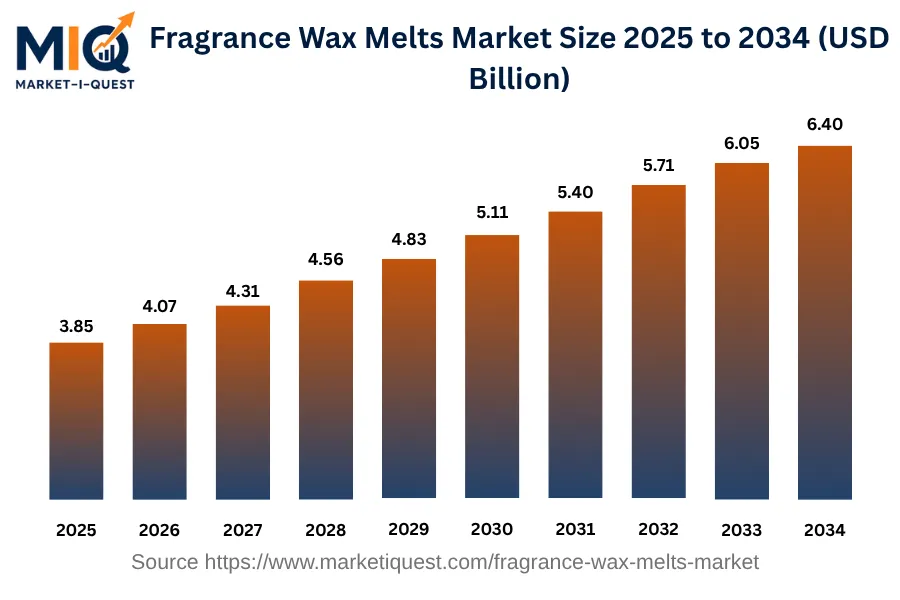
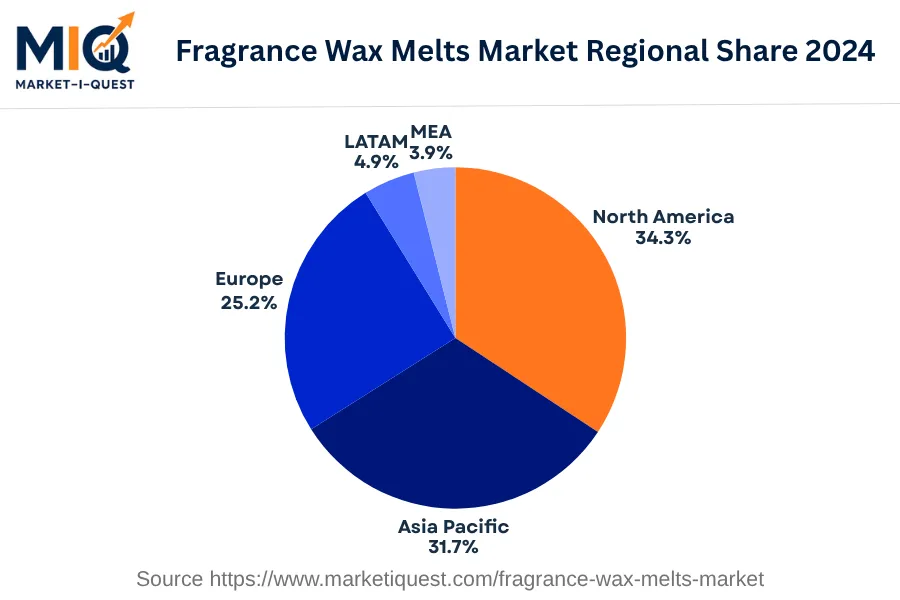
The Fragrance Wax Melts Market was valued at 3.85 billion USD in 2025 and is predicted to reach 6.40 billion USD by 2034, progressing at a CAGR of 5.8%. In the period from 2024, when the market was worth 3.64 billion USD, to 2034, there's a considerable market size increase of over 75.48% over a decade. This expansion is largely due to the rising consumer demand for home fragrant products. The changing customer preference for various scents and the frequency of purchase have both influenced the market growth. The regional share composition in 2024 effectively underlined this growth trajectory: North America had the highest share at 34.28%, followed closely by the Asia Pacific at 31.74%. Europe took up the next significant portion with 25.16%, while LATAM and MEA accounted for 4.89% and 3.93% respectively, reflecting the global market penetration of Fragrance Wax Melts.

Key Takeaways

  • By Wax Type - Paraffin Wax led the market accounting for a significant share of the Fragrance Wax Melts Market in 2024.
  • By Fragrance - Floral scents held a dominant presence accounting for a considerable percentage of the market in 2024.
  • By Application - Commercial segment expanded holding a noteworthy position in the Fragrance Wax Melts Market in 2024.
fragrance-wax-melts-market market size

Key Driving Factors

Emergence of DIY Aesthetic and Personalized Scents

One key driver of the fragrance wax melts market is the rise in popularity of the do-it-yourself (DIY) aesthetic, particularly among young, tech-savvy consumers. More and more individuals are seeking customizable options in many consumer sectors, including home fragrance. Making your own wax melts allows consumers to personalize their home scents, a factor that contributes significantly to the industry's growth. Simultaneously, numerous online platforms offer tutorials on how to make wax melts at home, providing a cost-effective alternative to commercially available products. This experience of handcrafting and customized scenting offers a unique selling point that commercial producers are emulating to create variety and engage with this DIY consumer segment.
Accelerated Switch from Chemical-based Synthetic Fragrances to Natural Ingredients

Another significant driver of the fragrance wax melts market is an accelerated switch from chemical-based synthetic fragrances to those made from natural ingredients. Modern consumers are becoming increasingly informed and conscious about the contents of the products they use, triggering a substantial rise in demand for naturally-derived fragrance products. Wax melts, particularly those made from soy or beeswax, are viewed favorably due to their natural derivation and perceived environmental benefits. Major manufacturers are taking notice, investing in the development and marketing of 'natural' and 'environmentally-friendly' options. This trend shows strong potential for driving growth within the fragrance wax melts market, both in the domestic sphere and in holistic wellness industries, such as spas and therapy centers.

Market Evolution by Timeline

2019-2023
In this period, North America dominated the Fragrance Wax Melts Market, with a surge in the trend of aromatherapy at homes attributed to increasing consumer interest in luxury and wellness. Suppliers focused on producing soy-based wax melts due to its eco-friendly nature and higher fragrance retention compared to paraffin-based melts. Concerning regulations, California Proposition 65 standards significantly affected the market, causing suppliers to switch to safer, natural ingredients. The commercial model saw fixed pricing strategies due to stiff market competition while contracts centered around wholesale partnerships for retailers. One major supply constraint was the fluctuating cost of raw materials, which suppliers mitigated through bulk purchasing and hedging techniques.
2024
This year marked a unique shift in demand in the Fragrance Wax Melts Market particularly in Europe, where new buyer segments emerged such as spa & wellness centers and hotels, which adopted these products for creating a relaxing and inviting atmosphere. Technological innovation was evident in scent-diffusing machines that provided a longer-lasting fragrance. Compliance with the European Regulation (EC) No 1223/2009 became mandatory for suppliers, which required carrying out a safety assessment of fragrance melts. Marketplaces and ecommerce platforms became the preferred procurement models. A main risk detected this year was related to supply disruptions caused by Covid-19, exacerbating the issue of raw material availability.
2025-2029
In these years, Asia-Pacific region became the fastest-growing buyer market for Fragrance Wax Melts due to the rising popularity of Western lifestyle trends. The supply side saw the introduction of essential oil-infused melts gaining popularity due to their therapeutic benefits. Furthering sustainability goals, suppliers adhered to the International Fragrance Association (IFRA) standards. The commercial model during this period leaned towards dynamic pricing due to increased raw material costs and logistics expenses. Partnerships between suppliers and essential oil producers emerged as a common practice. The risk of over-reliance on soy wax and citrus essential oils, however, created potential vulnerabilities in the supply chain.
2030-2034
During this period, demand for biodegradable wax melts spiked as part of the global push for environmentally friendly products. Tech advancements allowed for the creation of more intricate and custom-designed fragrance wax melts. Suppliers continued to align with regulations set by Environmental Protection Agency (EPA) to reduce the ecological impact of wax melts. The commercial model shifted towards a subscription-based model due to increased ecommerce penetration and convenience for recurrent buyers. Risks in this period revolved around maintaining supply levels to meet the growing demand for these popular items despite potential supply chain disruptions.

Future Market Outlook

Future Opportunities

As the fragrance wax melts market evolves, there are numerous opportunities tied to current trends and consumer preferences. The increasing demand for customizable wax melts is evident in 2023, with companies like AromaTech allowing customers to create personalized scent blends, which adds value through user engagement. Additionally, expanding e-commerce platforms, such as Etsy and Amazon, provide a robust medium for small businesses to monetize their unique wax melt creations, enabling niche players to thrive. The surge in remote work has also influenced consumer behavior; as people spend more time at home, the desire for pleasant olfactory environments is growing. In this context, brands can develop targeted marketing strategies that emphasize home ambiance. Collaborations between wellness brands and fragrance producers could enhance market offerings, providing consumers with scent solutions that promote relaxation or mental clarity. Furthermore, increased consumer awareness surrounding allergens has opened avenues for hypoallergenic wax melts, appealing to sensitive populations. Moreover, the retail landscape continues to evolve, with pop-up events and in-store experiences allowing consumers to sample products firsthand, thus enhancing brand loyalty. Brands that align with social responsibility initiatives could cultivate a loyal consumer base, as ethical consumption trends gain momentum. These factors indicate that the fragrance wax melts market has a promising future aligned with ongoing consumer trends and technological advancements.

Segmentation Analysis

By Wax Type

The market is divided into subsegments including Paraffin Wax, Soy Wax, Bees Wax, and Others. Paraffin Wax accounted for the largest revenue share while Soy Wax is expected to grow at the fastest CAGR during the forecast period.

Largest Revenue Share

Paraffin Wax

Market Share Leader

Paraffin Wax leads in revenue within the wax market, a position attributed to several factors. Primarily, paraffin wax's versatility contributes to its dominance. It's widely used in various industry sectors including candle making, packaging, cosmetics, and even in the food industry as a coating or glazing agent. Its ease of use, as a result of its exceptional blending capacity with colors and fragrances, has made it popular among manufacturers, thus driving its demand. Secondly, it's important to note that paraffin wax provides a favorable cost-benefit balance, which has greatly contributed to its prevalence in both developed and developing geographies. Lower switching costs associated with transitioning from other wax types to paraffin wax have allowed manufacturers to capitalize on this product. A conducive regulatory landscape further fuels its increased adoption, with no major restrictions or guidelines limiting its use. Finally, well-established distribution channels, ranging from wholesalers to online platforms, further facilitate the large-scale distribution and adoption of paraffin wax.

Fastest CAGR

Soy Wax

Forecast Period Growth Leader

Soy Wax, on the other hand, is projected to be the fastest-growing subsegment. The rise in consumer preference towards natural and environmentally-friendly products is one of the main growth drivers for Soy Wax. In comparison to other wax types, soy wax is renewable, biodegradable, and free of toxins, making it more appealing to environmentally conscious consumers and companies aiming to reduce their carbon footprint. This natural wax is also a product of the growing global soybean industry, therefore production supply is less of a concern. Adoption barriers such as higher costs are being overcome as manufacturers and consumers increasingly recognize its long-term benefits, and value over paraffin wax. In addition, technological advancements have enhanced its performance characteristics to match or even exceed that of its counterparts. However, uncertainties in commodity prices and the reactions of established markets towards this relatively new entrant pose as near-term risks to its growth trajectory. Nonetheless, the growth potential of Soy Wax remains high, driven by emerging market trends and consumer preferences.

By Fragrance

The market is divided into subsegments including Floral, Fruity, Woody & Spicy, and Others. The Floral subsegment accounted for the largest revenue share while the Fruity subsegment is expected to grow at the fastest CAGR during the forecast period.

Largest Revenue Share

Floral

Market Share Leader

The Floral subsegment tops the fragrance market in terms of revenue generated, driven by a wide acceptance and preference from consumers worldwide. Floral fragrances, often associated with femininity and romance, are typically preferred by women. The affinity for floral scents transcends generations, making it a stable and reliable subsegment in the market. Furthermore, leading perfume brands tend to promote floral fragrances due to their universal appeal and potential for variations. Regions like North America and Europe, with higher disposable income and consumer spending, significantly contribute to the sales of floral fragrances. Customers' purchasing decision often hinges on individual preference, brand reputation, and affordability, all of which favor the floral subsegment. Nonetheless, the growing consumer awareness about sustainable and organic fragrances might present future challenges.

Fastest CAGR

Fruity

Forecast Period Growth Leader

The Fruity subsegment is expected to yield the fastest CAGR during the forecast period. This can be attributed to evolving consumer preferences, especially among younger generations that seek fresh, vibrant, and trendy scents. Fruity fragrances, typically characterized by their sweet and tangy notes, appeal to this demographic tremendously. Moreover, the global increase in disposable income fuels this growth by granting consumers, especially in developing economies, access to luxury products. Innovative marketing techniques and strategic partnerships between perfume brands and celebrities further stimulate consumer interest and purchase. There are, however, potential risks. Market saturation and the tendency for fickle consumer behavior could hinder long-term growth. The steady introduction of new scents and investing in niche markets may help to navigate these challenges.

By Application

The market is divided into subsegments including Residential and Commercial. In 2024, the Commercial sector accounted for the largest revenue share while the Residential sector is expected to grow at the fastest CAGR during the forecast period.

Largest Revenue Share

Commercial

Market Share Leader

The Commercial subsegment leads in revenue, spurred by large scale procurement and implementation across various industry verticals. The breadth of applications in the commercial space, ranging from offices to retail establishments, makes it a broad and lucrative market for growth. This sector is receiving a significant boost from the ongoing digital transformation in various industries. Enterprises are quick to adopt the products or services because they facilitate streamlined operations, increased productivity, or cost savings. The sway of commercial users in the market is also due to larger budgets, therefore larger order volumes compared to residential customers. Furthermore, enterprise-scale purchases often lead to high-ticket deals, which result in extensive revenue generation. Urbanisation and globalisation offer diverse venues for the commercial sector to expand, hence contributing to its sizeable revenue share.

Fastest CAGR

Residential

Forecast Period Growth Leader

The Residential subsegment is predicted to experience the fastest growth. A key driving force behind this is the growing consumer trend towards comfort and convenience, fuelled by rise in disposable incomes and changing lifestyles. Additionally, advances in technology have precipitated a drop in prices and rise in availability of products or services that were previously expensive or niche. This has kindled mass-market adoption and thereby, faster growth. However, a potential challenge could be consumer hesitance to adopt advanced tech due to perceived complexity. Near-term success in this subsegment would require vendors to focus on user-friendly interfaces, robust customer support, and strong marketing efforts to build consumer trust and ease adoption fears. Partnerships with home builders and real estate developers may also be a smart move to stimulate growth in this segment.

Competitive Analysis: Fragrance Wax Melts Market

Key Market Players

Manufacturers / OEMs

Scentsy, Inc.
US
Yankee Candle
US
Goose Creek Candle
US

Key Suppliers & Raw Materials

BASF SE
Germany
Firmenich SA
Switzerland
DowDuPont
US

Distributors, Integrators & Channel Partners

Walmart Inc.
US
Amazon.Com, Inc.
US
Bed Bath & Beyond Inc.
US

Porter’s Five Forces Analysis

This is an evaluation of the competitive forces shaping the Fragrance Wax Melts market environment.

Supplier Bargaining Power

Medium

Relatively numerous suppliers with different quality and price options influence bargaining power.

Buyer Bargaining Power

High

Customers have high bargaining power due to the wide variety of product alternatives available.

Threat of Substitutes

High

Wide availability of substitute products like essential oils and sprays pose a significant threat.

Threat of New Entrants

Low

High investment in production and marketing equipment is a barrier for new entrants.

Competitive Rivalry

High

Rivalry is high due to the presence of numerous established brands and private labels.

Regional Analysis

Geographic market dynamics and growth opportunities across key regions

Global Market Outlook

fragrance-wax-melts-market market regional share

North America

In 2024, the North American Fragrance Wax Melts Market experienced abundant growth due to evolving consumer preferences and market innovations. Driving factors included the increasing popularity of natural, non-toxic, and environmentally friendly products, particularly in the U.S., where health and wellness trends heavily influenced consumer behavior. Significant investment in R&D led to the advent of technologically advanced fragrance dispensing devices, which further augmented market growth. Additionally, supply dynamics, such as the proliferation of artisanal producers and small businesses, bolstered the market. Heightened competition also resulted in competitive pricing strategies, making these products more readily accessible to a wider audience.

Trends observed within this market concentrated around shifts in consumer purchasing behavior. Customers exhibited a preference for online shopping, underscored by the increased digital presence of vendors. Changes in product technologies brought forth wax melts with adjustable scent intensity, increasingly popular in U.S households. Large-scale retail entities showed increased interest in partnering with small-scale artisanal producers, galvanizing the market’s dynamism. Stringent policy enforcement around product safety and labelling, particularly in Canada, dictated market standards, driving competitive innovation while ensuring consumer safety. A noted growth in consumption of these products was documented within the hospitality industry, with establishments in Mexico increasingly incorporating scent marketing to enrich customer experience.

Asia Pacific

In 2024, the Fragrance Wax Melts Market in the Asia Pacific region showcased substantial growth, given its increasing popularity among the burgeoning middle-class consumers. Drivers of this demand included rising disposable income, particularly in China and India, which encouraged consumer spending on luxury products such as wax melts. Additionally, the increasing prevalence of e-commerce platforms across Japan, South Korea, Australia and key ASEAN markets facilitated easy access to a wide range of fragrant wax melts, positively influencing market growth.

In terms of trends, the rise of aromatherapy in the healthcare sector created a surge in the demand for wax melts. Shoppers were inclined towards organic and eco-friendly products, leading to a product shift towards wax melts made of soy and beeswax. Meanwhile, strategic partnerships between wax melt manufacturing companies and online retail platforms amplified the product’s reach. Moreover, a significant trend in the retail sector was observed; here, customized and personalized fragrance wax melts gained popularity, driving innovation in the sector. In the manufacturing sector, advances in technology and equipment resulted in increased production efficiency, further bolstering the market. However, increasing regulations regarding ingredient disclosure and product safety were enforced across the Asia Pacific markets, influencing the supply dynamics and standard practices in the fragrance wax melts industry.

Europe

In 2024, the European fragrance wax melts market exhibited a trend of consistent growth driven by several factors. One such driver was the increasing consumer demand for organic and natural fragrances, particularly in Germany and France, with people prioritizing healthier and safer options in their lifestyle choices. Additionally, the expansion of distribution channels for these products, such as major European supermarkets and e-commerce platforms, significantly helped the market grow.

Technology adoption and investment also played a crucial role in the market's expansion. Digital platforms became a predominant channel for purchasing fragrance wax melts, and innovation in production technology attracted more investment from manufacturing companies in the UK, Italy and Spain. Authorities' policy enforcement on responsible sourcing and production of wax melts within the European Union further consolidated the market's integrity. Some notable trends included the rise of personalised fragrance wax melts in the retail sector and significant advancements in scent diffusion technology. In the enterprise sector, major players were looking to establish partnerships and seeking M&A opportunities to further expand their market presence in Central & Eastern Europe and Benelux. Furthermore, the shift towards eco-friendly packaging among major manufacturers in Europe, driven by stringent regulatory conditions, represented another significant trend in the fragrance wax melts market.

Latin America

In 2024, the Fragrance Wax Melts Market in Latin America saw significant development, catalyzed by an upsurge in consumer spending on home and personal care products. Drivers of growth included an increased consumer preference for eco-friendly, less harmful products prompting manufacturers to introduce organic and toxin-free fragrance wax melts. New investment in e-commerce platforms boosted market reach and accessibility, particularly in Brazil and Mexico, where online shopping surged. Finally, the introduction of low-cost, locally sourced materials, such as soy wax, improved supply dynamics and pricing in the region.

Trends shaping the market related to evolving buyer behavior and technology adoption. Latin American consumers, mainly from Argentina, Colombia, Chile, and Peru, showed a particular preference for exotic fragrances, favoring local brands that incorporated indigenous scents. Digital marketing and social media became key channels for product promotion and brand visibility. Notably, strategic partnerships, such as those between local artisanal candle makers and larger retail companies, expanded the availability and diversity of products. Regulatory trends highlighted a stronger focus on enforcing standards relating to product safety and transparency, as seen in Brazil's National Health Surveillance Agency's (ANVISA) stringent labeling requirements. The market primarily catered to individual households, but hospitality and wellness sectors also saw increased usage of fragrance wax melts for ambiance creation.

Middle East & Africa

In 2024, the fragrance wax melts market in the Middle East and Africa saw considerable growth. Demand surged, driven by an increased inclination towards luxury indoor fragrances, particularly in high-income countries like the United Arab Emirates and Saudi Arabia. Africa witnessed a shift towards wax melts due to their perceived environmental benefits compared to aerosol sprays, propelling market expansion. The introduction of new, alluring fragrances and attractive packaging designs also played a significant role in boosting the market.

The observed trend indicated a shift towards e-commerce platforms for the purchase of wax melts due to their wide variety, accessibility, and convenience, notably in tech-forward nations such as Israel and Qatar. A marked interest in artisanal, locally-produced wax melts was also visible, particularly in the South African market, fueling a boom in small-scale production enterprises. While the market was quite cluttered with numerous players, strategic partnerships, mainly in procurement and distribution, emerged to achieve economies of scale. The noticeable customers were primarily from the retail and hospitality sectors - luxury hotels, high-end restaurants, and boutiques across countries like Egypt, Nigeria, and Kenya were seen as significant buyers, enhancing indoor ambiance for their clientele through the use of fragrant wax melts. The oil and gas sector, keen to improve workplace environments, also showed a promising uptake of this product in 2024.

Recent Industry Developments

Latest market innovations, product launches, and strategic initiatives

December 2025

The company introduced an aesthetic-themed holiday collection that paired new flame-free fragrance warmers with specific wax melt scents.

November 2025

The organization expanded its business-to-business operations by launching a corporate gifting initiative focused on customized, sustainable wax melts.

Frequently Asked Questions