
Flue Gas Desulfurization Market Snapshot

Key Players

  • Mitsubishi Heavy Industries (Japan)
  • Ducon Technologies (US)
  • Thermax Limited (India)
  • Fujian Longking Co.
  • Ltd. (China)
  • Siemens AG (Germany)
  • Alstom SA (France)
  • Babcock & Wilcox Enterprises (US)
  • VALMET Corporation (Finland)
  • FLSmidth & Co. A/S (Denmark)
  • Chiyoda Corporation (Japan)

Market Size

Base Year 2024
$24.87 Bn
CAGR
5.84%
Forecast 2034
$43.87 Bn

Market Segments

By Technology
  • Wet Limestone FGD
  • Spray Dry Absorber (SDA)
  • Dry Sorbent Injection (DSI)
  • Seawater FGD
  • CFB Dry Scrubber
By Application
  • Power Generation (Coal)
  • Cement & Lime
  • Metal Smelting
  • Refineries & Petrochemicals
  • Waste-to-Energy
By End User
  • Utilities (Public & Private)
  • Heavy Industry
  • Government / Municipal

Market Dynamics

Drivers
  • - Stringent environmental regulations
  • - Growing industrialization in developing countries
Restraints
  • High installation costs
  • Strict environmental regulations
Opportunities
  • Rising environmental regulations
  • Increased demand for clean energy

Market Size

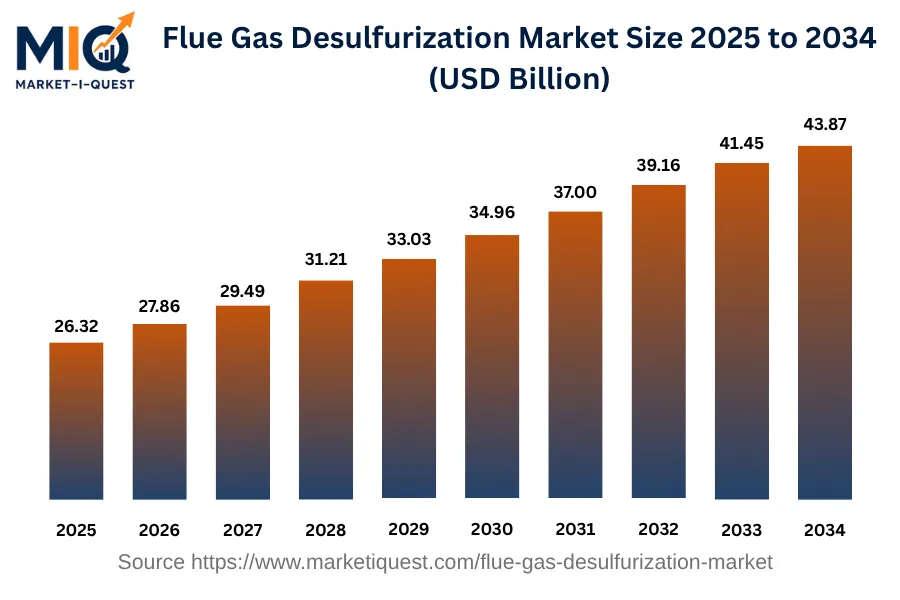
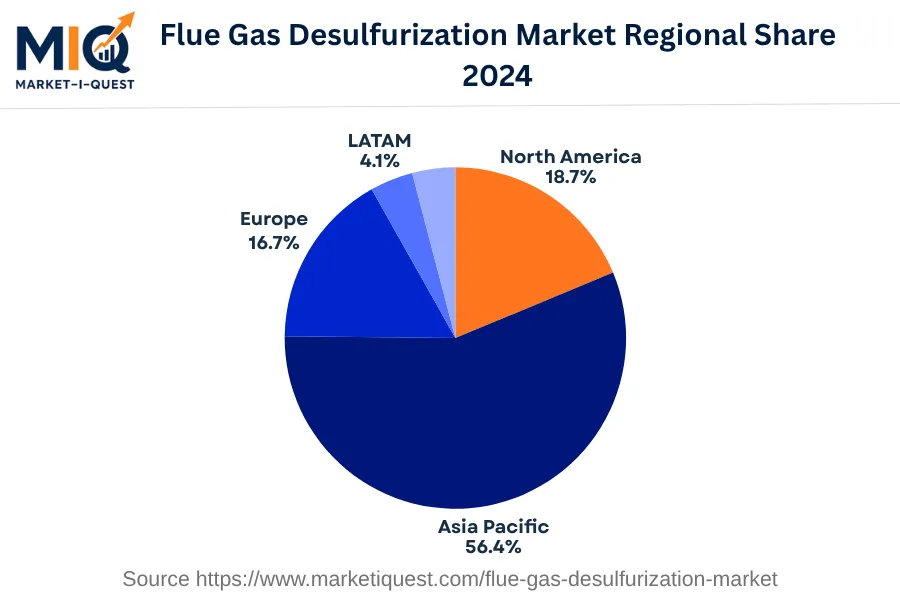
The Flue Gas Desulfurization Market was valued at 26.32 billion USD in 2025, and it is projected to reach 43.87 billion USD by 2034, growing at a CAGR of 5.84%. The significant rise from 24.87 billion USD in 2024 demonstrates the steady growth of this market. This increasing market value indicates the escalating demand for flue gas desulfurization technologies worldwide. The driving factors behind this growth are the regulatory pressures to minimize sulfur emissions and the increasing need for clean production methods across industries. In 2024, the market shares were segmented regionally as follows: North America had a share of 18.7%, Asia Pacific dominated the market with a share of 56.4%, Europe held a 16.7% share, and both LATAM and MEA had a relatively smaller share of 4.08% each.

Key Takeaways

  • By Technology - Wet Limestone FGD emerged as the top performer recognizing notable adoption across industries.
  • By Application - Refineries & Petrochemicals held a significant segment share leveraging robust demand for emission control.
  • By End User - Heavy Industry held a dominating position benefiting from stringent emission regulations.
flue-gas-desulfurization-market market size

Key Driving Factors

Implementation of Strict Environmental Regulations

The flue gas desulfurization market is influenced particularly by the rigorous enforcement of environmental regulations worldwide. For example, regulatory standards as stringent as the U.S. Clean Air Act or China's Ultra-Low Emissions (ULE) policy have been enacted to limit harmful emissions from power plants. These regulations specifically target sulfur dioxides (SO2), a common by-product of burning fossil fuels, which flue gas desulfurization systems can effectively remove. Further enforcing these regulations is the potential of heavy fines for non-compliance, prompting power plants and other industrial entities to invest in flue gas desulfurization systems, playing a considerable role in shaping the market.
Rapidly Growing Energy Demand in Developing Countries

The increasing demand for energy in emerging economies, such as India and China, is driving the flue gas desulfurization market. The growth in population and industrial sector in these regions are leading to a higher energy consumption, particularly from fossil fuel-based power plants, which are primary sources of sulfur dioxide emissions. The presence of a large number of coal-fired power plants, coupled with the establishment of new ones to fulfill the escalating energy demand, implies a high requirement for flue gas desulfurization systems. This, in turn, fuels the market growth for these systems.

Market Evolution by Timeline

2019-2023
During this period, flue gas desulfurization (FGD) demand in Asia, primarily China and India, rose significantly. Power plants, the core buyer segment, implemented FGD technologies to meet environmental norms laid out by the local governments. Wet limestone technology saw increased adoption because of higher desulfurization efficiency and applicability for various types of coal-fired boilers. However, supply constraints were visible due to the high capital and operational costs of setting up such systems. Regulations like China's Ultra-Low Emissions (ULE) Standards influenced FGD integration, pressuring plants to reduce SO2 emissions. Fixed price contracts was a prevalent commercial model by suppliers and buyers made long-term agreements to secure suppliers. However, concerns over waste residuals from the desulfurization process posed a significant risk.
2024
Slowing economic growth in Asia, especially China, impacted FGD demand in 2024. Power plants in India and Southeast Asia, however, continued to see stable demand. Newer technologies such as seawater FGD systems began seeing pilot implementation in coastal areas, offering an alternative to traditional limestone based systems. Policymakers started addressing waste management issue associated with FGD, introducing strict regulations on residual disposal. Supply contracts transitioned from fixed price models to performance-based models, incentivizing suppliers to improve the technology's efficiency and long-term reliability. Furthermore, cross-border partnerships rose, expanding the supplier base while also mitigating geopolitical risks.
2025-2029
FGD saw a resurgence in demand in the mid-to-late twenties, particularly in developing countries like Africa and Latin America. Power plants were still the largest buyer segment. Dry FGD technologies saw increased adoption, as they had improved efficiency and lower water usage. Enhanced integration maturity made these systems reliable and ideal for locations with water scarcity. Policies such as the Addis Ababa Agenda were instrumental in driving adoption, pushing nations to lower sulfur emissions. The changeover in contracts to 'shared savings' made the cost burden for the adopting industries less, boosting interest for FGD. Though the rising cost of raw materials emerged as a risk, syndicates between suppliers helped regulate the impact.
2030-2034
By the early thirties, European countries started showing renewed interest in FGD, especially in Eastern Europe. Industrial boiler segment started adopting this technology, besides existing power plants. High-efficiency FGD systems, with integration rates above 96%, became common in the marketplace. Regulations like the EU's Industrial Emissions Directive pushed for wider technology adoption. Commercial models evolved into service agreements, with suppliers managing FGD systems on behalf of customers. Additionally, increased interest in Carbon Capture Storage (CCS) made FGD systems crucial in the process. Potential risks emerged in terms of managing the increased volume of FGD waste, and discussions around its safe disposal became a priority.

Future Market Outlook

Future Opportunities

The future landscape of the Flue Gas Desulfurization market is poised for substantial evolution, driven by legislative measures and technological advancements. As of 2023, various countries, including India, are ramping up efforts to reduce air pollution through stringent emission regulations, creating a burgeoning demand for FGD solutions. India's Ministry of Environment, Forest and Climate Change has announced updated standards necessitating the installation of FGD systems at coal-fired power plants across the country. Furthermore, emerging economies in Southeast Asia are generating interest in FGD systems due to industrial expansions and rising environmental awareness among populations. Companies such as Ducon Technologies are investing in research and development to improve FGD effectiveness and explore synergies with renewable energy initiatives. The rising trend toward carbon neutrality has led to increased interest in integrating FGD systems with carbon capture mechanisms, allowing facilities to address multiple emissions simultaneously. Moreover, the growing focus on circular economy principles is inspiring innovative approaches to managing by-products from the FGD processes, such as gypsum utilization in construction. Global collaborations, such as the partnership between Siemens and a leading utility firm in Brazil to enhance FGD systems, reflect the industry's emphasis on shared solutions in overcoming environmental challenges. These dynamics illustrate a future ripe with opportunities driven by regulatory pressures and technological innovations.

Segmentation Analysis

By Technology

The market is divided into subsegments including Wet Limestone FGD, Spray Dry Absorber (SDA), Dry Sorbent Injection (DSI), Seawater FGD, and CFB Dry Scrubber. In 2024, Wet Limestone FGD accounted for the largest revenue share while Spray Dry Absorber (SDA) is expected to grow at the fastest CAGR during the forecast period.

Largest Revenue Share

Wet Limestone FGD

Market Share Leader

Wet Limestone FGD, as a technology, currently leads in revenue generation in this market. This significant market status can be attributed to several factors. Primarily, Wet Limestone FGD technology is well-established and has been proven to effectively reduce sulfur dioxide emissions, a driving regulatory goal in many geographies. This has led to it being widely chosen by clients, particularly in regions with stringent environmental regulations. Furthermore, the purchasing criteria for FGD technologies commonly prioritize efficacy and proven reliability, both of which are hallmarks of Wet Limestone FGD. The technology also benefits from a mature supply chain, facilitating easier sourcing of necessary materials and components. Finally, Wet Limestone FGD has the advantage of relatively lower switching costs for clients well-accustomed to this technology. Despite significant competition in the market, these factors collectively make Wet Limestone FGD the leading revenue contributor in this technology segment.

Fastest CAGR

Spray Dry Absorber (SDA)

Forecast Period Growth Leader

Within the technology segment, Spray Dry Absorber (SDA) is projected to have the highest growth rate. The main growth drivers for SDA include its ability to manage a wide range of input licorice, lower capital investment compared to others, and ability to produce by-products that can be monetized. These features make it an attractive option for companies looking to maximize resource efficiency and reduce operational costs. Furthermore, policy trends that support cleaner technologies have bolstered interest in SDA as a low-emissions option. Various partnerships are emerging between technology developers and utility companies in developing regions, aimed at capitalizing on this shift. Nevertheless, barriers still exist for SDA adoption, such as the need for specialised skills and operational complexities that limit some potential adopters. However, with ongoing technological advancements and industry engagement, these hurdles are expected to be mitigated in the near-term, supporting a robust growth outlook for the SDA segment.

By Application

The market is divided into subsegments including Power Generation (Coal), Cement & Lime, Metal Smelting, Refineries & Petrochemicals, and Waste-to-Energy. Refineries & Petrochemicals accounted for the largest revenue share, while Waste-to-Energy is projected to grow at the fastest rate during the forecast period.

Largest Revenue Share

Refineries & Petrochemicals

Market Share Leader

Refineries & Petrochemicals was the subsegment with the largest revenue in 2024. This can be attributed to several factors. The main one being the global dependence on oil and gas products for many industrial, commercial, and domestic activities. Activities such as transportation, heating, and general manufacturing rely heavily on these products, hence driving demand within this subsegment. Geographic regions with rich deposits of oil and gas resources, such as the Middle East and North America, have invested heavily in refineries and petrochemical industries to cater to this demand, further bolstering the revenue within this subsegment. Regulatory policies that favour oil and gas exploration and production, coupled with significant capital investment in these industries, have also influenced its revenue growth. Additionally, the costs of switching to other forms of energy are prohibitive for many businesses, thus reinforcing the dominance of the Refineries & Petrochemicals segment. Development of efficient distribution networks and channels have ensured the availability and supply of these products, enabling steady revenue growth.

Fastest CAGR

Waste-to-Energy

Forecast Period Growth Leader

Despite Refineries & Petrochemicals holding the largest market share, Waste-to-Energy is predicted to grow at the fastest rate in the forecast period. This growth is primarily driven by increased environmental concerns and the desire to achieve sustainable energy sources. Waste-to-Energy technologies provide solutions to both energy production and waste management challenges, making them a compelling choice for businesses, municipalities, and governments alike. As an emerging field, the acceptance and adoption of Waste-to-Energy technologies were initially slow. However, the rapid advancements in technology, coupled with supportive policies and increased capital investments, have facilitated its adoption. Also, the forging of strategic partnerships across stakeholders has been crucial in overcoming barriers. However, the nascent nature of the field carries inherent risks, such as uncertainties around technology, regulation, and the potential for unanticipated operational challenges. Notwithstanding these risks, the benefits and potential of the Waste-to-Energy subsegment position it as one of the market's fastest-growing areas.

By End User

The market is divided into subsegments including Utilities (Public & Private), Heavy Industry, and Government/Municipal. In 2024, Heavy Industry accounted for the largest revenue share while Utilities (Public & Private) is expected to grow at the fastest CAGR during the forecast period.

Largest Revenue Share

Heavy Industry

Market Share Leader

Heavy Industry is the revenue leader due to its broad spectrum of activities, including the manufacturing of large machinery, materials, and chemicals. These industries rely heavily on the economy's state, as investments in large fixed assets are often delayed during economic downturns. However, structure and long-term planning in these sectors provide the room for sustainable revenue flow. In addition, the demand from growing markets, especially in developing countries, has also boosted investments and revenue in the sector. Another reason is the rise of advanced technology integration in the industry, i.e., automation, IoT, and AI that have improved productivity, efficiency, and process control, driving up revenue as a result. Government supports and targeted policies are also significant drivers, as they encourage investments and revenue growth in heavy industries.

Fastest CAGR

Utilities (Public & Private)

Forecast Period Growth Leader

Utilities, both public and private, is expected to see the fastest growth. This projection is based on the increasing demand for efficient and sustainable energy solutions. Driven by the global climate crisis and advancing technology, both developing and developed countries are investing heavily in utilities infrastructure to meet their commitments to cleaner energy generation. Factors such as population growth, urbanization, and increased industrial activities are contributing to the overwhelming demand for power. As utilities are essential services, the market is less prone to fluctuations and is backed by regulatory guarantees and significant government support. Furthermore, partnerships between the public and private sectors have played a significant role in accelerating this sector's growth. However, regulatory uncertainties and complex licensing processes may pose near-term risks.

Competitive Analysis

Key Market Players

Manufacturers / OEMs

General Electric
US
Mitsubishi Heavy Industries
Japan
Siemens AG
Germany

Key Suppliers & Raw Materials

DuPont
US
BASF SE
Germany
Johnson Matthey
UK

Distributors, Integrators & Channel Partners

Total Energy
France
Shell
Netherlands
ExxonMobil
US

Porter’s Five Forces Analysis

This analysis assesses the competitive environment of the Flue Gas Desulfurization Market.

Supplier Bargaining Power

Medium

Dependence on a few major suppliers for quality raw materials impacts supplier bargaining power.

Buyer Bargaining Power

High

Multiple vendors offering similar solutions increase buyer bargaining power.

Threat of Substitutes

Low

Growing environmental regulations make alternatives less attractive.

Threat of New Entrants

Medium

Capital requirements and regulatory standards pose entry barriers for new players.

Competitive Rivalry

High

Established players, pricing competition, and technological advancements intensify market rivalry.

Regional Analysis

Geographic market dynamics and growth opportunities across key regions

Global Market Outlook

flue-gas-desulfurization-market market regional share

North America

In 2024, North America's Flue Gas Desulfurization (FGD) Market experienced progressive dynamics driven by various demand factors, regulations, technology adoption, and investment in environmental initiatives. Stricter environmental regulations implemented by governments, especially in the U.S. and Canada, incentivized industries to utilize FGD technology to lower their sulfur dioxide emissions. Increased investments from utilities and manufacturing sectors further bolstered the market growth. Technological advancements improved FGD's effectiveness, promising better compliance with environmental standards, which amplified adoption across sectors. Also, the rising cost of sulfur created a supply-side push for industries to invest in FGD to reduce their operational costs.

In terms of trends, enterprises were seen shifting toward advanced FGD tech to lower capital costs and boost operational efficiency. Adoption was particularly notable in industries such as power generation and chemicals, where sulfur emission is significant. The enforcement of environmental policies became stricter, and penalties for non-compliance increased, driving industries to stay ahead with new tech adoption. Lastly, several partnerships and mergers and acquisitions were seen in the FGD market, as companies aimed to combine resources for better R&D and market penetration. The policy enforcement, partnerships, and tech shifts underscored the heightened need for environmental responsibility among North American industries and led to increased implementation of FGD systems throughout 2024.

Asia Pacific

In 2024, the Flue Gas Desulfurization (FGD) market in the Asia Pacific was driven by an increased need for air quality improvement. The implementation of stricter environmental regulations gearing towards reducing sulfur dioxide emissions in countries like China, India, and South Korea were influential. Investments in pollution control technologies rose in response; even utilities and manufacturing sectors adopted FGD technologies to align with these regulations. Higher sulfur content in coal, predominantly in Australia and ASEAN countries, contributed to a notable demand surge.

Market trends showed a shift toward advanced FGD systems considering both cost and efficiency aspects. China Energy Engineering Corporation initiated partnerships to improve the technology for better absorbents, reflecting a broader regional trend. Customers in Japan majorly turned to seawater-based FGD systems, induced by its geographical advantage and the enforcement of strict industry-specific maritime SOx rules. The government and enterprise sectors showed significant uptake given the policy push. Meanwhile, technology adoption in India was driven by the policy enforcement of India's Ministry of Environment, Forest and Climate Change's mandate to retrofit thermal power plants with FGD systems. In the wake of these factors, FGD became a key technology in the Asia Pacific's fight against pollution in 2024.

Europe

In the base year 2024, the Flue Gas Desulfurization (FGD) market in Europe displayed a robust growth trajectory driven by stringent environmental regulations and escalated demand from key economies such as Germany and the United Kingdom. Increased governmental and corporate investments in clean energy technology adoption provided a major impetus to the market growth. Pivotal elements such as tighter emission standards in Spain, aggressive decarbonization policies in Benelux, and the extraordinary adaptation of GREEN (Generating Advanced Low Carbon Energy) policy in Italy led to strong supply dynamics. Furthermore, noticeable price reductions in FGD systems stimulated the entire value chain.

Trends pertaining to the widespread usage of FGDs across various sectors were also discerned. A significant shift occurred in buyer behavior amidst government and utilities sectors across the region, predominantly due to the enforcement of the European Union’s Industrial Emissions Directive. Enterprises focused on coal combustion for energy encountered product transitions, opting for advanced FGD systems to meet emission norms. Additionally, an uptick in collaborations and M&A activity was notable, particularly in the Nordics and Central & Eastern Europe. Sectors such as manufacturing and retail showed increased interest in adopting FGD technology, viewing it as an efficient way to curb sulfur dioxide emissions conforming to their sustainability objectives. Thus, regulatory drivers and technological shifts marked the European FGD market landscape in 2024.

Latin America

In 2024, the Flue Gas Desulfurization (FGD) market in Latin America became crucial due to increased emission regulations and the adoption of cleaner technologies in industrial processes. Major drivers included stringent environmental policies across the region, specifically in Mexico and Brazil, promoting healthier air quality and discouraging the emission of harmful sulfur compounds. Additionally, heavy investments were made in the energy sector, notably in Argentina and Chile, supporting the adoption of FGD technologies in power plants. The uptick in regulations spurred demand for FGD systems across industries, particularly in utilities and manufacturing. High sulfur fuels’ pricing influenced a dynamic shift towards desulfurization systems across LATAM. Technological advancements in FGD systems drove increased adoption, with Colombia and Peru seeing significant uptake.

Trends in 2024 indicated a pivot towards more sustainable practices, heightened by the increase in policy enforcement, particularly within the manufacturing sector. Changes in buyer behavior mirrored an interest in environmentally friendly solutions, influencing business operations. Developments in FGD technology facilitated this shift, with a rise in partnerships observed among regional businesses. The enterprise sector in Brazil specifically embraced this trend, implementing FGD systems in their processes, setting a precedent for other countries in the region. Moreover, the LATAM market saw an increased importance placed on meeting international emission standards, realizing the potential reputational benefits and avoidance of future penalties.

Middle East & Africa

In 2024, the Flue Gas Desulfurization (FGD) market in the Middle East and Africa saw significant growth, driven primarily by environmental regulations. Stricter governmental policies, particularly across key countries like Saudi Arabia and the United Arab Emirates, demanded a reduction in sulfur emissions, boosting FGD adoption. Additionally, heavy investments in cleaner technologies by oil and gas sectors and increasing electricity demand propelled the need for high-capacity power plants, amplifying FGD market penetration. Simultaneously, a visible trend was the increasing preference for dry FGD systems due to their cost-effectiveness and reduced water requirement.

In the utilities sector, retrofitting of existing power plants with FGD units to comply with emission standards was widespread, predominantly in Egypt and Nigeria. Meanwhile, technology advancements led to a shift towards more efficient and compact FGD systems. Israel's emergence as a regional technology hub, along with robust partnerships among international and local firms, further solidified this trend. Moreover, policy enforcement on emission standards from industries such as manufacturing and retail also shaped market dynamics. For instance, South Africa and Kenya saw a surge in demand from the mining industries accepting responsibility for sulfur emissions. By reducing harmful emissions, these markets backed sustainable industrial growth across Middle East and Africa in 2024. This signals a firm progression of the FGD landscape, geared towards an environment-friendly future.

Recent Industry Developments

Latest market innovations, product launches, and strategic initiatives

July 2025

India's Ministry of Environment, Forest and Climate Change also extended FGD compliance deadlines for thermal power plants: Category A plants granted deadline of December 31, 2027; Category B by December 31, 2028; and Category C by December 31, 2029. Thermal power plants declared to retire before December 31, 2030 were exempted from SO₂ emission standards.

November 2024

Valmet and Hitachi Zosen Corporation formed a strategic partnership to jointly market and deploy FGD technologies for both new-build and retrofit projects across Asia. (Included as the most recent significant partnership identified)

Frequently Asked Questions