
Float Glass Market Snapshot

Key Players

  • Saint-Gobain (France)
  • AGC Inc. (Japan)
  • Sisecam Group (Turkey)
  • Nippon Sheet Glass (Japan)
  • Guardian Industries (United States)
  • Central Glass (Japan)
  • Cardinal Glass Industries (United States)
  • Fuyao Glass Industry Group (China)
  • Xinyi Glass Holdings (Hong Kong)
  • Euroglas (Germany)

Market Size

Base Year 2024
$41.84 Bn
CAGR
3.56%
Forecast 2034
$59.36 Bn

Market Segments

By Coating
Anti-reflective, Hard-coated, Oleophobic, Hydrophobic
By Tint
Clear, Tinted, Reflective, Low-E
By Thickness
2mm-3mm, 4mm-6mm, 7mm-10mm, 11mm-12mm
By Application
Windows, Doors, Glazing

Market Dynamics

Drivers
  • Increasing Urbanization
  • Technological Advancements
Restraints
  • High production costs
  • Environmental regulations
Opportunities
  • Rising construction industry demands
  • Increasing automotive sector growth

Market Size

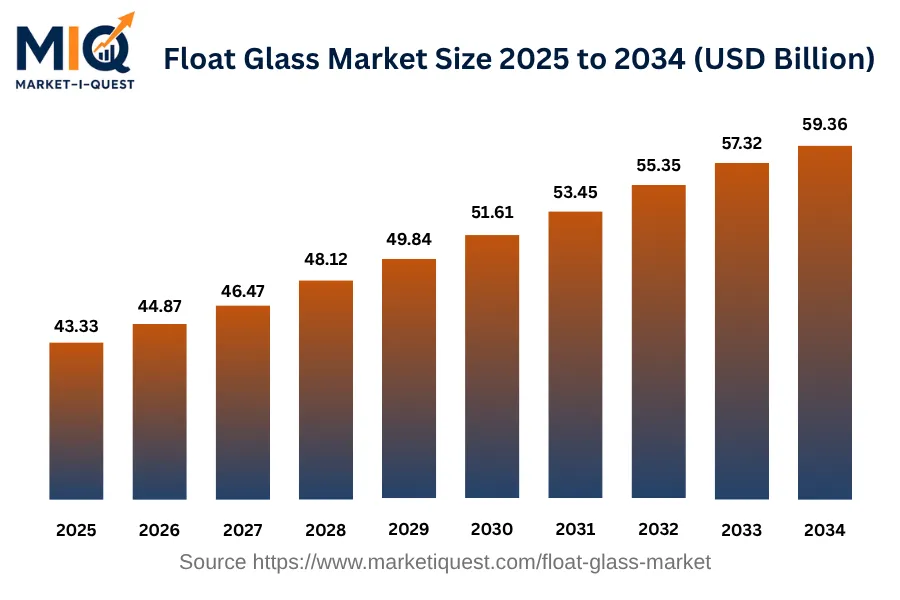
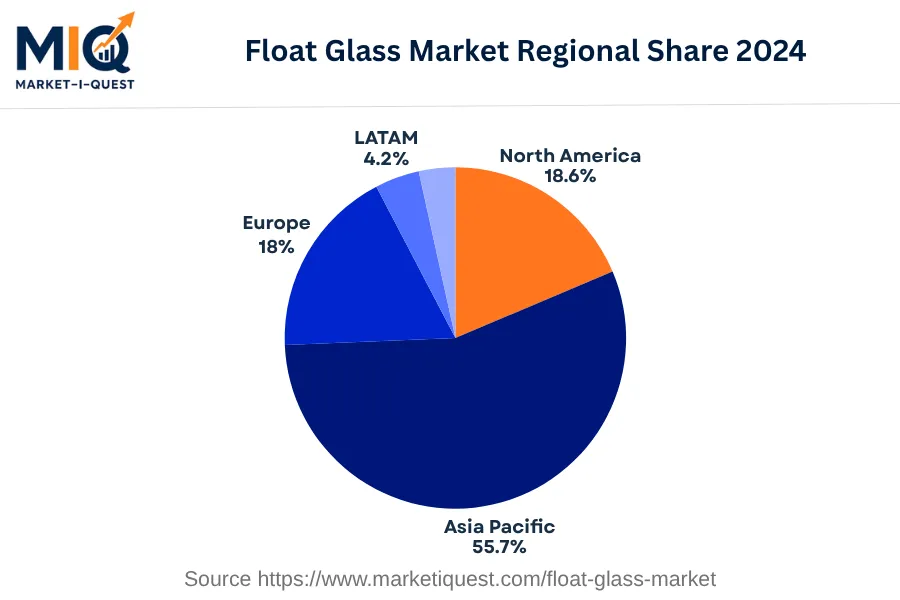
The Float Glass Market size in 2025 is projected to be 43.33 billion USD, increasing from 41.84 billion USD in 2024. By 2034, the market will have attained a value of 59.36 billion USD, suggesting a Compound Annual Growth Rate (CAGR) of 3.56% over the course of this period. The growth from 2025 to 2034 can be attributed to significant development in float glass applications and steady demand across various sectors. Its applications are becoming increasingly mainstream in industrial and domestic sectors alike, contributing to the steady expansion of this market. The regional share mix in 2024 reveals that the Asia Pacific region commanded the majority of the market with a 55.74% share, while North America followed with a 18.62% stake. Europe held a close third place with a 17.98% share, with the remaining market shares distributed amongst the LATAM and MEA regions, holding 4.21% and 3.45% respectively.

Key Takeaways

  • By Coating - Hard-coated glass led the market accounting for the highest share in base year.
  • By Tint - Tinted glass held the dominant position in recent years reflecting its increased demand.
  • By Thickness - 4mm-6mm segment emerged as the market leader in the base year due to its versatile use.
  • By Application - Doors accounted for a significant market share emphasizing its widespread use in construction.
float-glass-market market size

Key Driving Factors

Implementation of Green Building Codes

In the current climate-focused era, many nations are increasingly advocating for the creation of energy-efficient buildings. Part of this drive involves the implementation of green building codes that specify the materials appropriate for use in construction works. Float glass significantly contributes to the energy efficiency of a building due to its insulating properties. This means that buildings using float glass are able to reduce energy costs through reduced air conditioning or heating requirements. Developers are keen on adhering to these building codes not only due to regulatory compliance but also to access various incentives offered by governments. Thus, the float glass market is experiencing growth as a result of builders and developers employing this material to meet the energy efficiency requirements laid out in green building codes.
Expansion of Construction Industry in Developing Countries

The growth of the float glass market is also tied to the expansion of the construction industry in developing countries. Many nations in Asia and Africa are experiencing rapid urbanization. This phenomenon is driving the need for the construction of residential and commercial buildings to cater to the growing urban population. Consequently, the demand for construction materials, including float glass, is on the rise. Float glass is particularly favored due to its versatility and aesthetic appeal, which makes it suitable for use in various architecture styles. As the construction industry continues to boom in these regions, so does the consumption of float glass, leading to growth in the float glass market.

Market Evolution by Timeline

2019-2023
Primarily, buyers in this phase were construction and automobile sectors in Asia, particularly India, China, and Southeast Asia driven by urbanization and infrastructural development. From technology standpoint, the market saw common productions via float process, with constraints being energy consumption and environmental concerns. Policy-wise, European Union's Construction Products Regulation (305/2011) urged for safety in glass used in building projects, influencing adoption. Most common commercial model included long-term contracts, with pricing based on shipment volume. Practical blockers during this period included operational and environmental hazards posed by production methods.
2024
Demand from Asia persisted, with interest from North America for applications in solar panels and energy-efficient buildings. Supply involved more of eco-friendly production methods, though their integration was still in infancy. The United Nations Industrial Development Organization (UNIDO) set initiatives to reduce GHG emissions from glass manufacturing, indirectly promoting eco-friendly production methods. Typically, float glass was priced based on the manufacturing procedure, with energy-efficient methods costing more, regularly through long-term contracts. The adoption of eco-friendly production methods faced resistance due to capital-intensive nature and technology complexity.
2025-2029
The buyer segment diversified to include electronics industry for high-tech applications like smart windows and display panels. Suppliers were seen experimenting with advanced digital manufacturing methods and AI integration; however, the production majorly remained traditional. European Union's energy efficiency directive 2018/2002 that aimed to improve energy performance of buildings influenced the use of energy-efficient float glass. Consumption-based pricing models with flexibility started getting popular. The shift from traditional to digitally-aided production practices posed challenges in terms of high investment costs and demands for new skills.
2030-2034
Usage extended to futuristic applications like Augmented Reality (AR), Virtual Reality (VR) devices desiring ultra-thin, crystal-clear float glass. Latest manufacturing modules saw higher integration of AI and IoT ensuring efficient, eco-friendly production. Regulations became stringent with new measures from agencies like the Environmental Protection Agency (EPA) in the USA and the Energy Conservation Center (ECCJ) in Japan. Commercial models witnessed a shift towards sustainable and environmentally-conscious procurement models. The main risk observed was cybersecurity, owing to increased digitization, which companies mitigated by investing in security infrastructure.

Future Market Outlook

Future Opportunities

The anticipated growth trajectory of the float glass market hinges significantly on evolving consumer preferences and regulatory frameworks. As sustainability increasingly shapes industry dynamics, manufacturers are expected to prioritize eco-friendly products, which is exemplified by new waste management policies being devised in Canada. The demand for sustainable building materials is likely to drive innovation in recycling processes and circular economy strategies, with companies like NSG Group already exploring closed-loop recycling initiatives. In 2024, the adoption of augmented reality (AR) technologies for architectural design could offer enhanced visualization capabilities, fostering a shift toward more customized glass solutions, as demonstrated by recent partnerships between technology firms and glass manufacturers. Moreover, the construction boom in regions such as Asia-Pacific, supported by government infrastructure initiatives, presents opportunities for growth as the region looks to modernize its building stock. Emerging markets, particularly India, are experiencing increased urbanization, translating to greater demand for float glass in residential and commercial sectors. Furthermore, international climate agreements such as the Paris Agreement are expected to encourage stricter regulations, prompting significant investments into energy-efficient glass technologies. This evolving regulatory landscape will likely compel industry players to adapt quickly, creating avenues for collaboration among manufacturers, architects, and urban planners in shaping future glass applications.

Segmentation Analysis

By Coating

The market is divided into subsegments including Anti-reflective, Hard-coated, Oleophobic, and Hydrophobic coatings. The Hard-coated segment accounted for the largest revenue share while the Oleophobic coating segment is expected to grow at the fastest CAGR during the forecast period.

Largest Revenue Share

Hard-Coated

Market Share Leader

The Hard-coated segment has been a dominating force in the market, largely attributed to its core benefits and extensive use across multiple industries. Hard-coating offers an indispensable protective layer and scratch resistance which make it exceptionally durable and versatile for a range of applications such as eyewear, displays, devices, and automotive parts. This vast application scope has considerably augmented its demand, thereby leading to a higher revenue share compared to its counterparts. As a customary practice, the wider geographical distribution of hard-coated products has catered to a diverse customer base including both consumer and industrial sectors. It's noteworthy to say that regulatory bodies and standards have consistently acknowledged the vitality of hard-coated protection, pushing it as the preferred choice for manufacturers. Its supremacy is also characterized by inherent purchasing criteria such as durability, resistance to physical damage, and longevity, which are critical considerations for buying decisions. Given that the switch to alternative coatings incurs additional costs and uncompensated risk, the reluctance to deviate from hard coating further strengthens its market position.

Fastest CAGR

Oleophobic

Forecast Period Growth Leader

The Oleophobic coating segment is anticipated to experience the fastest growth, spurred by a combination of technological advancements, expanding applications, and increasing consumer demand. This is a specially engineered coating that repels oil, reducing fingerprints and smudges on electronic devices, particularly touchscreen gadgets. As the digital revolution advances, the demand for touchscreen devices is escalating; this is a significant catalyst for enhancing the adoption of oleophobic coatings. The challenge, however, lies in the higher initial capex required for its application. But, this barrier is progressively being overcome with advances in cost-efficient manufacturing techniques and collaborative efforts of key market players. Regulatory pushes incentivizing the use of smudge-resistant coatings in the electronics segment are also expected to help overcome this hurdle in the near term. While there are some risks associated with increased production capacity and evolving technological demands, the sector's potential for growth, propelled by burgeoning consumer electronics and digital segments, remains robust.

By Tint

The market is divided into subsegments including Clear, Tinted, Reflective, and Low-E. Tinted accounted for the largest revenue share while Low-E is expected to grow at the fastest CAGR during the forecast period.

Largest Revenue Share

Tinted

Market Share Leader

Tinted glasses have been an industry staple and leading source of revenue due to their versatility and demand across multiple sectors. The broad appeal of tinted windows — offering privacy, heat reduction, and UV protection — ensures stable demand. Residential, commercial, and automotive sectors primarily drive the demand for this subsegment, further supplemented by the hospitality and healthcare sectors. Geographically, urbanized regions with significant construction activity serve as the major markets for tinted windows. Regulations regarding energy efficiency and privacy often push for the usage of tinted windows, contributing to their leading position. The critical role of tinted glasses in design aesthetics where they serve both functional and decorative purposes, coupled with their relative affordability, keeps the barriers to switch to other types high.

Fastest CAGR

Low-E

Forecast Period Growth Leader

Low-E or low-emissivity glass subsegment is expected to witness the fastest CAGR in upcoming years. The key growth catalyst is the product's technical superiority in heat insulation, which aligns with the increasing global emphasis on energy efficiency and lower carbon footprint. A growth in awareness and subsequent regulations around energy conservation are driving adoption. This subsegment may face barriers in terms of higher upfront investment and lack of awareness in underdeveloped regions but partnerships with government bodies and environmental organizations aim to overcome these hurdles. An acceleration in green building practices and policies promoting energy efficient materials will further drive this subsegment's growth. The key near-term risks involve economic stagnation or downturn, as Low-E glasses are seen as premium products and may face reduced demand under stringent economic conditions.

By Thickness

The market is divided by thickness into subsegments including 2mm-3mm, 4mm-6mm, 7mm-10mm, and 11mm-12mm. In the base year of 2024, 4mm-6mm accounted for the largest revenue share, while the 11mm-12mm segment is predicted to grow at the fastest CAGR throughout the forecast period.

Largest Revenue Share

4mm-6mm

Market Share Leader

The 4mm-6mm subsegment dominates the revenue share due to its wide application range and versatility. Being moderately thick, these products present a sweet spot that balances structural strength and material savings. They are preferred in various industries such as automotive, construction, and manufacturing, capturing a sizable demand in the aforementioned spurring sectors. Further, this thickness range lends itself well to both mass-market consumer products and industrial goods, giving it a broad customer base. This is predominantly seen in developed regions like North America and Western Europe where high-volume manufacturing and industry standouts. There are no restrictive regulations deterring the usage of this thickness, giving it an open market space. The buying criteria for this segment primarily rest on quality, price, and brand reputation, with limited room for switching due to pre-set industry standards and equipment compatibility set by manufacturers. Distribution mainly happens through direct channels or specialized distributors, solidifying its market hold.

Fastest CAGR

11mm-12mm

Forecast Period Growth Leader

The 11mm-12mm thickness segment shows the fastest growth outlook. The primary factors driving the growth are emerging use-cases necessitating thicker materials for advanced structural applications, such as in the aerospace and heavy machinery sectors. Furthermore, these sectors are experiencing increased capital expenditure, which in turn is stimulating demand for thicker materials. Innovation and technological advancement act as catalysts in the sector. Capabilities for mass manufacturing and improved performance characteristics of 11mm-12mm thickness materials have also begun surfacing, further enticing its adoption. Though priced comparatively higher, its unique value proposition of durability and robustness justify the cost, eliminating major adoption barriers. However, manufacturers must be cognizant of potential near-term risks such as changing market dynamics and regulatory changes that could impact sourcing or usage. With strategic partnerships, manufacturers can mitigate such risks and align their strategies to cap the growth potential in this segment.

By Application

The market is divided into subsegments including Windows, Doors, and Glazing, with Doors accounting for the largest revenue share, while Windows is expected to grow at the fastest CAGR during the forecast period.

Largest Revenue Share

Doors

Market Share Leader

The Door subsegment leads the market primarily due to its universal application in various structures ranging from residential, commercial, to industrial spaces. The success of this segment can be attributed to the continual construction and renovation activities worldwide which fuel the demand for doors. Also, the trend of purchasing secure, weather-resistant, and aesthetically attractive doors contributes to the robust sales numbers. Geographically, the growth is more prominent in emerging regions like Asia-Pacific due to rapid urbanization and industrialization, creating a huge demand for doors. The presence of stringent regulations for fire safety and energy efficiency also promotes the use of modern doors, thereby propelling the revenue for this subsegment. Other factors like the ease of purchasing through various channels and the minimal cost of switching between door types add to the subsegment's leadership in revenue.

Fastest CAGR

Windows

Forecast Period Growth Leader

The Windows subsegment is poised for the fastest growth, driven by several factors. Technology improvement and increasing adoption of energy-efficient solutions are key drivers. Homeowners and commercial establishments are becoming more conscious about minimizing energy consumption, prompting them to adopt modern window designs that improve insulation and reduce heat loss. Regular advancements in window technologies, such as double-glazing or solar control glazing, also catalyze growth in this subsegment. At the same time, policies directed towards energy conservation provide impetus to the adoption of advanced windows. However, high upfront cost may serve as a barrier to new adoption, posing a near-term risk. Yet, partnerships between manufacturers, designers, and building professionals can help overcome the barrier by developing cost-effective, efficient solutions, thus ensuring continued exponential growth for the Windows subsegment.

Competitive Analysis

Key Market Players

Manufacturers / OEMs

AGC Inc.
Japan
Saint-Gobain
France
Nippon Sheet Glass Co., Ltd.
Japan

Key Suppliers & Raw Materials

Ardagh Group S.A.
Luxembourg
Owens-Illinois, Inc.
US
Vitro, S.A.B. de C.V.
Mexico

Distributors, Integrators & Channel Partners

Fuyao Glass Industry Group Co., Ltd.
China
Sisecam Group
Turkey
Central Glass Co., Ltd.
Japan

Porter’s Five Forces Analysis

This analysis assesses the competitive landscape of the float glass market, focusing on five key dynamic forces.

Supplier Bargaining Power

Medium

Raw material suppliers influence is tempered by abundance of key input resources like silica.

Buyer Bargaining Power

High

Buyers have high power due to various alternative glass technologies and product differentiation scarcity.

Threat of Substitutes

Medium

Substitutes such as acrylics and polycarbonates pose a moderate threat, depending on application and price.

Threat of New Entrants

Low

High capital investment and technical expertise serve as significant barriers to entry.

Competitive Rivalry

High

Intense competition among existing players, driven by production capacity and technological advancements.

Regional Analysis

Geographic market dynamics and growth opportunities across key regions

Global Market Outlook

float-glass-market market regional share

North America

In 2024, the North American float glass market faced a period of dynamic change and growth. Demand drivers included the surge in green building initiatives, particularly in the U.S, that increased the need for energy-efficient float glass. Regulatory norms enforced by the U.S. Federal Trade Commission advocating for energy conservation also contributed to the demand. Innovations in technology and increased adoption of smart glass and solar control glass in commercial setups across the U.S., Canada, and Mexico pushed market evolution further. Trade relationships with China affected supply dynamics and pricing, given the latter's dominance in the float glass manufacturing sector.

Market trends indicated shifts in buyer behavior towards sustainable and energy-efficient products. High-tech solutions in float glass manufacturing were progressively adopted by key players in the market; Saint-Gobain and AGC Inc. were amongst those known for their innovation. Channel dynamics reflected increased online sales due to intensified e-commerce penetration, mostly in the U.S. and Canada. The enforcement of policies centered on environmental sustainability was evidently affecting market trends. Major float glass customers in 2024 extended across sectors such as real estate, automotive, and renewable energy, specifically solar power companies, primarily responsible for industry developments in North America.

Asia Pacific

In 2024, the Float Glass Market in Asia Pacific demonstrated solid growth. The demand dynamics indicated an upsurge, predominantly due to the increased urbanization in India, China, and key ASEAN markets that propelled construction activities, stimulating the need for high-quality architectural glass. Sweeping energy efficiency regulations across Japan, South Korea, and Australia further bolstered the adoption of insulated and solar control glass products. Investments in technological innovations and the optimization of the float glass manufacturing process played a significant role in shaping supply dynamics.

Market trends manifested in buyer behavior cast a spotlight on the rise in preference for value-added glass products, particularly in the automotive and construction sectors. The emergence of digital technologies in these industries also generated demand for smart glass products. Significant channel shifts were noticed as e-commerce portals started becoming the central medium for procurement. Assertive policy enforcement related to recycling and waste management led to partnerships between major companies and recycling agencies in Chinese and Indian markets. In sectors such as manufacturing and utilities, rigorous safety standards boosted the adoption of safety and security glass. A transition toward sustainable and energy-efficient infrastructural elements was observed in governmental initiatives, which in turn influenced enterprise decisions. This balanced interplay of drivers and trends framed the float glass market scenario in the Asia Pacific region in 2024.

Europe

In 2024, Europe's Float Glass Market sustained robust growth driven by key developments in various sectors. Infrastructure expansion and renovation, particularly in Germany and the UK, played a significant role in driving the demand for float glass. Eco-conscious policies, like France's Energy Transition Law, favored energy-efficient solutions, promoting the use of insulated float glass in residential and commercial buildings. Investments into high-tech manufacturing capabilities in Italy and Eastern Europe streamlined the production process and improved quality control, positively impacting the supply dynamics.

Simultaneously, consumer trends shifted towards sustainable and energy-efficient building materials creating a spike in the demand for float glass, especially in the construction sector. Technological advancements led to an increased application of float glass in the automobile sector, primarily seen in the UK and Germany. Channel dynamics revealed a rise in direct sales from manufacturers to large-scale construction projects primarily in Spain and the Nordics. Additionally, partnerships like the one between Pilkington and Saint-Gobain strengthened the market, facilitating an improved supply chain. Enforcement of European Standards EN 572 for glass specifications ensured consistent quality across the region. Customers spanned across various sectors, including enterprise-level construction companies, government-funded infrastructure projects, healthcare facilities, manufacturing units, and retail businesses.

Latin America

In 2024, the Latin American float glass market reflected strong growth due to various factors. Increased demand from the construction sector, particularly in Brazil and Mexico, fueled the market growth as urban expansion and the surge in modern infrastructure necessitated high-quality glass products. Technological adoption in Argentina and Peru, with advanced automated manufacturing techniques, also played a part in bolstering supply dynamics. Regulatory changes, such as Colombia's green building standard (RES 549/15), instigated a push towards energy-efficient glass products. Additionally, favorable investment conditions in Chile, especially in the manufacturing sector, further stimulated the market's development, despite fluctuating raw material prices.

Trends in buyer behavior in 2024 showcased a shift towards sustainable and energy-efficient glass products across sectors, particularly in retail and utilities. This market shift was a clear response to ongoing environmental policies enforcement. Increased technology penetration also led to a rise in smart glass demand, particularly from the enterprise sector in Mexico, which brought on several structural changes in the market. Channel dynamics illustrated the increased reliance on e-commerce, particularly in Brazil and Argentina, redefining traditional sales approaches. Lastly, the year saw a few significant M&A activities, shaping the market concentration and further intensifying competition. Notable was the partnership between Brazilian and Chilean manufacturers aimed at improving production efficiency and expanding their market footprints.

Middle East & Africa

In the base year 2024, the Middle East and African Float Glass Market witnessed considerable growth due to multiple drivers. Increased urbanization and infrastructure development, especially in the United Arab Emirates, Saudi Arabia, and Qatar, led to an increased demand for Float Glass. Regulatory norms favoring energy-efficient construction in Egypt's and South Africa's government and utilities sectors boosted the market. Technological advancements, such as Low E-glass adoption within Nigeria's and Kenya's manufacturing sectors, also stimulated market growth. In addition, competitive supply dynamics and pricing played crucial roles, with Saudi Arabia leading with abundant raw material availability and cost-effective manufacturing.

Simultaneously, shifts in buyer behavior and product technology greatly influenced market trends. A heightened interest in green buildings and environmentally friendly initiatives, especially within Israel's and the UAE's financial services and healthcare sectors, fuelled demand for solar control and thermal insulation glass. The growing adoption of digital technologies in the retail sector, like smart glass in Kenya and South Africa, was another significant trend; this was reinforced by strategic M&A activities, such as Saint-Gobain's partnership with Central Glass. Lastly, increased policy enforcement for safety standards in Qatar's oil and gas sector favored the use of fire-resistant and tempered glass products. Throughout 2024, these various factors significantly shaped the Float Glass Market in the Middle East and Africa.

Recent Industry Developments

Latest market innovations, product launches, and strategic initiatives

June 2026

Apollo Global Management received EU approval for its $3.7 billion acquisition of NSG Group (Japan's largest float glass manufacturer), with the deal expected to close in Q4 2026 and NSG to delist from the Tokyo Stock Exchange in November.

February 2026

Ghana broke ground on a new US$250 million float glass factory at Shama in the Western Region, with Phase One producing 600 tons/day and Phase Two adding 800 tons/day for a total 1,400 tons/day capacity, making it one of Africa's largest float glass production facilities.

Frequently Asked Questions