
Flexitank Market Snapshot

Key Players

  • SIA Flexitanks (Ireland)
  • Hengxin Plastic (China)
  • Trust Flexitanks (Spain)
  • Environmental Packaging Technologies (USA)
  • Braid Logistics (Scotland)
  • BLT Flexitank (Malaysia)
  • Qingdao Laf Packaging (China)
  • MY Flexitank (Malaysia)
  • Bulk Liquid Solutions (India)
  • Trans Ocean Bulk Logistics (USA)

Market Size

Base Year 2024
$1.46 Bn
CAGR
21.7%
Forecast 2034
$10.41 Bn

Market Segments

By Type
  • Mono Layer Flexitanks
  • Multi Layer Flexitanks
  • Specialty Flexitanks
By Material
  • Polyethylene
  • Polypropylene
  • Others
By Application
  • Food and Beverage
  • Chemicals
  • Pharmaceuticals
  • Industrial Goods
  • Others

Market Dynamics

Drivers
  • Growing global trade
  • Increased demand for cost-effective solutions
Restraints
  • Limited product compatibility
  • Potential logistics challenges
Opportunities
  • Growing ecommerce industry
  • Emerging economies demand growth

Market Size

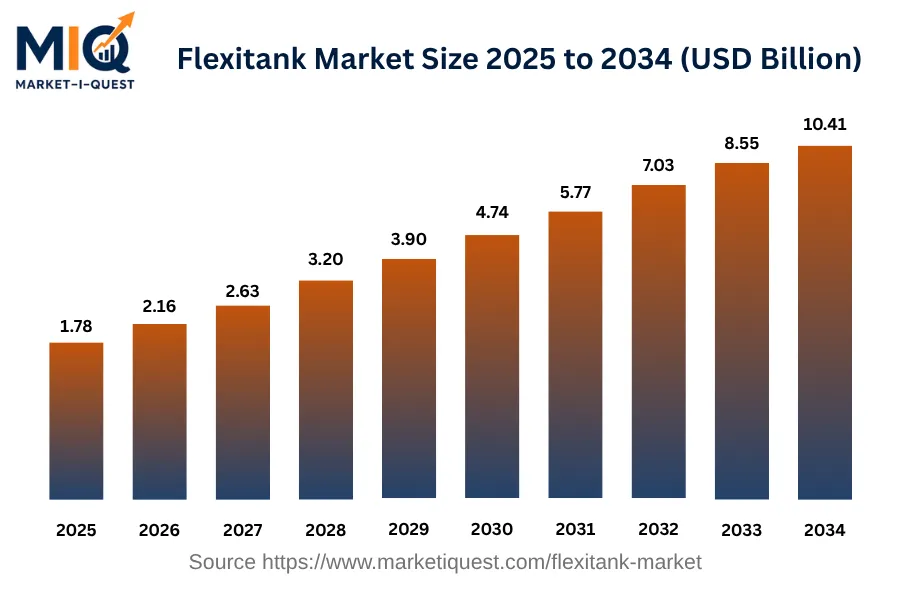
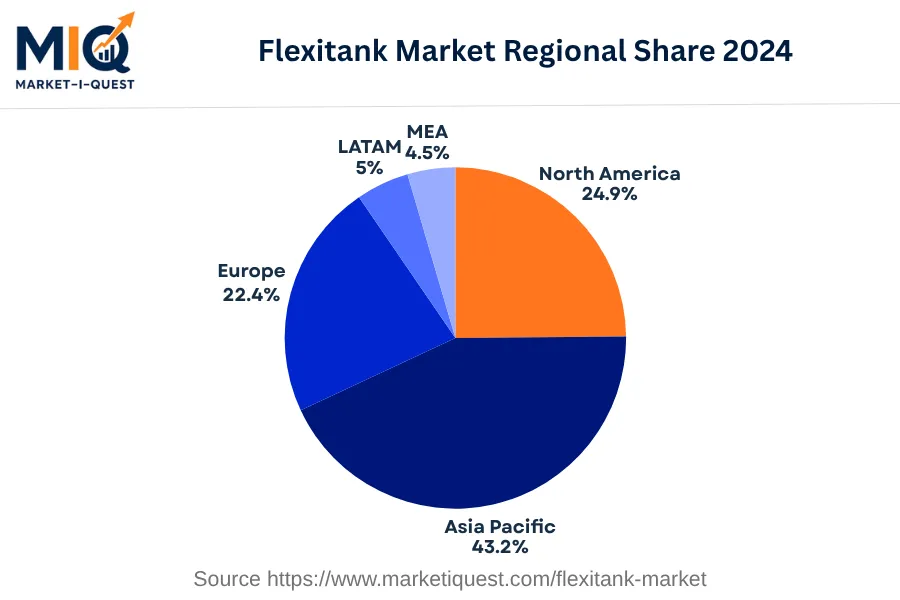
In 2025, the Flexitank market size is projected to be $1.78 billion, up from $1.46 billion in 2024. By 2034, the market value is expected to increase significantly to $10.41 billion, exhibiting a Compound Annual Growth Rate (CAGR) of 21.7%. This substantial growth observed from 2025 onwards indicates a robust expansion in the market during the period. Underlying this expansion are various contributing factors such as the extensive use of Flexitanks in the transport and logistics industries, along with the continuous rise in exports globally. Specifically, in year 2024, the regional share of the Flexitank market evidenced the Asia Pacific region accounting for 43.2%, followed by North America at 24.9%, and Europe at 22.4%. The regions with the least market share were LATAM and MEA holding 5.0% and 4.5% shares respectively. This data illustrates the regional distribution of the Flexitank market, identifying the Asia Pacific as the region with the largest market share.

Key Takeaways

  • By Type- Multi Layer Flexitanks held the fastest growth rate accounting for notable expansion during the forecast period.
  • By Material - Polyethylene dominated market share accounting for a striking position in the Flexitank Market.
  • By Application - Pharmaceuticals grew the fastest driving a remarkable market growth from 2025 to 2034.
flexitank-market market size

Key Driving Factors

Implementation of the International Maritime Dangerous Goods (IMDG) Code

One of the primary drivers behind the flexitank market is the enforcement of the International Maritime Dangerous Goods (IMDG) Code. This code stipulates packaging criteria for hazardous goods in marine environments, which provides a boost to the flexitank market as flexitanks are recognized for their superior safety characteristics. They ensure that liquid products are transported safely, minimizing the risk of spills and leaks. Additionally, flexitanks are designed to fit standard 20-foot containers, as mandated by the IMDG code, which increases their market appeal. These facts combined with increased compliance and consciousness about the safety and security of liquid transportation are driving companies towards the adoption of flexitanks.
Decreasing Shipping and Handling Costs

Shipping and handling costs can significantly affect a company's budgets, especially when talking about liquid goods. Flexitanks provide an economically attractive alternative to traditional methods like drums, jerry cans, and ISO tanks. Single-use flexitanks eliminate not only the cost of returning a container but also the cleaning costs associated with reusable containers. In addition, the containers' capacity to hold more liquid compared to traditional methods effectively reduces freight expenses by increasing the number of goods being transported per container. Therefore, the potential for significant cost savings is driving more companies towards the use of flexitanks in their shipping and logistics operations.

Market Evolution by Timeline

2019-2023
In this period, the demand for the Flexitank market showed a significant increase predominantly from the food-grade liquid sector, particularly in Asia. Singapore and China were leading buyers, utilizing flexitanks for safe and cost-effective ocean transport of palm oil and other bulk liquids. Shipment integration matured as leading suppliers like MY FlexiTank and Hoyer Global Transport began incorporating advanced GPS tracking and temperature control technology. However, poor installation practices remained a constraint, causing occasional product damage and delay. Regulation was underdeveloped, although the Container Owners Association (COA) began advocating for global flexitank standards. Typically, contract types included long-term leasing with pricing reflecting features such as anti-oxidation coatings and recyclability. The main risk was cargo leakage due to low installation standards, addressed by suppliers through additional staff training.
2024
Throughout 2024, the demand for flexitanks continued to grow with sizable input from the wine industry in Europe, specifically Spain and Italy. The integration of advanced technology still played a crucial role with flexitank suppliers offering multi-layered models enhanced with protective features. Simultaneously, manufacturers faced increasing recycling concerns due to rising environmental awareness. New regulations from the European Union aimed at reducing plastic waste impacted the supply chain, prompting companies to invest in research and development of biodegradable materials for flexitanks. Partnerships between flexitank suppliers and recycling companies emerged, striving to establish a circular economy approach. Risks remained around environmental damage caused by leakage and improper disposal.
2025-2029
From 2025 to 2029, the flexitank market saw increasing demand from North America for logistics purposes in the automotive industry. Residential growth and urbanization in major cities like New York and Los Angeles pushed need for more efficient transport solutions. More advanced models of flexitanks surfaced, boasting innovative leak proofing and damage-resistant materials, shaped by years of manufacturer research efforts. Legislation tightened further globally with the introduction of ISO standards governing flexitank installation and disposal. Contract structures shifted toward pay-per-use basis as a common commercial model. Major risks involved compliance with new standards, leading to increased investment in risk management and quality control by suppliers.
2030-2034
During this period, Middle East countries, notably Saudi Arabia and the United Arab Emirates, showed considerable demand for flexitanks in the oil industry. Technology incorporation and improving supply side capabilities remained a cornerstone. However, rapid desertification in these regions posed challenges for logistics operations. Globally instituted ISO standards continued to reshape the market, moving it towards more sustainability and standardized practices. The commercial models involved flexible pricing dependent on the degree of customization in design and material used. Finally, the possibility of geopolitical disruptions shifted the focus to risk management for smooth operations and business continuity.

Future Market Outlook

Future Opportunities

The future of the flexitank market presents substantial growth opportunities, particularly in expanding applications across diverse sectors. In Europe, increasing demand for cost-effective transportation solutions in the food industry has resulted in partnerships between shipping companies and flexitank providers like Moller-Maersk and Trans Ocean. Regulations promoting sustainable logistics, such as the European Union's Green Deal, are likely to accelerate the adoption of flexitanks in various industries as firms seek to lower their carbon footprints. Moreover, the rise in global trade, especially between Asia and North America, propels the flexitank market forward, as seen with the increasing use of flexitanks for shipping bulk liquids like oils and beverages. Companies such as Flexitank International are already expanding their product lines to cater to these trends. Furthermore, advancements in recycling technologies for flexitanks can lead to more environmentally sustainable practices, opening new markets in regions facing stricter environmental regulations. In 2023, climate action initiatives worldwide have heightened interest in biodegradable and recyclable transportation materials, further driving research in this area. Consequently, as environmental concerns and efficiency demands grow, stakeholders in the flexitank market are expected to explore innovative products that address these needs, fostering an environment ripe for strategic partnerships and new market entrants.

Segmentation Analysis

By Type

The market is divided into subsegments including Mono Layer Flexitanks, Multi Layer Flexitanks, and Specialty Flexitanks. Of these, Multi Layer Flexitanks accounted for the largest revenue share while Specialty Flexitanks are expected to grow at the fastest CAGR during the forecast period.

Largest Revenue Share

Multi Layer Flexitanks

Market Share Leader

Multi Layer Flexitanks are leading in terms of revenue share in the current market. This dominance can be attributed to several factors. Predominantly, their high capacity and durability make them particularly attractive to customers in various sectors, including food and beverage, chemical, and automotive. Furthermore, Multi Layer Flexitanks offer enhanced protection against potential contamination, an advantage that is especially valuable in industries where maintaining product purity is essential. These tanks are also resistant to physical damage and weather conditions, thereby minimizing losses during transportation. The global expansion of cross-border trade and the consequent increase in demand for efficient and safe transportation solutions are also contributing to the market segment's growth. However, it should be noted that these conclusions are drawn based on common market structures and the given list of subsegments. Future changes in market trends, customer preferences, or industry regulations could alter the revenue dynamics.

Fastest CAGR

Specialty Flexitanks

Forecast Period Growth Leader

The Specialty Flexitanks segment is expected to be the fastest-growing within the market. This growth can primarily be attributed to the increasing need for specialized transportation solutions in specific industries, such as pharmaceuticals, organic products, or dangerous goods. Specialty Flexitanks are designed to handle certain specific products or handle unique transport conditions, making them an essential choice for industries with complex logistics requirements. While they may currently command a smaller revenue share compared to other subsegments, changes in industry regulations, technological advancements, and strategic partnerships could act as growth catalysts. However, adoption could be hindered by high switching costs, perceived risks associated with newer designs, and capital expenditure requirements. Nonetheless, it is anticipated that the potential efficiency improvements and cost benefits they offer will drive their adoption. Please note that this forecast is based on existing market structures and trends.

By Material

The market is divided into subsegments including Polyethylene, Polypropylene, and Others. In 2024, Polyethylene accounted for the largest revenue share while Polypropylene is anticipated to grow at the fastest CAGR during the forecast period.

Largest Revenue Share

Polyethylene

Market Share Leader

Polyethylene's dominance in revenue generation can be attributed to its extensive usage across diverse industries including packaging, construction, automotive and more due to its versatility and durability. Its wide range of applications supports constant demand keeping Polyethylene at the forefront of the market. Further, its recyclability contributes to its popularity in the wake of growing environmental concerns and tighter regulations. Moreover, the low cost of Polyethylene compared to its alternatives enhances its attractiveness to manufacturers seeking cost-efficiency. From a geographic perspective, the high demand from developing regions with growing industries contributes significantly to Polyethylene's revenue. Additionally, mature markets with established industrial sectors continue to rely heavily on Polyethylene for their operational needs. Given the economies of scale, the purchasing power, and the low switching costs involved, it's reasonable to infer that Polyethylene will maintain its leading position for the foreseeable future.

Fastest CAGR

Polypropylene

Forecast Period Growth Leader

Polypropylene is expected to chart the fastest growth on a CAGR basis. This is underpinned by its superior properties such as high resistance to chemicals, elasticity, and toughness which make it favorable for application in industries like automotive, electrical, and construction. Moreover, technological advancements that enhance the attributes of polypropylene and widen its range of applications are acting as major growth catalysts. However, adoption barriers like environmental concerns surrounding its disposal and competition from other materials present near-term risks. Nevertheless, strategic partnerships alongside significant investments in R&D and manufacturing capabilities are expected to drive its market dominance. Policies promoting sustainability and the circular economy may further pivot the demand towards more environmentally-friendly alternatives like polypropylene. Therefore, while Polyethylene holds the current lead in terms of revenue, Polypropylene with its promising features and growing applicability is anticipated to register the fastest growth.

By Application

The market is divided into subsegments including Food and Beverage, Chemicals, Pharmaceuticals, Industrial Goods, and Others. In 2024, the Pharmaceuticals sector accounted for the largest revenue share while the Food and Beverage segment is expected to grow at the fastest CAGR during the forecast period.

Largest Revenue Share

Pharmaceuticals

Market Share Leader

The Pharmaceutical subsegment leads in terms of revenue primarily due to the increasing global demand for medicines and vaccines, driven by a growing and aging population with increased healthcare needs. Additionally, advancements in specialty medicines for chronic and rare diseases also contribute to this increasing demand and resultant revenue. Geographically, developed countries with a high frequency of chronic diseases and a robust healthcare infrastructure constitute the majority of the pharmaceutical market. However, emerging economies also significantly contribute to the revenue due to improving healthcare facilities and growing public health awareness. The purchasing criteria in this segment are largely based on quality, efficacy, and regulatory compliance. Strong relations with distributors, regulators, and healthcare providers, coupled with significant switching costs due to stringent regulatory criteria, ensure steady customer loyalty and continuous revenue streams.

Fastest CAGR

Food and Beverage

Forecast Period Growth Leader

The Food and Beverage subsegment is projected to have the fastest growth rate. The main drivers behind this are changing consumer preferences towards healthier and prepared meals, innovations in food technology, and rising incomes in emerging markets. Regulatory policies encouraging healthier eating habits can further boost this segment. Additionally, sustainability issues are influencing both purchases and production technology innovations, which could spur further growth. Significant capex is being made in clean-label products, plant-based diets, and sustainably produced foods, which may further catalyze this industry's growth. This shift to healthier, convenient, and sustainable consumptions comes with adoption barriers including pricing, availability, and consumer acceptance of new tastes or formats. In the near term, challenges could arise from dramatic shifts in commodity prices or disturbances in global supply chains.

Competitive Analysis of Flexitank Market

Key Market Players

Manufacturers / OEMs

Hengxin Plastic
China
Qingdao LAF Packaging
China
SIA Flexitanks
Ireland

Key Suppliers & Raw Materials

Trans Ocean Bulk Logistics
UK
Bulk Liquid Solutions
India
Rishi FIBC Solutions
India

Distributors, Integrators & Channel Partners

BLT Flexitank Industrial
China
My Flexitank Industries
Malaysia
Environmental Packaging Technologies
US

Porter’s Five Forces Analysis

A comprehensive assessment of the competitive dynamics in the Flexitank market.

Supplier Bargaining Power

Low

Surplus of raw material suppliers and low switching costs reduce supplier power.

Buyer Bargaining Power

High

Numerous suppliers and standard product characteristics increase buyer power.

Threat of Substitutes

Medium

Reduced cost and improved flexibility of IBCs pose moderate substitution threat.

Threat of New Entrants

Low

High capital investment and stringent regulations form high entry barriers.

Competitive Rivalry

Medium

Presence of several major players and product standardisation result in medium industry rivalry.

Regional Analysis

Geographic market dynamics and growth opportunities across key regions

Global Market Outlook

flexitank-market market regional share

North America

In 2024, the North American Flexitank market was primarily defined by increased demand for cost-efficient and eco-friendly bulk liquid transport solutions. Drivers of this market included the rising adoption of innovative technology by companies like Mauser Packaging Solutions and SIA Flexitanks, leading to investment in higher quality, reusable Flexitanks that improved supply dynamics. Further, stringent regulations from environmental bodies in the U.S., Canada, and Mexico promoted the use of Flexitanks due to their low emissions and waste generation. Additionally, the high demand for agricultural products, particularly from the U.S., resulted in increased usage of Flexitanks for transportation due to their increased load capacity and pricing advantage over traditional shipping methods.

In terms of trends, the acceptance of Flexitanks as a safe and reliable transport option in various sectors such as food & beverages, pharmaceuticals, and industrial products was notable. This led to companies forming strategic partnerships to expand their customer base, such as Hillebrand’s acquisition of TIBA International to strengthen its Flexitank division. Meanwhile, enforcement of policies like the FDA’s stringent rules for transporting consumables assured quality standards, boosting consumer trust. The shift toward digital sales channels also allowed suppliers to meet specific customer requirements more effectively. Thus, these drivers and trends shaped the North American Flexitank market in 2024.

Asia Pacific

In 2024, the Flexitank market in Asia Pacific witnessed robust growth, driven by several key factors. The heightened demand for efficient and safe liquid transportation solutions, particularly in China and Australia's mining and energy sectors, significantly contributed to this growth. Additionally, regulatory support for environment-friendly logistics solutions across the region, especially in Japan and South Korea, propelled adoption. The considerable investments in innovation and technology, primarily in India's burgeoning chemical industry, also enhanced the market dynamism.

Concurrently, clear trends emerged. One marked trend was the increased preference for disposable flexitanks, particularly among ASEAN wine exporters seeking cost-effective and hygienic transportation. Furthermore, there was observed an escalated use of IoT-based tracking and monitoring systems, underlining the central role of digitization in improving supply chain reliability. Another prominent trend was the growing collaborations between flexitank manufacturers and shipping companies to deliver integrated logistics services, as seen in key ASEAN markets. Additionally, regional enforcement of ISO standards for flexitanks amplified price competition while maintaining product quality. Primary customers spanned across various sectors, from manufacturers to enterprise and government bodies. Notably, sectors engaged in agri-foods, chemicals, and wines in China, Australia, India, and ASEAN, showed increasing utilization of flexitanks, leveraging their benefits in preserving product quality and reducing transportation costs.

Europe

In 2024, the European Flexitank Market exhibited significant dynamics in line with industry requirements and regulatory norms. Market drivers include increased demand for cost-effective and efficient freight solutions in liquid export industries such as food & beverages and chemicals, particularly in Germany and the UK. Reduction in overall freight charges, bolstered by technology adoption supporting real-time tracking of container loading, saw substantial traction in Italy and Spain. Stringent European Union (EU) regulations led to increased investment in bio-degradable flexitanks, finding widespread acceptance across France, Benelux and Central & Eastern Europe.

Shifts in buyer behaviour towards sustainable and optimized freight solutions infiltrated the market trends in 2024. This transition was apparent as businesses in the manufacturing sector, particularly in the Nordics, increasingly relied on flexitanks to minimize wastage and contamination. Prominently, M&A activities heightened to gain market share, with established firms allying with regional players to innovate flexitank models in compliance with EU policy enforcement. The increased trend of transporting non-hazardous chemicals using flexitanks duly influenced the government and utilities sector. Overall, the European Flexitank market in 2024 evolved due to explicit market forces, need for sustainable business practices, and adherence to stringent EU regulations.

Latin America

In the base year 2024, the Flexitank market in Latin America exhibited steady growth driven by several key factors and characterized by prominent trends. Enhanced environmental regulations across LATAM countries like Brazil and Argentina, coupled with increased investment in sustainable logistics, fueled the demand for eco-friendly Flexitanks. Mexico's booming oil sector's adoption of Flexitanks for efficient product transportation propelled the required supply dynamics. The competitive pricing of Flexitanks, especially in economies like Colombia and Chile, further boosted the market demand.

In terms of market trends, shifts towards customized Flexitanks to cater to specific industry needs were observed across LATAM. Enterprises in the food-grade liquids sector from Peru to Mexico demonstrated a higher inclination for Flexitanks, causing a significant shift in buyer behavior. Technological advances in Flexitank's material composition and capacity translated to the market's noticeable product shift. Stricter policy enforcements in Brazil's environmental laws fostered an upsurge in the use of Flexitanks by government and utility sectors. Lastly, an increasing trend of partnerships and M&As among Latin American Flexitank manufacturers widened the market scope while fostering a competitive market scenario.

Middle East & Africa

In the base year of 2024, the Flexitank Market in the Middle East and Africa began growing noticeably. Predominantly driven by escalating demand in oil and gas sectors, investments in improving logistics infrastructure and rapid adoption of efficient transport solutions, particularly in countries like Saudi Arabia, United Arab Emirates and Nigeria, brought dynamism to the market. Additionally, stringent government regulations in South Africa and Kenya favored the use of Flexitanks, further boosting market growth.

Trends emerged from fluctuating buyer behavior towards environmentally-friendly packaging, the inclination to reduce shipping costs, and increased emphasis on quality assurance. Particularly in the oil and gas industry of Qatar and manufacturing sector of Egypt, novel technologies for easy filling and discharge operations gained prominence. There was notable channel diversification with e-commerce giants in Israel opting for these flexible, cost-effective containers for shipping various commodities. Government sectors in several nations increasingly adopted Flexitanks, driving towards policy enforcement for safer and efficient freight transportation. Major players showed a propensity for M&A to consolidate their market presence, accelerating the advancement of Flexitank standards.

Recent Industry Developments

Latest market innovations, product launches, and strategic initiatives

July 2025

Hoover Ferguson acquired Bulk Liquid Solutions to expand its global flexitank service network and broaden capacity for bulk liquid shipments

February 2025

Kline Flexitanks secured a multi-year contract with a leading agrochemicals producer to supply flexitanks for bulk liquid shipments

Frequently Asked Questions