Flame Retardant Market Snapshot

Key Players

  • BASF SE (Germany)
  • Clariant AG (Switzerland)
  • Dow Inc. (US)
  • LANXESS AG (Germany)
  • DuPont de Nemours Inc. (US)
  • SABIC (Saudi Arabia)
  • ICL IP Europe B.V. (Netherlands)
  • Akzo Nobel N.V. (Netherlands)
  • Huntsman Corporation (US)
  • Nabaltec AG (Germany)

Market Size

Base Year 2024
$9.85 Bn
CAGR
6.15%
Forecast 2034
$17.89 Bn

Market Segments

By Product Type
  • Non-Halogenated
  • Halogenated
By Application
  • Polyolefins
  • PVC
  • Epoxy Resins
  • Others
By End-User Industry
  • Building & Construction
  • Electrical & Electronics
  • Transportation
  • Textiles & Furniture
  • Others

Market Dynamics

Drivers
  • Rising industrial safety standards
  • Growth in construction sector
Restraints
  • Regulatory compliance challenges
  • High implementation costs
Opportunities
  • Increased industrial safety standards
  • Advancements in polymer technology

Market Size

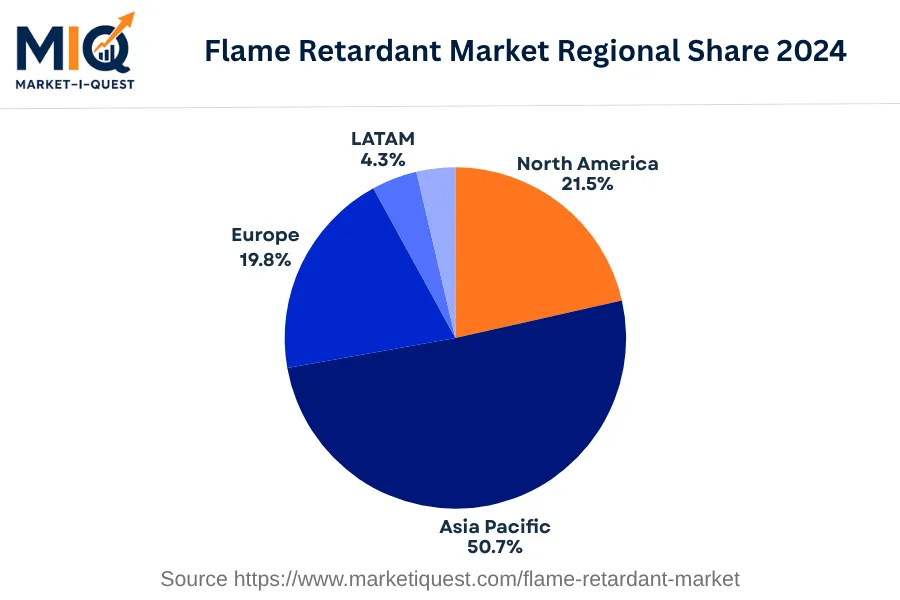
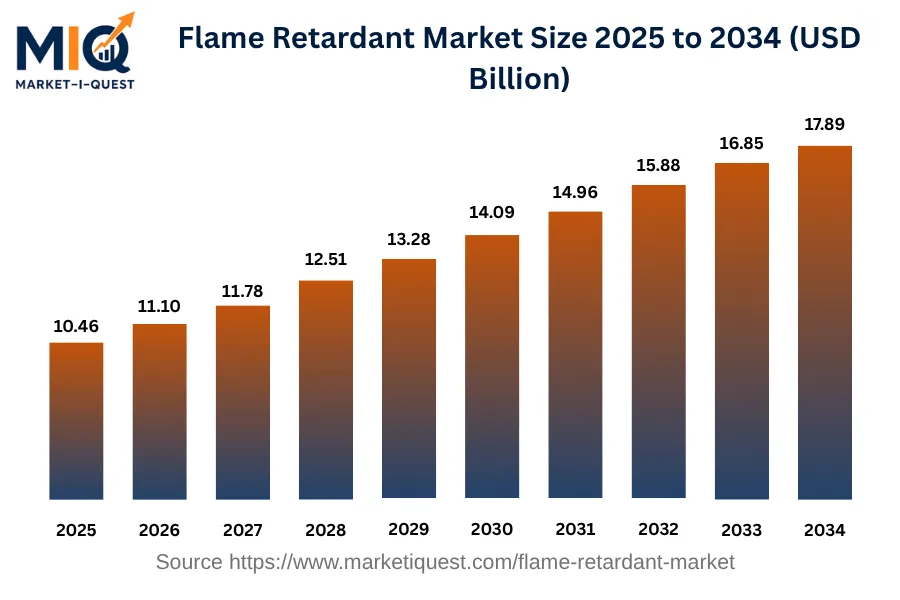
The Flame Retardant market was worth $10.46 billion in 2025, growing from $9.85 billion in 2024. Over the next decade, the market expands to $17.89 billion by 2034, corresponding to a Compound Annual Growth Rate (CAGR) of 6.15%. This progression indicates a steady and consistent escalation, with the market building on its solid foundation established early in the period. This growth is primarily due to the increasing use and demand for materials embedded with flame retardants for safety and fire prevention globally. Concluding with a look at regional shares in 2024, the Asia Pacific region dominated with a commanding 50.7% of the market. North America followed with a share of 21.5%, while Europe held 19.8%. The smaller shares were attributed to Latin America and Middle East & Africa, with 4.3% and 3.7% respectively. This allocation signifies the varying demand and use of flame retardants across different regions worldwide.

Key Takeaways

  • By Product Type - Halogenated held a major share in 2024.
  • By Application - PVC dominated the Flame Retardant Market in the base year.
  • By End-User Industry - Building & Construction led the market with its substantial growth.
flame-retardant-market market size

Key Driving Factors

Strict Implementation of Safety Standards in the Construction Sector

The growth of the flame retardant market is greatly influenced by the strict implementation of safety regulations and building codes in the construction sector worldwide. Various international and regional building regulation bodies, such as International Code Council (ICC) and European Committee for Standardization (CEN), mandate the use of flame retardants in building materials. These norms and codes are meant to enhance the fire resistance of buildings and prevent building structure collapses. In wake of growing urbanization and increasing incidents of fire accidents, these building codes are seeing stricter enforcement. This, in turn, pushes product adoption and drives growth in the flame retardant market.

Growing Emphasis on Fire Safety in the Automotive Industry

Another salient factor driving the flame retardant market is the increased emphasis on fire safety within the automotive industry. With vehicle manufacturers prioritizing safety enhancements, flame retardants are increasingly used in various car components including seats, door panels, and wiring harnesses. This is more crucial for electric vehicles where the use of flame retardants is extensive due to the higher risk of electrical fires. Moreover, regulatory bodies such as National Highway Traffic Safety Administration (NHTSA) regularly enforce fire safety regulations that necessitate the use of flame retardants in vehicles. This focus on fire safety and regulatory compliance in the automotive sector supports the escalation of the flame retardant market.

Market Evolution by Timeline

2019-2023
During this period, buyers in the Flame Retardant Market were primarily manufacturers of construction materials, textiles and electronics, driven by global safety regulations. Supply primarily revolved around halogen, phosphorus-based flame retardants, and new types such as nanocomposites. Integrating these types into product manufacturing faced initial hurdles due to compatibility issues. Regulations, such as EU's REACH standards, dictated market behavior. They promoted environmentally-friendly flame retardants and restricted use of certain hazardous substances. Commercial models were centered around long-term contracts to ensure steady supply. Pricing remained fairly stable, influenced by the cost of raw materials. The primary risk was dependency on non-renewable raw materials, notably phosphorus, leading to potential supply chain disruptions.
2024
In 2024, construction materials manufacturers were the major buyers followed by the automotive industry due to stringent safety standards. Phosphorus-based and mineral flame retardants led the supplies with better integration into products easing past constraints. Several countries adopted the EU's REACH standards leading to widespread demand for safer retardants. Contracts were largely upfront purchases in bulk given the increased demand. As a response to fluctuating raw material prices, contractual agreements came with price adjustment clauses. A key risk was inconsistent raw material supply, mainly from China which dominated phosphorus mining, endangering the market stability.
2025-2029
By this period, the automotive and aerospace sectors significantly contributed to the demand augmented by safety regulations adoption globally. Nanocomposites and intumescent flame retardants saw increased use, aligning with technology-driven manufacturing processes. Regulatory front saw more stringent fire safety measures adopted by countries like India and China. Products under subscription-licensing models were introduced, providing regular updates for compliance with evolving safety standards. Volatile raw material prices led to providers exploring hedging contracts to protect against massive fluctuations. Adapting to more strict emission regulations posed as a probable risk.
2030-2034
Towards this period, demand grew with electronic manufacturers being the leading buyers due high-end product proliferation. Advanced flame retardants, such as reactive and polymer blends, saw mainstream adoption. Further, nano-enhanced flame retardants gained prominence due to better fire protection and integration capabilities. Progressive regulations like USA's Consumer Product Safety Commission's STURDY act influenced the market dynamics. Subscription-licensing models became notably prevalent, reducing risks related to legislative changes. Pricing evolved to value-based, taking into account the sophistication and safety-score of the product. The threat of potential raw material scarcity continued with solutions gravitating towards recycling and circular economy.

Future Market Outlook

Future Opportunities

Considering the current landscape, the flame retardant market presents numerous future opportunities anchored in existing regulations and consumer preferences. The rise of electric vehicles, highlighted by Tesla's increasing production rates since 2020, has spurred the automotive industry to incorporate advanced flame retardants in battery packaging and components to meet stringent fire safety standards. Similarly, as building regulations tighten globally—exemplified by the recent updates to the NFPA 5000 and local building codes in Australia—there is a growing need for flame-retardant materials in construction, especially in high-rise developments. The aerospace sector is also exploring flame retardant solutions as evidenced by Boeing’s recent initiatives to enhance material safety standards in their aircraft manufacturing processes. Furthermore, the growing trend of smart homes and the Internet of Things (IoT) is prompting the demand for fire-resistant materials in new technologies, encouraging collaborations among different sectors. The launch of new flame-retardant products that comply with the 2021 ASTM D6413 standard reflects a proactive market response to meet performance benchmarks set forth by industry guidelines. Additionally, the perceived safety concerns related to traditional flame retardants are leading to an uptick in research on bio-based alternatives, as seen in recent projects funded by various governmental agencies, indicating a clear trajectory towards more sustainable materials in response to regulatory pressures and consumer trends.

Segmentation Analysis

By Product Type

The market is divided into subsegments including Non-Halogenated and Halogenated. Halogenated accounted for the largest revenue share while Non-Halogenated is expected to grow at the fastest CAGR during the forecast period.

Largest Revenue Share

Halogenated

Market Share Leader

The Halogenated subsegment leads the market in terms of revenue due to a variety of factors. For one, halogenated products typically have a wider range of applications compared to non-halogenated substances, making them a go-to option for industries with diverse needs. They are also preferred for their performance characteristics, offering superior thermal stability and mechanical resistance. Higher pricing compared to non-halogenated products also contributes to revenue. Geographically, developed markets play a crucial role in driving demand for halogenated products. Here, established industries prefer these products for their proven efficiency and reliability. Regulatory aspects also work in favor of Halogenated products, with certain industries mandating their use due to safety requirements. Despite potential concerns over environmental impact, the transition to non-halogenated alternatives is limited by high switching costs and lack of practical alternatives. In this context, given the purchasing criteria, traditional distribution channels continue to dominate the sales.

Fastest CAGR

Non-Halogenated

Forecast Period Growth Leader

Despite currently accounting for a smaller share of the market, Non-Halogenated products are projected to experience the fastest CAGR. Driving this growth are emerging trends toward environmental sustainability and strict regulations regarding the use of halogenated substances due to their potential toxicity. This shift creates a rising demand for safer, non-halogenated alternatives. Capital investment in research and development of these products is accelerating, with companies increasingly recognizing their market potential. Potential partnership opportunities with environmentally conscious industries serve as another growth catalyst. While barriers to adoption exist due to higher production costs and performance concerns, advances in technology and broader industry collaboration are likely to offset these challenges. However, near-term risks include potential supply chain disruptions and initial customer hesitance. It’s important to note, this outlook is based on the assumption of continuing regulatory pressures against halogenated substances.

By Application

The market by application includes subsegments such as Polyolefins, PVC, Epoxy Resins, and Others. Among these, PVC accounted for the largest revenue share while Polyolefins is projected to grow at the fastest CAGR during the forecast period.

Largest Revenue Share

PVC

Market Share Leader

Polyvinyl Chloride, known as PVC, holds the largest revenue share. This is primarily driven by its broad range of applications in various sectors. PVC's flexibility, durability, cost-effectiveness, and resistance to environmental degradation makes it a preferred choice for multiple applications such as flooring, roofing, pipes and fittings, and insulation. Moreover, it is widely used in the construction industry, which is witnessing substantial growth, especially in developing economies. The increase in infrastructural developments and advancements in PVC manufacturing techniques have further fueled its demand. Regulatory advocacy for environmentally friendly products and standards for construction materials has pivoted towards PVC due to its recyclability. Its robust supply chain, coupled with strong distribution channels, has eased access to the market, making it a dominant player in terms of revenue. However, fluctuations in raw material prices may pose a challenge to revenue growth.

Fastest CAGR

Polyolefins

Forecast Period Growth Leader

Polyolefins is the fastest-growing segment owing to its diverse utility, cost-effectiveness, and eco-friendliness. These lightweight, durable, and resistance-optimized polymers are largely used in the packaging industry, which is experiencing a sharp growth curve due to rising e-commerce platforms and consumer goods sales. Furthermore, advancements in technology and increased Capex in R&D have led to the development of bio-based polyolefins, propelling the growth in the environmentally-conscious era. The rapid increase in demand from the automotive sector, which uses polyolefins for lightweight vehicle components to reduce carbon emissions, is another driving factor. However, the volatility of crude oil prices and availability of alternatives could act as barriers to adoption. Partnerships and acquisitions among key market players are expected to overcome these barriers, facilitating the penetration in emerging markets and their expected rapid growth.

By End-User Industry

The market is divided into subsegments including Building & Construction, Electrical & Electronics, Transportation, Textiles & Furniture, and Others. Among them, the Building & Construction subsegment accounted for the largest revenue share while the Electrical & Electronics subsegment is expected to grow at the fastest CAGR during the forecast period.

Largest Revenue Share

Building & Construction

Market Share Leader

The Building & Construction sector stands out as the largest revenue contributor in 2024. This predominance can be explained by several factors. The ever-present requirement for infrastructure, whether for residential or commercial applications, is a major driving force. In both developing and established markets, urbanization and population growth are hastening the need for new constructions. Sustainability policies are pushing for more efficient building materials and solutions, steering the industry towards continuous growth. Regulatory norms also favor the construction industry with initiatives for both the public and private sectors, assuring an ongoing demand. Other significant factors include durability and safer building materials, cost-efficiency in materials, and the convenience element that some products bring to the construction process. These features are vital when assessing purchasing criteria resulting in continuous high consumption from this subsegment.

Fastest CAGR

Electrical & Electronics

Forecast Period Growth Leader

The Electrical & Electronics subsegment is forecasted to grow at the fastest CAGR during the forecast period. This rapid growth is driven largely by technological advancements in the consumer electronics and automotive sectors, particularly in economies with strong technology adoption inclinations. The miniaturization of electronic components, coupled with increasing demand for devices with greater operational efficiency, assists in driving this growth. In addition, the rising proliferation of Internet of Things (IoT) and high-speed communication technology trigger an increased demand for advanced electronic components. However, the subsegment could face barriers, such as regulatory hurdles and high initial investment. Intellectual property rights issues and high capital expenditure could also pose notable challenges. Nevertheless, partnerships, research collaborations, and government initiatives in technologically advanced nations could potentially alleviate these barriers, catalyzing growth in the subsegment.

Competitive Analysis

Key Market Players

Manufacturers / OEMs

BASF SE
Germany
Albemarle Corporation
US
Clariant AG
Switzerland

Key Suppliers & Raw Materials

Lanxess AG
Germany
AkzoNobel N.V.
Netherlands
Arkema Group
France

Distributors, Integrators & Channel Partners

DuPont de Nemours, Inc.
US
Solvay SA
Belgium
Perstorp Holding AB
Sweden

Porter’s Five Forces Analysis

This analysis evaluates the competitiveness and attractiveness of the Flame Retardant Market.

Supplier Bargaining Power

Medium

Suppliers have control over raw materials pricing, but buyer concentration affects power balance.

Buyer Bargaining Power

High

Large buyers with high demand influence pricing and contractual terms.

Threat of Substitutes

Low

Strict safety standards and performance requirements limit substitute products in the market.

Threat of New Entrants

Medium

High capital investment and technological proficiency can create entry barriers for new companies.

Competitive Rivalry

High

Several major players exist, making the market highly competitive with price and innovation competition.

Regional Analysis

Geographic market dynamics and growth opportunities across key regions

Global Market Outlook

flame-retardant-market market regional share

North America

In 2024, the North American flame retardant market experienced varied dynamics driven by demand factors, regulations, and evolving technology. Greater demand was observed from key sectors including manufacturing, construction, and the automotive industry, motivated by stringent safety standards and regulations. Investment into innovative, eco-friendly flame retardants surged significantly in the U.S., while Canada emphasized technology adoption, moving toward smarter, more effective solutions. Mexican manufacturers sought to streamline supply dynamics and stabilize pricing to compete effectively in the market.

Consumer trends towards safer, greener products heavily influenced market behavior. The U.S. market saw an increase in demand for halogen-free flame retardants due to health concerns associated with traditional alternatives. In Canada, product innovation became paramount, with companies striving to produce high-performance, eco-friendly flame retardants. Meanwhile, Mexico experienced shifts in buyer behavior towards cost-effective, efficient products. Amidst these trends, there was notable consolidation within the market. Acquisition activity aimed at gaining technological advantage was prevalent in the US and Canada, promoting the product innovation trend. Regulatory enforcement in response to rising environmental concerns drove standardization, particularly in sectors like construction and electronics, further intensifying the competition. All these factors underpinned the dramatic changes within the flame retardant market in North America in 2024.

Asia Pacific

In 2024, the Asia Pacific Flame Retardant market observed cohesive dynamics propelled by diverse factors across leading economies. Regulatory norms, particularly in China and Japan, had been pivotal, driving manufacturers to incorporate flame retardants into their products ranging across sectors like construction, electronics, and automotive. Particularly in India and key ASEAN markets, heightened investment in infrastructure development and the resultant surge in demand for electrical and electronics goods further invigorated the market. Meanwhile, technological adoption in flame retardant production, particularly in South Korea and Australia, led to improved efficiency and pricing benefits for the supply side.

Responding to these drivers, discernable trends emerged within the market. In China and Japan, an increase in demand for eco-friendly flame retardants could be observed, reflecting nuanced consumer behavior. Notably, in Australia, there was recognition of new channel dynamics with the surge in online retailing of flame retardant materials. In terms of policy enforcement, stricter standards in South Korea and India further influenced the market configuration. Moreover, selective partnerships and M&A activity, particularly within the Chinese and Japanese markets, played a significant part in shaping up the competitive scene in the Asia Pacific flame retardant market. In sum, the market in 2024 exhibited a complex interplay of regulatory pressures, demand surges, and shifting consumer preferences.

Europe

In 2024, the Flame Retardant Market in Europe experienced a significant surge due to several dynamic factors. Demand saw an uptick as industries like manufacturing, retail and utilities updated safety regulations, with a particular emphasis on flammability standards. Concomitantly, governments across Germany, the United Kingdom, France, and Benelux, driven by a need to enhance fire safety measures, pledged substantial investments towards the procurement and application of flame retardant materials. Innovations in technology were widely adopted in Italy and Spain, where supply chains effectively adapted to include newly developed fire-resistant products. However, despite increased demand, volatility in raw material prices led to a complex pricing model that impacted the market dynamics.

In the face of these driving factors, several trends emerged within the European market, notably changes in buyer behavior. Customers started prioritizing products manufactured under stringent fire safety standards and policies, leading to a shift towards certified materials across all sectors. To stay competitive, several companies engaged in M&A, following the model set by Central and Eastern European firms. Enhanced policy enforcement was observed in the Nordic countries, resulting in increased usage of flame retardant products within government, healthcare and utility sectors. Lastly, the distribution channel experienced a shift as online platforms became the preferred medium of purchase for flame retardant materials.

Latin America

In 2024, the Flame Retardant Market in Latin America (LATAM) marked substantive growth influenced by multiple drivers and trends. Regulatory pressures mandating enhanced fire safety in construction, automotive, and electronics industries propagated increased demand. Purposeful investments from major companies like BASF, Clariant, and ICL Industrial Products further stimulated flame retardant industry growth. Advances in technology and adoption of non-halogenated flame retardants in response to strict ecological norms played a significant role. Supply dynamics were largely shaped by China's export policies, whereas surging energy and raw material prices escalated production costs.

Various trends shaped LATAM's flame retardant market in 2024. Buyer behavior reflected a preference for eco-friendly solutions, complimenting the shift towards sustainable, effective flame retardants in manufacturing sectors. E-commerce platforms gained traction as key distribution channels, while partnerships and Mergers and Acquisitions (M&A) activities intensified market competition. Policy enforcement and standardization were particularly visible in Mexico and Brazil, multiplying product conformity to safety regulations, while Argentina, Colombia, Chile, and Peru exhibited substantial growth in the industrial, retail, and utilities sectors. In summary, the economic, technological, and regulatory landscape fashioned a burgeoning Flame Retardant Market in Latin America during the base year 2024.

Middle East & Africa

In 2024, the flame retardant market in the Middle East and Africa witnessed significant growth driven by various factors. Stricter government regulations on fire safety in countries like Saudi Arabia, United Arab Emirates, and Qatar demanded higher usage in construction, telecom, and oil and gas sectors. This was complemented by the rapid deployment of advanced technologies in manufacturing industries across Egypt, Nigeria, and Kenya, which necessitate the increased use of flame retardants. Key trends shaping market dynamics included shifts towards eco-friendly flame retardants catalysed by increasing environmental awareness and policy enforcement. The trend was particularly noticeable in the construction industry in Israel and South Africa. Additionally, buyer preference for products adhering to international safety standards became more predominant. This was largely motivated by a spate of fire incidents in manufacturing units across the region, thereby increasing pressure on manufacturers to ensure stringent safety measures.

In terms of channel dynamics, vendor partnerships with local suppliers grew in 2024, offering opportunities for market penetration, particularly in countries such as Nigeria and Kenya where accessibility was an issue. Government sectors, especially in countries like Saudi Arabia and UAE, emerged as significant customers due to large-scale public infrastructure projects requiring substantial quantities of flame retardants that meet high safety standards. Overall, regulatory landscape, technology adoption, and user preference largely drove and shaped the flame retardant market in the Middle East and Africa in 2024.

Recent Industry Developments

Latest market innovations, product launches, and strategic initiatives

July 2026

LX Hausys launched the LX Z:IN flame-retardant board in Korea, a wall finishing material that attaches a flame-retardant interior film to medium-density fiberboard (MDF), passing the flame-retardant performance test by the Korea Fire Institute (KFI).

January 2026

CAI Performance Additives launched ST-MCA-H, a high-efficiency halogen-free flame retardant engineered to deliver UL-94 V-0 performance at significantly lower loadings in nylon (PA6 and PA66) applications.

Frequently Asked Questions