
Fixed Wing Air Ambulance Service Market Snapshot

Key Players

  • Air Methods Corporation (US)
  • Acadian Companies (US)
  • REVA Inc. (United States)
  • Babcock Scandinavian Air Ambulance (Sweden)
  • Bundeswehr (Germany)
  • Rega Swiss Air Rescue (Switzerland)
  • Airmed International (US)
  • IAS Medical (United Kingdom)
  • Air Alliance Express AG (Germany)
  • Jet Rescue Air Ambulance (Mexico)

Market Size

Base Year 2024
$8.53 Bn
CAGR
10.58%
Forecast 2034
$23.32 Bn

Market Segments

By Service
  • Medical Evacuation and Repatriation
  • Medical Escort Service
By Service Model
  • Community-Based
  • Hospital-Based

Market Dynamics

Drivers
  • Increasing healthcare emergencies
  • Advancements in medical transportation technology
Restraints
  • High operational costs
  • Insufficient infrastructure availability
Opportunities
  • Increasing healthcare expenditure
  • Rising global demand for emergency medical services

Market Size

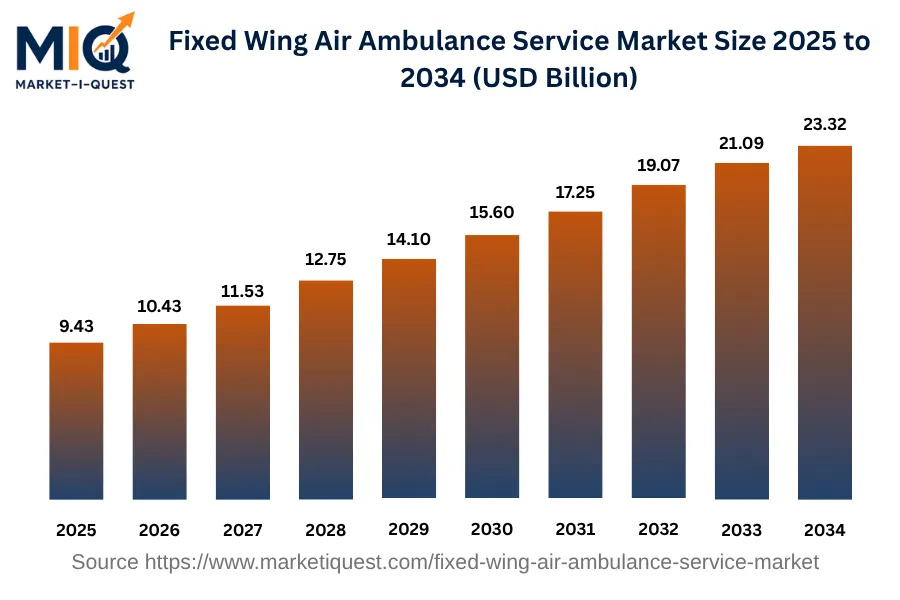
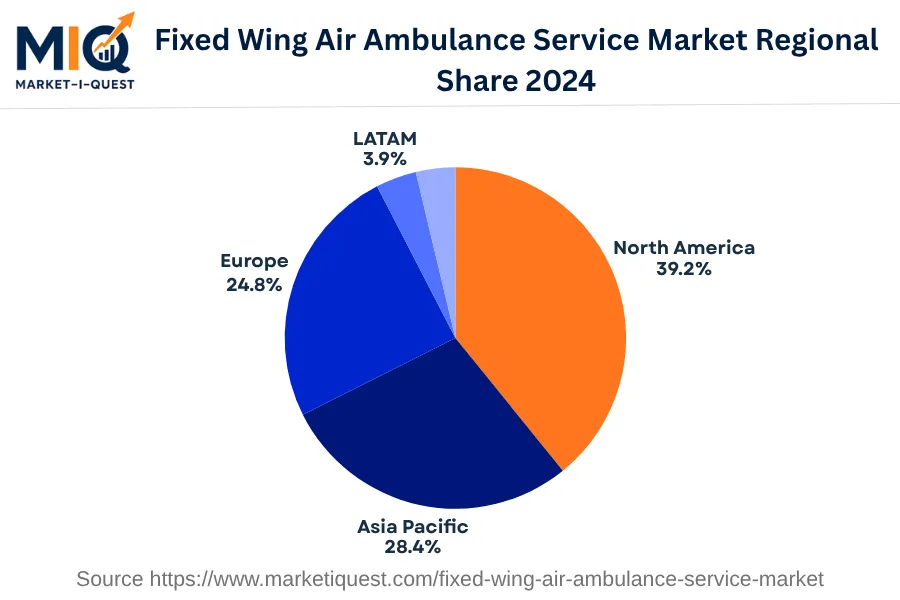
The Fixed Wing Air Ambulance Service Market was valued at USD 9.43 billion in 2025 and is projected to grow to USD 23.32 billion by 2034, achieving a CAGR of 10.6%. The market displayed robust growth from its value of USD 8.53 billion in 2024, propelling ahead over the next decade to nearly triple its value by 2034. This growth pattern is underpinned by the increasing prevalence and demand for advanced emergency medical services throughout the globe, thus stimulating the market's expansion. At the regional level, the market was distributed as follows in 2024: North America held 39.2% of the market, followed by the Asia Pacific region with 28.4%, Europe with 24.8%, LATAM with 3.9%, and MEA with 3.7%. This diversification of the market share points towards a widespread and growing need for air ambulance services across various geographic regions.

Key Takeaways

  • By Service - Medical Evacuation and Repatriation is holding largest share in the market
  • By Service Model - Hospital-Based approach held a dominant place accounting for a major share in 2024.
fixed-wing-air-ambulance-service-market market size

Key Driving Factors

Rise in Emergency Medical Services Related Legislation

A noticeable driving factor for the Fixed Wing Air Ambulance Service Market is the introduction and enforcement of more rigorous legislation related to Emergency Medical Services (EMS). Policymakers globally are implementing stricter standards and regulations aimed at ensuring prompt, reliable, and high-quality healthcare services for emergencies. The more rigorous standards have necessitated the procurement of medical evacuation services like fixed wing air ambulances, especially in geographically challenging areas. As these legislative measures increase, so does the need for dependable air ambulance services, subsequently propelling the growth of this market.
Shift Towards Professional and Specialized Healthcare in Remote Areas

Another key driver for the Fixed Wing Air Ambulance Service Market is the shift in focus towards providing specialized and professional healthcare services in remote and least accessible areas. Healthcare providers are recognizing the need for rapid patient transfers for essential treatments in time-sensitive situations where every minute counts in saving a life. With land transport often unsuitable due to logistical complications, Fixed Wing Air Ambulances emerge as a reliable solution for reaching these areas quickly. This shift in healthcare delivery paradigm towards hard-to-reach areas boosts the demand for such specialized aircraft.

Market Evolution by Timeline

2019-2023
During this period, the fixed wing air ambulance service market mainly saw use in urgent patient transfer scenarios, predominantly across developed regions like North America and Europe. The use of advanced medical equipment, such as life-support systems onboard these aircraft, became a norm. FAA's regulations around air ambulance standards had a significant influence. Suppliers focused on partnering with hospitals for long-term contracts. However, high operating costs remained a challenge, forcing service providers to try different pricing models. Despite these costs, North American hospitals were typically ready to invest due to the speed of these services.
2024
During this year, there was a prominent shift in demand from the Middle East and Africa region, especially for the evacuation of patients from areas of conflict. Advanced systems for in-flight patient care were shipped by major market players. Regulations and policies around safety and operational efficiency became stricter. On the commercial side, many companies looked into cost-sharing models to make their services more affordable. The risk associated with volatile fuel prices, however, likely affected profitability and compelled some providers to consider alternative propulsion technologies.
2025-2029
The next five years saw fixed wing air ambulance services extensively used in disaster management, particularly in Asia Pacific countries prone to natural calamities. Innovative technologies, such as telemedicine facilities in-flight, were piloted. The integration of these technologies was still in its early stages and faced scalability issues. In terms of regulation, green initiatives led to standards mitigating carbon emissions from fixed-wing air ambulances. Providers experimented with varying contract types, including subscription-based models, although profitability remained uncertain. The risk of prices increasing due to stricter environmental standards was a continuing concern.
2030-2034
In this period, market demand expanded to remote areas to cater to diverse patient needs. Technological advances saw more mature and streamlined in-flight telemedicine services. However, communication infrastructure limitations in remote areas posed challenges. Regulatory standards strongly pushed for 'green' aircraft reducing the industry's carbon footprint. To adapt to these standards, providers likely explored electric-powered options, despite high costs. Commercially, risk-sharing contracts became commonplace as a response to high investment risks. The practical hurdle of charging infrastructure for electric aircraft took center stage, indicating possible collaborations with energy companies.

Future Market Outlook

Future Opportunities

The future of the fixed wing air ambulance service market is heavily influenced by demographic changes and evolving healthcare policies across various regions. By 2025, the aging population in countries like Japan is projected to create a higher demand for medical transport services due to increased healthcare needs. In the United States, the Affordable Care Act's emphasis on improving patient outcomes has opened avenues for air mobility solutions to expedite emergency responses, with organizations like the Air Ambulance Industry Association advocating for expanded services. Furthermore, partnerships between air ambulance operators and healthcare systems are on the rise; for instance, rural hospitals are collaborating with air ambulance services like Life Flight Network to enhance access to specialized care. The ongoing development of telehealth services, driven by the COVID-19 pandemic's acceleration of remote consultations, presents another opportunity, as patients en route can receive initial assessments before arrival. Licensing frameworks from regulatory bodies, such as the FAA and EASA, are evolving, paving the way for new operational standards, including the potential for autonomous air ambulances in the future. The exploration of novel business models, such as subscription-based transport services, is becoming mainstream among operational models based on patient needs. Overall, these trends indicate that air ambulance services are advancing towards more integrated and efficient healthcare delivery solutions, aligning with broader public health priorities.

Segmentation Analysis

By Service

The market is divided into subsegments including Medical Evacuation and Repatriation, and Medical Escort Service. Medical Evacuation and Repatriation accounted for the largest revenue share while Medical Escort Service is expected to grow at the fastest CAGR during the forecast period.

Largest Revenue Share

Medical Evacuation and Repatriation

Market Share Leader

The largest revenue in the service segment comes from Medical Evacuation and Repatriation, due to various factors. The rising incidence of natural disasters and the hike in global travels drive the demand for this service. In many tragic incidents, patients often require immediate, international emergency medical evacuation and repatriation. Besides, growing geopolitical tensions and overseas operations by multinationals have led to a higher demand for medical evacuation and repatriation services. Additionally, high price points for each service due to the cost-intensive nature of these essential services, including professional medical care, specialized transportation equipment, and logistics planning, also contribute towards the high revenue generation of this subsegment. However, this same high price might represent a barrier for more widespread use of these services, leading to growth potential in the sector if cost-optimization strategies are implemented.

Fastest CAGR

Medical Escort Service

Forecast Period Growth Leader

Medical Escort Service is projected to be the fastest-growing segment in the market. While not as large in revenue as Medical Evacuation and Repatriation, this sector shows impressive growth potential. This is likely due to the fact that medical escort services are typically less expensive, making them more accessible to a wider range of consumers. As air travel continues to grow, more and more travelers are seeking ways to ensure their medical safety during their journeys, and medical escort services provide an affordable and effective solution. Another driver of growth for the medical escort services is the ageing demographic. As the population ages, the demand for medical assistance during travel is expected to increase. The main barrier to adoption in this area is public awareness, as many potential customers are currently unaware of the options available to them. However, as awareness increases, it is expected that the CAGR for Medical Escort Service will continue to rise.

By Service Model

The market is divided into subsegments including Community-Based and Hospital-Based services. In the base year 2024, Hospital-Based accounted for the largest revenue share, while Community-Based is expected to grow at the fastest CAGR during the forecast period.

Largest Revenue Share

Hospital-Based

Market Share Leader

Hospital-based services emerged as the largest revenue generating subsegment in 2024. This can be attributed to multiple factors. Firstly, hospital-based care can provide a comprehensive range of medical services under one roof given the sophisticated infrastructure and diverse professional staff. Patients often prefer this model due to accessibility of diverse health services, making it a lucrative segment. Secondly, the cost per service in hospitals is generally higher due to the overhead expenses associated with running a large establishment. Thirdly, with increased awareness about health, preventive check-ups and regular screenings have become more common, contributing to hospital revenues. Lastly, regulations often tend to favor hospital-based decisions through incentivized policy structures. The purchasing decision by clients typically leans towards the hospital-based model due to its potential for extensive and instant care. Therefore, despite the high switching cost, the hospital-based segment generates the most revenue.

Fastest CAGR

Community-Based

Forecast Period Growth Leader

Community-Based service segment shows the fastest growth in terms of CAGR. The model finds itself in a beneficial position due to current dynamics including an aging population, advancements in telehealth technology, and increased governmental focus on community-centered care. Their growth is essentially driven by the willingness of individuals to receive care in familiar environments and at lower costs, thus overcoming adoption barriers. Ongoing partnerships and collaborations among different care providers are supporting the coordination and delivery of care at community level. Challenges remain in the form of financing and scalability. But with the aid of capital expenditures and ad-hoc policy changes favouring this sector, the community-based segment is primed for accelerated growth, presenting an opportunity that market shareholders cannot ignore.

Competitive Analysis

Key Market Players

Manufacturers/OEMs

Pilatus Aircraft
Switzerland
Beechcraft Corporation
US
Cessna Aircraft Company
US

Key Suppliers & Raw Materials

DuPont
US
Boeing
US
GE Aviation
US

Distributors, Integrators & Channel Partners

FlightSafety International
US
BRS Aerospace
US

Porter’s Five Forces Analysis

A structured review of the competitive forces affecting the Fixed Wing Air Ambulance Service Market.

Supplier Bargaining Power

Medium

Locked-in contracts with aircraft manufacturers can limit supplier influence.

Buyer Bargaining Power

Low

High switching costs and immediate life-or-death needs limit buyer bargaining power.

Threat of Substitutes

Low

No direct substitutes are available, though slower ground-based services pose a limited threat.

Threat of New Entrants

High

Significant capital investment and regulatory hurdles present barriers to entry.

Competitive Rivalry

Medium

The essential service nature and geographic specificity of competitors limit direct rivalry.

Regional Analysis

Geographic market dynamics and growth opportunities across key regions

Global Market Outlook

fixed-wing-air-ambulance-service-market market regional share

North America

In 2024, the Fixed Wing Air Ambulance Service Market in North America was significantly driven by interest from healthcare entities and the necessity of emergency medical transport in distant regions. Increase in healthcare expenditure by the United States, Canada, and Mexico amplified the demand for these services, with organizations prioritizing access to rapid medical assistance. Government regulations, particularly in the U.S., also encouraged investment by mandating air ambulance coverage in health insurance plans. Moreover, advancements in aviation and medical technology led to improved service capabilities, further propelling the market growth.

Market trends were influenced by patient demographics and shifts in service delivery models. Seniors citizens and those with chronic illnesses represented a significant portion of the patient population served by air ambulances, indicating a correlation with aging North American demographics. Additionally, partnerships and mergers among air ambulance service suppliers and healthcare organizations reshaped the market landscape by facilitating service integration and enhancing value proposition. Lastly, rigorous policy enforcement to maintain quality standards was evident, reinforcing patient safety and quality of care. For instance, the Federal Aviation Administration's rules in the U.S. explicitly detailed operational specifications, fuelling transparency and elevating customer confidence in the market. This regulatory environment, in combination with evolving market dynamics, characterized the 2024 Fixed Wing Air Ambulance Service Market in North America.

Asia Pacific

In 2024, the Fixed Wing Air Ambulance Service Market in the Asia Pacific experienced dynamic growth primarily shaped by urgent healthcare needs, sophisticated delivery mechanisms, and revolving market regulations. Demand increased as countries like China and India addressed their densely populated urban and remote regions' urgent healthcare needs with high speed fixed wing air ambulances for efficient patient transport. Technological integrations in Australia and South Korea such as advanced medical equipment and telehealth facilities in these aircraft fueled market growth. Japanese government's increased funding for critical healthcare infrastructure and services, particularly emergency medical services, also drove the market expansion in the region.

Market trends witnessed variation based on evolving healthcare standards and changing consumer behavior. With patients and healthcare providers prioritizing effective emergency response services, there was an increased acceptance of air ambulance services in major Asia Pacific markets. A spurt in partnerships among air ambulances, hospitals, and insurance companies in ASEAN countries like Thailand and Malaysia were prominent. China rolled out comprehensive standards for air medical transport improving the service quality. In response to complex healthcare needs, more specialized services like neonatal emergency transport became increasingly common in India and Australia. Governments and commercial sectors were the predominant customers of these services, ultimately contributing to a vibrant Fixed Wing Air Ambulance Service Market in the Asia Pacific in 2024.

Europe

In 2024, the Fixed Wing Air Ambulance Service Market in Europe maintains a crucial role within the continent's healthcare space. High demand for medical evacuation and repatriation, coupled with increased healthcare expenditure, primarily propels the market. Regulations favoring swift medical assistance in emergencies, notably in Germany and France, underscore the need for robust air ambulance services. Additionally, technological advancements improving response times and the efficiency of the service further drive market growth. The market sees a proclivity toward collaborative partnerships, illustrated by mergers and acquisitions between market leaders in the UK and Italy, aiming to expand service coverage. Customer preference shows a shift towards service providers offering comprehensive medical support en route, a trend particularly prevalent in the Nordics and Benelux region. Central and Eastern Europe demonstrate increased adoption of air ambulance services within government healthcare systems, recognizing its life-saving potential.

The key sectors engaging these services include government, healthcare and utilities, further mandating the market's continued relevance. For example, in Spain, the government contracted service providers to ensure uninterrupted care in remote locations. The enterprise sub-sector, including large-scale manufacturing and retail, also utilizes these services as a proactive safety measure, particularly in the UK and Germany. Despite differing regional specifics, the overarching market dependence on these services remains apparent across Europe.

Latin America

The Fixed Wing Air Ambulance Service Market in Latin America (LATAM) in 2024 saw significant growth due to a combination of demand factors, regulatory changes, investment influx, technological adoption, dynamic supply, and pricing structures. Drivers for this growth included increased demand for rapid, reliable medical transport, particularly in remote, underserved regions of Brazil and Argentina, coupled with governments' regulatory policies promoting such services. Investment from both public and private sectors, propelled by technological innovations, brought sophisticated medical equipment onboard air ambulances, therefore enhancing their emergency response capabilities.

Concurrently, market trends involved notable shifts in buyer behavior and service delivery mechanisms. Investment in technology led to the ability to reach previously inaccessible areas in countries like Colombia, Chile, and Peru, changing the way healthcare providers, insurance companies, and government agencies perceive air ambulance services. Private healthcare facilities showed a growing preference for air ambulance subscriptions, utilizing them as an added service for their premium clients. At the same time, partnerships and mergers among airlines, medical equipment suppliers, and healthcare providers emerged as a significant trend to ensure adequate supply and demand balance. Meanwhile, rigorous adherence to safety standards across the market remained prevalent due to both policy enforcement and commitment to patient safety.

Middle East & Africa

In 2024, the Fixed Wing Air Ambulance Service market in the Middle East and Africa showed notable expansion across key territories, fueled by specific demand factors, investments, and technological developments. Drivers such as rapid urbanization and increased healthcare expenditure in countries like Saudi Arabia, United Arab Emirates, Qatar, and Egypt led to heightened demand. Government initiatives in healthcare infrastructure development and investments, particularly in Saudi Arabia and the United Arab Emirates, bolstered the supply dynamics. The adoption of advanced technologies in the healthcare sectors of South Africa, Nigeria, Kenya, and Israel accelerated market expansion.

Trends that shaped the market included striking shifts in buyer behavior with an increasing preference for quality healthcare services, especially in regions like Qatar, Egypt, and Israel. Technological innovations such as real-time tracking and telemedicine services redefined the product landscape. Strategic partnerships with the healthcare sector, along with increased M&A activities, were notable in markets like Saudi Arabia and United Arab Emirates. The shift towards stringent policy enforcement in healthcare service quality was particularly noticeable in South Africa, Nigeria, and Kenya. The primary end-users were government sectors, oil and gas corporations, healthcare facilities, and financially potent individuals seeking quality healthcare solutions.

Recent Industry Developments

Latest market innovations, product launches, and strategic initiatives

July 2026

Karnataka Chief Minister B.S. Yediyurappa launched South India’s first fixed-wing air ambulance service, operated by International Critical Air Transfer Team (ICATT) in collaboration with aviation technology firm Kyathi from the HAL airport in Bengaluru.

June 2025

Gama Aviation completed the acquisition of Capital Air Ambulance from Centreline on June 10, 2025. The transaction transferred Capital’s operational team and resources to Gama Aviation’s Special Mission strategic business unit, augmenting the Group’s fixed-wing air ambulance services in the UK.

Frequently Asked Questions