Fire Protection Materials Market Snapshot

Key Players

  • 3M Company (US)
  • Hilti Corporation (Liechtenstein)
  • R. STAHL AG (Germany)
  • Contego International Inc. (US)
  • Sherwin-Williams (US)
  • Isolatek International (US)
  • SKK Pte Ltd. (Japan)
  • Promat International NV (Belgium)
  • Knauf Insulation (Germany)
  • Tremco Incorporated (US)

Market Size

Base Year 2024
$5.39 Bn
CAGR
8.05%
Forecast 2034
$11.69 Bn

Market Segments

By Product
  • Sealants
  • Mortar
  • Spray
  • Sheets/Boards
  • Putty
  • Others
By End Use
  • Residential Construction
  • Commercial Construction
  • Industrial Construction

Market Dynamics

Drivers
  • Rising construction activities
  • Increasing fire safety regulations
Restraints
  • High manufacturing costs
  • Strict regulatory compliances
Opportunities
  • Growing construction industry
  • Increasing safety regulations

Market Size

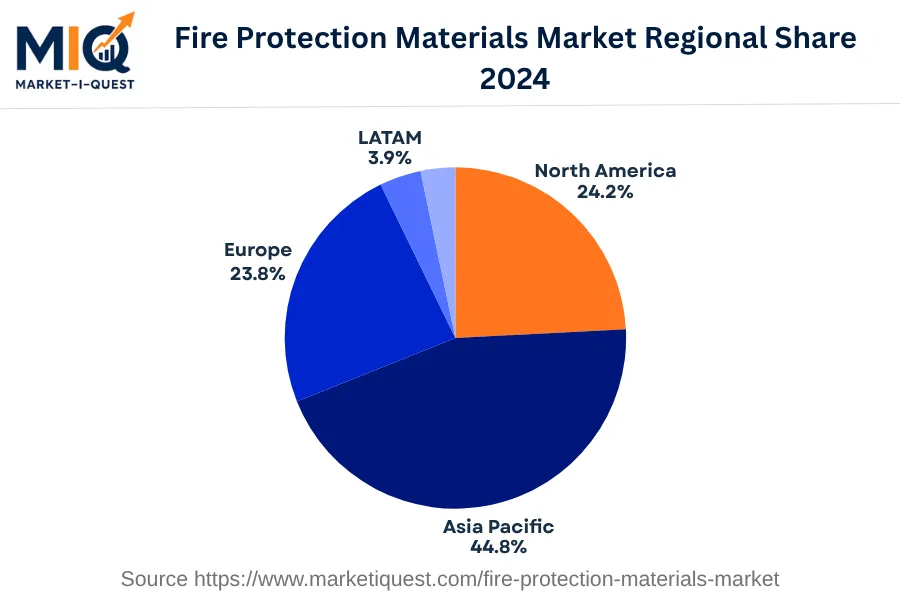
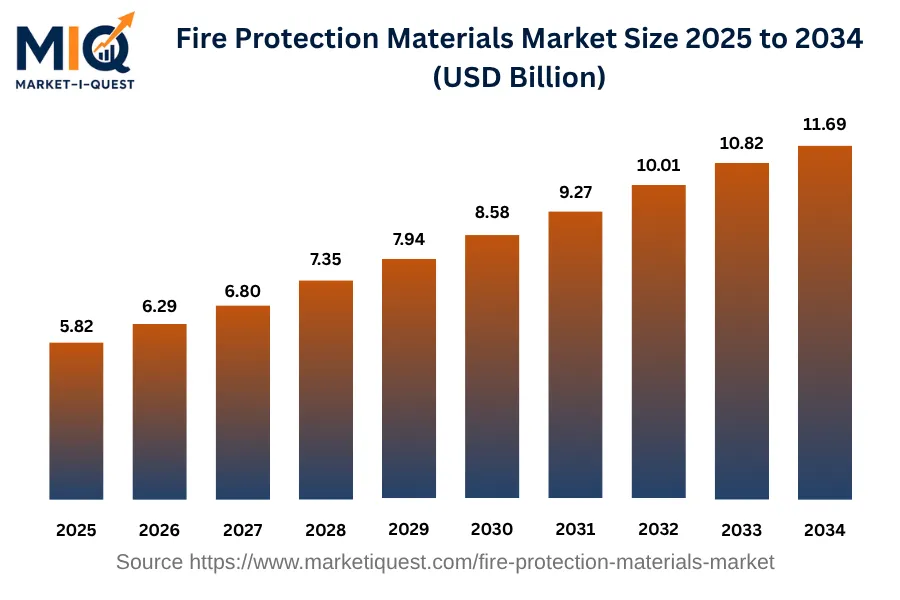
The Fire Protection Materials Market was valued at USD 5.82 billion in 2025, and it is projected to reach USD 11.69 billion by 2034, growing at a CAGR of 8.05%. This market experienced an incremental growth from USD 5.39 billion in 2024 to its value in 2025, indicating an increasing demand for these materials over time. This growth is attributable to the rising demand for fire protection materials, primarily driven by growing concerns over fire safety and the necessity to minimize fire-related casualties and property damage. Interestingly, in 2024, the regional shares of the Fire Protection Materials Market varied. The Asia Pacific held the majority, with a 44.76% share, followed closely by North America and Europe at 24.18% and 23.84% respectively. The LATAM and MEA regions closed out the list, holding 3.94% and 3.28% of the market share respectively.

Key Takeaways

  • By Product - Sealants held the dominant position accounting for a significant share in the base year.
  • By End Use - Commercial Construction led the market accounting for the highest share during the base year.
fire-protection-materials-market market size

Key Driving Factors

Stringent Fire-Safety Regulations

The ongoing revision and enforcement of stringent fire-safety building codes in construction by regulatory authorities are significantly driving the fire protection materials market. Bodies like the National Fire Protection Association (NFPA) in the United States and the European Committee for Standardization (CEN) in Europe have precise regulations stipulating the use of fire-retardant materials in building construction to prevent fires and limit their spread. These regulations are driven by increased awareness about the risks of fire accidents and are the primary factor prompting construction companies to integrate these materials into their practices, thus propelling the demand in the fire protection materials market.

Growth in the Aerospace Industry

The proliferating growth in the aerospace industry is another vital factor propelling the fire protection materials market. Commercial and defence aircraft, along with spacecraft, are required to be made from materials that are highly resistant to fire to ensure passenger and crew safety. This requirement is enforced by aviation authorities such as the Federal Aviation Administration (FAA) in the United States and the European Union Aviation Safety Agency (EASA). Growth in the aerospace industry, including the increasing production rates of commercial aircraft and rising defence budgets, directly influences the expanding use of fire protection materials, thereby driving the growth in this market.

Market Evolution by Timeline

2019-2023
During this period, we noted a considerable surge in demand for fire protection materials from the construction sector in Asia-Pacific regions, with China consuming the majority. Due to rapid urbanization and strict safety measures, builders increasingly sourced non-combustible materials, coatings, and sealants. On the supply side, technological advancement saw the introduction of materials that increased fire resistance in structural steel. However, fluctuating raw material prices posed a challenge. Fire safety regulations such as the European Union's EN standard 45545-2:2021 had a pervasive influence on the market. Commercially, manufacturers opted for partnerships for better market penetration. Price fixation remained a significant issue due to the raw material volatility. The market risk was heavily dependent on geopolitics affecting raw material access.
2024
In 2024, a significant demand shifter was the increasing importance of fireproof materials in marine settings amongst shipbuilders, primarily driven by trade network expansions. Developing countries output more fire-resistant materials due to rapid industrialization. However, manufacturing capacity constraints led to supply shortages. Regulations like SOLAS Convention 2024 amendments enforced stricter fire safety standards on ships, directing market trends. We also noted an increased preference for long-term contracts from manufacturers, ensuring pricing stability. Accessibility of key raw material sources continued to pose market risks, necessitating sourcing diversification.
2025-2029
During this period, the electric vehicle (EV) market played a crucial role as they necessitated high-performance fire protection materials, especially in North America and Europe. The adoption of advanced technologies like nano-coatings expanded the product offering. However, issues with scale-up hindered adequate supply. Stricter safety regulations in the EV domain, such as UN Regulation No. 100.2 influenced the market substantially. Manufacturers leaned more towards direct selling channels for commercial transactions. Price competition was rife due to the increase in the number of suppliers. Geopolitical factors impacting raw material availability still posed a risk.
2030-2034
The residential sector predominantly drove fire protection material demand in this period, primarily in developing regions like Africa and South Asia due to escalating housing needs. Technologically, efficient fire-protective materials were shipped in large quantities. Still, integration with other construction materials remained an issue. Stringent application of the International Residential Code (IRC) 2030 edition pushed for fire safety in homes, influencing market direction. Price competition became aggressive, with more manufacturers entering the market resulting in shorter contracts. The risk of price manipulation by large-scale raw material providers became evident, prompting calls for regulatory intervention.

Future Market Outlook

Future Opportunities

The current landscape of fire protection materials offers numerous avenues for growth and development due to stringent safety regulations and increased public awareness of fire hazards. Regulations by bodies like the National Fire Protection Association are increasingly emphasizing the use of advanced fire-resistant materials in building codes, especially in urbanizations found in countries such as the United States and Canada. As a result, companies like Hilti and fire safety institutions are participating in collaborative research projects to develop innovative materials that meet these rising standards. The rise in construction activities, particularly in Asia-Pacific nations like India and China, further propels the demand for enhanced fire protection solutions. Moreover, ongoing urbanization trends necessitate the retrofit of aging infrastructure, presenting opportunities for companies to offer sustainable fire protection systems that comply with modern regulations. The integration of fire protection materials with smart building technologies, such as smart sensors and automated alarm systems, is expected to gain traction, particularly in regions focusing on smart city initiatives. Notably, ongoing partnerships between manufacturers and technology firms are already being established, as seen in collaborations for developing next-gen fire detection systems. The increasing investment in R&D for bio-based fire-resistant materials aligns with environmental stewardship initiatives, allowing companies to cater to both safety and sustainability. Thus, the market is poised for an evolution driven by regulatory requirements and technological integration in upcoming years.

Segmentation Analysis

By Product

The market is divided into subsegments including Sealants, Mortar, Spray, Sheets/Boards, Putty, and Others, with Sealants accounting for the largest revenue share while Spray is expected to grow at the fastest CAGR during the forecast period.

Largest Revenue Share

Sealants

Market Share Leader

The Sealants subsegment is the leading revenue generator in this market due to its wide range of applications and indispensability in several industries. Specifically, sealants are extensively used in the construction sector for their unique ability to resist weather conditions, pressure, and temperature changes while maintaining physical stability. This makes them a preferred choice for sealing joints and openings, contributing significantly to their high demand. Moreover, the rising trend of green building and energy-efficient infrastructures globally encourages the use of sealants to retain indoor air quality, further driving their sales. The consistent advancements in sealant technologies aid in expanding their application areas into automotive, packaging, and electronics industries, among others. Lastly, the robust distribution channels, from brick and mortar stores to e-commerce platforms, ensure ubiquitous availability and higher sales of sealants. Note: this inference is based on typical market dynamics where products with wide applications and technological advancements often garner larger revenue.

Fastest CAGR

Spray

Forecast Period Growth Leader

Despite not being currently the largest revenue generator, the Spray subsegment is projected to experience the fastest growth during the forecast period. The primary driver for this growth rate is the rising trend towards automation and efficiency in the construction and automotive industries. Spray products offer quick application and fast drying times which significantly reduce the project timelines. Additionally, due to their even distribution, spray products provide a seamless, more consistent, and uniform output compared to traditional sealants or putty. Another catalyst for the growing popularity of spray products is changes in regulatory standards promoting safer and more environmentally friendly products. Spray products typically have lower VOC emissions and are often solvent-free, making them a preferred choice for industries aiming for greener operations. However, there could be near-term risks due to the relatively higher cost of these products and the need for special equipment for application, which might hinder adoption at a small scale or in developing regions. This projection assumes a continued push for efficiency and green practices in major industries.

By End Use

The market is divided into subsegments including Residential Construction, Commercial Construction, and Industrial Construction. Among these, Commercial Construction accounted for the largest revenue share, while Residential Construction is expected to grow at the fastest CAGR during the forecast period.

Largest Revenue Share

Commercial Construction

Market Share Leader

Among the subsegments in the end-use market, Commercial Construction holds the highest revenue share in 2024. This prominence can be associated with a combination of factors. Firstly, the commercial construction sector is often intertwined with the development of urbanization and economic growth. Commercial construction projects are usually large-scale investments that involve significant spending on various aspects ranging from planning to execution, yielding high revenues relative to residential and industrial constructions. Furthermore, the steady expansion of commercial activities such as business establishments, office spaces, and retail centers is a dominant driver for the growth. Geographically, regions with a booming economy and urban development likely contribute a significant share to the commercial construction revenue. Additionally, government regulations and policies that promote infrastructural and economic development often favor commercial construction, which in turn fuels demand and growth. The purchasing criteria in commercial construction are heavily leaned towards quality, safety, and sustainability which reflects in higher expenditure and thus higher revenue.

Fastest CAGR

Residential Construction

Forecast Period Growth Leader

Residential Construction is identified as the fastest-growing subsegment. A major driver behind this growth is the increasing global population, which inevitably fuels the need for housing and other residential structures. The need for urban housing, particularly affordable housing, has been a pivotal factor for growth in this segment. The rising trend of urbanization and a shift towards nuclear family setups are two trends that catalyze growth in this segment. Moreover, government policies favoring affordability and accessibility of housing for all also serve as a prominent catalyst. In terms of risks, funding and financial constraints could potentially slow down residential construction activities. Additionally, the adoption of environmentally-friendly construction methods remains a hurdle due to the cost implications. Nonetheless, technological advancements in construction methods and a shift toward sustainable green buildings, supported by favorable government regulations and partnerships with private builders, promise a strong growth outlook for the residential construction subsegment.

Competitive Analysis

Key Market Players

Manufacturers / OEMs

3M
US
Hilti Group
Liechtenstein
Rolf Kuhn GmbH
Germany

Key Suppliers & Raw Materials

Isolatek International
US
BASF SE
Germany
Akzo Nobel N.V.
Netherlands

Distributors, Integrators & Channel Partners

Rudolf Hensel GmbH
Germany
Sherwin-Williams Protective & Marine Coatings
US
Fire Protection Specialist
US

Porter’s Five Forces Analysis

This analysis delves into the competitive forces impacting the Fire Protection Materials Market.

Supplier Bargaining Power

Medium

Suppliers' power stems from the essential nature of their products for safety compliance in various sectors.

Buyer Bargaining Power

Low

Buyers are compelled by safety regulations and standards, limiting their negotiation power.

Threat of Substitutes

Low

Low substitution threat is due to high compliance demand and specific protection requirements.

Threat of New Entrants

Medium

Initial investment costs and market regulations can deter new market entrants.

Competitive Rivalry

High

Numerous established players, intense competition for market share and frequent technological advancements increase rivalry.

Regional Analysis

Geographic market dynamics and growth opportunities across key regions

Global Market Outlook

fire-protection-materials-market market regional share

North America

In 2024, North America's Fire Protection Materials Market witnessed robust activity driven by factors including demand growth, investment flow, and regulatory changes. Greater implementation of safety regulations in U.S., Canada, and Mexico bolstered the demand for fire protection materials, necessitating manufacturing enterprises to update their fire safety measures. Both public and private sectors have invested substantially in fire safety, propelling demand. Rise in construction activities across U.S., Canada, and Mexico, coupled with stringent fire safety regulations mandated by government bodies, have necessitated the increased use of fire protection materials. In addition, technological advancements have spurred the adoption of innovative, efficient materials, leading to product shifts in the market.

Consumer trends have also shaped the market landscape. Buyers in North America, particularly in sectors such as healthcare, utilities, and retail, have shown increased preference for technologically advanced, efficient fire protection materials. Furthermore, noticeable is the increase in partnerships and mergers & acquisitions, indicating firms' aspirations for market expansion and portfolio diversification. Finally, stringent policy enforcement has stressed the need for compliance, leading to a rise in demand for higher-standard fire protection materials across all sectors, from government institutions to manufacturing enterprises.

Asia Pacific

In 2024, the Fire Protection Materials Market in the Asia Pacific, accentuated by China, Japan, Australia, South Korea, India and key ASEAN markets, saw dynamic developments due to various drivers and trends. Market drivers included stringent government regulations such as China's 13th Five-Year Plan for the construction sector, spurring demand for fire protection materials. Rapid urbanization in India and the ASEAN region propelled investments in residential and commercial buildings, encouraging further market growth. A shift towards advanced technology and the adoption of innovative materials increased supply and created price competitiveness among manufacturers, stimulating the market.

On the trends front, increased buyer’s sensibility for safety fostered a preference for high-quality, fire-resistant building materials, driving standards upward across the Asia Pacific region. Market collaborations and M&A activities were prevalent, such as the partnership between Japan's Nippon Paint and IVM Chemicals to develop fire-resistant coatings. In terms of policy enforcement, countries like Australia rigorously monitored adherence to the National Construction Code, increasing the demand for compliant materials in the construction, manufacturing and healthcare sectors. As such, 2024 was marked by a surge in the demand for fire protection materials across diverse sectors in the Asia Pacific due to regulatory impetus, investment influx and technology adoption.

Europe

In 2024, the European Fire Protection Materials Market experienced significant shifts, primarily driven by tighter safety regulations and increased investments in the construction sector. Safety measures in residential and commercial buildings in countries like Germany and the United Kingdom showcased demand for fire-resistant materials. Similarly, the EU's stringent fire safety standards demanded a higher grade of fire protection materials, particularly influencing manufacturing dynamics in France, Italy, and Spain. Furthermore, technological adoption was seen in the Nordics, with smart materials offering enhanced fire protection, boosting the demand.

Concurrent trends emerged in the market as well. A prominent shift in buyer behaviour was noted towards eco-friendly fire protection materials, notably in the government and utilities sector. The industry also saw product innovation in terms of nanotechnology-infused fire-resistant materials, widely adopted in the manufacturing sector across Benelux. Changes in channel dynamics were evident, with online distribution of fire protection materials gaining prominence across Central and Eastern Europe due to the pandemic. Moreover, the policy enforcement in 2024 by the EU endorsing stringent fire safety standards amplified the market changes. Lastly, a surge in partnerships and M&A activities was seen, aimed at broadening product portfolios and market reach, meeting diverse customer requirements in sectors like retail and healthcare.

Latin America

In 2024, the Fire Protection Materials Market experienced heightened vitality in Latin America, particularly in Brazil, Mexico, Argentina, Colombia, Chile, and Peru. The market drivers include increasing demand due to the substantial growth of industrial sectors such as manufacturing and utilities, coupled with residential and commercial construction expansion. Additionally, government regulations enforcing stringent fire safety standards for buildings pushed for adoption of advanced fire protection materials throughout the region. Increased investment in infrastructure development also boosted the market, along with innovative technologies provided by the market participants to meet the special fire safety requirements.

Consumer preference shifted towards eco-friendly materials reaching an all-time high, consequently, manufacturers concentrated on the development of sustainable products. A noteworthy trend witnessed in 2024 was the increased use of fire protection coatings in steel structures across key sectors, including retail and healthcare. Moreover, the promotion and enforcement of fire safety norms intensified leading to more rigorous implementation of fire safety measures. On a corporate level, partnerships and mergers and acquisitions were rife, aimed at augmenting the product portfolio and expanding the consumer base. The digital channel, primarily online retail, dominated the distribution of fire protection materials due to its perceived convenience and efficiency.

Middle East & Africa

In the base year 2024, the Fire Protection Materials Market in the Middle East and Africa (MEA) demonstrated robust growth. Heightened demand was spurred by frequent fire outbreaks in regions with harsh climate conditions like Saudi Arabia, Qatar, and the UAE. Stricter fire safety regulations, particularly in the UAE after the Torch Tower blazes, necessitated increased investment in quality fire protection materials. Rapid urbanization and infrastructural development, notably in South Africa, Nigeria, and Kenya, required advanced fire safety measures escalating the demand further. Market trends revealed a pivot towards environmentally friendly fire retardants, particularly in Israel, known for its commitment to sustainable solutions. The digitization trend affected the sector with the adoption of smart fire safety systems, particularly in advanced markets like the UAE and Israel.

Meanwhile, partnerships thrived, as local manufacturers, especially in Egypt, sought collaborations with international companies for technological transfer. Key customers included government entities, real estate developers, and industries with high fire risk such as oil and gas, utilities, and manufacturing. The healthcare sector in the region, especially in Qatar and South Africa, also invested significantly in fire protection materials following the 2020 Covid-19 pandemic's high-risk revelations. Overall, an ambitious infrastructural agenda and heightened safety awareness shaped the MEA Fire Protection Materials Market in 2024.

Recent Industry Developments

Latest market innovations, product launches, and strategic initiatives

March 2026

AkzoNobel introduced a next-generation Interchar formulation that is low-VOC and free from borates and chlorine. The coating delivers fire resistance of up to 180 minutes for hollow steel sections while maintaining high architectural finish quality.

January 2026

3M introduced a new generation of Fire Barrier Electrical Box Inserts using Hyper-GS intumescent technology capable of expanding up to 100× in volume during fire conditions. The innovation supports retrofits and complex electrical penetrations, addressing a persistent safety concern in existing buildings.

Frequently Asked Questions